The Engineering Ethics Toolkit is a suite of interactive resources, guidance and teaching materials that enables educators to easily introduce ethics into the education of every engineer.

We’re always pleased to see the #EngineeringEthicsToolkit featured in news articles, blogs, podcasts etc., and we’ll be keeping track of those mentions here.

The latest workshops, conferences and events to feature the Ethics Toolkit

Sarah Jayne Hitt talks to Neil Cooke and Natalie Wint about the EPC’s Engineering Ethics Toolkit

Educating the educators – why the UK’s engineering teachers need reskilling too 

A look at engineering ethics education and research in 2023

Ethics workshop

Using the Engineering Ethics Toolkit in your teaching

Engineering ethics in the spotlight

Seen us in the news? Let us know!

Want to feature us? Get in touch for press kits, interviews etc.


This post is also available here.

Any views, thoughts, and opinions expressed herein are solely that of the author(s) and do not necessarily reflect the views, opinions, policies, or position of the Engineering Professors’ Council or the Toolkit sponsors and supporters.

Here you’ll find a list of our events related to the Engineering Ethics Toolkit.

You can also search here for meetings of the Ethics Advisory Group, and Ethics Ambassadors.

We’re pleased to announce that we have just published some much requested new materials focused on helping you to assess ethics learning within the classroom.

Assessing ethics: Guidance & rubric is designed in a way that encourages students to grapple with the numerous tensions involved in ethical decision making, with a focus on assessment of the decision-making process as opposed to the ‘answer’ given, the decision made, or the outcome of the scenario.

Assessing ethics: Case study example: Water wars demonstrates how the questions provided in the rubric can be used to assess the competencies stipulated at each level, with this example focusing on our Water Wars case study.

We would like to thank Dr. Natalie Wint (UCL) and Dr. William Bennett (Swansea University) for the time and effort they have put into creating these resources.

You can see all of our assessment content here.

If you would like to submit content to the Engineering Ethics Toolkit, you can do so here.

This post is also available here.

We are seeking academics and other engineering professionals to review the various case studies, enhancements, guidance articles and other resources that are submitted to us for publication within the Engineering Ethics Toolkit.

What you can expect as an Engineering Ethics Toolkit content reviewer:

What we expect from you:

You can read our current Guidance for Reviewers document here.

To become a volunteer reviewer for the Engineering Ethics Toolkit, please complete this application form.


This post is also available here.

We’re excited to share with you that we are starting work on a Complex Systems Toolkit, aimed at supporting educators in their teaching of the subject. Toolkit development will start in early 2025. The Complex Systems Toolkit is supported by Quanser. Read on to learn more and find out how you can get involved.

WHY is the EPC developing a Complex Systems Toolkit?

WHAT is a Complex Systems Toolkit?

HOW will the Toolkit be developed?

WHO is involved in Toolkit development?


This post is also available here. 

This webinar was live on 28th March 2024 and introduced the new Sustainability Toolkit.

Developed in collaboration with Siemens and the Royal Academy of Engineering, the Sustainability Toolkit serves as a valuable resource for educators working in engineering higher education.

To enable closed captions on Vimeo, click the CC button in the video player.

Any views, thoughts, and opinions expressed herein are solely that of the author(s) and do not necessarily reflect the views, opinions, policies, or position of the Engineering Professors’ Council or the Toolkit sponsors and supporters.

Have you used our Engineering Ethics Toolkit in your teaching? We want to hear from you!

February 2022 saw the launch of our Engineering Ethics Toolkit, with a range of case studies and guidance articles available to help engineering educators embed ethics into their modules and curriculum.

In March 2023 we published further guidance articles and case studies, as well as enhancements on some of the classroom activities suggested within our original cases. June 2023 saw the launch of the interactive Ethics Explorer, which replaced the static engineering ethics curriculum map from 2015. Since then the Toolkit has continued to grow.

More and more engineering educators are telling us that they use these resources, and are finding them invaluable in their teaching. A brave few have contributed blogs, detailing their methods of using and adapting our case studies and classroom activities, and giving an honest appraisal of their own learning curve in teaching ethics.

We’ve heard about leaning in to your discomfort, first time fear, and letting students flex their ethical muscles.

We would love to publish more of this type of content. We want to hear your experiences, good or bad, along with tips, potential pitfalls, what you added to our content in your teaching, and what you and your students got out of the experience. If you have students who are enthusiastic about sharing their thoughts, we would love to hear from them too.

We’d like you to send us your feedback, testimonials or blogs, whether that be a couple of sentences or paragraphs, or a full article with diagrams, or anything in between.

If you have just a few minutes, please complete our questionnaire.

If you have more to say, you can submit a blog post about your experiences.

We look forward to hearing from you.

This post is also available here.

Any views, thoughts, and opinions expressed herein are solely that of the author(s) and do not necessarily reflect the views, opinions, policies, or position of the Engineering Professors’ Council or the Toolkit sponsors and supporters.

EPC CEO Johnny Rich

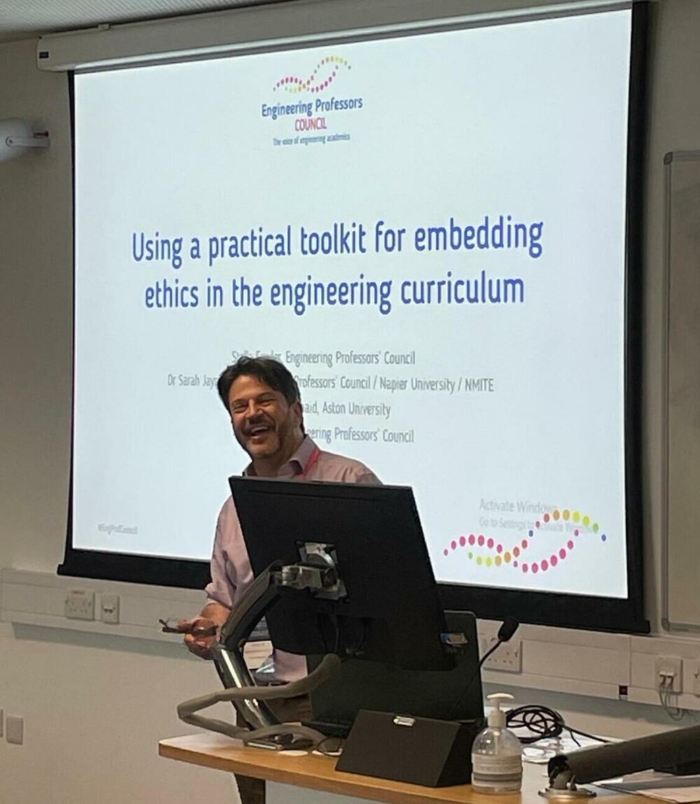
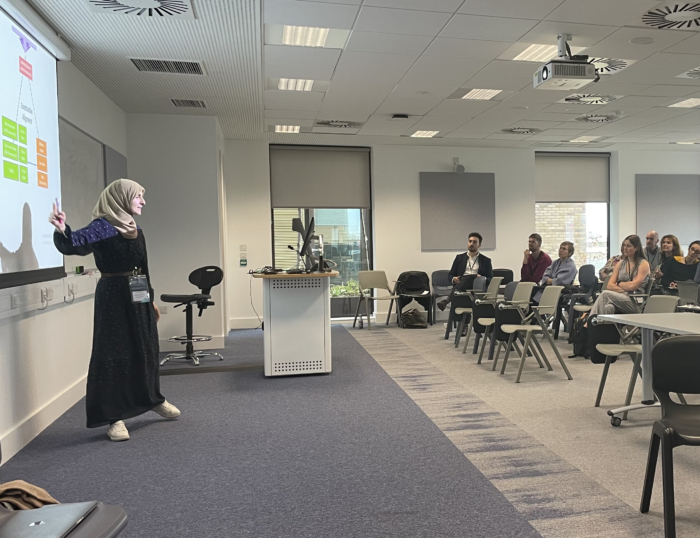
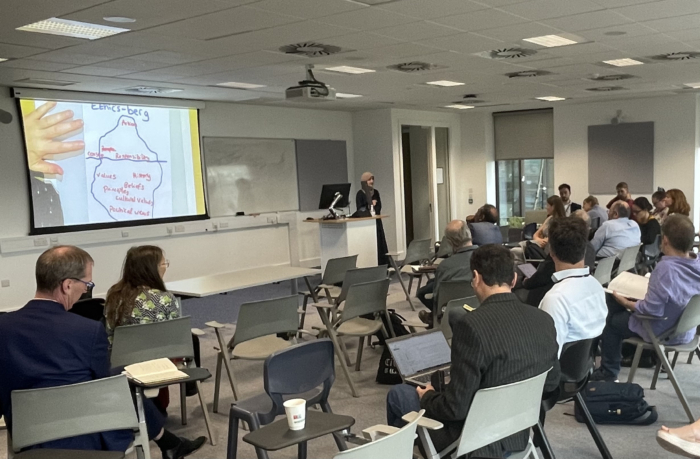
We were very pleased to be accepted to present a workshop at the 2023 SEFI Conference in September: Using a practical toolkit for embedding ethics in the engineering curriculum.

This workshop emphasised the need to embed ethics into the engineering curriculum, highlighted that behaviours such as inclusivity and sustainability must become instinctive – golden threads running through everything that engineers think and do – and posited that engineering programmes must be proactive in bringing engineering ethics to the fore in order to equip future engineers with the skills and mindset they need to succeed.

The workshop showcased the Engineering Ethics Toolkit and introduced a pragmatic approach to integrating ethics content into teaching, using examples and a detailed and interactive curriculum map, which connects the elements of the toolkit.

One of the presentations used in the workshop – Using a constructive alignment tool to plan ethics teaching – can be accessed and downloaded from here.

Sarah Junaid (Aston University)


Sarah Junaid (Aston University)


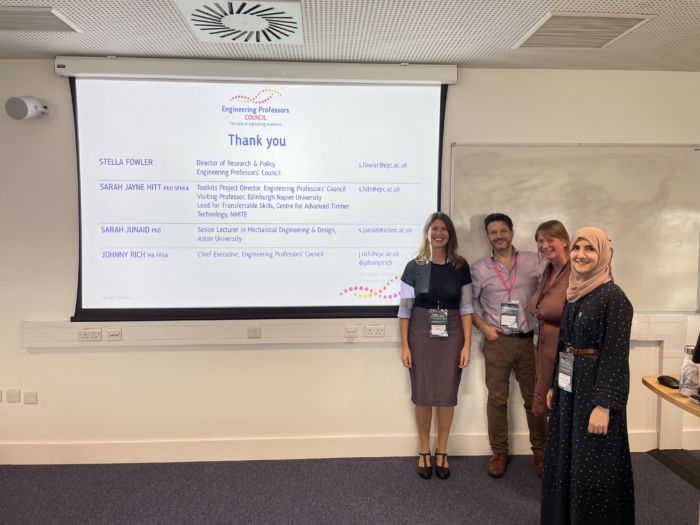
Sarah Jayne Hitt (NMITE), Johnny Rich (EPC), Stella Fowler (EPC), Sarah Junaid (Aston University)


You can also view this post here.

Any views, thoughts, and opinions expressed herein are solely that of the author(s) and do not necessarily reflect the views, opinions, policies, or position of the Engineering Professors’ Council or the Toolkit sponsors and supporters.

Media release

15th June 2023

The Engineering Professors’ Council today announced the launch of innovative new content for their Engineering Ethics Toolkit, an online resource that helps educators to build ethics directly into their engineering teaching.  

Created by the Engineering Professors’ Council (EPC) with support from the Royal Academy of Engineering, the Engineering Ethics Toolkit addresses the issue that relatively few university engineering courses explicitly embed ethics teaching throughout the curriculum.   

The ability to tell right from wrong – and better from worse – is as vital to an engineer as maths or design skills, yet many UK higher education institutions fall short in effectively developing these abilities in future engineering professionals. The Engineering Ethics Toolkit solves this problem with a suite of interactive resources, guidance and teaching materials that aim to engage educators, and enable them to introduce ethics into the education and training of every engineer, allowing the UK to position itself as a leader in promoting engineering as a force to improve the world for people and the planet.  

As well as offering advice to educators who want to teach ethics but are not sure where to begin, the Toolkit features ready-to-use classroom resources that are rooted in educational best practice and align with the Accreditation of Higher Education Programmes (AHEP) criteria, which are the conditions for courses to receive professional accreditation.   

These case studies and other teaching materials highlight current and emerging real-world issues and can be used and adapted by anyone. The latest additions to the Engineering Ethics Toolkit include the interactive Ethics Explorer, which helps educators understand, plan for and implement ethics learning, and 30 new academic guidance articles, case studies and comprehensive classroom activities created and developed by academic and industry professionals.  

Dr Rhys Morgan, Director of Education and Diversity at the Royal Academy of Engineering, comments: “There has never been a more crucial time to ensure that the next generation of engineers have the skills and training to critically address ethical questions around issues such as artificial intelligence and sustainability. It is vital for the future of our profession, as well as the future of our society and planet, that every engineer develops the ability to make responsible and informed decisions regarding the ethics of their work.”  

Raffaella Ocone OBE FREng FRSE, Professor of Chemical Engineering at Heriot-Watt University and a Fellow of the Royal Academy of Engineering, remarks: “As engineers and as educators we want to improve the world. When we teach ethics within our engineering degrees, we teach the ability to determine what is wrong and what is right, what is a mistake and what is an improvement. The Engineering Ethics Toolkit makes it easy to include ethics in our teaching. It is a treasure trove for educators.”  

The Engineering Ethics Toolkit is a free to use suite of resources, available at epc.ac.uk/resources/toolkit/ethics-toolkit   

To hear about forthcoming Engineering Ethics Toolkit webinars and workshops, join the EPC’s Ethics Ambassadors community by emailing press@epc.ac.uk   

Ends

Notes to editors

Contact

Contact: Johnny Rich
Email: press@epc.ac.uk
Phone: 0781 111 4292
Website: epc.ac.uk/resources/toolkit/ethics-toolkit
Twitter: @EngProfCouncil
#EngineeringEthicsToolkit
#EngineeringEthics


This post is also available here.
This webinar was live on 31st March 2023, to promote the new content added to the Engineering Ethics Toolkit.

Launched in 2022 with support from the Royal Academy of Engineering, the EPC’s Engineering Ethics Toolkit provides educators with a range of resources that can help them more effectively integrate ethics into their engineering modules.

Now, the Toolkit has been expanded to include:

Besides getting an introduction to these resources, you will hear from colleagues who have contributed some of these new resources and used some of them in the classroom.

This event is ideal for anyone involved in integrating ethics into engineering education.

Speakers:

To enable closed captions on Vimeo, click the CC button in the video player.


Any views, thoughts, and opinions expressed herein are solely that of the author(s) and do not necessarily reflect the views, opinions, policies, or position of the Engineering Professors’ Council or the Toolkit sponsors and supporters.

Let us know what you think of our website