Author: Professor Manuela Rosa (Algarve University, Institute of Engineering). 

Topic: Engineering for ecological sustainability. 

Tool type: Knowledge. 

Relevant disciplines: Any. 

Keywords: Curriculum; Engineering professionals; Ecology; Ecosystem services; Natural resources; Interdisciplinary; Biodiversity; Water and sanitation; Climate change; AHEP; Sustainability; Higher education; Pedagogy. 

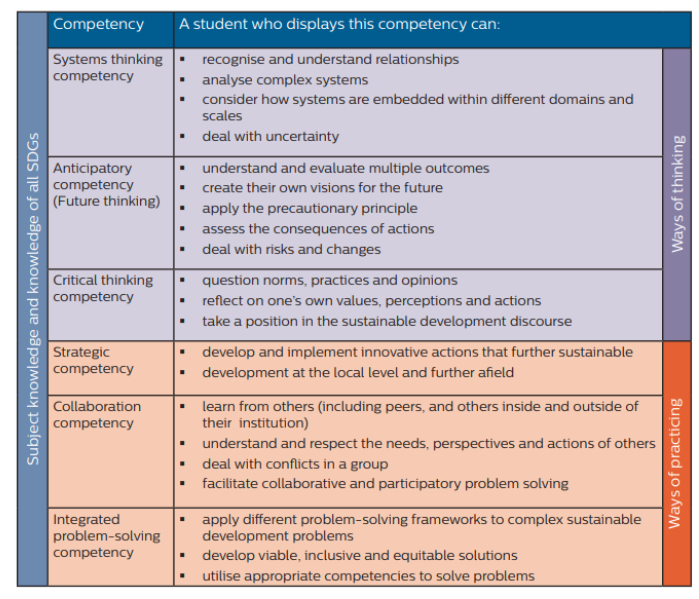
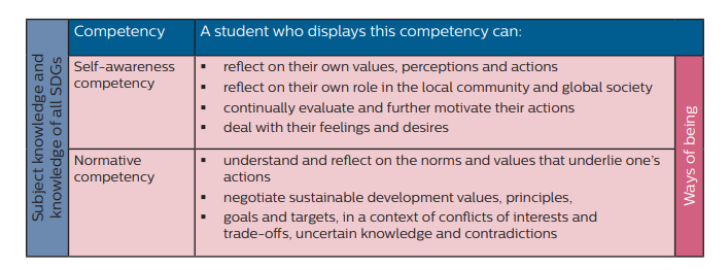
Sustainability competency: Systems thinking; Collaboration; Integrated problem-solving; Self-awareness; Normative.

AHEP mapping: This resource addresses two of the themes from the UK’s Accreditation of Higher Education Programmes fourth edition (AHEP4): The Engineer and Society (acknowledging that engineering activity can have a significant societal impact) and Engineering Practice (the practical application of engineering concepts, tools and professional skills). To map this resource to AHEP outcomes specific to a programme under these themes, access AHEP 4 here and navigate to pages 30-31 and 35-37. 

Related SDGs: SDG 4 (Quality education); SDG 6 (Clean water and sanitation); SDG 7 (Affordable and clean energy); SDG 12 (Responsible consumption and production); SDG 14 (Life below water). 

Reimagined Degree Map Intervention: Cross-disciplinarity; Active pedagogies and mindset development.

Who is this article for? This article should be read by educators at all levels in higher education who wish to embed environmental and ecological sustainability into the engineering curriculum or design modules. Engaging with this topic will also help to prepare students with the soft skill sets that employers are looking for. 


Premise: 

Engineering has always responded to the societal challenges of humanity, contributing to its progress and economic development. However, the synergetic effects of fossil-based economic growth together with large-scale engineering projects have also caused great pressures on natural resources and ecosystems leading to over-exploitation and degradation. In consequence, in the last decades, a multidimensional perspective on sustainability perspective has arisen, and has been acknowledged by social movements, governments and institutions.   

Meanwhile, this assumes deep epistemological changes, requiring holistic and transdisciplinary approaches that must be considered by engineering professionals, establishing communication based on new ways of thinking. There is the need to interweave disciplines, to establish complementary relationships, to create associations in order to root new knowledge, enabling communication between the sciences. In doing so, transdisciplinary science has emerged, i.e. the science that can develop from these communications. It corresponds to a higher stage succeeding the stage of interdisciplinary relationships, which would not only cover interactions or reciprocities between specialised research projects, but would place these relationships within a total system without any firm boundaries between disciplines (Piaget, 1972).  

Currently, the complexity associated with climate change and the uncertainty of the link between global loss of biodiversity and current loss of public health, are demanding innovative knowledge, needing those holistic and transdisciplinary approaches.  Engineering professionals must therefore give additional attention to ecological sustainability. 


The challenges of sustainability: 

The term “sustainability” portrays the quality of maintenance of something which can continue for an indefinite time, such as biological species and ecosystems. Sustainability is based on a dynamic balance between natural and human ecosystems, in order to maintain the diversity, complexity and functions of the ecological systems that support life, while contributing to prosperous and harmonious human development (Costanza, 1997). This strong perspective of sustainability needs to have a prominent place in land use management which must consider the carrying capacity of natural ecosystems.  

Ecological sustainability in particular aims to maintain the earth’s natural potential and the biosphere, its stock of natural resources, atmosphere and hydrosphere, ecosystems and species. Ecosystems should be kept healthy by preserving their “ecological integrity”, i.e. the capacity to maintain the structure and function of its natural communities, which includes biogeochemical cycles.  

Engineering professionals must therefore understand the global limits for water, land, and energy use (contributing to less atmospheric carbon emissions), and preserve other natural resources, such as nutrients or biodiversity. In the technical decision-making process, they need to understand the ecological impacts of big scale projects, such as transportation infrastructures, dams, deforestation, and others. Alongside other professionals, they need to contribute to the restoration, conservation and preservation of ecosystem services, e. g. support services, production services, regulating services and cultural services. These services result in benefits that people and organisations receive from ecosystems and constitute determinants of well-being (Millennium Ecosystem Assessment, 2005).  

Until now, technical solutions often focused on highly visible man-made structures, many of which stopped or disrupted natural processes. Presently, the importance of regulating natural ecosystem services such as water purification, water supply, erosion and flood control, carbon storage and climate regulation is beginning to be perceived. These are considered as soft engineering tools and must be highlighted by engineering educators and assumed in the practice. 

This ecological mindset would enable solutions that recognise management and restoration of natural ecosystems in order to curb climate change, protect biodiversity, sustain livelihoods and manage rainstorms. Nature-based solutions are a natural climate solution in cities, contributing to the mitigation and adaptation of climate change through green roofs, rain gardens, constructed wetlands that can minimise damaging runoff by absorbing stormwater, reducing flood risks and safeguarding freshwater ecosystems. They are essential in climate refuges for city residents during heatwaves and other extreme climate events. These solutions need specific and new knowledge made by ecologists working with engineers and others, which demands action beyond disciplinary silo, i.e., a transdisciplinary approach.  

Within this context, engineering professionals must consider specific operating principles of sustainability: 

These principles must be considered in engineering education, and require deep changes in teaching, because there is a great difficulty in studying and managing the socio-ecological system according to the Cartesian paradigm which breaks up and separates the parts of a whole. New ecological thinking emphasises holistic approaches, non-linearity, and values focused on preservation, conservation and collaboration (Capra, 1996). The transdisciplinary approach needs dialogic and recursive thinking, which articulates from the whole to the parts and from the parts to the whole, and can only be unchained with the connection of the different fields of knowledge, including knowledge from local communities in specific territories.   

In higher education, engineering students should establish face-to-face contacts with ecology students in order to better understand ecological sustainability and generate empathy on the subject. Engineering students must develop skills of collaboration and inter-cultural communication tools (Caeiro-Rodríguez et al., 2021) that will facilitate face to face workshops with other professionals and enrich learning experiences.  

In the 21st century, beyond the use of technical knowledge to solve problems, engineering professionals need communicational abilities to consider ecological sustainability, requiring networking, cooperating in teams, and working with local communities. Engineering educators must include trans-sectoral and transdisciplinary research and holistic approaches which make clear progress in tackling ecological sustainability. 


Conclusion: 

The interconnected socio-ecological system must be managed for sustainability by multiple stakeholders.  Engineering professionals need to develop a set of skills and competencies related with the ability to work with other ones (e.g. from the natural sciences) and citizens. Currently, beyond the use of technical knowledge to solve problems, engineers need to consider the sustainable development goals, requiring networking, cooperating in teams, and working with communities through transdisciplinary approaches.  

Education for Sustainable Development is required to empower engineering professionals to adopt strong sustainable actions that simultaneously ensure ecological integrity, economic viability and a just society for the current and future generations. Education is a fundamental tool for achieving the Sustainable Development Goals, as recognised in the 2030 Education Agenda, coordinated by UNESCO (2020).  


References: 


This work is licensed under a Creative Commons Attribution-ShareAlike 4.0 International License. 

Any views, thoughts, and opinions expressed herein are solely that of the author(s) and do not necessarily reflect the views, opinions, policies, or position of the Engineering Professors’ Council or the Toolkit sponsors and supporters. 


To view a plain text version of this resource, click here to download the PDF.
Author: Dr Manoj Ravi FHEA (University of Leeds). 

Topic: Pedagogical approaches to integrating sustainability. 

Tool type: Knowledge. 

Relevant disciplines: Any.  

Keywords: Education for Sustainable Development; Teaching or embedding sustainability; Course design; AHEP; Learning outcomes; Active learning; Assessment methods; Pedagogy; Climate change; Bloom’s Taxonomy; Project-based learning; Environment; Interdisciplinary; Higher education; Curriculum. 

Sustainability competency: Integrated problem-solving competency.

AHEP mapping: This resource addresses two of the themes from the UK’s Accreditation of Higher Education Programmes fourth edition (AHEP4): The Engineer and Society (acknowledging that engineering activity can have a significant societal impact) and Engineering Practice(the practical application of engineering concepts, tools and professional skills). To map this resource to AHEP outcomes specific to a programme under these themes, access AHEP 4 here and navigate to pages 30-31 and 35-37.  

Related SDGs: SDG 4 (Quality education); SDG 13 (Climate action). 

Reimagined Degree Map Intervention: Adapt and repurpose learning outcomes; Active pedagogies and mindset development; Authentic assessment; Cross-disciplinarity.

Who is this article for? This article should be read by educators at all levels in higher education who are seeking an overall perspective on teaching approaches for integrating sustainability in engineering education. Engaging with this topic will also help to prepare students with the soft skill sets that employers are looking for. 


Premise: 

As stated in the 1987 United Nations Brundtland Report, ‘sustainability’ refers to “meeting the needs of the present without compromising the ability of future generations to meet their own needs” (GH, 1987 p.242). It is underpinned by a tripartite definition encompassing environmental, social and economic sustainability. The necessity for embracing sustainability is underscored by several pressing challenges we face as a global society, ranging from climate change to economic crises.  

Against the backdrop of these global challenges, the role of the engineering profession assumes significant importance. While the scientific principles that underpin the various engineering disciplines remain largely the same, the responsibility of the engineering profession is to leverage these principles to address current and future challenges. Consequently, education for sustainable development (ESD) becomes a vital aspect of an engineer’s training, since the profession will guide the design and implementation of innovative solutions to challenges crosscutting environmental impact, judicious use of resources and social wellbeing.   


Integrated course design: 

Integrating ESD in engineering education requires programme and module designers to take a deliberate approach. Drawing on initial attempts to integrate sustainability in management and business education (Rusinko, 2010), four pedagogical approaches of ESD can be identified:  

  1. piggybacking,  
  2. mainstreaming,  
  3. specialising,  
  4. connecting.  

The last two approaches are for creating new curriculum structures with a narrow discipline-specific focus and a broad transdisciplinary focus, respectively. The other two, piggybacking and mainstreaming, are approaches to embed sustainability within existing curriculum structures. Although piggybacking is the easier-to-implement approach, achieved by additional sessions or resources on sustainability being tagged onto existing course modules, mainstreaming enables a broader cross-curricular perspective that intricately intertwines sustainability with engineering principles. 

The mainstreaming approach is also an elegant fit with the accreditation requirements for sustainability; the latest edition of the Accreditation of Higher Education Programmes (AHEP) emphasises competence in evaluating ‘environmental and societal impact of solutions’ to ‘broadly-defined’ and ‘complex’ problems. In order to foster this ability, where sustainability is a guiding principle for developing engineering solutions, a holistic (re)consideration of all elements of constructive alignment (Biggs, 1996) – intended learning outcomes (ILOs), teaching and learning activities, and student assessment – is needed. To this end, the Integrated Course Design (ICD) pedagogical framework can be leveraged for a simultaneous and integrated consideration of course components for embedding sustainability.  


Sustainability learning outcomes: 

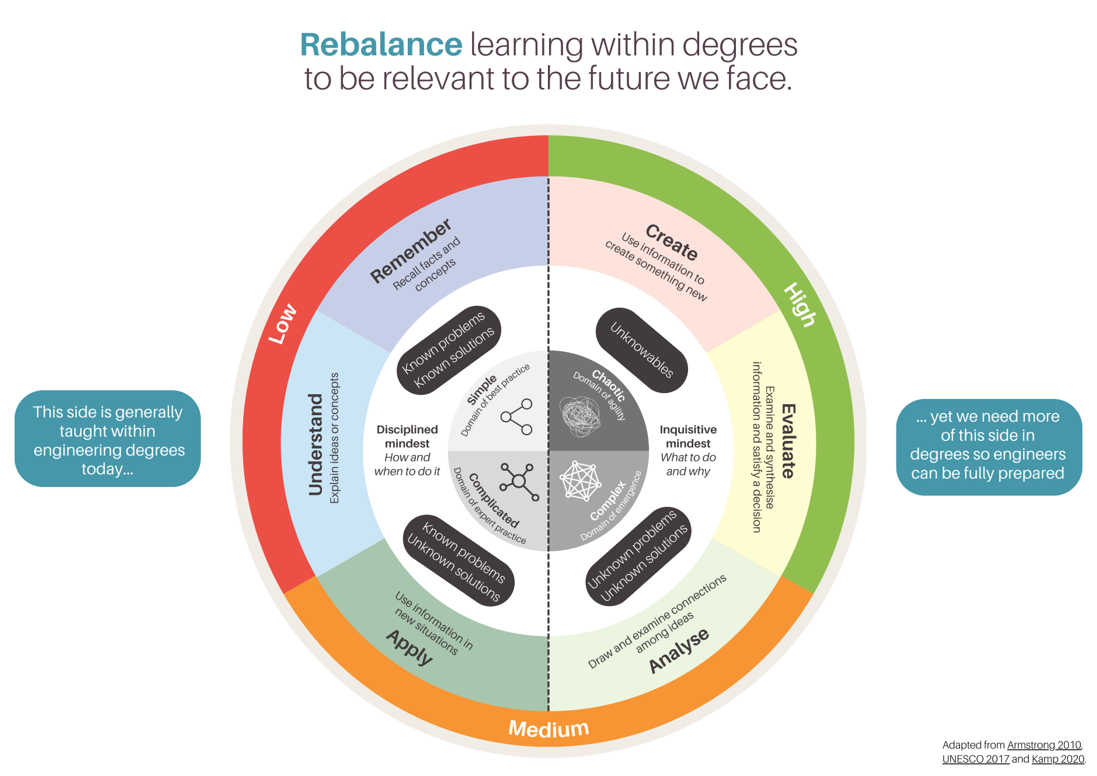
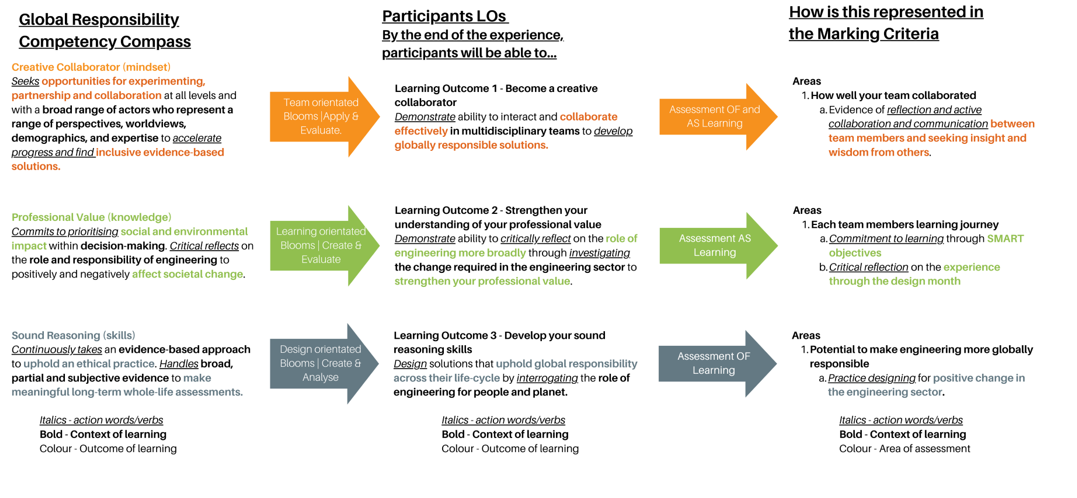
Bloom’s taxonomy (also see here), which conventionally guides formulation of ILOs, can be extended to incorporate sustainability-based learning outcomes. The action verb in the AHEP guidance for the learning outcome on sustainability is ‘evaluate’, signifying a high cognitive learning level. ILOs framed at this level call for application of foundational knowledge through practical, critical and creative thinking. Although the cognitive domain of learning is the main component of engineering education, sustainability competence is greater than just a cognitive ability. For more information, see the Reimagined Degree Map.   

ESD is a lifelong learning process and as stated by UNESCO, it ‘enhances the cognitive, socio-emotional and behavioural dimensions of learning’. This integration of cognitive learning outcomes with affective aspects, referred to as ‘significant learning’ in the ICD terminology, is of utmost importance to develop engineers who can engage in sustainable and inclusive innovation. Furthermore, mapping programme and module ILOs to the UN Sustainable Development Goals (SDGs) is another way to integrate sustainability in engineering with connections between technical engineering competence and global sustainability challenges becoming more explicit to students and educators. Similarly, the ILOs can be mapped against UNESCO’s sustainability competencies to identify scope for improvement in current programmes. See the Engineering for One Planet Framework for more information and guidance on mapping ILOs to sustainability outcomes and competencies. 


Teaching and learning activities: 

Activities that engage students in ‘active learning’ are best placed to foster sustainability skills. Additional lecture material on sustainability and its relevance to engineering (piggybacking approach) will have limited impact. This needs to be supplemented with experiential learning and opportunities for reflection. To this end, design and research projects are very effective tools, provided the problem definition is formulated with a sustainability focus (Glassey and Haile, 2012). Examples include carbon capture plants (chemical engineering), green buildings (civil engineering) and renewable energy systems (mechanical and electrical engineering).  

Project-based learning enables multiple opportunities for feedback and self-reflection, which can be exploited to reinforce sustainability competencies. However, with project work often appearing more prominently only in the latter half of degree programmes, it is important to consider other avenues. Within individual modules, technical content can be contextualised to the background of global sustainability challenges. Relevant case studies can be used in a flipped class environment for a more student-led teaching approach, where topical issues such as microplastic pollution and critical minerals for energy transition can be taken up for discussion (Ravi, 2023). Likewise, problem sheets or simulation exercises can be designed to couple technical skills with sustainability.    


Student assessment: 

With sustainability being embedded in ILOs and educational activities, the assessment of sustainability competence would also need to take a similar holistic approach. In other words, assessment tasks should interlace engineering concepts with sustainability principles. These assessments are more likely to be of the open-ended type, which is also the case with design projects mentioned earlier. Such engineering design problems often come with conflicting constraints (technical, business, societal, economic and environmental) that need careful deliberation and are not suited for conventional closed-book time-limited examinations.  

More appropriate tools to assess sustainability, include scaled self-assessment, reflective writing and focus groups or interviews (Redman et al., 2021). In a broader pedagogical sense, these are referred to as authentic assessment strategies. Given the nexus between sustainability and ethics, inspiration can also be drawn from how ethics is being assessed in engineering education. Finally, pedagogical models such as the systems thinking hierarchical model (Orgill et al., 2019), can be used to inform the design of assessment rubrics when evaluating sustainability skills.  


Supporting resources: 


References: 

Biggs, J. (1996) ‘Enhancing teaching through constructive alignment’, Higher education, 32(3), pp. 347-364.  

Brundtland, G.H. (1987) Our Common Future: Report of the World Commission on Environment and Development. United Nations General Assembly document A/42/427, p.247.   

Glassey, J. and Haile, S. (2012) ‘Sustainability in chemical engineering curriculum’, International Journal of Sustainability in Higher Education, 13(4), pp. 354-364.  

Orgill, M., York, S. and MacKellar, J. (2019) ‘Introduction to systems thinking for the chemistry education community’, Journal of Chemical Education, 96(12), pp. 2720-2729.  

Ravi, M. (2023) ‘Spectroscopic Methods for Pollution Analysis─Course Development and Delivery Using the Integrated Course Design Framework’, Journal of Chemical Education, 100(9), pp. 3516-3525.  

Redman, A., Wiek, A. and Barth, M. (2021) ‘Current practice of assessing students’ sustainability competencies: A review of tools’, Sustainability Science, 16, pp. 117-135.  

Rusinko, C. A. (2010) ‘Integrating sustainability in management and business education: A matrix approach’, Academy of Management Learning & Education, 9(3), pp. 507-519. 

This work is licensed under a  Creative Commons Attribution-ShareAlike 4.0 International License. 

Any views, thoughts, and opinions expressed herein are solely that of the author(s) and do not necessarily reflect the views, opinions, policies, or position of the Engineering Professors’ Council or the Toolkit sponsors and supporters. 


To view a plain text version of this resource, click here to download the PDF.
Our toolkits are separate but overlapping resources designed to support our members to be more professional in what they do. All toolkits are open to members to submit resources or get involved in their further development. 

Some toolkit content is available to members only. For best results, make sure you’re logged in.

Our toolkits:

Within About Toolkits you can find the following pages:


Any views, thoughts, and opinions expressed herein are solely that of the author(s) and do not necessarily reflect the views, opinions, policies, or position of the Engineering Professors’ Council or the Toolkit sponsors and supporters.

Authors: Sarah Junaid (Aston University); Yann Serreau (CESI); Alison Gwynne-Evans (University of Cape Town); Patric Granholm (Åland University of Applied Sciences); Kathryn Fee (Queen’s University Belfast); Sarah Jayne Hitt, Ph.D. SFHEA (NMITE, Edinburgh Napier University).

Keywords: Pedagogy.

Who is this article for?: This article should be read by educators at all levels in higher education who wish to integrate ethics into the engineering and design curriculum or module design


Using a constructive alignment tool to plan ethics teaching:

Incorporating ethics into an already-packed engineering curriculum can be an overwhelming prospect. But as more accreditation bodies are requiring engineering programmes to evidence the inclusion of ethics, this activity is becoming essential. Recently, a planning tool has been developed by a team of academics that you can use to constructively align your learning outcomes with activities and assessments that positively reinforce the inclusion of ethics.

For instance, in a year 2 Mechanical Engineering course, an existing outcome might read: “Use CAD modelling and additive manufacturing in the product development process and embed control sensors, actuators and physical hardware into a complete system.” As it is written, it contains no reference to ethics. But after comparing this outcome against language found in AHEP4, the CDIO Syllabus, and the Learning Landscape found in this Toolkit’s Ethics Explorer, you might revise it to read: “Use CAD, modelling and additive manufacturing in the product development process and embed control sensors, actuators and physical sensors to design a safe and complete system to address a societal need.” The minor changes to the language (shown in italics) ensure that this outcome reinforces the ethical dimension of engineering and encourages the ethical development of engineers. These changes also then inform the language used in activity briefs and the criteria by which students are assessed.

This tool has been used in workshops at Aston University and the 2023 SEFI conference, and is endorsed by CDIO.

Download this planning tool:


Engineering Ethics Teaching – Planning Tool Worksheet

Stage1: Resources – Tabulate all relevant resources and their Learning Outcomes or Programme Outcomes:

What are your Learning Outcomes for the topic you will teach? Please list them here.

Highlight the verbs in blue and the ethical topics in red; this will help highlight any potential gaps.

Program level (My module, course, class, or lecture)  

Accreditation level


National or Professional level ethics map or framework (optional) International level
Reference/ Source [Your University and course title] [Your national accreditation board] [e.g. codes of conduct, code of ethics, ethical principles, suggested teaching approaches] [e.g. CDIO Syllabus, ABET, Washington Accord]
Learning Outcome 1 [Write current Learning Outcome here] [Copy and paste the relevant competency here] [Copy and paste the relevant guidance here] [Copy and paste the relevant competency/skill here]
Learning Outcome 2 Enter text here Enter text here Enter text here Enter text here
Learning Outcome 3 Enter text here Enter text here Enter text here Enter text here


Stage 2: Re-write Learning Outcomes (LOs): 

Learning Outcomes Re-worded Learning Outcomes Rationale
LO1.

[Copy and paste LO from Stage I table here]

LO1.

[Re-write LO and highlight verbs in bold here]

[Justify your changes or if unchanged, justify why here]
LO2. LO2. Enter text here Enter text here
LO3. LO3. Enter text here Enter text here


Stage 3: Ethics Teaching Tools – Evidence-based tools and resources to help with teaching engineering ethics:


Three Examples of Ethics Teaching Models:

1. The Rest Model for Ethical Decision Making – Individual (Jones, 1991).

2. The Ethical Cycle – Problem-solving (Van de Poel & Royakkers, 2007).

3. The Innovent-E Model – Competencies – Language: French
(For access to competences in ethics contact Yann Serreau: yserreau@cesi.fr)

Note: you can use other models.


Stage 4: Constructive Alignment – Tabulate the LOs, activity and assessment, and ensure alignment:

My module – Learning Outcomes Learning & teaching activity Assessment
LO1.

[Copy and paste new LO from Stage II table here]
[What activity will support and prepare the student for the assessment?] [What assessment would be needed to demonstrate this new LO?]
LO2. Enter text here Enter text here Enter text here
LO3. Enter text here Enter text here Enter text here


Download this planning tool:


This work is licensed under a Creative Commons Attribution-ShareAlike 4.0 International License.

Any views, thoughts, and opinions expressed herein are solely that of the author(s) and do not necessarily reflect the views, opinions, policies, or position of the Engineering Professors’ Council or the Toolkit sponsors and supporters.

Authors: Dr. Jude Bramton (University of Bristol); Elizabeth Robertson (University of Strathclyde); Sarah Jayne Hitt, Ph.D. SFHEA (NMITE, Edinburgh Napier University).

Keywords: Collaboration; Pedagogy.

Who is this article for?: This article should be read by educators at all levels in higher education who wish to integrate ethics into the engineering and design curriculum or module design.


How to organise class sessions:

Engineering educators can find a wealth of ethics case studies in the Engineering Ethics Toolkit. Each one focuses on different disciplines, different areas of ethics learning, and different professional situations, meaning there is almost certainly a case study that could be embedded in one of your classes.

Even so, it can be difficult to know how to organise the delivery of the session. Fortunately, Toolkit contributors Jude Bramton of the University of Bristol and Elizabeth Robertson of the University of Strathclyde have put together diagrams that demonstrate their approaches. These processes can act as helpful guides for you as you integrate an Ethics case study in one of your engineering class sessions.


Jude Bramton’s class session organisation looks like this:

You can read more about her approach here.


Elizabeth Robertson’s class session organisation looks like this:

You can read more about her approach here.


This work is licensed under a Creative Commons Attribution-ShareAlike 4.0 International License.

Any views, thoughts, and opinions expressed herein are solely that of the author(s) and do not necessarily reflect the views, opinions, policies, or position of the Engineering Professors’ Council or the Toolkit sponsors and supporters.

Dr. Jude Bramton of the University of Bristol discusses her first-hand experience of using the Engineering Ethics Toolkit and what lessons she learnt.


Starting off

Let me set the scene. It’s a cold January morning after the winter break and I need to prepare some Engineering Ethics content for our third year Mechanical Engineers. The students have never been taught this topic, and I have never taught it.

I’m apprehensive – many of our students are fantastic engineering scientists/mathematicians and I’m not sure how they will engage with a subject that is more discussive and, unlike their more technical subjects, a subject with no single correct answer.

Nonetheless, my task is to design a 50-minute session for ca. 180 undergraduate Mechanical Engineers to introduce the concept of Engineering Ethics and start to build this thinking into their engineering mindset. The session will be in a flatbed teaching space, where students will be sitting in groups they have been working in for a number of weeks.

For a bit more context, the content is assessed eventually as part of a group coursework where students assess the ethical implications of a specific design concept they have come up with.


Designing the session with the help of the Toolkit

From doing a little bit of research online, I came across the Engineering Ethics Toolkit from the EPC – and I was so grateful.

I started off by reviewing all 8 case studies available at the time, and reading them in the context of my session. I picked one that I felt was most appropriate for the level and the subject matter and chose the Solar Panels in a Desert Oil Field case study.

I used the case study in a way that worked for me – that’s the beauty of this resource, you can make it what you want.

I put my session together using the case study as the basis, and including the Engineering Council’s principles of Engineering Ethics and some hand-picked tools from some of Toolkit’s guidance articles – for example, I used the 7-step guide to ethical decision making.

I used the text directly from the case study to make my slides. I introduced the scenario in parts, as recommended, and took questions/thoughts verbally from the students as we went. The students then had access to all of the scenario text on paper, and had 15-20 minutes to agree three decisions on the ethical dilemmas presented in the scenario. Students then had to post their group’s answers on PollEverywhere.

The overall session structure looked like this:


How did it go?

When I ran the session, one key component was ensuring I set my expectations for student participation and tolerance at the start of the session. I openly told students that, if they feel comfortable, they will need to be vocal and participative in the session to get the most from it. I literally asked them – “Is that something we think we can do?” – I got nods around the room (so far, so good).

Overall, the session went better than I could have expected. In fact, I think it was the most hands up I have ever had during a class. Not only did we hear from students who hadn’t openly contributed to class discussion before, but I had to actively stop taking points to keep to time. It made me wonder whether this topic, being presented as one with no wrong or right answers, enabled more students to feel comfortable contributing to a large class discussion. Students were very tolerant of each others’ ideas, and we encouraged differences of opinion.

For the small group discussions, I left a slide up with the three ethical dilemmas and the 7-step guide to ethical decision making as a prompt for those that needed it. During the small group discussions, I and supporting teaching staff wandered around the room observing, listening and helping to facilitate discussion, although this was rarely needed as engagement was fantastic. The small group sessions also allowed opportunities for contribution from those students who perhaps felt less comfortable raising points in the wider class discussion.

To my delight, the room was split on many decisions, allowing us to discuss all aspects of the dilemmas when we came to summarise as a larger class. I even observed one group being so split they were playing rock-paper-scissors to make their decision – not quite the ethical decision making tool we might advertise, but representative of the dilemma and engagement of students nonetheless!


Student feedback

I asked our Student Cohort Representative to gather some informal feedback from students who attended the session. Overall, the response was overwhelmingly positive, here are a few snippets:

“It was the best lecture I’ve had since I’ve been here.”

“The most interesting session, had me engaged.”

“It was the first time learning about the connections between engineering and ethics and it was really useful.”

“I enjoyed the participation and inclusion with the students during the lesson. It has favoured the growth of personal opinions and a greater clarity of the subject and its points of view.  Furthermore, the addition of real-life examples gave more depth to the topic, facilitating listening and learning.”

“The session was very engaging and I liked the use of examples… This whole unit has showed me how there are more aspects of engineering to consider apart from just designing something. Engineers must always think of ethics and I believe this session has demonstrated that well.”

And finally, when asked “What was your overall impression of the session?” a student replied Interesting and curious.” – what more could you ask for?

It was such a pleasant surprise to me that not only did students engage in the session, but they actively enjoyed the topic.


I’ve run it once, how would I improve it?

One thing I would do differently next time would be to allow even more time for discussion if at all possible. As discussed, I had to stop and move on, despite the engagement in the room at certain points.

I also reflect how it might have gone if the students weren’t as engaged at the start. If you have other teaching staff in the room, you can use them to demonstrate that it’s ok to have differences of opinion. A colleague and I openly disagreed with each other on a topic, and demonstrated that this was ok. Additionally, if larger class engagement doesn’t work for you, you could also go straight to the small group discussion.


In summary (and top tips!)

I now feel very comfortable, and excited, to be teaching engineering ethics. It has now also catalysed more content to be created to embed this theme further in our programme – so it doesn’t just become that “one off” lecture. However, I think providing specific time on this subject was very beneficial for the students, it gave them time and space to reflect on such a complex topic.

My takeaways and recommendations from this experience have been:

All in all, I would recommend the resources on the Engineering Ethics Toolkit to anyone. They can be easily adapted to your own contexts and there is a plethora of resources and knowledge that are proven to engage students and get them thinking ethically.

You can find out more about getting involved or contributing to the Engineering Ethics Toolkit here.


This blog is also available here.

Any views, thoughts, and opinions expressed herein are solely that of the author(s) and do not necessarily reflect the views, opinions, policies, or position of the Engineering Professors’ Council or the Toolkit sponsors and supporters.

Author: Sarah Jayne Hitt, Ph.D. SFHEA (NMITE, Edinburgh Napier University).

Keywords: Collaboration; Pedagogy.

Who is this article for?: This article should be read by educators at all levels in higher education who wish to integrate ethics into the engineering and design curriculum or module design.


Premise:

Most engineers and engineering educators have experienced or read about a situation that makes them think, “that would make a great case study for students to learn from.” Examples of potential cases can be found in the news, in textbooks, and in the workplace. However, it can be difficult to translate a real world situation into an educational resource. This article sets forth a “recipe” based on recent educational scholarship that can be used to create case studies ideal for classroom use.


Case study purpose:

Recipes are created for different reasons – sometimes you want comfort food, sometimes it’s a healthy detox meal, sometimes it’s a stand-out celebratory feast for a special occasion. In a similar way, case studies should be written with a deliberate purpose in mind. To help you consider these, ask yourself:

Next, it’s important to remember that there are different kinds of learning within ethics education. The Ethics Explorer highlights these with its focus on graduate attributes which specify what characteristics and attitudes we hope engineering graduates will develop through this learning. For example, do you want to focus on students’ abilities to identify or identify with an ethical situation? Or do you want them to be able to reason through options or make a judgement? Or is it important for them to learn ethical knowledge such as professional codes or practices? Any of these could be a good focus, but in general, it is useful to write a case study aimed at one particular purpose, otherwise it can become too unwieldy. Plus, case studies that have a specific learning aim can make it easier to devise assessments related to their content. 


Case study ingredients:

Just as cooks do when preparing to make a meal, case study writers assemble ingredients. These are the components of a case that can be mixed together in different proportions in order to create the desired result. And, as in cooking, sometimes you should use more or less of an ingredient depending on the effect you want to create or the needs of your audience. But in general, educational scholars agree that these elements are necessary within a case study to promote learner engagement and to achieve the desired educational outcomes. 

1. Setting / Context.  Ethical issues in engineering don’t happen in a vacuum. Often they are exacerbated by the setting and context in which they occur, whether that’s a start-up tech company in London or an aid organisation in Brazil or in a research lab in Singapore. An authentic environment not only makes the case more realistic, but it also can add important extra dimensions to the issues at stake (Valentine et al., 2020). However, to ensure you don’t run afoul of IP or other legal concerns, it can be best to fictionalise company names and invent hypothetical (yet realistic) engineering projects.

2. Characters. Ethics is a fundamentally human concern; therefore it’s important to emphasise the emotional and psychological elements of engineering ethics issues (Walling, 2015; Conlon & Zandervoort, 2011). In real life, every person brings their role, point-of-view, and background to their consideration of ethical dilemmas, so case studies should replicate that. Additionally, aspects like age, gender, and ethnicity can add complexities to situations that replicate the realities of professional life and address issues relevant to EDI. Case studies can help students imagine how they might negotiate these. 

3. Topic. Besides the overarching ethical issue that is related to an engineering discipline, case studies are most effective when they incorporate both macro- and micro-ethical considerations (Rottman & Reeve, 2020). This means that they require students to not only deliberate about a particular scenario (should I program the software to allow for users to see how their data is used?), but also about a wider concern (how should transparency and privacy be negotiated when consenting to share data?). The chosen topic should also be specific enough so that there is opportunity to integrate elements of technical learning alongside the ethical dilemma, and reference broader issues that could relate to ethics instruction more generally (Davis, 2006; Lawlor, 2021). 

4. Cause for Conflict. An ethical dilemma could arise from many kinds of conflict. For instance, an employee could feel pressured to do something unethical by a boss. A professional could believe that a stance by an institution is unjust. A person could experience internal conflict when trying to balance work and family responsibilities. A leader could struggle to challenge the norms of a system or a culture. In simplest terms, ethical dilemmas arise when values conflict: is efficiency more important than quality? Is saving money worth ecological harm? Case studies that highlight particular conflicts can help promote critical thinking (Lennerfors, Fors, & Woodward, 2020).


Narrative:

Once the ingredients are assembled, it’s time to write the narrative of the case study. Begin with a simple story of around 250-500 words that sets out the characters, the context, and the topic. Sometimes this is enough to gesture towards some potential ethical issues, and sometimes the conflict can be previewed in this introductory content as well.

Then, elaborate on the conflict by introducing a specific dilemma. You can create an engaging style by including human interests (like emotion or empathy), dialogue, and by avoiding highly technical language. Providing different vantage points on the issue through different characters and motivations helps to add complexity, along with adding more information or multiple decision-making points, or creating a sequel such as justifying the decision to a board of directors or to the public. 

Ultimately, the narrative of the case study should be engaging, challenging, and instructional (Kim et al., 2006). It should provide the opportunity for students to reconsider, revisit, and refine their responses and perspectives (Herreid, 2007). Most of all, it should provide opportunities to employ a range of activities and learning experiences (Herkert, 2000). Your case study will be most effective if you suggest ideas for discussions or activities that can help learners engage with the issues in a variety of ways. 


Putting the frosting on the cake:

The community of professionals committed to integrating ethics in engineering education is strong and supportive. Running your ideas by an expert in the topic, a colleague, or a member of our Ethics Ambassadors community can help strengthen your case study. Most of all, discussing the issue with others can help you develop your own confidence in embedding ethics in engineering. The more case studies that we develop from more perspectives, the more diversity we bring to engineering education and practice – we can all learn from each other. We hope you start cooking up your own case study soon!

You can find information on contributing your own resources to the toolkit here.


References:

Conlon, E. and Zandvoort, H. (2011). ‘Broadening ethics teaching in engineering: Beyond the individualistic approach’, Science and Engineering Ethics, 17, pp. 217-232.

Davis, M. (2006) ‘Integrating ethics into technical courses: Micro-insertion’, Science and Engineering Ethics, 12, pp. 717-730.

Herkert, J.R. (2000) ‘Engineering ethics education in the USA: Content, pedagogy, and curriculum’, European Journal of Engineering Education 25(4), pp. 303-313.

Herreid, C.F. (2007) Start with a story: The Case study method of teaching college science. Arlington, VA: NSTA Press.

Kim, S. et al. (2006) ‘A conceptual framework for developing teaching cases: A Review and synthesis of the literature across disciplines’, Medical Education 40, pp. 867-876.

Rottman, C. and Reeve, D. (2020) ‘Equity as rebar: Bridging the micro/macro divide in engineering ethics education’, Canadian Journal of Science, Mathematics and Technology Education 20, pp. 146-165. 

Valentine, A. et al. (2020) ‘Building students’ nascent understanding of ethics in engineering practice’, European Journal of Engineering Education 45(6), pp. 957-970.

Walling, O. (2015) ‘Beyond ethical frameworks: Using moral experimentation in the engineering ethics classroom’, Science and Engineering Ethics 21, pp. 1637-1656.


This work is licensed under a Creative Commons Attribution-ShareAlike 4.0 International License.

Any views, thoughts, and opinions expressed herein are solely that of the author(s) and do not necessarily reflect the views, opinions, policies, or position of the Engineering Professors’ Council or the Toolkit sponsors and supporters.

Author: Martin Griffin (Knight Piésold Consulting, United Kingdom). 

Keywords: Equity; Equality, diversity and inclusion (EDI); Collaboration; Bias; Social responsibility; Design. 

Who is this article for? This article should be read by educators at all levels in higher education who wish to integrate social sustainability, EDI, and ethics into the engineering and design curriculum or module design. It will also help to prepare students with the integrated skill sets that employers are looking for. 


Premise:

No engineer is an island; it is not good for an engineer to act in isolation. Rather engineers need to be part of a welcoming community in order to thrive.  How an engineering professional interacts with either other engineers and non-engineers is essential for building a culture and professional environment of collaboration, creating environments where engineers can create meaningful bonds with one another and feel comfortable communicating openly. This requires recognising and understanding how unconscious bias and privileges can create divides and foster negative professional (toxic) environments, and being committed to establishing standards of conduct for and addressing issues related to EDI. There is a great need to advocate for fellow engineers providing places to belong and empowering them to thrive in their chosen profession and career pathways. This includes people who are part of one or more underrepresented groups that have been historically, persistently, and systemically marginalised in society based on their identity, such as race, colour, religion, marital status, family status, disability, sex, sexual orientation, gender identity, and age. 

The Royal Academy of Engineering and EngineeringUK (2018) frequently publish reports on the demographics of engineers and the skills shortage in the workforce.  These reports highlight the under-representation of people from ethnic and minority groups, those with a disability or impairment, or those who are LGBTQ+.  In addition, the Institute of Engineering and Technology  recently reported that only 9% of businesses take particular action to increase underrepresented groups into their workforces.   

Engineering and technology are for everyone. It is morally right to ensure that everyone has equal opportunities and by doing so we can improve our world, shape our future, and solve complex global challenges. In order to accomplish these moral imperatives, we need to include a diversity of talent and knowledge. Furthermore, in the UK we still face a nationwide skills shortage threatening our industry. To address this and ensure the sustainability of our industry we must support equal opportunities for all and be truly inclusive. 


The three values: 

The three values of EDI are timeless and should be embedded into the way that engineering professionals act, starting with recognition that the unfair treatment of others exists. This unfair treatment may take the form of bullying, harassment, discrimination (either direct or indirect), victimisation, microaggressions, gaslighting, bias and inequity. An engineer’s role must also include advocating for the support of others in this regard too.  Each of the three values are very different, but all three together are essential to create opportunities for engineers to grow and thrive, and for a productive and creative engineering community to flourish. 

Equity encourages fair processes, treatment, and possibilities for everyone, resulting in an equal playing field for all. It acknowledges that oppressive systems have created varied circumstances for different engineers. By valuing equity, engineers must commit to fairly redistributing resources and power to address inequalities that systems have intentionally or unintentionally created, diminishing the impact of such circumstances and ensuring equitable opportunities.  Equality relates to ensuring engineers and groups are treated fairly and have access to equal opportunities. Note, it should be emphasised that equity is not the same as equality; in the simplest terms, equality means ‘sameness,’ and equity means ‘fairness’.  Thus, equality has become synonymous with ‘levelling the playing field’, whereas equity is synonymous with ‘more for those who need it’. 

Diversity refers to how diverse or varied a particular environment is, be it an engineering consultancy, academic funded research team, interdisciplinary joint venture designing as part of a national megaproject, and so on. Diversity involves professional openness and conscientiousness towards diverse social interactions. Therefore, diversity also involves intentional representation and collaboration with others from different demographic characteristics, identities, and differing experiences. Engineers should feel welcome to be their full self without the need to mask, being able to contribute and bring fresh perspectives where they are in attendance. 

Inclusion refers to a state of conscious belonging, meaning all are respected, empowered, and valued. Inclusivity should therefore be ingrained in an engineer’s daily operations and surrounding culture, being able to feel comfortable being their authentic selves. Inclusion involves extensive representation across roles, levels (grades) and the aforementioned demographic characteristics, recognising who is and is not in the room and the valuable perspectives and experiences they can bring. Inclusion also relates to ensuring all engineers feel valued and supported, where the benefits of creativity, innovation, decision making and problem solving are realised.   


Incorporating EDI in engineering education:

It is not possible to place EDI in a box and open it occasionally such as for annual awareness weeks or as an induction week module. It is a lifestyle, a conscious choice, and it needs to be embedded in an engineer’s values, approach and behaviours. Making engineering EDI an integral part of engineering ethics education will not involve an abstract ethical theory of EDI but rather a case-based approach. The teaching of EDI within engineering ethics through case studies helps students consider their philosophy of technology, recognise the positive and negative impact of technology, imagine ethical conduct, and then apply these insights to engineering situations. Moreover, when similar ethical modules have touched students, they are likely to remember the lessons learned from those cases. Several case studies found in the Ethics Toolkit that reference EDI concerns are listed at the end of this article. 

Good contemporary practical examples should be presented alongside case studies to promote and demonstrate why EDI ought to be embedded into a professional engineer’s life. The need to raise awareness, highlight the issues faced, and accelerate inclusion of Black people is provided in the Hamilton Commission report, focusing on all aspects of UK Motorsport including engineering. The importance of gender inclusivity in engineering design and how user-centred practices address this are addressed by Engineers Without Borders UK. Creating accessible solutions for everyone, including those who are disabled, is seen in the ongoing development of Microsoft’s Accessibility Technology & Tools. BP has launched a global framework for action to help them stay on track and progress in a positive way. The further benefits EDI brings to design and delivery in construction engineering are demonstrated by Mott Macdonald.   

Inclusive Engineering (similar to the principles of Universal Design) ensures that engineering products and services are accessible and inclusive of all users. Inclusive Engineering solutions aim to be as free as possible from discrimination and bias, and their use will help develop creative and enlightened engineers. Ethical responsibility is key to all aspects of engineering work, but at the design phase it is even more important, as we can literally be designing biases and discrimination into our technological solutions, thus amplifying existing biases. Recommended guidance is provided within PAS 6463:2022 as part of the engineering design process; this is a new standard written to give guidance on designing the built environment for our neurodiverse society. With the right design and management, it is possible to eliminate, reduce or adjust potentially negative impacts to create places where everyone can flourish equally.  

It is vital to recognise that achieving true equality, diversity, and inclusion is complex and cannot be ‘fixed’ quickly. An engineer must participate in active learning and go on a six stepped journey of self-awareness from being ‘not listening,’ ‘unaware,’ ‘passive,’ ‘curious,’ and ‘ally,’ to ‘advocate.’ A ‘not listening’ attitude involves shaming the unaware, speaking on behalf of others, invalidating others, clumsy behaviours, being bigoted, prejudiced, antagonistic and unwilling to listen and learn. Cultivating an ‘ally’ attitude is being informed and committed, routinely and proactively championing inclusion by challenging accepted norms, and taking sustained action to make positive change. It is for this reason the values of EDI should be part of an engineering professional’s ongoing lifestyle to have any real and lasting effect on engineering environments. 

Therefore, the importance of EDI needs to influence how an engineering professional thinks, acts, includes others and where engineers seek collaborative input. The concept of engineering is far more important than any individual engineer and sometimes engineers need to facilitate opportunities for voices to be heard. This involves respect and empathy to create trusted relationships and the need for self-awareness and self-development. Sometimes this means stepping back so that other engineers can step forward.   


Resources and support: 

Specific organisations representing protected characteristics such as InterEngineering have the goal to connect, inform and empower LGBTQ+ engineers.  Likewise, the Women’s Engineering Society (WES) and the Association for Black Engineers (AFBE-UK) provide support and promote higher achievements in education and engineering.  The aforementioned organisations are partnered with the Royal Academy of Engineering to highlight unheard voices, raise awareness of the barriers faced by minority groups, and to maximise impact. Many other umbrella groups, for instance Equal Engineers, also raise awareness of other underrepresented groups, such as the neurodivergent in engineering, by documenting case studies, undertaking surveys, holding regular careers events and annual conferences, and more.   

There is evidence to support the widely accepted view that supporting and managing EDI is a crucial element in increasing productivity and staff satisfaction. Diverse experiences and perspectives bring about diversity of thought which leads to innovation. It allows everybody to be authentic at work and provides the opportunity for diverse voices to be heard. Consequently, implementing EDI has proven to increase performance, growth, and innovation, as well as improvements in health, safety and wellbeing. EDI will therefore help to prepare students with the fundamental attitudes that are needed as practitioners and human beings.  

Finally, engineering with EDI embedded into a professional engineer’s lifestyle will make a difference to those most in need. In a globalised world it will put us in a good position to bring innovation and creativity to some of the biggest challenges we face together. Equitable, diverse and inclusive engineering must be at the heart of finding sustainable solutions to help shape a bright future for all. 


References: 

Resources in the Ethics Toolkit that link to EDI: 

Additional resources: 


This work is licensed under a Creative Commons Attribution-ShareAlike 4.0 International License.

Any views, thoughts, and opinions expressed herein are solely that of the author(s) and do not necessarily reflect the views, opinions, policies, or position of the Engineering Professors’ Council or the Toolkit sponsors and supporters.

Author: Dr Fiona Truscott (UCL). 

Keywords: Ethical theories; Societal impact; Decision making; Equality, diversity and inclusion (EDI); Health. 

Who is this article for?: This article should be read by educators at all levels in higher education who wish to better understand ethics and its connection to engineering education. It is also useful for students who are being introduced to this topic. 


Premise: 

Engineering, technology, and society have always had a close relationship, with changes and innovations in each affecting the other two. For instance, being able to communicate and access information instantaneously and 24/7 has changed our relationships with family, friends and colleagues as well as with employers and governments. While this certainly has some benefits, such as being able to work from home during the Covid-19 pandemic, is always being connected a good thing? We’ve seen a blurring of the lines between work and home with both positive and negative impacts. Social media algorithms bring us cute cat photos but they also spread misinformation. Ethics in engineering invites us to question how we should respond to the development and deployment of new technologies like these.   

Ethics can especially be seen through engineering innovations that mean life or death. For example, pacemakers are medical devices developed in the late 1950s that can regulate a person’s heart rate when their natural cells are damaged or misfunctioning. This diagnosis used to be a death sentence, but now millions of patients have pacemakers, completely changing their life expectancy and standard of living. At the time, however, there were ethical questions to answer about how they should be tested and implemented.  

Technology and engineering do not just affect society; society also influences engineering. This can be seen through the discovery of Viagra, which was originally developed as a treatment for heart disease but in clinical trials it was found to have little effect on heart disease but a much more interesting – and lucrative – side effect. The market for Viagra and similar drugs is worth billions of dollars, directing research and funds towards treating a condition that is not necessarily a life or death situation just because we are willing to pay for it. What engineering focuses on, or doesn’t, is determined by what society wants, thinks is important, or will pay for. Ethics invites us to identify and consider our values and how those influence what problems engineers identify and which ones they choose to work on. 

Clearly our decisions as engineers have an impact on society, so how might we approach making these decisions? Luckily there are people who have been thinking about how to make society-impacting decisions for thousands of years – ethicists! Ethics gives us a framework for balancing different opinions, needs, and values when making decisions, big or small. There are three lenses that we can use when thinking about ethics within Engineering: Professional, Theoretical, and Practical. 


Professional ethics: 

Professional engineering ethics is the question of how an engineer should behave in a professional setting or situation. Typically, professional engineering bodies, such as the Institute of Chemical Engineers, produce codes of conduct which outline how members are expected to behave in professional contexts. Members agree to follow these codes when they join the professional body. Many professional bodies’ codes of conduct are based on the joint statement on ethics from the Royal Academy of Engineering and the Engineering Council (2017). 

This is similar to an ethical theory, Virtue Ethics. The key question in virtue ethics is what makes a good person? A good person is one who fulfils their purpose. By following behaviours called virtues that fulfil that purpose, and avoiding ones that don’t, called vices, a person can always make the right ethical decision (Blackburn, 2003; Johnson, 2020).  

Coming from another angle we can look at what the responsibilities of an engineer are, and ask who they are responsible to. Typically, an engineer has a client that they are working for but they are also responsible to the wider community and the public. Buildings must fulfil the clients’ needs but must also comply with regulations. Where these responsibilities are in opposition, law and codes of conduct can help an engineer decide a path forward.  


Theoretical ethics: 

Besides Virtue Ethics, first propounded by Aristotle, there are several other ethical theories that influence engineering ethics. Utilitarianism is a theory developed by Jeremy Bentham and John Stuart Mill. A basic description of Utilitarianism is that the best ethical action is the one that produces the most happiness for the largest number of people. Here the approach centres not on an action itself but on the consequences of it. Utilitarianism is very context dependent, with all potential actions on the table, and it requires a collective or community-based approach. However, there appears to be a big flaw which is that it could justify harm to a few if it brought happiness to the many. Bentham and Mill both emphasised a key caveat: that we should select the action which produces the most happiness for as many as possible without causing harm to individuals (Blackburn, 2003; Johnson, 2020). 

Also writing in the late 18th and early 19th centuries but coming at ethical decision making from a very different angle is Immanuel Kant and his duty-based theory of ethics, also called deontology. Kant argued that sentient beings are ends in themselves and not means to achieve something else. The ethics of an action therefore should not be decided by its outcomes but is inherent in the action itself. When making an ethical decision, you should choose the course of action that you would be willing to follow under all circumstances, otherwise known as the categorical imperative. While this approach aligns with many legal systems, we can all think of circumstances when typically unacceptable actions become acceptable (Blackburn, 2003; Johnson, 2020). 

While no individual person follows Aristotle, Bentham, or Kant all the time, they do give us some insight into how people make ethical decisions. In general people will want the most happiness for the most people but they also have personal, legal or societal red lines that they won’t cross; or, that they will cross depending on the situation.  


Practical ethics: 

Practical Ethics is focused on the reality of making decisions when faced with an ethical issue. One useful approach for engineers outlined by Caroline Whitbeck (1998) is the analogy to solving design problems, something engineers are very familiar with! In design problems, we have a series of constraints and requirements that any successful solution needs to fulfil. We come up with a range of potential solutions, some that don’t fulfil the criteria, and some that do. We then select a successful solution based on our own experience, priorities, or interpretation of the brief. Other people will select different successful solutions. The same is true for ethical problems: there are criteria that must be achieved for a successful solution and each individual might choose a different successful solution.  

Engineers are very familiar with what constraints and requirements look like in design problem solving but what about ethical problem solving? This is where Aristotle, Bentham, and Kant pop back up again. Some criteria will involve harms that we want to avoid or ways to produce the most happiness, while others will be values that we hold to under any circumstances.  


Conclusion: 

While it may not always be clear how much impact a single engineer’s actions can have on the ethical decisions of a whole project or company, one area where we can have a significant impact is in design. Who can and can’t use our creations? Who are we excluding or favouring in our design decisions? Until recently crash test dummies were modelled on the 50th percentile man (Criado Perez, 2020). Car safety systems were designed around this dummy ensuring they survived the safety tests. Female drivers tend to be shorter, so they move their seat further forward and higher up, meaning that they are more likely to be an ‘out of position’ driver. Additionally, car seats are too firm for female drivers, throwing them forward faster on impact and not deforming as much, dispersing less of the energy of the crash. The effects of this engineering design decision is that in car crashes, women are 17% more likely to die, 47% more likely to be seriously injured and 71% more likely to be moderately injured because of the design choices made (Criado Perez, 2020). Who engineers do, or don’t, design for is an ethical question that has real world impact. 

Given the impact that engineering and technology has already had and will continue to have on society, we need to include ethical thinking in our day-to-day practise to ensure that we understand the consequences of our actions and decisions, and that our work makes positive impacts and minimises negative ones.   


References: 

Blackburn, S. (2003) Ethics: A very short introduction. Oxford: OUP. 

Criado Perez, C. (2020) Invisible women. Vintage. 

Johnson, D.G. (2020) Engineering ethics. Yale University Press. 

RAEng and Engineering Council joint Statement of Ethical Principles. 

Whitbeck, C. (1998) Ethics in engineering practice and research. Cambridge University Press. 


This work is licensed under a Creative Commons Attribution-ShareAlike 4.0 International License.

Any views, thoughts, and opinions expressed herein are solely that of the author(s) and do not necessarily reflect the views, opinions, policies, or position of the Engineering Professors’ Council or the Toolkit sponsors and supporters.

Author: Konstantinos Konstantis (National and Kapodistrian University of Athens). 

Keywords: Ethical theories; Societal impact; Privacy; Freedom; Security; Pedagogy; Risk. 

Who is this article for? This article should be read by educators at all levels in higher education who wish to integrate ethics into the engineering and design curriculum or module design. It will also help prepare students with the integrated skill sets that employers are looking for.  


Premise: 

It goes without saying that the way we design and use technology plays a crucial role in our daily lives. Engineers and their decisions have a huge impact on society (Unger, 2005). Technology is presented as a very promising solution for many societal problems, such as the environmental crisis and poverty. At the same time, many ethical challenges arise. The imminent possibility of artificial intelligence (AI) and robots replacing humans in a vast array of professions, and the everyday cyber-related issues concerning privacy, freedom, property, and security, are just a few of the challenges that the information revolution has bequeathed to us. Furthermore, advances in biomedical technology and, in particular, genetic engineering and developments in reproductive procedures, raise very similar issues including the reconfiguration of the distinction between the artificial and the human. Without a consideration of ethics, engineering could be inadequately or inappropriately designed to address these challenges. 

Walczak et al. (2010) assert that ethical development comes as an output of three components. First, the knowledge of ethics refers to the ability of engineers to understand what is ethical and what is not ethical. In this component belongs the understanding of the professional responsibility of engineers and of codes of ethics for engineers. Second, ethical reasoning refers to the ability of engineers to first understand ethical problems and then to deal with them. Third, ethical behaviour refers to the ethical intentions that engineers have during an ethical problem and ethical solutions that engineers provide to that problem (Walczak et al., 2010). According to Walczak et al. (2010), formal curricular experiences, co-curricular experiences, student characteristics, and institutional culture are four aspects that influence ethical development of engineering students.  

However, there is a disconnection between these four aspects and ethical development. There are five obstacles that are responsible for this disconnection (Walczak et al., 2010, p. 15.749.6). First, “the curriculum is already full, and there is little room for ethics education,” second, “faculty lack adequate training for teaching ethics,” third, “there are too few incentives to incorporate ethics into the curriculum,” fourth, “policies about academic dishonesty are inconsistent,” and fifth, “institutional growth is taxing existing resources.” Among other ways to overcome these obstacles, Walczak et al. (2010, p. 15.749.9 – 15.749.10) recommend the integration of curricular and co-curricular activities. Student organisations and service learning are two examples of how to integrate ethics in engineering education effectively. For instance, student organisations could organise lectures in which engineering students have the chance to listen to engineers talk about real life ethical problems and dilemmas. Secondly, service learning is a way for engineering students to combine ethics education with their engineering practice. Participating in community service activities offers the opportunity for students to understand the role of engineers and their responsibility towards society. Finally, integrating ethics alongside technical curriculum and within the context of engineering projects can help students understand the ethical context of their work.   

This is an important reason for integration, because as van de Poel and Royakkers (2011) describe, ethics helps engineers to deal with technical risks. Martin and Schinzinger (2009) show us how different subfields of engineering, such as computer and environmental engineering, could benefit from the inclusion of ethics. Baura (2006) analyses how engineers could have acted in concrete ethical dilemmas that have been presented in the past, in order not to lead to some of the engineering disasters that have happened. Martin and Schinzinger (1983) highlight engineering as “social experimentation,” requiring the need for the ethical education of engineers in order for them to be ready to take the right decisions in dilemmas they will have to deal with in the future. According to Fledderman (2011), codes of ethics of engineers and an array of ethical theories could be combined to offer ethical problem-solving techniques (for example ‘line drawing’ and ‘flow charts’) to engineers.  

However, ethics should be integrated in engineering for another reason as important as those listed above. Technology not only shapes society, but it is shaped by society too. Therefore, engineering ethics should be twofold. First, engineering ethics should address ‘disaster ethics,’ and second, it should be about “the social aspects of everyday engineering practice” (Kline, 2001, p. 14). Traditionally, engineering accidents become the cause for engineers and engineering ethicists to analyse the ethical implications of technology and the ways that engineers could take decisions that will not lead to disasters again. These examples are called ‘disaster ethics’. The “social aspects of everyday engineering practice” have to do with the fact that technology is not made in a single time when an engineer has to take a serious decision that may cause an accident or not, but rather in daily and regular practice. These aspects are referring to the co-constitution of technology and society and how engineers can “deal with everyday issues of tremendous significance regarding the ethical and social implications of engineering” (Kline, 2001, p. 19).  

The Engineering Council and the Royal Academy of Engineering have published the Statement of Ethical Principles, which should be followed by all engineers in the UK. Statements like this are useful to encourage engineers to act ethically. But, ethics in engineering should be integrated in the whole “engineering life”. From research to implementation, ethics should be part of engineering (Kline, 2001).  

If courses relevant to engineering ethics are absent from the curriculum, engineering students take the message that ethics is not important for their education and therefore for their profession (Unger, 2005). In contrast with the claim that ethics is innate and therefore cannot be taught (Bok, 1976), ethics should be integrated in engineering teaching and practice. The fields of Science and Technology Studies (STS) and History of Technology could play a crucial role in covering the twofold aspect of engineering ethics as presented in this article. Scholars from these fields, among others, could give answers on questions such as “How do engineering practices become common, despite the fact they may be risky?” This is what Vaughan (1997), in her analysis of the Challenger disaster, calls “normalisation of deviance”. This is the only way for engineers to understand the bidirectional relationship between technology and society, and to put aside the dominant ideology of neutral technology that affects and shapes society and doesn’t get affected by it. No matter if engineers want to add ethics into the making of technology, “in choosing a solution, engineers are making an ethical judgement” (Robison, 2014, p.1). 

To conclude, there are many engineering challenges that need to be addressed. Integrating ethics in engineering is one of the best ways to address these challenges for the benefit of the whole of society. This is also the way to overcome problems relevant with the difficulty to add ethics into the engineering curriculum, such as the fact that the engineering curriculum is already full. Ethics has not only to do with the way that technology affects society, but also with the fact that society shapes the way that engineers design and develop technology. If ethics is integrated in engineering education and the curriculum, students perceive that their actions in engineering are not only technical, but at the same time have to do with ethics too. They don’t perceive ethics as a separate ‘tick-box’ that they have to fill during engineering, but instead they perceive ethics as a fundamental part of engineering. 


References: 

Baura, G. D. (2006) Engineering Ethics: An Industrial Perspective. Academic Press. 

Bok, D. C. (1976) ‘Can Ethics Be Taught?’ Change, 8(9), pp. 26–30.  

Fleddermann, C. B. (2011) Engineering Ethics (4th ed.). Pearson. 

Hagendorff, T. (2020) ‘The Ethics of AI Ethics: An Evaluation of Guidelines’, Minds and Machines, 30(1), pp. 99–120.  

Kline, R. R. (2001) ‘Using history and sociology to teach engineering ethics’. IEEE Technology and Society Magazine, 20(4), pp. 13–20.  

Martin, M. W. and Schinzinger, R. (1983) ‘Ethics in engineering’. Philosophy Documentation Center, 2(2), 101–105. 

Martin, M. W. and Schinzinger, R. (2009) Introduction to Engineering Ethics. McGraw-Hill. 

Poel, I. van de, and Royakkers, L. (2011) Ethics, Technology, and Engineering: An Introduction. Wiley-Blackwell. 

Robison, W. L. (2014) ‘Ethics in engineering’, 2014 IEEE International Symposium on Ethics in Science, Technology and Engineering, pp. 1–4.  

Unger, S. H. (2005) ‘How best to inject ethics into an engineering curriculum with a required course’, International Journal of Engineering Education, 21(3), 373–377.  

Vaughan, D. (1997) The Challenger Launch Decision: Risky Technology, Culture, and Deviance at NASA. University of Chicago Press. 

Walczak, K., Finelli, C., Holsapple, M., Sutkus, J., Harding, T., and Carpenter, D. (2010) ‘Institutional obstacles to integrating ethics into the curriculum and strategies for overcoming them’, ASEE Annual Conference & Exposition, pp. 15.749.1-15.749.14.  


This work is licensed under a Creative Commons Attribution-ShareAlike 4.0 International License.

Any views, thoughts, and opinions expressed herein are solely that of the author(s) and do not necessarily reflect the views, opinions, policies, or position of the Engineering Professors’ Council or the Toolkit sponsors and supporters.

Let us know what you think of our website