
Toolkit: Complex Systems Toolkit.

Author: Dr. Zareena Gani (University College London); Mohammed Alabdullatif, (University College London).

Topic: Designing and evaluating additively manufactured heat sinks: A systems approach to digital manufacturing.

Title: Teaching complex systems in advanced manufacturing.

Resource type: Teaching activity.

Relevant disciplines: Mechanical engineering; Production and manufacturing engineering.

Keywords: Additive manufacturing; Prototype evaluation; LabVIEW; Data acquisition; Systems thinking.

Licensing: This work is licensed under a Creative Commons Attribution-ShareAlike 4.0 International License. 

Downloads: A PDF of this resource will be available soon.

Related INCOSE Competencies: Toolkit resources are designed to be applicable to any engineering discipline, but educators might find it useful to understand their alignment to competencies outlined by the International Council on Systems Engineering (INCOSE). The INCOSE Competency Framework provides a set of 37 competencies for Systems Engineering within a tailorable framework that provides guidance for practitioners and stakeholders to identify knowledge, skills, abilities and behaviours crucial to Systems Engineering effectiveness.   A free spreadsheet version of the framework can be downloaded.

AHEP4 mapping:This resource addresses several of the themes from the UK’s Accreditation of Higher Education Programmes fourth edition (AHEP4):  Analytical Tools and Techniques (critical to the ability to model and solve problems), and Integrated / Systems Approach (essential to the solution of broadly-defined problems).

Educational level:  Intermediate; Advanced.

Learners have the opportunity to:

Teachers have the opportunity to:


Materials and tools required:

This activity utilises both computational design tools and an experimental thermal testing facility to establish a complete system feedback loop:

The experimental facility integrates the following components:


Learning and teaching resources:

Pre-reading includes literature on additive manufacturing, design for manufacture, and systems thinking in engineering. Students can review the references listed below to learn the fundamentals of heat sinks, guidance on heat sink design, and important considerations.


Overview:

This teaching activity introduces students to complex systems thinking by having them design, fabricate, and experimentally evaluate additively manufactured heat sinks. It can form part of an advanced manufacturing module, in which learners apply systems engineering principles to understand the interdependencies among design, manufacturing, and performance. The activity demonstrates how complex systems principles—such as feedback, emergence, and uncertainty—manifest in physical engineering systems. Students are guided to see the design–test–evaluate cycle as an iterative, data-driven process that links digital design environments with real-world performance outcomes.


Activity description:

The experiential learning activity links digital design, manufacturing, and physical evaluation using a complex systems framework. Students iterate designs, fabricate prototypes, and measure thermal performance, reflecting on interdependencies and feedback loops.


Session 1: Introduction:

Students are introduced to complex systems and additive manufacturing principles. Variables affecting heat sink performance – geometry, material, surface finish – are identified. The session frames these variables as part of an interconnected thermal management system.

Notes for educators:


Session 2*: Design and manufacture:

Teams create CAD models in Fusion 360 and prepare designs for metal additive manufacturing. Students analyse trade-offs between thermal performance, printability, and material efficiency, applying complex design thinking to balance competing requirements. Feedback from earlier simulations informs iterative design refinement.

Notes for educators:

Provide a design prompt (e.g. “Optimise heat sink geometry for maximum heat dissipation under given constraints”).

Share an evaluation rubric that assesses the following: design rationale, manufacturability, thermal performance, and discussion/reflection, including consideration of environmental and societal impacts.

Encourage peer-review sessions in which teams critique one another’s designs before fabrication.

*Advanced option:
Academics may incorporate Thermal Analysis Tools within Fusion 360 or CFD simulations (e.g. ANSYS Fluent) to evaluate design performance and refine heat sink geometry for optimal efficiency.


Session 3: Experimental set-up and evaluation:

Each prototype is tested using the dedicated testing facility, as shown in Figure 1.
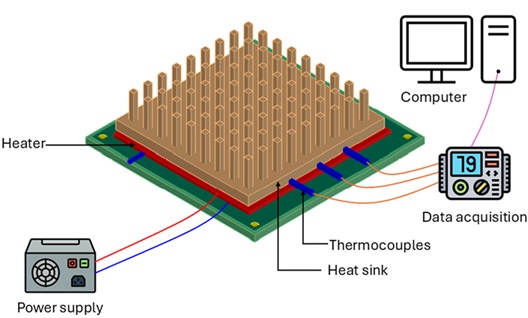
 

Figure 1: Schematic of the experimental facility for heat sink testing.

The experimental set-up used for evaluating the heat sink performance consists of a DC power supply (i.e. Velleman LABPS3003 30V, 3A), a polyimide-insulated flexible heater (i.e. OMEGA KHLVA-202/40), thermocouples (i.e. K type), a data acquisition system (i.e. NI USB-6210), and a computer for data recording, as shown schematically in Figure 1. A flexible heater is mounted beneath the heat sink, powered by a DC supply to simulate heat generation in microprocessors. Thermocouples are positioned at the heat sink base and calibrated to ASTM E230. A DOWSIL 340 thermal paste layer ensures optimal thermal contact. This enables accurate measurement of the thermal performance of fabricated heat sinks under controlled heat flux conditions.


Session 4: Data analysis and comparison:

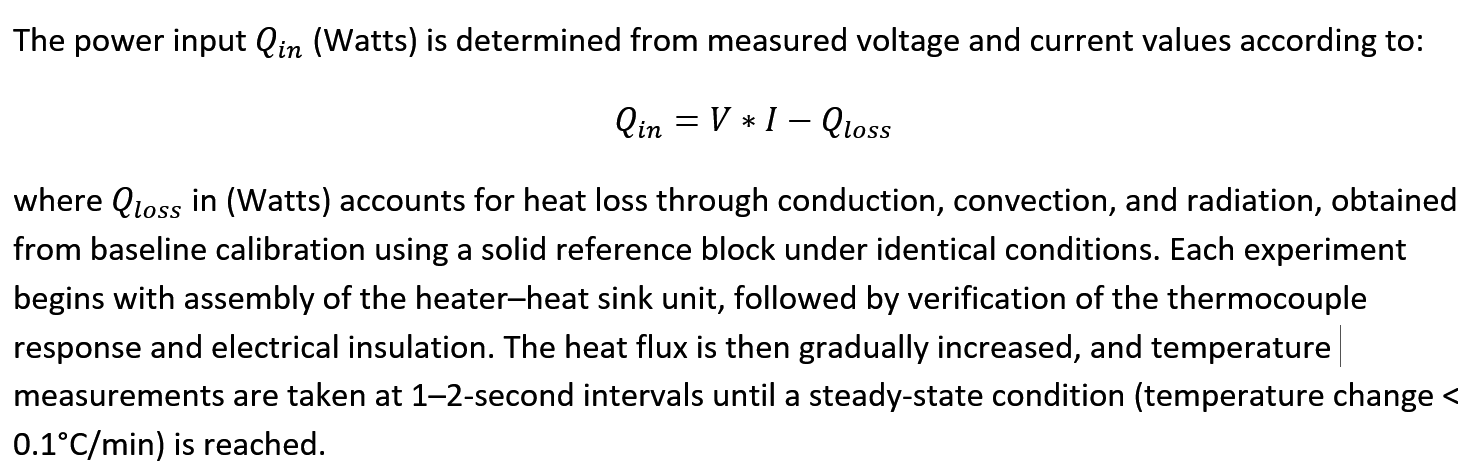
A custom LabVIEW interface is developed to acquire, visualise, and log temperature and power data in real time, thereby providing a digital bridge between the physical test rig and the data analysis environment. Temperature and power data are acquired using LabVIEW with the NI USB-6210 DAQ card.
The evaluation and comparison of thermal performance among heat sink geometries designed by various student groups are conducted by recording the base temperature of each configuration as a function of time under a constant heat flux and identical ambient conditions. The transient temperature response, illustrated in Figure 2 (a), provides insight into the rate at which each design approaches steady state, whereas the steady-state base temperature indicates its overall heat dissipation capability. This procedure can be applied to any heat sink to assess and compare its thermal behaviour.
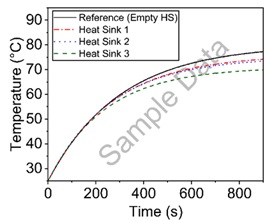
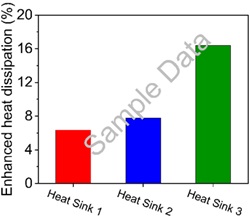
Figure 2: (a) Transient base temperature variation with time for the reference and three heat sink configurations. (b) Enhanced heat dissipation relative to the reference block, illustrating the method used to compare thermal performance across different designs. 

Students compare results and interpret the impact of geometry on heat dissipation. They connect observed variations to systemic dependencies between design, manufacture, and experimental performance.
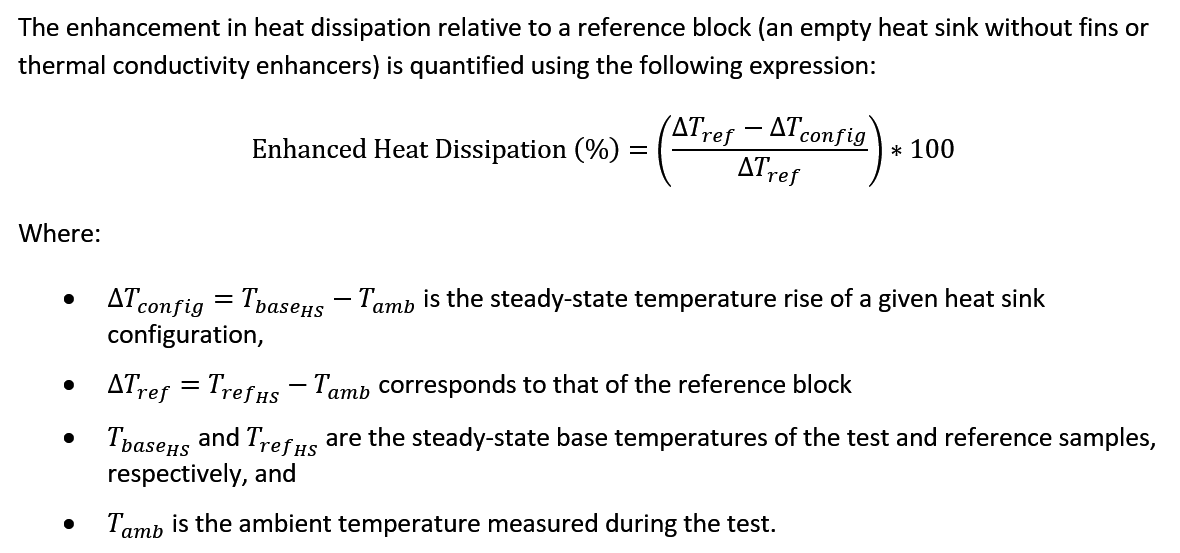
The computed enhancement values, shown in Figure 2 (b) allow direct comparison of heat dissipation efficiency among the different designs. By examining both the temperature–time response and the enhancement ratio, the effect of geometric modification on thermal performance can be quantitatively assessed within a unified experimental framework.

The experimental facility thus forms a closed digital loop connecting design, fabrication, and performance evaluation. The data acquired through LabVIEW and the DAQ system feed back into the design process, enabling iterative optimisation of heat-sink geometry and thermal-management strategies.


Session 5: Reflection:

Teams map out interdependencies between process variables, performance metrics, and uncertainties. They construct feedback diagrams (flowcharts) using Microsoft PowerPoint SmartArt, linking design iterations, measurements, and outcomes to identify emergent system behaviour.


Assessment and reflection:

The assessment can comprise a reflective report and a presentation.

Reports should include:

Presentations should summarise:


Additional image:  Heatsink fabricated using a metal 3D printer. 


Any views, thoughts, and opinions expressed herein are solely that of the author(s) and do not necessarily reflect the views, opinions, policies, or position of the Engineering Professors’ Council or the Toolkit sponsors and supporters.  

Toolkit: Complex Systems Toolkit.

Author: Dr. Rhythima Shinde (KLH Sustainability).

Topic: Applying Cynefin framework for climate resilience.  

Title: Managing floods in urban infrastructure.

Resource type: Teaching – Case study.

Relevant disciplines: Civil engineering; Environmental engineering; General engineering.

Keywords: Systems thinking; Climate change; Sustainability; Risk; Decision-making; Problem-solving; Disaster mitigation.

Licensing: This work is licensed under a Creative Commons Attribution-ShareAlike 4.0 International License. 

Related INCOSE Competencies: Toolkit resources are designed to be applicable to any engineering discipline, but educators might find it useful to understand their alignment to competencies outlined by the International Council on Systems Engineering (INCOSE). The INCOSE Competency Framework provides a set of 37 competencies for Systems Engineering within a tailorable framework that provides guidance for practitioners and stakeholders to identify knowledge, skills, abilities and behaviours crucial to Systems Engineering effectiveness.  A free spreadsheet version of the framework can be downloaded.

This resource relates to the Systems Thinking, Requirements Definition, Communication, Design For, and Critical Thinking INCOSE Competencies. 

AHEP4 mapping: This resource addresses several of the themes from the UK’s Accreditation of Higher Education Programmes fourth edition (AHEP4):  Analytical Tools and Techniques (critical to the ability to model and solve problems), and Integrated / Systems Approach (essential to the solution of broadly-defined problems). In addition, this resource addresses the themes of Sustainability and Communication. 

Educational level: Beginner; intermediate.


Acknowledgement

The case study underpinning this teaching activity was developed by Prof. Kristen MacAskill (University of Cambridge). The Module was first developed and implemented in teaching by TEDI- London, led by a team of learning technologists, Ellie Bates, Laurence Chater, Pratishtha Poudel, and academic member, Rhythima Shinde. This work was carried out in collaboration with the Royal Academy of Engineering through its Engineering X programme — a global partnership that supports safer, more sustainable engineering education and practice worldwide. With critical support from Professor Kristen MacAskill and involvement of Ana Andrade and Hazel Ingham, Aisha Seif Salim. This was a collective effort involving many individuals across TEDI-London and RAEng (advisors and reviewers), and while we cannot name everyone here, we are deeply grateful for all the contributions that made this module possible. 


Learning and teaching notes: 

This case study introduces a structured, systems-thinking–based teaching resource. It provides educators with tools and frameworks—such as the Cynefin framework and stakeholder mapping—to analyse and interpret complex socio-technical challenges. By exploring the case of the Queensland, Australia floods, it demonstrates how engineering decisions evolve within interconnected technical and social systems, helping students link theory with practice. 

The Cynefin framework (Nachbagauer, 2021; Snowden, 2002), helps decision-makers distinguish between different types of problem contexts—simple, complicated, complex, chaotic, and disordered. In an engineering context, this framework guides learners to recognise when traditional linear methods work (for simple or complicated problems) and when adaptive, experimental approaches are required (for complex or chaotic systems). 

Within this teaching activity, Cynefin is used to help students understand how resilience strategies evolve when facing uncertainty, incomplete information, and changing stakeholder dynamics. By mapping case study events to the Cynefin domains, learners gain a structured way to navigate uncertainty and identify appropriate modes of action. 

This case study activity assumes basic familiarity with systems concepts and builds on this foundation with deeper application to real-world socio-technical challenges.  


Summary of context:

The activity focuses on a case study of 2010–2011 floods in Queensland, Australia, which caused extensive damage to urban infrastructure. The Queensland Reconstruction Authority (QRA) initially directed resources to short-term asset repairs but subsequently shifted towards long-term resilience planning, hazard management, and community-centred approaches. 

The case resonates with global engineering challenges, such as flood, fire, and storm resilience, and can be easily adapted to local contexts. This case therefore connects systems thinking theory directly to engineering and governance decisions, illustrating how frameworks like Cynefin can support engineers in navigating uncertainty across technical and institutional domains. 


Learning objectives:

Aligned with AHEP4 (Engineering Council, 2020) – Outcomes 6, 10, and 16 on systems approaches, sustainability, and risk – this activity emphasises systems thinking, stakeholder engagement, problem definition, and decision-making under uncertainty. 

This teaching activity introduces learners to the principles and practice of systems thinking by embedding a real-world case study into engineering education (Godfrey et al., 2014; Monat et al.,2022). The objectives are to: 


Teachers have the opportunity to: 


Downloads: 


Learning and teaching resources:


Time required: 

The teaching activity is designed for 4–6 hours of structured learning, delivered across three modules: 

1. Context (1–2 hours) 

2. Analysis and insights (1–2 hours) 

3. Discussion and transferable learning (1–2 hours) 


Materials required:

1. Open access online learning platform: Engineering for a complex world

This dedicated platform hosts the interactive modules designed for this teaching activity. Students progress through three modules — Context, Analysis and Insights, and Discussion and Transferable Learning. Each module includes animations, narrative-driven content, scenario prompts, and interactive tasks. The platform ensures flexibility: it can be used in fully online, hybrid, or face-to-face settings. All necessary digital assets (readings, maps, videos, and quizzes) are embedded, so learners have a “one-stop” environment.

2. Case study pack: Queensland Reconstruction Authority flood response

The core teaching narrative is anchored in this Engineering X case study. It documents the evolution of the Queensland Reconstruction Authority (QRA) from a short-term flood recovery body to a long-term resilience institution. This resource provides students with authentic socio-technical detail — including stakeholder conflicts, institutional learning, and systemic barriers — which they then interrogate using systems thinking frameworks.

3. Facilitator’s guide: (Appendix A)

This guide equips educators to deliver the course consistently and effectively. It includes:

4. Timeline touchpoints: (Appendix B)

This resource provides a suggested delivery schedule for facilitators. It maps when live sessions, asynchronous tasks, and group discussions should occur, ensuring students remain engaged over the course. It also indicates where key reflective points and assessments (both formative and summative) can be integrated.

5. Pre- and post-module assessment form: (Appendix C)

This tool evaluates students’ systems thinking learning outcomes. It includes:

The form provides both quantitative data (Likert scales) and qualitative insights (open-ended reflections), enabling robust evaluation of teaching impact. 


Assessment:


Narrative of the case:

Learners are introduced to the case via a fictional guide, “Bernice,” who frames the scenario and supports navigation through the material. Students work through three stages that progressively apply the Cynefin framework and other systems tools to understand how resilience emerges through evolving governance and engineering responses: 

1. Context module: 

2. Analysis & insights module: 

3. Discussion & transfer learning module: 


Interactive learning design:

The teaching activity integrates multiple interactive elements to immerse students in systems thinking: 


Why this approach adds value: 

Although rooted in social-technical interactions, the activity explicitly connects systems thinking to core engineering design competencies—problem framing, stakeholder analysis, and iterative solution development under uncertainty 


Guided questions and activities: 

Facilitators can use these prompts to stimulate inquiry and structured reflection: 


Opportunities for extension: 

In addition to the Queensland floods and Sakura Cove examples, educators may draw parallels with urban heat planning in London, wildfire adaptation in Australia, or storm resilience in the Netherlands. These comparative cases allow learners to generalise systems insights beyond one event or geography. 

The activity is designed to be scalable and adaptable: 

This flexibility allows educators to tailor the activity to their students’ level of expertise, institutional context, and disciplinary focus. 


References:


Any views, thoughts, and opinions expressed herein are solely that of the author(s) and do not necessarily reflect the views, opinions, policies, or position of the Engineering Professors’ Council or the Toolkit sponsors and supporters.  

Toolkit: Complex Systems Toolkit.

Author: Dr. Ewa Ura-Binczyk (Warsaw University of Technology).

Topic: Rail accident investigation and material failure analysis using systems thinking.

Title: Using fault tree analysis in a rail failure investigation.

Resource type: Teaching – Case study.

Relevant disciplines: Mineral, metallurgy & materials engineering; Civil engineering.

Keywords: Public health and safety; Risk; Fault tree analysis; Failure; Ethics; Public trust; Stakeholders; Trade offs; Uncertainty.

Licensing: This work is licensed under a Creative Commons Attribution-ShareAlike 4.0 International License. 

Related INCOSE Competencies: Toolkit resources are designed to be applicable to any engineering discipline, but educators might find it useful to understand their alignment to competencies outlined by the International Council on Systems Engineering (INCOSE). The INCOSE Competency Framework provides a set of 37 competencies for Systems Engineering within a tailorable framework that provides guidance for practitioners and stakeholders to identify knowledge, skills, abilities and behaviours crucial to Systems Engineering effectiveness.   A free spreadsheet version of the framework can be downloaded.

This resource relates to the Systems Thinking, Systems Modelling and Analysis, Ethics and Professionalism, Technical Leadership and Critical Thinking INCOSE Competencies.

AHEP4 mapping: This resource addresses several of the themes from the UK’s Accreditation of Higher Education Programmes fourth edition (AHEP4): Analytical Tools and Techniques (critical to the ability to model and solve problems), and Integrated / Systems Approach (essential to the solution of broadly-defined problems). In addition, this resource addresses AHEP themes of Design, Ethics and Communication. 

Educational level: Intermediate; Advanced.


Learning and teaching notes:

The case is built around 3 × 90-minute sessions and independent report writing. A suggested breakdown of the activities can be seen below. 

Learners have the opportunity to: 

Teachers have the opportunity to: 


Downloads: 


Learning and teaching resources:


Session  Focus  Suggested activities and timing 
1  Introduction and problem framing  20 min: Introduce case scenario and system context; 30 min: Group discussion on initial impressions, key stakeholders, and potential causes; 40 min: Begin Fault Tree Analysis (FTA) construction using initial evidence. 
2  Investigation and analysis  30 min: Continue FTA construction and data evaluation; 30 min: Peer review of other groups’ fault trees; 30 min: Consolidate findings and prepare draft report outline. 
3  Reporting and reflection  30 min: Present findings to a simulated stakeholder panel; 30 min: Discuss feedback and defend conclusions; 30 min: Individual reflection on complexity, uncertainty, and assumptions. 


Summary of the system or context:

Rail transport systems consist of thousands of interdependent components, including rails, fasteners, sleepers, signalling systems, and maintenance processes. Failures in a single component can cascade, affecting: 


Complex system features: 


Narrative of the case:

On a cold January morning, a commuter train was halted after inspectors discovered a fractured rail joint component. Services were disrupted for several hours, stranding thousands of passengers. The media quickly picked up the story, raising questions about safety and reliability. 

The rail operator urgently commissioned an engineering consultancy (the students) to investigate the failure. Their findings will inform both the safety authority’s decision on whether the line can reopen and the legal proceedings to determine liability. 


The dilemma: 

As consultants, students face incomplete evidence: some lab tests are missing, inspection logs are inconsistent, and eyewitness accounts conflict. They must use Fault Tree Analysis (FTA) to map possible causes, evaluate data, and produce an expert opinion report — knowing that their conclusions could influence legal outcomes and public safety decisions. 

Groups: 3–5 students per group; 3-4 groups can run in parallel. 

Materials required: case narrative handouts, sample inspection log, example FTA, whiteboards/flipcharts, sticky notes for FTA mapping. 

Activity flow: 

1. Introduce case and assign roles. 

2. Construct initial fault trees using evidence. 

3. Peer-review across groups. 

4. Draft expert report and present to simulated stakeholder panel. 

5. Individual reflection on complexity and uncertainty. 


Why use Fault Tree Analysis (FTA):

FTA is a structured approach to trace a failure from an observed event back to potential causes, including technical, human, and organisational factors. 

FTA is particularly suitable for this case because it allows students to structure complex, uncertain information in a logical and transparent way. It helps them trace the chain of causes behind the rail component failure, linking material, human, and organisational factors into one coherent framework. By visualising how small events combine into system-level failures, FTA encourages learners to think critically about interdependencies, data gaps, and assumptions. It also mirrors real-world engineering investigations, where professionals must justify conclusions under uncertainty and demonstrate clear reasoning to stakeholders such as regulators or courts. 

Advantages in this case: 


Questions and activities: 

Prompt  Expected insight / reflection 
What technical, human, and organisational factors might have contributed to this failure?  Students identify multiple interacting factors, illustrating interdependencies and emergent risks. 
How does Fault Tree Analysis help structure uncertainty in this investigation?  Learners recognise FTA’s role in visualising cause-effect pathways and clarifying assumptions. 
Which assumptions are you forced to make, and how might they affect your conclusions?  Students reflect on data gaps, biased observations, and ethical implications of assumptions. 
How do different stakeholders’ interests shape urgency and framing of your analysis?  Learners understand trade-offs, pressures from conflicting priorities, and the precautionary principle. 
What are the risks of issuing a preliminary report under time pressure?  Students explore implications for safety, liability, professional integrity, and public trust. 


Activity  Focus  What “good practice” looks like  Facilitator notes / tips 
1. FTA construction  Collaborative problem analysis  Teams discuss evidence openly, question assumptions, and co-create a logical tree linking technical, human, and organisational causes.   Encourage each group to identify at least one “human/organisational” branch and to label any data gaps explicitly. 
2. Peer review  Critical reflection and systems perspective  Groups provide constructive critique, highlighting hidden assumptions, missing branches, or unclear logic. Dialogue stays professional and evidence-based.  Provide coloured sticky notes or digital comments to record feedback; model how to frame critique as questions (“Have you considered…?”). 
3. Report writing (in-class drafting)  Synthesis and professional communication  Drafts show a clear, defensible reasoning chain from evidence to conclusion. Teams justify assumptions and note uncertainties.  Remind students to separate “facts” from “interpretations.” Encourage use of structured headings (Findings – Analysis – Conclusions). 
4. Simulation role-Play  Perspective-taking and communication under pressure  Presentations are concise (≤5 min), factual, and adapted to stakeholder roles. Learners respond respectfully and clearly to challenging questions.  Provide role cards for the panel (operator, regulator, manufacturer, public). Rotate students if possible. 
5. Reflection  Metacognition and learning from uncertainty  Students identify what surprised them, what they found ambiguous, and how their view of engineering judgment evolved.  Offer prompts like “What would you do differently next time?” or “Where did your reasoning feel uncertain?” 


Further challenge:

Instructors may choose to introduce a second “reveal” phase: a new metallurgical test result or a whistle-blower statement emerges halfway through the case. Students must revise their fault tree and defend whether and how their conclusions change. This highlights the evolving nature of complex systems investigations. 


Assessment opportunities:


Any views, thoughts, and opinions expressed herein are solely that of the author(s) and do not necessarily reflect the views, opinions, policies, or position of the Engineering Professors’ Council or the Toolkit sponsors and supporters.  


Toolkit: Complex Systems Toolkit.

Author: Dr. Rebecca Margetts (Nottingham Trent University).

Topic: The importance of teaching and learning about complex systems.

Title: The real world is a complex system.

Resource type: Knowledge article.

Relevant disciplines: Any.

Keywords: Problem solving; Feedback loops; Decision-making; VUCA; Optimisation; Public health and safety; Risk; Sustainability; Ethics; Responsible design; Life cycle; Societal impact; Enterprise and innovation.

Licensing: This work is licensed under a Creative Commons Attribution-ShareAlike 4.0 International License. 

Downloads: 

Learning and teaching resources:

Who is this article for?: This article should be read by educators at all levels in higher education who are seeking an overall perspective on teaching approaches for integrating complex systems in engineering education. 

Related INCOSE Competencies: Toolkit resources are designed to be applicable to any engineering discipline, but educators might find it useful to understand their alignment to competencies outlined by the International Council on Systems Engineering (INCOSE). The INCOSE Competency Framework provides a set of 37 competencies for Systems Engineering within a tailorable framework that provides guidance for practitioners and stakeholders to identify knowledge, skills, abilities and behaviours crucial to Systems Engineering effectiveness. A free spreadsheet version of the framework can be downloaded.

This resource relates to the Systems Thinking and Critical Thinking INCOSE competencies.

AHEP mapping: This resource addresses several of the themes from the UK’s Accreditation of Higher Education Programmes fourth edition (AHEP4):  Analytical Tools and Techniques (critical to the ability to model and solve problems), and Integrated / Systems Approach (essential to the solution of broadly-defined problems). 


Premise: 

We live in a complex world. Complexity is a key challenge, captured in leadership terms by the VUCA framework: volatile, uncertain, complex and ambiguous (Lanucha 2024). Engineers have the privilege of creating products and processes for humans to use in this landscape. Each of these likely has numerous parts which interact, as well as interacting with the environment, people, and needing to meet a host of safety, quality, sustainability, ethics, and financial obligations. Traditionally, engineers analyse problems by breaking them down into simple parts. This helps understanding and makes calculations feasible, but it’s easy to lose understanding of the whole system. Any change can easily create a problem elsewhere. From a technical viewpoint, engineers need to understand this interconnectedness in order for their creations to work. In a wider sense, ‘systems thinking’ is a skill central to engineering quality and management techniques, which seek to rationalise the complexity of entire organisations and their ever-changing market pressures.  


The case for understanding systems: 

Systems is perhaps one of the most misunderstood words in engineering. It is often found combined with mathematical modelling or control – topics often perceived as challenging – and is used in other fields like Computer Science, where tools and models are different. In all cases, the idea revolves around a group of interacting or interrelated elements which form a unified whole. Those elements can be physical or information, hardware or software, or any combination of mechanical, electrical, and other engineering domains. Thinking in terms of systems can therefore be thought of as a holistic approach.  

The Engineering Council UK’s AHEP criteria include a systems approach: C/M6 – “Apply an integrated or systems approach to the solution of complex problems.” Several other AHEP criteria also reference complexity and complex problems, which they define as having “no obvious solution and may involve wide-ranging or conflicting technical issues and/or user needs that can be addressed through creativity and the resourceful application of engineering science. The Systems Thinking Alliance (2025) gives a broader definition of complexity as referring to “the condition of systems, objects, phenomena, or concepts that are challenging to understand, explain, or manage due to their intricate and interconnected nature. It involves multiple elements or factors that interact in unpredictable ways, often requiring significant information, time, or coordinated efforts to address.” For these, there is no ‘one-size-fits-all solution’ (Ellis 2025). This is the reality that engineers need to manage by understanding the potential effects on all parts of the system. 

In order to analyse, engineers dissect complexity into manageable components, and educators teach these simple components before moving onto more complex systems. For example, students initially learn basic electrical components, simple beams, rigid bodies, etc. before bringing these together in case studies, and then moving onto topics like mechatronic systems. Historically, engineers specialised on graduation, perhaps becoming a stress engineer or fluid dynamicist in dedicated offices and functional teams.  A design decision by one team could have unintended consequences for another, as well as additional uncertainty. The advent of cross-functional project and ‘matrix’ organisations mitigated against this, and companies have moved towards attribute teams which can consider the balance of behaviour. Even so, some uncertainty remains in the form of assumptions in calculations, changes in material properties with temperature or stress, or small variations in composition and manufacturing tolerances, which can all accumulate. Any parts which are bought ‘off-the-shelf’ or made by other companies under license must be carefully specified. Relationships can be nonlinear – or even chaotic – and contain feedback loops which can amplify changes (Kastens et al 2009). This all increases the risk of a product’s comfort, performance, and safety being impacted in ways that weren’t anticipated. Any problem that doesn’t come to light until the testing phase – late in the design process – represents costly redesigns and delays. In the unlikely event that a problem isn’t captured during testing either, the outcome could be disastrous. 

Systems engineers will bring the product together and establish these complex behaviours through models and testing. Identifying potential problems early in the design phase can save significant money and facilitate better designs. This can be challenging, especially for systems using novel materials or operating in extreme environments, which aren’t accurately captured by standard calculations. Models may be linearised, neglect external forcing, or be derived for an assumed air density or ambient temperature which may not be valid. In recent decades, the engineering industry has moved towards model-based design and virtual prototyping, facilitated by advances in computer tools. These are increasingly sophisticated, but models still need to be built by engineers with an appreciation of complexity and the mechanisms by which a problem could arise. As humans develop new materials and technologies, and explore the limits of what is possible, engineering techniques and calculations need constant revision, and software tools are frequently updated to facilitate this.  

That holistic view of problems has benefits outside of designing engineering artefacts. The manufacturing process is itself a complex system with potentially long supply chains. As is the organisation, which is comprised of numerous people operating in a landscape of financial pressures, employment law, politics and culture. Quality guru William Deming’s 14 Points for Management (Deming 2018) can be viewed as a systems approach to handling this complexity, by breaking down barriers between departments and instigating continuous improvement. Once a product is produced, it exists in a wider world and continues to interact with it. From a sustainability viewpoint, this can be the user and surrounding community, the environmental impact over a product’s lifecycle, and the financial markets which dictate whether a product is viable. It can also be the social, political, and legal landscapes: these can place direct constraints in the forms of laws governing safety and emissions (such as the UK’s legally binding target of net zero by 2050), or through embargos, tariffs, and subsidies. Each country has its own regulations, which can necessitate multiple variations of a product: a good example is cars, which need to be produced in both left- and right-hand drive, satisfy varying safety and emissions regulations, and cater for differing personal and cultural preferences for size, noise, usage and driving styles. Even when not legislated, a company might choose to support fair trade, lead the way in sustainable practices, or refuse to do business with suppliers or regimes they find objectionable – potentially making this a key part of their brand.  

An engineer’s ability to appreciate and understand the wider social and business landscape is a reason why finance and management consultancy companies can often be seen recruiting engineers at student careers fairs. The Sainsbury Management Fellowship (SMF) scheme notably develops UK engineers as industry leaders, and fellows have made a major contribution to the UK’s economic prosperity (RAEng 2025). 


Conclusions:

Complex systems are the “real world” that engineers attempt to understand and design for. They are complicated, interconnected, changing, and uncertain. The well-known part of engineering is analysis: breaking systems into understandable parts. There needs to be a parallel operation where those parts are assembled or integrated into a whole, and that whole interacts with everything around it. This is where unforeseen problems can occur. Systems models and a holistic systems thinking approach can mitigate this risk. A systems approach and ability to manage complexity is a key skill for engineers, and positions them well for other fields like management.   


References:


Any views, thoughts, and opinions expressed herein are solely that of the author(s) and do not necessarily reflect the views, opinions, policies, or position of the Engineering Professors’ Council or the Toolkit sponsors and supporters.  

Let us know what you think of our website