Authors: Dr. Jude Bramton (University of Bristol); Elizabeth Robertson (University of Strathclyde); Sarah Jayne Hitt, Ph.D. SFHEA (NMITE, Edinburgh Napier University).
Keywords: Collaboration; Pedagogy.
Who is this article for?: This article should be read by educators at all levels in higher education who wish to integrate ethics into the engineering and design curriculum or module design.
How to organise class sessions:
Engineering educators can find a wealth of ethics case studies in the Engineering Ethics Toolkit. Each one focuses on different disciplines, different areas of ethics learning, and different professional situations, meaning there is almost certainly a case study that could be embedded in one of your classes.
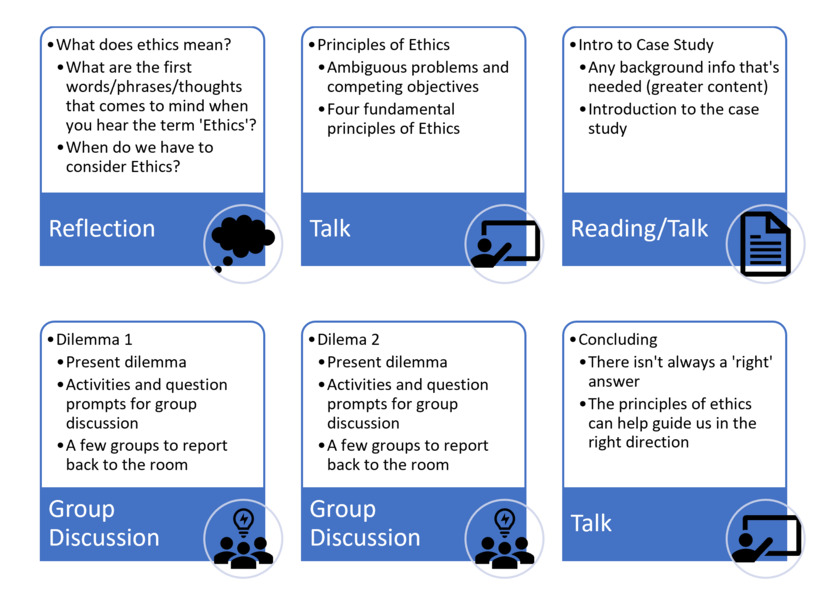
Even so, it can be difficult to know how to organise the delivery of the session. Fortunately, Toolkit contributors Jude Bramton of the University of Bristol and Elizabeth Robertson of the University of Strathclyde have put together diagrams that demonstrate their approaches. These processes can act as helpful guides for you as you integrate an Ethics case study in one of your engineering class sessions.
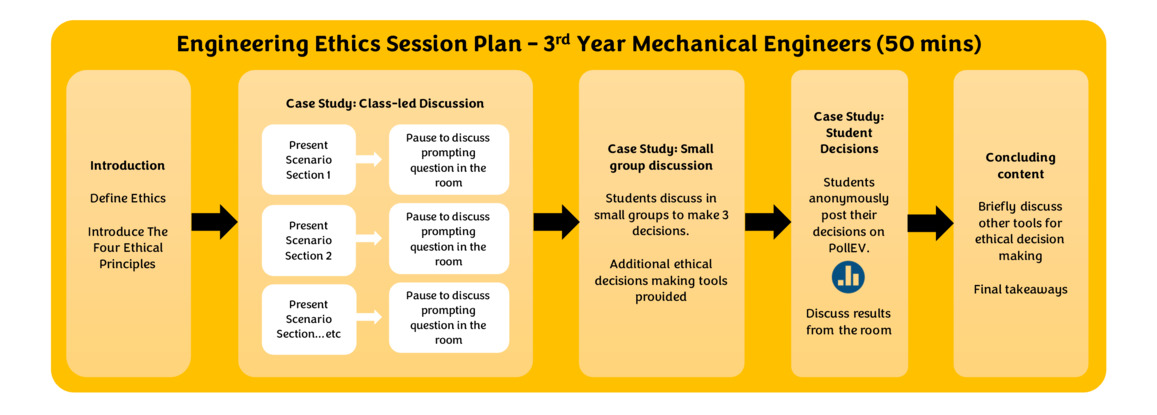
Jude Bramton’s class session organisation looks like this:
Any views, thoughts, and opinions expressed herein are solely that of the author(s) and do not necessarily reflect the views, opinions, policies, or position of the Engineering Professors’ Council or the Toolkit sponsors and supporters.
The Engineering Ethics Toolkit is a suite of interactive resources, guidance and teaching materials that enables educators to easily introduce ethics into the education of every engineer. We would like to ensure that all universities with Engineering departments are aware of the toolkit and able to make use of it.
To this end, we’ve produced a pack of resources that can be distributed to relevant departments and staff members such as Engineering department heads, staff and administrators, as well as Vice-Chancellors, Deans, and anyone else who may find our resource useful in teaching or curriculum development.
We would be very grateful if you could share these resources, and encourage you to explore and use them in your teaching.
Our pack of resources to help you present and promote the Engineering Ethics Toolkit contains the following files, and can be downloaded individually below, or as a pack from here.
Any views, thoughts, and opinions expressed herein are solely that of the author(s) and do not necessarily reflect the views, opinions, policies, or position of the Engineering Professors’ Council or the Toolkit sponsors and supporters.
The Ethics Explorer is an interactive tool that was built to help engineering educators navigate the landscape of engineering ethics education. It is the newest resource in the Engineering Ethics Toolkit.
Whether you’re an ethics veteran or brand new to teaching ethics within engineering, the Ethics Explorer allows you to find your own path through what can sometimes seem like a wilderness.
Choose a path depending on what you want to do. Improve your own ethics learning? Plan for ethics learning? Integrate or assess an ethics activity? Each path leads you through content such as learning outcomes, graduate attributes, and accreditation criteria, while also pointing you to supporting activities and resources linked to the content.
The Ethics Explorer replaces the static engineering ethics curriculum map published in 2015, although there is also a printable version available in PDF form, that summarises content from the interactive Explorer.
The content in the Ethics Explorer is subject to changes in context and should be customised to suit the various forms that
an engineering degree can take. It is intended as a non-prescriptive resource – as a way of suggesting to educators how ethics might comprise a distinct theme in an engineering undergraduate degree. This version of the Ethics Explorer is focused on the UK higher education context, but it may be adapted for use in other countries.
The Ethics Explorer is a free to use resource, accessible to all. Start exploring here.
Have you used the Ethics Explorer? Tell us about your experience – what you loved, what is missing, and what could be improved.
Dr. Jude Bramton of the University of Bristol discusses her first-hand experience of using the Engineering Ethics Toolkit and what lessons she learnt.
Starting off
Let me set the scene. It’s a cold January morning after the winter break and I need to prepare some Engineering Ethics content for our third year Mechanical Engineers. The students have never been taught this topic, and I have never taught it.
I’m apprehensive – many of our students are fantastic engineering scientists/mathematicians and I’m not sure how they will engage with a subject that is more discussive and, unlike their more technical subjects, a subject with no single correct answer.
Nonetheless, my task is to design a 50-minute session for ca. 180 undergraduate Mechanical Engineers to introduce the concept of Engineering Ethics and start to build this thinking into their engineering mindset. The session will be in a flatbed teaching space, where students will be sitting in groups they have been working in for a number of weeks.
For a bit more context, the content is assessed eventually as part of a group coursework where students assess the ethical implications of a specific design concept they have come up with.
Designing the session with the help of the Toolkit
From doing a little bit of research online, I came across the Engineering Ethics Toolkit from the EPC – and I was so grateful.
I started off by reviewing all 8 case studies available at the time, and reading them in the context of my session. I picked one that I felt was most appropriate for the level and the subject matter and chose the Solar Panels in a Desert Oil Field case study.
I used the case study in a way that worked for me – that’s the beauty of this resource, you can make it what you want.
I put my session together using the case study as the basis, and including the Engineering Council’s principles of Engineering Ethics and some hand-picked tools from some of Toolkit’s guidance articles – for example, I used the 7-step guide to ethical decision making.
I used the text directly from the case study to make my slides. I introduced the scenario in parts, as recommended, and took questions/thoughts verbally from the students as we went. The students then had access to all of the scenario text on paper, and had 15-20 minutes to agree three decisions on the ethical dilemmas presented in the scenario. Students then had to post their group’s answers on PollEverywhere.
The overall session structure looked like this:
How did it go?
When I ran the session, one key component was ensuring I set my expectations for student participation and tolerance at the start of the session. I openly told students that, if they feel comfortable, they will need to be vocal and participative in the session to get the most from it. I literally asked them – “Is that something we think we can do?” – I got nods around the room (so far, so good).
Overall, the session went better than I could have expected. In fact, I think it was the most hands up I have ever had during a class. Not only did we hear from students who hadn’t openly contributed to class discussion before, but I had to actively stop taking points to keep to time. It made me wonder whether this topic, being presented as one with no wrong or right answers, enabled more students to feel comfortable contributing to a large class discussion. Students were very tolerant of each others’ ideas, and we encouraged differences of opinion.
For the small group discussions, I left a slide up with the three ethical dilemmas and the 7-step guide to ethical decision making as a prompt for those that needed it. During the small group discussions, I and supporting teaching staff wandered around the room observing, listening and helping to facilitate discussion, although this was rarely needed as engagement was fantastic. The small group sessions also allowed opportunities for contribution from those students who perhaps felt less comfortable raising points in the wider class discussion.
To my delight, the room was split on many decisions, allowing us to discuss all aspects of the dilemmas when we came to summarise as a larger class. I even observed one group being so split they were playing rock-paper-scissors to make their decision – not quite the ethical decision making tool we might advertise, but representative of the dilemma and engagement of students nonetheless!
Student feedback
I asked our Student Cohort Representative to gather some informal feedback from students who attended the session. Overall, the response was overwhelmingly positive, here are a few snippets:
“It was the best lecture I’ve had since I’ve been here.”
“The most interesting session, had me engaged.”
“It was the first time learning about the connections between engineering and ethics and it was really useful.”
“I enjoyed the participation and inclusion with the students during the lesson. It has favoured the growth of personal opinions and a greater clarity of the subject and its points of view. Furthermore, the addition of real-life examples gave more depth to the topic, facilitating listening and learning.”
“The session was very engaging and I liked the use of examples… This whole unit has showed me how there are more aspects of engineering to consider apart from just designing something. Engineers must always think of ethics and I believe this session has demonstrated that well.”
And finally, when asked “What was your overall impression of the session?” a student replied “Interesting and curious.” – what more could you ask for?
It was such a pleasant surprise to me that not only did students engage in the session, but they actively enjoyed the topic.
I’ve run it once, how would I improve it?
One thing I would do differently next time would be to allow even more time for discussion if at all possible. As discussed, I had to stop and move on, despite the engagement in the room at certain points.
I also reflect how it might have gone if the students weren’t as engaged at the start. If you have other teaching staff in the room, you can use them to demonstrate that it’s ok to have differences of opinion. A colleague and I openly disagreed with each other on a topic, and demonstrated that this was ok. Additionally, if larger class engagement doesn’t work for you, you could also go straight to the small group discussion.
In summary (and top tips!)
I now feel very comfortable, and excited, to be teaching engineering ethics. It has now also catalysed more content to be created to embed this theme further in our programme – so it doesn’t just become that “one off” lecture. However, I think providing specific time on this subject was very beneficial for the students, it gave them time and space to reflect on such a complex topic.
My takeaways and recommendations from this experience have been:
Don’t be worried about the engagement – students will enjoy it and find it interesting.
Set the expectations for participation and tolerance at the beginning, encouraging that there are no right or wrong answers.
Use the Toolkit as you need it for your context – don’t be afraid to take only snippets from certain parts and make something your own.
Use PollEV or similar to involve the whole cohort and demonstrate the overall difference of opinion in the room
Give a good amount of time for discussion in small groups as well as in the larger class.
All in all, I would recommend the resources on the Engineering Ethics Toolkit to anyone. They can be easily adapted to your own contexts and there is a plethora of resources and knowledge that are proven to engage students and get them thinking ethically.
You can find out more about getting involved or contributing to the Engineering Ethics Toolkit here.
Any views, thoughts, and opinions expressed herein are solely that of the author(s) and do not necessarily reflect the views, opinions, policies, or position of the Engineering Professors’ Council or the Toolkit sponsors and supporters.
In this blog, Dr Matthew Studley, Associate Professor of Technology Ethics at UWE, looks at using case studies from the Engineering Ethics Toolkit to engage students.
Over the last two years, I have been part of the team that created the Engineering Ethics Toolkit for the Engineering Professors Council and the Royal Academy of Engineering. The toolkit is based around case studies, which let students flex their ethical muscles on problems concerning a variety of applications of technology in different fields, and are structured for delivery with examples of exercises, discussion points, and further reading.
We have integrated ethics teaching into all our programmes in the School of Engineering at UWE, Bristol, and this has given me the chance to build lessons on the case studies. I first delivered a session to around 100 Degree Apprentices from a variety of industrial backgrounds. This was exciting!
We first warmed up by discussing how ‘ethics’ is different from ‘morals’, and I suggested that we could view ethics in some ways as like any engineering process; we’re optimising for moral good, rather than cost, strength, or some other non-functional metric. The big difference of course is that it’s hard to determine moral value – how do we measure it?
We discussed if ideas of good and bad are culturally determined and change with time, and whether there might be any universally accepted definitions. We agreed that it would be hard to argue against a course of action if my opinion holds the same weight as yours. Not only is ‘good’ hard to measure, but we can’t agree what it is. So what’s the answer?
The big revelation. The advantage of applied ethics is that we can call upon an external standard which solves part of this problem for us, defining the behaviours and outcomes which are desirable. The Engineering Council and the Royal Academy of Engineering have created a Statement of Ethical Principles for all engineers, which gives weight to our arguments about moral worth. We now know what ‘good’ is.
I used one of the case studies in the toolkit to frame an open discussion in the lecture theatre, with groups discussing the points suggested by the authors. Although our students were from a variety of backgrounds, it wasn’t a disadvantage to use the same case study for all. Feedback from the module leader suggested that the students found the session enjoyable and engaging (apparently, I should do a regular podcast).
After this pilot we have delivered a similar session on a wider scale by tutors to groups of all our final year students. My colleagues suggested that some students were less engaged. I think we might use some role-play next time; get them moving round the room, get them to use their bodies, get them to own the issues. Ethics should engage the heart!
The great biologist E. O. Wilson said, “The real problem of humanity is the following: We have Palaeolithic emotions, medieval institutions and godlike technology.” With more people, having greater resource needs, and the possibility that AI will accelerate our technological development still faster, it seems to me more important than ever to train engineers who are confident and empowered to make ethical decisions.
If you would like to contribute a resource to the Engineering Ethics Toolkit, you can find out how to get involved here.
Any views, thoughts, and opinions expressed herein are solely that of the author(s) and do not necessarily reflect the views, opinions, policies, or position of the Engineering Professors’ Council or the Toolkit sponsors and supporters.
Authors: Prof Lucy Rogers (RAEng Visiting Professor at Brunel University, London and freelance engineering consultant) and Petra Gratton (Associate Dean of Professional Development and Graduate Outcomes in the College of Engineering, Design and Physical Science at Brunel University London, and Lecturer in the Department of Mechanical and Aerospace Engineering)
Keywords: Industry, Interview, Video, Real Life, Engineers
Abstract: A number of short videos that can be re-used in teaching undergraduate modules in Engineering Business, instead of inviting guest presentations. The interview technique got each individual to talk about their life experiences and topics in engineering business that are often considered mundane (or challenging) for engineers, such as ethics, risks and regulation, project management, innovation, intellectual property, life-cycle assessment, finance and creativity. They also drew attention to their professional development.
Project outcomes
The outcomes of this project are a number of short videos that were used, and can be re-used, in teaching delivery of an undergraduate module in Engineering Business in the Department of Mechanical and Aerospace Engineering at Brunel University London instead of having guest presentations from invited speakers. Lucy’s interview technique got the individuals featured in each film to talk about their life experiences and topics in engineering business that are often considered mundane (or challenging) for engineers, such as ethics, risks and regulation, project management, innovation, intellectual property, life-cycle assessment and finance; and drew attention to their professional development.
The shorter videos were inspirational for students to make videos of themselves as part of the assessment of the module, which required them to carry out a personal professional reflection exercise and report upon what they had learned from the exercise in a simple 90-second video using their smartphone or laptop.
Having used the videos with Brunel students, Lucy has made them available on her YouTube channel: Dr Lucy Rogers – YouTube. Each of the videos are listed in the following table:
We learned that students generally engaged with the videos that were used. Depending which virtual learning environment (VLE) was being used, using pre-recorded videos in synchronous online lectures presents various challenges. To avoid any unplanned glitches, in future we know to use the pre-recorded videos as part of the teaching-delivery preparation (e.g. in a flipped classroom mode).
As part of her legacy, Lucy is going to prepare a set of simple instructions on producing video interviews that can be carried out by both staff and students in future.
Any views, thoughts, and opinions expressed herein are solely that of the author(s) and do not necessarily reflect the views, opinions, policies, or position of the Engineering Professors’ Council or the Toolkit sponsors and supporters.
Abstract: The case study looks at how we use guest lecturers from industry (and academia) at Cranfield University. In the case study we examine why and how module leaders use guest lecturers in their modules. Furthermore, we also cover the student perspective. How do students perceive this form of industry collaboration and what are their expectations from guest lectures? The case study will benefit the EPC community by giving insight and advice on how to include guest lecturers in the curriculum. While many universities use guest lecturers from industry, very little research has been conducted into module leaders’ and students’ experience with guest lectures. The case study provides good practice examples based on students’ and module leaders’ feedback.
Any views, thoughts, and opinions expressed herein are solely that of the author(s) and do not necessarily reflect the views, opinions, policies, or position of the Engineering Professors’ Council or the Toolkit sponsors and supporters.
 The
The 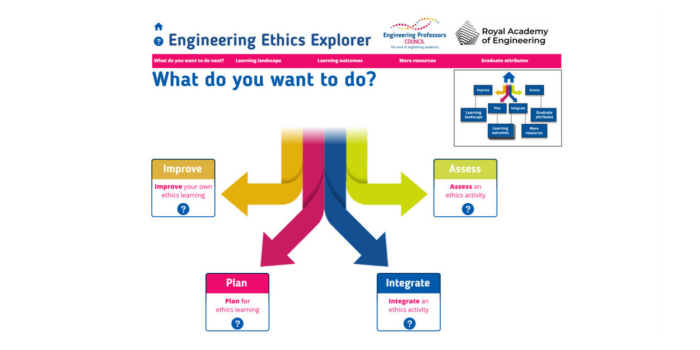
 Theme: