Author: Konstantinos Konstantis (National and Kapodistrian University of Athens). 

Keywords: Ethical theories; Societal impact; Privacy; Freedom; Security; Pedagogy; Risk. 

Who is this article for? This article should be read by educators at all levels in higher education who wish to integrate ethics into the engineering and design curriculum or module design. It will also help prepare students with the integrated skill sets that employers are looking for.  


Premise: 

It goes without saying that the way we design and use technology plays a crucial role in our daily lives. Engineers and their decisions have a huge impact on society (Unger, 2005). Technology is presented as a very promising solution for many societal problems, such as the environmental crisis and poverty. At the same time, many ethical challenges arise. The imminent possibility of artificial intelligence (AI) and robots replacing humans in a vast array of professions, and the everyday cyber-related issues concerning privacy, freedom, property, and security, are just a few of the challenges that the information revolution has bequeathed to us. Furthermore, advances in biomedical technology and, in particular, genetic engineering and developments in reproductive procedures, raise very similar issues including the reconfiguration of the distinction between the artificial and the human. Without a consideration of ethics, engineering could be inadequately or inappropriately designed to address these challenges. 

Walczak et al. (2010) assert that ethical development comes as an output of three components. First, the knowledge of ethics refers to the ability of engineers to understand what is ethical and what is not ethical. In this component belongs the understanding of the professional responsibility of engineers and of codes of ethics for engineers. Second, ethical reasoning refers to the ability of engineers to first understand ethical problems and then to deal with them. Third, ethical behaviour refers to the ethical intentions that engineers have during an ethical problem and ethical solutions that engineers provide to that problem (Walczak et al., 2010). According to Walczak et al. (2010), formal curricular experiences, co-curricular experiences, student characteristics, and institutional culture are four aspects that influence ethical development of engineering students.  

However, there is a disconnection between these four aspects and ethical development. There are five obstacles that are responsible for this disconnection (Walczak et al., 2010, p. 15.749.6). First, “the curriculum is already full, and there is little room for ethics education,” second, “faculty lack adequate training for teaching ethics,” third, “there are too few incentives to incorporate ethics into the curriculum,” fourth, “policies about academic dishonesty are inconsistent,” and fifth, “institutional growth is taxing existing resources.” Among other ways to overcome these obstacles, Walczak et al. (2010, p. 15.749.9 – 15.749.10) recommend the integration of curricular and co-curricular activities. Student organisations and service learning are two examples of how to integrate ethics in engineering education effectively. For instance, student organisations could organise lectures in which engineering students have the chance to listen to engineers talk about real life ethical problems and dilemmas. Secondly, service learning is a way for engineering students to combine ethics education with their engineering practice. Participating in community service activities offers the opportunity for students to understand the role of engineers and their responsibility towards society. Finally, integrating ethics alongside technical curriculum and within the context of engineering projects can help students understand the ethical context of their work.   

This is an important reason for integration, because as van de Poel and Royakkers (2011) describe, ethics helps engineers to deal with technical risks. Martin and Schinzinger (2009) show us how different subfields of engineering, such as computer and environmental engineering, could benefit from the inclusion of ethics. Baura (2006) analyses how engineers could have acted in concrete ethical dilemmas that have been presented in the past, in order not to lead to some of the engineering disasters that have happened. Martin and Schinzinger (1983) highlight engineering as “social experimentation,” requiring the need for the ethical education of engineers in order for them to be ready to take the right decisions in dilemmas they will have to deal with in the future. According to Fledderman (2011), codes of ethics of engineers and an array of ethical theories could be combined to offer ethical problem-solving techniques (for example ‘line drawing’ and ‘flow charts’) to engineers.  

However, ethics should be integrated in engineering for another reason as important as those listed above. Technology not only shapes society, but it is shaped by society too. Therefore, engineering ethics should be twofold. First, engineering ethics should address ‘disaster ethics,’ and second, it should be about “the social aspects of everyday engineering practice” (Kline, 2001, p. 14). Traditionally, engineering accidents become the cause for engineers and engineering ethicists to analyse the ethical implications of technology and the ways that engineers could take decisions that will not lead to disasters again. These examples are called ‘disaster ethics’. The “social aspects of everyday engineering practice” have to do with the fact that technology is not made in a single time when an engineer has to take a serious decision that may cause an accident or not, but rather in daily and regular practice. These aspects are referring to the co-constitution of technology and society and how engineers can “deal with everyday issues of tremendous significance regarding the ethical and social implications of engineering” (Kline, 2001, p. 19).  

The Engineering Council and the Royal Academy of Engineering have published the Statement of Ethical Principles, which should be followed by all engineers in the UK. Statements like this are useful to encourage engineers to act ethically. But, ethics in engineering should be integrated in the whole “engineering life”. From research to implementation, ethics should be part of engineering (Kline, 2001).  

If courses relevant to engineering ethics are absent from the curriculum, engineering students take the message that ethics is not important for their education and therefore for their profession (Unger, 2005). In contrast with the claim that ethics is innate and therefore cannot be taught (Bok, 1976), ethics should be integrated in engineering teaching and practice. The fields of Science and Technology Studies (STS) and History of Technology could play a crucial role in covering the twofold aspect of engineering ethics as presented in this article. Scholars from these fields, among others, could give answers on questions such as “How do engineering practices become common, despite the fact they may be risky?” This is what Vaughan (1997), in her analysis of the Challenger disaster, calls “normalisation of deviance”. This is the only way for engineers to understand the bidirectional relationship between technology and society, and to put aside the dominant ideology of neutral technology that affects and shapes society and doesn’t get affected by it. No matter if engineers want to add ethics into the making of technology, “in choosing a solution, engineers are making an ethical judgement” (Robison, 2014, p.1). 

To conclude, there are many engineering challenges that need to be addressed. Integrating ethics in engineering is one of the best ways to address these challenges for the benefit of the whole of society. This is also the way to overcome problems relevant with the difficulty to add ethics into the engineering curriculum, such as the fact that the engineering curriculum is already full. Ethics has not only to do with the way that technology affects society, but also with the fact that society shapes the way that engineers design and develop technology. If ethics is integrated in engineering education and the curriculum, students perceive that their actions in engineering are not only technical, but at the same time have to do with ethics too. They don’t perceive ethics as a separate ‘tick-box’ that they have to fill during engineering, but instead they perceive ethics as a fundamental part of engineering. 


References: 

Baura, G. D. (2006) Engineering Ethics: An Industrial Perspective. Academic Press. 

Bok, D. C. (1976) ‘Can Ethics Be Taught?’ Change, 8(9), pp. 26–30.  

Fleddermann, C. B. (2011) Engineering Ethics (4th ed.). Pearson. 

Hagendorff, T. (2020) ‘The Ethics of AI Ethics: An Evaluation of Guidelines’, Minds and Machines, 30(1), pp. 99–120.  

Kline, R. R. (2001) ‘Using history and sociology to teach engineering ethics’. IEEE Technology and Society Magazine, 20(4), pp. 13–20.  

Martin, M. W. and Schinzinger, R. (1983) ‘Ethics in engineering’. Philosophy Documentation Center, 2(2), 101–105. 

Martin, M. W. and Schinzinger, R. (2009) Introduction to Engineering Ethics. McGraw-Hill. 

Poel, I. van de, and Royakkers, L. (2011) Ethics, Technology, and Engineering: An Introduction. Wiley-Blackwell. 

Robison, W. L. (2014) ‘Ethics in engineering’, 2014 IEEE International Symposium on Ethics in Science, Technology and Engineering, pp. 1–4.  

Unger, S. H. (2005) ‘How best to inject ethics into an engineering curriculum with a required course’, International Journal of Engineering Education, 21(3), 373–377.  

Vaughan, D. (1997) The Challenger Launch Decision: Risky Technology, Culture, and Deviance at NASA. University of Chicago Press. 

Walczak, K., Finelli, C., Holsapple, M., Sutkus, J., Harding, T., and Carpenter, D. (2010) ‘Institutional obstacles to integrating ethics into the curriculum and strategies for overcoming them’, ASEE Annual Conference & Exposition, pp. 15.749.1-15.749.14.  


This work is licensed under a Creative Commons Attribution-ShareAlike 4.0 International License.

Any views, thoughts, and opinions expressed herein are solely that of the author(s) and do not necessarily reflect the views, opinions, policies, or position of the Engineering Professors’ Council or the Toolkit sponsors and supporters.
Author: Andrew Avent (University of Bath). 

Keywords: Assessment criteria; Pedagogy; Communication.  

Who is this article for? This article should be read by educators at all levels in higher education who wish to integrate ethics into the engineering and design curriculum, or into module design and learning activities. It describes an in-class activity that is appropriate for large sections and can help to provide students with opportunities to practise the communication and critical thinking skills that employers are looking for. 


Premise: 

Encouraging students to engage with the ethical, moral and environmental aspects of engineering in any meaningful way can be a challenge, especially in very large cohorts. In the Mechanical Engineering department at the University of Bath we have developed a debate activity which appears to work very well, minimising the amount of assessment, maximising feedback and engagement, and exposing the students to a wide range of topics and views.  

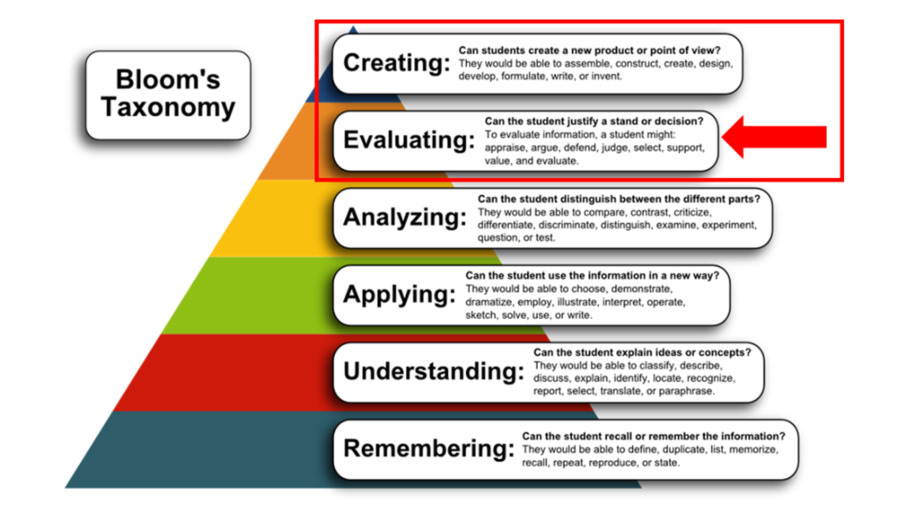
In our case, the debate comes after a very intensive second year design unit and it is couched as a slightly “lighter touch” assignment, ahead of the main summer assessment period. The debate format targets the deeper learning of Bloom’s taxonomy and is the logical point in our programme to challenge students to develop these critical thinking skills.  

Bloom, B. S. (1956). “Taxonomy of Educational Objectives, Handbook I: The Cognitive Domain.” New York: David McKay Co Inc. 

This activity addresses two of the themes from the Accreditation of Higher Education Programmes (AHEP) fourth edition: The Engineer and Society (acknowledging that engineering activity can have a significant societal impact) and Engineering Practice (the practical application of engineering concepts, tools and professional skills). To map this to AHEP outcomes specific to a programme under these themes, access AHEP 4 here and navigate to pages 30-31 and 35-37. 


The debate format: 

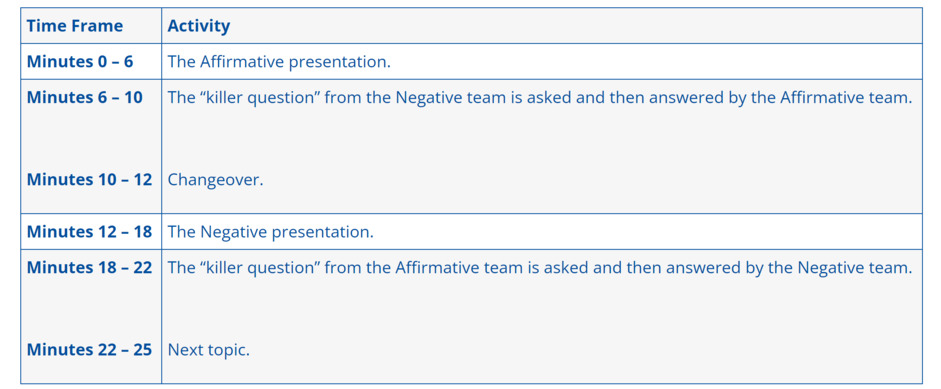
Table 1: Timings for technical feasibility debate. There is plenty of scope to alter these timings
and allow a
healthy debate from the floor and further exploration of the key arguments. 


Some key points to bear in mind: 

The environmental impact of Formula 1 can(not) be justified through improvements to vehicle and other technologies.

For clarity, the term “Affirmative” means they are arguing for the proposal, “Negative” implies they are arguing against the proposal. The Negative argument includes the bracketed word in all cases. 

Equally the team given the “affirmative” position to argue in favour of the sport, needs to be certain of their arguments and to fully research and anticipate any potential killer questions from their opponents. 


Discussion points for improvements: 

We felt that our experience with what has become known as the Technical Feasibility Debate was worth sharing with the wider higher education community, and hope that readers will learn from our experience and implement their own version.  


Acknowledgements: 


Appendices: 

Typical list of debate topics: 

  1. Gas turbines are (not) a dying technology for aircraft propulsion.
  2. Cumbrian super coal mine: there is (no) justification for accessing these fossil fuel reserves.
  3. Metal additive manufacturing, 3D Printing, is (not) a sustainable technology. 
  4. Mining the Moon/asteroids for minerals, helium, etc. should (not) be permitted. 
  5. Electrification of lorries via hydrogen fuel cell technology is (not) preferable to changing the road infrastructure to include overhead power lines (or similar). 
  6. Electrification of road vehicles is (not) preferable to using cleaner fuel alternatives in internal combustion engine cars. 
  7. The use of single use plastic packaging is (not) defensible when weighed up against increases in food waste. 
  8. The environmental impact of Formula 1 can(not) be justified through improvements to vehicle and other technologies. 
  9. Solar technologies should (not) take a larger share of future UK investment compared to wind technologies. 
  10. Tidal turbines will (never) produce more than 10% of the UK’s power. 
  11. Wave energy converters are (never) going to be viable as a clean energy resource. 
  12. Commercial sailing vessels should (not) be used to transport non-perishable goods around the globe. 
  13. We should (not) trust algorithms over humans in safety-critical settings, for example autonomous vehicles. 
  14. Inventing and manufacturing new technologies is (not) more likely to help us address the climate emergency than reverting to less technologically and energy intense practices 
  15. Mechanical Engineering will (not) one day be conducted entirely within the Metaverse, or similar. 
  16. The financial contribution and scientific effort directed towards fundamental physics research, for example particle accelerators, is (not) justified with regard to the practical challenges humanity currently faces. 
  17. A total individual annual carbon footprint quota would (not) be the best way to reduce our carbon emissions. 
  18. The UK power grid will (not) be overwhelmed by the shift to electrification in the next decade. 
  19. We are (not) more innovative than we were in the past – breakthrough innovations are (not) still being made. 
  20. Lean manufacturing and supply chains have (not) been exposed during the pandemic. 


Marking rubric:
 

Criteria  5  4  3  2  1 
1. Organisation and Clarity: 

Main arguments and responses are outlined in a clear and orderly way. 

Exceeds expectations with no suggestions for improvement.  Completely clear and orderly presentation.  Mostly clear and orderly in all parts.  Clear in some parts but not overall.  Unclear and disorganised throughout. 
2. Use of Argument: 

Reasons are given to support the resolution. 

Exceeds expectations with no suggestions for improvement.  Very strong and persuasive arguments given throughout.  Many good arguments given, with only minor problems.  Some decent arguments, but some significant problems.  Few or no real arguments given, or all arguments given had significant problems. 
3. Presentation Style: 

Tone of voice, clarity of expression, precision of arguments all contribute to keeping audience’s attention and persuading them of the team’s case. Neatly presented and engaging slides, making use of images and multimedia content. 

Exceeds expectations with no suggestions for improvement.  All style features were used convincingly.  Most style features were used convincingly.  Few style features were used convincingly.  Very few style features were used, none of them convincingly. 


References: 

Bloom, B. S. (1956). Taxonomy of Educational Objectives, Handbook I: The Cognitive Domain. New York: David McKay Co Inc. 


This work is licensed under a Creative Commons Attribution-ShareAlike 4.0 International License.

Any views, thoughts, and opinions expressed herein are solely that of the author(s) and do not necessarily reflect the views, opinions, policies, or position of the Engineering Professors’ Council or the Toolkit sponsors and supporters.
Author: Professor Manuela Rosa (Algarve University). 

Keywords: Societal impact; Equity; Equality, diversity and inclusion (EDI); Design; Justice; Equity; Communication; Global responsibility. 

Who is this article for?: This article should be read by educators at all levels in higher education who wish to integrate social sustainability, EDI, and ethics into the engineering and design curriculum or module design. It will also help to prepare students with the integrated skill sets that employers are looking for. 


Premise: 

The Declaration on the Rights of Disabled Persons, adopted by the General Assembly of United Nations on 9 December 1975, stipulated protection of the rights of people with disabilities. The United Nations 2030 Agenda for Sustainable Development, a plan of action for people, planet, and prosperity, demands that all stakeholders, acting in collaborative partnership, must recognise that the dignity of the human person is fundamental and so the development of the 17 Sustainable Development Goals must meet all segments of society in a way that “no one will be left behind”.  

In relation to engineering, the Statement of Ethical Principles published by the Engineering Council and the Royal Academy of Engineering in 2005 and revised in 2017, articulates one of its strategic challenges to be positioning engineering at the heart of society, enhancing its wellbeing, improving the quality of the built environment, and promoting EDI. To uphold these principles, engineering professionals are required to promote social equity, guaranteeing equal opportunities to access the built environment and transportation systems, enabling the active participation of all citizens in society, including vulnerable groups. The universal design approach is one method that engineers can use to ensure social sustainability. 


The challenges of universal and inclusive design: 

Every citizen must have the same equality of opportunities in using spaces because the existence of an accessible built environment is fundamental to guarantee vitality, safety, and sociability. These ethical values associated with the technical decision-making process were considered by the American architect Ronald Lawrence Mace (1941-1998) who defined the universal design concept as “designing all products, buildings and exterior spaces to be usable by all people to the greatest extent possible” (Mace et al., 1991), thus contributing to social inclusion.  

Universal accessibility according to this universal design approach is “the characteristic of an environment or object which enables everybody to enter into a relationship with, and make use of, that object or environment in a friendly, respectful and safe way” (Aragall et al., 2003). It focuses on people with reduced mobility, such as people with disabilities (mobility, vision, hearing and cognitive dimensions), children and elderly people. Built environment and transport systems must be designed considering this equity attribute which is associated with social sustainability and inclusion. 

The Center for Universal Design of the North Carolina State University developed seven principles of universal design (Connell et al., 1997):  

1. Equitable use 

2. Flexibility in use  

3. Simple and intuitive use  

4. Perceptible information  

5. Tolerance for error  

6. Low physical effort  

7. Size and space for approach and use.    

These principles must always be incorporated in the conception of products and physical environments, so as to create a ‘fair built’ environment, where all have the right to use it, in the same independent and natural way. This justice design must guarantee autonomy in the use of spaces and transport vehicles, contributing to the self-determination of citizens.   

The perceptions of the space users are fundamental to be considered in the design process to achieve the usability of the built environment and transport systems. Pedestrian infrastructure design and modal interfaces demand user-centred approaches and therefore processes of co-design and co-creation with communities, where people are effectively involved as collaborators and participants. 

Achieving an inclusive society is a great challenge because there are situations where the needs of users are divergent: technical solutions created for a specific group of people are inadequate for others. For example, wheelchair users and elderly people need smooth surfaces and, on the contrary, blind people need tactile surfaces.  

Consequently, in the process of universal design, some people can feel excluded because they need other technical solutions. It is then necessary to consider precise inclusive design when projecting urban spaces for all.   

Universal design is linked with designing one-space-suits-almost-all, and inclusive design focuses on one-space-suits-one, for example design a space for everyone (collective perspective) versus design a space for one specific group (particular perspective). As the built environment must be understandable to and usable by all people, both are important for social sustainability. Universal design contributes to social inclusion, but added inclusive design is needed, matching the excluded users to the object or space design.  

In order to promote social inclusion and quality of life, to which everyone is entitled, universal and inclusive co-design of the built environment and the transportation systems demands specific approaches that have to be integrated in engineering education: 


Conclusion: 

Universal and inclusive co-design of the built environment and transportation systems must be seen as an ethical act in engineering. Co-design for social sustainability can be strengthened through engineering acts. Ethical responsibility must be assumed to create inclusive solutions considering human diversity, empowering engineers to act and design justice.  

There is a strong need for engineers to possess a set of skills and competencies related to the ability to work with other professionals (for example from the social sciences),  users, or collaborators. In the 21st century, beyond the use of technical knowledge to solve problems, engineers need communication skills to achieve the sustainable development goals, requiring networking, cooperating in teams, and working with communities.  

Engineering education must consider transdisciplinary approaches which make clear progress in tackling urban challenges and finding human-centred solutions. Universal and inclusive co-design must be incorporated routinely into the practice of engineers and assumed in Engineering Ethics Codes.  


References: 

Aragall, F. and EuCAN members, (2003) European Concept for Accessibility: Technical Assistance Manual. Luxemburg: EuCAN – European Concept for Accessibility Network.  

Connell, B. R., Jones, M., Mace, R., Mueller, J., Mullick, A., Ostroff, E., Sanford, J., Steinfeld, E., Story, M. and Vanderheiden, G. (1997) The Principles of Universal Design, Version 2.0. Raleigh: North Carolina State University, The Center for Universal Design. USA.  

Mace, R. L., Hardie G. J. and Place, J. P. (1991) ‘Accessible environments: Toward universal design,’ in W.E. Preiser, J.C. Vischer, E.T. White (Eds.). Design Intervention: Toward a More Human Architecture. New York: Van Nostrand Reinhold, pp. 155-180.  

Declaration on the Rights of Disabled Persons. (1975). Proclaimed by G/A/RES 3447 of 9 December 1975. 

United Nations. (2015). Transforming Our World: The 2030 Agenda for Sustainable Development. Resolution adopted by the United Nations General Assembly on 25 September 2015, New York.  

Additional resources: 


This work is licensed under a Creative Commons Attribution-ShareAlike 4.0 International License.

Any views, thoughts, and opinions expressed herein are solely that of the author(s) and do not necessarily reflect the views, opinions, policies, or position of the Engineering Professors’ Council or the Toolkit sponsors and supporters.

Author: Dr Gill Lacey (Teesside University). 

Keywords: Pedagogy; Societal impact; Personal ethics; Research ethics. 

Who is this article for?: This article should be read by educators at all levels in higher education who wish to integrate ethics into the engineering and design curriculum or module design. It will also help prepare students with the integrated skill sets that employers are looking for.  


Premise: 

Ethics is defined in many ways but is generally agreed to be a set of moral (right or wrong) principles that govern social behaviour. While this is not the place for a discussion of ethical philosophies and theories that analyse what we mean by “moral”, or how we define social behaviour, it is pertinent to consider the nature of engineering ethics so that we understand why it should be integrated into modules. Davis gives us a rather pared down explanation: “Integrating ethics into science and engineering courses is largely a matter of providing context for what is already being taught, context that also makes the material already being taught seem ‘more relevant,’” (Davis, 2006).  

Despite this, very often ethics is considered as an afterthought – sometimes it only comes up when a solution to a technical problem results in unintended consequences. Rather, we need our students to look at any technical solution through an ethical lens – as well as through an economic one. This generally involves considering what effect any technical project might have on society, especially on those who use that technology. Teaching students to consider the technology through an ethical lens makes them true engineers, not just technicians. And as Davis implies, relevance provides motivation. 


Some principles for integrating ethics:

Consideration needs to be given to improving our students’ ethical learning throughout their course/programme (Hess and Fore, 2018). We argue that ethics can and should be embedded into most modules in a natural way, giving as much or as little time to it as necessary. A planned progression should be aimed for throughout the course, and the Ethics Explorer in this Toolkit provides suggestions as to how this can be accomplished. A more sophisticated understanding will be arrived at over time by exposing them to more and more complex cases where the outcome is not obvious. A graduate engineer should be able to give a considered response to an employer’s question about an ethical position during an interview.  

Other principles for integrating ethics include:  

1. State your assumptions and moral position at the start of a course/module 

This is not the same as taking a moral stance. Some moral issues can be universally agreed, but not all, so we need an approach to morally disputed issues.  We must be clear about the ethical framework in which the course is being taught. An ethically neutral engineering course is neither advisable nor possible. 

For instance, it needs to be baldly stated that climate change is real, that all the modules in the course make that assumption, and low carbon solutions are the only ones that will be considered. Some students will be challenged by that. This is a case of stating the moral position of the course and asking the students how they are going to ‘be’ with that position, because it will not be argued for (Broadbent, 2019).  

Many lecturers start a module with an “expectations” list, especially with new students; it could be argued this is a first exposure to engineering ethics as it relates to social and professional behaviour in the teaching space. There is no room for discussion or reflection here; this is a statement of how things are going to be in this community. Sharing accepted moral values is assumed here. 

There are general standards of behaviour to which everyone is expected to conform around respect and disagreeing constructively; there is a professional standard to which we can conform. The advantage of doing this is that it provides certainty and weight to our judgement in report writing as well as practice in professional ethical conduct in the workplace. 

2. Provide resources 

A survey regarding the teaching of ethics showed agreement between the students that provision of resources, such as case studies and examples, were needed to allow ethics to be considered. They want guidance and access to receiving ethical approval for projects or research, and an opportunity for reflection on personal ethics and how these relate to professional attitudes or projects (Covill et al., 2010). Examples include: 

3. Allow for opportunity to reflect 

This can be achieved by requiring a reflection in every level of an engineering degree. It could be part of an assessment at the end of a project or module in the form of a short, written reflection. It could be approached by asking the student in an interview to consider the ethics of a situation and the interviewer can then challenge the student on their journey to become ethically literate.  

Finally, for advice on assessing ethics in an engineering module, see this guidance article. 


References: 

Broadbent, O. (2018). ‘Delivering project based learning: Teaching resources and guidance for academics.’ Engineers without Borders and Think-up. 

Covill, D., Singh D.G., Katz, T., and Morris, R. (2010). ‘Embedding ethics into the engineering and product design curricula: A Case study from the UK,’ International Conference On Engineering And Product Design Education, 2 & 3 September. Norwegian University Of Science And Technology, Trondheim, Norway. 

Davis, M. (2006) ‘Integrating ethics into technical courses: Micro-insertion,’ Science and Engineering Ethics, 12(4), pp.717-730. 

Hess, J.L., and Fore, G. (2018) ‘A Systematic Literature Review of US Engineering Ethics Interventions,’ Science and Engineering Ethics 24, pp. 551–583.  

Junaid, S., Kovacs, H., Martin, D. A., and Serreau, Y. (2021) ‘What is the role of ethics in accreditation guidelines for engineering programmes in Europe?’, Proceedings of the SEFI 49th Annual Conference: Blended Learning in Engineering Education: challenging, enlightening – and lasting? European Society for Engineering Education (SEFI), pp. 274-282. 

Lundeberg, M.A., Levin, B.B. and Harrington, H.L. (eds.), (1999). Who learns what from cases and how? The research base for teaching and learning with cases. Routledge. 

Prince, M.J. and Felder, R.M. (2006) ‘Inductive teaching and learning methods: Definitions, comparisons, and research bases,’ Journal of Engineering Education 95, pp. 123-138. 


Additional resources: 


This work is licensed under a Creative Commons Attribution-ShareAlike 4.0 International License.

Any views, thoughts, and opinions expressed herein are solely that of the author(s) and do not necessarily reflect the views, opinions, policies, or position of the Engineering Professors’ Council or the Toolkit sponsors and supporters.

Authors: Matthew Studley (UWE Bristol); Sarah Jayne Hitt, Ph.D. SFHEA (NMITE, Edinburgh Napier University). 

Keywords: Pedagogy; Personal ethics; Risk. 

Who is this article for? This article should be read by educators at all levels in higher education who wish to integrate ethics into the engineering and design curriculum, or into module design and learning activities. It describes techniques that can help to provide students with opportunities to practise the communication and critical thinking skills that employers are looking for. 


Premise: 

Discussing ethical issues can be a daunting prospect, whether one-to-one or with an entire classroom. Ethics often addresses topics and decisions related to moral choices and delicate situations about which people may have firm and long-held beliefs. Additionally, these issues are often rooted in underlying values which may differ between people, cultures, or even time periods. For instance, something that was considered immoral or unethical in a rural community in 18th-century Ireland may have been viewed very differently at the same time in urban India. Because students come from different backgrounds and experiences, it is essential to be sensitive to this context (Kirk and Flammia, 2016). However, ethics also requires that we address tough topics in order to make decisions about what we should do in difficult situations, such as those encountered by engineers in their personal, professional, and civic lives. 


Why we need to be sensitive in discussions about ethics: 

Discussions about tough topics can be ‘triggering’. Psychologists define a psychological ‘trigger’ as a stimulus that causes a painful memory to resurface. A trigger can be any reminder of the traumatic event: a sound, sight, smell, physical sensation, words, or images. When a person is triggered, they’re being provoked by a stimulus that awakens or worsens the symptoms of a traumatic event or mental health condition (Gerdes, 2019). A person’s strong reaction to being triggered may come as a surprise to others because the response seems out of proportion to the stimulus, because the triggered individual is mentally reliving the original trauma. Some neurodivergencies can adapt these responses. For example, people with autism spectrum disorder (ASD) may experience stronger emotional reactions and may present this in ways which are unfamiliar or surprising to those who have not experienced the same challenges (Fuld, 2018). 

Apart from triggering memories, the topics of right and wrong may be emotive. Young people are often passionate in their beliefs and may be moved to strong responses. There is nothing wrong with that, unless one person’s strong response makes another’s participation and expression less likely.  


Ethics is only salient if the topics are tough: 

Ethics concerns questions of moral value, of right and wrong, and relates to our deep-held beliefs and emotions. If any experience in an engineer’s education is likely to cause unpleasant memories to surface, or to stimulate strong discussion, it’s likely to be Ethics, and some of our students may have an emotional response to the topics of discussion and their impacts. This might be enough to make many educators shy away from integrating ethics. 

However, research has shown that most engineers are moved by their personal sense of moral value, rather than by abstract external standards, and this can create very powerful and impactful learning experiences (Génova and González, 2016). To teach Ethics, we need to be willing to engage emotionally. Students also appreciate when educators can be vulnerable in the same way that we ask them to be, which means being willing to be honest about our own reactions to tough topics. 


Approaches to tackling tough topics:  

a. Prepare by reviewing resources 

Several resources exist to guide educators who are engaging with tough topics in the classroom. Teaching and learning specialists recognise the challenges inherent in engaging with this kind of activity, yet also want to support educators who see the value in creating a space for students to wrestle with the difficult questions that they will encounter in the future. Many centres of teaching and learning at universities provide strategies and guidance through websites or pamphlets that are easily found by searching online. We include a list of some of our preferred resources below. 

b. Prepare by finding local support 

Even though we will avoid obvious triggers, there’s always the possibility that our students may become upset. We should be prepared by promoting the contact details for local support services within the institution. It can never be a bad thing for our students to know about these. 

 c. Give warnings and ask for consent 

You might want to warn your students that discussing ethical matters is not without emotional consequence. At your discretion, seek their explicit consent to continue. There has been some criticism of this approach in the media, as some authors suggest that this infantilises the audience. Indeed, the pros and cons of trigger warnings might make an interesting topic for discussion: life can be cruel, is there value in developing a thick skin? What do we lose in this process? Being honest about your own hesitations and internal conflicts might encourage students to open up about how they wrestle with their own dilemmas. To be fully supportive, consider an advanced warning with the option to opt-out so that people aren’t stampeded into something they might prefer to avoid. 

 d. Recognise discomfort, and respond 

Be aware of the possibility that individuals in your group could become upset. Be prepared to quietly offer time out or to change the activity in response to where the students want to take the discussion. Again, being transparent with the students that some people may be uncomfortable or upset by topics can reveal another relevant ethical topic – how to be respectful of others whose response differs from your own. And being willing to change the activity demonstrates the flexibility and adaptability required of 21st century engineers!  

 e. Avoid unnecessary risk 

Some topics are best avoided due to the strength of emotion which they might trigger in students whose life story may be unknown to us. These topics include sexual abuse, self-harm, violence, eating disorders, homophobia, transphobia, racism, child abuse and paedophilia, and rape.  


Be kind, and be brave: 

Above all, let your students know that you care for their well-being. If we are to teach Ethics, let us be ethical. You might need to overcome some awkward moments with your students, but you will all learn and grow in the process! 


References: 

Fuld S. (2018) ‘Autism spectrum disorder: The Impact of stressful and traumatic life events and implications for clinical practice.’ Clinical Social Work Journal 46(3), pp. 210-219.  

Génova, G., and González, M.R. (2016) ‘Teaching ethics to engineers: A Socratic experience,’ Science and Engineering Ethics 22, pp. 567–580.  

Gerdes, K. (2019) ‘Trauma, trigger warnings, and the rhetoric of sensitivity,’ Rhetoric Society Quarterly, 49(1), pp. 3-24. 

Kirk S. A. and Flammia, M. (2016) ‘Teaching the ethics of intercultural communication,’ in Teaching and Training for Global Engineering: Perspectives on Culture and Professional Communication Practices, pp.91-124. 


Additional resources: 


This work is licensed under a Creative Commons Attribution-ShareAlike 4.0 International License.

Any views, thoughts, and opinions expressed herein are solely that of the author(s) and do not necessarily reflect the views, opinions, policies, or position of the Engineering Professors’ Council or the Toolkit sponsors and supporters.

Welcome to the EPC’s Enterprise Collaboration Toolkit – formerly known as the Crucible Project. Here you will find EPC’s landmark project supporting university and industry collaboration in engineering by showcasing and sharing the keys to success.

The Enterprise Collaboration Toolkit was inspired by the EPC’s landmark 2020 Annual Congress, Industry & Academia: Supercharging the Crucible, which highlighted five areas of mutual interest.

This toolkit includes case studies from a wide range of HE institutions and industry partners, focusing on these 5 themes which can all can be accessed via the links below:

These case studies are aimed at:

Advisors and contributors

In 2021 the EPC called for case study contributions to build this toolkit to help our members forge stronger industry links by sharing experiences and developing resources. We were delighted to receive nearly 50 applications to contribute case studies, exploring one or more of the Crucible Projects five main themes. These submissions were reviewed in detail by the EPC’s Research, Innovation and Knowledge Transfer Committee (RIKT) and 25 were shortlisted to present at our very successful Crucible Project online launch event on the 16th February 2022. With over 100 attendees joining us throughout the full-day event we saw presentations of a fantastic range of the case studies now available in this toolkit. We would like to extend our greatest thanks to the RIKT committee for all their enthusiasm and hard work on this project, in addition to all those who presented at the event and/or contributed case studies to make this an extensive, and what we hope will be a very useful, resource.

More to come

This is just the beginning of the Crucible Project toolkit – this will be a living and growing resource to provide best practice examples of academic-industry partnerships to help you find research funding, place graduates in employment, create work-based learning and many other collaborations. To ensure the continuous growth of this resource, members will soon be able to contribute their own, or further case studies.


Any views, thoughts, and opinions expressed herein are solely that of the author(s) and do not necessarily reflect the views, opinions, policies, or position of the Engineering Professors’ Council or the Toolkit sponsors and supporters.

Theme: Collaborating with industry for teaching and learning

Authors: Dr Gareth Thomson (Aston University, Birmingham), Dr Jakub Sacharkzuk (Aston University, Birmingham) and Paul Gretton (Aston University, Birmingham)

Keywords: Industry, Engineering Education, Authenticity, Collaboration, Knowledge exchange, Graduate employability and recruitment.

Abstract: This paper describes the work done within the Mechanical, Biomedical and Design Engineering group at Aston University to develop an Industry Club with the aim to enhance and strategically organise industry involvement in the taught programmes within the department. A subscription based model has been developed to allow the hiring of a part-time associate to manage the relationship with industry, academic and student partners and explore ways to develop provision. This paper describes the approach and some of the activities and outcomes achieved by the initiative.


Introduction

Industry is a key stakeholder in the education of engineers and the involvement of commercial engineering in taught programmes is seen as important within degrees but may not always be particularly optimised or strategically implemented.

Nonetheless, awareness of industry trends and professional practice is seen as vital to add currency and authenticity to the learning experience [1,2]. This industry involvement can take various forms including direct involvement with students in the classroom or in a more advisory role such as industrial advisory or steering boards [3] designed to support the teaching team in their development of the curriculum.

Direct input into the curriculum from industry normally involves engagement in dissertations, final year ‘capstone’ project exercises [4], visits [5], guest lectures [6,7], internships [8,9] or design projects [10,11]. These are very commonly linked to design type modules [12,13] or projects where the applied nature of the subject makes industrial engagement easier and are more commonly centred toward later years when students are perceived to have accrued the underpinning skills and intellectual maturity needed to cope with the challenges posed.

These approaches can however be ad hoc and piecemeal. Industry contacts used to directly support teaching are often tied into specific personal relationships through previous research or consultancy or through roles such as the staff involved also being careers or placement tutors. This means that there is often a lack of strategic thinking or sharing of contacts to give a joined up approach – an academic with research in fluid dynamics may not have an easy way to access industrial support or guidance if allocated a manufacturing based module to teach.

This lack of integration often gives rise to fractured and unconnected industrial involvement (Figure 1) with lack of overall visibility of the extent of industrial involvement in a group and lack of clarity on where gaps exist or opportunities present themselves.


Figure 1 : Industry involvement in degrees is often not as joined up as might be hoped.


As part of professional body accreditation it is also generally expected that Industrial Advisory Boards are set-up and meet regularly to help steer curriculum planning. Day to day pressures however often mean that these do not necessarily operate as effectively as they could and changes or suggestions proposed by these can be slow to implement.

Industry Club

To try to consolidate and develop engagement with industry a number of institutions have developed Industry Clubs [14,15] as a way of structuring and strategically developing industrial engagement in industry.

For companies, such a scheme offers a low risk, low cost involvement with the University, access to students to undertake projects and can also help to raise awareness in the students minds of companies and sectors which may not have the profile of the wider jobs market beyond the big players in the automotive, aerospace or energy sectors. At Aston University industry clubs have been running for several years in Mechanical Engineering, Chemical Engineering and Computer Science.

The focus in this report is the setting up and development of the industry club in the Mechanical, Biomedical and Design Engineering (MBDE) department.

Recruitment of companies was via consolidation of existing contacts from within the MBDE department and engagement with the wider range of potential partners through the University’s ‘Research and Knowledge Exchange’ unit.

The industry focus within the club has been on securing SME partners. This is a sector which has been found to be very responsive. Feedback from these partners has indicated that often getting access to University is seen as ‘not for them’ but when an easy route in is offered, it becomes a viable proposition. By definition SMEs do not have the visibility of multi-nationals and so they can struggle to attract good graduates so the ability to raise brand awareness is seen as positive. From the perspective of academics, the very flat and localised management structure also makes for a responsive partner able to make decisions relatively quickly. Longer term this opens up options to explore more expansive relationships such as KTPs or other research projects and also sets up a network of different but compatible companies able to share knowledge among themselves.

Within MBDE the industry club initially focussed on placing industrially linked projects for final year dissertation students. This was considered relatively ‘low hanging fruit’ with a simple proposition for companies, academics and students.

While this proposal is straightforward it is not entirely without difficulty with matching of academics to projects, expectation management and practical logistics of diary mapping between partners all needing attention.

To support this, an Industry Club Associate was recruited to help manage the initiative, funding for this being drawn from industry partner subscriptions and underwritten by the department.

This has allowed the Industry Club to move beyond its initial basis of final year projects to have a much wider remit to oversee much of the involvement of industry in both the teaching programmes directly and in their advising and steering of the curriculum.

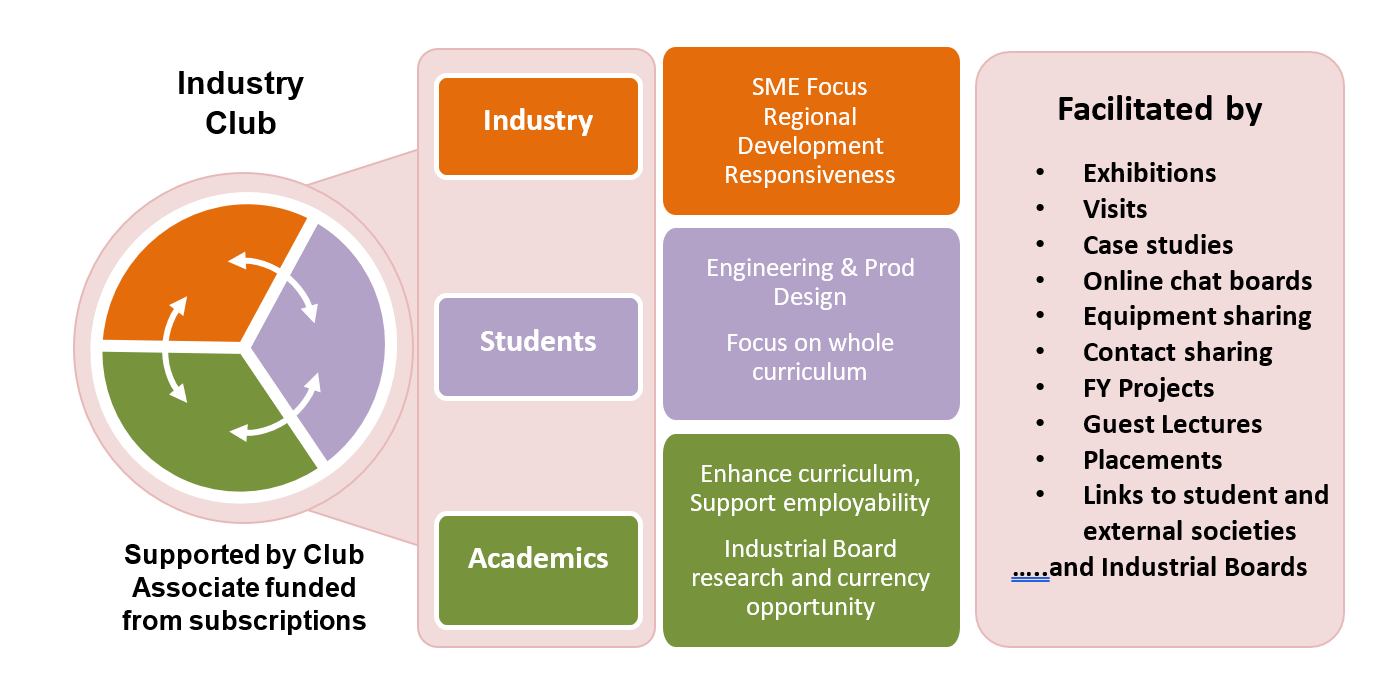
Figure 2 shows schematically the role and activities of the industry club within the group.

Impact Beyond Projects

The use of the Industry Club to co-ordinate and bolster other industry activity within the department has gone beyond final year projects. These can be seen in Figure 2.

The Industrial Advisory Board has now become linked to the Industry Club and so with partners now involved in the wider activities of the club involvement is now not exclusively limited to twice yearly meeting but is an active ongoing partnership using the projects, other learning and teaching activity and a LinkedIn group to create a more dynamic and responsive consultation body. A subset of the IAB is now also made up entirely of recent alumni to act as a bridge between the students and practising industry to help spot immediate gaps and opportunities to support students in this important transition.


Figure 2 : Industry Club set-up and Activity


The club has also developed a range of other industrially linked activities in support of teaching and learning.

While industrial involvement is relatively easy to embed in project or design type modules this is not so easy in traditional underpinning engineering science type activity.

To address the lack of industrial content in traditional engineering science modules a pilot interactive online case studies be developed to help show how fundamental engineering science can be applied in authentic industrial problems. A small team consisting of an academic, the industry club associate and an industrialist was assembled.

This team developed an online pump selection tool which combined interactive masterclasses and activities, introduced and explained by the industrialist to show how the classic classroom theory could be used and adapted in real world scenarios (Figure 3). This has been well-received by students, added authenticity to the curriculum and raised awareness in student minds of the perhaps unfashionable but important and rewarding water services sector.


Figure 3 : Online Interactive Activity developed as part of industry club activity

Further interactions developed by the Industry Club, and part of its remit to embed industrial links at all stages of the degree, include the involvement of an Industrial Partner on a major wind turbine design, build and test project engaged in as group exercises by all students in year one. Here the industrialist, a wind energy professional, contextualises work while his role is augmented by a recent alumni member of the Industrial board who is currently working as a graduate engineer on offshore wind and who completed the same module as the students four years or so previously.

Conclusion

While the development of the Industry Club and its associated activity can not be considered a panacea, it has significantly developed the level of industry involvement within programmes. More crucially it moves away from an opaque and piecemeal approach to industry engagement and offers a more transparent framework and structure on which to hang industry involvement to support academics and industry in developing and maximising the competencies of graduates.

References


Any views, thoughts, and opinions expressed herein are solely that of the author(s) and do not necessarily reflect the views, opinions, policies, or position of the Engineering Professors’ Council or the Toolkit sponsors and supporters.

Theme: Universities’ and businesses’ shared role in regional development.

Author: Dr Laura Fogg-Rogers (University of the West of England, Bristol).

Case-study team: Wendy Fowles-Sweet; Maryam Lamere; Prof. Lisa Brodie; Dr Venkat Bakthavatchaalam (University of the West of England, Bristol); Dr Abel Nyamapfene (University College London).

Keywords: Education for Sustainable Development; Climate Emergency; Net Zero; Sustainable Development Goals.

Abstract: The University of the West of England (UWE Bristol) has declared a Climate and Ecological Emergency, along with all regional councils in the West of England. In order to meet the regional goal of Net-Zero by 2030, sustainability education has now been embedded through all levels of the Engineering Curriculum. Current modules incorporate education for Sustainable Development Goals alongside citizen engagement challenges, where engineers find solutions to real-life problems. All undergraduate engineers also take part in immersive project weeks to develop problem-based learning around the Engineers without Borders international challenges.


Engineering Education for Sustainable Development

The environmental and health impacts of climate change and biodiversity loss are being felt around the world, from record high temperatures, drought, wildfires, extreme flooding, and human health issues (Ripple et al., 2020). The Intergovernmental Panel on Climate Change reports that urgent action is required to mitigate catastrophic impacts for billions of people globally (IPCC, 2022). The UK Government has pledged to reach net zero emissions by 2050, with a 78% drop in emissions by 2035 (UK Government, 2021). Following IPCC guidance, regional councils such as Bristol City Council and the West of England Combined Authority, have pledged to reach Net Zero at an earlier date of 2030 (Bristol City Council, 2019). In parallel, UWE Bristol has embedded this target within its strategic plan (UWE Bristol, 2019), and also leads the Environmental Association for Universities and Colleges (EAUC), an Alliance for Sustainability Leadership in Education (UWE Bristol, 2021b). All UWE Bristol programmes are expected to embed the UN Sustainable Development Goals (SDGs) within curricula (UN Department of Economic and Social Affairs, 2021), so that higher education degrees prepare graduates for working sustainably (Gough, 2021).

Bourn and Neal (2008) draw the link between global sustainability issues and engineering, with the potential to tackle complex sustainability challenges such as climate change, resource limitations, and extreme poverty. The SDGs are therefore particularly relevant to engineers, showing the connections between social, environmental, and economic actions needed to ensure humanitarian development, whilst also staying within planetary boundaries to support life on earth (Ramirez-Mendoza et al., 2020). The engineering sector is thus obligated to achieve global emissions targets, with the work of engineers being essential to enable the societal and technological change to reach net zero carbon emissions (Fogg-Rogers, L., Richardson, D., Bakthavatchaalam, V., Yeomans et al., 2021).

Systems thinking and solution-finding are critical engineering habits of mind (Lucas et al., 2014), and so introducing genuine sustainability problems provides a solid foregrounding for Education for Sustainable Development (ESD) in engineering. Indeed, consideration for the environment, health, safety, and social wellbeing are enshrined in the UK Specification for Professional Engineers (UK SPEC) (Engineering Council, 2021). ‘Real-world’ problems can therefore inspire and motivate learners (Loyens et al., 2015), while the use of group projects is considered to facilitate collaborative learning (Kokotsaki et al., 2016). This aligns with recommendations for creating sustainability-literate graduates published by the Higher Education Academy (HEA) and the UK Quality Assurance Agency for Higher Education (QAA and Advance HE, 2021) which emphasise the need for graduates to: (1) understand what the concept of environmental stewardship means for their discipline and their professional and personal lives; (2) think about issues of social justice, ethics and wellbeing, and how these relate to ecological and economic factors; and (3) develop a future-facing outlook by learning to think about the consequences of actions, and how systems and societies can be adapted to ensure sustainable futures (QAA & HEA, 2014). These competencies are difficult to teach, and instead need to developed by the learners themselves based on experience and reflection, through a student-centred, interdisciplinary, team-teaching design (Lamere et al., 2021).  

The need for engineers to learn about the SDGs and a zero carbon future is therefore necessary and urgent, to ensure that graduates are equipped with the skills needed to address the complex challenges facing the 21st Century.  Lamere et al., (2021)describe how the introduction of sustainability education within the engineering curriculum is typically initiated by individual academics (early adopters) introducing elements of sustainability content within their own course modules. Full curricula refresh in the UWE Bristol engineering curricula from 2018-2020 enabled a more programmatic approach, with inter-module connections being developed, alongside inter-year progression of topics and skills.

This case study explores how UWE Bristol achieved this curriculum change throughout all programmes and created inter-connected project weeks in partnership with regional stakeholders and industry. 

Case Study Methods – Embedding education for sustainable development

The first stage of the curricula transformation was to assess current modules against UK SPEC professional requirements, alongside SDG relevant topics. A departmental-wide mixed methods survey was designed to assess which SDGs were already incorporated, and which teaching methods were being utilized. The survey was emailed out to all staff in 2020, with 27 module leaders responding to highlight pedagogy in 60 modules, covering the engineering topics of: Aerospace; Mechanical and Automotive; Electrical, Electronic, and Robotics; Maths and Statistics; and Engineering Competency.

Two sub-themes were identified: ‘Direct’ and ‘Indirect’ embedding of SDGs; direct being where the engineering designs explicitly reference the SDGs as providing social or environmental solutions, and indirect being where the SDGs are achieved through engineering education e.g. quality education and gender equality. Direct inclusion of the SDGs tended to focus on reducing energy consumption, and reducing weight and waste, such as through improving the efficiency of the machines/designs. Mitigating the impact of climate change through optimal use of energy was also mentioned. The usage of lifecycle analysis was implemented in several courses, especially for composite materials and their recycling. The full analysis of the spread of the SDGs and their incorporation within different degree programmes can seen in Figure 1.


Figure 1 Number of Engineering Modules in which SDGs are Embedded


Project-based learning for civic engagement in engineering

Following this mapping process, the modules were reorganized to produce a holistic development of knowledge and skills across programmes, starting from the first year to the final year of the degree programmes. This Integrated Learning Framework was approved by relevant Professional Bodies and has been rolled out annually since 2020, as new learners enter the refreshed degree programmes at UWE Bristol. The core modules covering SDG concepts explicitly are Engineering Practice 1 and 2 (at Level 1 and 2 of the undergraduate degree programme) and ‘Engineering for Society’ (at Level 3 of the undergraduate degree programme and Masters Level). These modules utilise civic engagement with real-world industry problems, and service learning through engagement with industry, schools, and community groups (Fogg-Rogers et al., 2017).

As well as the module redevelopment, a Project-Based Learning approach has been adopted at department level, with the introduction of dedicated Project Weeks to enable cross-curricula and collaborative working. The Project Weeks draw on the Engineering for People Design Challenge (Engineers without Borders, 2021), which present global scenarios to provide university students with “the opportunity to learn and practice the ethical, environmental, social and cultural aspects of engineering design”. Critically, the challenges encourage universities to develop partnerships with regional stakeholders and industry, to provide more context for real-world problems and to enable local service learning and community action (Fogg-Rogers et al., 2017).

A collaboration with the innovation company NewIcon enabled the development of a ‘design thinking’ booklet which guides students through the design cycle, in order to develop solutions for the Project Week scenarios (UWE Bristol, 2021a). Furthermore, a partnership with the initiative for Digital Engineering Technology and Innovation (DETI) has enabled students to take part in the Inspire outreach programme (Fogg-Rogers & Laggan, 2022), which brings together STEM Ambassadors and schools to learn about engineering through sustainability focussed activities. The DETI programme is delivered by the National Composites Centre, Centre for Modelling and Simulation, Digital Catapult, UWE Bristol, University of Bristol, and University of Bath, with further industry partners including Airbus, GKN Aerospace, Rolls-Royce, and Siemens (DETI, 2021). Industry speakers have contributed to lectures, and regional examples of current real-world problems have been incorporated into assignments and reports, touching on a wide range of sustainability and ethical issues.

Reflections and recommendations for future engineering sustainability education

Students have been surveyed through module feedback surveys, and the project-based learning approach is viewed very positively. Students commented that they enjoyed working on ‘real-world projects’ where they can make a difference locally or globally. However, findings from surveys indicate that students were more inclined towards sustainability topics that were relevant to their subject discipline. For instance, Aerospace Engineering students tended to prefer topics relevant to Aerospace Engineering. A survey of USA engineering students by Wilson (2019) also indicates a link between students’ study discipline and their predilection for certain sustainability topics. This suggests that for sustainability education to be effective, the content coverage should be aligned, or better still, integrated, with the topics that form part of the students’ disciplinary studies.

The integration of sustainable development throughout the curricula has been supported at institutional level, and this has been critical for the widescale roll out. An institution-wide Knowledge Exchange for Sustainability Education (KESE) was created to support staff by providing a platform of knowledge sharing. Within the department, Staff Away days were used to hold sustainability workshops for staff to discuss ESD and the topics of interest to students.  In the initial phase of the mapping exercise, a lack of common understanding amongst staff about ESD in engineering was noted, including what it should include, and whether it is necessary for student engineers to learn about it. During the Integrated Learning Framework development, and possibly alongside growing global awareness of climate change, there has been more acceptance of ESD as an essential part of the engineering curriculum amongst staff and students. Another challenge has been the allocation of teaching workload for sustainability integration. In the initial phases, a small number of committed academics had to put in a lot of time, effort, and dedication to push through with ESD integration. There is now wider support by module leaders and tutors, who all feel capable of delivering some aspects of ESD, which eases the workload.

This case study outlines several methods for integrating ESD within engineering, alongside developing partnership working for regionally relevant real-world project-based learning. A recent study of UK higher education institutions suggests that only a handful of institutions have implemented ESD into their curricula in a systemic manner (Fiselier et al., 2018), which suggests many engineering institutions still need support in this area. However, we believe that the engineering profession has a crucial role to play in ESD alongside climate education and action, particularly to develop graduate engineers with the skills required to work upon 21st Century global challenges. To achieve net zero and a low carbon global economy, everything we make and use will need to be completely re-imagined and re-engineered, which will require close collaboration between academia, industry, and the community. We hope that other engineering educators feel empowered by this case study to act with the required urgency to speed up the global transition to carbon neutrality.

References

Bourn, D., & Neal, I. (2008). The Global Engineer Incorporating global skills within UK higher education of engineers.

Bristol City Council. (2019). Bristol City Council Mayor’s Climate Emergency Action Plan 2019.

DETI. (2021). Initiative for Digital Engineering Technology and Innovation. https://www.nccuk.com/deti/

Engineers without Borders. (2021). Engineering for People Design Challenge. https://www.ewb-uk.org/upskill/design-challenges/engineering-for-people-design-challenge/

Fiselier, E. S., Longhurst, J. W. S., & Gough, G. K. (2018). Exploring the current position of ESD in UK higher education institutions. International Journal of Sustainability in Higher Education, 19(2), 393–412. https://doi.org/10.1108/IJSHE-06-2017-0084

Fogg-Rogers, L., & Laggan, S. (2022). DETI Inspire Engagement Report.

Fogg-Rogers, L., Lewis, F., & Edmonds, J. (2017). Paired peer learning through engineering education outreach. European Journal of Engineering Education, 42(1). https://doi.org/10.1080/03043797.2016.1202906

Fogg-Rogers, L., Richardson, D., Bakthavatchaalam, V., Yeomans, L., Algosaibi, N., Lamere, M., & Fowles-Sweet, W. (2021). Educating engineers to contribute to a regional goal of net zero carbon emissions by 2030. Le Développement Durable Dans La Formation et Les Activités d’ingénieur. https://uwe-repository.worktribe.com/output/7581094

Gough, G. (2021). UWE Bristol SDGs Programme Mapping Portfolio.

IPCC. (2022). Impacts, Adaptation and Vulnerability – Summary for policymakers. In Intergovernmental Panel on Climate Change, WGII Sixth Assessment Report. https://doi.org/10.4324/9781315071961-11

Kokotsaki, D., Menzies, V., & Wiggins, A. (2016). Project-based learning: A review of the literature. Improving Schools. https://doi.org/10.1177/1365480216659733

Lamere, M., Brodie, L., Nyamapfene, A., Fogg-Rogers, L., & Bakthavatchaalam, V. (2021). Mapping and Enhancing Sustainability Literacy and Competencies within an Undergraduate Engineering Curriculum Implementing sustainability education : A review of recent and current approaches. In The University of Western Australia (Ed.), Proceedings of AAEE 2021.

Loyens, S. M. M., Jones, S. H., Mikkers, J., & van Gog, T. (2015). Problem-based learning as a facilitator of conceptual change. Learning and Instruction. https://doi.org/10.1016/j.learninstruc.2015.03.002

Lucas, Bill., Hanson, Janet., & Claxton, Guy. (2014). Thinking Like an Engineer: Implications For The Education System. In Royal Academy of Engineering (Issue May). http://www.raeng.org.uk/publications/reports/thinking-like-an-engineer-implications-summary

QAA and Advance HE. (2021). Education for Sustainable Development. https://doi.org/10.21300/21.4.2020.2

Ramirez-Mendoza, R. A., Morales-Menendez, R., Melchor-Martinez, E. M., Iqbal, H. M. N., Parra-Arroyo, L., Vargas-Martínez, A., & Parra-Saldivar, R. (2020). Incorporating the sustainable development goals in engineering education. International Journal on Interactive Design and Manufacturing. https://doi.org/10.1007/s12008-020-00661-0

Ripple, W. J., Wolf, C., Newsome, T. M., Barnard, P., & Moomaw, W. R. (2020). World Scientists’ Warning of a Climate Emergency. In BioScience. https://doi.org/10.1093/biosci/biz088

UK Government. (2021). UK enshrines new target in law to slash emissions by 78% by 2035. https://www.gov.uk/government/news/uk-enshrines-new-target-in-law-to-slash-emissions-by-78-by-2035

UN Department of Economic and Social Affairs. (2021). The 17 Sustainable Development Goals. https://sdgs.un.org/goals

UWE Bristol. (2019). Climate and Ecological Emergency Declaration. https://www.uwe.ac.uk/about/values-vision-strategy/sustainability/climate-and-ecological-emergency-declaration

UWE Bristol. (2021a). Engineering Solutions to Real World Problems. https://blogs.uwe.ac.uk/engineering/engineering-solutions-to-real-world-problems-uwe-project-week-2020/

UWE Bristol. (2021b). Sustainability Strategy, Leadership and Plans. https://www.uwe.ac.uk/about/values-vision-strategy/sustainability/strategy-leadership-and-plans Wilson, D. (2019). Exploring the Intersection between Engineering and Sustainability Education. In Sustainability (Vol. 11, Issue 11). https://doi.org/10.3390/su11113134


Any views, thoughts, and opinions expressed herein are solely that of the author(s) and do not necessarily reflect the views, opinions, policies, or position of the Engineering Professors’ Council or the Toolkit sponsors and supporters.

In developing the case studies and guidance articles for the EPC’s Engineering Ethics toolkit, the authors and advisory group took into account recent scholarship on best practices in teaching engineering ethics through case studies – examples of this can be found here. They also reviewed existing case study libraries in order to add to the growing body of material available on engineering ethics; examples of these can be found below:


Murdough Center for Engineering Professionalism, Texas Tech University


Online Ethics Center for Engineering and Science


National Society of Professional Engineers Board of Ethical Review


Markkula Center for Applied Ethics, Santa Clara University


Ethics 4TU Centre for Ethics and Technology


Global Engineering Education Collaboratory (GEEC)


Mason Tech Ethics


Engineering Professors’ Council


In developing the cases and articles for the EPC’s Engineering Ethics toolkit the authors and advisory group took into account recent scholarship on best practices in teaching engineering ethics through case studies – see further information on this below. They also reviewed existing case study libraries in order to add to the growing body of material available on engineering ethics, examples of which can be found here.


Best practices for developing and using case studies in teaching engineering ethics:


References:

Conlon, E. and Zandvoort, H. (2011) ‘Broadening ethics teaching in engineering: Beyond the individualistic approach’, Science and Engineering Ethics, 17(2), pp.217-232.

Davis, M. (2006) ‘Integrating ethics into technical courses: Micro-insertion’, Science and Engineering Ethics, 12(4), pp.717-730.

Herkert, J.R. (2000) ‘Engineering ethics education in the USA: Content, pedagogy, and curriculum’, European Journal of Engineering Education, 25(4), pp.303-313.

Herreid, C.F. (2007) Start with a Story: The Case Study Method of Teaching College Science. Arlington, VA: NSTA Press.

Kim, S., Phillips, W.R., Pinsky, L., Brock, D., Phillips, K. and Keary, J. (2006) ‘A conceptual framework for developing teaching cases: a review and synthesis of the literature across disciplines’, Medical Education, 40(9), pp.867-876.

Lawlor, R. (2021) Plea for more nuanced use of engineering ethics case studies. Available at: https://www.sefi.be/2021/04/12/plea-for-more-nuanced-use-of-engineering-ethics-case-studies/.

Lennerfors, T. T., Fors, P., and Woodward, J.R. (2020) ‘Case hacks: Four hacks for promoting critical thinking in case-based management education for sustainable development’, Högre Utbildning, 10(2), pp.1-15. 

Rottman, C. and Reeve, D. (2020) ‘Equity as rebar: Bridging the micro/macro divide in engineering ethics education’, Canadian Journal of Science, Mathematics and Technology Education, 20(1), pp.146-165. 

Swan, C., Kulich, A., and Wallace, R. (2019) A Review of ethics cases: Gaps in the engineering curriculum. Paper presented at 2019 Annual American Society of Engineering Education Annual Conference & Exposition. 

Valentine, A., Lowenhoff, S., Marinelli, M., Male, S. and Hassan, G.M. (2020) ‘Building students’ nascent understanding of ethics in engineering practice’, European Journal of Engineering Education, 45(6), pp.957-970.

Walling, O. (2015) ‘Beyond ethical frameworks: Using moral experimentation in the engineering ethics classroom’, Science and Engineering Ethics, 21(6), pp.1637-1656.


Any views, thoughts, and opinions expressed herein are solely that of the author(s) and do not necessarily reflect the views, opinions, policies, or position of the Engineering Professors’ Council or the Toolkit sponsors and supporters.

Let us know what you think of our website