REF 2029 Update and AI in Engineering Education

The annual PHEE-AiME Conference which will now be delivered online in a half day on the morning of Wednesday 13 May 2026.

In addition to two well balanced sessions providing the latest update on REF 2029 and recent developments on AI in Engineering Education, the Conference will incorporate the latest update on Challenges to AHEP 4 and Opportunities for AHEP5.

Full Conference Programme

All engineering colleagues at your university are welcome free of charge. Registration required.

What are the legal issues relating to machine condition monitoring? What ethical codes relate to data security and privacy? What responsibilities do engineers have in developing these technologies?”

These are some of the questions posed in our Engineering Ethics Toolkit case study Protecting data in an auto parts production facility.

This case study involves an engineer hired to develop and install an Industrial Internet of Things online machine monitoring system for a manufacturing company. It incorporates a variety of ethical components including law and policy, stakeholders, and risk analysis. 

We’ve provided this and other case studies for you to use and adapt in your teaching. We also have a growing library of guidance articles available to support you in your teaching, and an interactive Ethics Explorer to get you started.

Want to contribute your own content to the Ethics Toolkit? Get involved here.

We are excited to launch the EPC engineering enrolment survey 2023/4. The survey will be open throughout October and we encourage each engineering department to respond. If you have completed the survey previously, look out for an email from us in the next couple of days. Otherwise, if you would like to get involved, please contact us.

The annual EPC survey remains ever valuable as it provides an early check on the health of HE undergraduate and postgraduate engineering enrolments. It provides early signals of the changing patterns of enrolment long before the official sector enrollment data becomes available.

We would like to thank everyone who responded last year and contributed to its massive success in 2022. Thanks to our data explorer, analysing the results of the survey has never been easier and we are excited to implement this feature again for the upcoming year. See last year’s results in the data explorer.

Everyone who submits a completed survey will be entered into a prize draw for a free ticket to the EAN Access and Admissions Forum. Simply enter this by simply completing and submitting the survey.

This year the survey will be opening on the 2nd of October and will be open until the 30th of October. If you have any concerns about meeting HESA data collection deadlines, please feel free to contact us. The results for this year will be launched at the EAN Access and Admissions Forum. Watch this space for further details.

For more information and to access the survey, please follow this link.


Every year, the Engineering Professors’ Council flagship Congress meeting defines what’s hot in engineering academia. Competitively hosted by EPC members themselves on a UK touring model, in 2023 we are thrilled to be visiting the historic city of Hereford; a foodie paradise on the Welsh border. We celebrate six weeks to go with six reasons why you should come too, from 12th to 14th June…

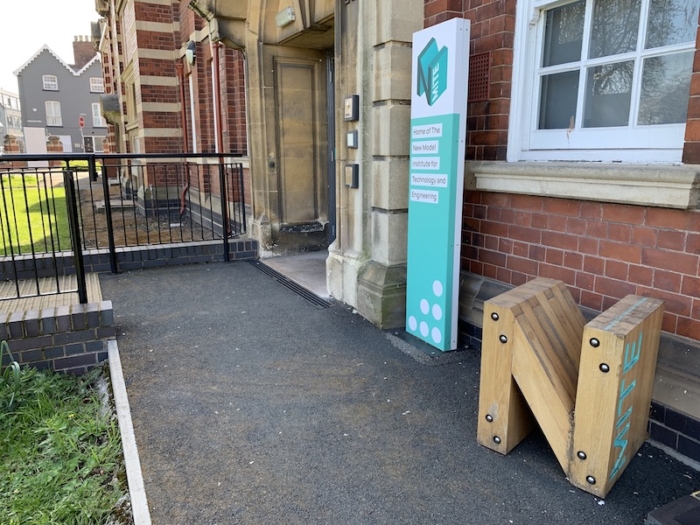
1. A glimpse into NMITE’s new model. Many of us have angled for an invite, here’s yours.

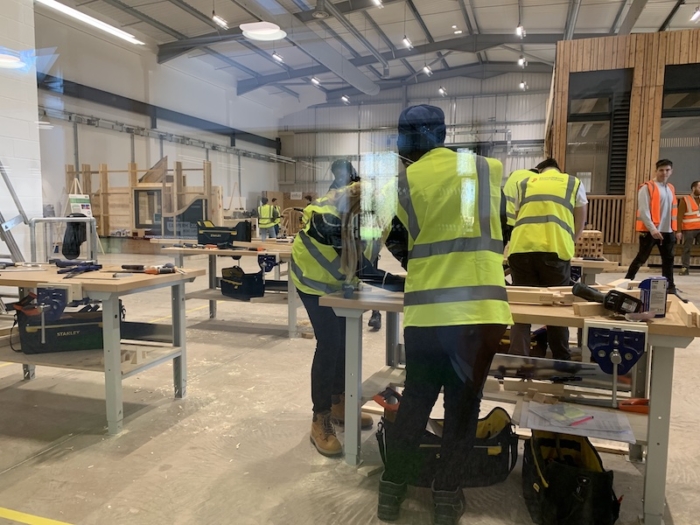
Hereford is, of course, home to NMITE; our hosts and new kids on the block in engineering HE. We’ve all heard of NMITE’s challenger approach and hands-on engineering degrees. No lecture halls. No traditional exams. No physics or maths requirement. But what does this actually look like and how does it relate to our own model of engineering HE?

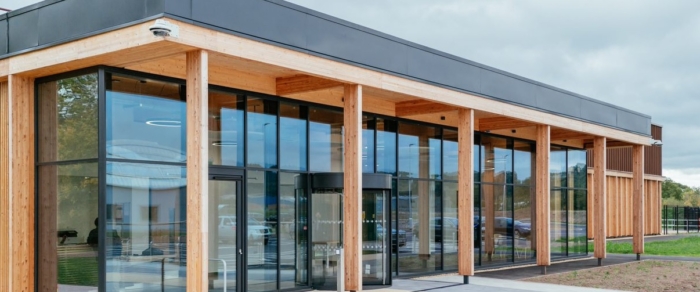
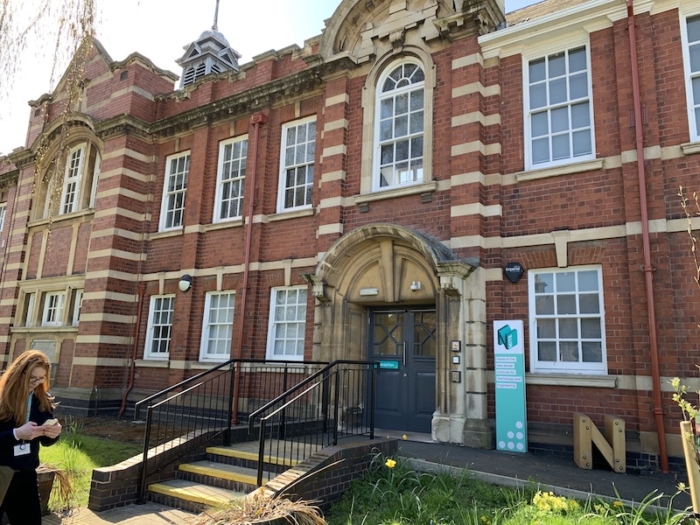
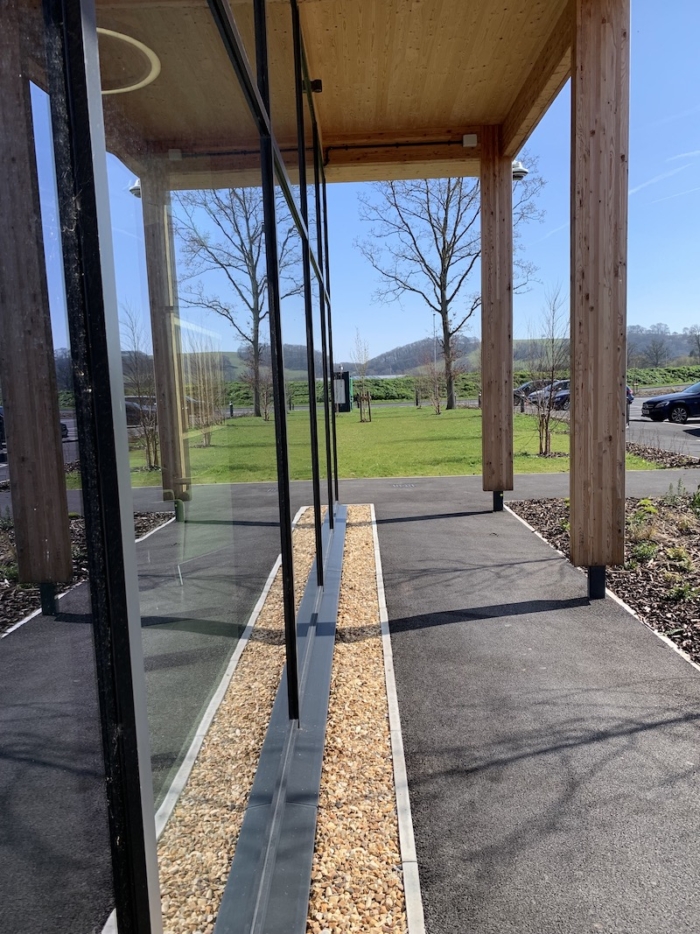
Congress will be based at Skylon Campus: a new, sustainably built smart building constructed from responsibly sourced timber. We’ll be using the student spaces for ourselves throughout the event. There is also the opportunity to take a guided tour around NMITE’s repurposed, state-of-the-art city centre facility, Blackfriars Campus.

2. Our awesome line up of speakers

Featuring Vivienne Stern MBE, Chief Executive of Universities UK; Vicki Stott, Chief Executive of the Quality Assurance Agency; The Rt Hon Jesse Norman MP, Minister of State (Decarbonisation and Technology); Dr Annabel Kiernan, Pro Vice Chancellor of Staffordshire University; Dr Ruth Graham, author of Improving University Reward for Teaching: A Roadmap for Change; Ian Dunn; Provost of Coventry University; and Rod Bristow, former CEO of Pearson UK.

Plus a host of expert speakers from on new models of recruitment; delivery; curriculum; assessment; employability; academic employment and progression; and funding. Including: Advance HE; Dyson; Pearson UK; the Royal Academy of Engineering; Siemens; Arden University; Canterbury Christ Church University; University of Cambridge; University of East Anglia; Imperial College London; NMITE; Oxford Brookes University; Swansea University; TEDI-London; University College London; Warwick Manufacturing Group; and Wiltshire College

3. An opportunity to try blacksmithing

The Rural Crafts Centre is recognised as the foremost national centre for Smiths and is the largest training based forge in Europe. On Monday, you can enjoy a hands-on blacksmithing workshop and go home with your very own hand forged results to show for it! Spaces on this amazing activity are limited and will be offered on a first-come first served basis. So book your space sooner, rather than later.

4. Food and even more culture

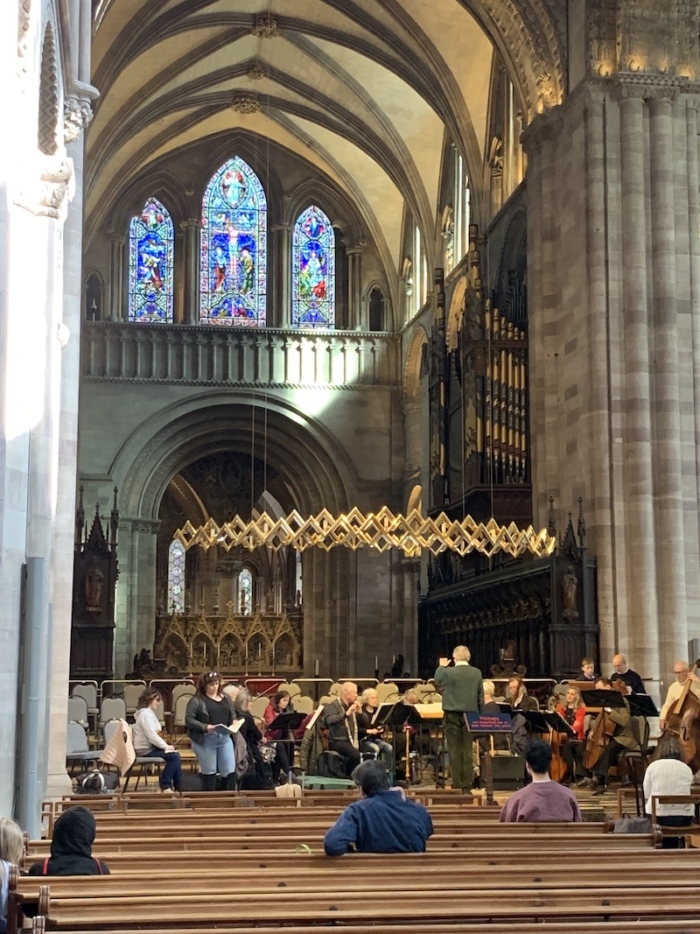
A good lunch is always a draw, and we promise you’ll be impressed with Hereford’s impressive food pedigree. We’ll feed you well in the day, and even better at night, warming up with an all-weather curry social on Monday night before the main event, Congress dinner on the Left Bank overlooking the River Wye, on Tuesday evening. You’ll be entertained by neuroscientist, author and blogger, Dean Burnett, and we’ll celebrate the success of the EPC student Hammermen Award finalists. You will already have experienced the awe-inspiring Hereford Cathedral – home of the mappa-mundi – where world famous physicist, Professor Dame Athene Donald DBE, FRS, will give the public lecture on Monday.

5. Your network, let’s network

This year, Congress truly belongs to the Engineering Academics Network. Annual congress is an event to bring together engineering academics at all levels of their career, from deans and heads of department to postgraduates. We’ve missed the organic opportunity to ask questions, discover and share innovative ideas, and gain important professional insight across a host of engineering-related institutions. We are proud to support early career academics with heavily discounted tickets for Congress. Networking opportunities at Congress are second to none. We want more of you to benefit!

6. Outstanding value for money

With early bird member tickets discounted to under £300 until 5th May, and an even bigger EPC subsidy for early career staff and staff from the hosting university, the professional development on offer is a steal. Where else can you get so much for so little?

Bookings are now being taken for EAN Annual Congress. Tickets and further information here.
The results of the 2022 EPC Engineering Enrolments Survey are now available. Deep dive the results through our members-only Data explorer, view the slide-deck, or read the summary blog.

To start, many thanks to members who completed this year’s EPC engineering enrolments survey. The survey gives us all an early temperature check of the health of HE undergraduate and postgraduate engineering enrolments and provides early signals to changing patterns of enrolments. Our survey is the only place you can gain this insight, long before official sector enrolment data for 2022/23 is available.

Following the introduction of EPC Online earlier this year, we are delighted to present an enhanced survey report in 2022. Results are now showcased in our pioneering Data explorer service which provides you, our members, the opportunity to access and explore the findings through dynamic and flexible data visualisations. Using our new service, you can drill down and dissect results by specific cohorts, filter to your own discipline(s) of interest and view charts, tables and data personalised to your needs.

Please remember that this is a survey – not a data collection – but with more than half of EPC member providers submitting a response we celebrate better coverage (c35K students) of more discrete disciplines (210) than ever before. Net of the increase in responses, this leads us to a relative increase in enrolments suggesting a healthy Engineering intake in 2022.

In another first for our survey, IT systems sciences & computer software engineering leads the pack in Engineering enrolments in 2022, following a pattern of year-on-year growth in our survey. Mechanical engineering is a close runner up this year.

Last year, early signals of a contracting overseas market in First degree engineering raised concerns over Engineering’s ability to retain its relative strength in overseas recruitment. We were seeing sector-wide recruitment of overseas students increasing, possibly in subjects more easily accessible remotely in the pandemic recovery period than lab and kit dependent Engineering courses. While we can’t corroborate this trend in the HESA enrolments data for 2021 for a few months yet, our 2022 survey shows an encouraging, stronger, First degree overseas Engineering market this year.

In another overseas twist, a massive 82% of postgraduates in the 2022 sample were from overseas, continuing an upward trend since at least the 2019 survey and witnessing a sharp increase from 71% in 2021. Our surveys consistently show that Russell Group universities dominate the overseas postgraduate cohort so it is of note that our sample this year is weighted 2:1 to non-Russell group providers (compared to only a marginal non-Russell group majority typically). This may suggest we will see an even more pronounced swing when the full data collection becomes available in 2024.

Meanwhile, our members report declines in traditional Engineering disciplines of Civil; Mechanical; and Chemical, process and energy engineering this year, as well as Bioengineering. Growth is reported overall in Mineral, metallurgy & materials; Production and manufacturing; and IT systems sciences & computer software engineering. Of course, we are reminded that that market forces aren’t the only factor at play when it comes to changes in the engineering enrolments profile year on year.

More detail is available in the Recruitment + Admissions Forum launch presentation slide deck (and a recording will be available via the event page in due course). If you wish to explore the data for yourself, discover insights most relevant to your setting, and dive deeper into this this year’s findings, please do visit our to our members-only Data explorer. Do tell us what you think using the comment, discussion and takeaway channels available to you.

You may have noticed our beta Data explorer on EPC’s new website.

Student enrolments on the site is now fully formed and we were excited to recently bring members the first of a series of Data dive workshops to help them explore the amazing possibilities this brings. You won’t want to watch a whole hour of an interactive workshop, so we have recorded the demonstration to share with members who were unable to make the Data dive event but want to learn more about this member only service. You can review the recording via the past event page EPC Data dive workshop: student enrolments.

If you have any problems logging in or accessing the page, please contact us.

We pledge to bring you regular updates and a monthly hands-on online workshop to guide you through our new exclusive-to-members service. Check our website regularly to see what’s up next.

20 September 2012: The American Society for Engineering Education reports that Columbia University is to offer engineering courses through Coursera.

The New York Times (9/20, Lewin, Subscription Publication) reports, “Coursera, a start-up online education company that has enrolled 1.35 million students in its free online courses since it began just five months ago, is now more than doubling, to 33, its partners, universities that will offer classes on its platform. All together, Coursera will provide more than 200 free ‘massive open online courses.’ known as MOOCs. The new partners include two more Ivy League institutions, Brown University and Columbia University; a liberal arts college, Wesleyan University; specialized institutions like the Mount Sinai School of Medicine; public research universities like the University of Florida; and more international schools like the University of Melbourne, Hebrew University of Jerusalem and Hong Kong University of Science and Technology.” Columbia “will start on Coursera with two engineering courses, according to the provost, John Coatsworth, but expects to expand to more courses in a variety of fields over the next year.”

The AP (9/20, Chea) reports the announcement “underscores the rapid expansion of” MOOCs “that are reshaping the higher education landscape. Coursera, a for-profit company started by two computer science professors at Stanford University, will now offer more than 200 courses from 33 institutions that are open to anyone with Internet access. Officials said the website has registered 1.3 million students around the world.”

Fast Company (9/20, Kamenetz) explains, “Coursera courses are 6 to 10 weeks long, with an hour or two of videos per week. In addition to the snap quizzes, they feature weekly exercises, ranging from problem sets to spreadsheets to design projects or essays, and sometimes a final project or exam. For all quantitative courses, the platform uses artificial intelligence to evaluate each longer exercise, with instant results. Students can keep trying until they get the right answer.”

Forbes (9/20, Pereira) reports, “The addition of the first Asia-based universities to the roster gives the platform a more global reach. The expansion is in line with the founders’ vision of opening up education to all – regardless of income, location or background. ‘Education is very broad, and international institutions can bring new dimensions to our course offerings,'” said co-founder Daphne Koller.

Inside Higher Ed (9/20, Kolowich) reports, “Andrew Ng, one of its co-founders, said Coursera will probably double its university partnerships at least one more time before it stops recruiting new institutions.” Coursera’s rapid expansion “raises questions about how broad a range of disciplines might be effectively adapted to the MOOC format. A report released last week by Moody’s Investors Service predicted that the new breed of open online course could eat into the business of for-profit providers of conventional online higher education. This will depend, the authors said, on whether MOOC providers such as Coursera are interested, and capable, of replicating vocational courses at scale, for free.”

Let us know what you think of our website