Toolkit: Complex Systems Toolkit.

Author: Dr. Stuart Grey, SFHEA (University of Glasgow).

Topic: Student created interactive simulation for complex sociotechnical systems.

Title: LLM-driven interactive simulation for complex sociotechnical systems.

Resource type: Teaching activity.

Relevant disciplines: Any.

Keywords: Artificial Intelligence; Large Language Model; Sociotechnical systems; Ethics; Modelling or simulation; Emergence.

Licensing: This work is licensed under a Creative Commons Attribution-ShareAlike 4.0 International License. It is based upon the author’s article “Enhancing Ethical Reasoning in Engineering Education through Student-Created Interactive Ethical Scenarios Using Generative AI,” 2025 IEEE Global Engineering Education Conference (EDUCON), London, United Kingdom, 2025, pp. 1-5, doi: 10.1109/EDUCON62633.2025.11016531. 

Downloads: 

Related INCOSE Competencies: Toolkit resources are designed to be applicable to any engineering discipline, but educators might find it useful to understand their alignment to competencies outlined by the International Council on Systems Engineering (INCOSE). The INCOSE Competency Framework provides a set of 37 competencies for Systems Engineering within a tailorable framework that provides guidance for practitioners and stakeholders to identify knowledge, skills, abilities and behaviours crucial to Systems Engineering effectiveness. A free spreadsheet version of the framework can be downloaded.

This resource relates to the Systems Thinking, Life Cycle, Configuration Management, Requirements Definition, Verification, and Validation INCOSE Competencies. 

AHEP mapping: This resource addresses several of the themes from the UK’s Accreditation of Higher Education Programmes fourth edition (AHEP4):  Analytical Tools and Techniques (critical to the ability to model and solve problems), and Integrated / Systems Approach (essential to the solution of broadly-defined problems). In addition, this resource addresses AHEP themes of Ethics and Communication. 

Education level: Intermediate.


Learners have the opportunity to: 

Teachers have the opportunity to: 


Overview:

This resource enables engineering students to create, run, and debug a textbased, interactive simulation of a complex sociotechnical system using a Large Language Model (LLM). It is intentionally flexible and may be delivered as a multisession studio activity (including assessment) or used solely as a compact assessment.


Purpose and use:

In both modes, students design a robust text prompt, test it with a user, document changes, and submit auditable artefacts that evidence learning. The key activity is interrogating their own thinking on how complex systems should be modelled by making judgements as to how their game does and does not capture the system dynamics. 


Why and how: 

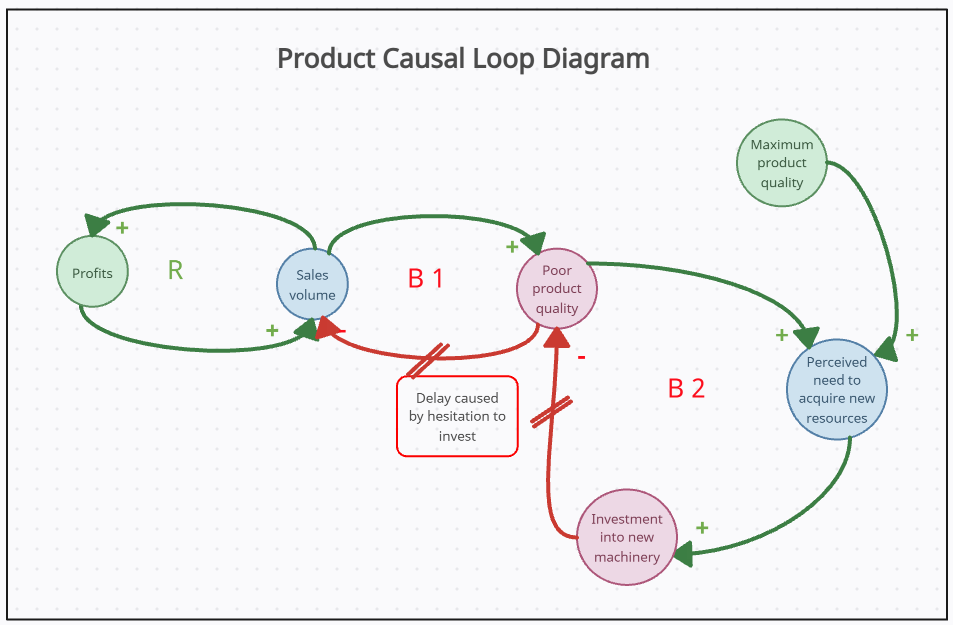
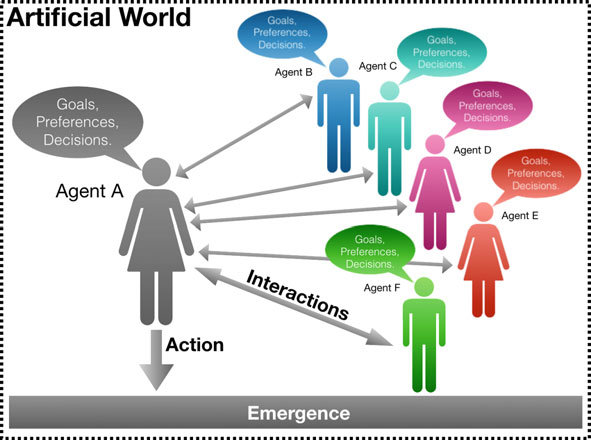
The approach aims to give students hands-on experience in putting systems thinking into practice. Concepts such as stakeholders, feedback loops, delays, uncertainty, and emergent behaviour can be implemented and interrogated without heavy tooling.  

The submission is a text LLM prompt with tracked changes, which allows students to demonstrate system design and debugging, produce transparent process evidence, and scale to large cohorts with minimal infrastructure. 


Delivery options at a glance:

Audience Undergraduate Years 2–4 and taught MSc, any engineering discipline 
Modes Studio activity (3–5×2 h + independent study) or Assessmentonly (promptonly; 1–2×2 h + 4–6 h)
Teams 3–4 students (solo permitted for assessmentonly) 
Assessment Portfolio (studio) or promptpluschangelog (assessmentonly) 
Platforms Institutional Copilot licences successful; encourage exploration of free tools (students record model/version)


Materials and software:


Delivery modes:

Mode A — Studio activity (3–5 sessions) 

Mode B — Assessmentonly (promptonly; 1–2 sessions) 

In both modes, module leaders may supply a predefined scenario(s) to standardise scope and simplify marking. A readytouse example is provided in Appendix C. 


Assessment:

Studio portfolio — rubric (suggested weighting):

Criterion  D–E 
Complexity modelling  Clear boundary; rich stakeholders; ≥4 correct loops; delays explicit; coherent KPIs  Mostly sound  Basic map  Superficial  25 
Simulation design and prompt quality  Consistent state logic; visible feedbacks/delays; nonlinearity; negative choices allowed with consequences; clear commands  Mostly coherent  Playable but brittle  Confusing/linear  25 
Debugging evidence  Systematic playtests; clear issue → fix → retest artefacts  Some iteration  Minimal  None  20 
Insight and reflection  Deep analysis of emergence, tradeoffs, equity, uncertainty, and LLM limits  Good  Descriptive  Vague  20 
Communication and referencing  Clear, concise, correct Harvard referencing  Minor issues  Adequate  Disorganised  10 


Assessment‑only (prompt‑only) — compact rubric: 


Scenario options: 

Students may propose their own topic or the module leader may supply a predefined scenario. Options suited to UK engineering contexts include: 


Appendix A — Prompt template (simulation + debugready): 

Title: Complex Systems Simulator — [Scenario] 

Purpose: Run a turnbased interactive simulation of a complex sociotechnical system. Track named state variables, apply feedback and delays, and let the player’s decisions drive nonlinear outcomes. 

Setup: 

  1) Offer three roles (distinct authority/constraints). 

  2) Introduce 3–5 NPCs with clear goals and plausible interventions. 

  3) Show a dashboard of [STATE_VARIABLES] each turn with short context. 

State rules: 

Commands: status, talk [npc], inspect [asset], implement [policy], pilot [intervention], advance time, review log. 

Debug commands (for testing): trace on/off (print update logic), why (state which loops/delays drove the change), show variables (print current state table), revert (roll back one turn), reseed (slight exogenous shock). 

Realism and ethics: Allow all plausible actions and report consequences neutrally. If unsafe in the real world, refuse, propose safer alternatives, and continue with plausible systemic effects. 

LLM pitfalls to avoid: Do not invent new variables; ask clarifying questions rather than guessing; keep outputs concise; summarise trajectory every five turns. 

Begin: Greet the player, state the scenario, ask for a role, and wait. 


Appendix B — Debugging and playtest checklist: 

Functional coherence 

Robustness 

User experience and clarity 

Report 


Appendix C — Predefined scenario (Urban Heatwave Response, UK city): 

Boundary: One UK local authority area during the July–August heatwave period. Focus on public health, energy demand, and community resilience. 

Roles: (1) Local Authority Resilience Lead; (2) NHS Trust Capacity Manager; (3) Distribution Network Operator (DNO) Duty Engineer. 

Stakeholders: Residents (with a focus on vulnerable groups), care homes, schools, SMEs, DNO, local NHS Trust, emergency services, voluntary/community groups, Met Office (for alerts), and local media. 

State variables (examples): Heathealth alert level (0–4); Emergency Department occupancy (%); Electricity demand/capacity (% of peak); Indoor temperature exceedance hours (hrs > 27 °C); Public trust (0–100); Budget (£); Equity index (0–100). 

Events/shocks: Red heat alert; substation fault; procurement delay; misinformation spike on social media; transport disruption; community centre cooling failure. 

KPIs and stop conditions: Heatrelated admissions; unserved energy; cost variance; equity gap across wards. Stop if alert level 4 persists >3 days, budget overspends >10%, or trust <25. 

Notes for assessors: Using a standard, predefined scenario simplifies marking and ensures comparable complexity across teams, while still allowing for diverse strategies and outcomes. 


Any views, thoughts, and opinions expressed herein are solely that of the author(s) and do not necessarily reflect the views, opinions, policies, or position of the Engineering Professors’ Council or the Toolkit sponsors and supporters.  

Toolkit: Complex Systems Toolkit.

Author: Mariam Makramalla, PhD, FRSA (New Giza University).

Topic: Integrating complex systems learning outcomes in engineering curricula.

Title: How to scaffold complex systems learning outcomes across a curriculum.

Resource type: Guidance article.

Relevant disciplines: Any.

Keywords: Learning outcomes; Pedagogy; Curriculum; Curriculum map; Critical thinking; Problem-solving; Life cycle; Decision-making. 

Licensing: This work is licensed under a Creative Commons Attribution-ShareAlike 4.0 International License. 

Downloads:

Who is this article for?: This article should be read by educators at all levels of higher education looking to embed and integrate complex systems topics into curriculum, module, and / or programme design.   


Premise: 

Teaching and learning engineering carries with it a double layer of complexity. On the one hand, this complexity is connected to the growing interdisciplinary nature of engineering itself. On the other hand, the complexity is connected to the growing diversity of engineering students that are often present in one project team. This multifaceted complexity requires a re-envisioned understanding of the role and purpose of the engineering educator.  

With the growing trend of a global classroom reality, we often find that learners in the classroom are representing different cultures, which in turn are rooted in them unconsciously carrying historical and socio-cultural baggage relating to these cultures. Thus, it becomes crucial to unpack the challenge and potential that such a diverse collective intelligence can offer to an engineering learning experience.  

As our understanding of the engineering discipline gets more rooted and interconnected with the precarious reality that our world is witnessing today, it becomes essential that the engineering education community would take up a proactive role in actively contributing to the formation of engineering citizenship. In other words, every engineering student should be educated as a citizen that has mastered the engineering cross-cutting fields in such a way that they are free to create and solve problems of the present and the future.  

With this in mind, it becomes very clear that the one-size-fits all model of a single discipline engineering classroom can no longer sustain itself. It does not factor in the richness that a diverse student body can offer, and it dilutes the value and potential of an engineering learner to think clearly or solve problems. It is therefore imperative that engineering educators grasp the complex reality of an integrated engineering discipline and address it in a way that fosters scaffolding of diverse knowledge. Some students might specialise in one core technical discipline. Yet, future projections for most students showcase the need to have a wide level of exposure to broader competency development. Students need to learn to understand the field of engineering at large and to develop system thinking skills that enable them to exist, challenge and have an impact on the system that they are a part of.  


How to scaffold learning outcomes in a complex engineering curriculum:

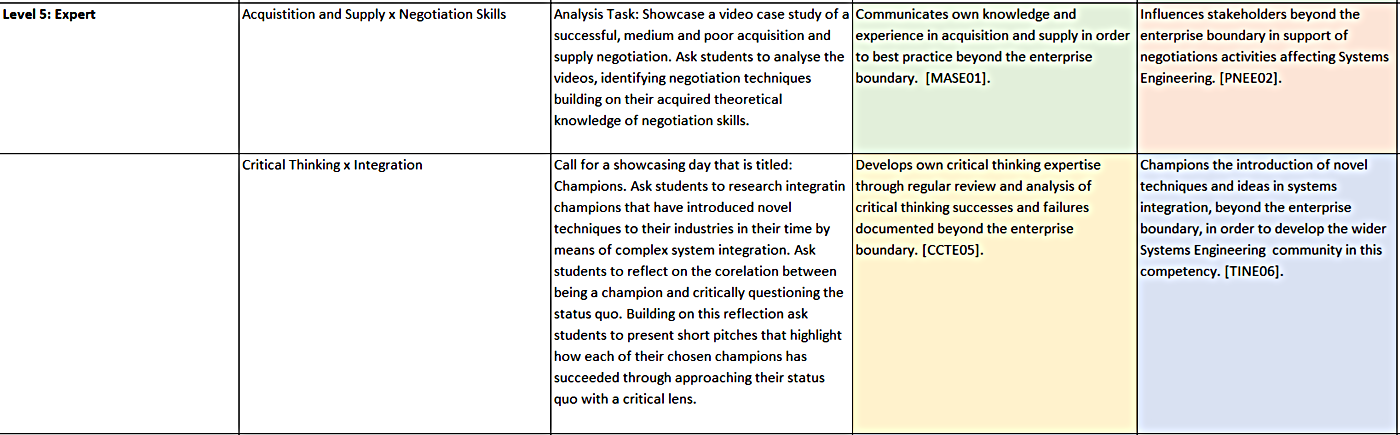
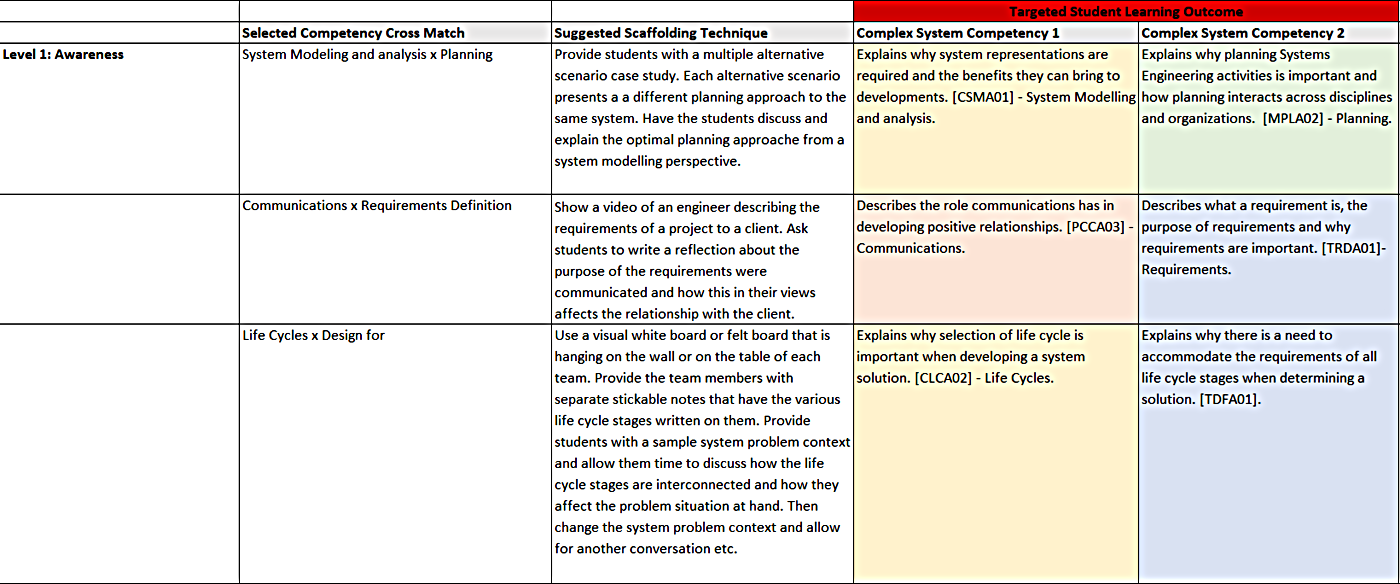
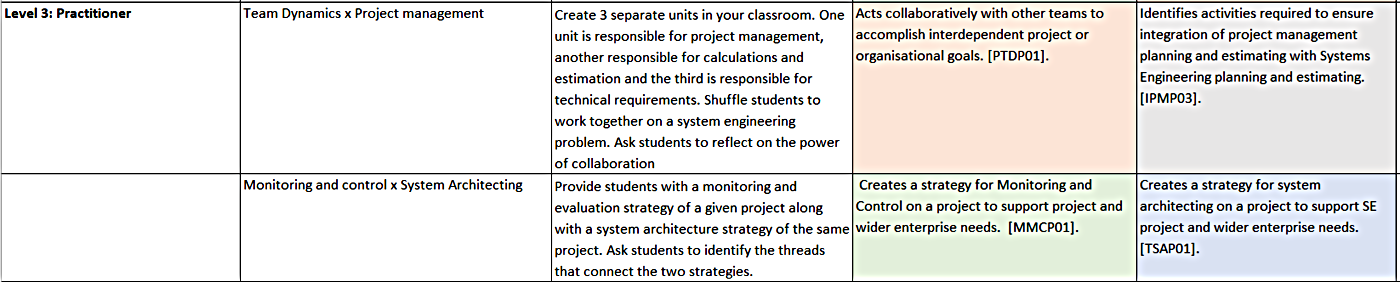
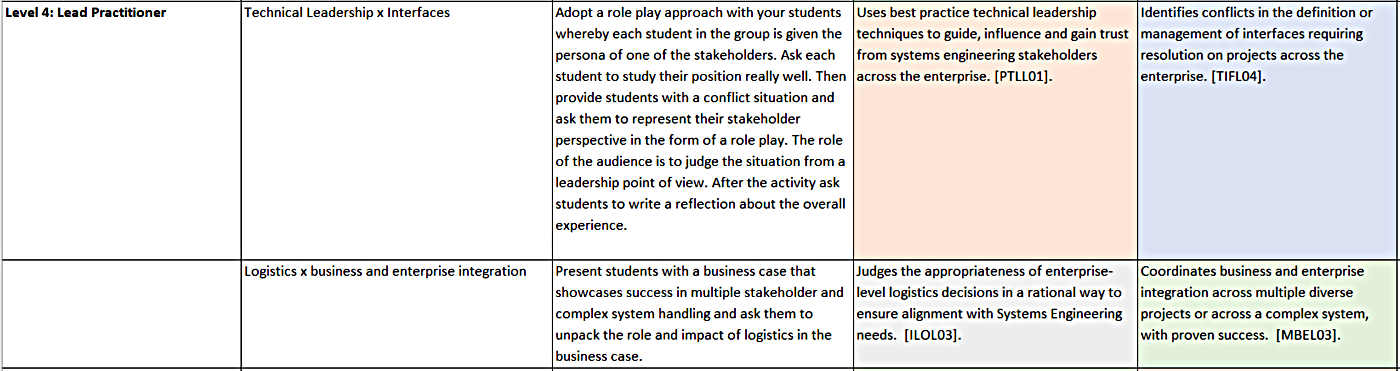
The below table has been designed for embedding Complex Systems Learning Outcomes across an engineering curriculum. It maps against competencies and suggests scaffolding techniques across educational levels. It is also important to note, that efforts need to be made to align to the relevant AHEP requirements or other accreditation standards. Table 1 presents the different strands of the Complex Systems Engineering Curriculum, colour coded in line with the INCOSE Competency Framework outline (INCOSE, 2025). Table 2 presents a practical guide for educators to scaffold Complex Systems learning outcomes across a curriculum. The intention is for the scaffolding framework to compare the trade-offs between different elements of the competency group. For example, system modelling and analysis as an element from the core competency and planning from the management competency. The table suggests activities that would integrate different competencies together in a scaffolded approach.  

Table 1. Competency Areas for Complex Systems (INCOSE, 2025).

Table 1 presents Competency Areas for Complex Systems. As mentioned, the skills range to include a wide variety of competencies, thereby enabling a solid and grounded systems thinking approach for students. As students approach their learning, they go through a series of development stages that gradually build up student level of expertise until they reach the stage of what the INCOSE competency framework refers to as a lead practitioner role. Building on the competencies of the complex system toolkit presented in Table 1, Table 2 presents a potential outline for a scaffolding framework that maps varying threads of the framework in a way that enables scaffolded activities at every developmental stage for learners. Depending on the learning context and educational level, educators can choose which level of attainment is appropriate to their curriculum.  

Table 2. Scaffolding Complex Systems Learning Outcomes across the curriculum 


Discussion and next steps:

As we are approaching the fuzzy front end to complexity in engineering pedagogy, as educators we need to be constantly toggling between devising frameworks, being informed by literature, contextualising ideas, validating these in our classrooms and repeating this cycle to continually fine-tune our complex teaching navigational complexity framework. The invitation is open for all educators who would like to connect as we continue to explore different ways of developing responsible engineers who leave a lasting and sustainable mark transforming their stationed realities.  


References:


Any views, thoughts, and opinions expressed herein are solely that of the author(s) and do not necessarily reflect the views, opinions, policies, or position of the Engineering Professors’ Council or the Toolkit sponsors and supporters.  


Toolkit: Complex Systems Toolkit.

Author: Dr. Rebecca Margetts (Nottingham Trent University).

Topic: The importance of teaching and learning about complex systems.

Title: The real world is a complex system.

Resource type: Knowledge article.

Relevant disciplines: Any.

Keywords: Problem solving; Feedback loops; Decision-making; VUCA; Optimisation; Public health and safety; Risk; Sustainability; Ethics; Responsible design; Life cycle; Societal impact; Enterprise and innovation.

Licensing: This work is licensed under a Creative Commons Attribution-ShareAlike 4.0 International License. 

Downloads: 

Learning and teaching resources:

Who is this article for?: This article should be read by educators at all levels in higher education who are seeking an overall perspective on teaching approaches for integrating complex systems in engineering education. 

Related INCOSE Competencies: Toolkit resources are designed to be applicable to any engineering discipline, but educators might find it useful to understand their alignment to competencies outlined by the International Council on Systems Engineering (INCOSE). The INCOSE Competency Framework provides a set of 37 competencies for Systems Engineering within a tailorable framework that provides guidance for practitioners and stakeholders to identify knowledge, skills, abilities and behaviours crucial to Systems Engineering effectiveness. A free spreadsheet version of the framework can be downloaded.

This resource relates to the Systems Thinking and Critical Thinking INCOSE competencies.

AHEP mapping: This resource addresses several of the themes from the UK’s Accreditation of Higher Education Programmes fourth edition (AHEP4):  Analytical Tools and Techniques (critical to the ability to model and solve problems), and Integrated / Systems Approach (essential to the solution of broadly-defined problems). 


Premise: 

We live in a complex world. Complexity is a key challenge, captured in leadership terms by the VUCA framework: volatile, uncertain, complex and ambiguous (Lanucha 2024). Engineers have the privilege of creating products and processes for humans to use in this landscape. Each of these likely has numerous parts which interact, as well as interacting with the environment, people, and needing to meet a host of safety, quality, sustainability, ethics, and financial obligations. Traditionally, engineers analyse problems by breaking them down into simple parts. This helps understanding and makes calculations feasible, but it’s easy to lose understanding of the whole system. Any change can easily create a problem elsewhere. From a technical viewpoint, engineers need to understand this interconnectedness in order for their creations to work. In a wider sense, ‘systems thinking’ is a skill central to engineering quality and management techniques, which seek to rationalise the complexity of entire organisations and their ever-changing market pressures.  


The case for understanding systems: 

Systems is perhaps one of the most misunderstood words in engineering. It is often found combined with mathematical modelling or control – topics often perceived as challenging – and is used in other fields like Computer Science, where tools and models are different. In all cases, the idea revolves around a group of interacting or interrelated elements which form a unified whole. Those elements can be physical or information, hardware or software, or any combination of mechanical, electrical, and other engineering domains. Thinking in terms of systems can therefore be thought of as a holistic approach.  

The Engineering Council UK’s AHEP criteria include a systems approach: C/M6 – “Apply an integrated or systems approach to the solution of complex problems.” Several other AHEP criteria also reference complexity and complex problems, which they define as having “no obvious solution and may involve wide-ranging or conflicting technical issues and/or user needs that can be addressed through creativity and the resourceful application of engineering science. The Systems Thinking Alliance (2025) gives a broader definition of complexity as referring to “the condition of systems, objects, phenomena, or concepts that are challenging to understand, explain, or manage due to their intricate and interconnected nature. It involves multiple elements or factors that interact in unpredictable ways, often requiring significant information, time, or coordinated efforts to address.” For these, there is no ‘one-size-fits-all solution’ (Ellis 2025). This is the reality that engineers need to manage by understanding the potential effects on all parts of the system. 

In order to analyse, engineers dissect complexity into manageable components, and educators teach these simple components before moving onto more complex systems. For example, students initially learn basic electrical components, simple beams, rigid bodies, etc. before bringing these together in case studies, and then moving onto topics like mechatronic systems. Historically, engineers specialised on graduation, perhaps becoming a stress engineer or fluid dynamicist in dedicated offices and functional teams.  A design decision by one team could have unintended consequences for another, as well as additional uncertainty. The advent of cross-functional project and ‘matrix’ organisations mitigated against this, and companies have moved towards attribute teams which can consider the balance of behaviour. Even so, some uncertainty remains in the form of assumptions in calculations, changes in material properties with temperature or stress, or small variations in composition and manufacturing tolerances, which can all accumulate. Any parts which are bought ‘off-the-shelf’ or made by other companies under license must be carefully specified. Relationships can be nonlinear – or even chaotic – and contain feedback loops which can amplify changes (Kastens et al 2009). This all increases the risk of a product’s comfort, performance, and safety being impacted in ways that weren’t anticipated. Any problem that doesn’t come to light until the testing phase – late in the design process – represents costly redesigns and delays. In the unlikely event that a problem isn’t captured during testing either, the outcome could be disastrous. 

Systems engineers will bring the product together and establish these complex behaviours through models and testing. Identifying potential problems early in the design phase can save significant money and facilitate better designs. This can be challenging, especially for systems using novel materials or operating in extreme environments, which aren’t accurately captured by standard calculations. Models may be linearised, neglect external forcing, or be derived for an assumed air density or ambient temperature which may not be valid. In recent decades, the engineering industry has moved towards model-based design and virtual prototyping, facilitated by advances in computer tools. These are increasingly sophisticated, but models still need to be built by engineers with an appreciation of complexity and the mechanisms by which a problem could arise. As humans develop new materials and technologies, and explore the limits of what is possible, engineering techniques and calculations need constant revision, and software tools are frequently updated to facilitate this.  

That holistic view of problems has benefits outside of designing engineering artefacts. The manufacturing process is itself a complex system with potentially long supply chains. As is the organisation, which is comprised of numerous people operating in a landscape of financial pressures, employment law, politics and culture. Quality guru William Deming’s 14 Points for Management (Deming 2018) can be viewed as a systems approach to handling this complexity, by breaking down barriers between departments and instigating continuous improvement. Once a product is produced, it exists in a wider world and continues to interact with it. From a sustainability viewpoint, this can be the user and surrounding community, the environmental impact over a product’s lifecycle, and the financial markets which dictate whether a product is viable. It can also be the social, political, and legal landscapes: these can place direct constraints in the forms of laws governing safety and emissions (such as the UK’s legally binding target of net zero by 2050), or through embargos, tariffs, and subsidies. Each country has its own regulations, which can necessitate multiple variations of a product: a good example is cars, which need to be produced in both left- and right-hand drive, satisfy varying safety and emissions regulations, and cater for differing personal and cultural preferences for size, noise, usage and driving styles. Even when not legislated, a company might choose to support fair trade, lead the way in sustainable practices, or refuse to do business with suppliers or regimes they find objectionable – potentially making this a key part of their brand.  

An engineer’s ability to appreciate and understand the wider social and business landscape is a reason why finance and management consultancy companies can often be seen recruiting engineers at student careers fairs. The Sainsbury Management Fellowship (SMF) scheme notably develops UK engineers as industry leaders, and fellows have made a major contribution to the UK’s economic prosperity (RAEng 2025). 


Conclusions:

Complex systems are the “real world” that engineers attempt to understand and design for. They are complicated, interconnected, changing, and uncertain. The well-known part of engineering is analysis: breaking systems into understandable parts. There needs to be a parallel operation where those parts are assembled or integrated into a whole, and that whole interacts with everything around it. This is where unforeseen problems can occur. Systems models and a holistic systems thinking approach can mitigate this risk. A systems approach and ability to manage complexity is a key skill for engineers, and positions them well for other fields like management.   


References:


Any views, thoughts, and opinions expressed herein are solely that of the author(s) and do not necessarily reflect the views, opinions, policies, or position of the Engineering Professors’ Council or the Toolkit sponsors and supporters.  

Objectives: To equip learners with the skills to successfully navigate digital and traditional recruitment processes for engineering roles. This includes demonstrating EDI, technical, and employability skills using the STAR framework; tailoring CVs for AI and Applicant Tracking Systems (ATS); and preparing for aptitude and abstract reasoning tests through targeted practice to enhance problem-solving and analytical abilities.

Introduction: Large national and international employers use digital application processes to recruit graduates. These digital applications aim to capture personal details, education, and work experience. Reflect on your experiences to demonstrate your EDI, employability, and technical skills applied using the STAR (Situation, Technique, Action, and Result) framework. Smaller and medium enterprises typically seek cover letters and CVs. 

Topic: Navigating digital recruitment in engineering: CVs, AI, and aptitude tests.

Keywords: Equity Diversity and Inclusion; Employability and skills; Problem solving; Assessment criteria or methods and tools; CVs and cover letters; Digitalisation; Artificial intelligence; Information and Digital literacy; Communication; Technical integration; Writing skills; Inclusive or Responsible design; Neurodiversity; Curriculum or Course; Computer science; Computing; Engineering professionals; Professional development; Recruitment; Digital engineering tools; Business or trade or industry; Workplace culture


Master the art of applying for engineering computing jobs

In the video below, Professor Anne Nortcliffe explains how to develop expertise in securing engineering computing positions by demonstrating technical proficiency and employability skills through well-supported, evidence-based responses.

Video summary:

Master the art of applying for engineering computing jobs by showcasing both technical and employability skills through evidence-based responses. 

Key insights:

⚙️AI in hiring: Understanding that many companies use AI for initial screenings emphasizes the need for clear, evidence-based answers in applications. 

✏️Individual contributions: Highlighting personal achievements rather than team efforts showcases leadership and initiative, key traits employers seek. 

💡Interpersonal skills: Employers value teamwork and leadership; demonstrating how you’ve influenced others highlights your potential as a valuable team member. 

💬Diversity matters: Bringing unique social perspectives into projects can lead to more inclusive solutions, making your application stand out. 

⭐STAR methodology: Using the STAR method helps structure your experiences into compelling narratives, making it easier for employers to assess your qualifications. 

🗒️Tailored applications: Customising your CV and cover letter for each job application reflects your genuine interest and ensures relevance to the employer’s needs. 

📚Professional etiquette: Ending your application with gratitude and a clear call to action maintains professionalism and shows your enthusiasm for the role. 


AI and Applications

To navigate digital recruitment, it’s crucial to understand AI’s role in candidate screening. Tailor your CV to pass AI and Applicant Tracking Systems (ATS) using resources that provide insights into keywords, formatting, and strategies. This enhances your visibility and competitiveness in the digital recruitment process. 

Further links to look at:

Please note that after clicking these links, you will need to create a free account on the external website to access the materials.


CV and Covering Letter

CV templates to support students and graduates to stand out and highlight their engineering and technology capabilities, especially when applying to Small and Medium Enterprises (SMEs) that do not use AI recruitment tools.

  1. CV template – Word 
  2. CV template – Publisher 
  3. CV template – Publisher with Advice 

For applications to large corporations that use AI recruitment tools, it is recommended:


Aptitude and Abstract Reasoning Test 

If your digital application is successful you will be typically invited to complete an aptitude and abstract reasoning tests to evaluate candidates. To excel, practice brain training exercises and brain teasers to enhance problem-solving, critical thinking, and analytical skills. Regular practice with similar questions boosts confidence and performance, improving your chances of passing these tests and standing out in the recruitment process. 

Further links to look at:


This work is licensed under a Creative Commons Attribution-ShareAlike 4.0 International License.

Any views, thoughts, and opinions expressed herein are solely that of the author(s) and do not necessarily reflect the views, opinions, policies, or position of the Engineering Professors’ Council or the Toolkit sponsors and supporters.

Please note: Discussions around discrimination, prejudice and bias are highly complex and part of a much wider national and international debate, including contested histories. As such, we have limited the scope of our resources to educating and supporting students.

The resources that the EPC and its partners are producing in this area will continue to expand and, if you feel there is an issue that is currently underrepresented in our content, we would be delighted to work with you to create more. Please get in touch.


Objectives: This activity aims to equip students with strategies to thrive in video interviews.

Introduction: Our mission is to empower students with tips to excel in video interviews. This interactive challenge provides tailored advice to leverage your strengths and navigate digital recruitment challenges. Get expert guidance for in-person, video, and telephone interviews with recruiters. Learn about optimal lighting, assessment centres, and holistic interview practices. 

Topic: Mastering video and virtual interview skills with inclusive preparation strategies.

Keywords: Neurodiversity; Equity Diversity and Inclusion; Interviews; Recruitment; CVs and cover letters; Digitalisation; Communication; Employability and skills; Accessibility; Professional development; Professional conduct; Digital engineering tools; Artificial intelligence; Virtual Learning Environment; Personal or professional reputation; Student support; Technology; Assessment criteria or methods and tools; Bias.


How to optimise your interview setup and presence

Watch our featured video from Wenite (below) for expert tips on optimising your interview setup and presence.  

Video summary:

Being well-prepared for job interviews is essential for making strong impressions, boosting confidence, and gaining a competitive edge.  


Highlights: 

🎯Importance of preparation: Crucial for first impressions and confidence.  

👔In-person tips: Dress appropriately, mind body language, and plan travel.  

💻Virtual interview prep: Ensure tech works, choose a quiet space, and test the platform.  

📞Phone interview strategies: Use notes wisely, maintain vocal clarity, and avoid distractions.  

🌟STAR technique: A framework for answering behavioural questions effectively.  

🏢Research the company: Align your values and goals with the organisation to show genuine interest.  

Prepare questions: Have smart, relevant questions ready for the interviewer.  


Key insights :

🔍First impressions matter: A strong initial impression can set the tone for the entire interview, making preparation vital.  

💪Confidence through practice: Thorough preparation helps articulate thoughts clearly, enhancing confidence during interviews.  

🏆Competitive edge: Detailed preparation allows candidates to showcase unique skills and experiences, differentiating them from others.  

🎥Adapt to formats: Each interview type requires a tailored approach, from dressing well for in-person to testing tech for virtual formats.  

📖Utilise the STAR technique: This adaptable framework helps structure responses to behavioural questions, ensuring clarity and relevance.  

🌐Company research is critical: Understanding the company’s values and strategies can help align your responses and demonstrate genuine interest.  

Engaging questions matter: Thoughtful questions reflect your interest in the role and provide insights into the company culture and expectations.  


Lights, camera, action!

A profile picture or video interview is often your first impression on a potential employer. Ensure you convey professionalism, approachability, and confidence, especially with proper lighting for accurate representation. AI tools can optimise your appearance by adjusting lighting and camera settings for accurate colour representation, helping you present your best self.  

Further links to look at:


Neurodiversity   

When preparing for a job interview, ensure the process is accessible to all candidates by requesting reasonable adjustments, like receiving interview questions beforehand. Approach employers with confidence and professionalism, clearly explaining how these adjustments will help you perform at your best. Proactively advocating for such adjustments fosters a more inclusive environment for all applicants.  

Further links to look at:


This work is licensed under a Creative Commons Attribution-ShareAlike 4.0 International License.

Any views, thoughts, and opinions expressed herein are solely that of the author(s) and do not necessarily reflect the views, opinions, policies, or position of the Engineering Professors’ Council or the Toolkit sponsors and supporters.

Please note: Discussions around discrimination, prejudice and bias are highly complex and part of a much wider national and international debate, including contested histories. As such, we have limited the scope of our resources to educating and supporting students.

The resources that the EPC and its partners are producing in this area will continue to expand and, if you feel there is an issue that is currently underrepresented in our content, we would be delighted to work with you to create more. Please get in touch.

Theme: Research

Authors: Dr Grazia Todeschini (King’s College London) and Kah Leong-Koo (National Grid UK)

Keywords: Electrical Engineering, Power Systems, Renewable Energy, Computer Model

Abstract: This case study deals with a collaboration between KCL and National Grid on a EPSRC project. The project deals with assessing the impact of renewable energy sources on the electricity grid. This assessment will be carried out by using a transmission grid model provided by National Grid and device models developed by KCL.


Topic of the case study

This case study deals with the development of advanced models to study the impact of renewable energy sources, and more in general, inverter-based devices, on the UK transmission grid. More specifically, this project focuses on the impacts in terms of voltage and current distortion. This topic is referred to as ‘power quality’ in the specialist literature.

Aims

This research was motivated by various reports presented in the technical literature in the last decade, where a general increase of harmonic levels has been observed. A similar trend has been reported in several countries, simultaneously to the installation of increasing levels of renewable energy sources and other inverter-based devices. These reports have created some concerns about harmonic management in the future, when more renewable energy sources will be in services. Ultimately, the project aims at forecasting harmonic levels in 2050, and at determining impact on the equipment, and possible mitigating solutions.

Collaborating parties

This case study involved the collaboration between the Department of engineering at King’s College London and National Grid UK.

Project set up

Power quality is a specialist area within power systems that deals with deviation of voltage and current waveforms from the nominal values, in terms of both amplitude and frequency. The academic PI worked for a few years in the power industry, with the aim of specialising in power quality and understanding the issues faced by the power industry, as well as the tools that are used to carry out power system studies. The industrial PI is an expert in the area of power quality and has been involved with many standardisation groups as well as professional organisation to help developing common tools to harmonise the approach to power quality. Therefore, the two PIs have a similar expertise and background that allowed them to discuss and define common areas of research. When looking to develop such a specialist project, it is very important that all parties involved have a common ground, so that it is possible to interact and work in the same direction.

Outcomes

The project is still not finished, however, some of the original objectives have been achieved:

  1. A 2050 scenario has been developed, by using: transmission system model data provided by National Grid, device models developed through research and testing, and identification of future locations of renewable energy sources. Although the case is still under development, preliminary results indicate that harmonic levels are expected to increase, but they can be managed using existing design practice.

Lessons learned, reflections, recommendations

Further resources

We published two papers and others are in preparation:


Any views, thoughts, and opinions expressed herein are solely that of the author(s) and do not necessarily reflect the views, opinions, policies, or position of the Engineering Professors’ Council or the Toolkit sponsors and supporters.
Theme: Collaborating with industry for teaching and learning, Graduate employability and recruitment

Author: James Ford (University College London)

Keywords: Civil Engineering Design, Building Information Modelling, BIM, Digital Engineering, Industry, Collaboration

Abstract: This project, developed jointly with industry partners at Multiplex, allowed Civil Engineering students at UCL to develop their understanding and technical skills around the use of Building Information Modelling (BIM) on civil engineering projects and related software. Students worked on a model of an emergency shelter (designed by UCL alumnus) and were required to consider the relevant parties involved (technical and non-technical), the information they require and how to utilise the model to organise and communicate this information effectively.


Background

Digital engineering tools and Building Information Modelling (BIM) are increasingly becoming important features of modern construction projects. The design teaching team in the Department of Civil, Environmental and Geomatic Engineering (CEGE) at University College London (UCL) recognised the need to embed this practice into parts of the design teaching delivery for students on the Civil Engineering undergraduate programmes.

UCL and Mulitplex (civil engineering contractor) had been partnering on school outreach activities for several years. A discussion at such an event led to a realisation that there was good alignment on how these topics should be taught, with a focus on information and communication rather than modelling. Staff at UCL had already started developing a project that would involve using elements of BIM in the design development of an emergency shelter for humanitarian relief and that the project should encourage students to think about the information and communication aspects of this. The digital engineering team at Multiplex then agreed to join the project and provide technical assistance, to develop and deliver teaching materials and to provide real life examples and case studies to supplement the project.

The Brief

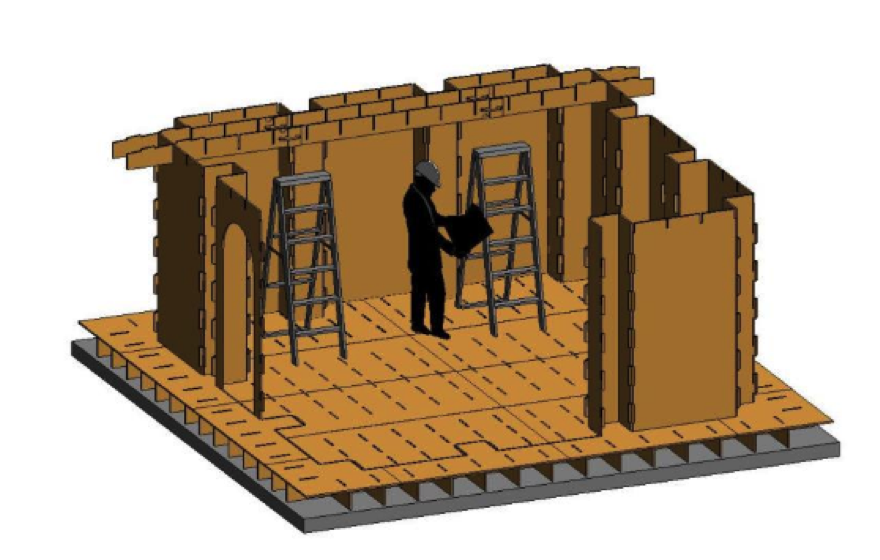
Students were provided with a pre-developed REVIT® model of an emergency shelter design made, predominantly, from timber. The shelter had been designed by a UCL alumnus during their time as a UCL student and agreement was granted to use it for this project. Students were presented with an imagined scenario that they were working for a charity that was planning to build 10 of these shelters in Haiti to assist with humanitarian relief effort following an earthquake. The students needed to consider which parties would need to be communicated with, what information they would need, how this information could be communicated with them and how the digital model could assist with this process.


Figure 1. Image of Emergency Shelter model in REVIT®


Students were encouraged to consider (but not limited to) included:

Students were required to research the relevant information and populate the REVIT® model appropriately and professionally.

Requirements

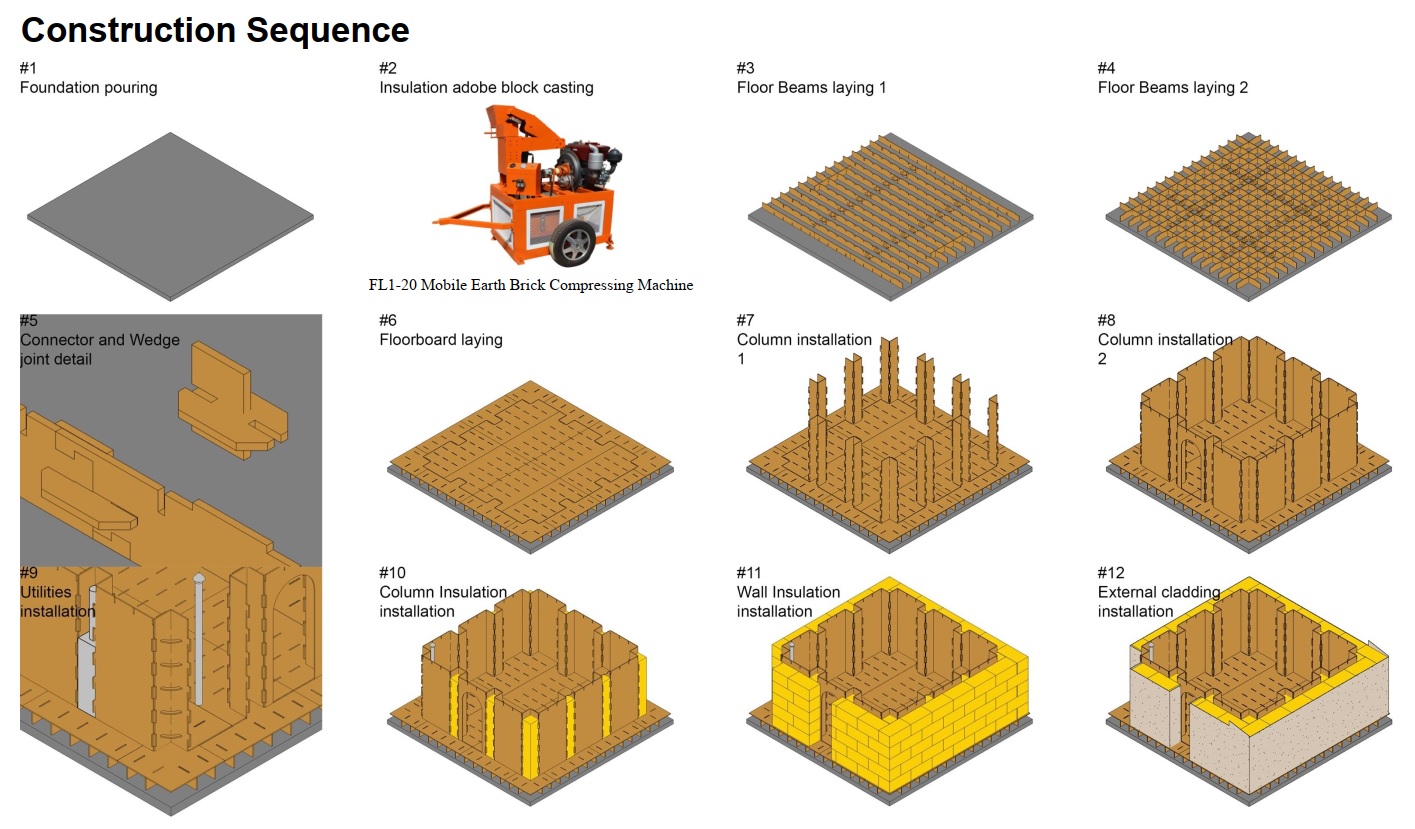
Teams (of 6) were required to provide a 10xA3 page report that would run through each of the potential parties to communicated with, what information they would need and how the model would be used to enable this communication. They also needed to describe any assumptions that were made and how information was selected during the research phase. They needed to highlight the critical thinking that had been carried out in relation to sources of information and its suitability and reliability.


Figure 2. Use of model to explain construction sequence


Teams also needed to submit their completed REVIT® model files for inspection as well as an 8 min video presentation that would:


Emergency Shelter Digital Design Project, A UCL / Multiplex Collaboration

Figure 3. External view of model


Delivery

Course material was delivered over 4 sessions with a final session for presentations:

Session 1: Project introduction and software introduction

Session 2: (i) Information and exporting in REVIT®. (ii) Commercial overview

Session 3: (i) Construction and Logistics. (ii) Health, safety and environmental factors

Session 4: (i) Handover requirements. (ii) Maintainable assets. (iii) Building management

Session 5: Student presentations

Sessions were co-designed and delivered by a UCL academic and a digital manager from Multiplex. The sessions involved a mixture of elements incl. taught, tutorial and workshop time that allowed students to work in their groups.

Learning / Skills Development

The project aimed to develop skills and learning in the following areas:

Benefits of Collaborating

The first benefit was the inspirational aspect of working on a shelter design that had been produced by a former UCL student. This Alumnus contributed to the introduction session by running through their design and this helped students understand just how much had been achieved by someone in their position.

The collaboration with Multiplex’s digital team brought obvious benefits to the technical skills development but also benefitted student understanding by showing how these skills are being used on live construction sites. The process of learning from and presenting to practicing construction professionals also allowed students to develop key professional behavioural skills that help develop and enhance employability.

Reflections and Feedback

Reflections and feedback from all staff involved was that the work produced was of a high quality and that this demonstrated an understanding of the project objectives from the student perspective. It was also apparent that students were becoming adept at using REVIT® software effectively and appropriately.

Wider feedback from students in the module review was very positive about the project and that it had improved their understanding of the role of digital technologies in the construction industry. Students said in feedback “BIM has helped us to look at all aspects of the design and to figure out more stuff in the same amount of time,” and, “Doing it this way [REVIT model] means you can see what you think might be a risk to the workers more easily.”

Several students posted positively about the project on their LinkedIn profiles, possibly suggesting a link between the project and employability in the minds of the students.

2 of the students successfully applied for summer internships with Multiplex’s digital team immediately following the project and were able to build on their digital engineering skills further.

The project was featured by trade magazine BIMPlus which ran an article on the project showcasing the relative novelty and uniqueness of the approach taken.


Any views, thoughts, and opinions expressed herein are solely that of the author(s) and do not necessarily reflect the views, opinions, policies, or position of the Engineering Professors’ Council or the Toolkit sponsors and supporters.
Let us know what you think of our website