Toolkit: Complex Systems Toolkit.

Author: James C Atuonwu, PhD, MIET, FHEA (NMITE).

Topic: Simulating pinch analysis and multi-stakeholder trade-offs.

Title: Modelling complexity in industrial decarbonisation.

Resource type: Teaching activity.

Relevant disciplines: Energy engineering; Chemical engineering; Process systems engineering; Mechanical engineering; Industrial engineering.

Keywords: Climate change; Modelling; Decarbonisation; Energy production; Heat integration; Optimisation; Stakeholders; Trade offs.

Licensing: This work is licensed under a Creative Commons Attribution-ShareAlike 4.0 International License. It is based upon the author’s 2025 article “A Simulation Tool for Pinch Analysis and Heat Exchanger/Heat Pump Integration in Industrial Processes: Development and Application in Challenge-based Learning”. Education for Chemical Engineers 52, 141–150. 

Related INCOSE Competencies: Toolkit resources are designed to be applicable to any engineering discipline, but educators might find it useful to understand their alignment to competencies outlined by the International Council on Systems Engineering (INCOSE). The INCOSE Competency Framework provides a set of 37 competencies for Systems Engineering within a tailorable framework that provides guidance for practitioners and stakeholders to identify knowledge, skills, abilities and behaviours crucial to Systems Engineering effectiveness.   A free spreadsheet version of the framework can be downloaded.

This resource relates to the Systems Thinking, Systems Modelling and Analysis and Critical Thinking INCOSE competencies.

AHEP mapping: This resource addresses several of the themes from the UK’s Accreditation of Higher Education Programmes fourth edition (AHEP4):  Analytical Tools and Techniques (critical to the ability to model and solve problems), and Integrated / Systems Approach (essential to the solution of broadly-defined problems). In addition, this resource addresses the themes of Science, mathematics and engineering principles; Problem analysis; and Design. 

Educational level: Intermediate.

Educational aim: To equip learners with the ability to model, analyse, and optimise pathways for industrial decarbonisation through a complex-systems lensintegrating technical, economic, and policy dimensionswhile linking factory-level design decisions to wider value-chain dynamics, multi-stakeholder trade-offs, and long-term sustainability impacts. 


Learning and teaching notes: 

This teaching activity explores heat integration for the decarbonisation of industrial processes through the lens of complex systems thinking, combining simulation, systems-level modelling, and reflective scenario analysis. It is especially useful in modules related to energy systems, process systems, or sustainability 

Learners analyse a manufacturing site’s energy system using a custom-built simulation tool to explore the energy, cost and carbon-emission trade-offs of different heat-integration strategies. They also reflect on system feedback, stakeholder interests and real-world resilience using causal loop diagrams and role-played decision frameworks.  

This activity frames industrial heat integration as a complex adaptive system, with interdependent subsystems such as process material streams, utilities, technology investments and deployments, capital costs, emissions, and operating constraints. 

Learners run the simulation tool to generate outputs to explore different systems integration strategies: pinch-based heat recovery by heat exchangers, with and without heat pump-based waste heat upgrade. Screenshots of the tool graphical user interface are attached as separate files:

The learning is delivered in part, through active engagement with the simulation tool. Learners interpret the composite and grand composite curves and process tables, to explore how system-level outcomes change across various scenarios. Learners explore, using their generated simulation outputs, how subsystems (e.g. hot and cold process streams, utilities) interact nonlinearly and with feedback effects (e.g., heat recovery impacts), shaping global system behaviour and revealing leverage points and emergent effects in economics, emissions and feasibility. 

Using these outputs as a baseline, and exploring other systems modelling options, learners evaluate trade-offs between heat recovery, capital expenditure (CAPEX), operating costs (OPEX), and carbon emissions, helping them develop systems-level thinking under constraints. 

The activity embeds scenario analysis, including causal loop diagrams, what-if disruption modelling, and stakeholder role-play, using multi-criteria decision analysis (MCDA) to develop strategic analysis and systems mapping skills. Interdisciplinary reasoning is encouraged across thermodynamics, economics, optimisation, engineering ethics, and climate policy, culminating in reflective thinking on system boundary definitions, trade-offs, sustainability transitions and resilience in industrial systems.  

Learners have the opportunity to: 

Teachers have the opportunity to: 


Downloads: 


Learning and teaching resources:


About the simulation tool (access and alternatives):

This activity uses a Streamlit-based simulation tool, supported with process data (Appendix A, Table 1, or an educator’s equivalent). The tool is freely available for educational use and can be accessed online through a secure link provided by the author on request (james.atuonwu@nmite.ac.uk or james.atuonwu@gmail.com). No installation or special setup is required; users can access it directly in a web browser. The activity can also be replicated using open-source or online pinch analysis tools such as OpenPinch, PyPinch PinCH, TLK-Energy Pinch Analysis Online. SankeyMATIC can be used for visualising energy balances and Sankey diagrams. 

Pinch Analysis, a systematic method for identifying heat recovery opportunities by analysing process energy flows, forms the backbone of the simulation. A brief explainer and further reading are provided in the resources section. Learners are assumed to have prior or guided exposure to its core principles. A key tunable parameter in Pinch Analysis, ΔTmin, represents the minimum temperature difference allowed between hot and cold process streams. It determines the required heat exchanger area, associated capital cost, controllability, and overall system performance. The teaching activity helps students explore these relationships dynamically through guided variation of ΔTmin in simulation, reflection, and trade-off analysis, as outlined below. 


Introducing and prioritising ΔTmin trade-offs:

ΔTmin is introduced early in the activity as a critical decision variable that balances heat recovery potential against capital cost, controllability, and safety. Students are guided to vary ΔTmin within the simulation tool to observe how small parameter shifts affect utility demands, exchanger area, and overall system efficiency. This provides immediate visual feedback through the composite and grand composite curves, helping them connect technical choices to system performance. 

Educators facilitate short debriefs using the discussion prompts in Part 1 and simulation-based sensitivity analysis in Part 2. Students compare low and high ΔTmin scenarios, reasoning about implications for process economics, operability, and energy resilience. 

This experiential sequence allows learners to prioritise competing factors (technical, economic, and operational), while recognising that small changes can create non-linear, system-wide effects. It reinforces complex systems principles such as feedback loops and leverage points that govern industrial energy behaviour. 


Data for decisions:

The simulator’s sidebar includes some default values for energy prices (e.g. gas and electricity tariffs) and emission factors (e.g. grid carbon intensity), which users can edit to reflect their own local or regional conditions. For those replicating the activity with other software tools, equivalent calculations of total energy costs, carbon emissions and all savings due to heat recovery investments can be performed manually using locally relevant tariffs and emission factors. 

The Part 1–3 tasks, prompts, and assessment suggestions below remain fully valid regardless of the chosen platform, ensuring flexibility and accessibility across different teaching contexts. 


Educator support and implementation notes:

The activity is designed to be delivered across 3 sessions (6–7.5 hours total), with flexibility to adapt based on depth of exploration, simulation familiarity, or group size. Each part can be run as a standalone module or integrated sequentially in a capstone-style format. 


Part 1: System mapping: (Time: 2 to 2.5 hours) – Ideal for a classroom session with blended instruction and group collaboration:

This stage introduces students to the foundational step of any heat integration analysis: system mapping. The aim is to identify and represent energy-carrying streams in a process plant, laying the groundwork for further system analysis. Educators may use the Process Flow Diagram of Fig. 1, Appendix A (from a real industrial setting: a food processing plant) or another Process Diagram, real or fictional. Students shall extract and identify thermal energy streams (hot/cold) within the system boundary and map energy balances before engaging with software to produce required simulation outputs. 


Key activities and concepts include: 


Discussion prompts: 


Student deliverables: 


Part 2: Running and interpreting process system simulation results (Time: 2 to 2.5 hours) – Suitable for lab or flipped delivery; only standard computer access is needed to run the tool (optional instructor demo can extend depth):

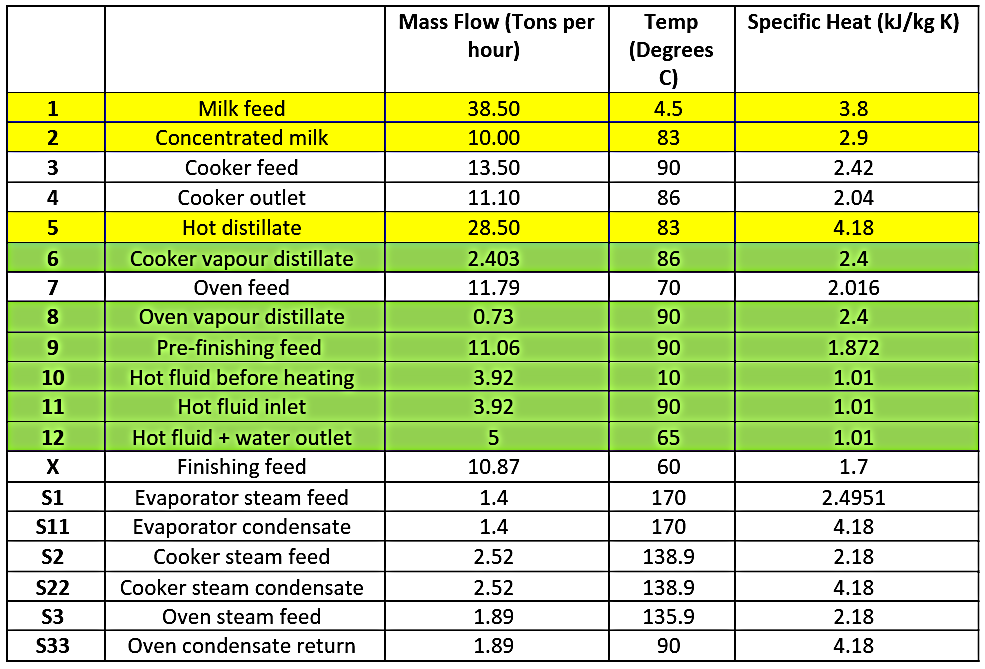
Students use the simulation tool to generate their own results. The process scenario of Fig. 1, Appendix A, with the associated stream data (Table 1) can be used as a baseline.
 

Tool-generated outputs:


Learning tasks:

1. Scenario sweeps
Run different scenarios (e.g., different ΔTmin levels, tariffs, emission factors, and Top-N HP selections).
Prompts: How do QREC, QHU/QCU, HX area, and CAPEX/OPEX/CO₂ shift across scenarios? Which lever moves the needle most? 

2. Group contrast (cases A vs B: see time-phased operations A & B in Appendix A)
Assign groups different cases; each reports system behaviours and trade-offs.
Prompts: Where do you see CAPEX vs. energy-recovery tension? Which case is more HP-friendly and why? 

3. Curve reading
Use the Composite & Grand Composite Curves to identify pinch points and bottlenecks; link features on the curves to the tabulated results.
Prompts: Where is the pinch? How does ΔTmin change the heat-recovery target and utility demands? 

4. Downstream implications
Trace how curve-level insights show up in HX sizing/costs and HP options.
Prompts: When does adding HP reduce utilities vs. just shifting costs? Where do stream temperatures/CP constrain integration? 

5. Systems lens: feedback and leverage
Map short causal chains from the results (e.g., tariffs → HP use → electricity cost → OPEX; grid-carbon → HP emissions → net CO₂).
Prompts: Which levers (ΔTmin, tariffs, EFs, Top-N) create reinforcing or balancing effects? 


Outcome:

Students will be able to generate and interpret industrial simulation outputs, linking technical findings to economic and emissions consequences through a systems-thinking lens. They begin by tracing simple cause–effect chains from the simulation data and progressively translate these into causal loop diagrams (CLDs) that visualise reinforcing and balancing feedback. Through this, learners develop the ability to explain how system structure drives performance both within the plant and across its broader industrial and policy environment. 

Optional extension: Educators may provide 2–3 predefined subsystem options (e.g., low-CAPEX HX network, high-COP HP integration, hybrid retrofit) for comparison. Students can use a decision matrix to justify their chosen configuration against CAPEX, OPEX, emissions, and controllability trade-offs. 


Part 3: Systems thinking through scenario analysis (Time: 2 to 2.5 hours) – Benefits from larger-group facilitation, a whiteboard or Miro board (optional), and open discussion. It is rich in systems pedagogy:

Having completed simulation-based pinch analysis and heat recovery planning, learners now shift focus to strategic implementation challenges faced in real-world industrial settings. In this part, students apply systems thinking to explore the broader implications of their heat integration simulation output scenarios, moving beyond process optimisation to consider real-world dynamics, trade-offs, and stakeholder interactions. The goal is to encourage students to interrogate the interconnectedness of decisions, feedback loops, and unintended consequences in process energy systems including but not limited to operational complexity, resilience to disruptions, and alignment with long-term sustainability goals. 

Activity: Stakeholder role play / Multi-Criteria Decision Analysis 
Students take on stakeholder roles and debate which design variant or operating strategy should be prioritised. They then conduct a Multi-Criteria Decision Analysis (MCDA), evaluating each option based on criteria such as CAPEX, OPEX savings, emissions reductions, risk, and operational ease. 

Stakeholders include:

The team must present a strategic analysis showing how the heat recovery system behaves as a complex adaptive system, and how its implementation can be optimised to balance technical, financial, environmental, and human considerations. 


Optional STOP for questions and activities:

Before constructing causal loop diagrams (CLDs), learners revisit key results from their simulation — such as ΔTmin, tariffs, emission factors, and system costs — and trace how these parameters interact to influence overall system performance. Educators guide this transition, helping students abstract quantitative outputs (e.g., changes in QREC, OPEX, or CO₂) into qualitative feedback relationships that reveal cause-and-effect chains. This scaffolding helps bridge the gap between process simulation and systems-thinking representation, supporting discovery of reinforcing and balancing feedback structures. 


Instructor guidance:
Each student or small subgroup first constructs a causal loop diagram (CLD) from the viewpoint of their assigned stakeholder (e.g., operations, finance, environment). They then reconvene to integrate these perspectives into a single, shared system map, revealing conflicting goals, reinforcing and balancing feedback, and common leverage points. This two-step approach mirrors real-world decision dynamics and strengthens collective systems understanding. Support materials such as a CLD starter template and a stakeholder impact matrix may be provided to assist instructors in scaffolding systems-thinking activities.


Discussion prompts:


Instructor debrief (engineering context with simulation linkage):
After students share their CLDs, the educator facilitates a short discussion linking their identified reinforcing and balancing loops to common dynamic patterns observable in the simulation results. For instance: 

This reflection connects quantitative model outputs (e.g. QREC, OPEX, CAPEX, emissions) to qualitative system behaviours, helping learners recognise leverage points and understand how design choices interact across technical, economic, and social dimensions of decarbonisation. 

Activity: Explore “What if?” scenarios 

Working in groups, students choose one scenario to explore using a systems lens:

Each group evaluates the resilience and flexibility of the proposed integration design. They consider:

Educators may add advanced scenarios (e.g. carbon tax introduction, supplier failure, or project delay) to challenge students’ resilience modelling and stakeholder negotiation skills.


Stakeholder impact reflection:

To extend systems reasoning beyond the technical domain, students assess how their chosen design scenarios (e.g., low vs. high ΔTmin, with or without heat pump integration) affect each stakeholder group. For instance: 

Each team member rates perceived benefits, risks, or compromises under each design case, and the results are summarised in a stakeholder impact matrix or discussion table. This exercise links quantitative system metrics (energy recovery, emissions, cost) to qualitative stakeholder outcomes, reinforcing the “multi-layered feedback” perspective central to complex systems analysis. 


Learning Outcomes (Part 3): 

By the end of this part, students will be able to:


Instructor Note – Guiding CLD and archetype exploration:

Moving from numerical heat-exchange and cost data to CLD archetypes can be conceptually challenging. Instructors are encouraged to model this process by identifying at least one reinforcing loop (e.g. “energy savings → lower OPEX → more investment in recovery → further savings”) and one balancing loop (e.g. “higher capital cost → reduced investment → lower heat recovery”). Relating these loops to common system archetypes such as “Limits to Growth” or “Balancing with Delay” helps students connect engineering data to broader system dynamics and locate potential leverage points. The activity concludes with students synthesising their findings from simulation, systems mapping, and stakeholder analysis into a coherent reflection on complex system behaviour and sustainable design trade-offs. 


Assessment guidance: 

This assessment builds directly on the simulation and systems-thinking activities completed by students. Learners generate and interpret their own simulation outputs (or equivalent open-source pinch analysis results), using these to justify engineering and strategic decisions under uncertainty. 

Assessment focuses on students’ ability to integrate quantitative analysis (energy, cost, carbon) with qualitative reasoning (feedbacks, trade-offs, stakeholder dynamics), demonstrating holistic systems understanding. 


Deliverables (portfolio; individual or group):

1. Reading and interpretation of simulation outputs

Use the outputs you generate (composite & grand composite curves: HX match/area/cost tables; HP pairing/ranking; summary sheets of QHU, QCU, QREC, COP, CAPEX, OPEX, CO₂, paybacks) for a different industrial process (from the one used in the main learning activity) to: 

2. Systems mapping and scenario reasoning 

3. Decision memo (max 2 pages) 

Students should include a short reflective note addressing assumptions, feedback insights, and how their stakeholder perspective shaped their recommendation. 


Appendix A: Example process scenario for teaching activity:

The following process scenario explains the industrial context behind the main teaching activity simulations. A large-scale food processing plant operates a milk product manufacturing line. The process, part of which is shown in Fig. 1, involves the following: 

In real operations, the evaporation subprocess occurs at different times from the cooking/separation, oven and pre-finishing operations. This means that their hot and cold process streams are not simultaneously available for direct heat exchange. For a realistic industrial pinch analysis, the process is thus split into two time slices: 

Separate pinch analyses are performed for each slice, using the yellow-highlighted sections of Table 1 as stream data for time slice A, and the green-highlighted sections as stream data for time slice B. Any heat recovery between slices would require thermal storage (e.g., a hot-water tank) to bridge the time gap. 
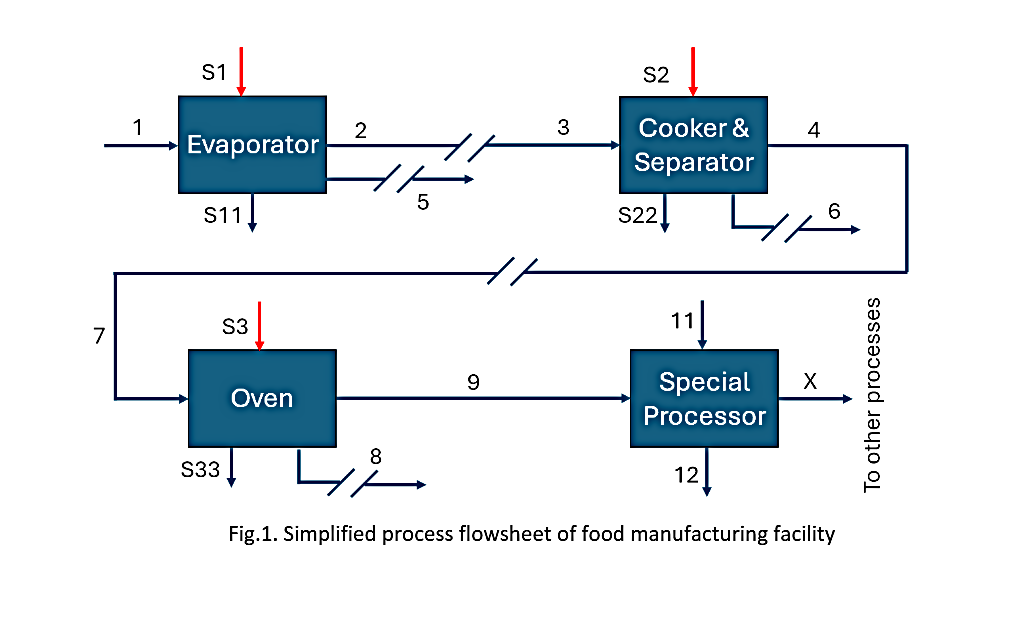
Fig.1. Simplified process flowsheet of food manufacturing facility.


Note on storage and system boundaries:

Because the two sub-processes occur at different times, direct process-to-process heat exchange between their streams is not possible without thermal storage. If storage is introduced: 


Table 1. Process stream data corresponding to flowsheet of Fig. 1. Yellow-highlighted sections represent processes available at time slice A, while green-highlighted sections are processes available at time slice B.


Appendix B: Suggested marking rubric (Editable):

Adopter note: The rubric below is a suggested template. Instructors may adjust criteria language, weightings and band thresholds to align with local policies and learning outcomes. No marks depend on running software. 

1) Interpretation of Simulation Outputs — 25% 

2) Systems Thinking & Scenario Analysis — 30% 

3) Stakeholder & Implementation Insight — 20% 

4) Decision Quality & Justification — 15% 

5) Communication & Presentation — 10% 


References:


Any views, thoughts, and opinions expressed herein are solely that of the author(s) and do not necessarily reflect the views, opinions, policies, or position of the Engineering Professors’ Council or the Toolkit sponsors and supporters.  

Toolkit: Complex Systems Toolkit.

Author: Dr. Ewa Ura-Binczyk (Warsaw University of Technology).

Topic: Rail accident investigation and material failure analysis using systems thinking.

Title: Using fault tree analysis in a rail failure investigation.

Resource type: Teaching – Case study.

Relevant disciplines: Mineral, metallurgy & materials engineering; Civil engineering.

Keywords: Public health and safety; Risk; Fault tree analysis; Failure; Ethics; Public trust; Stakeholders; Trade offs; Uncertainty.

Licensing: This work is licensed under a Creative Commons Attribution-ShareAlike 4.0 International License. 

Related INCOSE Competencies: Toolkit resources are designed to be applicable to any engineering discipline, but educators might find it useful to understand their alignment to competencies outlined by the International Council on Systems Engineering (INCOSE). The INCOSE Competency Framework provides a set of 37 competencies for Systems Engineering within a tailorable framework that provides guidance for practitioners and stakeholders to identify knowledge, skills, abilities and behaviours crucial to Systems Engineering effectiveness.   A free spreadsheet version of the framework can be downloaded.

This resource relates to the Systems Thinking, Systems Modelling and Analysis, Ethics and Professionalism, Technical Leadership and Critical Thinking INCOSE Competencies.

AHEP4 mapping: This resource addresses several of the themes from the UK’s Accreditation of Higher Education Programmes fourth edition (AHEP4): Analytical Tools and Techniques (critical to the ability to model and solve problems), and Integrated / Systems Approach (essential to the solution of broadly-defined problems). In addition, this resource addresses AHEP themes of Design, Ethics and Communication. 

Educational level: Intermediate; Advanced.


Learning and teaching notes:

The case is built around 3 × 90-minute sessions and independent report writing. A suggested breakdown of the activities can be seen below. 

Learners have the opportunity to: 

Teachers have the opportunity to: 


Downloads: 


Learning and teaching resources:


Session  Focus  Suggested activities and timing 
1  Introduction and problem framing  20 min: Introduce case scenario and system context; 30 min: Group discussion on initial impressions, key stakeholders, and potential causes; 40 min: Begin Fault Tree Analysis (FTA) construction using initial evidence. 
2  Investigation and analysis  30 min: Continue FTA construction and data evaluation; 30 min: Peer review of other groups’ fault trees; 30 min: Consolidate findings and prepare draft report outline. 
3  Reporting and reflection  30 min: Present findings to a simulated stakeholder panel; 30 min: Discuss feedback and defend conclusions; 30 min: Individual reflection on complexity, uncertainty, and assumptions. 


Summary of the system or context:

Rail transport systems consist of thousands of interdependent components, including rails, fasteners, sleepers, signalling systems, and maintenance processes. Failures in a single component can cascade, affecting: 


Complex system features: 


Narrative of the case:

On a cold January morning, a commuter train was halted after inspectors discovered a fractured rail joint component. Services were disrupted for several hours, stranding thousands of passengers. The media quickly picked up the story, raising questions about safety and reliability. 

The rail operator urgently commissioned an engineering consultancy (the students) to investigate the failure. Their findings will inform both the safety authority’s decision on whether the line can reopen and the legal proceedings to determine liability. 


The dilemma: 

As consultants, students face incomplete evidence: some lab tests are missing, inspection logs are inconsistent, and eyewitness accounts conflict. They must use Fault Tree Analysis (FTA) to map possible causes, evaluate data, and produce an expert opinion report — knowing that their conclusions could influence legal outcomes and public safety decisions. 

Groups: 3–5 students per group; 3-4 groups can run in parallel. 

Materials required: case narrative handouts, sample inspection log, example FTA, whiteboards/flipcharts, sticky notes for FTA mapping. 

Activity flow: 

1. Introduce case and assign roles. 

2. Construct initial fault trees using evidence. 

3. Peer-review across groups. 

4. Draft expert report and present to simulated stakeholder panel. 

5. Individual reflection on complexity and uncertainty. 


Why use Fault Tree Analysis (FTA):

FTA is a structured approach to trace a failure from an observed event back to potential causes, including technical, human, and organisational factors. 

FTA is particularly suitable for this case because it allows students to structure complex, uncertain information in a logical and transparent way. It helps them trace the chain of causes behind the rail component failure, linking material, human, and organisational factors into one coherent framework. By visualising how small events combine into system-level failures, FTA encourages learners to think critically about interdependencies, data gaps, and assumptions. It also mirrors real-world engineering investigations, where professionals must justify conclusions under uncertainty and demonstrate clear reasoning to stakeholders such as regulators or courts. 

Advantages in this case: 


Questions and activities: 

Prompt  Expected insight / reflection 
What technical, human, and organisational factors might have contributed to this failure?  Students identify multiple interacting factors, illustrating interdependencies and emergent risks. 
How does Fault Tree Analysis help structure uncertainty in this investigation?  Learners recognise FTA’s role in visualising cause-effect pathways and clarifying assumptions. 
Which assumptions are you forced to make, and how might they affect your conclusions?  Students reflect on data gaps, biased observations, and ethical implications of assumptions. 
How do different stakeholders’ interests shape urgency and framing of your analysis?  Learners understand trade-offs, pressures from conflicting priorities, and the precautionary principle. 
What are the risks of issuing a preliminary report under time pressure?  Students explore implications for safety, liability, professional integrity, and public trust. 


Activity  Focus  What “good practice” looks like  Facilitator notes / tips 
1. FTA construction  Collaborative problem analysis  Teams discuss evidence openly, question assumptions, and co-create a logical tree linking technical, human, and organisational causes.   Encourage each group to identify at least one “human/organisational” branch and to label any data gaps explicitly. 
2. Peer review  Critical reflection and systems perspective  Groups provide constructive critique, highlighting hidden assumptions, missing branches, or unclear logic. Dialogue stays professional and evidence-based.  Provide coloured sticky notes or digital comments to record feedback; model how to frame critique as questions (“Have you considered…?”). 
3. Report writing (in-class drafting)  Synthesis and professional communication  Drafts show a clear, defensible reasoning chain from evidence to conclusion. Teams justify assumptions and note uncertainties.  Remind students to separate “facts” from “interpretations.” Encourage use of structured headings (Findings – Analysis – Conclusions). 
4. Simulation role-Play  Perspective-taking and communication under pressure  Presentations are concise (≤5 min), factual, and adapted to stakeholder roles. Learners respond respectfully and clearly to challenging questions.  Provide role cards for the panel (operator, regulator, manufacturer, public). Rotate students if possible. 
5. Reflection  Metacognition and learning from uncertainty  Students identify what surprised them, what they found ambiguous, and how their view of engineering judgment evolved.  Offer prompts like “What would you do differently next time?” or “Where did your reasoning feel uncertain?” 


Further challenge:

Instructors may choose to introduce a second “reveal” phase: a new metallurgical test result or a whistle-blower statement emerges halfway through the case. Students must revise their fault tree and defend whether and how their conclusions change. This highlights the evolving nature of complex systems investigations. 


Assessment opportunities:


Any views, thoughts, and opinions expressed herein are solely that of the author(s) and do not necessarily reflect the views, opinions, policies, or position of the Engineering Professors’ Council or the Toolkit sponsors and supporters.  


“A new report from the National Engineering Policy Centre about resource efficiency and demand reduction for critical materials to support the UK’s existing Net Zero Strategy.

This report provides an overview of the underutilised policy options for achieving reductions in demands for critical materials and dependency on imports of scarce materials.

It presents a range of policy and engineering interventions around three main areas of demand-side resource management. These include: infrastructure and technology planning, design and design skills and circular economy.

The report concludes with 25 recommendations for policymakers which will help the UK cut its critical material footprint. Lead recommendations from the report call for: an integrated materials strategy, a National Materials Data Hub, infrastructure planning for material sustainability, and a new target to halve the UK’s material footprint.

The report also makes specific recommendations for targeted action, such as committing to the ban on single-use vapes, and improving repair and recycling of electronics to reduce e-waste.

Without intervention, the UK risks not achieving its Net Zero strategy and exposure to future economic uncertainty.” – The Royal Academy of Engineering


Any views, thoughts, and opinions expressed herein are solely that of the author(s) and do not necessarily reflect the views, opinions, policies, or position of the Engineering Professors’ Council or the Toolkit sponsors and supporters.

Authors: Dr Gilbert Tang; Dr Rebecca Raper (Cranfield University). 

Topic: Considering the SDGs at all stages of new robot creation. 

Tool type: Guidance. 

Relevant disciplines: Computing; Robotics; Electrical; Computer science; Information technology; Software engineering; Artificial Intelligence; Mechatronics; Manufacturing engineering; Materials engineering; Mechanical engineering; Data. 

Keywords: SDGs; AHEP; Sustainability; Design; Life cycle; Local community; Environment; Circular economy; Recycling or recycled materials; Student support; Higher education; Learning outcomes. 

Sustainability competency: Systems thinking; Anticipatory; Critical thinking.

AHEP mapping: This resource addresses two of the themes from the UK’s Accreditation of Higher Education Programmes fourth edition (AHEP4): The Engineer and Society (acknowledging that engineering activity can have a significant societal impact) and Engineering Practice (the practical application of engineering concepts, tools and professional skills). To map this resource to AHEP outcomes specific to a programme under these themes, access AHEP 4 here  and navigate to pages 30-31 and 35-37.  

Related SDGs: SDG 9 (Industry, innovation, and infrastructure); SDG 12 (Responsible consumption and production). 

Reimagined Degree Map Intervention: Adapt and repurpose learning outcomes; More real-world complexity.

Who is this article for? This article is for educators working at all levels of higher education who wish to integrate Sustainability into their robotics engineering and design curriculum or module design. It is also for students and professionals who want to seek practical guidance on how to integrate Sustainability considerations into their robotics engineering. 


Premise:  

There is an urgent global need to address the social and economic challenges relating to our world and the environment (Raper et al., 2022). The United Nations Sustainable Development Goals (SDGs) provide a framework for individuals, policy-makers and industries to work to address some of these challenges (Gutierrez-Bucheli et al., 2022). These 17 goals encompass areas such as clean energy, responsible consumption, climate action, and social equity. Engineers play a pivotal role in achieving these goals by developing innovative solutions that promote sustainability and they can use these goals to work to address broader sustainability objectives. 

Part of the strategy to ensure that engineers incorporate sustainability into their solution development is to ensure that engineering students are educated on these topics and taught how to incorporate considerations at all stages in the engineering process (Eidenskog et al., 2022). For instance, students need not only to have a broad awareness of topics such as the SDGs, but they also need lessons on how to ensure their engineering incorporates sustainable practice. Despite the increased effort that has been demonstrated in engineering generally, there are some challenges when the sustainability paradigm needs to be integrated into robotics study programs or modules (Leifler and Dahlin, 2020). This article details one approach to incorporate considerations of the SDGs at all stages of new robot creation: including considerations prior to design, during creation and manufacturing and post-deployment. 


1. During research and problem definition:

Sustainability considerations should start from the beginning of the engineering cycle for robotic systems. During this phase it is important to consider what the problem statement is for the new system, and whether the proposed solution satisfies this in a sustainable way, using Key Performance Indicators (KPIs) linked to the SDGs (United Nations, 2018), such as carbon emissions, energy efficiency and social equity (Hristov and Chirico, 2019). For instance, will the energy expended to create the robot solution be offset by the robot once it is in use? Are there long-term consequences of using a robot as a solution? It is important to begin engagement with stakeholders, such as end-users, local communities, and subject matter experts to gain insight into these types of questions and any initial concerns. Educators can provide students with opportunities to engage in the research and development of robotics technology that can solve locally relevant problems and benefit the local community. These types of research projects allow students to gain valuable research experience and explore robotics innovations through solving problems that are relatable to the students. There are some successful examples across the globe as discussed in Dias et al., 2005. 


2. At design and conceptualisation:

Once it is decided that a robot works as an appropriate solution, Sustainability should be integrated into the robot system’s concept and design. Considerations can include incorporating eco-design principles that prioritise resource efficiency, waste reduction, and using low-impact materials. The design should use materials with relatively low environmental footprints, assessing their complete life cycles, including extraction, production, transportation, and disposal. Powered systems should prioritise energy-efficient designs and technologies to reduce operational energy consumption, fostering sustainability from the outset. 


3. During creation and manufacturing:

The robotic system should be manufactured to prioritise methods that minimise, mitigate or offset waste, energy consumption, and emissions. Lean manufacturing practices can be used to optimise resource utilisation where possible. Engineers should be aware of the importance of considering sustainability in supply chain management to select suppliers with consideration of their sustainability practices, including ethical labour standards and environmentally responsible sourcing. Robotic systems should be designed in a way that is easy to assemble and disassemble, thus enabling robots to be easily recycled, or repurposed at the end of their life cycle, promoting circularity and resource conservation. 


4. Deployment:

Many robotic systems are designed to run constantly day and night in working environments such as manufacturing plants and warehouses. Thus energy-efficient operation is crucial to ensure users operate the product or system efficiently, utilising energy-saving features to reduce operational impacts. Guidance and resources should be provided to users to encourage sustainable practices during the operational phase. System designers should also implement systems for continuous monitoring of performance and data collection to identify opportunities for improvement throughout the operational life. 


5. Disposal:

Industrial robots have an average service life of 6-7 years. It is important to consider their end-of-life and plan for responsible disposal or recycling of product components. Designs should be prioritised that facilitate disassembly and recycling (Karastoyanov and Karastanev, 2018). Engineers should identify and safely manage hazardous materials to comply with regulations and prevent environmental harm. Designers can also explore options for product take-back and recycling as part of a circular economy strategy. There are various ways of achieving that. Designers can adopt modular design methodologies to enable upgrades and repairs, extending their useful life. Robot system manufacturers should be encouraged to develop strategies for refurbishing and reselling products, promoting reuse over disposal. 


Conclusion: 

Sustainability is not just an option but an imperative within the realm of engineering. Engineers must find solutions that not only meet technical and economic requirements but also align with environmental, social, and economic sustainability goals. As well as educating students on the broader topics and issues relating to Sustainability, there is a need for teaching considerations at different stages in the robot development lifecycle. Understanding the multifaceted connections between sustainability and engineering disciplines, as well as their impact across various stages of the engineering process, is essential for engineers to meet the challenges of the 21st century responsibly.  


References: 

Dias, M. B., Mills-Tettey, G. A., & Nanayakkara, T. (2005, April). Robotics, education, and sustainable development. In Proceedings of the 2005 IEEE International Conference on Robotics and Automation (pp. 4248-4253). IEEE. 

Eidenskog, M., Leifler, O., Sefyrin, J., Johnson, E., & Asplund, M. (2023). Changing the world one engineer at a time–unmaking the traditional engineering education when introducing sustainability subjects. International Journal of Sustainability in Higher Education, 24(9), 70-84.  

Gutierrez-Bucheli, L., Kidman, G., & Reid, A. (2022). Sustainability in engineering education: A review of learning outcomes. Journal of Cleaner Production, 330, 129734. 

Hristov, I., & Chirico, A. (2019). The role of sustainability key performance indicators (KPIs) in implementing sustainable strategies. Sustainability, 11(20), 5742. 

Karastoyanov, D., & Karastanev, S. (2018). Reuse of Industrial Robots. IFAC-PapersOnLine, 51(30), 44-47. 

Leifler, O., & Dahlin, J. E. (2020). Curriculum integration of sustainability in engineering education–a national study of programme director perspectives. International Journal of Sustainability in Higher Education, 21(5), 877-894. 

Raper, R., Boeddinghaus, J., Coeckelbergh, M., Gross, W., Campigotto, P., & Lincoln, C. N. (2022). Sustainability budgets: A practical management and governance method for achieving goal 13 of the sustainable development goals for AI development. Sustainability, 14(7), 4019. 

SDG Indicators — SDG Indicators (2018) United Nations (Accessed: 19 February 2024) 


This work is licensed under a Creative Commons Attribution-ShareAlike 4.0 International License.  

Any views, thoughts, and opinions expressed herein are solely that of the author(s) and do not necessarily reflect the views, opinions, policies, or position of the Engineering Professors’ Council or the Toolkit sponsors and supporters. 


To view a plain text version of this resource, click here to download the PDF.

Author: Dr. Natalie Wint (UCL). 

Topic: Responsibility for micro- and nano-plastics in the environment and human bodies.  

Engineering disciplines: Chemical Engineering; Environmental Engineering; Materials Engineering; Mechanical Engineering. 

Ethical issues: Corporate social responsibility; Power; Safety; Respect for the Environment. 

Professional situations: Whistleblowing; Company growth; Communication; Public health and safety. 

Educational level: Intermediate. 

Educational aim: Becoming Ethically Sensitive: being broadly cognizant of ethical issues and having the ability to see how these issues might affect others. 


Learning and teaching notes: 

This case study involves a young engineering student on an industrial placement year at a firm that manufactures cosmetics. The student has been working hard to impress the company as they are aware that this may lead to them being offered a job upon graduation. They are involved in a big project that focuses on alternative, more environmentally friendly cosmetic chemistries. When they notice a potential problem with the new formulation, they must balance their commitment towards environmental sustainability with their desire to work for the company upon graduation.  

This dilemma can be addressed from a micro-ethics point of view by analysing personal ethics, intrinsic motivations and moral values. It can also be analysed from a macro-ethics point of view, by considering corporate responsibility and intergenerational justice. The dilemma can also be framed to emphasise global responsibility and environmental justice whereby the engineers consider the implications of their decisions on global communities and future generations.  

This case study addresses two of the themes from the Accreditation of Higher Programmes fourth edition (AHEP4): The Engineer and Society (acknowledging that engineering activity can have a significant societal impact) and Engineering Practice (the practical application of engineering concepts, tools and professional skills). To map this case study to AHEP outcomes specific to a programme under these themes, access AHEP 4 here and navigate to pages 30-31 and 35-37. 

The dilemma in this case is presented in two parts. If desired, a teacher can use Part one in isolation, but Part two develops and complicates the concepts presented in Part one to provide for additional learning. The case allows teachers the option to stop at multiple points for questions and / or activities, as desired.

Learners have the opportunity to:   

Teachers have the opportunity to:    


Learning and teaching resources: 

Professional organisations: 

EU agencies: 

Industry publications: 

EU law: 


Dilemma – Part one: 

Microplastics are solid plastic particles composed of mixtures of polymers and functional additives; they also contain residual impurities. Microplastics generally fall into two groups: those that are unintentionally formed as a result of the wear and tear of larger pieces of plastic, and those that are deliberately manufacturedand added to products for specific purposes (primary microplastics). Microplastics are intentionally added to a range of products including cosmetics, in which they act as abrasives and can control the thickness, appearance, and stability of a product.  

Legislation pertaining to the use of microplastics varies worldwide and several loopholes in the regulations have been identified. Whilst many multinational companies have fought the introduction of such regulations, other stakeholders have urged for the use of the precautionary principle, suggesting that all synthetic polymers should be regulated in order to prevent significant damage to both the environment and human health. 

Recently, several changes to the regulation of microplastics have been proposed within Europe. One that affects the cosmetics industry particularly concerns the intentional addition of microplastics to cosmetics. Manufacturers, especially those who export their products, have therefore been working to change their products. 


Optional STOP for questions and activities:  

1. Discussion: Professional values – What ethical principles and codes of conduct are applicable to the use of microplastics? Should these change or be applied differently when the microplastics are used in products that may be swallowed or absorbed through the eyes or skin?

2. Activity: Research some of the current legislation in place surrounding the use of microplastics. Focus on the strengths and limitations of such legislation.  

3. Activity: Technical integration – Research the potential health and environmental concerns surrounding microplastics. Investigate alternative materials and/or technological solutions to the microplastic ‘problem’.  

4. Discussion: Familiarise yourself with the precautionary principle. What are the advantages and disadvantages of applying the precautionary principle in this situation?  


Dilemma – Part two: 

Alex is a young engineering student on an industrial placement year at a firm that manufactures cosmetics. The company has been commended for their sustainable approach and Alex is really excited to have been offered a role that involves work aligned with their passion. They are working hard to impress the company as they are aware that this may lead to them being offered a job upon graduation.  

Alex is involved in a big project that focuses on alternative, more environmentally friendly cosmetic chemistries. Whilst working in the formulation laboratory, they notice that some of the old filler material has been left near the preparation area. The container is not securely fastened, and residue is visible in the surrounding area. The filler contains microplastics and has recently been taken out of products. However, it is still in stock so that it could be used for comparative testing, during which the performance of traditional, microplastic containing formulations are compared to newly developed formulations. It is unusual for the old filler material to be used outside of the testing laboratory and Alex becomes concerned about the possibility that the microplastics have been added to a batch of the new product that had been made the previous day. They raise the issue to their supervisor, asking whether the new batch should be quarantined.  

“We wouldn’t ever hold such a large, lucrative order based on an uncertainty like that,” the supervisor replies, claiming that even if there was contamination it wasn’t intentional and would therefore not be covered by the legislation. “Besides, most of our products go to countries where the rules are different.” 

Alex mentions the health and environmental issues associated with microplastics, and the reputation the company has with customers for being ethical and sustainable. They suggest that they bring the issue up with the waste and environmental team who have expertise in this area.  

Their supervisor replies: “Everyone knows that the real issue is the microplastics that are formed from disintegration of larger plastics. Bringing up this issue is only going to raise questions about your competence.”  


Optional STOP for questions and activities: 

1. Discussion: Personal values – What competing personal values or motivations might trigger an internal conflict for Alex? 

2. Activity: Research intergenerational justice and environmental justice. How do they relate to this case? 

3. Activity: Identify all potential stakeholders and their values, motivations, and responsibilities. 

4. Discussion: Consider both the legislation in place and the RAEng/Engineering Council Ethical Principles. What should Alex do according to each of these? Is the answer the same for both? If not, which set of guidance is more important? 

5. Discussion: How do you think the issue of microplastics should be controlled? 

6. Activity: Alex and their boss are focused on primary microplastics. Consider the lifecycle of bulk plastics and the various stakeholders involved. Who should be responsible for the microplastics generated during the disintegration of plastic products?

7. Discussion: What options for action does Alex have available to them? What are the advantages and disadvantages of each approach? What would you do if you were Alex? 

8. Activity: Technical integration related to calculations or experiments on microplastics. 


This work is licensed under a Creative Commons Attribution-ShareAlike 4.0 International License.

Any views, thoughts, and opinions expressed herein are solely that of the author(s) and do not necessarily reflect the views, opinions, policies, or position of the Engineering Professors’ Council or the Toolkit sponsors and supporters.

Author: Dr Irene Josa (University College London). The author would like to acknowledge Colin Church (IOM3) who provided valuable feedback during the development of this case.

Topic: Materials sourcing and circularity.

Engineering disciplines: Materials engineering; Manufacturing; Environmental engineering; Construction.

Ethical issues: Respect for the environment; Risk.

Professional situations: Conflicts of interest; Public health and safety; Legal implications; Whistleblowing; Power; Corporate social responsibility.

Educational level: Intermediate.

Educational aim: Gaining ethical knowledge. Knowing the sets of rules, theories, concepts, frameworks, and statements of duty, rights, or obligations that inform ethical attitudes, behaviours, and practices.


Learning and teaching notes:

This case involves an engineer responsible for verifying the source of recycled construction material to ensure it is not contaminated. The case is presented in three parts. Part one focuses on the environmental, professional, and social contexts and may be used in isolation to allow students to explore both micro-ethical and macro-ethical concerns. Parts two and three bring in a dilemma about public information and communication and allows students to consider their positions and potential responses. The case allows teachers the option to stop at multiple points for questions and / or activities as desired.

This case study addresses two of AHEP 4’s themes: The Engineer and Society (acknowledging that engineering activity can have a significant societal impact) and Engineering Practice (the practical application of engineering concepts, tools and professional skills). To map this case study to AHEP outcomes specific to a programme under these themes, access AHEP 4 here and navigate to pages 30-31 and 35-37.

Learners have the opportunity to:

Teachers have the opportunity to:


Learning and teaching resources:

NGOs:

Government site:

Business:

Journal articles:

Professional organisations:


Dilemma – Part one:

Charlie is a junior environmental engineer who started working at Circle Mat after graduating. Circle Mat is a construction products company that takes pride in using recycled materials from waste in their products, such as mortars and concretes. In fact, Circle Mat was recently nominated by the National Sustainability Association in the prize for the most innovative and sustainable production chains.

Charlie’s role is to ensure that the quality standards of the recycled waste used in the products are met. She is sent a report every two weeks from the factories receiving the waste and she checks the properties of this waste. While she is also supposed to visit all the factories once a month, her direct supervisor, Sam, advised her to visit only those factories where data shows that there are problems with the quality. While it is Charlie’s responsibility to verify the quality and to create the factory visit plan, she trusts her line manager as to how best approach her work.

Among all the factories with which they are working, the factory in Barretton has always had the highest quality standards, and since it is very far from where Charlie is based, she has postponed for months her visit to that factory.


Optional STOP for questions and activities:

1. Discussion: Charlie is responsible for checking the quality from the data she receives, but what about the quality/reliability of the data? Where does her responsibility begin and end? What ethical guidance, codes, or frameworks can help her decide?

2. Activity: Research the issue of asbestos, including current science, potential risks, and legal implications.

3. Discussion: Macroethical context – What is circularity, and how does it relate to climate goals or environmental practice?


Dilemma: Part two:

After several months, she finally goes to the town where the factory is located. Before getting to the factory, she stops for a coffee at the town’s café. There, she enquires of the waiter about the impacts of the factory on the town. The waiter expresses his satisfaction and explains that since Circle Mat started operations there, the town has become much more prosperous.

When Charlie reaches the factory, she notices a pile of waste that, she assumes, is the one that is being used as recycled aggregate in concrete. Having a closer look, she sees that it is waste from demolition of a building, with some insulation walls, concrete slabs and old pipes. At that moment, the head of the factory arrives and kindly shows Charlie around.

At the end of the visit, Charlie asks about the pile, and the head says that it is indeed demolition waste from an old industrial building. By the description, Charlie remembers that there are some buildings in the region that still contain asbestos, so asks whether the demolition material could potentially have asbestos. To Charlie’s surprise, the head reacts aggressively and says that the visit is over.


Optional STOP for questions and activities:

1. Activity: Use an environmental and social Life Cycle Assessment tool to assess the environmental and social impacts that the decision that Charlie makes might have.

2. Discussion: Map possible courses of action regarding the approach that Charlie could adopt when the factory head tries to shut down the visit. Discuss which is the best approach and why. Some starting questions would be: What should Charlie do? What feels wrong about this situation?

3. Discussion: if she reports her suspicions to her manager, what data or evidence can she present? Should she say anything at all at this point?


Dilemma – Part three:

In the end, Charlie decides not to mention anything, and after writing her report she leaves Barretton. A few days later, Circle Mat is announced to be the winner of the prize by the National Sustainability Association. Circle Mat organises a celebration event to be carried out in Barretton. During the event, Charlie discovers that Circle Mat’s CEO is a relative of the mayor of Barretton.

She is not sure if there really is asbestos in the waste, and also she does not know if other factories might be behaving in the same way. Nonetheless, other junior engineers are responsible for the other factories, so she doesn’t have access to the information.

Some days after the event, she receives a call from a journalist who says that they have discovered that the company is using waste from buildings that contain asbestos. The journalist is preparing an article to uncover the secret and wants to interview her. They ensure that, if she wants, her identity will be kept anonymous. They also mention that, if she refuses to participate, they will collect information from other sources in the company.


Optional STOP for questions and activities:

1. Activity: Technical integration related to measuring contaminants in waste products used for construction materials.

2. Discussion: What ethical issues can be identified in this scenario? Check how ethical principles of the construction sector inform the ethical issues that may be present, and the solutions that might be possible.

3. Discussion: What interpersonal and workplace dynamics might affect the approach taken to resolve this situation? 

4. Discussion: Would you and could you take the interview with the journalist? Should Charlie? Why or why not?

5. Activity: In the case of deciding to take the interview, prepare the notes you would take to the interview.


This work is licensed under a Creative Commons Attribution-ShareAlike 4.0 International License.

Any views, thoughts, and opinions expressed herein are solely that of the author(s) and do not necessarily reflect the views, opinions, policies, or position of the Engineering Professors’ Council or the Toolkit sponsors and supporters.

Case enhancement: Glass safety in a heritage building conversion

Activity: Do engineers have a responsibility to warn the public if there is a chance of risk?

Author: Cortney Holles (Colorado School of Mines, USA).


Overview:

This enhancement is for an activity found in the Dilemma Part two, Point 1 section of this case: Debate whether or not Krystyna has an ethical or professional responsibility to warn relevant parties (“of matters . . .  which are of potential detriment to others who may be adversely affected by them” – The Society of Construction Law’s Statement of Ethical Principles).

After introducing or studying the Glass Safety case, teachers may want students to dig deeper into the ethical issues in the case through a debate.  The resources and lesson plan below guide teachers through this lesson.


1. Introduce the debate assignment:

Students will debate whether or not Krystyna has an ethical or professional responsibility to warn relevant parties. Build in some time for students to prepare their arguments in small groups (either during class or as a homework assignment).  Create small groups of 2-5 students that can develop positions on each of the following positions on the question of the debate:

Does Krystyna have a responsibility to warn Sir Robert or future residents of the buildings about the glass?


2. Supporting the arguments in the debate with texts:

Provide students with resources that offer support for the different positions in the debate, listed below.  Perhaps you have assigned readings in the class they can be asked to reference for support in the debate.  Teachers could also assign students to conduct independent research on these stakeholders and positions if that matches the goals of the class.


Resources:

Journal articles:

Law:

Professional organisations:

Educational institution:

Ethics:


3. Running the debate in class:

Key concepts this debate can cover:


This work is licensed under a Creative Commons Attribution-ShareAlike 4.0 International License.

Any views, thoughts, and opinions expressed herein are solely that of the author(s) and do not necessarily reflect the views, opinions, policies, or position of the Engineering Professors’ Council or the Toolkit sponsors and supporters.

Theme: Collaborating with industry for teaching and learning, Universities’ and businesses’ shared role in regional development, Knowledge exchange, Graduate employability and recruitment

Authors: Prof Simon Barrans (University of Huddersfield), Harvey Kangley (Associated Utility Supplies Ltd), Greg Jones (University of Huddersfield) and Mark Newton (Associated Utility Supplies Ltd)

Keywords: Knowledge Transfer Partnership, Design and Innovation, Student Projects, Railway Infrastructure

Abstract: A six year collaboration between the University of Huddersfield and Associated Utility Supplies Ltd has resulted in one completed and one ongoing KTP project, two successfully completed First of a Kind projects for the rail industry and the development of a new design department in the company. Benefits to the University include, graduate and placement student employment, industrially relevant final year and masters projects and the application of University research. Continued collaboration will generate a case study for the next REF. In this paper we explore the various mechanisms that have been used to facilitate this work.


The opportunity

Network Rail felt that their current supply chain was vulnerable with many parts being single source, some from overseas. They addressed this issue by engaging with SMEs who could develop alternative products. A local company, AUS, believed they could tackle this challenge but needed to develop their design and analysis capability. Their collaboration with the University of Huddersfield enabled this.

Seed funded taster projects

In 2016 AUS approached regional development staff at the 3M Buckley Innovation Centre, the University‘s business and innovation centre, with two immediate needs. These were: an explanation as to why a cast iron ball swivel clamp had failed in service, and a feasibility study to determine if a cast iron cable clamp could be replaced with an aluminium equivalent. Both these small projects were funded using the University’s Collaborative Venture Fund, an internal funding scheme to deliver short feasibility projects for industry. This incentivises staff to only engage in collaborations where there is a high expectation of significant external future funding, and which are low risk to an industry partner.

Knowledge Transfer Partnership (KTP) Projects

KTPs are managed by Innovate UK and are one of the few Innovate UK grants that are designed to have a university as the lead organisation. They are particularly attractive to SMEs as Innovate UK funds 67% of the project cost. The costs cover: the employment costs for a graduate, known as the Associate, who typically works full time at the company; an academic supervisor who meets with the Associate for half a day a week; and administrative support. The key measure of success of a KTP project is that it leaves the company generating more profit and hence, paying more tax. Increased employment is also desirable.

The first, three-year KTP project, applied for in January 2017 and started in June 2017, aimed to provide the company with a design and analysis capability. A Mechanical Engineering graduate from Huddersfield was recruited as the Associate and the Solidworks package was introduced to the company. A product development procedure was put in place and a number of new products brought to market. The Associate’s outstanding performance was recognised in the KTP Best of the Best Awards 2020 and he has stayed with the company to lead the Product Innovation team.

The second, two-year KTP project started in November 2020 with the aim of expanding the company’s capability to use FRP materials. Whilst the company had some prior product experience in this area, they were not carrying out structural analysis of the products. FRP is seen as an attractive material for OLE structures as it is non-conductive (hence removing the need for insulators) and reduces mass (compared to steel) which reduces the size of foundations needed.

First of a kind (FOAK) projects

The Innovate UK FOAK scheme provides 100% funding to develop products at a high technology readiness level and bring them to market. They are targeted at particular industry areas and funding calls are opened a month to two months before they close. It is important therefore to be prepared to generate a bid before the call is made. FOAKs can and have been led by universities. In the cases here, the company was the lead as they could assemble the supply chain and route to market. The entire grant went to the company with the university engaged as a sub-contractor.

The first FAOK to support development of a new span-wire clamp was initially applied for in 2019 and was unsuccessful but judged to be fundable. A grant writing agency was employed to rewrite the bid and it was successful the following year. Comparing the two bids, re-emphasis of important points between sections of the application form and emphasising where the bid met the call requirements, appeared to be the biggest change.

The span-wire clamp is part of the head-span shown in figure 1. The proposal was to replace the existing cast iron, 30 component assembly with an aluminium bronze, 14 component equivalent, as shown in figure 2. The FOAK project was successful with the new clamp now approved for deployment by Network Rail.

The University contributed to the project by testing the load capacity of the clamps, assessing geometric tolerances in the cast parts and determining the impact that the new clamp would have on the pantograph-contact wire interface. This latter analysis used previous research work carried out by the University and will be an example to include in a future REF case study.

The second FOAK applied for in 2020 was for the development of a railway footbridge fabricated from pultruded FRP sections. This bid was developed jointly by the University and the company, alongside the resubmission of the span-wire FOAK bid. This bid was successful and the two projects were run in parallel. The footbridge was demonstrated at RailLive 2021.

Additional benefits to University of Huddersfield

In addition to the funding attracted, the collaboration has provided material for two MSc module assignments, six MSc individual projects and 12 undergraduate projects. The country of origin of students undertaking these projects include India, Sudan, Bangladesh, Egypt, Syria and Qatar. A number of these students intend to stay in the UK and their projects should put them in a good position to seek employment in the rail industry. A number of journal and conference papers based on the work are currently being prepared.


Figure 1. Head-span showing span-wires and span-wire clamp.


Figure 2. Old (left) and new (right) span-wire clamps.


Any views, thoughts, and opinions expressed herein are solely that of the author(s) and do not necessarily reflect the views, opinions, policies, or position of the Engineering Professors’ Council or the Toolkit sponsors and supporters.

Theme: Knowledge exchange

Authors: Dr Tom Allen (Manchester Metropolitan University), Prof Andy Alderson (Sheffield Hallam University) and Dr Stefan Mohr (HEAD)

Keywords: Sport, Tennis, Material, Auxetic, Mechanics

Abstract: The case study is interesting as it combines the engaging topics of smart materials and sports engineering, and showcases the release of a sports product. The work is underpinned by academic papers, include a teaching focus one detailing how materials have influenced tennis rackets dating back to the origins of the game. Effect of materials and design on the bending stiffness of tennis rackets: https://doi.org/10.1088/1361-6404/ac1146. Review of auxetic materials for sports applications: Expanding options in comfort and protection: https://doi.org/10.3390/app8060941.


This case study is about the application of auxetic materials to sports equipment. Particularly, it is about the development of the first ever tennis racket to feature auxetic fibre-polymer composites [1]. In our work, we aim to combine the exciting fields of sport and advanced materials to engage people with science, technology, engineering, and maths (STEM). Indeed, our work is multi-disciplinary. Dr Mohr is the R&D Manager for PreDevelopement at HEAD and brings expertise in tennis racket engineering, Dr Allen and Professor Alderson are academics and bring respective expertise in sports engineering and smart materials.

Dr Allen has been researching the mechanics of sports equipment for many years, with a focus on tennis rackets [2]. One project involved characterising the properties of over 500 diverse rackets dating back to the origins of the game in the 1870s to the present day. The rackets were from various collections, including the Wimbledon Lawn Tennis Museum in London, and HEAD in Kennelbach Austria, where Dr Mohr works. The museum houses particularly old and rare rackets, whereas the collection at HEAD has a broad range of more modern designs. Initial work involved developing techniques for efficiently characterising many rackets [3]. Subsequent publications describe how a shift in construction materials – from wood to fibre-polymer composites – around the 1970s and 1980s led to lighter and stiffer rackets, with shorter handles and larger heads [4], [5]. Indeed, the application of new materials has driven the development of tennis rackets, and further advances are likely to come from developments in materials and manufacturing techniques.

Professor Alderson has been researching smart materials and structures for many years, with a focus on auxetic materials [6]. Auxetic materials have a negative Poisson’s ratio, which means that they fatten when stretched and become thinner when compressed. A negative Poisson’s ratio can enhance other properties, including vibration damping. Dr Allen and Professor Alderson have been working together to apply auxetic materials to sports equipment [7]. Dr Allen discussed this work on auxetic materials with Dr Mohr, and this led to the collaboration between the three parties that resulted in the new racket design [1].

Auxetic fibre-polymer composites were particularly appealing to Dr Mohr for application in tennis rackets, as they can be made using conventional fibres and resins, by simply arranging the fibres in specific orientations [8]. Following a visit to HEAD, where he was able to see the prototyping facilities, Professor Alderson developed various auxetic fibre-polymer composites, using the materials already being used by HEAD to make rackets. HEAD then developed prototype rackets incorporating these auxetic fibre-polymer composites at their research and development facility in Kennelbach. The racket designs were further developed and refined through testing, both in the laboratory and on the tennis court with players providing feedback.  

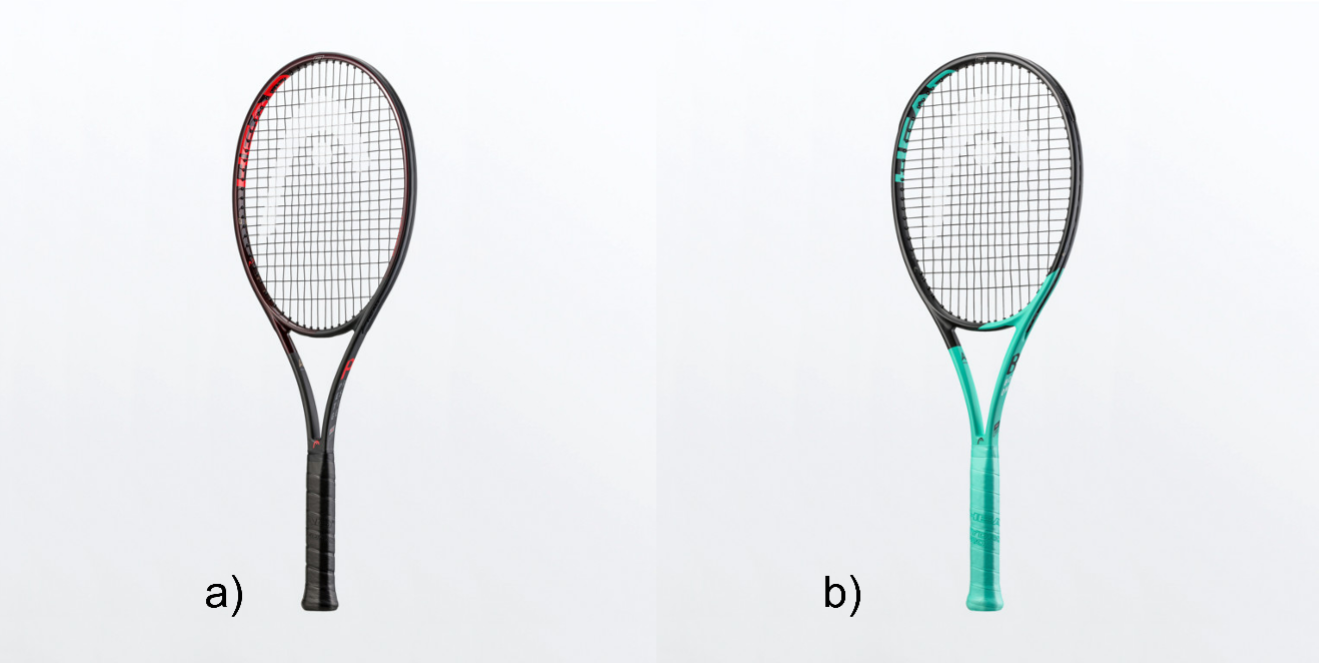
The first tennis racket with auxetic fibre composites was released in late 2021, in the form of the HEAD Prestige (Figure 1a). The Prestige was followed by the release of a new racket silo (collection) in early 2022 in the form of the Boom (Figure 1b). Drs Mohr and Allen and Professor Alderson are now exploring options for further applying auxetic materials to tennis rackets. Dr Allen’s teaching case study on the historical development of the tennis racket [4] has been enriched by including the story behind the development of the new auxetic fibre-polymer composite rackets [1]. He also includes discussion of emerging topics in the case study that could be applied to tennis rackets, such as more automated manufacturing techniques like additive manufacturing, and more environmentally friendly materials, like natural fibres and resins [5]. We hope that the new tennis rackets will raise awareness of auxetic materials amongst the public, and the case study will help inspire others to use topics like sports engineering and advanced materials to support their STEM teaching and public engagement.  


Figure 1 Examples of HEAD rackets featuring auxetic fibre-polymer composites, a) Prestige Pro and b) Boom Prom.


References

[1]         HEAD Sports, “Auxetic – The Science Behind the Sensational Feel,” 2021. https://www.head.com/en_GB/tennis/all-about-tennis/auxetic-the-science-behind-the-sensational-feel (accessed Feb. 05, 2022).

[2]         T. Allen, S. Choppin, and D. Knudson, “A review of tennis racket performance parameters,” Sport. Eng., vol. 19, no. 1, Mar. 2016, doi: 10.1007/s12283-014-0167-x.

[3]         L. Taraborrelli et al., “Recommendations for estimating the moments of inertia of a tennis racket,” Sport. Eng., vol. 22, no. 1, 2019, doi: 10.1007/s12283-019-0303-8.

[4]         L. Taraborrelli, S. Choppin, S. Haake, S. Mohr, and T. Allen, “Effect of materials and design on the bending stiffness of tennis rackets,” Eur. J. Phys., vol. 42, no. 6, 2021, doi: 10.1088/1361-6404/ac1146.

[5]         L. Taraborrelli et al., “Materials Have Driven the Historical Development of the Tennis Racket,” Appl. Sci., vol. 9, no. 20, Oct. 2019, doi: 10.3390/app9204352.

[6]         K. E. Evans and A. Alderson, “Auxetic materials: Functional materials and structures from lateral thinking!,” Adv. Mater., vol. 12, no. 9, 2000, doi: 10.1002/(SICI)1521-4095(200005)12:9<617::AID-ADMA617>3.0.CO;2-3.

[7]         O. Duncan et al., “Review of auxetic materials for sports applications: Expanding options in comfort and protection,” Applied Sciences (Switzerland), vol. 8, no. 6. 2018, doi: 10.3390/app8060941.

[8]         K. L. Alderson, V. R. Simkins, V. L. Coenen, P. J. Davies, A. Alderson, and K. E. Evans, “How to make auxetic fibre reinforced composites,” Phys. Status Solidi Basic Res., vol. 242, no. 3, 2005, doi: 10.1002/pssb.200460371.


Any views, thoughts, and opinions expressed herein are solely that of the author(s) and do not necessarily reflect the views, opinions, policies, or position of the Engineering Professors’ Council or the Toolkit sponsors and supporters.

Theme: Universities’ and business’ shared role in regional development; Knowledge exchange.

Authors: Prof Tony Dodd (Staffordshire University); Marek Hornak (Staffordshire University) and Rachel Wood (Staffordshire University).

Keywords: Regional Development Funding, Innovation Enterprise Zone

Abstract: The Stoke-on-Trent and Staffordshire region registers low in measures of economic prosperity, research and development expenditure, productivity, and higher skills. Staffordshire University has received funding to support regional growth in materials, manufacturing, digital and intelligent mobility and to develop higher skills. Packaged together into the Innovation Enterprise Zone these projects have made positive impacts in the region. This presentation will provide an overview of our approach to regional support and highlight impact and lessons learnt for companies, academics, and students.


Background

The Stoke-on-Trent and Staffordshire economy underperforms compared to the wider West Midlands and England [1].

Industry is dominated by SMEs with strengths in manufacturing, advanced materials, automotive, logistics and warehousing, agriculture, and digital industries [1].

Aims and Objectives

The aim was to develop an ecosystem for driving innovation, economic growth, job creation and higher skills in Stoke-on-Trent and Staffordshire.

The objectives were to:

Enterprise Zone and Projects

Funding was successfully awarded from ERDF, Research England, and Staffordshire County Council.  The themes of the projects were developed in collaboration with regional partners to identify key strengths and potential for growth.  Each of the projects is match funded by Staffordshire University including through academic time.

Innovation

Skills development through the Enterprise Academy

The projects are part of the wider Staffordshire University Innovation Enterprise Zone (launched November 2020, Research England) to support research collaboration, knowledge exchange, innovation, and skills development.  This includes space for business incubation and low-cost shared office space in The Hatchery for new start-ups.  We also provide a Creative Lab (funded by Stoke-on-Trent and Staffordshire LEP) for hosting business-academic meetings and access to the SmartZone equipment for rapid prototyping.

Spotlight on Innovation Projects

To highlight the differences between approaches we highlight two innovation projects.

Staffordshire Advanced Manufacturing, Prototyping, and Innovation Demonstrator (SAMPID) Staffordshire Connected & Intelligent Mobility Innovation Accelerator (SCIMIA)
Advanced manufacturing and product development Connected and intelligent mobility
ERDF funded ERDF funded
SMEs in Stoke-on-Trent and Staffordshire SMEs in Stoke-on-Trent and Staffordshire
12-weeks of funded support Up to 12-months of support
Innovation consultants (students/graduates) Innovation consultants (students/graduates)
Academic supervision, knowledge exchange and business support Academic supervision, knowledge exchange and business support
Dedicated technician support (0.5FTE) Dedicated technician support (0.5FTE)
3x funded PhD students to support projects and develop advanced innovation 2x Innovation and Enterprise Fellows to support technical business engagement
Funded advanced manufacturing equipment (including 3D metal printing, robot arms) and access to equipment in SmartZone Access to equipment in SmartZone


Case study videos:

Lessons Learnt

Business engagement

Project length

Student roles and recruitment

Supporting roles

Academic involvement

Possible future developments

References

[1] Stoke-on-Trent and Staffordshire Local Enterprise Partnership (2019).  Local Industrial Strategy – Evidence Base September 2019.  Available from Development of a Stoke-on-Trent & Staffordshire Industrial Strategy (SSIS) (stokestaffslep.org.uk)


Any views, thoughts, and opinions expressed herein are solely that of the author(s) and do not necessarily reflect the views, opinions, policies, or position of the Engineering Professors’ Council or the Toolkit sponsors and supporters.


Let us know what you think of our website