Toolkit: Complex Systems Toolkit.

Authors: Dr. Natalie Wint (University College London); Dr. Mohammad Hassannezhad (University College London); Dr. Manoj Ravi (University of Leeds).

Topic: Complex systems competencies.

Title: Understanding complex systems competencies required in engineering graduates. 

Resource type: Knowledge article.

Relevant disciplines: Any.

Keywords: Systems thinking; Problem-solving; Critical thinking; Digital literacy; Modelling and simulation; Design; Project management; Life cycle; Risk; Collaboration; Communication; Professional conduct; Social responsibility.

Licensing: This work is licensed under a Creative Commons Attribution-ShareAlike 4.0 International License. 

Downloads: A PDF of this resource will be available soon.

Learning and teaching resources:

Who is this article for?: This article should be read by educators at all levels in higher education who are seeking an overall perspective on teaching approaches for integrating complex systems in engineering education. 

Related INCOSE Competencies: Toolkit resources are designed to be applicable to any engineering discipline, but educators might find it useful to understand their alignment to competencies outlined by the International Council on Systems Engineering (INCOSE). The INCOSE Competency Framework provides a set of 37 competencies for Systems Engineering within a tailorable framework that provides guidance for practitioners and stakeholders to identify knowledge, skills, abilities and behaviours crucial to Systems Engineering effectiveness. A free spreadsheet version of the framework can be downloaded. 

AHEP mapping: This resource addresses several of the themes from the UK’s Accreditation of Higher Education Programmes fourth edition (AHEP4). 


Premise:

This article outlines the core competencies required for engineering students to effectively engage with complex systems. Such systems involve a range of technical and non-technical components that interact in non-linear and unpredictable ways. Working effectively with such complex systems requires collaboration across engineering disciplines, as well as other fields and stakeholder groups.  

Within AHEP4, complex problems are referred to as those which “have no obvious solution and may involve wide-ranging or conflicting technical issues and/or user needs that can be addressed through creativity and the resourceful application of engineering science” (p.26). The ability to work productively with complex systems is therefore essential for engineers and helps them address problems increasingly experienced in business and society, which have many interdependent components and lack clear or stable solutions.  

The aim of this article is to provide a foundational framework that integrates the knowledge, skills and attitudes necessary for undergraduate and graduate engineering students to navigate complexity. In so doing, it serves educators, curriculum designers, and students seeking to develop the mindset and skills required to tackle the challenges of the 21st century within an increasingly volatile, uncertain, complex, and ambiguous (VUCA) world (SEFI, 2025).  

This knowledge article, informed by the INCOSE Competency Framework for Systems Engineering (INCOSE, 2018), categorises complex systems competencies into eight core competencies. These competencies encompass mindset and foundations, technical methods and tools, management and delivery, and attributes and behaviours. The description of each competency references learning outcomes (LOs) outlined in AHEP4 (Engineering Council, 2025) and the International Engineering Alliance (IEA) Graduate Attributes (2021) to establish a common baseline for all engineering graduates (see Appendix for mapping).  


The eight core complex systems competencies:

1. Systems thinking and problem framing 

The ability to take a holistic approach, to consider a problem from multiple perspectives and to understand how a system’s parts interact to produce emergent behaviour.  

Students must be able to understand what makes a system ‘complex’ and move beyond narrow problem-solving to identify root causes. This involves understanding fundamental Systems thinking concepts including hierarchies and interfaces (structural dimension), holism and cause-effect (dynamic dimension), lifecycles (time dimension), and multiple perspectives (perception dimension).  

Systems thinking enables engineers to anticipate ripple effects, emergent behaviours, and trade-offs, designing solutions that remain robust under uncertainty. AHEP4 requires students to “formulate and analyse complex problems to reach substantiated conclusions” (LO2) and to “apply an integrated or systems approach to the solution of complex problems” (LO6).  

2. Critical thinking 

The ability to question assumptions, evaluate evidence, apply logical reasoning, and justify decisions based on reasoned arguments and evidence.  

Navigating complex systems involves working with a variety of (often conflicting) goals, information, and data types from across discipline and stakeholder groups. Critical thinking is thus necessary to enable engineers to identify biases, avoid oversimplification and flawed reasoning, and to make ethical, transparent and evidence-informed decisions with consideration for unintended consequences. AHEP4 requires graduates to “critically evaluate technical literature and other sources of information to solve complex problems” (LO4). 

3. Simulation, modelling and data literacy 

The ability to apply scientific, mathematical, and engineering principles to model, test, and improve complex systems.  

Working with complex systems involves a range of resources including people, data and information, tools and appropriate technologies. Students must be able to create, apply and validate system models (as physical, mathematical, or logical representation of systems) and demonstrate competence in simulation and data literacy to address uncertainty and complexity at scale. This may involve using models and data to justify assumptions, explore scenarios, predict the consequences of actions, solve difference equations, conduct sensitivity and stability analysis, and predict the probability of risk.  

This aligns with several AHEP4 outcomes: “apply mathematics, statistics, and engineering principles to solve complex problems” (LO1); “apply computational and analytical techniques while recognising limitations” (LO3); and “select and critically evaluate technical literature and other data sources” (LO4).  

4. Design for complexity and changeability 

The ability to design adaptable, robust, and resilient systems across their lifecycle.  

Changes (both planned and unplanned) are inherent in complex systems. Long-term success of a system therefore requires design for resilience to first hand/internal (by the system), second hand/external (to the system) or third hand (around the system) change. Design for complexity and changeability ensures systems can evolve and integrate new capabilities across their lifecycle.  

AHEP4 requires engineers to be able to innovatively “design solutions that meet a combination of societal, user, business and customer needs” (LO5). This may involve designing systems that deliver required functions over time, including evolution, adaptability, and integration across subsystems (capability engineering), and supports evaluation of alternatives, balance competing objectives, and justify transparent decisions (decision management).  

5. Project and lifecycle management 

The ability to plan and deliver engineering activities across the system lifecycle, ensuring outcomes are delivered on time, on cost, and with integrity.  

Complex systems involve many subsystems with various purposes and lifecycles. This necessitates effective coordination and delivery processes and a focus on early planning and lasting systemic impacts. Project and lifecycle management allows for concurrent engineering (parallelisation of tasks), and verification and validation of tasks in dynamic environments. Graduates must “apply knowledge of engineering management principles, commercial context, project and change management” (AHEP4, LO15).  

This aligns with the Engineering Attribute of Project Management and Teamwork and the INCOSE Framework competencies in Lifecycle Processes, Integration, and Project Management, emphasising coordinated delivery and long-term value creation across socio-technical systems. Lifecycle awareness prevents short-term optimisation and emphasises aspects such as maintainability, whole-life value delivery and total expenditure (TOTEX) thinking, all of which support efforts towards sustainability and net-zero.  

6. Risk and uncertainty management 

The ability to identify, assess, and manage technical, social, environmental, and ethical risks at multiple levels of complex systems.  

Complex systems are inherently uncertain, with cascading risks that must be anticipated and managed proactively. Risk management enables students to quantify source and impact of uncertainties where possible and apply precaution where uncertainty is irreducible, ensuring safety, sustainability, and governance.  

AHEP4 requires graduates to “use a structured risk management process to identify, evaluate and mitigate risks (the effects of uncertainty)” (LO9), ranging from project-specific challenges to systemic threats, which need to “adopt a holistic and proportionate approach to the mitigation of security risks” (LO10).  

7. Collaboration and communication 

The ability to work effectively across disciplines, boundaries, and cultures, while conveying complex insights clearly to technical and non-technical audiences. 

Complex systems challenges cannot be solved by individuals alone and include consideration for stakeholders across industry, policy and society. Such collaborative processes involve participatory problem-solving, learning from others, inclusive communication, and negotiation and persuasion strategies, all of which necessitate emotional intelligence.  

AHEP4 expects graduates to “function effectively as an individual, and as a member or leader of a team, being able to evaluate own and team performance” (LO16). They must be able to influence stakeholder decisions, foster alignment, and shape outcomes across industry, policy, and society (AHEP4, LO17).  

8. Professional responsibility 

The ability to apply professional and societal responsibilities in decision-making, with awareness of ethical implications and long-term impacts and unintended consequences of engineered systems.  

Engineers increasingly work on complex systems that shape lives, societies, and ecosystems. Ethical responsibility ensures that technical competence aligns with social good and involves consideration for trade-offs between factors including environmental impact, affordability and social acceptance. This aligns with AHEP4, IEA, and INCOSE principles on ethics, professionalism, and leadership, ensuring engineers act responsibly within complex systems and contribute positively to society and sustainability. AHEP4 requires graduates to “identify and analyse ethical concerns and make reasoned ethical choices informed by professional codes of conduct” (LO8) and “evaluate the environmental and societal impact of solutions to complex problems” (LO7).  


Conclusions:

This article defines a set of eight integrated competencies that prepare engineering graduates to navigate complex systems. Together, they combine knowledge (what graduates must know), skills (what they can do), and attitudes (how they behave and think). Embedding these competencies requires project-based learning, interdisciplinary collaboration, and reflective exercises, while assessment should include portfolios, teamwork, and scenario analysis. Employers and professional bodies can reinforce these competencies through mentoring, internships, and early career development. 

By aligning with INCOSE, AHEP4, and IEA GA frameworks (see Appendix for mapping), this guidance provides an internationally consistent foundation that can be adapted to local contexts, equipping engineering graduates to address complex, interdependent challenges of the 21st century with competence, integrity, and resilience.  


Appendix:  

Mapping between Eight Core Competencies and Standard frameworks 

Proposed Core Competency   INCOSE * AHEP4 ** IEA GA *** 
Systems Thinking & Problem Framing ST LO2, LO6 WA2
Critical Thinking   CT LO4 WA4, WA11 
Simulation, Modelling & Data Literacy  IM, SM  LO1, LO3, LO4  WA1, WA4, WA5
Design for Complexity & Changeability  CP, DM, DF LO5  WA3 
Project & Lifecycle Management   LC, PL, CE, CP  LO15  WA10 
Risk & Uncertainty Management  CE, PL, RO  LO9, LO10
Collaboration & Communication   CC, TD, TL, EI  LO16, LO17  WA8, WA9 
Professional Responsibility  EI, EP  LO7, LO8  WA6, WA7 


* INCOSE Competency Framework, 2nd edition (2018) 

** AHEP4 Learning Outcome (LO) (2025) 

*** International Engineering Alliance (IEA) Graduate Attributes (GA) (2021) 


CC = Communications 

CE = Concurrent Engineering  

CP = Capability Engineering 

CT = Critical Thinking 

DF = Design For … 

DM = Decision Management 

EI = Emotional Intelligence 

EP = Ethics and Professionalism 

IM = Information Management 

LC = Life Cycle 

LO = Learning Outcome 

PL = Planning 

RO = Risk and Opportunity Management 

TD = Team Dynamics 

TL = Technical Leadership 

SM = Systems Modelling and Analysis 

ST = Systems Thinking 

WA = Washington Accord 


References:


Any views, thoughts, and opinions expressed herein are solely that of the author(s) and do not necessarily reflect the views, opinions, policies, or position of the Engineering Professors’ Council or the Toolkit sponsors and supporters.  
Toolkit: Complex Systems Toolkit.

Author: Onyekachi Nwafor (KatexPower).

Topic: Emergence in complex systems.

Title: Understanding emergence in complex engineering systems.

Resource type: Knowledge article.

Relevant disciplines: Any.

Keywords: Emergence; Boundaries; Unpredictability; Instability; System dynamics model; Digital engineering tools.

Licensing: This work is licensed under a Creative Commons Attribution-ShareAlike 4.0 International License. 

Downloads: A PDF of this resource will be available soon.

Who is this article for?: This article should be read by educators at all levels in higher education who are seeking to provide students with an overall perspective on complex systems in engineering. 

Related INCOSE Competencies: Toolkit resources are designed to be applicable to any engineering discipline, but educators might find it useful to understand their alignment to competencies outlined by the International Council on Systems Engineering (INCOSE). The INCOSE Competency Framework provides a set of 37 competencies for Systems Engineering within a tailorable framework that provides guidance for practitioners and stakeholders to identify knowledge, skills, abilities and behaviours crucial to Systems Engineering effectiveness. A free spreadsheet version of the framework can be downloaded. 

This resource relates to the Systems Thinking and Critical Thinking INCOSE competencies. 

AHEP mapping: This resource addresses several of the themes from the UK’s Accreditation of Higher Education Programmes fourth edition (AHEP4): Analytical Tools and Techniques (critical to the ability to model and solve problems), and Integrated / Systems Approach (essential to the solution of broadly-defined problems).  


Learning and teaching resources:


Premise:

Engineering systems today are increasingly complex, interconnected, and adaptive. To understand and manage them effectively, engineers must move beyond reductionist thinking where systems are broken into isolated parts and adopt systems thinking, which views systems as wholes made up of interacting components. 

At the heart of this perspective lies emergence, a defining characteristic of complex systems. Emergence refers to properties or behaviours that arise from interactions among components but cannot be predicted or understood by examining those components in isolation. Appreciating emergence helps engineers anticipate how individual design decisions can produce system-level outcomes, sometimes beneficial, sometimes negative and unintended. 

This article introduces the concept of emergence as one key characteristic of complex systems, situates it within systems thinking, and provides practical guidance for recognising and managing emergent behaviours in engineering practice.


1. What is a system?:

A system can be defined as “a set of interconnected elements organised to achieve a purpose” (Meadows, 2008). Systems possess structure (components), relationships (interactions), and purpose (function). Engineering systems such as aircraft, power grids, transport networks, or data infrastructures are composed of numerous subsystems that depend on each other. 

Crucially, systems thinking emphasises interdependence and feedback. The behaviour of the whole cannot be fully explained by the behaviour of the parts alone. Properties such as resilience, adaptability, and emergence result from interactions within the system’s structure and environment. Recognising these relationships is essential to understanding how system-level behaviours arise.


2. Understanding emergence:

Emergence describes the appearance of new patterns, properties, or behaviours at the system level that are not present in individual components. These properties are often irreducible: they cannot be explained solely by analysing each part separately (Holland, 2014). 

Researchers distinguish between: 

In engineering, most emergent behaviours are weakly emergent: complex yet explainable with sufficient data and computational tools such as agent-based modelling or system dynamics. 

A key caveat is that emergence depends on perspective and system boundaries. What seems emergent at one scale (e.g., the stability of a power grid) might appear straightforward when viewed at another. Therefore, engineers must define boundaries and assumptions clearly when analysing emergence. 


3. Why emergence matters in engineering:

Emergence shapes how engineering systems behave, evolve, and sometimes fail. It can produce both desired outcomes (like adaptability or resilience) and undesired ones (like instability or cascading failure). 

Understanding emergence enables engineers to: 

For instance, in cyber-physical systems, emergent coordination can enhance efficiency, but it may also create unpredictable vulnerabilities if feedback loops reinforce errors. Engineers therefore must not only observe emergence but learn how to influence it through design and governance. 


4. Recognising and managing emergent behaviour:

Engineers can identify emergence by looking for: 

Not all emergence is beneficial. Engineers often need to mitigate unwanted emergent behaviours such as instability or inefficiency while reinforcing desirable ones. Effective approaches include: 

Managing emergence requires humility: complex systems cannot be fully controlled, only influenced. The goal is to guide system dynamics toward safe and productive outcomes. 


5. Illustrative examples of emergence in engineering systems:

The Internet exemplifies emergence: billions of devices follow simple communication protocols, yet collectively create a resilient, adaptive global network. No single node dictates its performance; instead, routing efficiency and viral content propagation arise from local interactions among routers and users. 

Urban traffic patterns such as congestion waves, spontaneous lane formation, and adaptive rerouting emerge from individual driver behaviour and infrastructural design. Traffic engineers use simulation models to study how simple decision rules generate complex city-wide flows. 

Electrical grids maintain frequency and voltage stability through distributed interactions among generators, loads, and controllers. Emergent synchronisation enables reliability, but loss of coordination can cause cascading blackouts showing both beneficial and harmful emergence. 

In smart factories, machines and sensors collaborate autonomously, producing system-wide optimisation in scheduling and quality control. Adaptive algorithms and feedback loops create emergent flexibility beyond what central planning alone could achieve. 


6. Practical guidance for engineers and educators:

For engineers, the key is to design with emergence in mind: 

For educators, teaching emergence provides an opportunity to bridge theory and practice. Software such as NetLogo and Insight Maker allows students to visualise emergent behaviour through agent-based and system-dynamics models. Linking engineering examples to ecological, social, or digital systems helps learners appreciate the universality of emergence. 


Conclusion:

Emergence is not an anomaly to be avoided but a natural attribute of complex systems. It challenges traditional engineering by revealing that system behaviour often arises from relationships, not components. 

Understanding emergence equips engineers to recognise interdependencies, design adaptive solutions, and work with complexity rather than against it. By embracing systems thinking, engineers can create technologies that are not only functional but resilient, sustainable, and aligned with real-world dynamics.


References:


Any views, thoughts, and opinions expressed herein are solely that of the author(s) and do not necessarily reflect the views, opinions, policies, or position of the Engineering Professors’ Council or the Toolkit sponsors and supporters.  
Toolkit: Complex Systems Toolkit.

Author: Dr. Rebecca Margetts (Nottingham Trent University).

Topic: The importance of teaching and learning about complex systems.

Title: The real world is a complex system.

Resource type: Knowledge article.

Relevant disciplines: Any.

Keywords: Problem solving; Feedback loops; Decision-making; VUCA; Optimisation; Public health and safety; Risk; Sustainability; Ethics; Responsible design; Life cycle; Societal impact; Enterprise and innovation.

Licensing: This work is licensed under a Creative Commons Attribution-ShareAlike 4.0 International License. 

Downloads: 

Learning and teaching resources:

Who is this article for?: This article should be read by educators at all levels in higher education who are seeking an overall perspective on teaching approaches for integrating complex systems in engineering education. 

Related INCOSE Competencies: Toolkit resources are designed to be applicable to any engineering discipline, but educators might find it useful to understand their alignment to competencies outlined by the International Council on Systems Engineering (INCOSE). The INCOSE Competency Framework provides a set of 37 competencies for Systems Engineering within a tailorable framework that provides guidance for practitioners and stakeholders to identify knowledge, skills, abilities and behaviours crucial to Systems Engineering effectiveness. A free spreadsheet version of the framework can be downloaded.

This resource relates to the Systems Thinking and Critical Thinking INCOSE competencies.

AHEP mapping: This resource addresses several of the themes from the UK’s Accreditation of Higher Education Programmes fourth edition (AHEP4):  Analytical Tools and Techniques (critical to the ability to model and solve problems), and Integrated / Systems Approach (essential to the solution of broadly-defined problems). 


Premise: 

We live in a complex world. Complexity is a key challenge, captured in leadership terms by the VUCA framework: volatile, uncertain, complex and ambiguous (Lanucha 2024). Engineers have the privilege of creating products and processes for humans to use in this landscape. Each of these likely has numerous parts which interact, as well as interacting with the environment, people, and needing to meet a host of safety, quality, sustainability, ethics, and financial obligations. Traditionally, engineers analyse problems by breaking them down into simple parts. This helps understanding and makes calculations feasible, but it’s easy to lose understanding of the whole system. Any change can easily create a problem elsewhere. From a technical viewpoint, engineers need to understand this interconnectedness in order for their creations to work. In a wider sense, ‘systems thinking’ is a skill central to engineering quality and management techniques, which seek to rationalise the complexity of entire organisations and their ever-changing market pressures.  


The case for understanding systems: 

Systems is perhaps one of the most misunderstood words in engineering. It is often found combined with mathematical modelling or control – topics often perceived as challenging – and is used in other fields like Computer Science, where tools and models are different. In all cases, the idea revolves around a group of interacting or interrelated elements which form a unified whole. Those elements can be physical or information, hardware or software, or any combination of mechanical, electrical, and other engineering domains. Thinking in terms of systems can therefore be thought of as a holistic approach.  

The Engineering Council UK’s AHEP criteria include a systems approach: C/M6 – “Apply an integrated or systems approach to the solution of complex problems.” Several other AHEP criteria also reference complexity and complex problems, which they define as having “no obvious solution and may involve wide-ranging or conflicting technical issues and/or user needs that can be addressed through creativity and the resourceful application of engineering science. The Systems Thinking Alliance (2025) gives a broader definition of complexity as referring to “the condition of systems, objects, phenomena, or concepts that are challenging to understand, explain, or manage due to their intricate and interconnected nature. It involves multiple elements or factors that interact in unpredictable ways, often requiring significant information, time, or coordinated efforts to address.” For these, there is no ‘one-size-fits-all solution’ (Ellis 2025). This is the reality that engineers need to manage by understanding the potential effects on all parts of the system. 

In order to analyse, engineers dissect complexity into manageable components, and educators teach these simple components before moving onto more complex systems. For example, students initially learn basic electrical components, simple beams, rigid bodies, etc. before bringing these together in case studies, and then moving onto topics like mechatronic systems. Historically, engineers specialised on graduation, perhaps becoming a stress engineer or fluid dynamicist in dedicated offices and functional teams.  A design decision by one team could have unintended consequences for another, as well as additional uncertainty. The advent of cross-functional project and ‘matrix’ organisations mitigated against this, and companies have moved towards attribute teams which can consider the balance of behaviour. Even so, some uncertainty remains in the form of assumptions in calculations, changes in material properties with temperature or stress, or small variations in composition and manufacturing tolerances, which can all accumulate. Any parts which are bought ‘off-the-shelf’ or made by other companies under license must be carefully specified. Relationships can be nonlinear – or even chaotic – and contain feedback loops which can amplify changes (Kastens et al 2009). This all increases the risk of a product’s comfort, performance, and safety being impacted in ways that weren’t anticipated. Any problem that doesn’t come to light until the testing phase – late in the design process – represents costly redesigns and delays. In the unlikely event that a problem isn’t captured during testing either, the outcome could be disastrous. 

Systems engineers will bring the product together and establish these complex behaviours through models and testing. Identifying potential problems early in the design phase can save significant money and facilitate better designs. This can be challenging, especially for systems using novel materials or operating in extreme environments, which aren’t accurately captured by standard calculations. Models may be linearised, neglect external forcing, or be derived for an assumed air density or ambient temperature which may not be valid. In recent decades, the engineering industry has moved towards model-based design and virtual prototyping, facilitated by advances in computer tools. These are increasingly sophisticated, but models still need to be built by engineers with an appreciation of complexity and the mechanisms by which a problem could arise. As humans develop new materials and technologies, and explore the limits of what is possible, engineering techniques and calculations need constant revision, and software tools are frequently updated to facilitate this.  

That holistic view of problems has benefits outside of designing engineering artefacts. The manufacturing process is itself a complex system with potentially long supply chains. As is the organisation, which is comprised of numerous people operating in a landscape of financial pressures, employment law, politics and culture. Quality guru William Deming’s 14 Points for Management (Deming 2018) can be viewed as a systems approach to handling this complexity, by breaking down barriers between departments and instigating continuous improvement. Once a product is produced, it exists in a wider world and continues to interact with it. From a sustainability viewpoint, this can be the user and surrounding community, the environmental impact over a product’s lifecycle, and the financial markets which dictate whether a product is viable. It can also be the social, political, and legal landscapes: these can place direct constraints in the forms of laws governing safety and emissions (such as the UK’s legally binding target of net zero by 2050), or through embargos, tariffs, and subsidies. Each country has its own regulations, which can necessitate multiple variations of a product: a good example is cars, which need to be produced in both left- and right-hand drive, satisfy varying safety and emissions regulations, and cater for differing personal and cultural preferences for size, noise, usage and driving styles. Even when not legislated, a company might choose to support fair trade, lead the way in sustainable practices, or refuse to do business with suppliers or regimes they find objectionable – potentially making this a key part of their brand.  

An engineer’s ability to appreciate and understand the wider social and business landscape is a reason why finance and management consultancy companies can often be seen recruiting engineers at student careers fairs. The Sainsbury Management Fellowship (SMF) scheme notably develops UK engineers as industry leaders, and fellows have made a major contribution to the UK’s economic prosperity (RAEng 2025). 


Conclusions:

Complex systems are the “real world” that engineers attempt to understand and design for. They are complicated, interconnected, changing, and uncertain. The well-known part of engineering is analysis: breaking systems into understandable parts. There needs to be a parallel operation where those parts are assembled or integrated into a whole, and that whole interacts with everything around it. This is where unforeseen problems can occur. Systems models and a holistic systems thinking approach can mitigate this risk. A systems approach and ability to manage complexity is a key skill for engineers, and positions them well for other fields like management.   


References:


Any views, thoughts, and opinions expressed herein are solely that of the author(s) and do not necessarily reflect the views, opinions, policies, or position of the Engineering Professors’ Council or the Toolkit sponsors and supporters.  
Authors: Dr Jonathan Truslove MEng PhD and Emma Crichton CEng MICE (Engineers Without Borders UK). 

Topic: Assessing sustainability competencies in engineering education. 

Type: Knowledge. 

Relevant disciplines: Any. 

Keywords: Assessment; Design challenges; Global responsibility; Learning outcomes; Sustainability; AHEP; Higher education; Pedagogy. 

Sustainability competency: Integrated problem-solving, Critical thinking.

AHEP mapping: This resource addresses two of the themes from the UK’s Accreditation of Higher Education Programmes fourth edition (AHEP4): The Engineer and Society (acknowledging that engineering activity can have a significant societal impact) and Engineering Practice (the practical application of engineering concepts, tools and professional skills). To map this resource to AHEP outcomes specific to a programme under these themes, access AHEP 4 here and navigate to pages 30-31 and 35-37.  

Related SDGs: SDG 4 (Quality education); SDG 13 (Climate action). 

Reimagined Degree Map Intervention: Authentic assessment; Active pedagogies and mindset development.

Who is this article for? This article should be read by educators at all levels of higher education looking to embed and integrate sustainability into curriculum design. It may also be of interest for students practising lifelong learning to articulate and explore how their learning translates into competency development as they embark on their careers. 


Premise: 

Today we know that how we engineer is changing – and this change is happening at a quicker pace than in previous decades. The decisions engineers make throughout their careers shape the world we all inhabit. Consequently, the education of engineers has a profound impact on society. Ensuring our degrees are up to date is of pressing importance to prepare all future practitioners and professionals. Arguably, it is especially important for engineers to act sustainably, ethically and equitably. 

How do engineers understand their roles when sustainability becomes a key driver in the context of their work? What does sustainability look like in learning journeys, and how can it be incorporated into assessments? This article does not advocate for simply adding ‘sustainability’ to degrees; rather, it encourages the connection between sustainability competencies and engineering assessments. 


Developing 21st-century engineers 

Choosing to become an engineer is a great way to be useful to society. Studying an engineering degree can develop what people can do (skills), what they know (knowledge) and how they think (mindset), as well as open up a diverse range of career opportunities. 

The path to becoming an engineer can start at university (though there are other routes in). Weaving in a focus on globally responsible engineering throughout a degree course is about embracing the need to develop a broader set of competencies in engineers and expand the types of projects they practise on during their degree to reflect the problems they may encounter during their career. 

This doesn’t mean that engineering degrees as they are aren’t valuable or useful. It’s about strengthening the building blocks of degrees to ensure that 21st-century engineers have space to play their role in addressing 21st-century societal challenges. These building blocks are what learning outcomes are prioritised, what pedagogies are used, the types of projects students work on, who they work with and the way we assess learning. All of these elements can be aggregated to develop competence in sustainable engineering practice. 


What are sustainability competency frameworks saying? 

There are many frameworks exploring what are the competencies most needed today (such as UNESCO Education for Sustainable Development competencies, EU GreenComp, Inner Development Goals). Many frameworks are calling for similar things that allow us to shift focus, attention and energy onto how to truly develop a person over the three to five plus years of experience they might gain at university.  

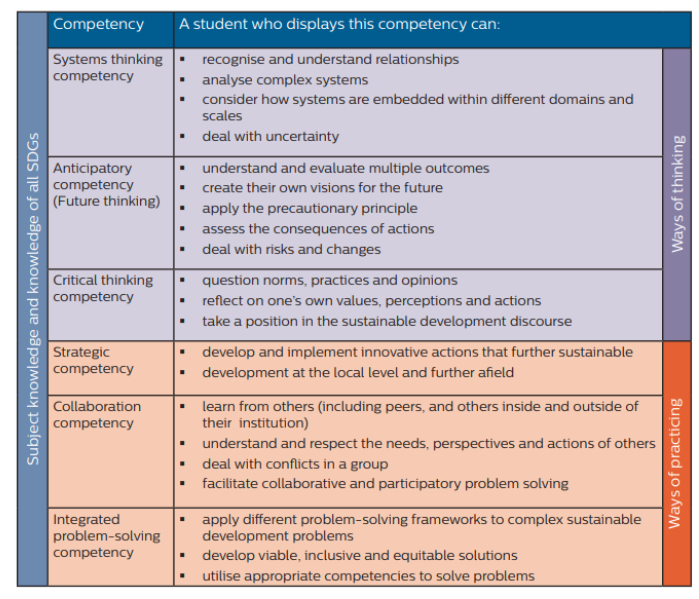
By designing education to meet learning outcomes, you build and evidence a range of competencies, including developing the mindsets of learners. Practically, it is the use of different competency frameworks, and the associated updates to learning outcomes, and how we deliver education and assessment that really matters. The table below, in the second column, synthesises various competency frameworks to clearly articulate what it means a learner can then do. Rather than argue different frameworks, focusing on what a student can do as a result is really key.  

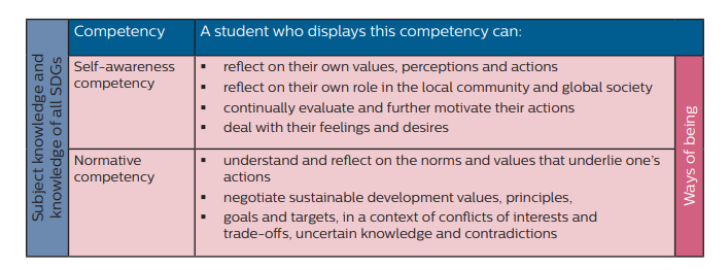
Figure 1. Competencies for sustainable development in Advance HE and QAA (2021) and UNESCO Education for Sustainable Development (2017). 


By reading through this table, you can see that this is more than just about ‘sustainability’ – these are useful things for a person to be able to do. Ask yourself, what if we don’t develop these in our graduates? Will they be better or worse off? 

Graduates can then build on this learning they have had at university to continue to develop as engineers working in practice. The Global Responsibility Competency Compass for example points practitioners to the capabilities needed to stay relevant and provides practical ways to develop themselves. It is made up of 12 competencies and is organised around the four guiding principles of global responsibility – Responsible, Purposeful, Inclusive and Regenerative.  


What needs to shift in engineering education? 

The shifts required to the building blocks of an engineering degree are:  

  1. To adapt and repurpose learning outcomes. 
  2. To integrate more real-world complexity within project briefs. 
  3. To be excellent at active pedagogies and mindset development. 
  4. To ensure authentic assessment. 
  5. To maximise cross-disciplinary experience and expertise.  

All of the above need to be designed with mechanisms that work at scale. Let’s spotlight two of these shifts, ‘to adapt and repurpose learning outcomes’ and ‘to integrate authentic assessment’ so we can see how sustainability competence relates. 


Adapt and repurpose learning outcomes. 

We can build on what is already working well within a degree to bring about positive changes. Many degrees exhibit strengths in their learning outcomes such as, developing the ability to understand a concept or a problem and apply that understanding through a disciplinary lens focused on simple/complicated problems. However, it is crucial to maintain a balance between addressing straightforward problems and tackling more complex ones that encourage learners to be curious and inquisitive.  

For example, a simple problem (where the problem and solution are known) may involve ‘calculating the output of a solar panel in a community’. A complex problem (where the problem and solution are unknown) may involve ‘how to improve a community’s livelihood and environmental systems, which may involve exploring the interconnectedness, challenges and opportunities that may exist in the system. 

Enhancing the learning experience by allowing students to investigate and examine a context for ideas to emerge is more reflective of real-world practice. Success is not solely measured by learners accurately completing a set of problem sets; rather, it lies in their ability to apply concepts in a way that creates a better, more sustainable system. 

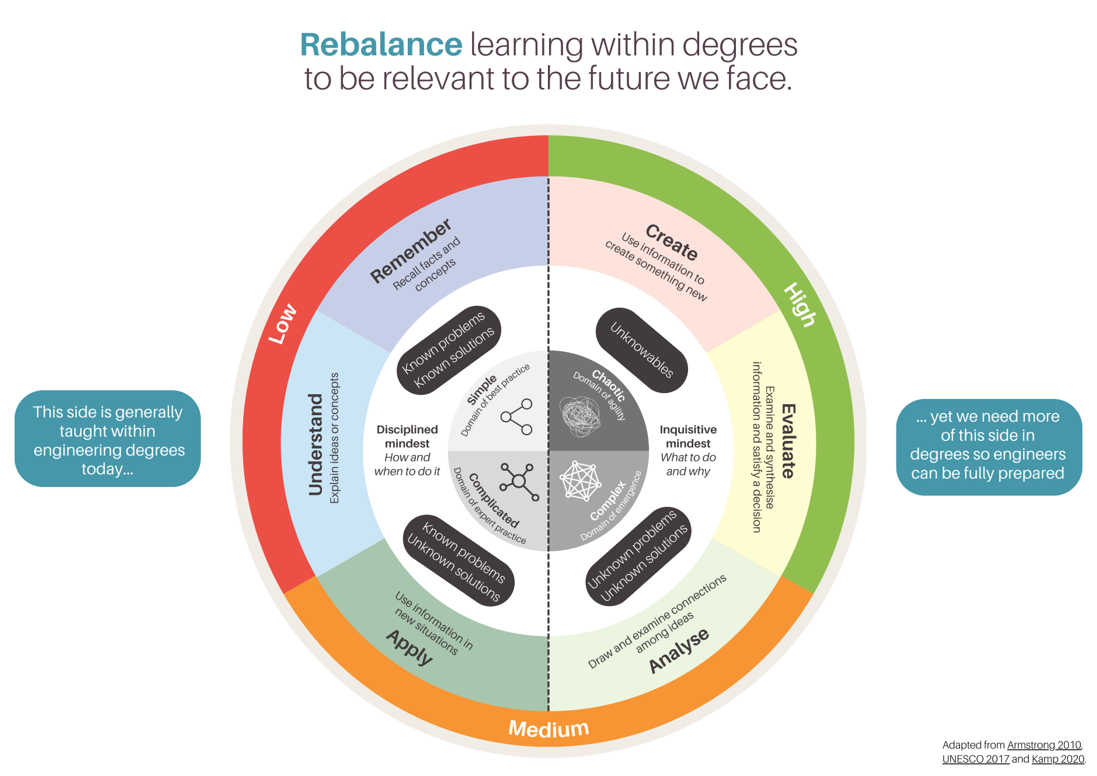
See how this rebalancing is represented in the visual below: 

Figure 2. ​​​​Rebalancing learning within degrees to be relevant to the future we face. Source: Engineers Without Borders UK. 


Keeping up to date and meeting accreditation standards is another important consideration. Relating the intended learning outcomes to the latest language associated with accreditation requirements, such as AHEP4 (UK), ABET (US) or ECSA (SA), doesn’t mean you have to just add more in. You can adapt what you’ve already got for a new purpose and context. For instance, the Engineering for One Planet framework’s 93 (46 Core and 46 Advanced) sustainability-focused learning outcomes that hundreds of academics, engineering professionals, and other key stakeholders have identified as necessary for preparing all graduating engineers — regardless of subdiscipline — with the skills, knowledge, and understanding to protect and improve our planet and our lives. These outcomes have also been mapped to AHEP4. 


Integrate authentic assessment: 

It is important that intended learning outcomes and assessment methods are aligned so that they reinforce each other and lead to the desired competency development. An important distinction exists between assessment of learning and assessment as or for learning: 

  1. Assessment OF learning e.g. traditional methods of assessment of student learning against learning outcomes and standards that typically measure students’ knowledge-based learning.
  2. Assessment AS/FOR learning e.g. reflective and performance-based (e.g. self-assessments, peer assessments and feedback from educators using reflective journals or portfolios) where the learning journey is part of the assessment process that captures learners’ insights and critical thinking, and empowers learners to identify possibilities for improvement.  

Assessment should incorporate a mix of methods when evaluating aspects like sustainability, to bring in authenticity which strengthens the integrity of the assessment process and mirrors how engineers work in practice. For example, University College London and Kings College London both recognise that critical evaluation, interpretation, analysis, and judgement are all key skills which will become more and more important, and making assessment rubrics more accessible for students and educators. Authentic assessment can mirror professional practices, such as having learners assessed within design reviews, or asking students to develop a portfolio across modules.  


Engineers Without Borders UK | Assessing competencies through design challenges: 

Below is an example of what Engineers Without Borders UK has done to translate competencies into assessment through our educational offerings. The Engineering for People Design Challenge (embedded in-curriculum focuses on placing the community context at the heart of working through real-world project-based learning experiences) and Reshaping Engineering (a co-curricular voluntary design month to explore how to make the engineering sector more globally responsible). The competencies in the Global Responsibility Competency Compass are aligned and evidenced through the learning outcomes and assessment process in both challenges.  

Please note – the Global Responsibility Competency Compass points practitioners to the capabilities needed to stay relevant and provides practical ways to develop themselves. 

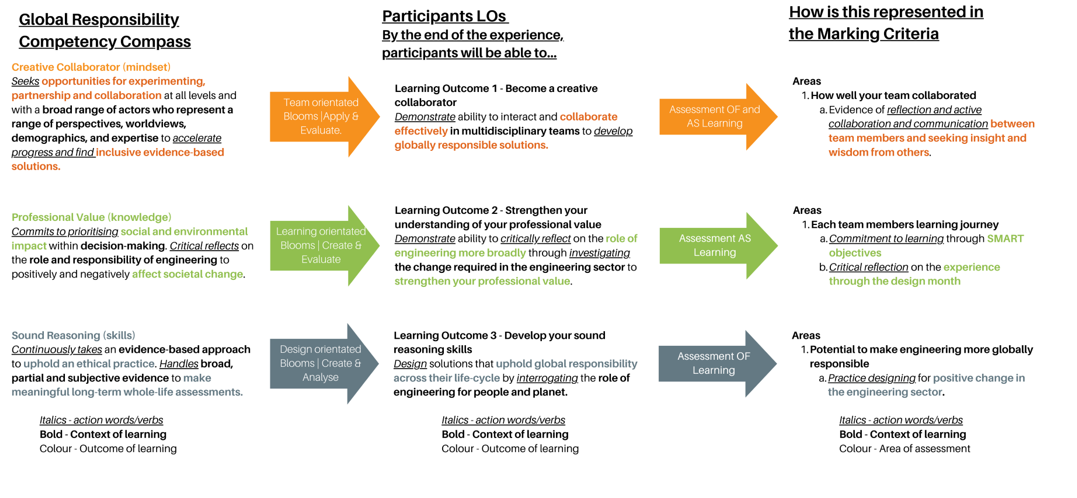
See below an example of the logic behind translating competencies acquired by participants to assessment during the design challenges.  

Figure 3. Example of the logic behind translating the Global Responsibility Competency Compass to assessment during the design challenges. Source: Engineers Without Borders UK.  


    1. The Competencies developed through the educational offering are orientated around the Global Responsibility Competency Compass to align with the learning journey from undergraduate to practising globally responsible individuals in learners’ future careers.
    2. We then align learning outcomes to the competency and purpose of the design challenge using simple and concise language.

  a. Useful resources that were used to help frame, align and iterate the learning outcomes and marking criteria are shared at the end of this article.

    1. The Marking Criteria draws on the assessment methods previously mentioned under ‘Assessment OF’ and ‘Assessment AS/FOR’ while aligning to the context of intended learning i.e. design focussed, individual journals reflecting on the learning journey, and collaborating in teams.
    2. We frame and align key action words from Competency to learning outcome to marking criteria using Bloom’s taxonomy (in Figure 2) to scale appropriately, the context of learning and what the intended outcome of learning/area of assessment would be.  


Conclusions: 

How your students think matters. How they engage in critical conversations matters. What they value matters. How we educate engineers matters.  

These may feel like daunting shifts to make but developing people to navigate our future is important for them, and us. Sustainability competencies are actually about competencies that are useful – the label ‘sustainability’ may or may not help but it’s the underlying concepts that matters most. The interventions that we make to instil these competencies in the learning journeys of future engineers are required – so degrees can be continuously improved and will be valuable over the long term. Making assessment mirror real practice helps with life-long learning. That’s useful in general, not just about sustainability. This is a major opportunity to attract more people into engineering, keep them and enable them to be part of addressing urgent 21st century challenges. 


Sustainability is more than a word or concept, it is actually a culture, and if we aim to see it mirrored in the near future, what better way exists than that of planting it in the young hearts of today knowing they are the leaders of the tomorrow we are not guaranteed of? It is possible.” 

2021 South African university student (after participating in the Engineering for People Design Challenge during their degree course) 


Useful resources: 

There are some excellent resources out there that help us understand and articulate what sustainability competencies and learning outcomes look like, and how to embed them into teaching, learning and assessment. Some of them were used in the example above. Here are some resources that we have found useful in translating the competencies in the Compass into learning outcomes in our educational offerings: 


This work is licensed under a Creative Commons Attribution-ShareAlike 4.0 International License.  

Any views, thoughts, and opinions expressed herein are solely that of the author(s) and do not necessarily reflect the views, opinions, policies, or position of the Engineering Professors’ Council or the Toolkit sponsors and supporters. 

To view a plain text version of this resource, click here to download the PDF.

Authors: Professor Emanuela Tilley, (UCL); Associate Professor Kate Roach (UCL); Associate Professor Fiona Truscott (UCL). 

Topic: Sustainability must-haves in engineering project briefs. 

Type: Guidance. 

Relevant disciplines: Any. 

Keywords: PBL; Assessment; Project brief; Learning outcomes; Pedagogy; Communication; Future generations; Decision-making; Design; Ethics; Sustainability; AHEP; Higher education.

Sustainability competency: Integrated problem-solving; Collaboration.

AHEP mapping: This resource addresses two of the themes from the UK’s Accreditation of Higher Education Programmes fourth edition (AHEP4): The Engineer and Society (acknowledging that engineering activity can have a significant societal impact) and Engineering Practice (the practical application of engineering concepts, tools and professional skills). To map this resource to AHEP outcomes specific to a programme under these themes, access AHEP 4 here and navigate to pages 30-31 and 35-37.  

Related SDGs: All. 

Reimagined Degree Map Intervention: Adapt learning outcomes; Active pedagogies and mindsets; More real-world complexity; Cross-disciplinarity; Authentic assessment.


Supporting resources: 


Premise: 

Projects, and thus project-based learning, offer valuable opportunities for integrating sustainability education into engineering curricula by promoting active, experiential learning through critical and creative thinking within problem-solving endeavours and addressing complex real-world challenges. Engaging in projects can have a lasting impact on students’ understanding and retention of knowledge. By working on projects related to sustainability, students are likely to internalise key concepts and develop a commitment to incorporating sustainable practices into their future engineering endeavours. 


Building a brief:

Project briefs are a powerful tool for integrating sustainability into engineering education through project-based learning. They set the tone, define the scope, and provide the parameters for students to consider sustainability in their engineering projects, ensuring that future engineers develop the knowledge, skills, and mindset needed to address the complex challenges of sustainability. 

To ensure sustainability has a central and/or clear role within an engineering project, consider the following as you develop the brief: 

1. Sustainability as part of goals, objectives, and requirements. By explicitly including sustainability objectives in the project brief, educators communicate the importance of considering environmental, social, and economic factors in the engineering design and implementation process. This sets the stage for students to integrate sustainability principles into their project work. 


2. Context: Briefs should always include the context of the project so that students understand the importance of place and people to an engineered solution. Below are aspects of the context to consider and provide:


3. Stakeholders: Sustainability is intertwined with the interests and needs of various stakeholders. Project briefs can include considerations for stakeholder engagement, prompting students to identify and address the concerns of different groups affected by the project. This reinforces the importance of community involvement and social responsibility in engineering projects. Below are aspects of the stakeholders to consider and provide: 


4. Ethical decision-making: Including ethical considerations related to sustainability in the project brief guides students in making ethical decisions throughout the project lifecycle. The Ethics Toolkit can provide guidance in how to embed ethical considerations such as: 


5. Knowns and unknowns: Considering both knowns and unknowns is essential for defining the project scope. Knowing what is already understood and what remains uncertain allows students to set realistic and achievable project goals. Below are aspects of considering the knowns and unknowns aspects of a project brief to consider and provide:


6. Engineering design process and skills development: The Project Brief should support how the educator wants to guide students through the engineering design cycle, equipping them with the skills, knowledge, and mindset needed for successful problem-solving. Below are aspects of the engineering design process and skills development to consider and provide: 

a. Research – investigate,  

b. Creative thinking – divergent and convergent thinking in different parts of the process of engineering design,

c. Critical thinking – innovation model analysis or other critical thinking tools,

d. Decision making – steps taken to move the project forward, justifying the decision making via evidence,

e. Communication, collaboration, negotiation, presentation,  

f. Anticipatory thinking – responsible innovation model AREA, asking in the concept stages (which ideas could go wrong because of a double use, or perhaps thinking of what could go wrong?),

g. Systems thinking.  


7. Solution and impact: Students will need to demonstrate that they have met the brief and can demonstrate that they understand the impact of their chosen solution. Here it would need to be clear what the students need to produce and how long it is expected to take them. Other considerations when designing the project brief to include are: 


Important considerations for embedding sustainability into projects: 

1. Competences or content? 


 2. Was any content added or adapted? 

– What form of content, seminars, readings, lectures, tutorials, student activity 


3. Competencies  

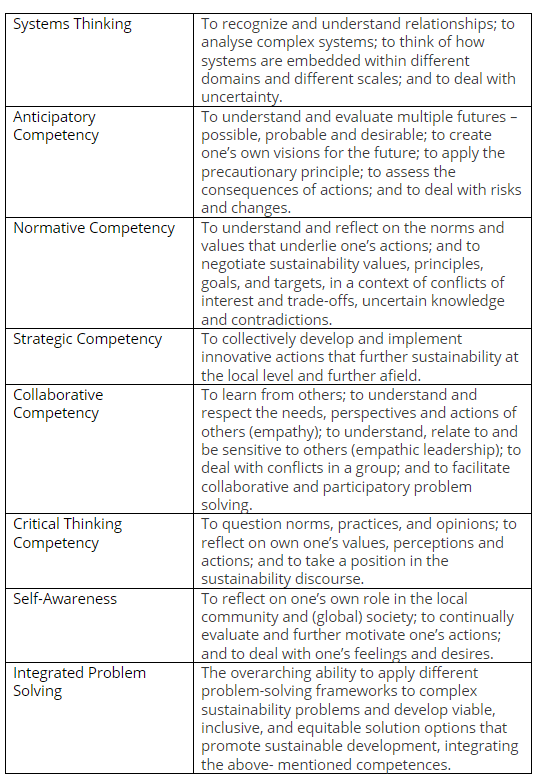
UNESCO has identified eight competencies that encompass the behaviours, attitudes, values and knowledge which facilitate safeguarding the future. These together with the SDGs provide a way of identifying activities and learning that can be embedded in different disciplinary curricula and courses.  For more information on assessing competences, see this guidance article.  


This work is licensed under a Creative Commons Attribution-ShareAlike 4.0 International License. 

Any views, thoughts, and opinions expressed herein are solely that of the author(s) and do not necessarily reflect the views, opinions, policies, or position of the Engineering Professors’ Council or the Toolkit sponsors and supporters. 
To view a plain text version of this resource, click here to download the PDF.

Author: Aditya Johri (George Mason University). 

Topic: Sustainability implications in mobility and technology development.   

Type: Teaching. 

Relevant disciplines: Electrical, Robotics, Civil, Mechanical, Computing. 

Keywords: Design; Accessibility; Technology Policy; Electric Vehicles; Mobility, Circularity; AHEP; Sustainability; Higher education.

Sustainability competency: Normative; Self-awareness; Strategic; Critical thinking.

AHEP mapping: This resource addresses two of the themes from the UK’s Accreditation of Higher Education Programmes fourth edition (AHEP4): The Engineer and Society (acknowledging that engineering activity can have a significant societal impact) and Engineering Practice (the practical application of engineering concepts, tools and professional skills). To map this resource to AHEP outcomes specific to a programme under these themes, access AHEP 4 here  and navigate to pages 30-31 and 35-37.  

Related SDGs: SDG 4 (Quality education); SDG 9 (Industry, innovation, and infrastructure), SDG 12 (Responsible consumption and production); SDG 13 (Climate action).   

Reimagined Degree Map Intervention: Active pedagogies and mindset development.

Educational aim: The objective of this activity is to provide students with an understanding of the complexity of technology development and different considerations that need to be made by stakeholders in the design and implementation of a technology. The activity is set up as a role-play where students are assigned different roles as members of an expert panel providing feedback on the use of E-Scooters on a college campus. 

Educational level: Beginner. 


Learning and teaching notes: 

Learners have the opportunity to: 

Teachers have the opportunity to: 


Supporting resources: 

Several different ethical frameworks, codes, or guidelines can be provided to students to prepare for the discussion or to reflect upon during their discussion depending on the students’ disciplinary composition. Here are a few examples:  


Background readings and resources: 

One of the goals of this exercise is to motivate students to undertake their own research on the topic to prepare for the activity. But it is important to provide them with preliminary material to start their own research. Here are a few useful resources for this case:  

Readings: 


Videos: 


Role-play instructions: 

  1. Each student is assigned a role a week before the discussion.
  2. Students assigned to the role of Eva Walker serve as the moderator and lead the conversation based on the script below.
  3. The script provided below is there to guide the discussion, but you should leave room for the conversation to flow naturally and allow everyone to contribute.

One way to ensure students are prepared for the discussion is to assign a few questions from the script as a pre-discussion assignment (short answers). Similarly, to ensure students reflect on the discussion, they can be assigned the last question from the script as a post-discussion exercise. They can also be asked specifically about frameworks and concepts related to sustainability.  


Role-play scenario narrative and description of roles: 

Eva Walker recently started reporting about on-campus traffic issues for the student newspaper. She would have preferred to do more human-interest stories, but as a new member of the staff who had just moved from intern to full-time, she was happy to get whatever opportunity she could. Eva was studying both journalism and creative writing, and this was her dream on-campus job. She also realised that, even though many stories at first didn’t appear to her as though she would be interested in them, as she dug deeper she eventually found an angle with which she could strongly relate.  

One weekday morning, Eva was working on yet another story on parking woes when Amina Ali, one of the editorial staff members, texted her to say that there had been an accident on campus; she just passed it at the intersection of the library and the recreation building, and it might be worth covering. Eva was at the library, and within no time, reached the spot of the accident.  

When Eva arrived, a police vehicle, an ambulance, and a fire engine were all present at the scene, and near the accident site, an e-scooter lay smashed into a tree. It looked like the rider was sitting in the ambulance and was being treated by the medical staff. A little further away, Eva noticed the police speaking to a young woman in a wheelchair. Although Eva’s first instinct was to try to talk to the police or the medical staff to ascertain what had happened, she realised this probably wasn’t the best moment and she would have to wait until later for the official version of the event.  

She looked around and saw a group of four students leaning against a wall with drinks in their hands. A couple of them were vaping. Eva thought that they looked like they had been here for a while, and she walked over to ask them what had happened. From the account they gave her, it appeared as if the e-scooter rider was coming around the bend at some speed, saw the woman in the wheelchair a little too late to ride past her, and, to avoid hitting her, leapt off his e-scooter and let the vehicle hit the tree. Things happened very quickly and no one was exactly sure about the sequence of events, but this was the rough story she got.  

Later, she called the police department on campus and was able to speak with one of the officers to get an official account. The story was very similar to what she already knew. She did find out that nobody was seriously hurt and that the only injuries were to the e-scooter rider and were taken care of at the scene by the medical staff. When she asked about who was to blame or if any legal action was expected, she was told that there were no laws around the use of helmets or speeding for e-scooters yet and that she should reach out later for more information. Eva wrote up what she had so far, sent it over to the editorial staff, and considered her work done.  

But as she was walking back to her halls of residence that evening, her attention was drawn to the large number of e-scooters parked near the library. As she crossed the central campus, she noticed even more e-scooters lying about the intersections, and there was a litter of them around the residence hall. She wondered why she hadn’t noticed them before. Her attention was drawn today, she thought, because of the accident and also because she saw a good Samaritan remove an e-scooter from the sidewalk, as it was blocking the path of one of the self-driving food delivery robots. It’s a sign, Eva thought, this is what she needs to look for more in her next article, the use of e-scooters on campus.  

Eva recognised that, to write a balanced and informative article, as she had been taught to do, she would have to look at many different aspects of the use of e-scooters as well as look broadly at mobility on campus and the use of battery powered vehicles. She had also recently seen e-bikes on campus and, in addition to the food delivery robots, service robots in one of the buildings that she assumed was either delivering paperwork or mail. The accident had also made her realise that, when it came to mobility, accessibility was something that never crossed her mind but that she now understood was an important consideration. She hoped to learn more about it as her research progressed.  

As background research for the article, Eva started reading up on articles and studies published about e-scooters, e-bikes, and urban mobility and came across a range of concerns that had been raised beyond accessibility. First, there were reports that e-scooters are not as environmentally friendly as many service providers had made them out to be. This is related to the production of the battery as well as the short lifespan of the vehicles, and as of yet, there has been no procedure implemented to reuse them (Pyzyk, 2019). Second, there were reports of littering, where e-scooters are often left on sidewalks and other places where they restrict movement of other vehicles, pedestrians, and in particular, those in wheelchairs (Iannelli, 2021). Finally, it was also clear from the reports that accidents and injuries have increased due to e-scooters, especially since many riders do not wear safety gear and are often careless, even inebriated, as there were little to no regulations (2021). When she approached her editor with an outline for an article, she was advised to do some more reporting by talking with people who could shed more light on the issue.  

After some research, Eva shortlisted the following experts across fields related to e-scooters for an interview, and once she spoke with them, she realised that it would help her if she could get them to have a dialogue and respond to some of the questions that were raised by other experts. Therefore, she decided to conduct a focus group with them so that she achieved her goal of a balanced article and did not misrepresent any expert’s point of view.  


Experts/roles for discussion: 

1. Bryan Avery is co-founder and chief technology officer (CTO) of RideBy, an e-scooter company. RideBy is one of the options available on campus. Born in a small town, Bryan used to ride his bicycle everywhere while growing up, and for him, founding and leading an e-scooter company provided a chance to merge his interests in personal transportation and new forms of energy. He was a chemical engineer by training, and at a time when most of his friends ended up working for big oil companies, Bryan decided to work on alternative fuels and found himself developing expertise and experience with batteries. For most of the software- and mobile device-related development, RideBy outsourced the work and utilised ready-to-configure systems that were available. By only keeping the core device and battery functionality in-house, they could focus on delivering a much stronger product. Overall, he is quite happy with the success of RideBy so far and can’t help but extol the difference it can make for the environment.  


2. Abiola Abrams is a professor of transportation engineering and an expert on mobility systems. Her work combines systems engineering, computer science, and data analytics. Her recent research is on urban mobility and micro-mobility services, particularly e-bikes. In her research, Dr. Abrams has looked at a host of topics related to e-bikes, many of which are also applicable to e-scooters, including the optimisation of hubs for availability, common path patterns of users, subscription use models, and the e-waste and end of lifecycle for these vehicles. Increasingly, she has become concerned about the abuse of some of these services, especially in cities that attract a lot of tourists, and about the rough use of the vehicles, so much so that many do not even last for a month. In a new project, she is investigating the effect of e-vehicles on the environment and has found that there is mixed evidence for how much difference battery-operated vehicles will actually make for climate change compared to vehicles that use fossil fuels.  


3. Marco Rodrigues works as transportation director for the local county government where the university is based. As part of a recent bilateral international exchange, he got the opportunity to spend time in different cities in Germany to learn about local transportation. He realised very quickly that local transportation was very different in Germany; residents had a range of public, shared options that were missing in the United States. However, he also realised that e-mobility services were being considered across both countries. He investigated this further and found that Germany waited until it could pass some regulations before allowing e-mobility operators to offer services; helmets were mandatory on e-scooters and e-bikes, and riders had to purchase a nominal insurance policy. He also learned that there were strict rules around the sharing of data generated by the vehicles as well as the apps used by riders.  


4. Judy Whitehouse is director of infrastructure and sustainability on campus and responsible for planning the long-term development of the campus from a space perspective, but also increasingly from a sustainability dimension. As the number of students has increased, so has the need for more infrastructure, including classrooms and halls of residence. This has also resulted in greater distances to be traveled on campus. Judy regards e-mobility options as a necessary component of campus life and has been a strong supporter for them. Lately, she has been called into meetings with safety and emergency management people discussing the issue of increased accidents on campus and the littering of e-vehicles across the campus. Not only is it bad for living on campus, but it is also bad for optics. A recent photo featured in the campus newspaper was a stark reminder of just how bad it can look. She is further divided on the use of e-scooters due to misgivings about the sustainability of battery use, as new research suggests that manufacturing batteries and disposing them are extremely harmful for the environment.  


5. Aaron Schneider heads Campus Mobility, a student interest group focused on autonomous vehicles development and use. The group members come from different degree programmes and are interested in both the technical dimensions of mobile solutions and the policy issues surrounding their implementation. Aaron himself is a computer science student with interests in data science, and with some of his fellow members from the policy school, he has been analysing a range of mobility-related datasets that are publicly available online. Of these, the data on accidents is quite glaring, as the number of accidents in which e-scooters are involved has gone up significantly. Aaron and his friends were intrigued by their findings and approached some of the companies to see if they would share data, but they were disappointed when they could not get access. Although the companies said it was due to privacy reasons, Aaron was not too convinced by that argument. He was also denied access to any internal reports about usage patterns of accidents. Ideally, he would have liked to know what algorithms were used for optimising delivery and access, but he knew he was not going to get that information.  


6. Sarah Johnson is the head of accessibility services on campus and is responsible for both technology- and infrastructure-related support for students, faculty, and staff. The growth of the physical campus and the range of technological offerings has significantly increased the workload for her office, and they are really strained in terms of people and expertise. The emphasis from the university leadership is largely on web and IT accessibility, as teaching and other services are shifting quickly online, but Sarah realises that there is still an acute need to provide physical and mobility support to many members of the community. Although all the new buildings are up to code in terms of accessibility, there is still work to be done both for the older buildings and especially for mobility. Campus beautification does not always go along with access. She is also worried about access to devices, as taking part in any campus activity requires not just a computer, but also access to mobile devices that are out of reach economically for many and not easy to use.  


Role-play script: 

To help get the dialogues started and based on her prior conversation with the group, Eva has prepared some initial questions:  

  1. What role are you playing and, from your perspective, what do you see as the biggest pros of using e-vehicles, especially e-scooters on campus?
  2. From your perspective, what do you see as the biggest downside of using e-vehicles, especially e-scooters on campus?
  3. Can you confidently say that e-scooters are an environmentally friendly option?
  4. What current accessibility accommodations would be impacted by the use of e-vehicles, and what new, potential accessibility accommodations might arise from increased use of e-vehicles?
  5. Would we be better off waiting for more regulations to come before deploying these vehicles on campus and, if so, what should those regulations look like?
  6. Should we use automatic regulation of speed on the vehicle based on where it is and/or inform authorities if it is violated?
  7. Can we control where it can go or penalise if not put back?
  8. What guidelines do you recommend for e-scooter usage on campus?  


Authorship and project information and acknowledgements: The scenarios and roles were conceptualised and written by Aditya Johri. Feedback was provided by Ashish Hingle, Huzefa Rangwala, and Alex Monea, who also collaborated on initial implementation and empirical research. This work is partly supported by U.S. National Science Foundation Awards# 1937950, 2335636, 1954556; USDA/NIFA Award# 2021-67021-35329. Any opinions, findings, and conclusions or recommendations expressed in this material are those of the authors and do not necessarily reflect the views of the funding agencies. The research study associated with the project was approved by the Institutional Review Board at George Mason University. 


This work is licensed under a Creative Commons Attribution-ShareAlike 4.0 International License. 

Any views, thoughts, and opinions expressed herein are solely that of the author(s) and do not necessarily reflect the views, opinions, policies, or position of the Engineering Professors’ Council or the Toolkit sponsors and supporters. 
To view a plain text version of this resource, click here to download the PDF.

Author: Dr. Jemma L. Rowlandson (University of Bristol). 

Topic: Achieving carbon-neutral aviation by 2050.  

Tool type: Teaching. 

Relevant disciplines: Chemical; Aerospace; Mechanical; Environmental; Energy.  

Keywords: Design and innovation; Conflicts of interest; Ethics; Regulatory compliance; Stakeholder engagement; Environmental impact; AHEP; Sustainability; Higher education; Pedagogy; Assessment. 

Sustainability competency: Systems thinking; Anticipatory; Critical thinking; Integrated problem-solving; Strategic; Collaboration.

AHEP mapping: This resource addresses two of the themes from the UK’s Accreditation of Higher Education Programmes fourth edition (AHEP4): The Engineer and Society (acknowledging that engineering activity can have a significant societal impact) and Engineering Practice (the practical application of engineering concepts, tools and professional skills). To map this resource to AHEP outcomes specific to a programme under these themes, access AHEP 4 here and navigate to pages 30-31 and 35-37. 

Related SDGs: SDG 7 (Affordable and Clean Energy); SDG 9 (Industry, Innovation and Infrastructure); SDG 12 (Responsible Consumption and Production); SDG 13 (Climate Action). 

Reimagined Degree Map Intervention: More real-world complexity; Active pedagogies and mindset development; Authentic assessment.

Educational aim: Apply interdisciplinary engineering knowledge to a real-world sustainability challenge in aviation, foster ethical reasoning and decision-making with regards to environmental impact, and develop abilities to collaborate and communicate with a diverse range of stakeholders. 

Educational level: Intermediate. 


Learning and teaching notes: 

This case study provides students an opportunity to explore the role of hydrogen fuel in the aviation industry. Considerable investments have been made in researching and developing hydrogen as a potential clean and sustainable energy source, particularly for hydrogen-powered aircraft. Despite the potential for hydrogen to be a green and clean fuel there are lingering questions over the long-term sustainability of hydrogen and whether technological advancements can progress rapidly enough to significantly reduce global carbon dioxide emissions. The debate around this issue is rich with diverse perspectives and a variety of interests to consider. Through this case study, students will apply their engineering expertise to navigate this complex problem and examine the competing interests involved.  

This case is presented in parts, each focusing on a different sustainability issue, and with most parts incorporating technical content. Parts may be used in isolation, or may be used to build up the complexity of the case throughout a series of lessons.  

Learners have the opportunity to: 

Teachers have the opportunity to: 


Supporting resources:  


Learning and teaching resources: 

Hydrogen fundamentals resources: 

We recommend encouraging the use of sources from a variety of stakeholders. Encourage students to find their own, but some examples are included below: 


Pre-Session Work: 

Students should be provided with an overview of the properties of hydrogen gas and the principles underlying the hydrogen economy: production, storage and transmission, and application. There are several free and available sources for this purpose (refer to the Hydrogen Fundamentals Resources above). 


Introduction 

At Airbus, we believe hydrogen is one of the most promising decarbonisation technologies for aviation. This is why we consider hydrogen to be an important technology pathway to achieve our ambition of bringing a low-carbon commercial aircraft to market by 2035.” – Airbus, 2024 

As indicated in the industry quote above, hydrogen is a growing area of research interest for aviation companies to decarbonise their fleet. In this case study, you are put in the role of working as an engineering consultant and your customer is a multinational aerospace corporation. They are keen to meet their government issued targets of reducing carbon emissions to reach net zero by 2050 and your consultancy team has been tasked with assessing the feasibility of powering a zero-emission aircraft using hydrogen. The key areas your customer is interested in are: 


Part one: The aviation landscape 

Air travel connects the world, enabling affordable and reliable mass transportation between continents. Despite massive advances in technology and infrastructure to produce more efficient aircraft and reduce passenger fuel consumption, carbon emissions have doubled since 2019 and are equivalent to 2.5 % of global CO2 emissions.  


Your customer is interested in the feasibility of hydrogen for aviation fuel. However, there is a debate within the management team over the sustainability of hydrogen. As the lead engineering consultant, you must guide your customer in making an ethical and sustainable decision.  

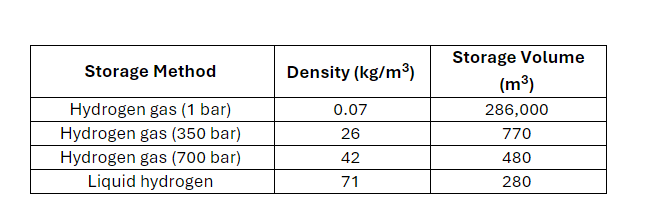
Hydrogen is a potential energy carrier which has a high energy content, making it a promising fuel for aviation. Green hydrogen is produced from water and is therefore potentially very clean. However, globally most hydrogen is currently made from fossil fuels with an associated carbon footprint. Naturally occurring as a gas, the low volumetric density makes it difficult to transport and add complications with storage and transportation. 


Part two: Hydrogen production 

Hydrogen is naturally abundant but is often found combined with other elements in various forms such as hydrocarbons like methane (CH4) and water (H2O). Methods have been developed to extract hydrogen from these compounds. It is important to remember that hydrogen is an energy carrier and not an energy source; it must be generated from other primary energy sources (such as wind and solar) converting and storing energy in the form of hydrogen.  


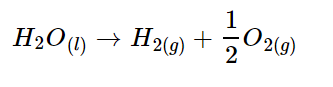
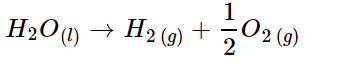
The ideal scenario is to produce green hydrogen via electrolysis where water (H2O) is split using electricity into hydrogen (H2) and oxygen (O2). This makes green hydrogen potentially completely green and clean if the process uses electricity from renewable sources. The overall chemical reaction is shown below: 

However, the use of water—a critical resource—as a feedstock for green hydrogen, especially in aviation, raises significant ethical concerns. Your customer’s management team is divided on the potential impact of this practice on global water scarcity, which has been exacerbated by climate change. You have been tasked with assessing the feasibility of using green hydrogen in aviation for your client. Your customer has chosen their London to New York route (3,500 nmi), one of their most popular, as a test-case. 


Despite its potential for green production, globally the majority of hydrogen is currently produced from fossil fuels – termed grey hydrogen. One of your team members has proposed using grey hydrogen as an interim solution to bridge the transition to green hydrogen, in order for the company to start developing the required hydrogen-related infrastructure at airports. They argue that carbon capture and storage technology could be used to reduce carbon emissions from grey hydrogen while still achieving the goal of decarbonisation. Hydrogen from fossil fuels with an additional carbon capture step is known as blue hydrogen. 

However, this suggestion has sparked a heated debate within the management team. While acknowledging the potential to address the immediate concerns of generating enough hydrogen to establish the necessary infrastructure and procedures, many team members argued that it would be a contradictory approach. They highlighted the inherent contradiction of utilising fossil fuels, the primary driver of climate change, to achieve decarbonisation. They emphasised the importance of remaining consistent with the ultimate goal of transitioning away from fossil fuels altogether and reducing overall carbon emissions. Your expertise is now sought to weigh these options and advise the board on the best course of action. 


Part three: Hydrogen storage 

Despite an impressive gravimetric energy density (the energy stored per unit mass of fuel) hydrogen has the lowest gas density and the second-lowest boiling point of all known chemical fuels. These unique properties pose challenges for storage and transportation, particularly in the constrained spaces of an aircraft.  


As the lead engineering consultant, you have been tasked with providing expert advice on viable hydrogen storage options for aviation. Your customer has again chosen their London to New York route (3,500 nmi) as a test-case because it is one of their most popular, transatlantic routes. They want to know if hydrogen storage can be effectively managed for this route as it could set a precedent for wider adoption for their other long-haul flights. The plane journey from London to New York is estimated to require around 15,000 kg of hydrogen (or use the quantity estimated previously estimated in Part 2 – see Appendix for example).  


Part four: Emissions and environmental impact 

In Part four, we delve deeper into the environmental implications of using hydrogen as a fuel in aviation with a focus on emissions and their impacts across the lifecycle of a hydrogen plane. Aircraft can be powered using either direct combustion of hydrogen in gas turbines or by reacting hydrogen in a fuel cell to produce electricity that drives a propeller. As the lead engineering consultant, your customer has asked you to choose between hydrogen combustion in gas turbines or the reaction of hydrogen in fuel cells. The management team is divided on the environmental impacts of both methods, with some emphasising the technological readiness and efficiency of combustion and others advocating for the cleaner process of fuel cell reaction.  


Both combustion of hydrogen in an engine and reaction of hydrogen in a fuel cell will produce water as a by-product. The management team are concerned over the effect of using hydrogen on the formation of contrails. Contrails are clouds of water vapour produced by aircraft that have a potential contribution to global warming but the extent of their impact is uncertain.  


So far we have considered each aspect of the hydrogen debate in isolation. However, it is important to consider the overall environmental impact of these stages as a whole. Choices made at each stage of the hydrogen cycle – generation, storage, usage – will collectively impact the overall environmental impact and sustainability of using hydrogen as an aviation fuel and demonstrates how interconnected our decisions can be.  


Part five: Hydrogen aviation stakeholders 

Hydrogen aviation is an area with multiple stakeholders with conflicting priorities. Understanding the perspectives of these key players is important when considering the feasibility of hydrogen in the aviation sector.   


Your consultancy firm is hosting a debate for the aviation industry in order to help them make a decision around hydrogen-based technologies. You have invited representatives from consumer groups, the UK government, Environmental NGOs, airlines, and aircraft manufacturers.  


Stakeholder Key priorities and considerations
Airline & Aerospace Manufacturer 
  • Cost efficiency (fuel, labour, fleet maintenance) – recovering from pandemic. 
  • Passenger experience (commercial & freight). 
  • Develop & maintain global supply chains. 
  • Safety, compliance and operational reliability. 
  • Financial responsibility to employees and investors. 
  • Need government assurances before making big capital investments. 
UK Government 
  • Achieve net zero targets by 2050 
  • Promote economic growth and job creation (still recovering from pandemic). 
  • Fund research and innovation to put their country’s technology ahead. 
  • Fund renewable infrastructure to encourage industry investment. 
Environmental NGOs 
  • Long-term employment for aviation sector. 
  • Demand a sustainable future for aviation to ensure this – right now, not in 50 years. 
  • Standards and targets for industry and government and accountability if not met. 
  • Some NGOs support drastic cuts to flying. 
  • Want to raise public awareness over sustainability of flying. 
Consumer 
  • Environmentally aware (understand the need to reduce carbon emissions). 
  • Also benefit greatly from flying (tourism, commercial shipping, etc.). 
  • Safety and reliability of aircraft & processes. 
  • Cost effectiveness – want affordable service

Appendix: Example calculations 

There are multiple methods for approaching these calculations. The steps shown below are just one example for illustrative purposes.  


Part two: Hydrogen production 

Challenge: Estimate the volume of water required for a hydrogen-powered aircraft.   

Assumptions around the hydrogen production process, aircraft, and fuel requirement can be given to students or researched as a separate task. In this example we assume: 


Example estimation: 

1. Estimate the energy requirement for a mid-size jet 

No current hydrogen-fuelled aircraft exists, so we can use a kerosene-fuelled analogue. Existing aircraft that meet the requirements include the Boeing 767 or 747. The energy requirement is then: 


2. Estimate the hydrogen requirement 

Assuming a hydrogen plane has the same fuel requirement:


3. Estimate the volume of water required 

Assuming all hydrogen is produced from the electrolysis of water: 

Electrolysis reaction:

For this reaction, we know one mole of water produces one mole of hydrogen. We need to calculate the moles for 20,000 kg of hydrogen: 


With a 1:1 molar ratio, we can then calculate the mass of water: 

This assumes an electrolyser efficiency of 100%. Typical efficiency values are under 80%, which would yield: 


Challenge: Is it feasible to power the UK aviation fleet with water? 


The total energy requirement for UK aviation can be given to students or set as a research task.  

Estimation can follow a similar procedure to the above. 

Multiple methods for validating and assessing the feasibility of this quantity of water. For example, the UK daily water consumption is 14 billion litres. The water requirement estimated above is < 1 % of this total daily water consumption, a finding supported by FlyZero.  


Part three: Hydrogen storage 

Challenge: Is it feasible to store 20,000 kg of hydrogen in an aircraft? 

There are multiple methods of determining the feasibility of storage volume. As example is given below. 


1. Determining the storage volume 

The storage volume is dependent on the storage method used. Density values associated with different storage techniques can be research or given to students (included in Table 2). The storage volume required can be calculated from the mass of hydrogen and density of storage method, example in Table 2.  

Table 2: Energy densities of various hydrogen storage methods 


2. Determining available aircraft volume 

A straightforward method is to compare the available volume on an aircraft with the hydrogen storage volume required. Aircraft volumes can be given or researched by students. Examples: 

This assumes hydrogen tanks are integrated into an existing aircraft design. Liquid hydrogen can feasibly fit into an existing design, though actual volume will be larger due to space/constraint requirements and additional infrastructure (pipes, fittings, etc) for the tanks. Tank size can be compared to conventional kerosene tanks and a discussion encouraged over where in the plane hydrogen tanks would need to be (conventional liquid fuel storage is in the wings of aircraft, this is not possible for liquid storage tanks due to their shape and infrastructure storage is inside the fuselage). Another straightforward method for storage feasibility is modelling the hydrogen volume as a simple cylinder and comparing to the dimensions of a suitable aircraft.  


This work is licensed under a Creative Commons Attribution-ShareAlike 4.0 International License. 

Any views, thoughts, and opinions expressed herein are solely that of the author(s) and do not necessarily reflect the views, opinions, policies, or position of the Engineering Professors’ Council or the Toolkit sponsors and supporters. 
To view a plain text version of this resource, click here to download the PDF.

Authors: Maryam Lamere, Marianthi Leon, Wendy Fowles-Sweet, Lucy Yeomans,  Laura Fogg-Rogers (University of the West of England, UWE Bristol). 

Topic: Opportunities and challenges for integrating ESD into engineering programmes via PBL. 

Tool type: Guidance. 

Relevant disciplines: Any.  

Keywords: Education for sustainable development; Project-based learning; Problem-based learning; Engineering design; Sustainability; AHEP; UK-SPEC; Pedagogy; Higher education; Curriculum. 

Sustainability competency: Critical thinking; Integrated problem-solving, Collaboration.

AHEP mapping: This resource addresses two of the themes from the UK’s Accreditation of Higher Education Programmes fourth edition (AHEP4): The Engineer and Society (acknowledging that engineering activity can have a significant societal impact) and Engineering Practice (the practical application of engineering concepts, tools and professional skills). To map this resource to AHEP outcomes specific to a programme under these themes, access AHEP 4 here  and navigate to pages 30-31 and 35-37.  

Related SDGs: SDG 4 (Quality education); SDG 13 (Climate action). 

Reimagined Degree Map Intervention: More real-world complexity; Active pedagogies and mindset development.

Who is this article for? This article should be read by educators at all levels in higher education who are seeking an overall perspective on using PBL for integrating sustainability in engineering education. Engaging with this topic will also help to prepare students with the soft skill sets that employers are looking for. 


Premise: 

Engineering graduates are increasingly required to implement sustainability-focussed initiatives within industry, alongside enhanced expectations from professional bodies and the UK specification (UK-SPEC) for engineers (Engineering Council, 2024). However, a recent study of UK Higher Education institutions highlighted that only a handful have implemented Education for Sustainable Development (ESD) into their curricula in a systemic manner (Fiselier et al., 2018), which suggests many engineering institutions still need support in this area. This article aims to explain opportunities and challenges for integrating ESD into engineering programmes via project-based learning. 


 1. An overview of problem-based learning as a tool for teaching sustainability within engineering:

To develop sustainability-literate graduates, the Higher Education Academy (AdvanceHE) and the UK Quality Assurance Agency for Higher Education (QAA) emphasise that students need to:  

  1. understand what the concept of environmental stewardship means for their discipline and their professional and personal lives; 
  2. think about issues of social justice, ethics, and wellbeing, and how these relate to ecological and economic factors; and 
  3. develop a future-facing outlook by learning to think about the consequences of actions, and how systems and societies can be adapted to ensure sustainable futures (QAA & HEA, 2014).  

Problem-Based Learning (PBL) provides a suitable teaching method for addressing these educational objectives. It is an influential approach in engineering education that emphasises real-world problem-solving and student-centred investigation. PBL deeply engages engineering students, prompting them to develop higher-level thinking skills while they personally confront and navigate economic, social, and environmental issues. This method fosters holistic systems thinking, interdisciplinary insights, ethical considerations, and an emphasis on the long-term viability of technical solutions (Cavadas and Linhares, 2023), while also inspiring and motivating learners (Loyens, 2015). 

While PBL can be delivered through theoretical case study examples, the term is used interchangeably with Project-Based Learning within engineering education. Both problem-based learning and project-based learning share characteristics such as collaboration and group work, the integration of knowledge and practice, and foregrounding problem analysis as the basis of the learning process (De Graaff and Kolmos, 2003). One of the main differences is where the parameters lie: with problem-based learning the parameters are defined at the beginning and students are able to find a range of solutions; with project-based learning the parameters lie at the end and students are expected to reach a specific end solution (Savery, 2006). There is also a difference in the role of the tutor and the information they provide: in problem-based learning the tutor facilitates but gives little information, while in project-based learning they are both a facilitator and a source of knowledge (Savery, 2006). Project based learning may be more accepted within engineering education since it is considered to more closely resemble the reality of the profession (Perrenet, Bouhuijs and Smits, 2000), hence Aalborg’s working definition of PBL as “Problem-Oriented, Project-Organized, Learning” (Dym et al., 2005) 

PBL thus facilitates the creation of immersive student-centric environments where group projects enable collaborative learning (Kokotsaki, Menzies and Wiggins, 2016). As Lozano et al. (2017) highlight, the nature of PBL advances critical thinking and problem-solving in engineering contexts, enabling students to critically reflect on sustainability concepts and apply this understanding to real-world challenges. Importantly, it is paramount in engineering education to foster action-oriented competencies and incorporate social contextualisation aspects (Fogg-Rogers et al., 2022), such as ethical nuances, justice, and equality, ensuring a comprehensive grasp of an engineer’s role amidst evolving societal and environmental challenges (Wang et al., 2022).  


2. Overcoming challenges within PBL:

While PBL presents an obvious approach for embedding sustainability, there are a series of challenges which engineering educators need to overcome to facilitate transformational learning. This section presents some of the most common challenges encountered, along with pedagogic solutions.  


Lack of apparent topic relevance
Sustainability topics can sometimes be treated as isolated topics, rather than an integrated aspect of an engineering problem. A perception of sustainability in engineering is that it is not implicit in design, manufacture, and operation; rather it is often perceived as an ‘add-on’ to technical skill development. This applies to both students and teachers: both require support to understand the relevance and complexities of sustainability. When academics delivering sustainability materials may struggle to relate the topic to their own engineering disciplines, students may fail to see how they can impact change. Students must work on real-world projects where they can make a difference locally or globally, and they are more inclined towards sustainability topics that are relevant to their subject discipline with subject experts.  


Dealing with an overwhelming amount of information
Students can be overwhelmed by the large amounts of multidisciplinary information that needs to be processed when tackling real-world problems. This can also be a challenge for academics delivering teaching, especially if the topic is not related to their speciality. Additional support (and training), along with allocation of teaching workload, are needed to successfully integrate sustainability contexts for both staff and students.   


Group work challenges
PBL is best conducted by mixing individual study and group work. However, groups can fail if group creation, monitoring, supporting, and assessing processes are inconsistent, or not understood by academic tutors or students. Tutors need to act as group facilitators to ensure successful collaborative learning.  


Issues with continual engagement
PBL often requires active engagement of students over an extended period (several weeks or months). This can be a challenge, as over time, students’ focus and priorities can change. We suggest that whole programmes need to be designed around PBL components, so that other modules and disciplines provide the scaffolding and knowledge development to the relevant PBL topics.  


Delivering PBL online 

PBL is best delivered using experiential hands-on learning. For example, at UWE Bristol, this is provided through civic engagement with real-world industry problems and service learning through engagement with industry, schools, and community groups (Fogg-Rogers et al., 2017). This experiential learning was exceptionally challenging to deliver online during the COVID-19 pandemic, and programmes would need to be re-designed for online learning. 


3. Recommendations for successful implementation of PBL:

Sustainability topics need to be embedded within engineering education so that each discipline-specific engineering problem is explored within PBL from a technical, economic, ethical, and sustainability perspective.  Drawing from UWE Bristol’s journey of ESD implementation using PBL, key recommendations are outlined below.  


Managing academic workload
In the initial phases of ESD integration at UWE Bristol, a small number of committed academics contributed a lot of time, effort, and dedication to push through and enable ESD acceptance from staff and students. Programme-wide implementation of ESD required wider support at the institutional level, alongside additional support for module leaders and tutors, so they felt capable of delivering ESD with a realistic workload. 


Structured delivery of ESD
Structuring delivery over time and throughout different modules enables students to work through large amounts of information. Providing summative feedback/assessments during key phases of the PBL exercise can also help students stay on track and manage their workload. At UWE Bristol, group presentations with pass/fail grading are introduced mid-project, so students can present information gathered about the context, before beginning problem-solving. 


Managing group work challenges
PBL is best conducted by mixing individual study and group work. Ensuring assessment briefs have implicit sustainability requirements is vital to embedding ESD concepts, so that students can see the need for engagement. This is further enhanced by stating the relevance to workplace contexts and UK-SPEC requirements. Tutors need to facilitate group dynamics and engagement, along with providing support structures for students who, for whatever reason, are unable to engage with group work.  


Creating an enabling environment for ESD integration
The integration of sustainable development throughout the curricula at UWE Bristol has been supported at the institutional level, and this has been critical for the wide scale rollout. An institution-wide Knowledge Exchange for Sustainability Education (KESE) network was created to support staff by providing a platform for knowledge sharing. Within the department, Staff Away days were used to run sustainability workshops to discuss ESD and topics of interest to students. An initial mapping exercise was conducted to highlight where sustainability was already taught within the curriculum and to identify the discipline relevant contexts (Lamere et al., 2022). Further training and industrially relevant contexts were provided to convince some staff that sustainability needed to be included in the curriculum, along with evidence that it was already of great relevance in the wider engineering workplace. This led to the development of an integrated framework of key learning requirements which embedded professional attributes and knowledge of the UK-SPEC.  


Student motivation and continual engagement  

For sustainability education to be effective, the content coverage should be aligned, or better still, integrated, with the topics that form part of students’ disciplinary studies. To maintain continual engagement during the PBL delivery and beyond, clear linkages need to be provided between learning and future career-related practice-based sustainability activities. Partnerships have been developed with regional stakeholders and industry, to provide more context for real-world problems and to enable local service learning and community action (Fogg-Rogers, Fowles-Sweet, 2018). Industry speakers have also been invited to contribute to lectures, touching on a wide range of sustainability and ethical issues. ESD teaching is also firmly linked to the individual’s own professional development, using the UK-SPEC competency requirements, and linked to end-point assessments. This allows students to see the potential impact on their own professionalism and career development. 


These recommendations can enable engineering educators to integrate sustainability topics within the curriculum using PBL to enhance student learning and engagement.  


References:  

Cavadas, B., Linhares, E. (2023). ‘Using a Problem-Based Learning Approach to Develop Sustainability Competencies in Higher Education Students’, in Leal Filho, et al. W., Azul, A.M., Doni, F., Salvia, A.L. (eds) Handbook of Sustainability Science in the Future. Springer, Cham. (Accessed 05 February 2024) 

De Graaff, E. and Kolmos, A. (2003) ‘Characteristics of Problem-Based learning’. International Journal of Engineering Education. 19 (5), pp. 657–662. 

Dym, C.L., et al.  Agogino, A.M., Eris, O., Frey, D.D. and Leifer, L.J. (2005) ‘Engineering design thinking, teaching, and learning’. Journal of engineering education. 94 (1), pp. 103–120. 

Engineering Council (2024). UK-SPEC Fourth Edition. (Accessed 05 February 2024).  

Fogg-Rogers, L., Lewis, F., & Edmonds, J. (2017). ‘Paired peer learning through engineering education outreach’, European Journal of Engineering Education, 42(1). (Accessed 05 February 2024).   

Fogg Rogers, L., & Fowles-Sweet, W. (2018). ‘Engineering and society: Embedding active service learning in undergraduate curricula’, in J. Andrews, R. Clark, A. Nortcliffe, & R. Penlington (Eds.), 5th Annual Symposium of the United Kingdom & Ireland Engineering Education Research Network (125-129). Aston University 

Fogg-Rogers, L., Bakthavatchaalam, V., Richardson, D., & Fowles-Sweet, W. (2022). ‘Educating engineers to contribute to a regional goal of net zero carbon emissions by 2030’. Cahiers COSTECH, 5, Article 133 

Fiselier, E. S., Longhurst, J. W. S., & Gough, G. K. (2018). ‘Exploring the current position of ESD in UK higher education institutions.’ International Journal of Sustainability in Higher Education, 19(2), 393–412.  

Kokotsaki, D., Menzies, V. and Wiggins, A. (2016) ‘Project-based learning: A review of the literature.’ Improving Schools. 19 (3), pp. 267–277. 

Lamere, M., Brodie, L., Nyamapfene, A., Fogg-Rogers, L., & Bakthavatchaalam, V. (2022). ‘Mapping and enhancing sustainability literacy and competencies within an undergraduate engineering curriculum’ in 9th Research in Engineering Education Symposium and 32nd Australasian Association for Engineering Education Conference (REES AAEE 2021) (298-306) 

Lozano, R., Merrill, M.Y., Sammalisto, K., Ceulemans, K. and Lozano, F.J. (2017), ‘Connecting competences and pedagogical approaches for sustainable development in higher education: a literature review and framework proposal’, Sustainability, Vol. 9 No. 10, pp. 1889-1903. 

Perrenet, J.C., Bouhuijs, P.A.J and Smits, J.G.M.M. (2000) ‘The Suitability of Problem based Learning for Engineering Education: Theory and practice.’ Teaching in Higher Education. 5 (3) pp.345-358. 

QAA & HEA. (2014). Education for sustainable development: guidance for UK higher education providers. Retrieved from Gloucester, UK. 

Savery, J.R. (2006) Overview of Problem-based Learning: Definitions and Distinctions.  The Interdisciplinary Journal of Problem-based Learning. 1 (1), pp. 9–20. 

Wang, Y., Sommier, M. and Vasques, A. (2022), ‘Sustainability education at higher education institutions: pedagogies and students’ competences’, International Journal of Sustainability in Higher Education, Vol. 23 No. 8, pp. 174-193.  


This work is licensed under a Creative Commons Attribution-ShareAlike 4.0 International License.  

Any views, thoughts, and opinions expressed herein are solely that of the author(s) and do not necessarily reflect the views, opinions, policies, or position of the Engineering Professors’ Council or the Toolkit sponsors and supporters. 
 

To view a plain text version of this document, click here to download the PDF.

Author: Mark J. Heslop (University of Strathclyde). 

Topic: ESD in Chemical Engineering projects. 

Tool type: Guidance. 

Relevant disciplines: Chemical. 

Keywords: Problem-based learning; Education for sustainable development; Circularity; Circular economy; Assessment; AHEP; Sustainability; Higher education; Design; Data; Pedagogy. 

Sustainability competency: Systems-thinking; Collaboration; Integrated problem-solving.

AHEP mapping: This resource addresses two of the themes from the UK’s Accreditation of Higher Education Programmes fourth edition (AHEP4): The Engineer and Society (acknowledging that engineering activity can have a significant societal impact) and Engineering Practice (the practical application of engineering concepts, tools and professional skills). To map this resource to AHEP outcomes specific to a programme under these themes, access AHEP 4 here  and navigate to pages 30-31 and 35-37.  

Related SDGs: SDG 2 (Zero hunger); SDG 3 (Good health and well-being); SDG 4 (Quality education); SDG 12 (Responsible consumption and production); SDG 13 (Climate action). 

Reimagined Degree Map Intervention: Active pedagogies and mindset development; Authentic assessment; More real-world complexity.

Who is this article for? This article should be read by Chemical Engineering educators in higher education who are seeking to integrate sustainability in their project modules. Engaging with this topic will also help to prepare students with the soft skill sets that employers are looking for. 


Premise: 

The design project (DP) is considered to be the major focus of the CE curriculum, where students work in groups to design a complete chemical process – feeds, products process routes, energy requirements, financial aspects and emissions.  It is considered challenging for various reasons including the following: the requirement to recall and combine knowledge covered previously in taught classes (some of which may have been forgotten), dealing with a huge corpus of data (unavailability, uncertainty, some being in conflict and some being superfluous) and all the design decisions that need to be made from many options.  This is a major contrast with standard taught modules where all the data required is normally provided in advance.  Just making decisions is not enough – they need to be timely and justified otherwise the project may be rushed and may not complete by the deadline.  This is why the DP is valued by employers.  Furthermore, if Education for Sustainable Development (ESD) is embedded in the design project, it is more likely that students will take forward sustainability into the workplace. Figure 1 illustrates Chemical processes and the design project.   


1. Subject (CE) and DP pictorial representations:

Part (a) is a generic representation of a chemical process and shows the input-output nature of chemical processes.  A chemical process takes a feed and converts it to useful products (the process shown has two equipment units and four streams). Part (b) is a representation of the design project, where the specification (or brief) is provided to groups at the start (DSpec) and the final submission (or solution) is the information in part (a).  Part (c) shows that specifications can be product-based (the top two) or feed-based (the bottom two).  The dashed lines indicate specifications where the flowrate and composition of the feed/product is subject to design choice – a typical factor that will extend the design procedure and require more decision-making. 


 2. Inclusion of sustainability in the project topic and communication with students:

This is fairly straightforward in CE design projects, because of the circular economy and the associated waste minimisation.  So, from Figure 1, a feed-based (rather than product-based) specification can be employed.  Topics that have been used at Strathclyde in recent years have been the utilisation of coffee grounds, food waste and (in 2024) green and garden waste. It is helpful that such topics can be linked to many of the UN SDGs. Furthermore, waste products are often complex with many components, and one of the characteristics of chemical engineering is the various separation techniques. These two factors should be communicated to students to improve engagement.   


3. Inclusion of sustainability as an ESD activity to be carried out by groups:

One of the complicating factors about the UN SDGs is that there are so many, meaning that there is the possibility of a chemical process having both positive and negative impacts on different SDGs. This means that groups really need to consider all of the SDGs.  This might be conveniently demonstrated as per Table 1.  Certainly, it would be hoped that there are more ticks in column 2 than in column 3.  Column 4 corresponds to minimal change, and column 5 where there is not enough information to determine any impact. 


Table 1: Sustainability rating form for design project submissions   

As an example, consider a design project which is based on better utilisation of green waste.  Let us say that this results in less greenhouse gas emissions, as well as there being less need to plant and harvest plants.  This will result in positive outcomes for SDG12 and SDG13.  There are also positive effects because more land can be used for crops, and there will be higher plant coverage during the year.  It could be argued then that there are minor positive effects om SDG2 and SDG3.  The subsequent SDG profile in Table 1 shows two major impacts and two minor impacts – this might be typical for DPs.  


4. Assessment of sustainability in the design project:

Table 2 shows the typical sections in a DP submission.  For convenience these are shown as having equal 20-mark contributions.  One way of determining marks is to divide these sections into a number of dimensions, for example: use of the literature, technical knowledge, creativity/innovation and style/layout.  Sustainability could then be included as a fifth dimension.  It is then a case of determining the sustainability dimension for each of the marking sections.  It could be argued that sustainability is particularly important at the start of the project (when feeds and amounts are being decided) and at the end (when the final process is being assessed).  This explains the larger weightings in Table 2. Coherence refers to how well the submission reads in terms of order and consistency and is thus independent of sustainability.  The weightings are subject to debate, but they do at least give the potential for consistent (and traceable) grading between different assessors.        


Table 2: Design project assessment now including ESD   

References: 

Byrne, E.P. (2023) “The evolving engineer; professional accreditation sustainability criteria and societal imperatives and norms”, Education for Chemical Engineers 43, pp. 23–30  

Feijoo, G., Moreira, M.T. (2020) “Fostering environmental awareness towards responsible food consumption and reduced food waste in chemical engineering students”, Education for Chemical Engineers 33, pp. 27–35  

IChemE (2021), “Accreditation of chemical engineering programmes: a guide for education providers and assessors” 


This work is licensed under a Creative Commons Attribution-ShareAlike 4.0 International License. 

Any views, thoughts, and opinions expressed herein are solely that of the author(s) and do not necessarily reflect the views, opinions, policies, or position of the Engineering Professors’ Council or the Toolkit sponsors and supporters. 
 

To view a plain text version of this resource, click here to download the PDF.

Authors: Dr Gilbert Tang; Dr Rebecca Raper (Cranfield University). 

Topic: Considering the SDGs at all stages of new robot creation. 

Tool type: Guidance. 

Relevant disciplines: Computing; Robotics; Electrical; Computer science; Information technology; Software engineering; Artificial Intelligence; Mechatronics; Manufacturing engineering; Materials engineering; Mechanical engineering; Data. 

Keywords: SDGs; AHEP; Sustainability; Design; Life cycle; Local community; Environment; Circular economy; Recycling or recycled materials; Student support; Higher education; Learning outcomes. 

Sustainability competency: Systems thinking; Anticipatory; Critical thinking.

AHEP mapping: This resource addresses two of the themes from the UK’s Accreditation of Higher Education Programmes fourth edition (AHEP4): The Engineer and Society (acknowledging that engineering activity can have a significant societal impact) and Engineering Practice (the practical application of engineering concepts, tools and professional skills). To map this resource to AHEP outcomes specific to a programme under these themes, access AHEP 4 here  and navigate to pages 30-31 and 35-37.  

Related SDGs: SDG 9 (Industry, innovation, and infrastructure); SDG 12 (Responsible consumption and production). 

Reimagined Degree Map Intervention: Adapt and repurpose learning outcomes; More real-world complexity.

Who is this article for? This article is for educators working at all levels of higher education who wish to integrate Sustainability into their robotics engineering and design curriculum or module design. It is also for students and professionals who want to seek practical guidance on how to integrate Sustainability considerations into their robotics engineering. 


Premise:  

There is an urgent global need to address the social and economic challenges relating to our world and the environment (Raper et al., 2022). The United Nations Sustainable Development Goals (SDGs) provide a framework for individuals, policy-makers and industries to work to address some of these challenges (Gutierrez-Bucheli et al., 2022). These 17 goals encompass areas such as clean energy, responsible consumption, climate action, and social equity. Engineers play a pivotal role in achieving these goals by developing innovative solutions that promote sustainability and they can use these goals to work to address broader sustainability objectives. 

Part of the strategy to ensure that engineers incorporate sustainability into their solution development is to ensure that engineering students are educated on these topics and taught how to incorporate considerations at all stages in the engineering process (Eidenskog et al., 2022). For instance, students need not only to have a broad awareness of topics such as the SDGs, but they also need lessons on how to ensure their engineering incorporates sustainable practice. Despite the increased effort that has been demonstrated in engineering generally, there are some challenges when the sustainability paradigm needs to be integrated into robotics study programs or modules (Leifler and Dahlin, 2020). This article details one approach to incorporate considerations of the SDGs at all stages of new robot creation: including considerations prior to design, during creation and manufacturing and post-deployment. 


1. During research and problem definition:

Sustainability considerations should start from the beginning of the engineering cycle for robotic systems. During this phase it is important to consider what the problem statement is for the new system, and whether the proposed solution satisfies this in a sustainable way, using Key Performance Indicators (KPIs) linked to the SDGs (United Nations, 2018), such as carbon emissions, energy efficiency and social equity (Hristov and Chirico, 2019). For instance, will the energy expended to create the robot solution be offset by the robot once it is in use? Are there long-term consequences of using a robot as a solution? It is important to begin engagement with stakeholders, such as end-users, local communities, and subject matter experts to gain insight into these types of questions and any initial concerns. Educators can provide students with opportunities to engage in the research and development of robotics technology that can solve locally relevant problems and benefit the local community. These types of research projects allow students to gain valuable research experience and explore robotics innovations through solving problems that are relatable to the students. There are some successful examples across the globe as discussed in Dias et al., 2005. 


2. At design and conceptualisation:

Once it is decided that a robot works as an appropriate solution, Sustainability should be integrated into the robot system’s concept and design. Considerations can include incorporating eco-design principles that prioritise resource efficiency, waste reduction, and using low-impact materials. The design should use materials with relatively low environmental footprints, assessing their complete life cycles, including extraction, production, transportation, and disposal. Powered systems should prioritise energy-efficient designs and technologies to reduce operational energy consumption, fostering sustainability from the outset. 


3. During creation and manufacturing:

The robotic system should be manufactured to prioritise methods that minimise, mitigate or offset waste, energy consumption, and emissions. Lean manufacturing practices can be used to optimise resource utilisation where possible. Engineers should be aware of the importance of considering sustainability in supply chain management to select suppliers with consideration of their sustainability practices, including ethical labour standards and environmentally responsible sourcing. Robotic systems should be designed in a way that is easy to assemble and disassemble, thus enabling robots to be easily recycled, or repurposed at the end of their life cycle, promoting circularity and resource conservation. 


4. Deployment:

Many robotic systems are designed to run constantly day and night in working environments such as manufacturing plants and warehouses. Thus energy-efficient operation is crucial to ensure users operate the product or system efficiently, utilising energy-saving features to reduce operational impacts. Guidance and resources should be provided to users to encourage sustainable practices during the operational phase. System designers should also implement systems for continuous monitoring of performance and data collection to identify opportunities for improvement throughout the operational life. 


5. Disposal:

Industrial robots have an average service life of 6-7 years. It is important to consider their end-of-life and plan for responsible disposal or recycling of product components. Designs should be prioritised that facilitate disassembly and recycling (Karastoyanov and Karastanev, 2018). Engineers should identify and safely manage hazardous materials to comply with regulations and prevent environmental harm. Designers can also explore options for product take-back and recycling as part of a circular economy strategy. There are various ways of achieving that. Designers can adopt modular design methodologies to enable upgrades and repairs, extending their useful life. Robot system manufacturers should be encouraged to develop strategies for refurbishing and reselling products, promoting reuse over disposal. 


Conclusion: 

Sustainability is not just an option but an imperative within the realm of engineering. Engineers must find solutions that not only meet technical and economic requirements but also align with environmental, social, and economic sustainability goals. As well as educating students on the broader topics and issues relating to Sustainability, there is a need for teaching considerations at different stages in the robot development lifecycle. Understanding the multifaceted connections between sustainability and engineering disciplines, as well as their impact across various stages of the engineering process, is essential for engineers to meet the challenges of the 21st century responsibly.  


References: 

Dias, M. B., Mills-Tettey, G. A., & Nanayakkara, T. (2005, April). Robotics, education, and sustainable development. In Proceedings of the 2005 IEEE International Conference on Robotics and Automation (pp. 4248-4253). IEEE. 

Eidenskog, M., Leifler, O., Sefyrin, J., Johnson, E., & Asplund, M. (2023). Changing the world one engineer at a time–unmaking the traditional engineering education when introducing sustainability subjects. International Journal of Sustainability in Higher Education, 24(9), 70-84.  

Gutierrez-Bucheli, L., Kidman, G., & Reid, A. (2022). Sustainability in engineering education: A review of learning outcomes. Journal of Cleaner Production, 330, 129734. 

Hristov, I., & Chirico, A. (2019). The role of sustainability key performance indicators (KPIs) in implementing sustainable strategies. Sustainability, 11(20), 5742. 

Karastoyanov, D., & Karastanev, S. (2018). Reuse of Industrial Robots. IFAC-PapersOnLine, 51(30), 44-47. 

Leifler, O., & Dahlin, J. E. (2020). Curriculum integration of sustainability in engineering education–a national study of programme director perspectives. International Journal of Sustainability in Higher Education, 21(5), 877-894. 

Raper, R., Boeddinghaus, J., Coeckelbergh, M., Gross, W., Campigotto, P., & Lincoln, C. N. (2022). Sustainability budgets: A practical management and governance method for achieving goal 13 of the sustainable development goals for AI development. Sustainability, 14(7), 4019. 

SDG Indicators — SDG Indicators (2018) United Nations (Accessed: 19 February 2024) 


This work is licensed under a Creative Commons Attribution-ShareAlike 4.0 International License.  

Any views, thoughts, and opinions expressed herein are solely that of the author(s) and do not necessarily reflect the views, opinions, policies, or position of the Engineering Professors’ Council or the Toolkit sponsors and supporters. 
 

To view a plain text version of this resource, click here to download the PDF.

Let us know what you think of our website