Author: Dr. Jemma L. Rowlandson (University of Bristol). 

Topic: Achieving carbon-neutral aviation by 2050.  

Tool type: Teaching. 

Relevant disciplines: Chemical; Aerospace; Mechanical; Environmental; Energy.  

Keywords: Design and innovation; Conflicts of interest; Ethics; Regulatory compliance; Stakeholder engagement; Environmental impact; AHEP; Sustainability; Higher education; Pedagogy; Assessment. 

Sustainability competency: Systems thinking; Anticipatory; Critical thinking; Integrated problem-solving; Strategic; Collaboration.

AHEP mapping: This resource addresses two of the themes from the UK’s Accreditation of Higher Education Programmes fourth edition (AHEP4): The Engineer and Society (acknowledging that engineering activity can have a significant societal impact) and Engineering Practice (the practical application of engineering concepts, tools and professional skills). To map this resource to AHEP outcomes specific to a programme under these themes, access AHEP 4 here and navigate to pages 30-31 and 35-37. 

Related SDGs: SDG 7 (Affordable and Clean Energy); SDG 9 (Industry, Innovation and Infrastructure); SDG 12 (Responsible Consumption and Production); SDG 13 (Climate Action). 

Reimagined Degree Map Intervention: More real-world complexity; Active pedagogies and mindset development; Authentic assessment.

Educational aim: Apply interdisciplinary engineering knowledge to a real-world sustainability challenge in aviation, foster ethical reasoning and decision-making with regards to environmental impact, and develop abilities to collaborate and communicate with a diverse range of stakeholders. 

Educational level: Intermediate. 


Learning and teaching notes: 

This case study provides students an opportunity to explore the role of hydrogen fuel in the aviation industry. Considerable investments have been made in researching and developing hydrogen as a potential clean and sustainable energy source, particularly for hydrogen-powered aircraft. Despite the potential for hydrogen to be a green and clean fuel there are lingering questions over the long-term sustainability of hydrogen and whether technological advancements can progress rapidly enough to significantly reduce global carbon dioxide emissions. The debate around this issue is rich with diverse perspectives and a variety of interests to consider. Through this case study, students will apply their engineering expertise to navigate this complex problem and examine the competing interests involved.  

This case is presented in parts, each focusing on a different sustainability issue, and with most parts incorporating technical content. Parts may be used in isolation, or may be used to build up the complexity of the case throughout a series of lessons.  

Learners have the opportunity to: 

Teachers have the opportunity to: 


Supporting resources:  


Learning and teaching resources: 

Hydrogen fundamentals resources: 

We recommend encouraging the use of sources from a variety of stakeholders. Encourage students to find their own, but some examples are included below: 


Pre-Session Work: 

Students should be provided with an overview of the properties of hydrogen gas and the principles underlying the hydrogen economy: production, storage and transmission, and application. There are several free and available sources for this purpose (refer to the Hydrogen Fundamentals Resources above). 


Introduction 

At Airbus, we believe hydrogen is one of the most promising decarbonisation technologies for aviation. This is why we consider hydrogen to be an important technology pathway to achieve our ambition of bringing a low-carbon commercial aircraft to market by 2035.” – Airbus, 2024 

As indicated in the industry quote above, hydrogen is a growing area of research interest for aviation companies to decarbonise their fleet. In this case study, you are put in the role of working as an engineering consultant and your customer is a multinational aerospace corporation. They are keen to meet their government issued targets of reducing carbon emissions to reach net zero by 2050 and your consultancy team has been tasked with assessing the feasibility of powering a zero-emission aircraft using hydrogen. The key areas your customer is interested in are: 


Part one: The aviation landscape 

Air travel connects the world, enabling affordable and reliable mass transportation between continents. Despite massive advances in technology and infrastructure to produce more efficient aircraft and reduce passenger fuel consumption, carbon emissions have doubled since 2019 and are equivalent to 2.5 % of global CO2 emissions.  


Your customer is interested in the feasibility of hydrogen for aviation fuel. However, there is a debate within the management team over the sustainability of hydrogen. As the lead engineering consultant, you must guide your customer in making an ethical and sustainable decision.  

Hydrogen is a potential energy carrier which has a high energy content, making it a promising fuel for aviation. Green hydrogen is produced from water and is therefore potentially very clean. However, globally most hydrogen is currently made from fossil fuels with an associated carbon footprint. Naturally occurring as a gas, the low volumetric density makes it difficult to transport and add complications with storage and transportation. 


Part two: Hydrogen production 

Hydrogen is naturally abundant but is often found combined with other elements in various forms such as hydrocarbons like methane (CH4) and water (H2O). Methods have been developed to extract hydrogen from these compounds. It is important to remember that hydrogen is an energy carrier and not an energy source; it must be generated from other primary energy sources (such as wind and solar) converting and storing energy in the form of hydrogen.  


The ideal scenario is to produce green hydrogen via electrolysis where water (H2O) is split using electricity into hydrogen (H2) and oxygen (O2). This makes green hydrogen potentially completely green and clean if the process uses electricity from renewable sources. The overall chemical reaction is shown below: 
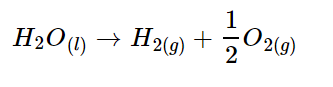
However, the use of water—a critical resource—as a feedstock for green hydrogen, especially in aviation, raises significant ethical concerns. Your customer’s management team is divided on the potential impact of this practice on global water scarcity, which has been exacerbated by climate change. You have been tasked with assessing the feasibility of using green hydrogen in aviation for your client. Your customer has chosen their London to New York route (3,500 nmi), one of their most popular, as a test-case. 


Despite its potential for green production, globally the majority of hydrogen is currently produced from fossil fuels – termed grey hydrogen. One of your team members has proposed using grey hydrogen as an interim solution to bridge the transition to green hydrogen, in order for the company to start developing the required hydrogen-related infrastructure at airports. They argue that carbon capture and storage technology could be used to reduce carbon emissions from grey hydrogen while still achieving the goal of decarbonisation. Hydrogen from fossil fuels with an additional carbon capture step is known as blue hydrogen. 

However, this suggestion has sparked a heated debate within the management team. While acknowledging the potential to address the immediate concerns of generating enough hydrogen to establish the necessary infrastructure and procedures, many team members argued that it would be a contradictory approach. They highlighted the inherent contradiction of utilising fossil fuels, the primary driver of climate change, to achieve decarbonisation. They emphasised the importance of remaining consistent with the ultimate goal of transitioning away from fossil fuels altogether and reducing overall carbon emissions. Your expertise is now sought to weigh these options and advise the board on the best course of action. 


Part three: Hydrogen storage 

Despite an impressive gravimetric energy density (the energy stored per unit mass of fuel) hydrogen has the lowest gas density and the second-lowest boiling point of all known chemical fuels. These unique properties pose challenges for storage and transportation, particularly in the constrained spaces of an aircraft.  


As the lead engineering consultant, you have been tasked with providing expert advice on viable hydrogen storage options for aviation. Your customer has again chosen their London to New York route (3,500 nmi) as a test-case because it is one of their most popular, transatlantic routes. They want to know if hydrogen storage can be effectively managed for this route as it could set a precedent for wider adoption for their other long-haul flights. The plane journey from London to New York is estimated to require around 15,000 kg of hydrogen (or use the quantity estimated previously estimated in Part 2 – see Appendix for example).  


Part four: Emissions and environmental impact 

In Part four, we delve deeper into the environmental implications of using hydrogen as a fuel in aviation with a focus on emissions and their impacts across the lifecycle of a hydrogen plane. Aircraft can be powered using either direct combustion of hydrogen in gas turbines or by reacting hydrogen in a fuel cell to produce electricity that drives a propeller. As the lead engineering consultant, your customer has asked you to choose between hydrogen combustion in gas turbines or the reaction of hydrogen in fuel cells. The management team is divided on the environmental impacts of both methods, with some emphasising the technological readiness and efficiency of combustion and others advocating for the cleaner process of fuel cell reaction.  


Both combustion of hydrogen in an engine and reaction of hydrogen in a fuel cell will produce water as a by-product. The management team are concerned over the effect of using hydrogen on the formation of contrails. Contrails are clouds of water vapour produced by aircraft that have a potential contribution to global warming but the extent of their impact is uncertain.  


So far we have considered each aspect of the hydrogen debate in isolation. However, it is important to consider the overall environmental impact of these stages as a whole. Choices made at each stage of the hydrogen cycle – generation, storage, usage – will collectively impact the overall environmental impact and sustainability of using hydrogen as an aviation fuel and demonstrates how interconnected our decisions can be.  


Part five: Hydrogen aviation stakeholders 

Hydrogen aviation is an area with multiple stakeholders with conflicting priorities. Understanding the perspectives of these key players is important when considering the feasibility of hydrogen in the aviation sector.   


Your consultancy firm is hosting a debate for the aviation industry in order to help them make a decision around hydrogen-based technologies. You have invited representatives from consumer groups, the UK government, Environmental NGOs, airlines, and aircraft manufacturers.  


Stakeholder Key priorities and considerations
Airline & Aerospace Manufacturer 
  • Cost efficiency (fuel, labour, fleet maintenance) – recovering from pandemic. 
  • Passenger experience (commercial & freight). 
  • Develop & maintain global supply chains. 
  • Safety, compliance and operational reliability. 
  • Financial responsibility to employees and investors. 
  • Need government assurances before making big capital investments. 
UK Government 
  • Achieve net zero targets by 2050 
  • Promote economic growth and job creation (still recovering from pandemic). 
  • Fund research and innovation to put their country’s technology ahead. 
  • Fund renewable infrastructure to encourage industry investment. 
Environmental NGOs 
  • Long-term employment for aviation sector. 
  • Demand a sustainable future for aviation to ensure this – right now, not in 50 years. 
  • Standards and targets for industry and government and accountability if not met. 
  • Some NGOs support drastic cuts to flying. 
  • Want to raise public awareness over sustainability of flying. 
Consumer 
  • Environmentally aware (understand the need to reduce carbon emissions). 
  • Also benefit greatly from flying (tourism, commercial shipping, etc.). 
  • Safety and reliability of aircraft & processes. 
  • Cost effectiveness – want affordable service

Appendix: Example calculations 

There are multiple methods for approaching these calculations. The steps shown below are just one example for illustrative purposes.  


Part two: Hydrogen production 

Challenge: Estimate the volume of water required for a hydrogen-powered aircraft.   

Assumptions around the hydrogen production process, aircraft, and fuel requirement can be given to students or researched as a separate task. In this example we assume: 


Example estimation: 

1. Estimate the energy requirement for a mid-size jet 

No current hydrogen-fuelled aircraft exists, so we can use a kerosene-fuelled analogue. Existing aircraft that meet the requirements include the Boeing 767 or 747. The energy requirement is then: 



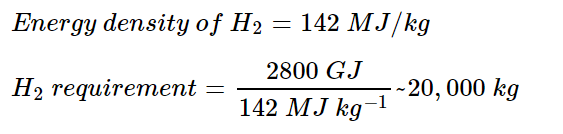
2. Estimate the hydrogen requirement 

Assuming a hydrogen plane has the same fuel requirement:
 

3. Estimate the volume of water required 

Assuming all hydrogen is produced from the electrolysis of water: 

Electrolysis reaction:
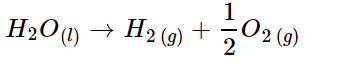
For this reaction, we know one mole of water produces one mole of hydrogen. We need to calculate the moles for 20,000 kg of hydrogen: 



With a 1:1 molar ratio, we can then calculate the mass of water: 

This assumes an electrolyser efficiency of 100%. Typical efficiency values are under 80%, which would yield: 

 

Challenge: Is it feasible to power the UK aviation fleet with water? 


The total energy requirement for UK aviation can be given to students or set as a research task.  

Estimation can follow a similar procedure to the above. 

Multiple methods for validating and assessing the feasibility of this quantity of water. For example, the UK daily water consumption is 14 billion litres. The water requirement estimated above is < 1 % of this total daily water consumption, a finding supported by FlyZero.  


Part three: Hydrogen storage 

Challenge: Is it feasible to store 20,000 kg of hydrogen in an aircraft? 

There are multiple methods of determining the feasibility of storage volume. As example is given below. 


1. Determining the storage volume 

The storage volume is dependent on the storage method used. Density values associated with different storage techniques can be research or given to students (included in Table 2). The storage volume required can be calculated from the mass of hydrogen and density of storage method, example in Table 2.  
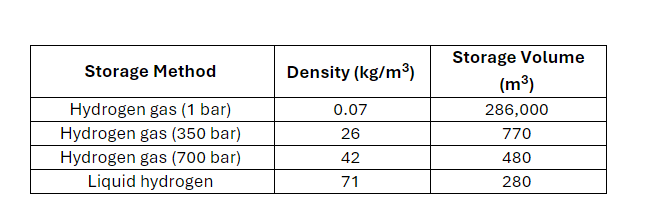
Table 2: Energy densities of various hydrogen storage methods 


2. Determining available aircraft volume 

A straightforward method is to compare the available volume on an aircraft with the hydrogen storage volume required. Aircraft volumes can be given or researched by students. Examples: 
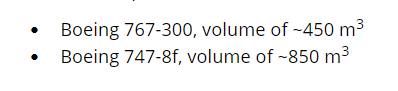
This assumes hydrogen tanks are integrated into an existing aircraft design. Liquid hydrogen can feasibly fit into an existing design, though actual volume will be larger due to space/constraint requirements and additional infrastructure (pipes, fittings, etc) for the tanks. Tank size can be compared to conventional kerosene tanks and a discussion encouraged over where in the plane hydrogen tanks would need to be (conventional liquid fuel storage is in the wings of aircraft, this is not possible for liquid storage tanks due to their shape and infrastructure storage is inside the fuselage). Another straightforward method for storage feasibility is modelling the hydrogen volume as a simple cylinder and comparing to the dimensions of a suitable aircraft.  


This work is licensed under a Creative Commons Attribution-ShareAlike 4.0 International License. 

Any views, thoughts, and opinions expressed herein are solely that of the author(s) and do not necessarily reflect the views, opinions, policies, or position of the Engineering Professors’ Council or the Toolkit sponsors and supporters. 

To view a plain text version of this resource, click here to download the PDF.
Author: Dr Irene Josa (UCL) 

Topic: Embodied carbon in the built environment. 

Type: Teaching. 

Relevant disciplines: Civil engineering; Environmental engineering; Construction management. 

Keywords: Embodied carbon; Resilient construction practices; Climate change adaptation; Ethics; Teaching or embedding sustainability; AHEP; Higher education; Pedagogy; Environmental impact assessment; Environmental risk; Assessment. 

Sustainability competency: Integrated problem-solving; Systems thinking; Critical thinking; Collaboration; Anticipatory.

AHEP mapping: This resource addresses two of the themes from the UK’s Accreditation of Higher Education Programmes fourth edition (AHEP4): The Engineer and Society (acknowledging that engineering activity can have a significant societal impact) and Engineering Practice (the practical application of engineering concepts, tools and professional skills). To map this resource to AHEP outcomes specific to a programme under these themes, access AHEP 4 here and navigate to pages 30-31 and 35-37.  

Related SDGs: SDG 4 (Quality education); SDG 9 (Industry, innovation and infrastructure); SDG 11 (Sustainable cities and communities); SDG 13 (Climate action). 

Reimagined Degree Map Intervention: More real-world complexity; Active pedagogies and mindset development; Authentic assessment; Cross-disciplinarity.

Educational aim: To foster a deep understanding of the challenges and opportunities in balancing environmental sustainability and profitability/safety in construction projects. To develop critical thinking and decision-making skills in addressing social, economic, and environmental considerations. To encourage students to propose innovative and comprehensive solutions for sustainable urban development. 

Educational level: Intermediate. 


Learning and teaching notes: 

Before engaging with the case study, learners should be familiar with the process of calculating embodied carbon and conducting a cost-benefit analysis. The case study is presented in three parts. In Part one, an ambitious urban revitalisation project is under development, and a project manager needs to find a balance between financial considerations and the urgent need for sustainable, low-embodied carbon construction. In Part two, the project being developed is located in a coastal area prone to climate change-related disasters. The team needs to ensure that the project is durable in the face of disasters and, at the same time, upholds sustainability principles. Lastly, in Part three, stakeholders involved in the two previous projects come together to identify potential synergies. 

Learners have the opportunity to: 

Teachers have the opportunity to: 


Supporting resources 


Learning and teaching resources: 

Environmental impact assessment: 

Social impact assessment: 

Economic impact assessment: 

Systems thinking and holistic analysis approaches (PESTLE, SWOT): 

Real-world cases to explore:


Part one: 

In the heart of an urban revitalisation project, the company CityScape Builders is embarking on a transformational journey to convert a neglected area into a vibrant urban centre which will be named ReviveRise District. This urban centre will mostly be formed by tall buildings. 

Avery, the project manager at CityScape Builders, is under immense pressure to meet tight budget constraints and deadlines. Avery understands the project’s economic implications and the importance of delivering within the stipulated financial limits. However, the conflict arises when Rohan, a renowned environmental advocate and consultant, insists on prioritising sustainable construction practices to reduce the project’s embodied carbon. Rohan envisions a future where construction doesn’t come at the cost of the environment. 

On the other side of the situation is Yuki, the CFO of CityScape Builders, who is concerned about the project’s bottom line. Yuki is wary of any actions that could escalate costs and understands that using low-embodied carbon materials often comes with a higher price tag.  

In light of this situation, Avery proposes exploring different options of construction methods and materials that could be used in the design of their skyscrapers. Avery needs to do this quickly to avoid any delay, and therefore consider just the most important carbon-emitting aspects of the different options.  


Optional STOP for questions and activities 


Part two:

CityScape Builders is now embarking on a new challenge, ResilientCoast, a construction project located in a coastal area that is susceptible to climate change-related disasters. This region is economically disadvantaged and lacks the financial resources often found in more developed areas.  

Micha, the resilience project manager at CityScape Builders, is tasked with ensuring the project’s durability in the face of disasters and the impacts of climate change. Micha’s primary concern is to create a resilient structure that can withstand extreme weather events but is equally dedicated to sustainability goals. To navigate this complex situation, Micha seeks guidance from Dr. Ravi, a climate scientist with expertise in coastal resiliency. Dr. Ravi is committed to finding innovative and sustainable solutions that simultaneously address the climate change impacts and reduce embodied carbon in construction. 

In this scenario, Bao, the local community leader, also plays a crucial role. Bao advocates for jobs and economic development in the area, even though Bao is acutely aware of the inherent safety risks. Bao, too, understands that balancing these conflicting interests is a substantial challenge. 

In this situation, Micha wonders how to construct safely in a vulnerable location while maintaining sustainability goals.  


Optional STOP for questions and activities 


Part three: 

Robin and Samir are two independent sustainability consultants that are supporting the projects in ReviveRise District and ResilientCoast respectively. They are concerned that sustainability is just being assessed by embodied carbon and cost sustainability, and they believe that sustainability is a much broader concept than just those two indicators. Robin is the independent environmental consultant working with ReviveRise District officials and is responsible for assessing the broader environmental impacts of the construction project. Robin’s analysis spans beyond embodied carbon, considering local job creation, transportation effects, pollution, biodiversity, and other aspects of the project. 

Samir, on the other hand, is a municipal board member of ResilientCoast. Samir’s role involves advocating for the local community while striving to ensure that sustainability efforts do not compromise the safety and resilience of the area. Samir’s responsibilities are more comprehensive than just economic considerations; they encompass the entire well-being of the community in the face of climate change. 

Robin and Samir recognise the need for cross-city collaboration and information sharing, and they want to collaborate to ensure that the sustainability efforts of both projects do not create unintended burdens for their communities. They acknowledge that a comprehensive approach is necessary for analysing broader impacts, and to ensure both the success of the construction projects and the greater good of both communities. They believe in working collectively to find solutions that are not only sustainable but also beneficial to all stakeholders involved. 


Optional STOP for questions and activities 


The above questions and activities call for the involvement of cross-disciplinary teams, requiring expertise not only in engineering but also in planning, policy, and related fields. Ideally, in the classroom setting, students with diverse knowledge across these disciplines can be grouped together to enhance collaboration and address the tasks proposed. In cases where forming such groups is not feasible, the educator can assign specific roles such as engineer, planner, policymaker, etc., to individual students, ensuring a balanced representation of skills and perspectives. 


This work is licensed under a Creative Commons Attribution-ShareAlike 4.0 International License. 

Any views, thoughts, and opinions expressed herein are solely that of the author(s) and do not necessarily reflect the views, opinions, policies, or position of the Engineering Professors’ Council or the Toolkit sponsors and supporters. 

To view a plain text version of this resource, click here to download the PDF.

In developing the resources for the EPC’s Sustainability Toolkit, we took into account recent scholarship and best practices and reviewed existing material available on sustainability in engineering. You can find links to these online resources in our ever-growing library of engineering education resources on sustainability below. Please note, the resources linked below are all open-source. If you want to suggest a resource that has helped you, find out how on our Get Involved page.


Jump to a section on this page:


To view a page that only lists library links from a specific category type:


Assessment tools

Listed below are links to tools that are designed to support educators’ ability to measure quality and impact of sustainability teaching and learning activities. These have been grouped according to topic. You can also find our suite of assessment tools, here.

Resource Topic Discipline
Newcastle University’s Assessing Education for Sustainable Development Assessment materials  General
Welsh Assembly Government: Education for Sustainable Development and Global Citizenship. A self-assessment toolkit for Work-Based Learning Providers. Assessment materials  General
The Accreditation of Higher Education Programmes (AHEP) – Fourth edition Accreditation materials  General
Times Higher Education – Impact Rankings 2022 Accreditation materials  General
Times Higher Education, Impact Rankings 2023 Accreditation materials  General
The UK Standard for Professional Engineering Competence and Commitment (UK-SPEC) Accreditation materials  General


Collaboration resources

Click to view our Collaboration resources page where you can find links to groups, networks, and organisations/initiatives that will support educators’ ability to learn with and from others. 


Integration tools

Listed below are links to tools designed to support educators ability to apply and embed sustainability topics within their engineering teaching. These have been grouped according to topic. You can also find our suite of learning activities and case studies, here.

Resource Topic Discipline

AdvanceHE’s Education for Sustainable Development Curriculum Design Toolkit

Curriculum Development  General
Engineering for One Planet Framework Learning Outcomes Curriculum Development  Engineering-specific
Education & Training Foundation’s Map the Curriculum Tool for ESD Curriculum Development  General
University College Cork’s Sustainable Development Goals Toolkit Curriculum Development  General
Strachan, S.M. et al. (2019) Using vertically integrated projects to embed research-based education for Sustainable Development in undergraduate curricula, International Journal of Sustainability in Higher Education. (Accessed: 01 February 2024). Curriculum Development  General
Snowflake Education – Faculty Training: Teaching Sustainability Program Curriculum Development General
Siemens Case Studies on Sustainability Case Studies Engineering-specific
Low Energy Transition Initiative Case Studies Case Studies , Energy Engineering-specific
UK Green Building Council Case Studies Case Studies , Construction Engineering-specific
Litos, L. et al. (2017) Organizational designs for sharing environmental best practice between manufacturing sites, SpringerLink. (Accessed: 01 February 2024). Case Studies , Manufacturing Engineering-specific
Litos, L. et al. (2017) A maturity-based improvement method for eco-efficiency in manufacturing systems, Procedia Manufacturing. (Accessed: 01 February 2024). Case Studies , Manufacturing Engineering-specific
European Product Bureau – Indicative list of software tools and databases for Level(s) indicator 1.2 (version December 2020). Technical tools, Built environment Engineering-specific
Royal Institution of Chartered Surveyors (RICS) – Whole life carbon assessment (WLCA) for the built environment Technical tools, Built environment Engineering-specific
The Institution of Structural Engineers (ISTRUCTE) – The Structural carbon tool – version 2 Technical tools, Structural engineering Engineering-specific
Green, M. (2014) What the social progress index can reveal about your country, Michael Green: What the Social Progress Index can reveal about your country | TED Talk. (Accessed: 01 February 2024). Technical tools  General

Manfred Max-Neef’s Fundamental human needs (Matrix of needs and satisfiers)

”One of the applications of the work is in the field of Strategic Sustainable Development, where the fundamental human needs (not the marketed or created desires and wants) are used in the Brundtland definition.”

Technical tools  General
Siemens – Engineering student software  Technical tools Engineering-specific
Despeisse, M. et al. (2016) A collection of tools for factory eco-efficiency, Procedia CIRP. (Accessed: 01 February 2024). Technical tools, Manufacturing Engineering-specific
Engineering for One Planet Quickstart Activity Guide Other Learning Activities  Engineering-specific
Engineering for One Planet Comprehensive Guide to Teaching Learning Outcomes Other Learning Activities  Engineering-specific
Siemens Engineering Curriculum Materials Other Learning Activities  Engineering-specific
VentureWell’s Activities for Integrating Sustainability into Technical Classes Other Learning Activities  General
VentureWell’s Tools for Design and Sustainability Other Learning Activities  Engineering-specific
AskNature’s Biomimicry Toolbox Other Learning Activities  Engineering-specific
Segalas , J. (2020) Freely available learning resources for Sustainable Design in engineering education, SEFI. (Accessed: 01 February 2024). Other Learning Activities  Engineering-specific
Siemens Xcelerator Academy Other Learning Activities  Engineering-specific


Knowledge tools

Listed below are links to resources that support educators’ awareness and understanding of sustainability topics in general as well as their connection to engineering education in particular. These have been grouped according to topic. You can also find our suite of knowledge tools, here.

Resource Topic Discipline
UN SDG website Education for Sustainable Development and UN Sustainable Development Goals General
UNESCO’s Education for Sustainable Development Toolbox Education for Sustainable Development and UN Sustainable Development Goals General
Newcastle University’s Guide to Engineering and Education for Sustainable Development Education for Sustainable Development and UN Sustainable Development Goals General
International Institute for Sustainable Development Knowledge Hub Education for Sustainable Development and UN Sustainable Development Goals General
PBL, SDGs, and Engineering Education WFEO Academy webinar (only accessible to WFEO academy members) Education for Sustainable Development and UN Sustainable Development Goals Engineering-specific
Re-setting the Benchmarks for Engineering Graduates with the Right Skills for Sustainable Development WFEO Academy webinar (only accessible to WFEO academy members) Education for Sustainable Development and UN Sustainable Development Goals Engineering-specific
AdvanceHE’s Guidance on embedding Education for Sustainable Development in HE Education for Sustainable Development and UN Sustainable Development Goals General
UNESCO Engineering Report  Education for Sustainable Development and UN Sustainable Development Goals Engineering-specific
AdvanceHEEducation for Sustainable Development: a review of the literature 2015-2022  (only accessible to colleagues from member institutions at AdvanceHE – this is a member benefit until October 2025) Education for Sustainable Development and UN Sustainable Development Goals General

Wackernagel, M., Hanscom, L. and Lin, D. (2017) Making the Sustainable Development Goals consistent with sustainability, Frontiers. (Accessed: 01 February 2024).

Education for Sustainable Development and UN Sustainable Development Goals General
Vertically Integrated Projects for Sustainable Development (VIP4SD), University of Strathclyde (Video) Education for Sustainable Development and UN Sustainable Development Goals General
Vertically Integrated Projects for Sustainable Development, University of Strathclyde (Study with us) Education for Sustainable Development and UN Sustainable Development Goals General
Siemens Skills for Sustainability Network Roundtable Article – August 2022 Education for Sustainable Development and UN Sustainable Development Goals Engineering-specific
Siemens Skills for Sustainability Network Roundtable Article – October 2022 Education for Sustainable Development and UN Sustainable Development Goals Engineering-specific
Report: World Engineering Day – Engineering for One Planet (2024)
Education for Sustainable Development and UN Sustainable Development Goals Engineering-specific
Siemens Skills for Sustainability Student Survey Student Voice  Engineering-specific
Students Organising for Sustainability Learning Academy Student Voice  General
Students Organising for Sustainability – Sustainability Skills Survey Student Voice  General
Engineers Without Borders-UK Global Responsibility Competency Compass Competency Frameworksfor Sustainability  Engineering-specific
Institute of Environmental Management and Assessment Sustainability Skills Map Competency Frameworksfor Sustainability  General
Arizona State School of Sustainability Key Competencies Competency Frameworksfor Sustainability  General
EU GreenComp: the European Sustainability Competence Framework Competency Frameworksfor Sustainability  General
International Engineering Alliance Graduate Attributes & Professional Competencies Competency Frameworksfor Sustainability  General
Engineering for One Planet (EOP) – The EOP Framework Competency Frameworksfor Sustainability  Engineering-specific
Ellen Macarthur Foundation’s Circular Economy website Broader Context , Circular economy Engineering-specific
GreenBiz’s Cheat Sheet of EU Sustainability Regulations Broader Context , Regulations General
Green Software Practitioner – Principles of Green Software Broader Context , Software Engineering-specific
Microsoft’s Principles of Sustainable Software Engineering Broader Context , Software Engineering-specific
Engineering Futures – Sustainability in Engineering Webinars  (You will need to create an account on the Engineering Futures website. Once you have created your account, navigate back to this link, scroll down to ”Sustainability in Engineering Webinars” and enter your account details. Click on the webinar recordings you wish to access. You will then be redirected to the Crowdcast website, where you will need to create an account to view the recordings.) Broader Context, Engineering Engineering-specific
Innes, C. (2023) AI and Sustainability: Weighing up the environmental pros and cons of Machine Intelligence Technology., Jisc – Infrastructure.  (Accessed: 01 February 2024). Broader Context, Artificial Intelligence Engineering-specific
Arnold, W. (2020a) The structural engineer’s responsibility in this climate emergency, The Institution of Structural Engineers. (Accessed: 01 February 2024). Broader Context, Structural engineering Engineering-specific
Arnold, W. (2017) Structural engineering in 2027, The Institution of Structural Engineers. (Accessed: 01 February 2024). Broader Context, Structural engineering Engineering-specific
Arnold, W. (2020b) The institution’s response to the climate emergency, The Institution of Structural Engineers. (Accessed: 01 February 2024). Broader Context, Structural engineering Engineering-specific
Litos , L. et al. (2023) An investigation between the links of sustainable manufacturing practices and Innovation, Procedia CIRP. (Accessed: 01 February 2024). Broader Context, Manufacturing Engineering-specific
UAL Fashion SEEDS: Fashion Societal, Economic and Environmental Design-led Sustainability
Broader Context, Design General
ISTRUCTE – Sustainability Resource Map
Broader Context, Engineering Engineering-specific


Any views, thoughts, and opinions expressed herein are solely that of the author(s) and do not necessarily reflect the views, opinions, policies, or position of the Engineering Professors’ Council or the Toolkit sponsors and supporters.

Author: The Sustainability Resources Library was produced by Crystal Nwagboso (Engineering Professors Council). If you want to suggest a resource that has helped you, find out how on our Get Involved page.

This post is also available here.

In developing the resources for the EPC’s Sustainability Toolkit, we took into account recent scholarship and best practices and reviewed existing material available on sustainability in engineering. You can find links to these online resources in our ever-growing library of engineering education resources on sustainability below. Please note, the resources linked below are all open-source. If you want to suggest a resource that has helped you, find out how on our Get Involved page.


To view a page that only lists library links from a specific category type:


Integration tools

Listed below are links to tools designed to support educators ability to apply and embed sustainability topics within their engineering teaching. These have been grouped according to topic. You can also find our suite of learning activities and case studies, here.

Resource Topic Discipline

AdvanceHE’s Education for Sustainable Development Curriculum Design Toolkit

Curriculum Development  General
Engineering for One Planet Framework Learning Outcomes Curriculum Development  Engineering-specific
Education & Training Foundation’s Map the Curriculum Tool for ESD Curriculum Development  General
University College Cork’s Sustainable Development Goals Toolkit Curriculum Development  General
Strachan, S.M. et al. (2019) Using vertically integrated projects to embed research-based education for Sustainable Development in undergraduate curricula, International Journal of Sustainability in Higher Education. (Accessed: 01 February 2024). Curriculum Development  General
Snowflake Education – Faculty Training: Teaching Sustainability Program Curriculum Development General
Siemens Case Studies on Sustainability Case Studies Engineering-specific
Low Energy Transition Initiative Case Studies Case Studies , Energy Engineering-specific
UK Green Building Council Case Studies Case Studies , Construction Engineering-specific
Litos, L. et al. (2017) Organizational designs for sharing environmental best practice between manufacturing sites, SpringerLink. (Accessed: 01 February 2024). Case Studies , Manufacturing Engineering-specific
Litos, L. et al. (2017) A maturity-based improvement method for eco-efficiency in manufacturing systems, Procedia Manufacturing. (Accessed: 01 February 2024). Case Studies , Manufacturing Engineering-specific
European Product Bureau – Indicative list of software tools and databases for Level(s) indicator 1.2 (version December 2020). Technical tools, Built environment Engineering-specific
Royal Institution of Chartered Surveyors (RICS) – Whole life carbon assessment (WLCA) for the built environment Technical tools, Built environment Engineering-specific
The Institution of Structural Engineers (ISTRUCTE) – The Structural carbon tool – version 2 Technical tools, Structural engineering Engineering-specific
Green, M. (2014) What the social progress index can reveal about your country, Michael Green: What the Social Progress Index can reveal about your country | TED Talk. (Accessed: 01 February 2024). Technical tools  General

Manfred Max-Neef’s Fundamental human needs (Matrix of needs and satisfiers)

”One of the applications of the work is in the field of Strategic Sustainable Development, where the fundamental human needs (not the marketed or created desires and wants) are used in the Brundtland definition.”

Technical tools  General
Siemens – Engineering student software  Technical tools Engineering-specific
Despeisse, M. et al. (2016) A collection of tools for factory eco-efficiency, Procedia CIRP. (Accessed: 01 February 2024). Technical tools, Manufacturing Engineering-specific
Engineering for One Planet Quickstart Activity Guide Other Learning Activities  Engineering-specific
Engineering for One Planet Comprehensive Guide to Teaching Learning Outcomes Other Learning Activities  Engineering-specific
Siemens Engineering Curriculum Materials Other Learning Activities  Engineering-specific
VentureWell’s Activities for Integrating Sustainability into Technical Classes Other Learning Activities  General
VentureWell’s Tools for Design and Sustainability Other Learning Activities  Engineering-specific
AskNature’s Biomimicry Toolbox Other Learning Activities  Engineering-specific
Segalas , J. (2020) Freely available learning resources for Sustainable Design in engineering education, SEFI. (Accessed: 01 February 2024). Other Learning Activities  Engineering-specific
Siemens Xcelerator Academy Other Learning Activities  Engineering-specific

Any views, thoughts, and opinions expressed herein are solely that of the author(s) and do not necessarily reflect the views, opinions, policies, or position of the Engineering Professors’ Council or the Toolkit sponsors and supporters.

Author: The Sustainability Resources Library was produced by Crystal Nwagboso (Engineering Professors Council).If you want to suggest a resource that has helped you, find out how on our Get Involved page.

Authors: Ahmet Omurtag (Nottingham Trent University); Andrei Dragomir (National University of Singapore / University of Houston).

Topic: Data security of smart technologies.

Engineering disciplines: Electronics; Data; Biomedical engineering.

Ethical issues: Autonomy; Dignity; Privacy; Confidentiality.

Professional situations: Communication; Honesty; Transparency; Informed consent; Misuse of data.

Educational level: Advanced.

Educational aim: Practising Ethical Analysis: engaging in a process by which ethical issues are defined, affected parties and consequences are identified, so that relevant moral principles can be applied to a situation in order to determine possible courses of action.


Learning and teaching notes:

This case involves Aziza, a biomedical engineer working for Neuraltrix, a hypothetical company that develops Brain-computer interfaces (BCI) for specialised applications. Aziza has always been curious about the brain and enthusiastic about using cutting-edge technologies to help people in their daily lives. Her team has designed a BCI that can measure brain activity non-invasively and, by applying machine learning algorithms, assess the job-related proficiency and expertise level of a person. She is leading the deployment of the new system in hospitals and medical schools, to be used in evaluating candidates being considered for consultant positions. In doing so, and to respond to requests to extend and use the BCI-based system in unforeseen ways, she finds herself compelled to weigh various ethical, legal and professional responsibilities.

This case study addresses two of AHEP 4’s themes: The Engineer and Society (acknowledging that engineering activity can have a significant societal impact) and Engineering Practice (the practical application of engineering concepts, tools and professional skills). To map this case study to AHEP outcomes specific to a programme under these themes, access AHEP 4 here and navigate to pages 30-31 and 35-37.

The dilemma in this case is presented in three parts. If desired, a teacher can use the Summary and Part one in isolation, but Parts two and three develop and complicate the concepts presented in the Summary and Part one to provide for additional learning. The case allows teachers the option to stop at multiple points for questions and/or activities as desired.

Learners have the opportunity to:

Teachers have the opportunity to:


Learning and teaching resources:

Legal regulations:

Professional organisations:

Philanthropic organisations:

Journal articles:

Educational institutions:


Summary:

Brain-computer interfaces (BCIs) detect brain activity and utilise advanced signal analysis to identify features in the data that may be relevant to specific applications. These features might provide information about people’s thoughts and intentions or about their psychological traits or potential disorders, and may be interpreted for various purposes such as for medical diagnosis, for providing real-time feedback, or for interacting with external devices such as a computer. Some current non-invasive BCIs employ unobtrusive electroencephalography headsets or even optical (near-infrared) sensors to detect brain function and can be safe and convenient to use.

Evidence shows that the brains of people with specialised expertise have identifiable functional characteristics. Biomedical technology may translate this knowledge soon into BCIs that can be used for objectively assessing professional skills. Researchers already know that neural signals support features linked to levels of expertise, which may enable the assessment of job applicants or candidates for promotion or certification.

BCI technology would potentially benefit people by improving the match between people and their jobs, and allowing better and more nuanced career support. However, the BCI has access to additional information that may be sensitive or even troubling. For example, it could reveal a person’s health status (such as epilepsy or stroke), or it may suggest psychological traits ranging from unconscious racial bias to psychopathy. Someone sensitive about their privacy may be reluctant to consent to wearing a BCI.

In everyday life, we show what is on our minds through language and behaviour, which are normally under our control, and provide a buffer of privacy. BCIs with direct access to the brain and increasing capability to decode its activity may breach this buffer. Information collected by BCIs could be of interest not only to employers who will decide whether to hire and invest in a new employee, but also to health insurers, advertising agencies, or governments.


Optional STOP for questions and activities:

1. Activity: Risks of brain activity decoding – Identify the physical, ethical, and social difficulties that could result from the use of devices that have the ability to directly access the brain and decipher some of its psychological content such as thoughts, beliefs, and emotions.

2. Activity: Regulatory oversight – Investigate which organisations and regulatory bodies currently monitor and are responsible for the safe and ethical use of BCIs.

3. Activity: Technical integration – Investigate how BCIs work to translate brain activity into interpretable data.


Dilemma – Part one:

After the company, Neuraltrix, deployed their BCI and it had been in use for a year in several hospitals, its lead developer Aziza became part of the customer support team. While remaining proud and supportive of the technology, she had misgivings about some of its unexpected ramifications. She received the following requests from people and institutions for system modifications or for data sharing:

1. A hospital asked Neuraltrix for a technical modification that would allow the HR department to send data to their clinical neurophysiologists for “further analysis,” claiming that this might benefit people by potentially revealing a medical abnormality that might otherwise be missed.

2. An Artificial Intelligence research group partnering with Neuraltrix requested access to the data to improve their signal analysis algorithms.

3. A private health insurance company requested Neuraltrix provide access to the scan of someone who had applied for insurance coverage; they stated that they have a right to examine the scan just as life insurance agencies are allowed to perform health checks on potential customers.

4. An advertising agency asked Neuraltrix for access to their data to use them to fine-tune their customer behavioural prediction algorithms.

5. A government agency demanded access to the data to investigate a suspected case of “radicalisation”.

6. A prosecutor asked for access to the scan of a specific person because she had recently been the defendant in an assault case, where the prosecutor is gathering evidence of potential aggressive tendencies.

7. A defence attorney requested data because they were gathering potentially exonerating evidence, to prove that the defendant’s autonomy had been compromised by their brain states, following a line of argument known as “My brain made me do it.”


Optional STOP for questions and activities: 

1. Activity: Identify legal issues – Students could research what laws or regulations apply to each case and consider various ways in which Neuraltrix could lawfully meet some of the above requests while rejecting others, and how their responses should be communicated within the company and to the requestor.

2. Activity: Identify ethical issues – Students could reflect on what might be the immediate ethical concerns related to sharing the data as requested.

3. Activity: Discussion or Reflection – Possible prompts:


Dilemma – Part two:

The Neuraltrix BCI has an interface which allows users to provide informed consent before being scanned. The biomedical engineer developing the system was informed about a customer complaint which stated that the user had felt pressured to provide consent as the scan was part of a job interview. The complaint also stated that the user had not been aware of the extent of information gleaned from their brains, and that they would not have provided consent had been made aware of it.


Optional STOP for questions and activities: 

1. Activity: Technical analysis – Students might try to determine if it is possible to design the BCI consent system and/or consent process to eliminate the difficulties cited in the complaint. Could the device be designed to automatically detect sensitive psychological content or allow the subject to stop the scan or retroactively erase the recording?

2. Activity: Determine the broader societal impact and the wider ethical context – Students should consider what issues are raised by the widespread availability of brain scans. This could be done in small groups or a larger classroom discussion.

Possible prompts:


Dilemma – Part three:

Neuraltrix BCI is about to launch its updated version, which features all data processing and storage moved to the cloud to facilitate interactive and mobile applications. This upgrade attracted investors and a major deal is about to be signed. The board is requesting a fast deployment from the management team and Aziza faces pressure from her managers to run final security checks and go live with the cloud version. During these checks, Aziza discovers a critical security issue which can be exploited once the BCI runs in the cloud, risking breaches in the database and algorithm. Managers believe this can be fixed after launch and request the engineer to start deployment and identify subsequent solutions to fix the security issue.


Optional STOP for questions and activities: 

1. Activity: Students should consider if it is advisable for Aziza to follow requests from managers and the Neuraltrix BCI board and discuss possible consequences, or halt the new version deployment which may put at risk the new investment deal and possibly the future of the company.

2. Activity: Apply an analysis based on “Duty-Ethics” and “Rights Ethics.” This could be done in small groups (who would argue for management position and engineer position, respectively) or a larger classroom discussion. A tabulation approach with detailed pros and cons is recommended.

3. Activity: Apply a similar analysis as above based on the principles of “Act-Utilitarianism” and “Rule-Utilitarianism.”

Possible prompts:


This work is licensed under a Creative Commons Attribution-ShareAlike 4.0 International License.

Any views, thoughts, and opinions expressed herein are solely that of the author(s) and do not necessarily reflect the views, opinions, policies, or position of the Engineering Professors’ Council or the Toolkit sponsors and supporters.


Authors: Paola Seminara (Edinburgh Napier University); Alasdair Reid (Edinburgh Napier University).

Topic: Sustainable materials  in construction.

Engineering disciplines: Civil engineering; Manufacturing; Construction.

Ethical issues: Sustainability; Respect for the environment; Future generations; Societal impact; Corporate Social Responsibility.

Professional situations: EDI; Communication; Conflicts with leadership/management; Quality of work; Personal/professional reputation.

Educational level: Intermediate.

Educational aim: Practising Ethical Analysis: engaging in a process by which ethical issues are defined, affected parties and consequences are identified, so that relevant moral principles can be applied to a situation in order to determine possible courses of action.


Learning and teaching notes:

This case involves an early-career consultant engineer working in the area of sustainable construction. She must negotiate between the values that she, her employer, and her client hold in order to balance sustainability goals and profit. The summary involves analysis of personal values and technical issues, and parts one and two bring in further complications that require the engineer to decide how much to compromise her own values.

This case study addresses two of AHEP 4’s themes: The Engineer and Society (acknowledging that engineering activity can have a significant societal impact) and Engineering Practice (the practical application of engineering concepts, tools and professional skills). To map this case study to AHEP outcomes specific to a programme under these themes, access AHEP 4 here and navigate to pages 30-31 and 35-37.

The dilemma in this case is presented in two parts. If desired, a teacher can use the Summary and Part one in isolation, but Part two develops and complicates the concepts presented in the Summary and Part one to provide for additional learning. The case allows teachers the option to stop at multiple points for questions and / or activities as desired.

Learners have the opportunity to:

Teachers have the opportunity to:


Learning and teaching resources:

News articles:

Business:

Journal articles:

Educational institutions:

Citizen engagement organisation:

Professional organisation:

NGOs:


Suggested pre-reading:

Learners and teachers might benefit from pre-reading the above resources about EDI and enacting global responsibility, as well as introductory material on construction with mass timber such as information from Transforming Timber or the “How to Build a Wood Skyscraper” video.


Summary:

Originally from rural Pakistan, Anika is a construction engineer who has recently finished her postgraduate degree, having been awarded a fully funded scholarship. During her studies, Anika was introduced to innovative projects using mass timber and off-site methods of construction. After completing her studies, she was inspired to start her own consultancy practice in the UK, aiming to promote the use of sustainable materials within the construction industry.

James is the director of a well-established, family-owned architectural firm, originally started by his great-grandfather who was also a prominent societal figure. In the last year, James and his colleagues have sought to develop a sustainability policy for the firm. A key feature of this new policy is a commitment to adopt innovative, sustainable construction solutions wherever possible. James has been contacted by an important client who wants to commission his firm to work on a new residential development.

James first met Anika at university when they were both studying for the same postgraduate degree. Having a high regard for Anika’s capability and professionalism, James contacts Anika to propose working together to develop a proposal for the new residential development.

James hopes that Anika’s involvement will persuade the client to select construction solutions that are aligned with the new sustainability policy adopted by his firm. However, the important client has a reputation for prioritising profit over quality, and openly admits to being sceptical about environmental issues.

Anika schedules a meeting with the client to introduce herself and discuss some initial ideas for the project.


Optional STOP for questions and activities:

1. Discussion: Personal values – What are the different personal values for Anika, James, and the client? How might they conflict with each other?

2. Activity: Professional communication – Elevator pitch activity part 1 – Working in groups of 2-3 and looking at the three different stakeholders’ personal values, each group will create a persuasive pitch of 1 minute used by Anika to convince the client to focus on sustainability.

3. Activity: Technical Analysis – Assemble a bibliography of relevant projects using mass timber and off-site methods of construction, and identify the weaknesses and strengths of these projects in terms of sustainability and long- and short-term costs and benefits.

4. Activity:  Professional communication – Elevator pitch activity part 2 – After conducting your technical analysis, work in groups of 2-3 to revise your elevator pitch and role play the meeting with the client. How should Anika approach the meeting?


Dilemma – Part one:

After the first meeting, the client expresses major concerns about Anika’s vision. Firstly, the client states that the initial costings are too high, resulting in a reduced profit margin for the development. Secondly, the client has serious misgivings about the use of mass timber, citing concerns about fire safety and the durability of the material.

Anika is disheartened at the client’s stance, and is also frustrated by James, who has a tendency to contradict and interrupt her during meetings with the client. Anika is also aware that James has met with the client on various occasions without extending the invitation to her, most notably a drinks and dinner reception at a luxury hotel. However, despite her misgivings, Anika knows that being involved in this project will secure the future of her own fledgling consulting company in the short term – and therefore, reluctantly, suspects she will have to make compromises.


Optional STOP for questions and activities:

1. Discussion: Leadership and Communication – Which global responsibilities does Anika face as an engineer? Are those personal or professional responsibilities, or both? How should Anika balance her ethical duties, both personal and professional, and at the same time reach a decision with the client?

2. Activity: Research – Assemble a bibliography of relevant projects where mass timber has been used. How might you design a study to evaluate its structural and environmental credentials? What additional research needs to be conducted in order for more acceptance of this construction method?

3. Activity: Wider impact – Looking at Anika’s idea of using mass timber and off-site methods of construction, students will work in groups of 3-4 to identify the values categories of the following capital models: Natural, Social, Human, Manufactured and Financial.

4. Activity: Equality, Diversity, and Inclusion – Map and analyse qualities and abilities in connection with women and how these can have a positive and negative impact in the construction industry.

5. Discussion: Leadership and Communication – Which are the competitive advantages of women leading sustainable businesses and organisations? Which coping strategy should Anika use for her working relationship with James?


Dilemma – Part two:

Despite some initial misgivings, the client has commissioned James and Anika to work on the new residential development. Anika has begun researching where to locally source mass timber products. During her research, Anika discovers a new off-site construction company that uses homegrown mass timber. Anika is excited by this discovery as most timber products are imported from abroad, meaning the environmental impact can be mitigated.


Optional STOP for questions and activities:

1. Activity: Environmental footprint – Research the Environmental Product Declaration of different construction materials and whole life carbon assessment.

2. Discussion: Is transportation the only benefit of using local resources? Which other values (Natural, Social, Human, Manufactured and Financial) can be maximised with the use of local resources? How should these values be weighted?

3. Discussion: Professional responsibility – How important is Corporate Social Responsibility (CSR) in Construction? How could the use of local biogenic materials and off-site methods of construction be incorporated into a strategic CSR business plan?


This work is licensed under a Creative Commons Attribution-ShareAlike 4.0 International License.

Any views, thoughts, and opinions expressed herein are solely that of the author(s) and do not necessarily reflect the views, opinions, policies, or position of the Engineering Professors’ Council or the Toolkit sponsors and supporters.

Author: Sarah Jayne Hitt, Ph.D. SFHEA (NMITE, Edinburgh Napier University).

Keywords: Collaboration; Pedagogy.

Who is this article for?: This article should be read by educators at all levels in higher education who wish to integrate ethics into the engineering and design curriculum or module design.


Premise:

Most engineers and engineering educators have experienced or read about a situation that makes them think, “that would make a great case study for students to learn from.” Examples of potential cases can be found in the news, in textbooks, and in the workplace. However, it can be difficult to translate a real world situation into an educational resource. This article sets forth a “recipe” based on recent educational scholarship that can be used to create case studies ideal for classroom use.


Case study purpose:

Recipes are created for different reasons – sometimes you want comfort food, sometimes it’s a healthy detox meal, sometimes it’s a stand-out celebratory feast for a special occasion. In a similar way, case studies should be written with a deliberate purpose in mind. To help you consider these, ask yourself:

Next, it’s important to remember that there are different kinds of learning within ethics education. The Ethics Explorer highlights these with its focus on graduate attributes which specify what characteristics and attitudes we hope engineering graduates will develop through this learning. For example, do you want to focus on students’ abilities to identify or identify with an ethical situation? Or do you want them to be able to reason through options or make a judgement? Or is it important for them to learn ethical knowledge such as professional codes or practices? Any of these could be a good focus, but in general, it is useful to write a case study aimed at one particular purpose, otherwise it can become too unwieldy. Plus, case studies that have a specific learning aim can make it easier to devise assessments related to their content. 


Case study ingredients:

Just as cooks do when preparing to make a meal, case study writers assemble ingredients. These are the components of a case that can be mixed together in different proportions in order to create the desired result. And, as in cooking, sometimes you should use more or less of an ingredient depending on the effect you want to create or the needs of your audience. But in general, educational scholars agree that these elements are necessary within a case study to promote learner engagement and to achieve the desired educational outcomes. 

1. Setting / Context.  Ethical issues in engineering don’t happen in a vacuum. Often they are exacerbated by the setting and context in which they occur, whether that’s a start-up tech company in London or an aid organisation in Brazil or in a research lab in Singapore. An authentic environment not only makes the case more realistic, but it also can add important extra dimensions to the issues at stake (Valentine et al., 2020). However, to ensure you don’t run afoul of IP or other legal concerns, it can be best to fictionalise company names and invent hypothetical (yet realistic) engineering projects.

2. Characters. Ethics is a fundamentally human concern; therefore it’s important to emphasise the emotional and psychological elements of engineering ethics issues (Walling, 2015; Conlon & Zandervoort, 2011). In real life, every person brings their role, point-of-view, and background to their consideration of ethical dilemmas, so case studies should replicate that. Additionally, aspects like age, gender, and ethnicity can add complexities to situations that replicate the realities of professional life and address issues relevant to EDI. Case studies can help students imagine how they might negotiate these. 

3. Topic. Besides the overarching ethical issue that is related to an engineering discipline, case studies are most effective when they incorporate both macro- and micro-ethical considerations (Rottman & Reeve, 2020). This means that they require students to not only deliberate about a particular scenario (should I program the software to allow for users to see how their data is used?), but also about a wider concern (how should transparency and privacy be negotiated when consenting to share data?). The chosen topic should also be specific enough so that there is opportunity to integrate elements of technical learning alongside the ethical dilemma, and reference broader issues that could relate to ethics instruction more generally (Davis, 2006; Lawlor, 2021). 

4. Cause for Conflict. An ethical dilemma could arise from many kinds of conflict. For instance, an employee could feel pressured to do something unethical by a boss. A professional could believe that a stance by an institution is unjust. A person could experience internal conflict when trying to balance work and family responsibilities. A leader could struggle to challenge the norms of a system or a culture. In simplest terms, ethical dilemmas arise when values conflict: is efficiency more important than quality? Is saving money worth ecological harm? Case studies that highlight particular conflicts can help promote critical thinking (Lennerfors, Fors, & Woodward, 2020).


Narrative:

Once the ingredients are assembled, it’s time to write the narrative of the case study. Begin with a simple story of around 250-500 words that sets out the characters, the context, and the topic. Sometimes this is enough to gesture towards some potential ethical issues, and sometimes the conflict can be previewed in this introductory content as well.

Then, elaborate on the conflict by introducing a specific dilemma. You can create an engaging style by including human interests (like emotion or empathy), dialogue, and by avoiding highly technical language. Providing different vantage points on the issue through different characters and motivations helps to add complexity, along with adding more information or multiple decision-making points, or creating a sequel such as justifying the decision to a board of directors or to the public. 

Ultimately, the narrative of the case study should be engaging, challenging, and instructional (Kim et al., 2006). It should provide the opportunity for students to reconsider, revisit, and refine their responses and perspectives (Herreid, 2007). Most of all, it should provide opportunities to employ a range of activities and learning experiences (Herkert, 2000). Your case study will be most effective if you suggest ideas for discussions or activities that can help learners engage with the issues in a variety of ways. 


Putting the frosting on the cake:

The community of professionals committed to integrating ethics in engineering education is strong and supportive. Running your ideas by an expert in the topic, a colleague, or a member of our Ethics Ambassadors community can help strengthen your case study. Most of all, discussing the issue with others can help you develop your own confidence in embedding ethics in engineering. The more case studies that we develop from more perspectives, the more diversity we bring to engineering education and practice – we can all learn from each other. We hope you start cooking up your own case study soon!

You can find information on contributing your own resources to the toolkit here.


References:

Conlon, E. and Zandvoort, H. (2011). ‘Broadening ethics teaching in engineering: Beyond the individualistic approach’, Science and Engineering Ethics, 17, pp. 217-232.

Davis, M. (2006) ‘Integrating ethics into technical courses: Micro-insertion’, Science and Engineering Ethics, 12, pp. 717-730.

Herkert, J.R. (2000) ‘Engineering ethics education in the USA: Content, pedagogy, and curriculum’, European Journal of Engineering Education 25(4), pp. 303-313.

Herreid, C.F. (2007) Start with a story: The Case study method of teaching college science. Arlington, VA: NSTA Press.

Kim, S. et al. (2006) ‘A conceptual framework for developing teaching cases: A Review and synthesis of the literature across disciplines’, Medical Education 40, pp. 867-876.

Rottman, C. and Reeve, D. (2020) ‘Equity as rebar: Bridging the micro/macro divide in engineering ethics education’, Canadian Journal of Science, Mathematics and Technology Education 20, pp. 146-165. 

Valentine, A. et al. (2020) ‘Building students’ nascent understanding of ethics in engineering practice’, European Journal of Engineering Education 45(6), pp. 957-970.

Walling, O. (2015) ‘Beyond ethical frameworks: Using moral experimentation in the engineering ethics classroom’, Science and Engineering Ethics 21, pp. 1637-1656.


This work is licensed under a Creative Commons Attribution-ShareAlike 4.0 International License.

Any views, thoughts, and opinions expressed herein are solely that of the author(s) and do not necessarily reflect the views, opinions, policies, or position of the Engineering Professors’ Council or the Toolkit sponsors and supporters.


Authors:
Cortney Holles (Colorado School of Mines); Ekaterina Rzyankina (University of Cape Town).

Topic: Critical digital literacy.

Engineering disciplines: Computer Science; Information Systems; Biomedical engineering.

Ethical issues: Cultural context; Social responsibility; Privacy.

Professional situations: Public health and safety; Working in area of competence; Informed consent.

Educational level: Intermediate.

Educational aim: Engaging in ethical judgement: reaching moral decisions and providing the rationale for those decisions.


Learning and teaching notes:

The case involves an engineering student whose personal choices may affect her future professional experience. It highlights both micro- and macro-ethical issues, dealing with the ways that individual actions and decisions can scale to create systemic challenges.

An ethical and responsible engineer should know how to work with and use digital information responsibly. Not all materials available online are free to use or disperse. To be digitally literate, a person must know how to access, evaluate, utilise, manage, analyse, create, and interact using digital resources (Martin, 2008). It is important to guide engineering students in understanding the media landscape and the influence of misleading information on our learning, our political choices, and our careers. A large part of critical digital literacy is evaluating information found on the web. For students working on a research project or an experiment, accessing accurate information is imperative. This case study offers several approaches to engaging students in the critique and improvement of their critical digital literacy skills. The foundations of this lesson can be applied in multiple settings and can be expanded to cover several class periods or simplified to be inserted into a single class.

This case study addresses two of AHEP 4’s themes: The Engineer and Society (acknowledging that engineering activity can have a significant societal impact) and Engineering Practice (the practical application of engineering concepts, tools and professional skills). To map this case study to AHEP outcomes specific to a programme under these themes, access AHEP 4 here and navigate to pages 30-31 and 35-37.

The dilemma in this case is presented in two parts. If desired, a teacher can use the Summary and Part one in isolation, but Part two develops and complicates the concepts presented in the Summary and Part one to provide for additional learning. The case allows teachers the option to stop at multiple points for questions and / or activities as desired.

Learners have the opportunity to:

Teachers have the opportunity to:


Learning and teaching resources:

News articles:

Educational institutions:

Legal regulations:

Non-profit organisations:

Business:


Summary:

Katherine is a biomedical engineering student in her 3rd year in 2022, and will have a placement in a community hospital during her last term at university. She plans to pursue a career in public health after seeing what her country went through during the Covid-19 pandemic. She wants to contribute to the systems that can prevent and track public health risks from growing too large to manage, as happened with Covid-19. She is motivated by improving systems of research and treatment for emerging diseases and knows that communication between a variety of stakeholders is of the utmost importance.


Optional STOP for questions and activities:

1. Discussion: What can you determine about Katherine’s values and motivation for her studies and her choice of career?

2. Discussion: How do you connect with her mission to improve diagnostic and treatment systems for public health threats?

3. Discussion: Who should be responsible for the messaging and processes for public health decisions? How are engineers connected to this system?

4. Activity: Research the Covid-19 vaccine rollout in the United Kingdom versus other countries – how did power, privilege, and politics influence the response?

5. Activity: Research current public health concerns and how they are being communicated to the public. In what ways might engineers affect how and what is communicated?


Dilemma – Part one:

As Katherine approaches the winter holiday season, she makes plans to visit her grandmother across the country. She hasn’t seen her since before the Covid-19 pandemic and is excited to be around her extended family for the holidays once again. However, she receives an email from her cousin informing everyone that he and his family are not vaccinated against Covid-19 because the whole vaccination operation was forced upon citizens and they refused to participate. Katherine is immediately worried for her grandmother – at 85 years old, she is at a higher risk than most – and for her brother, who suffers from Addison’s disease, an autoimmune disorder. Additionally, if Katherine comes into contact with Covid-19 while celebrating the holidays with her family, she could suffer repercussions at both her university and the hospital where she will work for her placement.


Optional STOP for questions and activities:

1. Discussion: How can Katherine communicate with her cousin about her concerns for her brother and grandmother? How might she use her expertise as a biomedical engineer in this conversation?

2. Discussion: What kind of information will be most convincing to support her decision? What sources would provide the evidence she is looking for, and which ones would provide counter arguments?

3. Discussion: What impacts might the decision have on Katherine’s position as a student or in the hospital?

4. Discussion: Do engineers, scientists, and medical professionals have more of an obligation to promote and adhere to public health guidance? Why or why not?

5. Activity: Talk to people in your life about their experience of navigating the Covid-19 vaccine. Did they choose to get it as soon as it was available? Did they avoid getting the vaccine for particular reasons? Were there impacts on their personal relationships or work because of their choices about the vaccine?

6. Activity: Research some of the impacts on individuals with health concerns and comorbidities in regard to Covid-19 and other viruses or public health concerns. How do these experiences match with or differ from your own?

7. Activity: Investigate the different ways that engineers were involved in vaccination development and response.    


Dilemma – Part two:

Katherine went back to university after a lengthy break for the holidays and immediately registered for an account on Facebook as a brand-new user. She was in such a hurry to have her profile up that she did not take the time to configure any privacy settings. She stayed up late reading an article about Covid-19  that had been posted on the website of one of the online newspapers. Before she posted this report on her own Facebook page, she did not verify the accuracy of the information or the source of the information.


Optional STOP for questions and activities:

1. Discussion: What kind of impact might this social media activity have on Katherine’s position as a student or in the company/organisation/hospital she is working for as an intern? What should Katherine be worried or concerned about after posting information?

2. Discussion: Do social media companies collect or ask for any other non-essential information from you? Why does the website claim that they are collecting or asking for your information? Does the website share/sell/trade the information that they collect from you? With whom does the website share your collected information? How long does the website keep your collected information? Does the website delete your information, or simply de-personalise it?

3. Discussion: Regarding question 2, how are engineers involved with products, processes, or services that enable those choices and actions?

4. Discussion: What is real and fake news? How do you know? What do you look for to know if it is real or fake news (share guidelines)? Do you expect it to be easy to spot fake news? Why should we care if people distribute and believe fake news?

Students are particularly susceptible to being duped by propaganda, misleading information, and fake news due to the significant role that information and communication technology which is problematic to verify plays in their everyday life. Students devote a significant portion of their time to participating in various forms of online activity, including watching television, playing online games, chatting, blogging, listening to music, posting photos of themselves on social networking sites, and searching for other individuals with whom they can engage in online conversation. Students owe a significant portion of what they know about the world and how they perceive reality to the content that they read online. While many people share reliable and positive information online, others may engage in negative impact information sharing:

5. Discussion: What are some other examples of how engineering might fall prey to negative impact information sharing?

6. Discussion: How might engineers help address the problem of fake news and negative impact information sharing?


References:

Martin, A. (2008). ‘Digital Literacy and the “Digital Society”’, in Lankshear C. and Knobel M. (eds.), Digital Literacies: Concepts, Policies, and Practices. New York: Peter Lang,  (pp. 151-176).


This work is licensed under a Creative Commons Attribution-ShareAlike 4.0 International License.

Any views, thoughts, and opinions expressed herein are solely that of the author(s) and do not necessarily reflect the views, opinions, policies, or position of the Engineering Professors’ Council or the Toolkit sponsors and supporters.

Author: Onyekachi Nwafor (KatexPower).

Topic: A country-wide energy transition plan.

Engineering disciplines: Energy; Electrical.

Ethical issues:  Sustainability; Social responsibility; Risk.

Professional situations: Public health and safety,

Educational level: Beginner.

Educational aim: Engaging in Ethical Judgement: reaching moral decisions and providing the rationale for those decisions.


Learning and teaching notes:

At COP26, H.E. President Muhammadu Buhari announced Nigeria’s commitment to carbon neutrality by 2050. This case involves an engineer who is one of the stakeholders invited by the president of Nigeria to implement an Energy Transition Plan (ETP). It requires the engineer, who is a professional and well experienced in renewable energy and energy transition, to deliver a comprehensive decarbonisation roadmap that will ensure net zero emissions.

This case study addresses two of AHEP 4’s themes: The Engineer and Society (acknowledging that engineering activity can have a significant societal impact) and Engineering Practice (the practical application of engineering concepts, tools and professional skills). To map this case study to AHEP outcomes specific to a programme under these themes, access AHEP 4 here and navigate to pages 30-31 and 35-37.

The dilemma in this case is presented in two parts. If desired, a teacher can use Part one in isolation, but Part two develops and complicates the concepts presented in Part one to provide for additional learning. The case allows teachers the option to stop at multiple points for questions and / or activities, as desired.

Learners have the opportunity to:

Teachers have the opportunity to:


Learning and teaching resources:

UK website:

Think tank:

Nigeria government site:

Industry publication:

Business:


Dilemma – Part one:

You are an electrical engineer working as a technical consultant in an international organisation aiming to  transform the global energy system to secure a clean, prosperous, zero-carbon future for all. The organisation is one of the stakeholders invited by the federal government of Nigeria to implement the country’s new Energy Transition Plan (ETP) and you are given the task of creating a comprehensive decarbonisation roadmap and presenting it at the stakeholder meeting.


Optional STOP for questions and activities:

1. Discussion: In what ways could an electrical engineer bring needed expertise to the ETP? Why are engineers essential to ensuring a zero-carbon future? Should engineers be involved in policy planning? Why or why not?

2. Activity: Wider context research: Nigeria is currently an oil-producing country. What might policy makers need to consider about this reality when implementing an ETP? How strongly should you advocate for a reduction of the use of fossil fuels in the energy mix?

3. Discussion and activity: List the potential benefits and risks to implementing the ETP. Are these benefits and risks the same no matter which country they are implemented in?

4. Activity: Research and outline countries that have attained a zero emission target. What are their energy distribution mixes? Based on this information, what approach should Nigeria take and why?

5. Activity: What will be your presentation strategy at the stakeholder meeting? What will you advocate for and why? What ethical justifications can you make for the plan you propose?


Dilemma – Part two:

At the stakeholder meeting, you were given the opportunity to present your decarbonisation roadmap and afterwards faced serious opposition by the chief lobbyist of the Fossil Fuel and Mining Association, Mr. Abiola. Mr. Abiola is of the opinion that because Nigeria contributes less than 1% to the global emissions, it should not be held accountable for climate change, and therefore no country-wide climate policy is necessary. Furthermore, he fears the domestic market for coal that is used to produce electricity as well as the global market for fossil fuels will shrink because of the new policy. He also argues that a shift away from coal and fossil fuels could result in challenges to the security of supply, since renewables are by definition unreliable and volatile. Other stakeholders, such as activists and environmental experts, also voiced different concerns and opinions. They argue that time has already run out, and no country can delay decarbonisation plans no matter how small their impact on the global total. This conflict has resulted in disagreements in the negotiation.


Optional STOP for questions and activities:

1. Debate: Do different countries have different ethical responsibilities when it comes to decarbonisation? Why or why not? If so, for what reasons?

2. Discussion: How should countries weigh the short-term versus long-term benefits and burdens of the energy transition? What role do governments and corporations play in managing those? What role should citizens play?

3. Discussion: How will you prepare for and handle opposing questions to your roadmap plan? 

4. Activity: Create a participatory stakeholder engagement plan embedded in the overall decarbonisation strategy.

5. Activity: How will you utilise the different renewable energy mix to provide 100% access to electricity and ensure security of supply as an electrical engineer?


This work is licensed under a Creative Commons Attribution-ShareAlike 4.0 International License.

Any views, thoughts, and opinions expressed herein are solely that of the author(s) and do not necessarily reflect the views, opinions, policies, or position of the Engineering Professors’ Council or the Toolkit sponsors and supporters.

Author: Dr. Natalie Wint (UCL). 

Topic: Responsibility for micro- and nano-plastics in the environment and human bodies.  

Engineering disciplines: Chemical Engineering; Environmental Engineering; Materials Engineering; Mechanical Engineering. 

Ethical issues: Corporate social responsibility; Power; Safety; Respect for the Environment. 

Professional situations: Whistleblowing; Company growth; Communication; Public health and safety. 

Educational level: Intermediate. 

Educational aim: Becoming Ethically Sensitive: being broadly cognizant of ethical issues and having the ability to see how these issues might affect others. 


Learning and teaching notes: 

This case study involves a young engineering student on an industrial placement year at a firm that manufactures cosmetics. The student has been working hard to impress the company as they are aware that this may lead to them being offered a job upon graduation. They are involved in a big project that focuses on alternative, more environmentally friendly cosmetic chemistries. When they notice a potential problem with the new formulation, they must balance their commitment towards environmental sustainability with their desire to work for the company upon graduation.  

This dilemma can be addressed from a micro-ethics point of view by analysing personal ethics, intrinsic motivations and moral values. It can also be analysed from a macro-ethics point of view, by considering corporate responsibility and intergenerational justice. The dilemma can also be framed to emphasise global responsibility and environmental justice whereby the engineers consider the implications of their decisions on global communities and future generations.  

This case study addresses two of the themes from the Accreditation of Higher Programmes fourth edition (AHEP4): The Engineer and Society (acknowledging that engineering activity can have a significant societal impact) and Engineering Practice (the practical application of engineering concepts, tools and professional skills). To map this case study to AHEP outcomes specific to a programme under these themes, access AHEP 4 here and navigate to pages 30-31 and 35-37. 

The dilemma in this case is presented in two parts. If desired, a teacher can use Part one in isolation, but Part two develops and complicates the concepts presented in Part one to provide for additional learning. The case allows teachers the option to stop at multiple points for questions and / or activities, as desired.

Learners have the opportunity to:   

Teachers have the opportunity to:    


Learning and teaching resources: 

Professional organisations: 

EU agencies: 

Industry publications: 

EU law: 


Dilemma – Part one: 

Microplastics are solid plastic particles composed of mixtures of polymers and functional additives; they also contain residual impurities. Microplastics generally fall into two groups: those that are unintentionally formed as a result of the wear and tear of larger pieces of plastic, and those that are deliberately manufacturedand added to products for specific purposes (primary microplastics). Microplastics are intentionally added to a range of products including cosmetics, in which they act as abrasives and can control the thickness, appearance, and stability of a product.  

Legislation pertaining to the use of microplastics varies worldwide and several loopholes in the regulations have been identified. Whilst many multinational companies have fought the introduction of such regulations, other stakeholders have urged for the use of the precautionary principle, suggesting that all synthetic polymers should be regulated in order to prevent significant damage to both the environment and human health. 

Recently, several changes to the regulation of microplastics have been proposed within Europe. One that affects the cosmetics industry particularly concerns the intentional addition of microplastics to cosmetics. Manufacturers, especially those who export their products, have therefore been working to change their products. 


Optional STOP for questions and activities:  

1. Discussion: Professional values – What ethical principles and codes of conduct are applicable to the use of microplastics? Should these change or be applied differently when the microplastics are used in products that may be swallowed or absorbed through the eyes or skin?

2. Activity: Research some of the current legislation in place surrounding the use of microplastics. Focus on the strengths and limitations of such legislation.  

3. Activity: Technical integration – Research the potential health and environmental concerns surrounding microplastics. Investigate alternative materials and/or technological solutions to the microplastic ‘problem’.  

4. Discussion: Familiarise yourself with the precautionary principle. What are the advantages and disadvantages of applying the precautionary principle in this situation?  


Dilemma – Part two: 

Alex is a young engineering student on an industrial placement year at a firm that manufactures cosmetics. The company has been commended for their sustainable approach and Alex is really excited to have been offered a role that involves work aligned with their passion. They are working hard to impress the company as they are aware that this may lead to them being offered a job upon graduation.  

Alex is involved in a big project that focuses on alternative, more environmentally friendly cosmetic chemistries. Whilst working in the formulation laboratory, they notice that some of the old filler material has been left near the preparation area. The container is not securely fastened, and residue is visible in the surrounding area. The filler contains microplastics and has recently been taken out of products. However, it is still in stock so that it could be used for comparative testing, during which the performance of traditional, microplastic containing formulations are compared to newly developed formulations. It is unusual for the old filler material to be used outside of the testing laboratory and Alex becomes concerned about the possibility that the microplastics have been added to a batch of the new product that had been made the previous day. They raise the issue to their supervisor, asking whether the new batch should be quarantined.  

“We wouldn’t ever hold such a large, lucrative order based on an uncertainty like that,” the supervisor replies, claiming that even if there was contamination it wasn’t intentional and would therefore not be covered by the legislation. “Besides, most of our products go to countries where the rules are different.” 

Alex mentions the health and environmental issues associated with microplastics, and the reputation the company has with customers for being ethical and sustainable. They suggest that they bring the issue up with the waste and environmental team who have expertise in this area.  

Their supervisor replies: “Everyone knows that the real issue is the microplastics that are formed from disintegration of larger plastics. Bringing up this issue is only going to raise questions about your competence.”  


Optional STOP for questions and activities: 

1. Discussion: Personal values – What competing personal values or motivations might trigger an internal conflict for Alex? 

2. Activity: Research intergenerational justice and environmental justice. How do they relate to this case? 

3. Activity: Identify all potential stakeholders and their values, motivations, and responsibilities. 

4. Discussion: Consider both the legislation in place and the RAEng/Engineering Council Ethical Principles. What should Alex do according to each of these? Is the answer the same for both? If not, which set of guidance is more important? 

5. Discussion: How do you think the issue of microplastics should be controlled? 

6. Activity: Alex and their boss are focused on primary microplastics. Consider the lifecycle of bulk plastics and the various stakeholders involved. Who should be responsible for the microplastics generated during the disintegration of plastic products?

7. Discussion: What options for action does Alex have available to them? What are the advantages and disadvantages of each approach? What would you do if you were Alex? 

8. Activity: Technical integration related to calculations or experiments on microplastics. 


This work is licensed under a Creative Commons Attribution-ShareAlike 4.0 International License.

Any views, thoughts, and opinions expressed herein are solely that of the author(s) and do not necessarily reflect the views, opinions, policies, or position of the Engineering Professors’ Council or the Toolkit sponsors and supporters.

Let us know what you think of our website
