
Theme: Collaborating with industry for teaching and learning, Graduate employability and recruitment

Author: James Ford (University College London)

Keywords: Civil Engineering Design, Building Information Modelling, BIM, Digital Engineering, Industry, Collaboration

Abstract: This project, developed jointly with industry partners at Multiplex, allowed Civil Engineering students at UCL to develop their understanding and technical skills around the use of Building Information Modelling (BIM) on civil engineering projects and related software. Students worked on a model of an emergency shelter (designed by UCL alumnus) and were required to consider the relevant parties involved (technical and non-technical), the information they require and how to utilise the model to organise and communicate this information effectively.


Background

Digital engineering tools and Building Information Modelling (BIM) are increasingly becoming important features of modern construction projects. The design teaching team in the Department of Civil, Environmental and Geomatic Engineering (CEGE) at University College London (UCL) recognised the need to embed this practice into parts of the design teaching delivery for students on the Civil Engineering undergraduate programmes.

UCL and Mulitplex (civil engineering contractor) had been partnering on school outreach activities for several years. A discussion at such an event led to a realisation that there was good alignment on how these topics should be taught, with a focus on information and communication rather than modelling. Staff at UCL had already started developing a project that would involve using elements of BIM in the design development of an emergency shelter for humanitarian relief and that the project should encourage students to think about the information and communication aspects of this. The digital engineering team at Multiplex then agreed to join the project and provide technical assistance, to develop and deliver teaching materials and to provide real life examples and case studies to supplement the project.

The Brief

Students were provided with a pre-developed REVIT® model of an emergency shelter design made, predominantly, from timber. The shelter had been designed by a UCL alumnus during their time as a UCL student and agreement was granted to use it for this project. Students were presented with an imagined scenario that they were working for a charity that was planning to build 10 of these shelters in Haiti to assist with humanitarian relief effort following an earthquake. The students needed to consider which parties would need to be communicated with, what information they would need, how this information could be communicated with them and how the digital model could assist with this process.

 

Figure 1. Image of Emergency Shelter model in REVIT®


Students were encouraged to consider (but not limited to) included:

Students were required to research the relevant information and populate the REVIT® model appropriately and professionally.

Requirements

Teams (of 6) were required to provide a 10xA3 page report that would run through each of the potential parties to communicated with, what information they would need and how the model would be used to enable this communication. They also needed to describe any assumptions that were made and how information was selected during the research phase. They needed to highlight the critical thinking that had been carried out in relation to sources of information and its suitability and reliability.
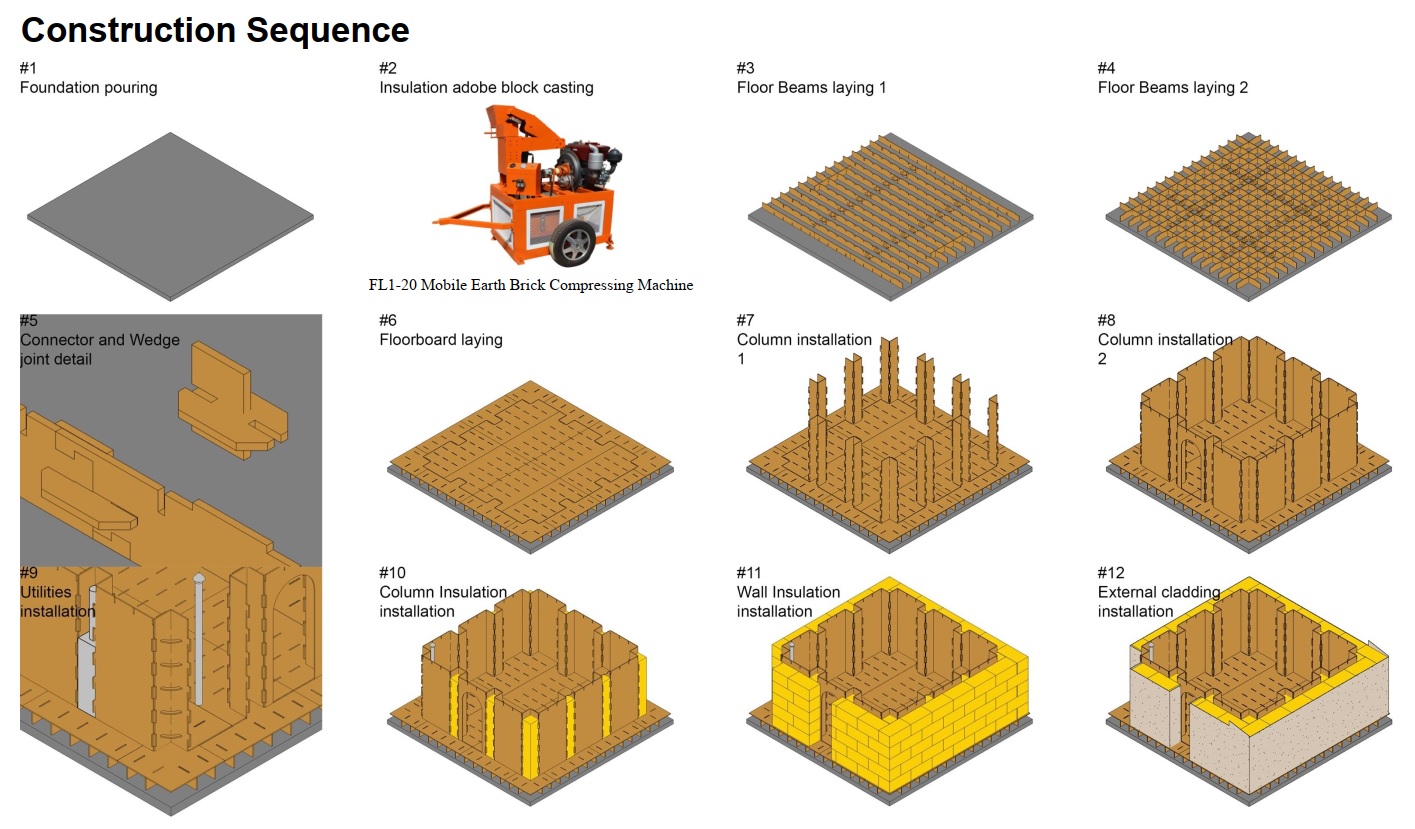
 

Figure 2. Use of model to explain construction sequence


Teams also needed to submit their completed REVIT® model files for inspection as well as an 8 min video presentation that would:


Emergency Shelter Digital Design Project, A UCL / Multiplex Collaboration

Figure 3. External view of model


Delivery

Course material was delivered over 4 sessions with a final session for presentations:

Session 1: Project introduction and software introduction

Session 2: (i) Information and exporting in REVIT®. (ii) Commercial overview

Session 3: (i) Construction and Logistics. (ii) Health, safety and environmental factors

Session 4: (i) Handover requirements. (ii) Maintainable assets. (iii) Building management

Session 5: Student presentations

Sessions were co-designed and delivered by a UCL academic and a digital manager from Multiplex. The sessions involved a mixture of elements incl. taught, tutorial and workshop time that allowed students to work in their groups.

Learning / Skills Development

The project aimed to develop skills and learning in the following areas:

Benefits of Collaborating

The first benefit was the inspirational aspect of working on a shelter design that had been produced by a former UCL student. This Alumnus contributed to the introduction session by running through their design and this helped students understand just how much had been achieved by someone in their position.

The collaboration with Multiplex’s digital team brought obvious benefits to the technical skills development but also benefitted student understanding by showing how these skills are being used on live construction sites. The process of learning from and presenting to practicing construction professionals also allowed students to develop key professional behavioural skills that help develop and enhance employability.

Reflections and Feedback

Reflections and feedback from all staff involved was that the work produced was of a high quality and that this demonstrated an understanding of the project objectives from the student perspective. It was also apparent that students were becoming adept at using REVIT® software effectively and appropriately.

Wider feedback from students in the module review was very positive about the project and that it had improved their understanding of the role of digital technologies in the construction industry. Students said in feedback “BIM has helped us to look at all aspects of the design and to figure out more stuff in the same amount of time,” and, “Doing it this way [REVIT model] means you can see what you think might be a risk to the workers more easily.”

Several students posted positively about the project on their LinkedIn profiles, possibly suggesting a link between the project and employability in the minds of the students.

2 of the students successfully applied for summer internships with Multiplex’s digital team immediately following the project and were able to build on their digital engineering skills further.

The project was featured by trade magazine BIMPlus which ran an article on the project showcasing the relative novelty and uniqueness of the approach taken.


Any views, thoughts, and opinions expressed herein are solely that of the author(s) and do not necessarily reflect the views, opinions, policies, or position of the Engineering Professors’ Council or the Toolkit sponsors and supporters.
Theme: Collaborating with industry for teaching and learning

Authors: Ian Hobson (Senior Lecturer and Academic Mentor for Engineering Leadership Management at Swansea University and former Manufacturing Director at Tata Steel) and Dr Vasilios Samaras (Senior Lecturer and Programme Director for Engineering Leadership Management at Swansea University)

Keywords: Academia, Industry

Abstract: Throughout the MSc Engineering Leadership Management program, the students at Swansea University develop theoretical knowledge and capability around leadership in organisations. Working alongside our industry partner Tata Steel, they deploy this knowledge to help understand and provide potential solutions to specific organisational issues that are current and of strategic importance to the business. The output of this work is presented to the Tata Steel board of directors along with a detailed report.


Aims of the program

In today’s world, our responsibility as academics is to ensure that we provide an enabling learning environment for our students and deliver a first-class education to them. This has been our mantra for many years. But what about our responsibility to the employing organisations? It’s all well and good providing well educated graduates but if they are not aligned to the requirements of those organisations then we are missing the point. This may be an extreme scenario, but there is a real danger that as academics we can lose touch with the needs of those organisations and as time moves on the gap between what they want and what we deliver widens.

In today’s world this relationship with the employment market and understanding the requirement of it is essential. We need to be agile in our approach to meet those requirements and deliver quality employees to the market.

How did we set this collaborative approach?

In reality the only way to do this is by adopting a collaborative approach to our program designs. Our aim with the MSc Engineering Leadership Management (ELM) at Swansea University is to ensure that we collaborate fully with the employment market by integrating industry professionals into our program design and delivery processes. In this way we learn to understand the challenges that organisations face and how they need strength in the organisation to meet those challenges. This of course not an easy task to accomplish.

In our experience professionals within organisations are often overrun with workload and trying to manage the challenges that they face. A university knocking the door with an offer of collaboration is not always top of their priority list, so how do we make this happen? You need to have a balance of academics and experienced industry leaders working within the program who understand the pressures that business faces. They also often have networks within the external market who are willing to support such programs as the ELM. The power of collaboration is often overlooked. It’s often a piece of research, dealing with a specific technical issue, it is rarely a continuum of organisational alignment. If the collaboration is designed for the long-term benefit of improving employability, then organisations will see this as a way to help solve the increasing challenge of finding “good” employees in a market that is tightening. So overall this becomes a win-win situation.

How was the need for the program identified?

Our program was developed following feedback to the university from the market that graduates were joining organisations with good academic qualifications but lacked an understanding of how organisations work. More importantly how to integrate into the organisation and develop their competencies. This did come with time and support, but the graduates fell behind the expected development curve and needed significant support to meet their aspirations.

Swansea University developed the ELM to provide education on organisations and how they work and develop the skills that are required to operate in them as an employee. These tend to be the softer skills, but also developing the student’s competence in using them. Examples include working as teams and providing honest feedback via 1-1s and 360s and team reviews.

In our experience the ability to challenge in a constructive way is a competency that the students don’t possess. All our work is anchored in theory which provides reference for the content. The assignments that we set involve our industry partners and provide potential solutions to real issues that organisations face.  The outcome of their projects is presented to senior management within the host organisation. This is often the high point of the year for the students. This way the students get exposure to the organisations which extends their comfort zones preparing them for the future challenges.

What are the program outcomes?

September 2022 will be our fifth year. The program is accredited by the Institution of Engineering and Technology (IET). Our numbers have increased year on year, and we are running cohorts of up to 20 students. It’s a mix of UK and international students. The program requires collaboration between the university faculties which has brought significant benefits and provided many learning opportunities. The collaboration between the engineering and business schools has made us realise that working together we provide a rounded program that is broad in content, but also deep in areas that are identified as specific learning objectives.

The feedback from the University is that students on the ELM program perform well and they have a more mature approach to learning and have confidence in themselves and are proactive in lectures. From our industry partners they feed back that the ELM students are ahead of the curve and are promoted into positions ahead of their peers.

What have we learned from the program?

As lecturers, over the years it has become very clear that the content that we deliver must change year on year. We cannot deliver the same content as it quickly becomes out of date. The theory changes very little, but the application changes significantly, in line with the general market challenges. It is almost impossible to predict and if we sit back and look at the past 4 years this pattern is clear. We also need to refresh our knowledge and we have as much to learn from our students as they do from us. We treat them as equals and have a very good learning relationships and have open and honest debates. We always build feedback into our programs and discus how we can improve the content and delivery of the program. Without exception feedback from a year’s cohort will modify the program for the following year.

Looking ahead

We are being approached by organisations interested in the University delivering a similar program to their future leaders on a part time basis which is something we are considering. We do however recognise that this program is successful because of the experience and knowledge of the lecturers and the ability to work with small cohorts which enables a tailored approach to the program content.

We believe that collaboration with the market keeps the ELM aligned with its requirements. Equally as importantly is the collaboration with our students. They are the leaders of the future and if the market loses sight of the expectations of these future leaders, then they will fail.

The ELM not only aligns its programs with the market, it keeps the market aligned with future leaders.


Any views, thoughts, and opinions expressed herein are solely that of the author(s) and do not necessarily reflect the views, opinions, policies, or position of the Engineering Professors’ Council or the Toolkit sponsors and supporters.

Authors: Professor Dawn Bonfield MBE (Aston University); Johnny Rich (Engineering Professors’ Council); Professor Chike Oduoza (University of Wolverhampton).

Keywords: Ethical principles; Code of conduct; Engineering professionals; Ethical decision-making; Ethical behaviour.

Who is this article for?: This article should be read by educators at all levels in higher education who wish to integrate ethics into the engineering and design curriculum or module design. It will also help to prepare students with the integrated skill sets that employers are looking for.


Premise:

The Statement of Ethical Principles published by the Engineering Council and the Royal Academy of Engineering in 2005 (revised in 2017) contains the recommendations to which all UK engineers should comply. It sets out four fundamental principles that all engineering professionals should aspire to follow in their working habits and relationships.

At the launch of the revised document, the Chair of the Engineering Council said “The profession needs to ensure that the principles are embedded at all stages of professional development for engineers and those technicians, tradespeople, students, apprentices and trainees engaged in engineering.”

These principles are based on the premise that engineering professionals work to enhance the wellbeing of society, and in so doing they are required to maintain and promote high ethical standards, as well as to challenge unethical behaviour. The principles are the foundation for making decisions when faced with an ethical dilemma in engineering.


The four principles:

The code defines four fundamental principles of ethical behaviour: Honesty and integrity; Respect for life, law, the environment and public good; Accuracy and rigour; and Leadership and communication.

The requirement for engineers to embody honesty and integrity is based on the expectation that engineers can be trusted. It seeks to position the engineering community as one that possesses the respect and confidence of the public. People should feel confident that the word of an engineer is a reliable one, and that decisions taken by engineers are fair and without compromise or conflict.

Respect for life, law, the environment and public good demands that engineers are law-abiding and have the public’s best interests at heart. This allows people to feel safe when they drive over bridges, fly in aircrafts, and use electrical equipment. It reassures them that engineering designs have been tested, are legally compliant, and that the engineer puts, above all else, the wellbeing of the public, future generations, other members of the profession, and the environment in which we live. This principle also covers the protection of data and privacy of the public.

Accuracy and rigour ensures that engineers are trained, competent and knowledgeable, and that they do not pass themselves off as experts in areas where they are not competent. It requires that engineers keep their knowledge up-to-date, and share their knowledge and understanding with others in their profession. It calls for engineers to take a broad approach to problem-solving, considering a variety of external factors which may influence the risks of any project.

And finally, the principle of leadership and communication ensures that engineers lead by example, that diversity and inclusion are valued, and that people are treated fairly and with respect. It is concerned with the impact of engineering on society in the broadest sense – with how the public sees engineering and how engineering addresses public, social and environmental justice concerns. It requires engineers to be considerate and truthful when acting in a professional capacity, and to raise concerns where necessary.

These four principles underpin professional codes of conduct for engineers, and they provide guidance on how ethical decisions should be made, giving a set of values against which engineers can behave.


Using the principles to unpick right from wrong and make the best decision:

While these principles can form a useful basis for ethical decision-making within engineering, it is often the case that conflicts arise that prevent the decision pathway from being straightforward, when there is no obvious right or wrong answer. There may be other principles that need to be considered, relating to the organisation or the institution that the engineer is working for. Furthermore, there may be other considerations associated with a person’s religion, culture or belief system. We shouldn’t forget that other constraints such as cost and time will also impact on the possible options available.

So, decision-making in engineering is rarely straightforward. It is not like a mathematical equation with right and wrong answers, but rather with degrees of rightness, balances of pros and cons and, often, with some costs incurred for the sake of a greater good. Various tools and frameworks exist to help the decision-maker with ethical problems. Probably the simplest logical method considers each of the possible solutions against the ethical principles that are to be complied with. These can then be considered in relation to the stakeholders affected, and a list of pros and cons can be developed. They can even be scored and weighted.

What if a decision is required quickly? How do we ensure that we are likely to make the best one? These questions are partly due to the values that we subscribe to as engineers, and as individuals. They become embedded in our subconsciousness through our training and practice. When decisions need to be made in a hurry, we rely on heuristics, or simple rules or instincts that feel consistent with the ethical knowledge and expertise that we have built up during our career. These heuristics, however, are subject to cognitive biases – psychological patterns of thought that divert us from purely rational approaches. Being aware of these biases can help to minimise or compensate for them.


Conclusion:

Engineers should utilise the Statement of Ethical Principles and knowledge of the specific context they are working in, to make the best decisions on the situation or dilemmas at hand. Ultimately, decisions that we make as a professional engineer are our individual responsibility, and whatever decision results, we should be prepared to justify and stand by them, knowing that we have taken these in good faith and for the right reasons. Ethical decision-making can be practised throughout an engineer’s education by using a variety of case studies to explore a range of scenarios an engineer could face. The Royal Academy of Engineering and Engineering Professors’ Council’s Engineering ethics case studies can be used for this.


Additional resources:


This work is licensed under a Creative Commons Attribution-ShareAlike 4.0 International License.

Any views, thoughts, and opinions expressed herein are solely that of the author(s) and do not necessarily reflect the views, opinions, policies, or position of the Engineering Professors’ Council or the Toolkit sponsors and supporters.

There’s a range of resources available to support you in the professional and administrative areas of your role as you climb the career ladder…

Some toolkit content is available to members only. For best results, make sure you’re logged in.


The Engineering Professors’ Council provides the opportunity for all academics to develop their professional network and national profile through participation in and chairmanship of a range of committees working on matters influencing national policy in higher education.  It also provides informal mentoring and support for those developing their careers with a view to taking up leadership roles in higher education and a range of comparative data and information about UK university engineering departments.


A leaflet outlining how teachers and researchers can achieve professional recognition and explaining the benefits is available from the Engineering Council. This and other relevant documents can be downloaded from the Engineering Council website. For hard copies of the leaflet email info@engc.org.uk.

 

The Leadership Foundation exists to support  development of management and leadership skills in “existing and future leaders in higher education”.  Its programmes range from support in understanding university finances better to courses for new heads of department.

 

The British Universities Finance Directors Group (BUFDG) provides a useful online forum and information digests to help you to gain a wider understanding of university finances.


Any views, thoughts, and opinions expressed herein are solely that of the author(s) and do not necessarily reflect the views, opinions, policies, or position of the Engineering Professors’ Council or the Toolkit sponsors and supporters.

There’s a range of resources available to support you in the professional and administrative areas of your role as you climb the career ladder…


The Leadership Foundation exists to support  development of management and leadership skills in “existing and future leaders in higher education”.  Its programmes range from support in understanding university finances better to courses for new heads of department.


The British Universities Finance Directors Group (BUFDG) provides a useful online forum and information digests to help you to gain a wider understanding of university finances.


Any views, thoughts, and opinions expressed herein are solely that of the author(s) and do not necessarily reflect the views, opinions, policies, or position of the Engineering Professors’ Council or the Toolkit sponsors and supporters.

There’s a range of resources available to support you in the professional and administrative areas of your role as you climb the career ladder…


A leaflet outlining how teachers and researchers can achieve professional recognition and explaining the benefits is available from the Engineering Council. This and other relevant documents can be downloaded from the Engineering Council website. For hard copies of the leaflet email info@engc.org.uk.


Any views, thoughts, and opinions expressed herein are solely that of the author(s) and do not necessarily reflect the views, opinions, policies, or position of the Engineering Professors’ Council or the Toolkit sponsors and supporters.

There’s a range of resources available to support you in the professional and administrative areas of your role as you climb the career ladder…

The Engineering Professors’ Council provides the opportunity for all academics to develop their professional network and national profile through participation in and chairmanship of a range of committees working on matters influencing national policy in higher education.  It also provides informal mentoring and support for those developing their careers with a view to taking up leadership roles in higher education and a range of comparative data and information about UK university engineering departments.


Any views, thoughts, and opinions expressed herein are solely that of the author(s) and do not necessarily reflect the views, opinions, policies, or position of the Engineering Professors’ Council or the Toolkit sponsors and supporters.

Let us know what you think of our website