Downloads: A PDF of this resource will be available soon.
Related INCOSE Competencies: Toolkit resources are designed to be applicable to any engineering discipline, but educators might find it useful to understand their alignment to competencies outlined by the International Council on Systems Engineering (INCOSE). The INCOSE Competency Framework provides a set of 37 competencies for Systems Engineering within a tailorable framework that provides guidance for practitioners and stakeholders to identify knowledge, skills, abilities and behaviours crucial to Systems Engineering effectiveness. A free spreadsheet version of the framework can be downloaded.
This resource relates to the Systems Thinking, Systems Modelling and Analysis, Configuration Management, Requirements Definition, Communication, Verification, and Validation INCOSE Competencies.
AHEP4 mapping: This resource addresses several of the themes from the UK’s Accreditation of Higher Education Programmes fourth edition (AHEP4):Analytical Tools and Techniques (critical to the ability to model and solve problems), and Integrated / Systems Approach (essential to the solution of broadly-defined problems). In addition, this resource addresses the themes of Sustainability and Communication.
Educational level: Advanced.
Learning and teaching notes:
Overview:
This multi-part case study guides students through the complex systems challenges of Prince Edward Island, Canada’s ambitious 100% renewable energy transition by 2030. Students will experience how technical, social, and economic factors interact through emergence, feedback loops, and multi-scale dynamics that traditional engineering analysis alone cannot capture.
Learners have the opportunity to:
Identify complex systems characteristics (emergence, feedback loops, nonlinearity) in real energy systems.
Apply multiple modelling approaches (ABM, system dynamics, network analysis) to analyse system behaviour.
Evaluate how technical decisions create emergent social and economic consequences.
Synthesise insights from different modelling approaches to inform policy recommendations.
Communicate complex systems concepts and uncertainties to non-technical stakeholders.
Teachers have the opportunity to:
Demonstrate complex systems concepts through hands-on modelling.
Facilitate discussions on emergence and system-level behaviours.
Evaluate learners’ ability to apply systems thinking to engineering problems.
Connect technical modelling to real-world policy and social implications.
Overview: Energy transition as a complex systems challenge:
Prince Edward Island (PEI), Canada’s smallest province, aims to achieve 100% renewable electricity by 2030. Its small grid, dependence on imported power, and growing renewable infrastructure make it a natural laboratory for systems thinking in energy transitions.
This case invites students to explore how technical, social, and policy decisions interact to shape renewable integration outcomes. Using complexity-science tools, they will uncover how local actions produce emergent system behaviour, and why traditional linear models often fail to predict real-world dynamics.
The complex challenge: Traditional engineering approaches often treat energy systems as predictable and linear, optimising components like generation, transmission, or storage in isolation. However, energy transitions are complex socio-technical systems, characterised by feedback loops, interdependencies, and emergent behaviours.
In PEI’s case, replacing stable baseload imports with variable wind and solar generation creates cascading effects on grid stability, pricing, storage demand, and social acceptance. The island’s bounded geography magnifies these interactions, making it an ideal context to observe emergence and system-level behaviour arising from local interactions.
PEI currently imports about 75% of its electricity via two 180 MW submarine cables, while 25% is produced locally through onshore wind farms (204 MW). Plans for offshore wind, community solar, and hydrogen projects have triggered debates around stability, affordability, and social acceptance.
Taking on the role of an engineer at TechnoGrid Consulting, students are tasked to advise Maritime Electric, the island’s utility, on modelling strategies to guide $2.5 billion in renewable investments.
Competing goals:
Maintain grid reliability while replacing fossil baseloads.
Achieve policy targets without increasing public resistance.
Balance economic cost, environmental benefit, and technological feasibility.
Discussion prompt:
In systems terms, where do you see tensions between policy, technology, and society? How might feedback loops amplify or mitigate these tensions?
While Maritime Electric’s engineering team insists the project scope should stay strictly technical, limited to grid hardware, generation, and storage, policy advisors argue that social behaviour, market pricing, and community engagement are part of the system’s real dynamics.
Expanding boundaries makes the model richer but harder to manage; narrowing them simplifies computation but risks missing the very factors that determine success.
Temporal boundaries: timescales from milliseconds (grid response) to decades (infrastructure).
Organisational boundaries: stakeholders, regulations, and markets.
Discuss how including or excluding elements (e.g., electric-vehicle uptake, community cooperatives, carbon policy) changes the model’s focus and meaning.
Learning insight:
Complex systems cannot be fully understood in isolation; boundaries are analytical choices that shape both perception and leverage. Every inclusion or exclusion reflects an assumption about what matters and that assumption determines which complexities emerge, and which stay hidden.
Part three: Modelling the system: Multiple lenses of complexity:
(a) Agent-Based Modelling (ABM) with NetLogo:
Students construct simplified models of households, businesses, and grid operators:
Household agents: decide to adopt rooftop solar based on payback time and neighbour influence.
Technology providers: adjust prices in response to market demand.
Grid operator: balances reliability and cost.
Emergent patterns such as adoption S-curves or network clustering illustrate how simple local rules generate complex collective dynamics.
(b) System Dynamics (SD) with Vensim:
Students then develop causal loop diagrams capturing key feedbacks:
Adoption–Learning Loop: installations ↓ costs ↓ encourage more adoption.
Cost–Acceptance Loop: higher bills ↓ public support ↓ investment capacity.
This provides a macroscopic view of feedback, delay, and leverage points.
(c) Network Analysis with Python (NetworkX):
Students model actor interdependencies: how households, utilities, industries, and regulators interact. Network metrics (centrality, clustering, connectivity) reveal where resilience or vulnerability is concentrated.
Reflection prompt:
Which modelling approach offered the most insight into system-level behaviour? What were the trade-offs in complexity and interpretability?
Part four: Scenario exploration: Pathways to 2030:
Students explore three transition scenarios, each with distinct emergent behaviours:
A. Distributed Solar + Community Storage
300 MW solar, 150 MWh batteries
Decentralised coordination challenges and social clustering effects.
B. Offshore Wind + Grid Enhancement
400 MW offshore wind, new 300 MW interconnection
Weather-dependent reliability and cross-border dependency.
Any views, thoughts, and opinions expressed herein are solely that of the author(s) and do not necessarily reflect the views, opinions, policies, or position of the Engineering Professors’ Council or the Toolkit sponsors and supporters.
Licensing:This work is licensed under a Creative Commons Attribution-ShareAlike 4.0 International License. It is based upon the author’s 2025 article “A Simulation Tool for Pinch Analysis and Heat Exchanger/Heat Pump Integration in Industrial Processes: Development and Application in Challenge-based Learning”. Education for Chemical Engineers 52, 141–150.
Related INCOSE Competencies: Toolkit resources are designed to be applicable to any engineering discipline, but educators might find it useful to understand their alignment to competencies outlined by the International Council on Systems Engineering (INCOSE). The INCOSE Competency Framework provides a set of 37 competencies for Systems Engineering within a tailorable framework that provides guidance for practitioners and stakeholders to identify knowledge, skills, abilities and behaviours crucial to Systems Engineering effectiveness. A free spreadsheet version of the framework can be downloaded.
This resource relates to the Systems Thinking, Systems Modelling and Analysis and Critical Thinking INCOSE competencies.
AHEP mapping: This resource addresses several of the themes from the UK’s Accreditation of Higher Education Programmes fourth edition (AHEP4): Analytical Tools and Techniques (critical to the ability to model and solve problems), and Integrated / Systems Approach (essential to the solution of broadly-defined problems). In addition, this resource addresses the themes of Science, mathematics and engineering principles; Problem analysis; and Design.
Educational level: Intermediate.
Educational aim:To equip learners with the ability to model, analyse, and optimise pathways for industrial decarbonisation through a complex-systems lens – integrating technical, economic, and policy dimensions – while linking factory-level design decisions to wider value-chain dynamics, multi-stakeholder trade-offs, and long-term sustainability impacts.
Learning and teaching notes:
This teaching activity explores heat integration for the decarbonisation of industrial processes through the lens of complex systems thinking, combining simulation, systems-level modelling, and reflective scenario analysis. It is especially useful in modules related to energy systems, process systems, or sustainability.
Learners analyse a manufacturing site’s energy system using a custom-built simulation tool to explore the energy, cost and carbon-emission trade-offs of different heat-integration strategies. They also reflect on system feedback, stakeholder interests and real-world resilience using causal loop diagrams and role-played decision frameworks.
This activity frames industrial heat integration as a complex adaptive system, with interdependent subsystems such as process material streams, utilities, technology investments and deployments, capital costs, emissions, and operating constraints.
Learners run the simulation tool to generate outputs to explore different systems integration strategies: pinch-based heat recovery by heat exchangers, with and without heat pump-based waste heat upgrade. Screenshots of the tool graphical user interface are attached as separate files:
The learning is delivered in part, through active engagement with the simulation tool. Learners interpret the composite and grand composite curves and process tables, to explore how system-level outcomes change across various scenarios. Learners explore, using their generated simulation outputs, how subsystems (e.g. hot and cold process streams, utilities) interact nonlinearly and with feedback effects (e.g., heat recovery impacts), shaping global system behaviour and revealing leverage points and emergent effects in economics, emissions and feasibility.
Using these outputs as a baseline, and exploring other systems modelling options, learners evaluate trade-offs between heat recovery, capital expenditure (CAPEX), operating costs (OPEX), and carbon emissions, helping them develop systems-level thinking under constraints.
The activity embeds scenario analysis, including causal loop diagrams, what-if disruption modelling, and stakeholder role-play, using multi-criteria decision analysis (MCDA) to develop strategic analysis and systems mapping skills. Interdisciplinary reasoning is encouraged across thermodynamics, economics, optimisation, engineering ethics, and climate policy, culminating in reflective thinking on system boundary definitions, trade-offs, sustainability transitions and resilience in industrial systems.
Learners have the opportunity to:
Analyse non-linear interactions in thermodynamic systems.
Reconcile conflicting demands (e.g. energy savings vs costs vs emissions vs technical feasibility) using data generated from real system simulation.
Model and interpret feedback-driven process systems using pinch analysis, heat recovery via heat exchangers, and heat upgrade via heat pump integration.
Explore emergent behaviour, trade-offs, and interdisciplinary constraints.
Navigate system uncertainties by simulation data analysis and scenario thinking.
Understand the principles of heat integration using pinch analysis, heat exchanger networks, and heat pump systems, framed within complex industrial systems with interdependent subsystems.
Evaluate decarbonisation strategies and their performances in terms of energy savings, CAPEX/OPEX, carbon reduction, and operational risks, highlighting system-level trade-offs and nonlinear effects
Develop data-driven decision-making, navigating assumptions, parameter sensitivity, and model limitations, reflecting uncertainty and systems adaptation.
Explore ethical, sustainability, and resilience dimensions of engineering design, recognising how small changes or policy shifts may act on leverage points and produce emergent behaviours.
Analyse stakeholder dynamics, policy impacts, and uncertainty as part of the broader system environment influencing energy transition pathways.
Construct and interpret causal loop diagrams (CLDs), explore what-if scenarios, and apply multi-criteria decision analysis (MCDA), building competencies in feedback loops, system boundaries, and systems mapping.
Teachers have the opportunity to:
Embed systems thinking and complex systems pedagogy into energy and process engineering, using real-world simulations and data-rich problem-solving.
Introduce modelling and scenario-based reasoning, helping students understand how interactions between process units, energy streams, and external factors affect industrial decarbonisation.
Facilitate exploration of design trade-offs, encouraging learners to consider technical feasibility, economic sustainability, and environmental constraints within dynamic system contexts.
Support students in identifying leverage points, feedback loops, and emergent behaviours, using tools like CLDs, composite curves, and stakeholder role play.
Assess complex problem-solving capacity, including students’ ability to model, critique and adapt industrial systems under conflicting constraints and uncertain futures.
Proprietary Simulator for Pinch Analysis & Heat Integration. Freely available for educational use and can be accessed online through a secure link provided by the author on request (james.atuonwu@nmite.ac.uk or james.atuonwu@gmail.com). No installation or special setup is required; users can access it directly in a web browser.
About the simulation tool (access and alternatives):
This activity uses a Streamlit-based simulation tool, supported with process data (Appendix A, Table 1, or an educator’s equivalent). The tool is freely available for educational use and can be accessed online through a secure link provided by the author on request (james.atuonwu@nmite.ac.uk or james.atuonwu@gmail.com). No installation or special setup is required; users can access it directly in a web browser.The activity can also be replicated using open-source or online pinch analysis tools such as OpenPinch, PyPinchPinCH, TLK-Energy Pinch Analysis Online. SankeyMATIC can be used for visualising energy balances and Sankey diagrams.
Pinch Analysis, a systematic method for identifying heat recovery opportunities by analysing process energy flows, forms the backbone of the simulation. A brief explainer and further reading are provided in the resources section. Learners are assumed to have prior or guided exposure to its core principles. A key tunable parameter in Pinch Analysis, ΔTmin, represents the minimum temperature difference allowed between hot and cold process streams. It determines the required heat exchanger area, associated capital cost, controllability, and overall system performance. The teaching activity helps students explore these relationships dynamically through guided variation of ΔTmin in simulation, reflection, and trade-off analysis, as outlined below.
Introducing and prioritising ΔTmin trade-offs:
ΔTmin is introduced early in the activity as a critical decision variable that balances heat recovery potential against capital cost, controllability, and safety. Students are guided to vary ΔTmin within the simulation tool to observe how small parameter shifts affect utility demands, exchanger area, and overall system efficiency. This provides immediate visual feedback through the composite and grand composite curves, helping them connect technical choices to system performance.
Educators facilitate short debriefs using the discussion prompts in Part 1 and simulation-based sensitivity analysis in Part 2. Students compare low and high ΔTmin scenarios, reasoning about implications for process economics, operability, and energy resilience.
This experiential sequence allows learners to prioritise competing factors (technical, economic, and operational), while recognising that small changes can create non-linear, system-wide effects. It reinforces complex systems principles such as feedback loops and leverage points that govern industrial energy behaviour.
Data for decisions:
The simulator’s sidebar includes some default values for energy prices (e.g. gas and electricity tariffs) and emission factors (e.g. grid carbon intensity), which users can edit to reflect their own local or regional conditions. For those replicating the activity with other software tools, equivalent calculations of total energy costs, carbon emissions and all savings due to heat recovery investments can be performed manually using locally relevant tariffs and emission factors.
The Part 1–3 tasks, prompts, and assessment suggestions below remain fully valid regardless of the chosen platform, ensuring flexibility and accessibility across different teaching contexts.
Educator support and implementation notes:
The activity is designed to be delivered across 3 sessions (6–7.5 hours total), with flexibility to adapt based on depth of exploration, simulation familiarity, or group size. Each part can be run as a standalone module or integrated sequentially in a capstone-style format.
Part 1: System mapping: (Time: 2 to 2.5 hours) – Ideal for a classroom session with blended instruction and group collaboration:
This stage introduces students to the foundational step of any heat integration analysis: system mapping. The aim is to identify and represent energy-carrying streams in a process plant, laying the groundwork for further system analysis. Educators may use the Process Flow Diagram of Fig. 1, Appendix A (from a real industrial setting: a food processing plant) or another Process Diagram, real or fictional. Students shall extract and identify thermal energy streams (hot/cold) within the system boundary and map energy balances before engaging with software to produce required simulation outputs.
Key activities and concepts include:
Defining system boundaries: Focus solely on thermal energy streams, ignoring non-thermal operations. The boundary is drawn from heat sources (hot streams) to heat sinks (cold streams).
Identifying hot and cold streams: Students classify process material streams based on whether they release or require heat. Each stream is defined by its inlet and target temperatures and its heat capacity flow rate (CP).
Building the stream table: Students compile a simple table of hot/cold streams (name, supply temperature, target temperature and heat capacity flow CP).
Constructing energy balances and Sankey Diagrams: Students manually calculate energy balances across each subsystem in the defined system boundary, identifying energy inputs, useful heat recovery, and losses. Using this information, they construct Sankey diagrams to visualise the magnitude and direction of energy flows, strengthening their grasp of system-wide energy performance before optimisation.
Pinch Concept introduction: Students are introduced to the concept of “the Pinch”, including the minimum heat exchanger temperature difference (ΔTmin) and how it affects heat recovery targets (QREC), as well as overall heating and cooling utility demands (QHU & QCU, respectively).
Assumptions: All analysis is conducted under steady-state conditions with constant CP and no heat losses.
Discussion prompts:
What insights does the Sankey diagram reveal about energy use, waste and recovery potential in the system? How might these visual insights shape optimisation decisions?
Why might certain streams be excluded from the analysis?
How does the choice of ΔTmin influence the heat recovery potential and cost?
What trade-offs are involved in system simplification during mapping?
How can assumptions (like steady-state vs. transient) impact integration outcomes?
Student deliverables:
A labelled system map showing the thermal process boundaries, hot and cold streams.
A structured stream data table.
Justification for selected ΔTmin values based on process safety, economics, or practical design and operational considerations.
A basic Sankey diagram representing the energy flows in the mapped system, based on calculated heat duties of each stream.
Part 2: Running and interpreting process system simulation results (Time: 2 to 2.5 hours) – Suitable for lab or flipped delivery;only standard computer access is needed to run the tool (optional instructor demo can extend depth):
Students use the simulation tool to generate their own results.The process scenario of Fig. 1, Appendix A, with the associated stream data (Table 1) can be used as a baseline.
Tool-generated outputs:
Curves: Composite and Grand Composite (pinch location, recovery potential).
Scenario summary: QREC, QHU, QCU; COP (where applicable); CAPEX/OPEX/CO₂; payback period for various values of system levers (e.g., ΔTmin levels, tariffs, emission factors).
Heat Pump (HP) tables: Feasible pairs, Top-N heat pump selections (where N = 0, 1, or 2); QEVAP, QCOND, QCOMP, COP. All notations are designated in the simulator’s help/README section.
Learning tasks:
1. Scenario sweeps Run different scenarios (e.g., different ΔTmin levels, tariffs, emission factors, and Top-N HP selections). Prompts: How do QREC, QHU/QCU, HX area, and CAPEX/OPEX/CO₂ shift across scenarios? Which lever moves the needle most?
2. Group contrast (cases A vs B: see time-phased operations A & B in Appendix A) Assign groups different cases; each reports system behaviours and trade-offs. Prompts: Where do you see CAPEX vs. energy-recovery tension? Which case is more HP-friendly and why?
3. Curve reading Use the Composite & Grand Composite Curves to identify pinch points and bottlenecks; link features on the curves to the tabulated results. Prompts: Where is the pinch? How does ΔTmin change the heat-recovery target and utility demands?
4. Downstream implications Trace how curve-level insights show up in HX sizing/costs and HP options. Prompts: When does adding HP reduce utilities vs. just shifting costs? Where do stream temperatures/CP constrain integration?
5. Systems lens: feedback and leverage Map short causal chains from the results (e.g., tariffs → HP use → electricity cost → OPEX; grid-carbon → HP emissions → net CO₂). Prompts: Which levers (ΔTmin, tariffs, EFs, Top-N) create reinforcing or balancing effects?
Outcome:
Students will be able to generate and interpret industrial simulation outputs, linking technical findings to economic and emissions consequences through a systems-thinking lens. They begin by tracing simple cause–effect chains from the simulation data and progressively translate these into causal loop diagrams (CLDs) that visualise reinforcing and balancing feedback. Through this, learners develop the ability to explain how system structure drives performance both within the plant and across its broader industrial and policy environment.
Optional extension: Educators may provide 2–3 predefined subsystem options (e.g., low-CAPEX HX network, high-COP HP integration, hybrid retrofit) for comparison. Students can use a decision matrix to justify their chosen configuration against CAPEX, OPEX, emissions, and controllability trade-offs.
Part 3: Systems thinking through scenario analysis (Time: 2 to 2.5 hours) – Benefits from larger-group facilitation, a whiteboard or Miro board (optional), and open discussion. It is rich in systems pedagogy:
Having completed simulation-based pinch analysis and heat recovery planning, learners now shift focus to strategic implementation challenges faced in real-world industrial settings. In this part, students apply systems thinking to explore the broader implications of their heat integration simulation output scenarios, moving beyond process optimisation to consider real-world dynamics, trade-offs, and stakeholder interactions. The goal is to encourage students to interrogate the interconnectedness of decisions, feedback loops, and unintended consequences in process energy systems including but not limited to operational complexity, resilience to disruptions, and alignment with long-term sustainability goals.
Activity: Stakeholder role play / Multi-Criteria Decision Analysis Students take on stakeholder roles and debate which design variant or operating strategy should be prioritised. They then conduct a Multi-Criteria Decision Analysis (MCDA), evaluating each option based on criteria such as CAPEX, OPEX savings, emissions reductions, risk, and operational ease.
Stakeholders include:
Operations managers, focused on ease of control and process stability.
Investors and finance teams, focused on return on investment.
Environmental officers, concerned with emissions and policy compliance.
Engineers, responsible for design and retrofitting.
Community members, advocating for sustainable industry practices.
Government reps responsible for regulations and policy formulation, e.g. taxes and subsides.
The team must present a strategic analysis showing how the heat recovery system behaves as a complex adaptive system, and how its implementation can be optimised to balance technical, financial, environmental, and human considerations.
Optional STOP for questions and activities:
Before constructing causal loop diagrams (CLDs), learners revisit key results from their simulation — such as ΔTmin, tariffs, emission factors, and system costs — and trace how these parameters interact to influence overall system performance. Educators guide this transition, helping students abstract quantitative outputs (e.g., changes in QREC, OPEX, or CO₂) into qualitative feedback relationships that reveal cause-and-effect chains. This scaffolding helps bridge the gap between process simulation and systems-thinking representation, supporting discovery of reinforcing and balancing feedback structures.
Activity: Construct a causal loop diagram (CLD) Students identify at least five variables that interact dynamically in the implementation of a heat integration system (e.g. energy cost, investment risk, emissions savings, system complexity, staff training). They must map reinforcing and balancing feedback loops that illustrate trade-offs or virtuous cycles.
Where could policy or process changes trigger leverage points?
How could delays in response (e.g. slow staff adaptation to new technologies) affect outcomes?
How might design choices affect local energy equity, air quality, or community outcomes?
What policy incentives or ethical trade-offs might reinforce or hinder your proposed solution?
Instructor debrief (engineering context with simulation linkage): After students share their CLDs, the educator facilitates a short discussion linking their identified reinforcing and balancing loops to common dynamic patterns observable in the simulation results. For instance:
Limits to growth: As ΔTmin decreases, heat recovery (QREC) initially improves, but exchanger area, CAPEX, and controllability demands grow disproportionately — diminishing overall economic benefit.
Shifting the burden: Installing a heat pump may appear to improve carbon performance, but if low process efficiency remains unaddressed, electricity use and OPEX rise — creating a new dependency that shifts rather than solves the problem.
Tragedy of the commons: Competing units or stakeholders optimising locally (e.g. for their own OPEX or production uptime) can undermine total system efficiency or resilience.
Success to the successful: Design options with early financial or policy support (e.g. high-COP heat pumps) attract more investment and attention, reinforcing a positive but unequal feedback loop.
This reflection connects quantitative model outputs (e.g. QREC, OPEX, CAPEX, emissions) to qualitative system behaviours, helping learners recognise leverage points and understand how design choices interact across technical, economic, and social dimensions of decarbonisation.
Activity: Explore “What if?” scenarios
Working in groups, students choose one scenario to explore using a systems lens:
What if gas prices fluctuate drastically?
What if capital funding is delayed by 6 months?
What if a heat exchanger fouls during peak season?
What if CO₂ emissions policy tightens?
What if current electricity grid decarbonisation trends suffer an unexpected setback?
What if government policies now encourage onsite renewable electricity generation?
Each group evaluates the resilience and flexibility of the proposed integration design. They consider:
System bottlenecks and fragilities.
Leverage points for intervention.
Need for redundancy or modular design.
Educators may add advanced scenarios (e.g. carbon tax introduction, supplier failure, or project delay) to challenge students’ resilience modelling and stakeholder negotiation skills.
Stakeholder impact reflection:
To extend systems reasoning beyond the technical domain, students assess how their chosen design scenarios (e.g., low vs. high ΔTmin, with or without heat pump integration) affect each stakeholder group. For instance:
Operations managers assess control complexity, downtime risk, and maintenance implications.
Finance teams evaluate CAPEX/OPEX trade-offs and payback periods.
Environmental officers examine lifecycle emissions and regulatory compliance.
Engineers reflect on reliability, retrofit feasibility, and process safety.
Community members or regulators consider social and policy outcomes, such as visible sustainability impact or energy equity.
Each team member rates perceived benefits, risks, or compromises under each design case, and the results are summarised in a stakeholder impact matrix or discussion table. This exercise links quantitative system metrics (energy recovery, emissions, cost) to qualitative stakeholder outcomes, reinforcing the “multi-layered feedback” perspective central to complex systems analysis.
Learning Outcomes (Part 3):
By the end of this part, students will be able to:
Identify systemic interdependencies in industrial energy systems.
Analyse how feedback loops and delays influence system behaviour.
Assess the resilience of energy integration solutions under different future scenarios.
Balance multiple stakeholder objectives in complex engineering contexts.
Apply systems thinking tools to communicate complex technical scenarios to diverse stakeholder audiences.
Use systems diagrams and decision tools to support strategic analysis.
Instructor Note – Guiding CLD and archetype exploration:
Moving from numerical heat-exchange and cost data to CLD archetypes can be conceptually challenging. Instructors are encouraged to model this process by identifying at least one reinforcing loop (e.g. “energy savings → lower OPEX → more investment in recovery → further savings”) and one balancing loop (e.g. “higher capital cost → reduced investment → lower heat recovery”). Relating these loops to common system archetypes such as “Limits to Growth” or “Balancing with Delay” helps students connect engineering data to broader system dynamics and locate potential leverage points. The activity concludes with students synthesising their findings from simulation, systems mapping, and stakeholder analysis into a coherent reflection on complex system behaviour and sustainable design trade-offs.
Assessment guidance:
This assessment builds directly on the simulation and systems-thinking activities completed by students. Learners generate and interpret their own simulation outputs (or equivalent open-source pinch analysis results), using these to justify engineering and strategic decisions under uncertainty.
Assessment focuses on students’ ability to integrate quantitative analysis (energy, cost, carbon) with qualitative reasoning (feedbacks, trade-offs, stakeholder dynamics), demonstrating holistic systems understanding.
Deliverables (portfolio; individual or group):
1. Reading and interpretation of simulation outputs
Use the outputs you generate (composite & grand composite curves: HX match/area/cost tables; HP pairing/ranking; summary sheets of QHU, QCU, QREC, COP, CAPEX, OPEX, CO₂, paybacks) for a different industrial process (from the one used in the main learning activity) to:
Identify the pinch point(s) and explain what the curves imply for recovery potential and bottlenecks.
Comment on QHU/QCU/QREC and how they change across the scenarios you run (e.g., ΔTmin, tariffs, emission factors, Top-N HP selection).
Interpret trade-offs among energy, CAPEX, OPEX, emissions, using numbers reported by the simulator. No calculations beyond light arithmetic/annotation.
2. Systems mapping and scenario reasoning
A concise system boundary sketch and a simple stream table.
A Causal Loop Diagram (CLD) highlighting key feedbacks (e.g., tariffs ↔ HP use ↔ grid carbon intensity ↔ emissions/cost).
A short MCDA (transparent criteria/weights) comparing the scenario variants you test; include a brief stakeholder reflection.
3. Decision memo (max 2 pages)
Your recommended integration option under stated assumptions, with one “what-if” sensitivity (e.g., +20% electricity price, tighter CO₂ factor).
State uncertainties/assumptions and any implementation risks (operations, fouling, timing of capital).
Students should include a short reflective note addressing assumptions, feedback insights, and how their stakeholder perspective shaped their recommendation.
Appendix A: Example process scenario for teaching activity:
Sample narrative: Large-scale food processing plant with time-sliced operations
The following process scenario explains the industrial context behind the main teaching activity simulations. A large-scale food processing plant operates a milk product manufacturing line. The process, part of which is shown in Fig. 1, involves the following:
Thermal evaporation of milk feed.
Cooking operations after other ingredient mixing and formulation upstream.
Oven heating to drive off moisture and stimulate critical product attributes.
Pre-finishing operations as the product approaches packaging.
In real operations, the evaporation subprocessoccurs at different times from the cooking/separation, oven and pre-finishing operations. This means that their hot and cold process streams are not simultaneously available for direct heat exchange. For a realistic industrial pinch analysis, the process is thus split into two time slices:
Time Slice A (used for scenario Case A): Evaporation streams only.
Time Slice B (Case B): Cooking/separation, oven and pre-finishing streams only.
Separate pinch analyses are performed for each slice, using the yellow-highlighted sections of Table 1 as stream data for time slice A, and the green-highlighted sections as stream data for time slice B. Any heat recovery between slices would require thermal storage (e.g., a hot-water tank) to bridge the time gap.
Fig.1. Simplified process flowsheet of food manufacturing facility.
Note on storage and system boundaries:
Because the two sub-processes occur at different times, direct process-to-process heat exchange between their streams is not possible without thermal storage. If storage is introduced:
Production surplus heat at time slice A can be stored at high temperature (e.g., 80 °C) and later discharged to preheat time slice B cold streams.
The size of the tank depends on the portion of hot utility demand of sub-process B to be offset, the temperature swing, and the duration of the sub-process B.
Table 1. Process stream data corresponding to flowsheet of Fig. 1. Yellow-highlighted sections represent processes available at time slice A, while green-highlighted sections are processes available at time slice B.
Appendix B: Suggested marking rubric (Editable):
Adopter note: The rubric below is a suggested template. Instructors may adjust criteria language, weightings and band thresholds to align with local policies and learning outcomes. No marks depend on running software.
1) Interpretation of Simulation Outputs — 25%
A (Excellent): Reads curves/tables correctly; uses QHU/QCU/QREC, COP, CAPEX/OPEX/CO₂, payback figures accurately; draws clear, defensible trade-offs.
B (Good): Mostly accurate; links numbers to decisions with some insight.
C (Adequate): Mixed accuracy; limited or generic trade-off discussion.
D/F (Weak): Frequent misreads; cherry-picks or contradicts generated data.
2) Systems Thinking & Scenario Analysis — 30%
A: Clear CLD with at least one reinforcing and one balancing loop; leverage points identified; scenarios coherent; MCDA with explicit criteria, weights, and justified ranking; uncertainty acknowledged.
B: Reasonable CLD; scenarios sound; MCDA present with partial justification.
C: Superficial CLD; scenarios/MCDA incomplete or weakly reasoned.
D/F: Little or no systems view; scenarios/MCDA absent or not meaningful.
Atuonwu, J.C. (2025). A Simulation Tool for Pinch Analysis and Heat Exchanger/Heat Pump Integration in Industrial Processes: Development and Application in Challenge-based Learning. Education for Chemical Engineers 52, 141-150.
Oh, X.B., Rozali, N.E.M., Liew, P.Y., Klemes, J.J. (2021). Design of integrated energy- water systems using Pinch Analysis: a nexus study of energy-water-carbon emissions. Journal of Cleaner Production 322, 129092.
Rosenow, J., Arpagaus, C., Lechtenböhmer, S.,Oxenaar, S., Pusceddu, E. (2025). The heat is on: Policy solutions for industrial electrification. Energy Research & Social Science 127, 104227.
Bale, C.S.E., Varga, L., Foxon, T.J. (2015). Energy and complexity: New ways forward. Applied Energy 138, 150-159.
Atuonwu, J.C. (2025). Proprietary Simulator for Pinch Analysis & Heat Integration. Private reviewer access available on request (demo video or temporary login).
Any views, thoughts, and opinions expressed herein are solely that of the author(s) and do not necessarily reflect the views, opinions, policies, or position of the Engineering Professors’ Council or the Toolkit sponsors and supporters.
Author: Onyekachi Nwafor (KatexPower).
Topic: A country-wide energy transition plan.
Engineering disciplines: Energy; Electrical.
Ethical issues: Sustainability; Social responsibility; Risk.
Professional situations: Public health and safety,
Educational level: Beginner.
Educational aim: Engaging in Ethical Judgement: reaching moral decisions and providing the rationale for those decisions.
Learning and teaching notes:
At COP26, H.E. President Muhammadu Buhari announced Nigeria’s commitment to carbon neutrality by 2050. This case involves an engineer who is one of the stakeholders invited by the president of Nigeria to implement an Energy Transition Plan (ETP). It requires the engineer, who is a professional and well experienced in renewable energy and energy transition, to deliver a comprehensive decarbonisation roadmap that will ensure net zero emissions.
This case study addresses two of AHEP 4’s themes: The Engineer and Society (acknowledging that engineering activity can have a significant societal impact) and Engineering Practice (the practical application of engineering concepts, tools and professional skills). To map this case study to AHEP outcomes specific to a programme under these themes, access AHEP 4 here and navigate to pages 30-31 and 35-37.
The dilemma in this case is presented in two parts. If desired, a teacher can use Part one in isolation, but Part two develops and complicates the concepts presented in Part one to provide for additional learning. The case allows teachers the option to stop at multiple points for questions and / or activities, as desired.
Learners have the opportunity to:
research various aspects of decarbonisation and the energy transition;
consider short- and long-term components of ethical decision-making;
practice negotiating between stakeholders;
develop and present an energy transition plan.
Teachers have the opportunity to:
introduce or expand on technical content related to decarbonisation;
introduce or reinforce bibliographic research skills;
informally evaluate critical thinking and argumentation.
You are an electrical engineer working as a technical consultant in an international organisation aiming to transform the global energy system to secure a clean, prosperous, zero-carbon future for all. The organisation is one of the stakeholders invited by the federal government of Nigeria to implement the country’s new Energy Transition Plan (ETP) and you are given the task of creating a comprehensive decarbonisation roadmap and presenting it at the stakeholder meeting.
Optional STOP for questions and activities:
1. Discussion: In what ways could an electrical engineer bring needed expertise to the ETP? Why are engineers essential to ensuring a zero-carbon future? Should engineers be involved in policy planning? Why or why not?
2. Activity: Wider context research: Nigeria is currently an oil-producing country. What might policy makers need to consider about this reality when implementing an ETP? How strongly should you advocate for a reduction of the use of fossil fuels in the energy mix?
3. Discussion and activity: List the potential benefits and risks to implementing the ETP. Are these benefits and risks the same no matter which country they are implemented in?
4. Activity: Research and outline countries that have attained a zero emission target. What are their energy distribution mixes? Based on this information, what approach should Nigeria take and why?
5. Activity: What will be your presentation strategy at the stakeholder meeting? What will you advocate for and why? What ethical justifications can you make for the plan you propose?
Dilemma – Part two:
At the stakeholder meeting, you were given the opportunity to present your decarbonisation roadmap and afterwards faced serious opposition by the chief lobbyist of the Fossil Fuel and Mining Association, Mr. Abiola. Mr. Abiola is of the opinion that because Nigeria contributes less than 1% to the global emissions, it should not be held accountable for climate change, and therefore no country-wide climate policy is necessary. Furthermore, he fears the domestic market for coal that is used to produce electricity as well as the global market for fossil fuels will shrink because of the new policy. He also argues that a shift away from coal and fossil fuels could result in challenges to the security of supply, since renewables are by definition unreliable and volatile. Other stakeholders, such as activists and environmental experts, also voiced different concerns and opinions. They argue that time has already run out, and no country can delay decarbonisation plans no matter how small their impact on the global total. This conflict has resulted in disagreements in the negotiation.
Optional STOP for questions and activities:
1. Debate: Do different countries have different ethical responsibilities when it comes to decarbonisation? Why or why not? If so, for what reasons?
2. Discussion: How should countries weigh the short-term versus long-term benefits and burdens of the energy transition? What role do governments and corporations play in managing those? What role should citizens play?
3. Discussion: How will you prepare for and handle opposing questions to your roadmap plan?
4. Activity: Create a participatory stakeholder engagement plan embedded in the overall decarbonisation strategy.
5. Activity: How will you utilise the different renewable energy mix to provide 100% access to electricity and ensure security of supply as an electrical engineer?
Any views, thoughts, and opinions expressed herein are solely that of the author(s) and do not necessarily reflect the views, opinions, policies, or position of the Engineering Professors’ Council or the Toolkit sponsors and supporters.
Author: Dr Gill Lacey (Teesside University).
Topic: Maintenance of an offshore wind farm.
Engineering disciplines: Mechanical; Energy.
Ethical issues: Sustainability; Risk.
Professional Situations: Public health and safety; Quality of work; Conflicts with leadership/management.
Educational level: Beginner.
Educational aim: Becoming Ethically Aware: determining that a single situation can be considered from a ethical point of view.
Learning and teaching notes:
The case is based on a genuine challenge raised by a multinational energy company that operates an offshore wind farm in the North Sea. It involves three professional engineers responsible for various aspects of the project to negotiate elements of safety, risk, environmental impact, and costs, in order to develop a maintenance plan for the wind turbine blades.
This case study addresses two of AHEP 4’s themes: The Engineer and Society (acknowledging that engineering activity can have a significant societal impact) and Engineering Practice (the practical application of engineering concepts, tools and professional skills). To map this case study to AHEP outcomes specific to a programme under these themes, access AHEP 4 here and navigate to pages 30-31 and 35-37.
This case is presented in two parts. In the first part, the perspectives and responsibilities of the three engineers are outlined so that students can determine what professional and ethical responsibilities are inherent in their roles. In the second part, a scenario is developed that puts the roles into potential conflict. Students then have the opportunity to work through a real-world brief that requires them to negotiate in order to present a solution to management. Teachers can choose to use Part one in isolation, or some or all of Part two to expand on the issues in the case. The case allows teachers the option to stop at multiple points for questions and / or activities, as desired.
Learners have the opportunity to:
determine if an engineering situation has ethical dimensions and identify what these are;
identify where tensions might arise between professionals and practise resolving those tensions;
consider and present possible solutions to a professional dilemma;
integrate ethical considerations into an engineering solution.
Teachers have the opportunity to:
highlight professional codes of ethics and their relevance to engineering situations;
address approaches to resolve interpersonal and/or professional conflict;
integrate technical content on engineering design;
evaluate students’ critical thinking and communication skills.
Offshore wind has huge benefits to the electricity industry as a renewable, low carbon resource. The size and scale of the turbines, together with the remoteness – the wind farm referred to in this case is 200 km from shore – are a problem. However, it is a rapidly maturing industry and many of the issues around accessibility during installation have been solved. A wind farm is expected to generate for twenty years and so a system of inspection and maintenance needs to be put in place. At the same time, the environmental impact of industrial activity (including ongoing maintenance and repairs) needs to be managed in order to mitigate risks to ecosystem resources and services provided by the open sea.
In this wind farm there are one hundred turbines, each with three blades. The blades are 108 m long. Clearly, they need to be kept in good condition. However, inspecting the blades is a difficult and time consuming job.
There are three engineers that are responsible for various aspects of maintenance of the wind turbine blades. They are:
1. Blade engineer: My job is to make sure the blades are in good condition so that the wind farm operates as it was designed and generates as much power as possible. I am responsible for:
Checking each blade for damage;
Assessing whether repairs are needed, what repairs those are, and how urgently;
Determining how maintenance can be conducted efficiently and cost-effectively.
2. Health and safety engineer: My job is to make sure that the technicians who inspect and maintain the turbine blades are at minimal risk. I need to ensure compliance with:
Employment safety regulations;
Legal guidelines governing industrial activity in the open sea.
3. Environmental engineer: My job is to ensure that the ecosystem is damaged as little as possible during turbine inspection and maintenance, and to rectify as best as possible any adverse effects that are incurred. After all, wind power is considered to be “green” energy and so wind farms should do as little damage to the environment as possible. This work helps:
The company to meet or exceed its corporate responsibility commitments relating to social licence to operate;
Maintain the ecological integrity of the ecosystem.
Optional STOP for questions and activities:
1. Discussion: What sort of instances might cause damage to the turbine blades? (Possible answers: bird strike, collision with a vessel, storm, ice etc.)
2. Discussion: What problems might a damaged blade cause? (Possible answers: a damaged blade cannot generate properly; it might unbalance the other two blades until the whole turbine is affected. If a blade were to come loose it could strike another turbine blade, a vessel, sea creatures etc.)
3. Activity: Research how blade inspection is done. (Answer: a combination of photos from drones and reports from crew who need to use rope access to take a close look.)
a. If a drone is used, what issues might the drone have? (Answers: needs to be operated from a nearby vessel; weather (wind!); getting good resolution photos from a vibrating and moving drone; energy (battery) to power the drone.)
b. If a technician goes onsite, what issues are there with rope access? (Answers: time consuming; dangerous; can only be done in good weather; have to stop the turbine to access; training the inspection team; recording the findings.)
4. Discussion: What competing values or motivations might conflict in this scenario? Explain what constraints each engineer might be operating under and the potential conflicts between the roles.
5. Activity: Research what health and safety, environmental, and legal policies affect offshore wind farms. If they are in the open sea, which country’s laws are applied? Who is responsible for maintaining ecosystem health in the open sea? How are harms identified and mitigated?
Dilemma – Part two:
So, the blade engineer wants maintenance done effectively, with as little down time as possible; the H&S engineer wants it done safely, with as little danger to crew as possible; while the environmental engineer wants it done with as little damage to the ecosystem as possible. These three people must together develop an inspection plan that will be approved by upper management, who are largely driven by profitability – limited downtime in maintenance means increased profits as well as more energy delivered to customers.
Optional STOP for questions and activities:
The students are then presented with a brief that gives some background to the wind farms and the existing inspection regime. The brief is structured to allow engineering design, engineering drawing and technical research to take place alongside consideration of potential ethical dilemmas.
Brief: In teams of three, where each team member is assigned a different role outlined above (blade engineer, health and safety engineer, environmental engineer), propose a feasible method for blade inspection that:
Minimises or removes the need for personnel rope access and working from height;
Minimises or removes downtime of a wind turbine generator (WTG) during inspection.
Aspects to consider:
Types of damage that the solution can detect
Detection methods
Accuracy of data and how data is retrieved and processed
Weather and sea conditions
Ease and flexibility of operation e.g., distance from turbines, battery life, charging requirements
Speed of inspection
Safety of operation
Effects on the environment.
Teachers could task teams to work together to:
Develop a feasible blade inspection solution
Create a project programme for development of the solution
Assess risk, technical merit and personnel health & safety within the field
Pitch the solution in a technical sales meeting.
The pitch could include details of:
Overview of solution, methodology and unique selling points
Technical explanation of solution (including product specifications and risk)
Explanation of operability within the field
Assessment of health & safety and environmental impact.
1. Activity: Working in groups,consider possible solutions:
a. Explore 2 or 3 alternatives to answer the need or problem, identifying the ethical concerns in each.
b. Analyse the alternative solutions to identify potential benefits, risks, costs, etc.
c. Justify the proposed solution.
(Apart from the design process, this activity allows some discussion over the choice of solution. Looking at more than one allows the quieter students to speak out and justify their thinking.)
2. Activity: Working in groups, present a solution that consists of one or more of the following:
a. Make a CAD or drawn prototype.
b. Make a physical or 3D model.
c. Create a poster detailing the solution which could include technical drawings.
Any views, thoughts, and opinions expressed herein are solely that of the author(s) and do not necessarily reflect the views, opinions, policies, or position of the Engineering Professors’ Council or the Toolkit sponsors and supporters.
Topic: Balancing personal values and professional conduct in the climate emergency.
Engineering disciplines: Civil engineering; Energy and Environmental engineering; Energy.
Ethical issues:Respect for the environment; Justice; Accountability; Social responsibility; Risk; Sustainability; Health; Public good; Respect for the law; Future generations; Societal impact.
Professional situations:Public health and safety; Communication; Law / Policy; Integrity; Legal implications; Personal/professional reputation.
Educational level: Intermediate.
Educational aim:Practicing Ethical Reasoning: the application of critical analysis to specific events in order to evaluate and respond to problems in a fair and responsible way.
Learning and teaching notes:
This case study involves an engineer who has to weigh personal values against professional codes of conduct when acting in the wake of the climate crisis. This case study allows students to explore motivations and justifications for courses of action that could be considered morally right but legally wrong.
This case study addresses two of the themes from the Accreditation of Higher Education Programmes fourth edition (AHEP4): The Engineer and Society (acknowledging that engineering activity can have a significant societal impact) and Engineering Practice (the practical application of engineering concepts, tools and professional skills). To map this case study to AHEP outcomes specific to a programme under these themes, access AHEP 4 here and navigate to pages 30-31 and 35-37.
The dilemma in this case is presented in three parts. If desired, a teacher can use Part one in isolation, but Parts two and three develop and complicate the concepts presented in Part one to provide for additional learning. The case study allows teachers the option to stop at multiple points for questions and/or activities, as desired.
Learners have the opportunity to:
identify underlying values of professional situations;
practise developing, defending, and delivering arguments;
debate the potential options of an ethical decision;
make and justify an ethical decision;
identify and define positions on an ethical issue;
apply codes of ethics to an engineering ethics dilemma;
consider different perspectives on an ethical issue and what values inform those perspectives;
practise professional communication related to ethical dilemmas;
identify professional responsibilities of engineers in an ethical dilemma;
determine and defend a course of action in response to an ethical dilemma;
consider how they would act in an ethical situation.
Teachers have the opportunity to:
evaluate critical thinking, argumentation, and communication skills;
highlight professional codes of ethics and their relevance to an engineering situation;
Kelechi is a civil engineer in a stable job, working on the infrastructure team of a County Council that focuses on regeneration and public realm improvements. Kelechi grew up in an environment where climate change and its real impacts on people was discussed frequently. She was raised with the belief that she should live as ethically as possible, and encourage others to consider their impact on the world. These beliefs were instrumental in leading Kelechi into a career as a civil engineer, in the hope that she could use her skills and training to create a better world. In one of her engineering modules at university, Kelechi met Amanda, who encouraged her to join a student group pushing for sustainability within education and the workplace. Kelechi has had some success with this within her own job, as her employer has been willing to participate in ongoing discussions on carbon and resilience, and is open to implementing creative solutions.
But Kelechi is becoming frustrated at the lack of larger scale change in the wake of the climate emergency. Over the years she has signed petitions and written to her representatives, then watched in dismay as each campaign failed to deliver real world carbon reduction, and as the government continued to issue new licenses for fossil fuel projects. Even her own employers have failed to engage with climate advocates pushing for further changes in local policy, changes that Kelechi believes are both achievable and necessary. Kelechi wonders what else she can do to set the UK – if not the world – on a path to net zero.
Dilemma – Part one:
Scrolling through a news website, Kelechi is surprised to see a photo of her friend and ex-colleague Amanda, in a report about climate protesters being arrested. Kelechi messages Amanda to check that she’s ok, and they get into a conversation about the protests. Amanda is part of a climate protest group of STEM professionals that engages in non-violent civil disobedience. The group believes that by staging direct action protests they can raise awareness of the climate emergency and ultimately effect systemic change.
Amanda tries to convince Kelechi to join the group and protest with them. Amanda references the second principle of the Statement of Ethical Principles published by the Engineering Council and the Royal Academy of Engineering: “Respect for life, law, the environment and public good.” Amanda believes that it is ok to ignore the tenet about respect for the law in an effort to safeguard the other three, and says that there have been plenty of unjust laws throughout history that have needed to be protested in order for them to be changed for the public good. She also references another part of the Statement: that engineers should ”maximise the public good and minimise both actual and potential adverse effects for their own and succeeding generations”. Amanda believes that by protesting she is actually fulfilling her duty to uphold these principles.
Kelechi isn’t sure. She has never knowingly broken the law before, and is worried about being arrested. Kelechi consults her friend Max, who is a director of a professional engineering institution, of which Kelechi is a member. Max, whilst she has some sympathies for the aims of the group, immediately warns Kelechi away from the protests. “Forget about being arrested; you could lose your job and end your career.”
Optional STOP for questions and activities:
1. Discussion: What personal values will Kelechi have to weigh in order to decide whether or not to take part in a civil disobedience protest?
2. Discussion: Consider the tenet of the Statement of Ethical Principles “Respect for life, law, the environment and public good.” To what extent (if at all) do the four tenets of this ethical principle come into conflict with one another in this situation? Can you think of other professional situations in which they might conflict?
3. Discussion: Is breaking the law always unethical? Are there circumstances when breaking the law might be the ethical thing to do in the context of engineering practice? What might these circumstances be?
4. Discussion: To what extent (if at all) does the content of the Statement of Ethical Principles make a case for or against being part of a protest where the law is broken?
5. Discussion: Following on from the previous question – does it make a difference what is being protested, if a law is broken? For example, is protesting fossil fuels that lead to climate change different from protesting unsafe but legal building practices, such as cladding that causes a fire risk? Why?
6. Activity: Research other professional codes of engineering: do these have clear guidelines for this situation? Assemble a bibliography of other professional codes or standards that might be relevant to this scenario.
7. Discussion: What are the potential personal and professional risks or benefits for Kelechi if she takes part in a protest where the law is broken?
8. Discussion: From a professional viewpoint, should Kelechi take part in the protest? What about from a personal viewpoint?
Dilemma – Part two:
After much deliberation, Kelechi decides to join the STEM protest group. Her first protest is part of a direct action to blockade a busy London bridge. To her own surprise, she finds herself volunteering to be one of two protesters who will climb the cables of the bridge. She is reassured by the risk assessment undertaken by the group before selecting her. She has climbing experience (although only from her local leisure centre), and safety equipment is provided.
On the day of the protest, Kelechi scales the bridge. The police are called and the press arrive. Kelechi stays suspended from the bridge for 36 hours, during which time all traffic waiting to cross the bridge is halted or diverted. Eventually, Kelechi is convinced that she should climb down, and the police arrest all of the protesters.
Later on, Kelechi is contacted by members of the press, asking for a statement about her reason for taking part in the protest. Kelechi has seen that press coverage of the protest is so far overwhelmingly negative, and poll results suggest that the majority of the public see the protesters’ actions as selfish, inconvenient, and potentially dangerous, although some have sympathy for their cause. “What if someone died because an ambulance couldn’t use the bridge?” asks someone via social media. “What about the five million deaths a year already caused by climate change?” asks another, citing a recent news article.
Kelechi would like to take the opportunity to make her voice heard – after all, that’s why she joined the protest group – but she isn’t sure whether she should mention her profession. Would it add credibility to her views? Or would she be lambasted because of it?
Optional STOP for questions and activities:
1. Discussion: What professional principles or codes is Kelechi breaking or upholding by scaling the bridge?
2. Activity: Compare the professional and ethical codes for civil engineers in the UK and elsewhere. How might they differ in their guidance for an engineer in this situation?
3. Activity: Conduct a risk assessment for a) the protesters who have chosen to be part of this scenario, and b) members of the public who are incidentally part of this scenario.
4. Discussion: Who would be responsible if, as a direct or indirect result of the protesters blocking the bridge, a) a member of the public died, or b) a protester died? Who is responsible for the excess deaths caused directly or indirectly by climate change?
5. Discussion: How can Kelechi best convey to the press and public the quantitative difference between the short-term disruption caused by protests and the long-term disruption caused by climate change?
6. Discussion: Should Kelechi give a statement to the press? If so, should she discuss her profession? What would you do in her situation?
7. Activity: Write a statement for Kelechi to release to the press.
8. Discussion: Suggest alternative ways of protesting that would have as much impact in the news but potentially cause less disruption to the public.
Dilemma – Part three:
Kelechi decides to speak to the press. She talks about the STEM protest group, and she specifically cites the Statement of Ethical Principles as her reason for taking part in the protest: “As a professional civil engineer, I have committed to acting within our code of ethics, which requires that I have respect for life, the environment and public good. I will not just watch lives be destroyed if I can make a difference with my actions.”
Whilst her statement gets lots of press coverage, Kelechi is called out by the media and the public because of her profession. The professional engineering institution of which Kelechi is a member receives several complaints about her actions, some from members of the public and some from other members of the institution. “She’s bringing the civil engineering profession into disrepute,” says one complaint.“She’s endangering the public,” says another.
It’s clear that the institution must issue a press release on the situation, and it falls to Kelechi’s friend Max, as a director of the institution, to decide what kind of statement to put out, and to recommend whether Kelechi’s membership of the institution could – or should – be revoked. Max looks closely at the institution’s Code of Professional Conduct. One part of the Code says that “Members should do nothing that in any way could diminish the high standing of the profession. This includes any aspect of a member’s personal conduct which could have a negative impact upon the profession.” Another part of the Code says: “All members shall have full regard for the public interest, particularly in relation to matters of health and safety, and in relation to the well-being of future generations.”
As well as the institution’s Code of Conduct, Max considers the historic impact of civil resistance in achieving change, and how those engaging in such protests – such as the suffragettes in the early 1900s – could be viewed negatively at the time, whilst later being lauded for their efforts. Max wonders at what point the tide of public opinion begins to turn, and what causes this change. She knows that she has to consider the potential impacts of the statement that she puts out in the press release; how it might affect not just her friend, but the institution’s members, other potential protesters, and also her own career.
Optional STOP for questions and activities:
1. Discussion: Historically, has civil resistance been instrumental or incidental in achieving systemic change? Research to find out if and when engineers have been involved in civil resistance in the past.
2. Discussion: Could Kelechi’s actions, and the results of her actions, be interpreted as having “a negative impact on the profession”?
3. Discussion: Looking at Kelechi’s actions, and the institution’s code of conduct, should Max recommend that Kelechi’s membership be revoked?
4. Discussion: Which parts of the quoted code of conduct could Max emphasise or omit in her press release, and how might this affect the tone of her statement and how it could be interpreted?
5. Activity: Debate which position Max should take in her press release: condemning the actions of the protesters as being against the institution’s code of conduct; condoning the actions as being within the code of conduct; remaining as neutral as possible in her statement.
6. Discussion: What are the wider impacts of Max’s decision to either remain neutral, or to stand with or against Kelechi in her actions?
7. Activity: Write a press release for the institution, taking one of the above positions.
8. Discussion: Which other authorities or professional bodies might be impacted by Max’s decision?
9. Discussion: What are the potential impacts of Max’s press release on the following stakeholders, and what decisions or actions might they take because of it? Kelechi; Kelechi’s employer; members of the STEM protest group; the institution; institution members; government policymakers; the media; the public; the police; fossil fuel businesses; Max’s employers; Max herself.
Any views, thoughts, and opinions expressed herein are solely that of the author(s) and do not necessarily reflect the views, opinions, policies, or position of the Engineering Professors’ Council or the Toolkit sponsors and supporters.
Author: Dr J.L. Rowlandson (University of Bristol).
Ethical issues: Sustainability; Social responsibility.
Professional situations: Public health and safety; Conflicts of interest; Quality of work; Conflicts with leadership/management; Legal implication.
Educational level: Intermediate.
Educational aim: Becoming Ethically Sensitive: being broadly cognizant of ethical issues and having the ability to see how these issues might affect others.
Learning and teaching notes:
This case study considers not only the environmental impacts of a clean technology (the heat pump) but also the social and economic impacts on the end user. Heat pumps form an important part of the UK government’s net-zero plan. Our technical knowledge of heat pump performance can be combined with the practical aspects of implementing and using this technology. However, students need to weigh the potential carbon savings against the potential economic impact on the end user, and consider whether current policy incentivises consumers to move towards clean heating technologies.
This case study offers students an opportunity to practise and improve their skills in making estimates and assumptions. It also enables students to learn and practise the fundamentals of energy pricing and link this to the increasing issue of fuel poverty. Fundamental thermodynamics concepts, such as the second law, can also be integrated into this study.
This case study addresses two of the themes from the Accreditation of Higher Education Programmes fourth edition (AHEP4): The Engineer and Society (acknowledging that engineering activity can have a significant societal impact) and Engineering Practice (the practical application of engineering concepts, tools and professional skills). To map this case study to AHEP outcomes specific to a programme under these themes, access AHEP 4 hereand navigate to pages 30-31 and 35-37.
The dilemma in this case is presented in six parts. If desired, a teacher can use the Summary and Part one in isolation, but Parts two to six develop and complicate the concepts presented in the Summary and Part one to provide for additional learning. The case study allows teachers the option to stop at multiple points for questions and/or activities, as desired.
Learners have the opportunity to:
understand how the current energy system works;
relate the implementation of new technologies to real-world impacts on the consumer;
improve their zeroth order approximation skills and use these back of the envelope calculations to inform decisions;
consider how to weigh the benefits and burdens of ethical decisions;
consider the influence of policy on technology uptake and consumer behaviour.
Teachers have the opportunity to:
introduce concepts related to energy pricing;
integrate technical content about energy and thermodynamics;
informally evaluate students’ research skills and zeroth order approximation.
Summary – Heating systems and building requirements:
You are an engineering consultant working for a commercial heat pump company. The company handles both the manufacture and installation of heat pumps. You have been called in by a county council to advise and support a project to decarbonise both new and existing housing stock. This includes changes to social housing (either directly under the remit of the council or by working in partnership with a local housing association) and also to private housing, encouraging homeowners and landlords to move towards net zero emissions. In particular, the council is interested in the installation of clean heating technologies with a focus on heat pumps, which it views as the most technologically-ready solution. Currently most heating systems rely on burning natural gas in a boiler to provide heat. By contrast, a heat-pump is a device that uses electricity to extract heat from the air or ground and transfer it to the home, avoiding direct emission of carbon dioxide.
The council sets your first task of the project as assessing the feasibility of replacing the existing gas boiler systems with heat pumps in social housing. You are aware that there are multiple stakeholders involved in this process you need to consider, in addition to evaluating the suitability of the housing stock for heat pump installation.
Optional STOP for questions and activities:
1. Discussion: Why might the council have prioritised retrofitting the social housing stock with heat pumps as the first task of the project? How might business and ethical concerns affect this decision?
2. Activity: Use stakeholder mapping to determine who are the main stakeholders in this project and what are their main priorities? In which areas will these stakeholders have agreements or disagreements? What might their values be, and how do those inform priorities?
3. Discussion: What key information about the property is important for choosing a heating system? What does the word feasibility mean and how would you define it for this project?
4. Activity: Research the Energy Performance Certificate (EPC): what are the main factors that determine the energy performance of a building?
5. Discussion: What do you consider to be an ‘acceptable’ EPC rating? Is the EPC rating a suitable measure of energy efficiency? Who should decide, and how should the rating be determined?
Technical pre-reading for Part one:
It is useful to introduce the thermodynamic principles on which heat pumps operate in order to better understand the advantages and limitations when applying this engineering technology in a real-world situation. A heat pump receives heat (from the air, ground, or water) and work (in the form of electricity to a compressor) and then outputs the heat to a hot reservoir (the building you are heating). We recommend covering:
the second law of thermodynamics and how a heat pump works;
Dilemma – Part one – Considering heat pump suitability:
You have determined who the main stakeholders are and how to define the project feasibility. A previous investigation commissioned by the council into the existing housing stock, and one of the key drivers for them to initiate this project, has led them to believe that most properties will not require significant retrofitting to make them suitable for heat pump installation.
Optional STOP for question and activities:
1. Activity: Research how a conventional gas boiler central heating system works. How does a heat pump heating system differ? What heat pump technologies are available? What are the design considerations for installing a heat pump in an existing building?
Dilemma – Part two – Inconsistencies:
You spot some inconsistencies in the original investigation that appear to have been overlooked. On your own initiative, you decide to perform a more thorough investigation into the existing housing stock within the local authority. Your findings show that most of the dwellings were built before 1980 and less than half have an EPC rating of C or higher. The poor energy efficiency of the existing housing stock causes a potential conflict of interest for you: there are a significant number of properties that would require additional retrofitting to ensure they are suitable for heat pump installation. Revealing this information to the council at this early stage could cause them to pull out of the project entirely, causing your company to lose a significant client. You present these findings to your line manager who wants to suppress this information until the company has a formal contract in place with the council.
Optional STOP for question and activities:
1. Discussion: How should you respond to your line manager? Is there anyone else you can go to for advice? Do you have an obligation to reveal this information to your client (the council) when it is they who overlooked information and misinterpreted the original study?
2. Activity: An example of a factor that causes a poor EPC rating is how quickly the property loses heat. A common method for significantly reducing heat loss in a home is to improve the insulation. Estimate the annual running cost of using an air-source heat pump in a poorly-insulated versus a well-insulated home to look at the potential financial impact for the tenant (example approach shown in the Appendix, Task A).
3. Discussion: What recommendations would you make to the council to ensure the housing is heat-pump ready? Would your recommendation change for a new-build property?
Dilemma – Part three – Impact of energy costs on the consumer:
Your housing stock report was ultimately released to the council and they have decided to proceed, though for a more limited number of properties. The tenants of these dwellings are important stakeholders who are ultimately responsible for the energy costs of their properties. A fuel bill is made up of the wholesale cost of energy, network costs to transport it, operating costs, taxes, and green levies. Consumers pay per unit of energy used (called the unit cost) and also a daily fixed charge that covers the cost of delivering energy to a home regardless of the amount of energy used (called the standing charge). In the UK, currently the price of natural gas is the main driver behind the price of electricity; the unit price of electricity is typically three to four times the price of gas.
Your next task is to consider if replacing the gas boiler in a property with a heat pump system will have a positive or negative effect on the running costs.
Optional STOP for questions and activities:
1. Activity: Estimate the annual running cost for a property when using a heat pump versus a natural gas boiler (see Appendix Task B for an example approach).
2. Discussion: Energy prices are currently rising and have seen drastic changes in the UK over the past year. The lifetime of a new heat pump system is around 20 years. How would rising gas and electric prices affect the tenant? Does this impact the feasibility of using a gas boiler versus a heat pump? How can engineering knowledge and expertise help inform pricing policies?
Dilemma – Part four – Tenants voice concerns:
After a consultation, some of the current tenants whose homes are under consideration for heat pump installation have voiced concerns. The council is planning to install air-source heat pumps due to their reduced capital cost compared to a ground-source heat pump. The tenants are concerned that the heat pump will not significantly reduce their fuel bills in the winter months (when it is most needed) and instead could increase their bills if the unit price and standing charge for electricity continue to increase. They want a guarantee from the council that their energy bills will not be adversely affected.
Optional STOP for questions and activities:
1. Discussion: Why would air-source heat pumps be less effective in winter? What are the potential effects of increased energy bills on the tenants? How much input should the tenants have on the heating system in their rented property?
2. Discussion: Do the council have any responsibility if the installation does result in an increased energy bill in the winter for their tenants? Do you and your company have any responsibility to the tenants?
Dilemma – Part five – The council consultation:
The council has hosted an open consultation for private homeowners within the area that you are involved in. They want to encourage owners of private dwellings to adopt low-carbon technologies and are interested in learning about the barriers faced and what they can do to encourage the adoption of low carbon-heating technologies. The ownership of houses in the local area is similar to the overall UK demographic: around 20% of dwellings are in the social sector (owned either by the local authority or a housing association), 65% are privately owned, and 15% are privately rented.
Optional STOP for questions and activities:
1. Activity: Estimate the lifetime cost of running an air-source heat pump and ground-source heat pump versus a natural gas boiler. Include the infrastructure costs associated with installation of the heating system (see Appendix Task C for an example approach). This can be extended to include the impact of increasing energy prices.
2. Activity: Research the policies, grants, levies, and schemes available at local and national levels that aim to encourage uptake of net zero heating.
3. Discussion: From your estimations and research, how suitable are the current schemes? What recommendations would you make to improve the uptake of zero carbon heating?
Dilemma – Part six – Recommendations:
Energy costs and legislation are important drivers for encouraging homeowners and landlords to adopt clean heating technologies. There is a need to weigh up potential cost savings with the capital cost associated with installing a new heat system. Local and national policies, grants, levies, and bursaries are examples of tools used to fund and support adoption of renewable technologies. Currently, an environmental and social obligations cost, known as the ‘green levies,’ are added to energy bills which contribute to a mixture of social and environmental energy policies (including, for example, renewable energy projects, discounts for low-income households, and energy efficiency improvements).
Your final task is to think more broadly on encouraging the uptake of low-carbon heating systems in private dwellings (the majority of housing in the UK) and to make recommendations on how both councils locally and the government nationally can encourage uptake in order to reduce carbon emissions.
Optional STOP for questions and activities:
1. Discussion: In terms of green energy policy, where does the ethical responsibility lie – with the consumer, the local government, or the national government?
2. Discussion: Should the national Government set policies like the green levy that benefit the climate in the long-term but increase the cost of energy now?
3. Discussion: As an employee of a private company, to what extent is the decarbonisation of the UK your problem? Do you or your company have a responsibility to become involved in policy? What are the advantages or disadvantages to yourself as an engineer?
Appendix:
The three tasks that follow are designed to encourage students to practise and improve their zeroth order approximation skills (for example a back of the envelope calculation). Many simplifying assumptions can be made but they should be justified.
Task A: Impact of insulation
Challenge: Estimate the annual running cost for an air-source heat pump in a poorly insulated home. Compare to a well-insulated home.
Base assumptions around the heat pump system and the property being heated can be researched by the student as a task or given to them. In this example we assume:
The air source heat-pump has a COP of 2.5
The air-source heat pump runs for 8 hours a day to maintain a temperature of 21 °C
The average UK property size is 82 m2
A poorly insulated property (Victorian, single-glazed, no loft insulation) has an average heat loss of 110 W/m2
A well-insulated property (recent new build, post-2006) has an average heat loss of 30 W/m2
The unit price of electricity is 33.8 p per kWh
Example estimation:
1. Estimate the overall heat loss for a poorly- and well-insulated property.
Note: heat loss is greater in the poorly insulated building.
2. Calculate the work input for the heat pump.
Assumption: heat pump matches the heat loss to maintain a consistent temperature.
Note: a higher work input is required in the poorly insulated building to maintain a stable temperature.
3. Determine the work input over a year.
Assumption: heat pump runs for 8 hours per day for 365 days.
4. Determine the running cost
For an electricity unit price of 33.8 p per kWh.
Note: running cost is higher for the poorly insulated building due to the higher work input required to maintain temperature.
Task B: Annual running cost estimation
Challenge: Estimate the annual running cost for a property when using a heat pump versus a natural gas boiler.
Base assumptions around the boiler system, heat pump system, and property can be researched by the student as a task or given to them. In this example we assume:
The building requires 15,000 kWh for heating every year
A boiler has an efficiency of 85 %
An air-source heat pump (ASHP) has a COP of 2.5
A ground-source heat pump (GSHP) has a COP of 4.0
Energy tariffs (correct at time of writing) for the domestic consumer including the energy price guarantee discount:
Domestic energy tariffs
Electric standing charge
51.0p per day
Unit price of electricity
33.8p per kWh
Gas standing charge
26.8p per kWh
Unit price of gas
10.4p per kWh
Example estimation:
1. Calculate the annual power requirement for each case.
Assumed heating requirement is 15,000 kWh for the year.
2. Calculate the annual cost for each case:
Note: the higher COP of the ground-source heat pump makes this the more favourable option (dependent on the fuel prices).
Task C: Lifetime cost estimation
Challenge: Estimate the total lifetime cost for a property when using a heat pump versus a natural gas boiler.
Base assumptions around the boiler system, heat pump system, and property can be researched by the student as a task or given to them. In this example we assume:
Identical assumptions to Task B on the heating requirement (15,000 kWh), boiler efficiency (85%), and heat pump COP (2.5 for air-source and 4.0 for ground-source)
The average boiler lifetime is 10 years
The average heat pump lifetime (air-source and ground source) is 20 years
The infrastructure cost for boiler installation is £1,500, for an ASHP is £7,000, and for a GSHP is £14,000
Energy tariffs (correct at time of writing) for the domestic consumer including the energy price guarantee discount:
Domestic energy tariffs
Electric standing charge
51.0p per day
Unit price of electricity
33.8p per kWh
Gas standing charge
26.8p per kWh
Unit price of gas
10.4p per kWh
1. Calculate the lifetime running cost for each case.
2. Calculate the total lifetime cost for each case.
Any views, thoughts, and opinions expressed herein are solely that of the author(s) and do not necessarily reflect the views, opinions, policies, or position of the Engineering Professors’ Council or the Toolkit sponsors and supporters.
Authors: Diana Martin (Eindhoven University of Technology); Sarah Jayne Hitt, Ph.D. SFHEA (NMITE, Edinburgh Napier University).
Topic: Participatory approaches for engaging with a local community about the development of risky technologies.
Engineering disciplines: Nuclear engineering; Energy; Chemical engineering.
Ethical issues: Corporate Social Responsibility; Risk; Accountability; Respect for the Environment.
Professional situations: Conflicts of interest; Public health and safety; Communication.
Educational level: Advanced.
Educational aim: Engaging in ethical judgement: reaching moral decisions and providing the rationale for those decisions.
Learning and teaching notes:
This case study involves an early career engineer tasked with leading the development of plans for the construction of the first nuclear plant in a region. The case can be customised by instructors when specifying the name of the region, as to whether the location of the case study corresponds to the location of the educational institution or if a more remote context is preferred. The case incorporates several components, including stakeholder mapping, participatory methods for assessing risk perception and community engagement, qualitative risk analysis, and policy-making.
The case study asks students to identify and define an open-ended risk problem in engineering and develop a socially acceptable solution, on the basis of limited and possibly contradictory information and differing perspectives. Additionally, students can gain awareness of broader responsibilitiesof engineers in the development of risky technologies, as well as the role of engineers in public debates and community engagement related to the adoption or development of risky technologies.
This case study addresses two of the themes from the Accreditation of Higher Education Programmes fourth edition (AHEP4): The Engineer and Society (acknowledging that engineering activity can have a significant societal impact) and Engineering Practice (the practical application of engineering concepts, tools and professional skills). To map this case study to AHEP outcomes specific to a programme under these themes, access AHEP 4 here and navigate to pages 30-31 and 35-37.
The dilemma in this case is presented in three parts. If desired, a teacher can use Part one in isolation, but Part two and Part three develop and complicate the concepts presented in Part one to provide for additional learning. The case allows teachers the option to stop at multiple points for questions and / or activities as desired.
Learners have the opportunity to:
apply their ethical judgement to a case study focused on the adoption of a risky technology;
understand the national and supranational policy context related to the development of novel technologies;
analyse engineering risks related to the development of a novel technology;
investigate the risk perception of the population about the development and operation of a risky technology;
debate how to factor risks as well as community preferences and risk perceptions into decision-making related to the development and operation of a risky technology;
identify the key stakeholder groups in the adoption and operation of risky technology in a local and national setting;
reflect on how risks may differ for different demographic groups and identify the stakeholder groups most vulnerable to the negative effects of risky technologies;
propose methods for communicating and engaging with stakeholders during the adoption, development and operation stages of a risky technology.
Teachers have the opportunity to:
introduce a range of ethical considerations related to risk, risk perception and responsibility;
create a theoretical context for applying methods for qualitative risk analysis, stakeholder mapping and engagement;
provide an opportunity for group reflection and debate on the topic of a contested and polarising technology;
present the link between novel technologies and national or supranational targets and plans towards climate neutrality;
adapt the range and complexity of issues to the characteristics and levels of the class.
You are an early career engineer working in the civil nuclear industry for Ultra Nuclear. This is a major company overseeing the construction of new power stations that has a strong reputation as a leader in the field with no controversies associated with its activity. Indeed, you have been impressed with Ultra Nuclear’s vision that the transition to using more nuclear energy can significantly reduce carbon emissions, and their development of next-generation nuclear technologies. After two years of working on the strictly technical side of the business, you have been promoted to a project manager role which requires you to do more public engagement. Your manager has assigned your first major project which involves making the plans for the development of a new power plant.
Optional STOP for questions and activities:
1. Activity:Societal context – What is the context in which Ultra Nuclear operates? Identify the national and supranational policies and regulation in your country related to the adoption of nuclear energy. Reflect on the broader rationale given for the adoption of nuclear energy. Research the history of nuclear technological developments (including opposition and failures) in your country. When tracing the context, you may consider:
What is your country’s policy on nuclear energy?
What are your country’s main sources of energy?
What are your country’s targets for climate neutrality?
Will this target be reached?
What is the current and projected level of emissions?
How do these national targets fit with EU targets or targets of major economies?
2. Discussion: Personal values – What is your initial position on the adoption of nuclear energy? What are the advantages and disadvantages that you see for the adoption of nuclear energy in your country? What alternatives to nuclear energy do you deem more suitable and why?
3. Discussion: Risk perception – How do you perceive the risk of nuclear energy? How do your family and friends see this risk? How is nuclear energy portrayed in the media? Do you see any differences in how people around you see these risks? Why do you think this is so?
4. Activity: Risk mapping – Using a qualitative risk matrix, map the risks of a nuclear power plant.
Dilemma – Part two:
As it happens, this will be the first power plant established in the region where you were born, and your manager counts on your knowledge of the local community in addition to your technical expertise. To complete your project successfully, you are expected to ensure community approval for the new nuclear power plant. In order to do this, you will have to do some research to understand different stakeholders and their positions.
Optional STOP for questions and activities:
1. Activity:Stakeholder mapping – Who are all the groups that are involved in the scenario?
1.a. Activity:Read the article bySven Ove Hansson, which puts forward a method for categorising stakeholders as risk-exposed, beneficiaries, or decision-makers (including overlaps of the three categories). Place each stakeholder group in one of these categories.
1.b. Discussion:Why are some groups risk-exposed, others beneficiaries, and others decision-makers? Why is it undesirable to have stakeholder groups solely in one of the categories?
1.c. Discussion: What needs to change for some stakeholder groups to be not only in the category of risk-exposed, but also in the category of beneficiaries or decision-makers?
2. Activity: Stakeholder mapping– How does each stakeholder group view nuclear energy? For each stakeholder group identified, research the arguments they put forward, their positions and preferences in regard to the adoption of nuclear energy. In addition to the stakeholder groups previously identified, you may consider:
The Green party
Other political parties
Member of the public
Local residents
Advocates of other sources of energy
Environmental groups and activists (such as Extinction Rebellion, including local chapters, if they exist)
Human rights activists
Power plant workers
The Union of Concerned Scientists
Climate change deniers
The Ultra Nuclear company
Any other stakeholder?
For your research, you may consult the webpage of the stakeholder group (if it exists); any manifesto they present; mass media features (including interviews, podcasts, news items or editorials); flyers and posters.
3. Discussion: How convincing are these arguments according to you? Do you see any contradictions between the arguments put forward by different groups?
3.a. Discussion: Which group relies most on empirical data when presenting their position? Which stakeholders take the most extreme positions, according to you (radical either against or for nuclear energy), and why do you think this is so?
3.b. Discussion: In groups of five students, rank the stakeholders from those that provide the most convincing to the least convincing arguments, then discuss these rankings in plenary.
3.c. Roleplay (with students divided into groups): Each group is assigned a stakeholder, and gets to prepare and make the case for why their group is right, based on the empirical data and position put forward publicly by the group. The other groups grade on different criteria for how convincing the group is (such as 1. reliability of data, 2. rhetoric, 3. soundness of argument).
4. Guest speaker activity:The instructor can invite as a guest speaker a representative of one of the stakeholder groups to talk with students about the theme of nuclear energy. Students can prepare a written reflection after the session on the topic of “What I learned about risks from the guest speaker” or “What I learned about my responsibility as a future engineer in regard to the adoption of nuclear energy.”
Dilemma – Part three:
You arrive at the site of the intended power plant. You are received with mixed emotions. Although you are well liked and have many friends and relatives here, you are also warned that some residents are against the plans for the development of nuclear energy in the area. Several people with whom you’ve had informal chats have significant concerns about the power plant, and whether their health or safety will be negatively affected. At the same time, many people from the surrounding area do not yet know anything about the plans for building the nuclear site. In addition, in the immediate vicinity of the power plant site, the community hosts a small number of refugees who, having just arrived, are yet to be proficient in the language, and whose communication relies mostly on a translator. How will you ensure that this community is well informed of the plans for developing the power plant in their region and approves the plans of Ultra Nuclear? How will you engage with the community and towards what aims?
Optional STOP for questions and activities:
1. Activity: Research empirical data on the risk awareness and risk perception of public attitudes about nuclear energy, and sum up any findings that you find interesting or relevant for the case study.
1.a. Discussion: According to you, is risk awareness and perception the same thing? How do they differ as concepts? Considering the research you just did, is there a relation between people’s risk awareness and perception? What does this imply?
1.b Discussion: Do you identify any differences in the risk perception of the public (based on gender, age, geographical location, educational level)? Why do you think this is so?
1.c. Discussion: Does the public see the same risks about nuclear energy as technical experts do? Why is this so?
The entire island of Ireland, comprising The Republic of Ireland and Northern Ireland (part of the UK), has never produced any electricity from nuclear power stations. Previous plans have been opposed as early as the 1970s through large public rallies, concerts, and demonstrations against the production of nuclear energy on the island. At the time, Carnsore Point was proposed as a site for the development of four nuclear reactors by the Electricity Supply Board. Public opposition led to the cancelling of this nuclear project and its replacement with a coal burning power station at Moneypoint. Since the 2000s there has been a renewed interest in the possibilities for producing nuclear energy on the island, in response to climate change and the need to ensure energy security. Surveys for identifying public acceptance and national forums have been proposed as ways to identify current perceptions and prospects for the development of nuclear energy. Nevertheless, nuclear energy in the Republic of Ireland is still prohibited by law, through the Electricity Regulation Act (1999). Nuclear energy is currently a contentious topic of debate, with many involved parties holding varying positions and arguments.
Example of stakeholders: The Irish government; the UK government; political parties; electricity supply board (state owned electricity company); BENE – Better Environment with Nuclear Energy (lobby group); Friends of the Irish Environment (environmental group), Friends of the Earth – Ireland (environmental group); The Union of Concerned Scientists; Wind Aware (lobby group); local community (specified further based on demographic characteristics, such as the Traveller community); scientists in the National Centre for Plasma Science & Technology at Dublin City University (university researchers).
Sources used for the description of the roles: Policy documents; official websites; institutional or group manifestos; news articles, editorials and other appearances in the media.
Any views, thoughts, and opinions expressed herein are solely that of the author(s) and do not necessarily reflect the views, opinions, policies, or position of the Engineering Professors’ Council or the Toolkit sponsors and supporters.
Activity: Technical integration – Practical investigation of electrical energy.
Author: Mr Neil Rogers (Independent Scholar).
Overview:
This enhancement is for an activity found in the Dilemma Part two, Point 1 section of the case: “Technical integration – Undertake an electrical engineering technical activity related to smart meters and the data that they collect.”
This activity involves practical tasks requiring the learner to measure parameters to enable electrical energy to be calculated in two different scenarios and then relate this to domestic energy consumption. This activity will give technical context to this case study as well as partly address two AHEP 4themes:
AHEP: SM1m – A comprehensive knowledge and understanding of scientific principles and methodology necessary to underpin their education in their engineering discipline, and an understanding and know-how of the scientific principles of related disciplines, to enable appreciation of the scientific and engineering context, and to support their understanding of relevant historical, current and future developments and technologies.
AHEP: EA1m – Understanding of engineering principles and the ability to apply them to undertake critical analysis of key engineering processes.
This activity is in three parts. To fully grasp the concept of electrical energy and truly contextualise what could be a remote and abstract concept to the learner, it is expected that all three parts should be completed (even though slight modifications to the equipment list are acceptable).
Learners are required to have basic (level 2) science knowledge as well as familiarity with the Multimeters and Power Supplies of the institution.
Learners have the opportunity to:
solve given technical tasks relating to the operation of electronic circuits (AHEP: SM1m);
assess the performance of a given electronic circuit (AHEP: EA1m).
Teachers have the opportunity to:
introduce concepts related to electrical circuit theory;
develop learners’ practical abilities and confidence in the use of electronic equipment;
develop learners’ mathematical skills in a practical context.
Suggested pre-reading:
To prepare for these practical activities, teachers may want to explain, or assign students to pre-read articles relating to electrical circuit theory with respect to:
Voltage and Current Power
Energy
Learning and teaching resources:
Bench Power Supply Unit (PSU) & multimeters;
High intensity LEDs and incandescent lamps (and associated data-sheets);
Energy monitor/plug in Power Meter (240V) and stopwatch;
Access to a kettle, fan heater and dishwasher or washing machine.
Activity: Practical investigation of electrical energy:
Task A: Comparing the energy consumed by incandescent bulbs with LEDs.
1. Power in a circuit.
By connecting the bulbs and LEDs in turn to the PSU with a meter in series:
a. Compare the wattage of the two devices.
b. On interpretation of their data sheets compare their luminous intensities.
c. Equate the quantity of each device to achieve a similar luminous intensity of approximately 600 Lumens (a typical household bulb equivalent).
d. now equate the wattages required to achieve this luminous intensity for the two devices.
2. Energy = Power x Time.
The units used by the energy providers are kWh:
a. Assuming the devices are on for 6 hours/day and 365 days/year, calculate the energy consumption in kWh for the two devices.
b. Now calculate the comparative annual cost assuming 1 kWh = 27p ! (update rate).
3. Wider implications.
a. Are there any cost-benefit considerations not covered?
b. How might your findings affect consumer behaviour in ways that could either negatively or positively impact sustainability?
c. Are there any ethical factors to be considered when choosing LED lightbulbs? For instance, you might investigate minerals and materials used for manufacturing and processing and how they are extracted, or end-of-life disposal issues, or fairness of costs (both relating to production and use).
Task B: Using a plug-in power meter.
1. Connect the power meter to a dishwasher or washing machine and run a short 15/30 minute cycle and record the energy used in kWh.
2. Connect the power meter to a ½ filled kettle and turn on, noting the instantaneous power (in watts) and the time taken. Then calculate the energy used and compare to the power meter.
3. Connect the power meter to the fan heater and measure the instantaneous power. Now calculate the daily energy consumption in kWh for a fan heater on for 6 hours/day.
4. Appreciation of consumption of electrical energy over a 24 hour period (in kWh) is key. What are the dangers in reading instantaneous energy readings from a smart meter?
Task C: Calculation of typical domestic electrical energy consumption.
1. Using the list of items in Appendix A, calculate the typical electrical energy usage/day for a typical household.
2. Now compare the electrical energy costs per day and per year for these three suppliers, considering how suppliers source their energy (i.e. renewable vs fossil fuels vs nuclear etc).
Standing charge cost / day
Cost per kWh
Cost / day
Cost / year
A)
48p
28p
B)
45p
31p
C)
51p
27p
3. Does it matter that data is collected every 30 minutes by your energy supplier? What implications might changing the collection times have?
4. With reference to Sam growing marijuana in the case, how do you think this will show up in his energy bill?
Appendix A: Household electrical devices power consumption:
Typical power consumption of electrical devices on standby (in Watts).
Wi-Fi router
10
TV & set top box
20
Radios & alarms
10
Dishwasher
5
Washing machine
5
Cooker & heat-ring controls
10
Gaming devices
10
Laptops x2
10
Typical consumption of electrical devices when active (in Watts) and assuming Gas central heating.
Any views, thoughts, and opinions expressed herein are solely that of the author(s) and do not necessarily reflect the views, opinions, policies, or position of the Engineering Professors’ Council or the Toolkit sponsors and supporters.
Authors: Dr Grazia Todeschini (King’s College London) and Kah Leong-Koo (National Grid UK)
Keywords: Electrical Engineering, Power Systems, Renewable Energy, Computer Model
Abstract: This case study deals with a collaboration between KCL and National Grid on a EPSRC project. The project deals with assessing the impact of renewable energy sources on the electricity grid. This assessment will be carried out by using a transmission grid model provided by National Grid and device models developed by KCL.
Topic of the case study
This case study deals with the development of advanced models to study the impact of renewable energy sources, and more in general, inverter-based devices, on the UK transmission grid. More specifically, this project focuses on the impacts in terms of voltage and current distortion. This topic is referred to as ‘power quality’ in the specialist literature.
Aims
This research was motivated by various reports presented in the technical literature in the last decade, where a general increase of harmonic levels has been observed. A similar trend has been reported in several countries, simultaneously to the installation of increasing levels of renewable energy sources and other inverter-based devices. These reports have created some concerns about harmonic management in the future, when more renewable energy sources will be in services. Ultimately, the project aims at forecasting harmonic levels in 2050, and at determining impact on the equipment, and possible mitigating solutions.
Collaborating parties
This case study involved the collaboration between the Department of engineering at King’s College London and National Grid UK.
Project set up
Power quality is a specialist area within power systems that deals with deviation of voltage and current waveforms from the nominal values, in terms of both amplitude and frequency. The academic PI worked for a few years in the power industry, with the aim of specialising in power quality and understanding the issues faced by the power industry, as well as the tools that are used to carry out power system studies. The industrial PI is an expert in the area of power quality and has been involved with many standardisation groups as well as professional organisation to help developing common tools to harmonise the approach to power quality. Therefore, the two PIs have a similar expertise and background that allowed them to discuss and define common areas of research. When looking to develop such a specialist project, it is very important that all parties involved have a common ground, so that it is possible to interact and work in the same direction.
Outcomes
The project is still not finished, however, some of the original objectives have been achieved:
A 2050 scenario has been developed, by using: transmission system model data provided by National Grid, device models developed through research and testing, and identification of future locations of renewable energy sources. Although the case is still under development, preliminary results indicate that harmonic levels are expected to increase, but they can be managed using existing design practice.
A distribution system model with harmonic injection has been developed and it is currently under discussion with the industrial partner. This model is needed by the industrial partner to be able to represent the presence of renewable energy sources on the power grid at lower voltage levels.
This was the first collaboration between the academic and the industrial PI, and was very positive and constructive for both parties. Therefore, the two collaborators now planning to continue this collaboration via other projects in the future.
Lessons learned, reflections, recommendations
In terms of technical developments, the collaboration has been very productive, as it allowed the exchange of information between industry and academia. Specifically, the industrial partner provided data and models that are used by power system engineer working at National Grid to carry out renewable integration studies. This information cannot be found in the literature as it is protected by NDAs. On the other side, the university provided expertise in developing models that can be used to represent specialist equipment, and that are needed to study the integration of renewable energy sources. Development of such models is time consuming, and the support of the university allowed faster development and testing.
COVID impacted the collaboration because, as part of the original project plan, placements in industry were to be carried out. However, ultimately they didn’t take place. The industrial placements would have helped the model development to proceed faster as it would have allowed closer communication. The use of remote meetings mitigated the impact of COVID and still allowed the project to be carried out successfully. For any project of this type, it is very important to be able to work closely with the industrial partner and being able to meet regularly. Being in the same office allows to discuss more frequently, rather than waiting for formal meetings to be set.
For a technical project aiming at analysis a very-well defined problem, one recommendation is to find the technical experts within the company that can provide expertise. This may take some time in the initial stages, but at the end it will pay off as it will allow to carry out meaningful technical discussions.
Further resources
We published two papers and others are in preparation:
Z. Deng, G. Todeschini and K.L. Koo: ‘Modelling Renewable Energy Sources for Harmonic Assessments in DIgSILENT PowerFactory: Comparison of Different Approaches’, 11th International Conference on Simulation and Modeling Methodologies, Technologies and Applications.
Z. Deng, G. Todeschini and K.L. Koo: ‘Comparison between Ideal and Frequency-dependent Norton Equivalent Model of Inverter-Based Resources for Harmonic Studies’, 2021 IEEE Innovative Smart Grid Technologies Conference Asia.
Any views, thoughts, and opinions expressed herein are solely that of the author(s) and do not necessarily reflect the views, opinions, policies, or position of the Engineering Professors’ Council or the Toolkit sponsors and supporters.
Authors: Amer Gaffar (Manchester Metropolitan University); Dr Ian Madley (Manchester Metropolitan University); Prof Bamidele Adebisi (Manchester Metropolitan University).
Keywords: Decarbonisation; Local Energy; Skills; Economic Growth.
Abstract: Greater Manchester (GM) has committed to carbon neutrality by 2038. There is a 97m tonnes carbon emission gap between solutions currently available and a net zero budget. To bridge this innovation gap under the leadership of the Greater Manchester Combined Authority the agency brings together: Bruntwood, Hitachi, MMU, UoM, GM Growth Company, SSE and UoS to support R&D and innovation initiatives focused on customer pull to enable rapid deployment of new and emerging technologies, services and business models to meet the challenge of GM becoming a carbon neutral city-region by 2038, drive skills development and deliver economic growth.
The need for an Energy Innovation Agency
The Mayor for Greater Manchester Combined Authority (GMCA) has committed the city region to carbon neutrality by 2038. An analysis of the implications of the Paris Climate Change Agreement for Greater Manchester (GM) (Figure 1) has identified that there is a 97m tonnes carbon emission gap between solutions currently available and the actions needed to reach net zero. We refer to this as the Innovation Gap.
Figure 1 GM Net Zero Carbon Budget and implementation pathways. Source GM 5-year Environment Plan [1]
[2] Unconstrained implementation of Scatter methods Achievable implementation of Scatter methods
To bridge the GM innovation gap under the leadership of GMCA the agency brings together: Bruntwood, Hitachi, Manchester Metropolitan University, University of Manchester, SSE and University of Salford to support R&D and innovation initiatives focused on customer pull to enable rapid deployment of new and emerging technologies, services and business models (energy innovations) to meet the challenge of GM becoming a carbon neutral city-region by 2038, driving skills development and delivering economic growth.
Forming the Energy Innovation Agency
GMCA initially approached the city’s three universities to seek advice on how their academic expertise could be harnessed to help bridge the innovation gap. This quickly led to discussions between each of the universities that identified a wide pool of complementary, and largely non-competitive, areas of research expertise that could address the gap (Figure 2).
Figure 2 Research expertise by university partner – darker colour indicates a greater depth of expertise in the area.
It was also clear that the timescales needed to deliver city wide change would not fit within a traditional academic approach to research and knowledge transfer that required a public-private partnership.
At the core of this partnership approach are three key components.
Public sector influence and leadership across both city region and local authority levels that enables new ways of working to be demonstrated and quickly built into local plans, can influence national policy and regulation, and convene wider public involvement.
The business community, end-users and investors, in its widest sense, who have the need for change and can drive change by steering the development of the business and finance models that allow rapid large-scale adoption and deployment of innovation.
Academic sector able to drive the underpinning research, access to research and test facilities to validate novel innovations, TRL and IP, and develop the skilled workforce needed.
Using existing networks, a core team comprising GMCA, Bruntwood, Hitachi, MMU, UoM, SSE and UoS came together to develop the business plan for the agency and to jointly provide the funding for the first three-years of the operation of the agency.
Vision, Aims and Objectives
To accelerate the energy transition towards a carbon-neutral economy by bridging the energy innovation gap, increasing the deployment of innovative energy solutions in GM and beyond, to speed-up the reduction of carbon emissions.
Aims:
Innovation Exploitation: supporting and scaling the most promising decarbonised energy innovations to maximise the early adoption of effective carbon-neutral energy systems.
Decarbonisation: reducing Greater Manchester’s carbon emissions from energy to meet our ambitious target to be a carbon-neutral city region by 2038
Rapid Commercialisation: rapid transition of carbon-neutral energy innovations to full-scale integration.
Investment: creating and promoting investment opportunities for carbon-neutral energy innovations and projects in the city region.
Objectives:
Position Greater Manchester as a global destination of choice for those looking to create and deploy innovative net-zero energy solutions.
Create a clear entry point, managed development, and validation pathway, for innovators to test, trial, and scale their most promising energy technologies and services in Greater Manchester.
Enhance the connection between industry and academia “push” and customer “pull”, by putting innovative products, services, and projects in front of purchasers at the very earliest stage for advice and steer.
Provide a dedicated vehicle to bid for competitive funding and for industry to generate investment value, pooling the very best innovations to solve key decarbonisation challenges.
Link local investment to innovative products and projects, to enable rapid development and deployment where clear business cases are set out.
Direct alignment to local and national policy and strategy, ensuring project delivery intelligently informs policy and vice-versa.
Foster public confidence in new approaches and technologies, creating local skills and employment opportunities and improving access to cheaper, cleaner energy for all.
Scope
With a population of 2.8 million covering 1,277 km2 the ten metropolitan boroughs of GMCA comprises the second most populous urban area in the UK, outside of London. The scope and potential for the Energy Innovation Agency is huge.
Figure 3 GMCA Energy Transition Region showing local authority boundaries.
Establishing the GM-city region area as an Energy Transition Region will provide the opportunity to develop the scale of deployment necessary to go beyond small-scale demonstration projects and develop the supply chains that can be replicated as a blue-print elsewhere in urban environments across the UK and internationally.
Progress to date
Following the investment by the founding partners a management team has been established within GMCA’s subsidiary “The Growth Company”. An independent board chaired by Peter Emery CEO ENWL has also been established.
The formal launch event will take place on 28th April 2022, at which a first challenge to the innovation community to bring forward solutions to decarbonise non-domestic buildings will be set.
Any views, thoughts, and opinions expressed herein are solely that of the author(s) and do not necessarily reflect the views, opinions, policies, or position of the Engineering Professors’ Council or the Toolkit sponsors and supporters.
 Toolkit: Complex Systems Toolkit.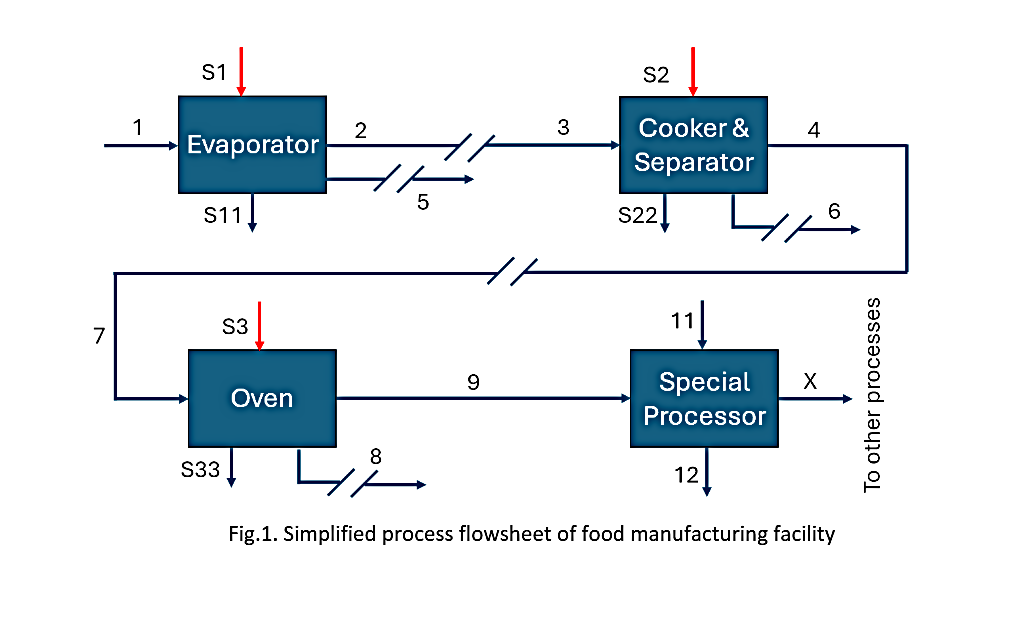
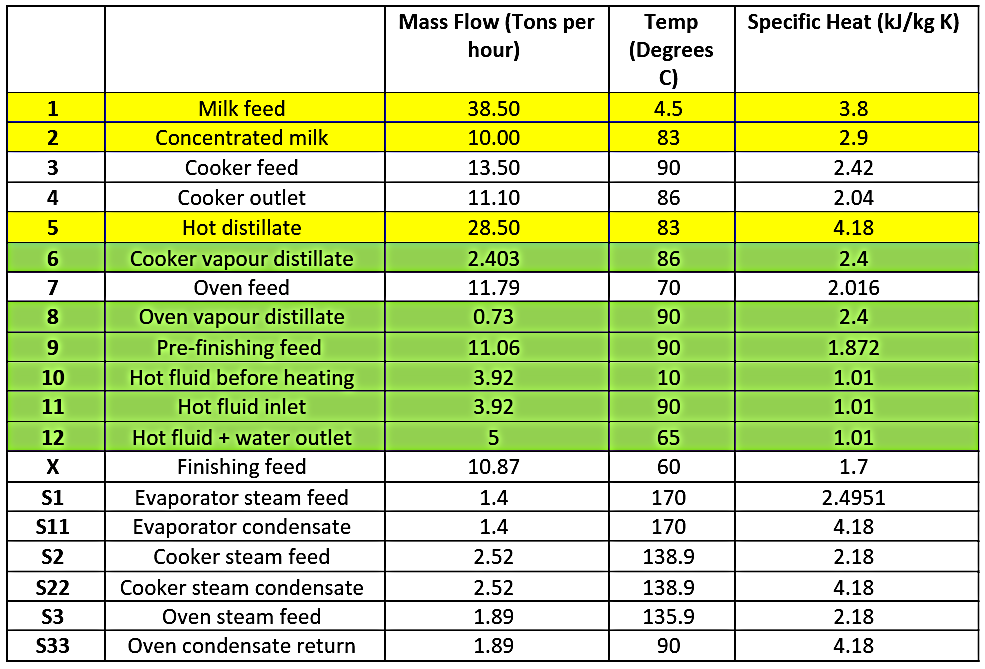
 Author: Onyekachi Nwafor (KatexPower).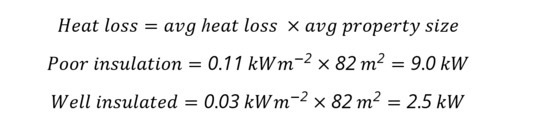
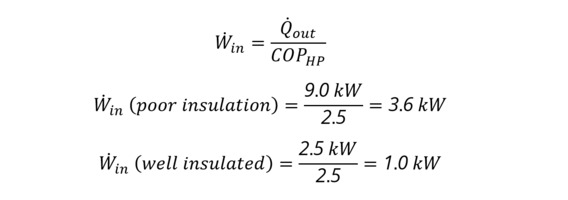
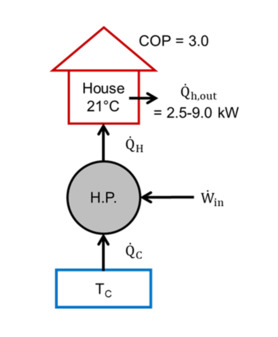
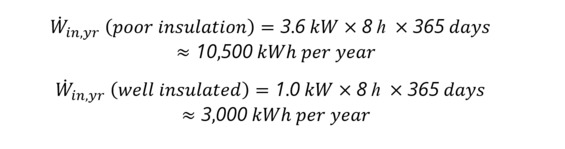
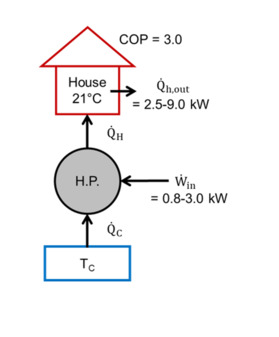

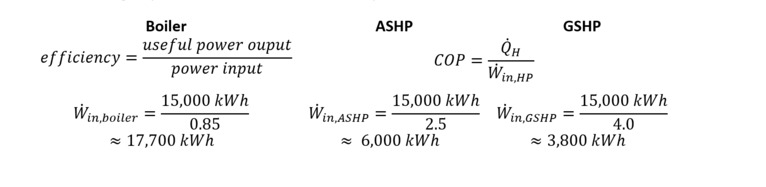
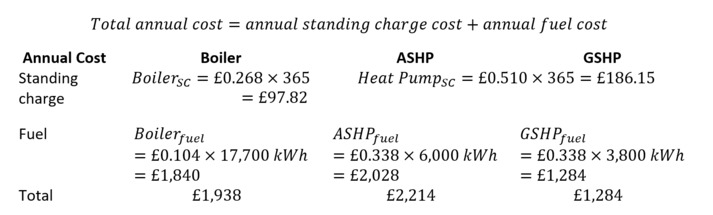
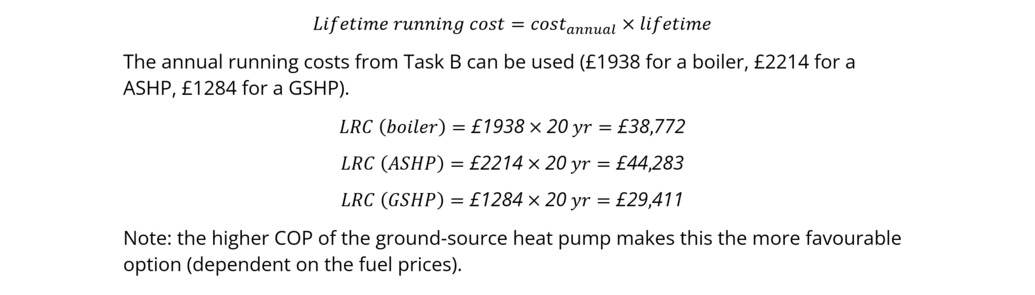
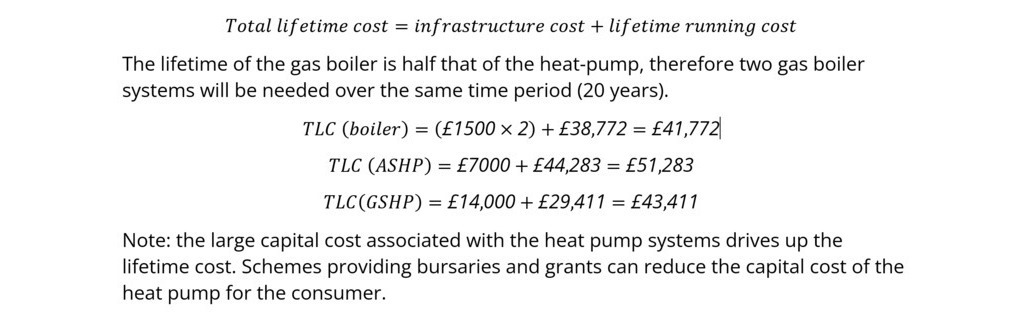
 Theme: