Toolkit: Complex Systems Toolkit.

Author: Dr. James E. Pickering, PhD, SFHEA, MIET, MInstMC (Harper Adams University); Dr. George Amarantidis (MathWorks).

Topic: Developing competence in model-based systems engineering.

Title: Practical control engineering education through the ACE-Model.

Resource type: Teaching activity.

Relevant disciplines: Systems engineering; electrical engineering; control engineering.

Keywords: Available soon.

Licensing: This work is licensed under a Creative Commons Attribution-ShareAlike 4.0 International License. 

Downloads: A PDF of this resource will be available soon.

Learning and teaching resources:

Related INCOSE Competencies: Toolkit resources are designed to be applicable to any engineering discipline, but educators might find it useful to understand their alignment to competencies outlined by the International Council on Systems Engineering (INCOSE). The INCOSE Competency Framework provides a set of 37 competencies for Systems Engineering within a tailorable framework that provides guidance for practitioners and stakeholders to identify knowledge, skills, abilities and behaviours crucial to Systems Engineering effectiveness.   A free spreadsheet version of the framework can be downloaded.

This resource relates to the Systems Thinking, Systems Modelling and Analysis, Integration, and Technical Leadership INCOSE competencies. 

AHEP4 mapping: This resource addresses several of the themes from the UK’s Accreditation of Higher Education Programmes fourth edition (AHEP4):  Analytical Tools and Techniques (critical to the ability to model and solve problems), and Integrated / Systems Approach (essential to the solution of broadly-defined problems). 

Educational level: Beginner; intermediate. 


Learning and teaching notes:

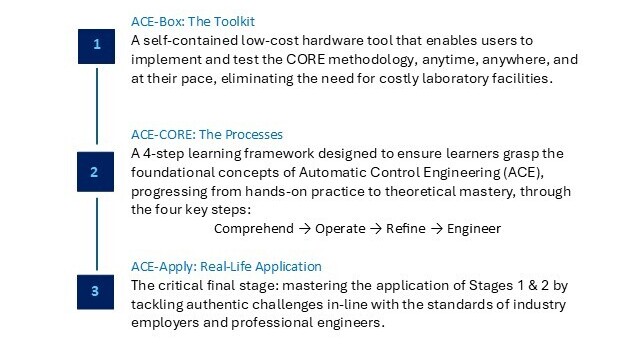
Modern engineering is increasingly digital, interconnected, and system oriented. To prepare students for this evolving landscape, the Automatic Control Engineering (ACE) Model offers  a systems-driven, application-focused framework for practical control engineering education. Developed through a MathWorks-funded project launched in the summer of 2025, the ACE-Model unifies three complementary components that together cultivate systems thinking and model-based systems engineering competence: 

Learners have the opportunity to: 

Teachers have the opportunity to: 


What does the ACE-Model consist of?:


Figure 1: The ACE-Model: Integrating the Toolkit (ACE-Box), with the Processes (ACE-CORE), to Lead to the Real-Life Application (ACE-Apply) to build a progressive mastery in Automatic Control Engineering (ACE).

The ACE-Model is closely aligned with Bloom’s Taxonomy, see (Anderson and Krathwohl, 2001) and Figure 2(a) providing a structured pathway for students to progress through the cognitive hierarchy, while developing capabilities across multiple levels of system abstraction. Figure 2(b) offers a schematic view of the three stages of the ACE-Model, as introduced in Figure 1. An initial overview of the ACE-Model is presented here, with further details provided in the following sections.  

 The ACE-Box is a portable, self-contained hardware tool that brings ACE to life beyond the traditional costly, full-scale laboratories. All that is required is a laptop and the ACE-Box. Designed to support the ACE-CORE methodology, ACE-Box can be set up on a desk, in a classroom, or even at home. MATLAB and Simulink serve as the primary platforms for model-based design, enabling system modelling, control system development, and the deployment of control algorithms to physical hardware (e.g. Arduino Uno) through code generation tools. 

 ACE-CORE guides learners through successive levels of Bloom’s framework: 

At each stage of CORE, learners move from recognising system components to synthesising complex interactions, mirroring the systems engineering lifecycle from requirement capture through verification and validation. This alignment supports AHEP4’s emphasis on analytical and problem-solving competence and INCOSE’s System Definition and Integration competencies. 

Finally, learners progress to Create, the highest stage of Bloom’s Taxonomy, by applying their knowledge to design complete control systems for real-world applications such as drones, vehicles, and automation systems. In this way, the ACE-Model scaffolds learning in parallel with Bloom’s progression, from foundational comprehension to advanced problem-solving, design and innovation. 

Together, these three pillars form a cohesive learning ecosystem: the toolkit, the process, and the application. 
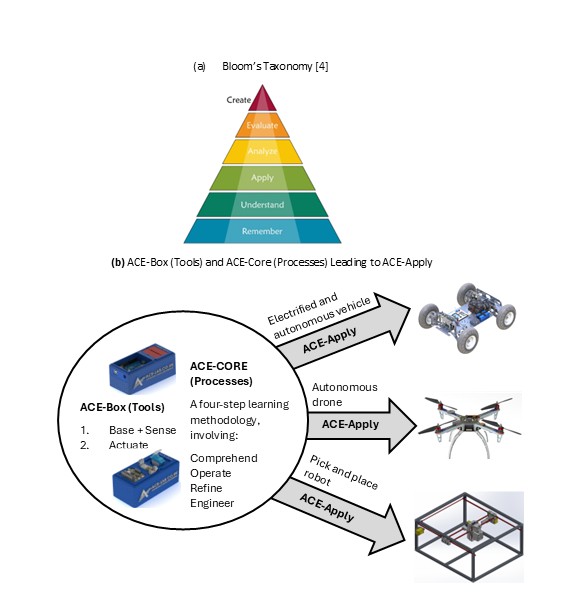
Figure 2: Bloom’s Taxonomy (Anderson and Krathwohl, 2001) (a) and the ACE-Model Three Stages (b).


Collaborative community:

The ACE-Model ‘sits’ within the ACE-Lab, a collaborative community of academics and industry professionals committed to developing, validating, and disseminating open-access systems education resources. The ACE-Lab approach embodies complex adaptive systems principles, where the community evolves through continuous feedback, iteration, and co-design. Membership to the ACE-Lab is open to anyone who shares our vision of advancing control engineering teaching tools and practices. Through this approach, the ACE-Model equips graduates with the knowledge and hands-on skills required to excel in modern ACE careers. Find out more about the ACE-Lab through the following website: www.ace-lab.co.uk 

As an evolving community, ACE-Lab continually expands its open-access content through the active contributions of its members. New materials are regularly developed and shared, ensuring the resources remain current and relevant. Through this dynamic, collaborative approach, embodied in the ACE-Model, students not only gain technical knowledge but also develop the capacity to understand, navigate, and work effectively with complex, interconnected engineering systems. 


ACE-Box: The toolkit:  

The ACE-Box is based on the early development work of Control-Lab-in-a-Box (Pickering, 2023; 2025). CLB integrates sensors, actuators, and microcontroller to allow students to experience dynamic behaviour, and feedback control. 

 For now, two ACE-Box kits have been developed: 

1. Base and sense 

2. Actuate  

 The ACE-Box (base and sense) is illustrated in Figure 3, with the 15 key components labelled, along with an exploded view of the main parts in Figure 4. The ACE-Boxes integrate the essential microcontrollers, electronics, sensors, and actuators needed to design, implement, and test elements of digital control algorithm development, e.g. control algorithms in real time. It bridges the gap between theory and practice, allowing learners to see how abstract concepts behave in physical systems. The ACE-Box is also available as an open-access resource, with laboratory exercises included, with details provided later in this article. The ACE-Box (labelled (1) in Figure 3) and the tray (labelled (2) in Figure 3) are manufactured using 3D printing, with the necessary files available on the project website referenced above. A list of the required components and their sources is also provided on the project website, corresponding to labels (3) to (15) in Figure 3. Due to the open-source design of ACE-Lab, the library of exercises will continue to expand, supported by contributions from both academia and industry. The ACE-Box (Actuate) is illustrated in Figure 5, with the key actuator components detailed in (a), along with some typical lab set-ups (b, c and d). Figure 6 illustrates both the ACE-Box (Base + Sense) and also ACE-Box (Actuate).    
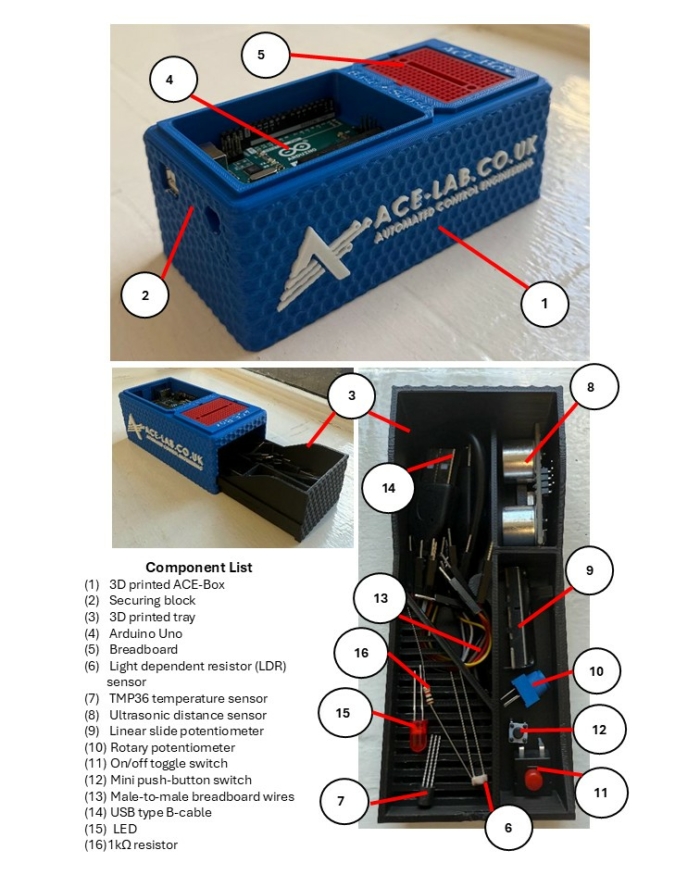
Figure 3: The ACE-Box (Base and Sense).
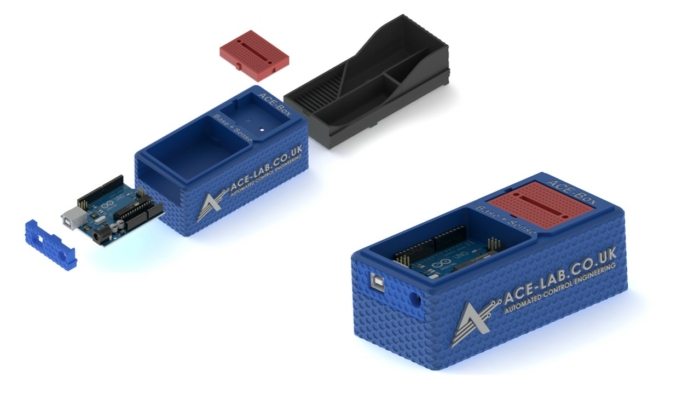
 

Figure 4: Assemble of the 3D Printed ACE-Box (Base and Sense).
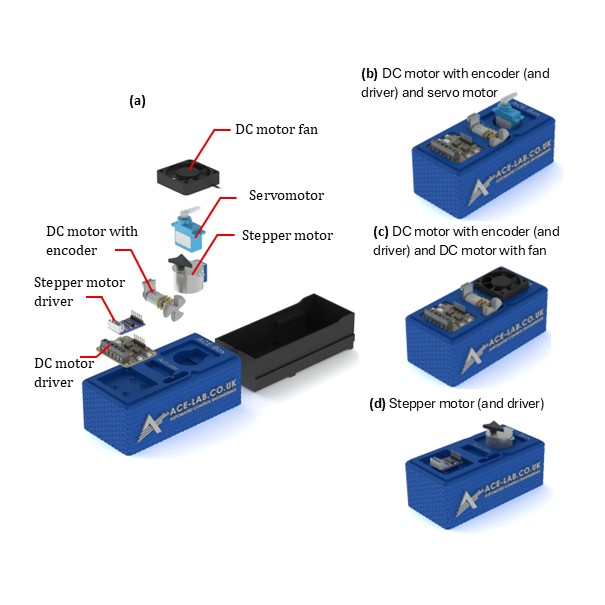
 

Figure 5: The ACE-Box (Actuate).
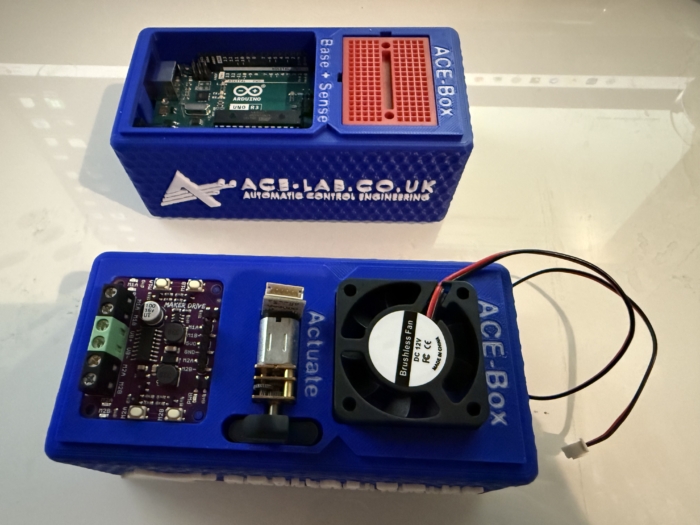
 

Figure 6: ACE-Box (Actuate) Alongside the ACE-Box (Base + Sense).


ACE-CORE: The methodology:

ACE-CORE is a four-step framework designed to scaffold learning from components to system-of-systems understanding: 

The methodology explicitly develops systems thinking, and integration competencies, core to both AHEP4 and INCOSE frameworks.  

ACE-CORE is intentionally designed to offer a scaffolded learning experience, allowing students to build confidence step by step as they deepen their understanding. Due to its flexible structure, students can also follow a completely practical route, i.e. avoiding the modelling and simulation. The emphasis is not on rote memorisation of theory, but on progression through understanding the fundamentals of control engineering, e.g. the components that form a feedback control system. These routes enable learners to apply concepts in practical control engineering contexts and develop genuine competence. 


ACE-Apply: Real-world application:

ACE-Apply is the project stage, where the skills and knowledge gained from ACE-Box and ACE-CORE are consolidated by tackling authentic challenges aligned with the expectations of industry and professional engineers, see Figure 2(b). At this stage, learners prove their mastery by addressing engineering application problems that reflect the standards of industry practice. The focus is on: 

This stage reinforces AHEP4 Themes 3 and 5, particularly:  

It also strengthens INCOSE competencies in System Realisation, Integration, and Technical Project Management, encouraging students to act as systems integrators capable of managing interfaces and dependencies across mechanical, electrical, and software domains.   

By bridging theory, simulation, and hardware using industry-standard digital tools, ACE-Apply nurtures the ability to navigate complex adaptive systems, anticipate emergent behaviour, and work collaboratively within multidisciplinary engineering ecosystems.  


ACE-Box activities:

Upon visiting the ACE-Lab website (www.ace-lab.co.uk), under the tab ‘ACE-Box’, the following tabs exist (with the links provided):  

The “What is the ACE-Box?” page introduces educators and students to the ACE-Box platform, outlining its purpose, key features, and practical considerations such as sourcing components and 3D-printing enclosure parts.  

The “Prior Exercises” page provides essential onboarding material designed to help users become familiar with MATLAB and Simulink. This includes links to the relevant OnRamp courses, guidance on installing the required software packages, and short tutorial videos that introduce the MATLAB and Simulink graphical user interfaces (GUIs).  

The “Base + Sense” section contains a set of introductory tutorial exercises that use the ACE-Box (Base + Sense configuration). These activities help users get started with Simulink code generation for the Arduino Uno, while working with a range of basic sensors and electronic components.  

Finally, the “Base + Sense + Actuate” section builds on the previous material by introducing actuation hardware. Using both the Base + Sense and Actuate modules, students and educators learn how to interface with and control devices such as DC motors, servomotors, and stepper motors. This section is designed to familiarise users with actuator integration and reinforce practical control engineering workflows.  


Example use of ACE-Box (Base + Sense):

To demonstrate the use of the ACE-Box (Base + Sense), an introductory activity is provided, i.e. the on-off blinking of an LED. Prior to this activity, through ACE-CORE, students should receive a short introduction to microcontrollers covering key concepts such as digital input/output pins, analogue pins, and pulse-width modulation (PWM). Once students are familiar with these fundamentals, they progress to the initial exercise detailed here, which is aligned with defined learning outcomes. 

Since MATLAB and Simulink are the primary software tools used with the ACE-Box, students are first guided through installing the Simulink Support Package for Arduino Hardware. After the hardware and software setup is complete, they assemble a simple circuit, see Figure 7(a), and configure a Simulink model for the first exercise, see Figure 6(b). This initial activity requires students to control the state of a digital output pin on the Arduino, switching it on and off. The Simulink model, provided in Figure 7(b), enables students to quickly build the exercise using a visual programming approach. To run the activity, they follow a sequence of steps that includes code generation, which compiles the Simulink model into embedded C code and deploys it onto the Arduino Uno microcontroller. Once completed, the LED connected to the circuit blinks on and off according to the settings of the Simulink pulse generator. A visual of the complete set-up for this initial exercise can be found in Figure 8. At this stage, students are encouraged to experiment with the pulse generator parameters in real-time, observing how changes to the signal properties immediately affect the LED’s behaviour. Scopes can also be used (see Figure 7(b)) to visualise the pulse generator’s square-wave output, including its amplitude, period, and pulse width. This hands-on interaction reinforces the link between the initial set-up and hardware implementation while deepening their understanding of microcontrollers. 
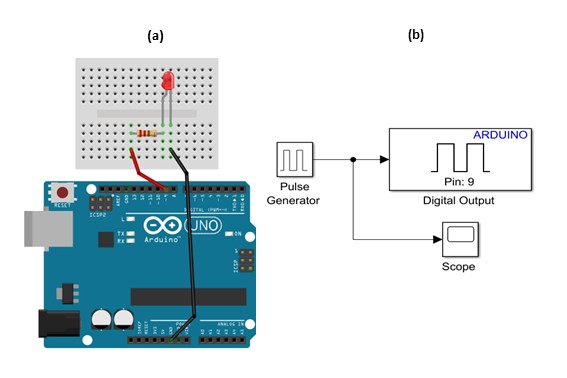
Figure 7: LED Simple Circuit (a) and Simulink for Code Generation for the on-off Blinking of an LED.
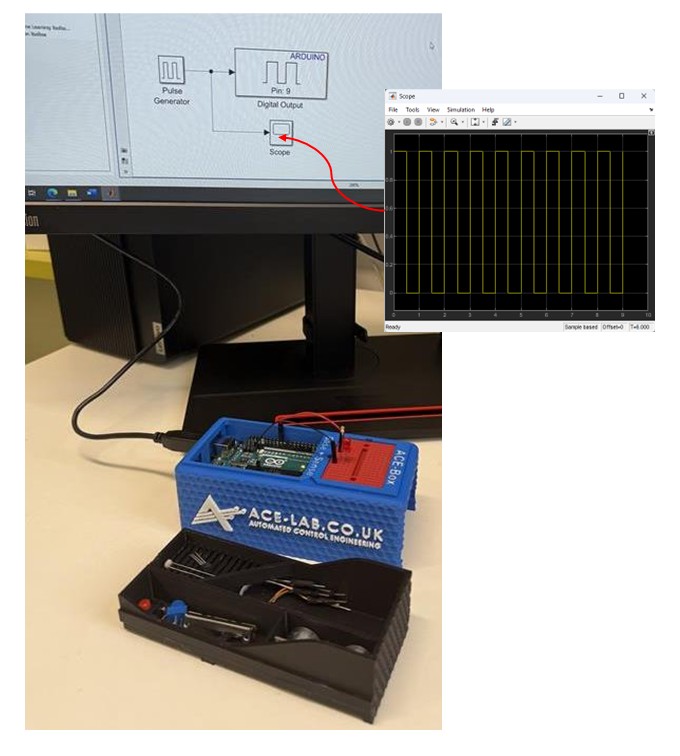
Figure 8: LED Simple Circuit Set-Up using Simulink for Code Generation for on-off Blinking of an LED.

The initial exercise is designed to familiarise students with the ACE-Box and the use of Simulink’s code generation tools. This type of activity is typical for introducing students to a new software and hardware environment. The next exercise involves using pulse width modulation (PWM) to vary the brightness of the LED. This exercise involves using additional blocks in Simulink, see Figure 8, where multiple scopes are used to visualise the signals in real-time. Once students understand the fundamental building blocks of Simulink, they can quickly progress to developing feedback control systems that meet a variety of application requirements. In the authors’ view, student familiarity with Simulink makes it a more accessible platform for designing advanced control algorithms, particularly when working with sub-systems. 
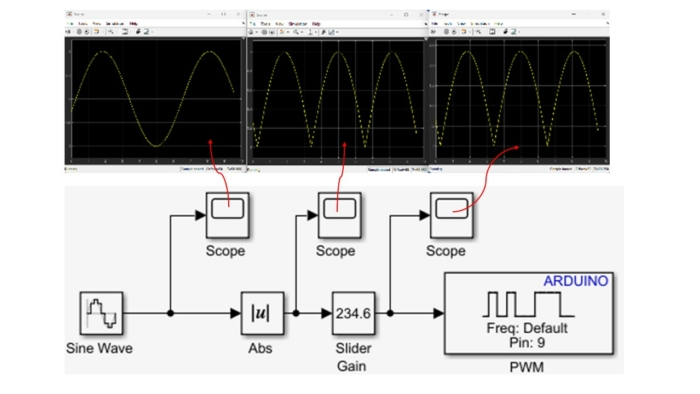
Figure 9: LED Simple Circuit Set-Up using Simulink for Code Generation Varying Brightness of an LED using Pulse Width Modulation (PWM).

Building on this foundation, a wide range of laboratory exercises can be developed using the electronic components involved in ACE-Box (Base + Sense), as illustrated in Figure 3, with the option to expand further by incorporating additional components. Examples of extended exercises include: 

In addition to sensing activities, the ACE-Box (Actuate) provides four actuators: a servomotor, a DC motor with encoder, a stepper motor, and a DC motor fan. This unit can be used independently or in combination with the Base and Sense ACE-Box to enable more advanced control experiments, such as DC motor speed control or motor control based on light intensity measurements from an LDR. 

The flexibility of the ACE-Box system ensures that the number of possible exercises is effectively unlimited, as new experiments can be designed by combining existing sensors and actuators or by integrating additional measurement devices. This also allows unique coursework assignments to be created. 


Summary:

The ACE-Model provides a systemic and holistic framework for practical control engineering education that: 


Acknowledgements:  

Dr James E. Pickering gratefully acknowledges the support from MathWorks, whose funding made this project possible. He also extends his sincere thanks to Hari Sudeskkumar for his exceptional engineering design contributions and 3D-printing work. The authors would like to thank the Project Advisory Group (PAG) for their valuable guidance throughout the development of this work.  


References:


Any views, thoughts, and opinions expressed herein are solely that of the author(s) and do not necessarily reflect the views, opinions, policies, or position of the Engineering Professors’ Council or the Toolkit sponsors and supporters.  

Toolkit: Complex Systems Toolkit.

Authors: Dr. Natalie Wint (University College London); Dr. Mohammad Hassannezhad (University College London); Dr. Manoj Ravi (University of Leeds).

Topic: Complex systems competencies.

Title: Understanding complex systems competencies required in engineering graduates. 

Resource type: Knowledge article.

Relevant disciplines: Any.

Keywords: Systems thinking; Problem-solving; Critical thinking; Digital literacy; Modelling and simulation; Design; Project management; Life cycle; Risk; Collaboration; Communication; Professional conduct; Social responsibility.

Licensing: This work is licensed under a Creative Commons Attribution-ShareAlike 4.0 International License. 

Downloads: A PDF of this resource will be available soon.

Learning and teaching resources:

Who is this article for?: This article should be read by educators at all levels in higher education who are seeking an overall perspective on teaching approaches for integrating complex systems in engineering education. 

Related INCOSE Competencies: Toolkit resources are designed to be applicable to any engineering discipline, but educators might find it useful to understand their alignment to competencies outlined by the International Council on Systems Engineering (INCOSE). The INCOSE Competency Framework provides a set of 37 competencies for Systems Engineering within a tailorable framework that provides guidance for practitioners and stakeholders to identify knowledge, skills, abilities and behaviours crucial to Systems Engineering effectiveness. A free spreadsheet version of the framework can be downloaded. 

AHEP mapping: This resource addresses several of the themes from the UK’s Accreditation of Higher Education Programmes fourth edition (AHEP4). 


Premise:

This article outlines the core competencies required for engineering students to effectively engage with complex systems. Such systems involve a range of technical and non-technical components that interact in non-linear and unpredictable ways. Working effectively with such complex systems requires collaboration across engineering disciplines, as well as other fields and stakeholder groups.  

Within AHEP4, complex problems are referred to as those which “have no obvious solution and may involve wide-ranging or conflicting technical issues and/or user needs that can be addressed through creativity and the resourceful application of engineering science” (p.26). The ability to work productively with complex systems is therefore essential for engineers and helps them address problems increasingly experienced in business and society, which have many interdependent components and lack clear or stable solutions.  

The aim of this article is to provide a foundational framework that integrates the knowledge, skills and attitudes necessary for undergraduate and graduate engineering students to navigate complexity. In so doing, it serves educators, curriculum designers, and students seeking to develop the mindset and skills required to tackle the challenges of the 21st century within an increasingly volatile, uncertain, complex, and ambiguous (VUCA) world (SEFI, 2025).  

This knowledge article, informed by the INCOSE Competency Framework for Systems Engineering (INCOSE, 2018), categorises complex systems competencies into eight core competencies. These competencies encompass mindset and foundations, technical methods and tools, management and delivery, and attributes and behaviours. The description of each competency references learning outcomes (LOs) outlined in AHEP4 (Engineering Council, 2025) and the International Engineering Alliance (IEA) Graduate Attributes (2021) to establish a common baseline for all engineering graduates (see Appendix for mapping).  


The eight core complex systems competencies:

1. Systems thinking and problem framing 

The ability to take a holistic approach, to consider a problem from multiple perspectives and to understand how a system’s parts interact to produce emergent behaviour.  

Students must be able to understand what makes a system ‘complex’ and move beyond narrow problem-solving to identify root causes. This involves understanding fundamental Systems thinking concepts including hierarchies and interfaces (structural dimension), holism and cause-effect (dynamic dimension), lifecycles (time dimension), and multiple perspectives (perception dimension).  

Systems thinking enables engineers to anticipate ripple effects, emergent behaviours, and trade-offs, designing solutions that remain robust under uncertainty. AHEP4 requires students to “formulate and analyse complex problems to reach substantiated conclusions” (LO2) and to “apply an integrated or systems approach to the solution of complex problems” (LO6).  

2. Critical thinking 

The ability to question assumptions, evaluate evidence, apply logical reasoning, and justify decisions based on reasoned arguments and evidence.  

Navigating complex systems involves working with a variety of (often conflicting) goals, information, and data types from across discipline and stakeholder groups. Critical thinking is thus necessary to enable engineers to identify biases, avoid oversimplification and flawed reasoning, and to make ethical, transparent and evidence-informed decisions with consideration for unintended consequences. AHEP4 requires graduates to “critically evaluate technical literature and other sources of information to solve complex problems” (LO4). 

3. Simulation, modelling and data literacy 

The ability to apply scientific, mathematical, and engineering principles to model, test, and improve complex systems.  

Working with complex systems involves a range of resources including people, data and information, tools and appropriate technologies. Students must be able to create, apply and validate system models (as physical, mathematical, or logical representation of systems) and demonstrate competence in simulation and data literacy to address uncertainty and complexity at scale. This may involve using models and data to justify assumptions, explore scenarios, predict the consequences of actions, solve difference equations, conduct sensitivity and stability analysis, and predict the probability of risk.  

This aligns with several AHEP4 outcomes: “apply mathematics, statistics, and engineering principles to solve complex problems” (LO1); “apply computational and analytical techniques while recognising limitations” (LO3); and “select and critically evaluate technical literature and other data sources” (LO4).  

4. Design for complexity and changeability 

The ability to design adaptable, robust, and resilient systems across their lifecycle.  

Changes (both planned and unplanned) are inherent in complex systems. Long-term success of a system therefore requires design for resilience to first hand/internal (by the system), second hand/external (to the system) or third hand (around the system) change. Design for complexity and changeability ensures systems can evolve and integrate new capabilities across their lifecycle.  

AHEP4 requires engineers to be able to innovatively “design solutions that meet a combination of societal, user, business and customer needs” (LO5). This may involve designing systems that deliver required functions over time, including evolution, adaptability, and integration across subsystems (capability engineering), and supports evaluation of alternatives, balance competing objectives, and justify transparent decisions (decision management).  

5. Project and lifecycle management 

The ability to plan and deliver engineering activities across the system lifecycle, ensuring outcomes are delivered on time, on cost, and with integrity.  

Complex systems involve many subsystems with various purposes and lifecycles. This necessitates effective coordination and delivery processes and a focus on early planning and lasting systemic impacts. Project and lifecycle management allows for concurrent engineering (parallelisation of tasks), and verification and validation of tasks in dynamic environments. Graduates must “apply knowledge of engineering management principles, commercial context, project and change management” (AHEP4, LO15).  

This aligns with the Engineering Attribute of Project Management and Teamwork and the INCOSE Framework competencies in Lifecycle Processes, Integration, and Project Management, emphasising coordinated delivery and long-term value creation across socio-technical systems. Lifecycle awareness prevents short-term optimisation and emphasises aspects such as maintainability, whole-life value delivery and total expenditure (TOTEX) thinking, all of which support efforts towards sustainability and net-zero.  

6. Risk and uncertainty management 

The ability to identify, assess, and manage technical, social, environmental, and ethical risks at multiple levels of complex systems.  

Complex systems are inherently uncertain, with cascading risks that must be anticipated and managed proactively. Risk management enables students to quantify source and impact of uncertainties where possible and apply precaution where uncertainty is irreducible, ensuring safety, sustainability, and governance.  

AHEP4 requires graduates to “use a structured risk management process to identify, evaluate and mitigate risks (the effects of uncertainty)” (LO9), ranging from project-specific challenges to systemic threats, which need to “adopt a holistic and proportionate approach to the mitigation of security risks” (LO10).  

7. Collaboration and communication 

The ability to work effectively across disciplines, boundaries, and cultures, while conveying complex insights clearly to technical and non-technical audiences. 

Complex systems challenges cannot be solved by individuals alone and include consideration for stakeholders across industry, policy and society. Such collaborative processes involve participatory problem-solving, learning from others, inclusive communication, and negotiation and persuasion strategies, all of which necessitate emotional intelligence.  

AHEP4 expects graduates to “function effectively as an individual, and as a member or leader of a team, being able to evaluate own and team performance” (LO16). They must be able to influence stakeholder decisions, foster alignment, and shape outcomes across industry, policy, and society (AHEP4, LO17).  

8. Professional responsibility 

The ability to apply professional and societal responsibilities in decision-making, with awareness of ethical implications and long-term impacts and unintended consequences of engineered systems.  

Engineers increasingly work on complex systems that shape lives, societies, and ecosystems. Ethical responsibility ensures that technical competence aligns with social good and involves consideration for trade-offs between factors including environmental impact, affordability and social acceptance. This aligns with AHEP4, IEA, and INCOSE principles on ethics, professionalism, and leadership, ensuring engineers act responsibly within complex systems and contribute positively to society and sustainability. AHEP4 requires graduates to “identify and analyse ethical concerns and make reasoned ethical choices informed by professional codes of conduct” (LO8) and “evaluate the environmental and societal impact of solutions to complex problems” (LO7).  


Conclusions:

This article defines a set of eight integrated competencies that prepare engineering graduates to navigate complex systems. Together, they combine knowledge (what graduates must know), skills (what they can do), and attitudes (how they behave and think). Embedding these competencies requires project-based learning, interdisciplinary collaboration, and reflective exercises, while assessment should include portfolios, teamwork, and scenario analysis. Employers and professional bodies can reinforce these competencies through mentoring, internships, and early career development. 

By aligning with INCOSE, AHEP4, and IEA GA frameworks (see Appendix for mapping), this guidance provides an internationally consistent foundation that can be adapted to local contexts, equipping engineering graduates to address complex, interdependent challenges of the 21st century with competence, integrity, and resilience.  


Appendix:  

Mapping between Eight Core Competencies and Standard frameworks 

Proposed Core Competency   INCOSE * AHEP4 ** IEA GA *** 
Systems Thinking & Problem Framing ST LO2, LO6 WA2
Critical Thinking   CT LO4 WA4, WA11 
Simulation, Modelling & Data Literacy  IM, SM  LO1, LO3, LO4  WA1, WA4, WA5
Design for Complexity & Changeability  CP, DM, DF LO5  WA3 
Project & Lifecycle Management   LC, PL, CE, CP  LO15  WA10 
Risk & Uncertainty Management  CE, PL, RO  LO9, LO10
Collaboration & Communication   CC, TD, TL, EI  LO16, LO17  WA8, WA9 
Professional Responsibility  EI, EP  LO7, LO8  WA6, WA7 


* INCOSE Competency Framework, 2nd edition (2018) 

** AHEP4 Learning Outcome (LO) (2025) 

*** International Engineering Alliance (IEA) Graduate Attributes (GA) (2021) 


CC = Communications 

CE = Concurrent Engineering  

CP = Capability Engineering 

CT = Critical Thinking 

DF = Design For … 

DM = Decision Management 

EI = Emotional Intelligence 

EP = Ethics and Professionalism 

IM = Information Management 

LC = Life Cycle 

LO = Learning Outcome 

PL = Planning 

RO = Risk and Opportunity Management 

TD = Team Dynamics 

TL = Technical Leadership 

SM = Systems Modelling and Analysis 

ST = Systems Thinking 

WA = Washington Accord 


References:


Any views, thoughts, and opinions expressed herein are solely that of the author(s) and do not necessarily reflect the views, opinions, policies, or position of the Engineering Professors’ Council or the Toolkit sponsors and supporters.  

Toolkit: Complex Systems Toolkit.

Author: Onyekachi Nwafor (KatexPower).

Topic: Emergence in complex systems.

Title: Understanding emergence in complex engineering systems.

Resource type: Knowledge article.

Relevant disciplines: Any.

Keywords: Emergence; Boundaries; Unpredictability; Instability; System dynamics model; Digital engineering tools.

Licensing: This work is licensed under a Creative Commons Attribution-ShareAlike 4.0 International License. 

Downloads: A PDF of this resource will be available soon.

Who is this article for?: This article should be read by educators at all levels in higher education who are seeking to provide students with an overall perspective on complex systems in engineering. 

Related INCOSE Competencies: Toolkit resources are designed to be applicable to any engineering discipline, but educators might find it useful to understand their alignment to competencies outlined by the International Council on Systems Engineering (INCOSE). The INCOSE Competency Framework provides a set of 37 competencies for Systems Engineering within a tailorable framework that provides guidance for practitioners and stakeholders to identify knowledge, skills, abilities and behaviours crucial to Systems Engineering effectiveness. A free spreadsheet version of the framework can be downloaded. 

This resource relates to the Systems Thinking and Critical Thinking INCOSE competencies. 

AHEP mapping: This resource addresses several of the themes from the UK’s Accreditation of Higher Education Programmes fourth edition (AHEP4): Analytical Tools and Techniques (critical to the ability to model and solve problems), and Integrated / Systems Approach (essential to the solution of broadly-defined problems).  


Learning and teaching resources:


Premise:

Engineering systems today are increasingly complex, interconnected, and adaptive. To understand and manage them effectively, engineers must move beyond reductionist thinking where systems are broken into isolated parts and adopt systems thinking, which views systems as wholes made up of interacting components. 

At the heart of this perspective lies emergence, a defining characteristic of complex systems. Emergence refers to properties or behaviours that arise from interactions among components but cannot be predicted or understood by examining those components in isolation. Appreciating emergence helps engineers anticipate how individual design decisions can produce system-level outcomes, sometimes beneficial, sometimes negative and unintended. 

This article introduces the concept of emergence as one key characteristic of complex systems, situates it within systems thinking, and provides practical guidance for recognising and managing emergent behaviours in engineering practice.


1. What is a system?:

A system can be defined as “a set of interconnected elements organised to achieve a purpose” (Meadows, 2008). Systems possess structure (components), relationships (interactions), and purpose (function). Engineering systems such as aircraft, power grids, transport networks, or data infrastructures are composed of numerous subsystems that depend on each other. 

Crucially, systems thinking emphasises interdependence and feedback. The behaviour of the whole cannot be fully explained by the behaviour of the parts alone. Properties such as resilience, adaptability, and emergence result from interactions within the system’s structure and environment. Recognising these relationships is essential to understanding how system-level behaviours arise.


2. Understanding emergence:

Emergence describes the appearance of new patterns, properties, or behaviours at the system level that are not present in individual components. These properties are often irreducible: they cannot be explained solely by analysing each part separately (Holland, 2014). 

Researchers distinguish between: 

In engineering, most emergent behaviours are weakly emergent: complex yet explainable with sufficient data and computational tools such as agent-based modelling or system dynamics. 

A key caveat is that emergence depends on perspective and system boundaries. What seems emergent at one scale (e.g., the stability of a power grid) might appear straightforward when viewed at another. Therefore, engineers must define boundaries and assumptions clearly when analysing emergence. 


3. Why emergence matters in engineering:

Emergence shapes how engineering systems behave, evolve, and sometimes fail. It can produce both desired outcomes (like adaptability or resilience) and undesired ones (like instability or cascading failure). 

Understanding emergence enables engineers to: 

For instance, in cyber-physical systems, emergent coordination can enhance efficiency, but it may also create unpredictable vulnerabilities if feedback loops reinforce errors. Engineers therefore must not only observe emergence but learn how to influence it through design and governance. 


4. Recognising and managing emergent behaviour:

Engineers can identify emergence by looking for: 

Not all emergence is beneficial. Engineers often need to mitigate unwanted emergent behaviours such as instability or inefficiency while reinforcing desirable ones. Effective approaches include: 

Managing emergence requires humility: complex systems cannot be fully controlled, only influenced. The goal is to guide system dynamics toward safe and productive outcomes. 


5. Illustrative examples of emergence in engineering systems:

The Internet exemplifies emergence: billions of devices follow simple communication protocols, yet collectively create a resilient, adaptive global network. No single node dictates its performance; instead, routing efficiency and viral content propagation arise from local interactions among routers and users. 

Urban traffic patterns such as congestion waves, spontaneous lane formation, and adaptive rerouting emerge from individual driver behaviour and infrastructural design. Traffic engineers use simulation models to study how simple decision rules generate complex city-wide flows. 

Electrical grids maintain frequency and voltage stability through distributed interactions among generators, loads, and controllers. Emergent synchronisation enables reliability, but loss of coordination can cause cascading blackouts showing both beneficial and harmful emergence. 

In smart factories, machines and sensors collaborate autonomously, producing system-wide optimisation in scheduling and quality control. Adaptive algorithms and feedback loops create emergent flexibility beyond what central planning alone could achieve. 


6. Practical guidance for engineers and educators:

For engineers, the key is to design with emergence in mind: 

For educators, teaching emergence provides an opportunity to bridge theory and practice. Software such as NetLogo and Insight Maker allows students to visualise emergent behaviour through agent-based and system-dynamics models. Linking engineering examples to ecological, social, or digital systems helps learners appreciate the universality of emergence. 


Conclusion:

Emergence is not an anomaly to be avoided but a natural attribute of complex systems. It challenges traditional engineering by revealing that system behaviour often arises from relationships, not components. 

Understanding emergence equips engineers to recognise interdependencies, design adaptive solutions, and work with complexity rather than against it. By embracing systems thinking, engineers can create technologies that are not only functional but resilient, sustainable, and aligned with real-world dynamics.


References:


Any views, thoughts, and opinions expressed herein are solely that of the author(s) and do not necessarily reflect the views, opinions, policies, or position of the Engineering Professors’ Council or the Toolkit sponsors and supporters.  

Case study example: Water wars: managing competing water rights

Activity: Assessment. This example demonstrates how the questions provided in Assessing ethics: Rubric can be used to assess the competencies stipulated at each level.

Authors: Dr. Natalie Wint (UCL); Dr. William Bennett (Swansea University).

Related content:


Water wars: managing competing water rights 

This example demonstrates how the questions provided in the accompanying rubric can be used to assess the competencies stipulated at each level. Although we have focused on ‘Water Wars’ here, the suggested assessment questions have been designed in such a way that they can be used in conjunction with the case studies available within the toolkit, or with another case study that has been created (by yourself or elsewhere) to outline an ethical dilemma. 

Year 1 

Personal values: What is your initial position on the issue? Do you see anything wrong with how DSS are using water? Why, or why not?

Professional responsibilities: What ethical principles and codes of conduct are relevant to this situation?

Ethical principles and codes of conduct can be used to guide our actions during an ethical dilemma. How does the guidance provided in this case align/differ with your personal views? (This is a question we had created in addition to those provided within the case study to meet the requirements stipulated in the accompanying rubric.)

What are the moral values involved in this case and why does it constitute an ethical dilemma? (This is a question we had created in addition to those provided within the case study to meet the requirements stipulated in the accompanying rubric.)

What role should an engineer play in influencing the outcome? What are the implications of not being involved? (This is a question we had created in addition to those provided within the case study to meet the requirements stipulated in the accompanying rubric.)

Year 2 

Formulate a moral problem statement which clearly states the problem, its moral nature and who needs to act. (This is a question we had created in addition to those provided within the case study to meet the requirements stipulated in the accompanying rubric.)

Stakeholder mapping: Who are all the stakeholders in the scenario? What are their positions, perspective and moral values?

Stakeholder  Perspectives/interests  Moral values 
Data Storage Solutions (DSS)  Increasing production in a profitable way; meeting legal requirements; good reputation to maintain/grow customer base.  Accountability; sustainability (primarily economic). 
Farmers’ union  Represent farmers who suffer from economic implications associated with costly irrigation.  Accountability; environmental sustainability; justice. 
Farm  The farm (presumably) benefits from DSS using the land.  Ownership and property; environmental sustainability; justice. 
Local Green Party  Represent views of those concerned about biodiversity. May be interested in opening of green battery plant.  Human welfare; environmental sustainability; justice. 
Local Council  Represent views of all stakeholders and would need to consider economic benefits of DSS (tax and employment), the need of the university and hospital, as well as the needs of local farmers and environmentalists. May be interested in opening of green battery plant.  Human welfare and public health; trust; accountability; environmental sustainability; justice. 
Member of the public  This may depend on their beliefs as an individual, their employment status and their use of services such as the hospital and university. Typically interested in low taxes/responsible spending of public money. May be interested in opening of green battery plant.  Human welfare; trust; accountability; environmental sustainability; justice. 
Stakeholders using DSS data storage  Reliable storage. They may also be interested in being part of an ethical supply chain.  Trust; privacy; accountability; autonomy. 
Non-human stakeholders  Environmental sustainability. 


What are some of the possible courses of action in the situation. What responsibilities do you have to the various stakeholders involved? What are some of the advantages and disadvantages associated with each? (Reworded from case study.)

What are the relevant facts in this scenario and what other information would you like to help inform your ethical decision making? (This is a question we had created in addition to those provided within the case study to meet the requirements stipulated in the accompanying rubric.)


Year 2/Year 3  

(At Year 2, students could provide options; at Year 3 they would evaluate and form a judgement.) 

Make use of ethical frameworks and/or professional codes to evaluate the options for DSS both short term and long term. How do the uncertainty and assumptions involved in this case impact decision making?

Option  Consequences  Intention  Action 
Keep using water  May lead to expansion and profit of DSS and thus tax revenue/employment and supply. 

Reputational damage of DSS may increase. Individual employee piece of mind may be at risk. 

Farmers still don’t have water and biodiversity still suffers which may have further impact long term. 

Intention behind action not consistent with that expected by an engineer, other than with respect to legality  Action follows legal norms but not social norms such as good will and concern for others. 
Keep using the water but limit further work  May limit expansion and profit of DSS and thus tax revenue/employment and supply. 

Farmers still don’t have water and biodiversity still suffers and may have further impact long term. This could still result in reputation damage. 

Intention behind action partially consistent with that expected by an engineer.  Action follows legal norms but only partially follow social norms such as good will and concern for others. 
Make use of other sources of water  Data storage continues. 

Potential for reputation to increase. 

Potential increase in cost of water resulting in less profit potentially less tax revenue/employment. 

Farmers have water and biodiversity may improve.

Alternative water sources may be associated with the same issues or worse. 

Intention behind action seems consistent with that expected by an engineer. However, this is dependent upon 

whether they chose to source sustainable water with less impact on biodiversity etc. 

This may be dependent on the degree to which DSS proactively source sustainable water. 
Reduce work levels or shut down  Impact on profit and thus tax revenue/employment and supply chain. Farmers have water and biodiversity may improve. 

May cause operational issues for those whose data is stored. 

Seems consistent with those expected of engineer. Raises questions more generally about viability and feasibility of data storage.  Action doesn’t follow social norms of responsibility to employees and shareholders. 
Investigate other cooling methods which don’t require as much water/don’t take on extra work until another method identified. 
May benefit whole sector. 

May cause interim loss of service. 


This follows expectations of the engineering profession in terms of evidence-based decision making and consideration for impact of engineering in society.  It follows social norms in terms of responsible decision making. 


Downloads:

Assessing ethics: Guidance

Assessing ethics: Rubric

Assessing ethics: Case study assessment example: Water Wars


This work is licensed under a Creative Commons Attribution-ShareAlike 4.0 International License.

Any views, thoughts, and opinions expressed herein are solely that of the author(s) and do not necessarily reflect the views, opinions, policies, or position of the Engineering Professors’ Council or the Toolkit sponsors and supporters.

Author: Jing Zhao (University of West of England). 

Topic: Investigating the decarbonisation transition. 

Type: Teaching. 

Relevant disciplines: Civil; Structural; Chemical; Mechanical; Electrical; Computing. 

Keywords: Decarbonisation, Housing, Built environment; Net zero, Carbon emissions; Energy efficiency; Sustainable energy; Local community; Curriculum; Higher education; Sustainability; Assessment. 

Sustainability competency: Systems thinking; Anticipatory; Collaboration; Self-awareness; Normative.

AHEP mapping: This resource addresses two of the themes from the UK’s Accreditation of Higher Education Programmes fourth edition (AHEP4): The Engineer and Society (acknowledging that engineering activity can have a significant societal impact) and Engineering Practice (the practical application of engineering concepts, tools and professional skills). To map this resource to AHEP outcomes specific to a programme under these themes, access AHEP 4 here  and navigate to pages 30-31 and 35-37.  

Related SDGs: SDG 4 (Quality education); SDG 7 (Affordable and clean energy); SDG 9 (Industry, Innovation and Infrastructure); SDG 11 (Sustainable cities and communities). 

Reimagined Degree Map Intervention: More real-world complexity; Active pedagogies and mindsets; Authentic assessment.

Educational level: Beginner. 


Learning and teaching notes: 

The purpose of this exercise is to encourage students to think in a socio-technical perspective of delivering extreme low carbon housing (e.g. Passivhaus), in order to support the occupants in adapting to new technologies and low-carbon lifestyle, shifting the paradigm from building isolated energy efficient homes to forming low-carbon communities.  

Learners have the opportunity to: 

Teachers have the opportunity to: 


Supporting resources: 


Terminology: 

Before beginning the activity, teachers and learners will want to become familiar with the following concepts. 


Activity overview:  

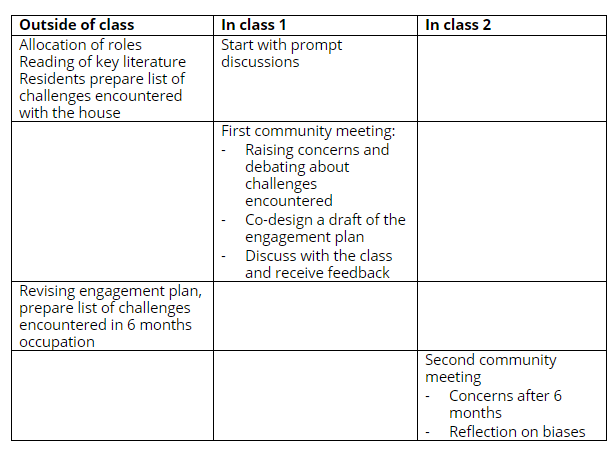
Students will role-play the post occupancy stage of inhabiting a Passivhaus home by playing different characters with different priorities (and personalities). Students will need to learn what new technologies and features are included in Passivhaus and what difficulties/problems the residents might encounter, and at the same time familiarise themselves with contemporary research on energy behaviour, performance gap, rebound effect, as well as broader issues in decarbonisation transition such as social justice and low carbon community building. Through two community meetings, the community manager needs to resolve the residents’ issues, support the residents in learning and adapting their behaviours, and devising an engagement plan to allow the residents to form a self-governed low-carbon community. 


Step one: Preparation prior to class: 

Provide a list of reading materials on ‘performance gap’, ‘rebound effect’, ‘adaptive comfort’, energy behaviour, usability and control literature, as well as on Passivhaus and examples of low-carbon features and technologies involved to get a sense of what difficulties residents might encounter.  

To prepare for the role-play activity, assign students in advance to take on different roles (randomly or purposefully), or let them self-assign based on their interests. They should try to get a sense of their character’s values, lifestyle, priorities, abilities. Where no information is available, students can imagine the experiences and perspectives of the residents. Students assigned to be community managers or building associations will prepare for the role-play by learning about the Passivhaus system and prepare ways to support occupants’ learning and behaviour adaptation. The goal is to come up with an engagement plan, facilitate the residents to form their own community knowledge base and peer support. (Considering 1. Who are you engaging (types of residents and their characteristics); 2. How are you engaging (level of engagement, types of communication; 3. When are you engaging (frequency of engagement) 


Step two: In class, starting by giving prompts for discussions: 

Below are several prompts for discussion questions and activities that can be used. Each prompt could take up as little or as much time as the educator wishes, depending on where they want the focus of the discussion to be. 


  1. Discuss what support the residents might need in post occupancy stage? Who should provide (/pay for) the support? For how long? Any examples or best practice that they might know? Does support needs to be tailored to specific groups of people? (see extra prompts at the end for potential difficulties)
  2. Discuss what the risks are involved in residents not being sufficiently supported to adapt their behaviour when living in a low-carbon house or Passivhaus? (reflect on literature)
  3. Discuss what are the barriers to domestic behaviour change? What are the barriers to support the residents in changing behaviour and to build low-carbon community? 


Step three: Class 1 Role Play  

Prior to the Role Play, consider the following prompts: 

Consider the variety of residents and scenarios:

Their varying demographics, physical and mental abilities, lifestyle and priorities. The following characters are examples. Students can make up their own characters. Students can choose scenarios of  

1) social housing or; 

2) private owner-occupier  

Social housing tenants will likely have a more stretched budget, higher unemployment rate and a bigger proportion of disabled or inactive population. They will have different priorities, knowledge and occupancy patterns than private owner-occupier, and will be further disadvantaged during decarbonisation transition (Zhao, 2023). They will need different strategies and motivations to be engaged. The characters of residents could be chosen from a variety of sources (e.g. RIBA Brief generator), or based on students’ own experiences. Each character needs to introduce themselves in a succinct manner. 


Other stakeholders involved include: 

They are role-specific characters that don’t necessarily need a backstory. They are there to listen, take notes, give advice and come up with an engagement plan. 


Consider the post occupancy in different stages: 

  1. Prior to move-in 
  2. Move-in day 
  3. The initial month 
  4. Change of season  
  5. Quarterly energy audit meeting 


Consider the difficulties the residents might encounter: 


Consider the different engagement levels of the residents: 


The role-play consists of two community meetings over two classes. The first meeting is held at two weeks after move-in date. The second meeting at 6 months of occupancy. The meeting should include a variety of residents on one side, and the ‘chair’ of the meeting on the other. (Consider the accessibility and inclusivity of the meetings as when and where those will be held). In the first meeting, residents will get to know each other, ask questions about house-related problems occurred in the first two weeks, voice concerns. Community managers/council members will chair the meeting, take notes and make plans for support. The teacher should act as a moderator to guide students through the session. First the teacher will briefly highlight the issue up for discussion, then pass it to the ‘chair’ of the meeting. The ‘chair’ of the meeting will open the meeting with the purpose of the meeting – to support the residents and facilitate a self-governed low carbon community. They then ask the residents to feedback on their experience and difficulties. At the end of the first meeting, the group of students will need to co-design an engagement plan, including setting agendas for the second meeting in a 6-month interval (but in reality will happen in the second class) and share the plan with the residents and the class. The teacher and class will comment on the plan. The group will revise the plan after class so it’s ready for the second meeting. 


Step four: Homework tasks: Revising the plan 

The students will use the time before the second class to revise the plan and prepare for challenges, problems occurred over the 6-months period. 

Optional wild cards could be used as unpredictable events occur between the first and second meeting. Such events include: 


Step five: Class 2 Role play 

The second meeting in the second class will either be chaired by community managers/council members, or be chaired by a few residents, monitored by community managers/council members. The second meeting begins the same way. The students playing residents should research/imagine problems occurred during the 6 months period (refer to literature), and what elements of the engagement plan devised at the end of the first meeting worked and what hasn’t worked. The ‘chair’ of the meeting will take notes, ask questions or try to steer the conversations. At the end of the second meeting, the ‘chair’ of the meeting will reflect on the support and engagement plan, revise it and make a longer-term plan for the community to self-govern and grow. At the end of this class, the whole class could then engage in a discussion about the outcome of the meetings. Teachers could focus on an analysis of how the process went, a discussion about broader themes of social justice, community building, comfort, lifestyle and value system. Challenge students to consider their personal biases and position at the outset and reflect on those positions and biases at the end of the meeting. 


This work is licensed under a Creative Commons Attribution-ShareAlike 4.0 International License. 

Any views, thoughts, and opinions expressed herein are solely that of the author(s) and do not necessarily reflect the views, opinions, policies, or position of the Engineering Professors’ Council or the Toolkit sponsors and supporters. 
To view a plain text version of this resource, click here to download the PDF.

Author: Aditya Johri (George Mason University). 

Topic: Sustainability implications in mobility and technology development.   

Type: Teaching. 

Relevant disciplines: Electrical, Robotics, Civil, Mechanical, Computing. 

Keywords: Design; Accessibility; Technology Policy; Electric Vehicles; Mobility, Circularity; AHEP; Sustainability; Higher education.

Sustainability competency: Normative; Self-awareness; Strategic; Critical thinking.

AHEP mapping: This resource addresses two of the themes from the UK’s Accreditation of Higher Education Programmes fourth edition (AHEP4): The Engineer and Society (acknowledging that engineering activity can have a significant societal impact) and Engineering Practice (the practical application of engineering concepts, tools and professional skills). To map this resource to AHEP outcomes specific to a programme under these themes, access AHEP 4 here  and navigate to pages 30-31 and 35-37.  

Related SDGs: SDG 4 (Quality education); SDG 9 (Industry, innovation, and infrastructure), SDG 12 (Responsible consumption and production); SDG 13 (Climate action).   

Reimagined Degree Map Intervention: Active pedagogies and mindset development.

Educational aim: The objective of this activity is to provide students with an understanding of the complexity of technology development and different considerations that need to be made by stakeholders in the design and implementation of a technology. The activity is set up as a role-play where students are assigned different roles as members of an expert panel providing feedback on the use of E-Scooters on a college campus. 

Educational level: Beginner. 


Learning and teaching notes: 

Learners have the opportunity to: 

Teachers have the opportunity to: 


Supporting resources: 

Several different ethical frameworks, codes, or guidelines can be provided to students to prepare for the discussion or to reflect upon during their discussion depending on the students’ disciplinary composition. Here are a few examples:  


Background readings and resources: 

One of the goals of this exercise is to motivate students to undertake their own research on the topic to prepare for the activity. But it is important to provide them with preliminary material to start their own research. Here are a few useful resources for this case:  

Readings: 


Videos: 


Role-play instructions: 

  1. Each student is assigned a role a week before the discussion.
  2. Students assigned to the role of Eva Walker serve as the moderator and lead the conversation based on the script below.
  3. The script provided below is there to guide the discussion, but you should leave room for the conversation to flow naturally and allow everyone to contribute.

One way to ensure students are prepared for the discussion is to assign a few questions from the script as a pre-discussion assignment (short answers). Similarly, to ensure students reflect on the discussion, they can be assigned the last question from the script as a post-discussion exercise. They can also be asked specifically about frameworks and concepts related to sustainability.  


Role-play scenario narrative and description of roles: 

Eva Walker recently started reporting about on-campus traffic issues for the student newspaper. She would have preferred to do more human-interest stories, but as a new member of the staff who had just moved from intern to full-time, she was happy to get whatever opportunity she could. Eva was studying both journalism and creative writing, and this was her dream on-campus job. She also realised that, even though many stories at first didn’t appear to her as though she would be interested in them, as she dug deeper she eventually found an angle with which she could strongly relate.  

One weekday morning, Eva was working on yet another story on parking woes when Amina Ali, one of the editorial staff members, texted her to say that there had been an accident on campus; she just passed it at the intersection of the library and the recreation building, and it might be worth covering. Eva was at the library, and within no time, reached the spot of the accident.  

When Eva arrived, a police vehicle, an ambulance, and a fire engine were all present at the scene, and near the accident site, an e-scooter lay smashed into a tree. It looked like the rider was sitting in the ambulance and was being treated by the medical staff. A little further away, Eva noticed the police speaking to a young woman in a wheelchair. Although Eva’s first instinct was to try to talk to the police or the medical staff to ascertain what had happened, she realised this probably wasn’t the best moment and she would have to wait until later for the official version of the event.  

She looked around and saw a group of four students leaning against a wall with drinks in their hands. A couple of them were vaping. Eva thought that they looked like they had been here for a while, and she walked over to ask them what had happened. From the account they gave her, it appeared as if the e-scooter rider was coming around the bend at some speed, saw the woman in the wheelchair a little too late to ride past her, and, to avoid hitting her, leapt off his e-scooter and let the vehicle hit the tree. Things happened very quickly and no one was exactly sure about the sequence of events, but this was the rough story she got.  

Later, she called the police department on campus and was able to speak with one of the officers to get an official account. The story was very similar to what she already knew. She did find out that nobody was seriously hurt and that the only injuries were to the e-scooter rider and were taken care of at the scene by the medical staff. When she asked about who was to blame or if any legal action was expected, she was told that there were no laws around the use of helmets or speeding for e-scooters yet and that she should reach out later for more information. Eva wrote up what she had so far, sent it over to the editorial staff, and considered her work done.  

But as she was walking back to her halls of residence that evening, her attention was drawn to the large number of e-scooters parked near the library. As she crossed the central campus, she noticed even more e-scooters lying about the intersections, and there was a litter of them around the residence hall. She wondered why she hadn’t noticed them before. Her attention was drawn today, she thought, because of the accident and also because she saw a good Samaritan remove an e-scooter from the sidewalk, as it was blocking the path of one of the self-driving food delivery robots. It’s a sign, Eva thought, this is what she needs to look for more in her next article, the use of e-scooters on campus.  

Eva recognised that, to write a balanced and informative article, as she had been taught to do, she would have to look at many different aspects of the use of e-scooters as well as look broadly at mobility on campus and the use of battery powered vehicles. She had also recently seen e-bikes on campus and, in addition to the food delivery robots, service robots in one of the buildings that she assumed was either delivering paperwork or mail. The accident had also made her realise that, when it came to mobility, accessibility was something that never crossed her mind but that she now understood was an important consideration. She hoped to learn more about it as her research progressed.  

As background research for the article, Eva started reading up on articles and studies published about e-scooters, e-bikes, and urban mobility and came across a range of concerns that had been raised beyond accessibility. First, there were reports that e-scooters are not as environmentally friendly as many service providers had made them out to be. This is related to the production of the battery as well as the short lifespan of the vehicles, and as of yet, there has been no procedure implemented to reuse them (Pyzyk, 2019). Second, there were reports of littering, where e-scooters are often left on sidewalks and other places where they restrict movement of other vehicles, pedestrians, and in particular, those in wheelchairs (Iannelli, 2021). Finally, it was also clear from the reports that accidents and injuries have increased due to e-scooters, especially since many riders do not wear safety gear and are often careless, even inebriated, as there were little to no regulations (2021). When she approached her editor with an outline for an article, she was advised to do some more reporting by talking with people who could shed more light on the issue.  

After some research, Eva shortlisted the following experts across fields related to e-scooters for an interview, and once she spoke with them, she realised that it would help her if she could get them to have a dialogue and respond to some of the questions that were raised by other experts. Therefore, she decided to conduct a focus group with them so that she achieved her goal of a balanced article and did not misrepresent any expert’s point of view.  


Experts/roles for discussion: 

1. Bryan Avery is co-founder and chief technology officer (CTO) of RideBy, an e-scooter company. RideBy is one of the options available on campus. Born in a small town, Bryan used to ride his bicycle everywhere while growing up, and for him, founding and leading an e-scooter company provided a chance to merge his interests in personal transportation and new forms of energy. He was a chemical engineer by training, and at a time when most of his friends ended up working for big oil companies, Bryan decided to work on alternative fuels and found himself developing expertise and experience with batteries. For most of the software- and mobile device-related development, RideBy outsourced the work and utilised ready-to-configure systems that were available. By only keeping the core device and battery functionality in-house, they could focus on delivering a much stronger product. Overall, he is quite happy with the success of RideBy so far and can’t help but extol the difference it can make for the environment.  


2. Abiola Abrams is a professor of transportation engineering and an expert on mobility systems. Her work combines systems engineering, computer science, and data analytics. Her recent research is on urban mobility and micro-mobility services, particularly e-bikes. In her research, Dr. Abrams has looked at a host of topics related to e-bikes, many of which are also applicable to e-scooters, including the optimisation of hubs for availability, common path patterns of users, subscription use models, and the e-waste and end of lifecycle for these vehicles. Increasingly, she has become concerned about the abuse of some of these services, especially in cities that attract a lot of tourists, and about the rough use of the vehicles, so much so that many do not even last for a month. In a new project, she is investigating the effect of e-vehicles on the environment and has found that there is mixed evidence for how much difference battery-operated vehicles will actually make for climate change compared to vehicles that use fossil fuels.  


3. Marco Rodrigues works as transportation director for the local county government where the university is based. As part of a recent bilateral international exchange, he got the opportunity to spend time in different cities in Germany to learn about local transportation. He realised very quickly that local transportation was very different in Germany; residents had a range of public, shared options that were missing in the United States. However, he also realised that e-mobility services were being considered across both countries. He investigated this further and found that Germany waited until it could pass some regulations before allowing e-mobility operators to offer services; helmets were mandatory on e-scooters and e-bikes, and riders had to purchase a nominal insurance policy. He also learned that there were strict rules around the sharing of data generated by the vehicles as well as the apps used by riders.  


4. Judy Whitehouse is director of infrastructure and sustainability on campus and responsible for planning the long-term development of the campus from a space perspective, but also increasingly from a sustainability dimension. As the number of students has increased, so has the need for more infrastructure, including classrooms and halls of residence. This has also resulted in greater distances to be traveled on campus. Judy regards e-mobility options as a necessary component of campus life and has been a strong supporter for them. Lately, she has been called into meetings with safety and emergency management people discussing the issue of increased accidents on campus and the littering of e-vehicles across the campus. Not only is it bad for living on campus, but it is also bad for optics. A recent photo featured in the campus newspaper was a stark reminder of just how bad it can look. She is further divided on the use of e-scooters due to misgivings about the sustainability of battery use, as new research suggests that manufacturing batteries and disposing them are extremely harmful for the environment.  


5. Aaron Schneider heads Campus Mobility, a student interest group focused on autonomous vehicles development and use. The group members come from different degree programmes and are interested in both the technical dimensions of mobile solutions and the policy issues surrounding their implementation. Aaron himself is a computer science student with interests in data science, and with some of his fellow members from the policy school, he has been analysing a range of mobility-related datasets that are publicly available online. Of these, the data on accidents is quite glaring, as the number of accidents in which e-scooters are involved has gone up significantly. Aaron and his friends were intrigued by their findings and approached some of the companies to see if they would share data, but they were disappointed when they could not get access. Although the companies said it was due to privacy reasons, Aaron was not too convinced by that argument. He was also denied access to any internal reports about usage patterns of accidents. Ideally, he would have liked to know what algorithms were used for optimising delivery and access, but he knew he was not going to get that information.  


6. Sarah Johnson is the head of accessibility services on campus and is responsible for both technology- and infrastructure-related support for students, faculty, and staff. The growth of the physical campus and the range of technological offerings has significantly increased the workload for her office, and they are really strained in terms of people and expertise. The emphasis from the university leadership is largely on web and IT accessibility, as teaching and other services are shifting quickly online, but Sarah realises that there is still an acute need to provide physical and mobility support to many members of the community. Although all the new buildings are up to code in terms of accessibility, there is still work to be done both for the older buildings and especially for mobility. Campus beautification does not always go along with access. She is also worried about access to devices, as taking part in any campus activity requires not just a computer, but also access to mobile devices that are out of reach economically for many and not easy to use.  


Role-play script: 

To help get the dialogues started and based on her prior conversation with the group, Eva has prepared some initial questions:  

  1. What role are you playing and, from your perspective, what do you see as the biggest pros of using e-vehicles, especially e-scooters on campus?
  2. From your perspective, what do you see as the biggest downside of using e-vehicles, especially e-scooters on campus?
  3. Can you confidently say that e-scooters are an environmentally friendly option?
  4. What current accessibility accommodations would be impacted by the use of e-vehicles, and what new, potential accessibility accommodations might arise from increased use of e-vehicles?
  5. Would we be better off waiting for more regulations to come before deploying these vehicles on campus and, if so, what should those regulations look like?
  6. Should we use automatic regulation of speed on the vehicle based on where it is and/or inform authorities if it is violated?
  7. Can we control where it can go or penalise if not put back?
  8. What guidelines do you recommend for e-scooter usage on campus?  


Authorship and project information and acknowledgements: The scenarios and roles were conceptualised and written by Aditya Johri. Feedback was provided by Ashish Hingle, Huzefa Rangwala, and Alex Monea, who also collaborated on initial implementation and empirical research. This work is partly supported by U.S. National Science Foundation Awards# 1937950, 2335636, 1954556; USDA/NIFA Award# 2021-67021-35329. Any opinions, findings, and conclusions or recommendations expressed in this material are those of the authors and do not necessarily reflect the views of the funding agencies. The research study associated with the project was approved by the Institutional Review Board at George Mason University. 


This work is licensed under a Creative Commons Attribution-ShareAlike 4.0 International License. 

Any views, thoughts, and opinions expressed herein are solely that of the author(s) and do not necessarily reflect the views, opinions, policies, or position of the Engineering Professors’ Council or the Toolkit sponsors and supporters. 

To view a plain text version of this resource, click here to download the PDF.

Authors: Mr. Neil Rogers (Independent Scholar), Dr. Sarah Jayne Hitt Ph.D. SFHEA (NMITE, Edinburgh Napier University) 

Topic: Designing a flood warning system to communicate risk. 

Tool type: Teaching. 

Engineering disciplines: Electronic; Energy; Mechanical. 

Keywords: Climate change; Water and sanitation; Renewable energy; Battery Technologies; Recycling or recycled materials; AHEP; Sustainability; Student support; Local community; Environment; Future generations; Risk; Higher education; Assessment; Project brief. 

Sustainability competency: Systems thinking; Anticipatory; Strategic; Integrated problem-solving; Normative.

AHEP mapping: This resource addresses two of the themes from the UK’s Accreditation of Higher Education Programmes fourth edition (AHEP4): The Engineer and Society (acknowledging that engineering activity can have a significant societal impact) and Engineering Practice (the practical application of engineering concepts, tools and professional skills). To map this resource to AHEP outcomes specific to a programme under these themes, access AHEP 4 here and navigate to pages 30-31 and 35-37. Potential alignments with AHEP criteria are shown below. 

Related SDGs: SDG 7 (Affordable and Clean Energy); SDG 11 (Sustainable Cities and Communities). 

Reimagined Degree Map Intervention: More real-world complexity; Active pedagogies and mindset development; Authentic assessment.

Educational level: Intermediate / Advanced. 


Learning and teaching notes: 

This resource outlines a project brief that requires an engineer to assess the local area to understand the scale of flooding and the local context. This will highlight how climate change affects everyday life, how water usage is changing and happening on our doorstep.

The project also requires the engineer to be considerate of the needs of a local business and showcases how climate change affects the economy and individual lives, enabling some degree of empathy and compassion to this exercise.

Depending upon the level of the students and considering the needs of modules or learning outcomes, the project could follow either or both of the following pathways: 


Pathway 1 – Introduction to Electronic Engineering (beginner/intermediate- Level 4) 

In this pathway, the project deliverables could be in the form of a physical artefact, together with a technical specification. 


Pathway 2 – Electromagnetics in Engineering (intermediate/advanced- Level 5) 

This project allows teachers the option to stop at multiple points for questions and/or activities as desired.  


Learners have the opportunity to: 

Teachers have the opportunity to: 


Learning and teaching resources: 


Overview:  

A local business premises near to a river has been suffering from severe flooding over the last 10 years. The business owner seeks to install a warning system that can provide adequate notice of a possible flood situation. 


Time frame & structure:
This project can be completed over 30 hours, either in a block covering 2-3 weeks (preferred) or 1 hour per week over the academic term. This project should be attempted in teams of 3-5 students. This would enable the group to develop a prototype, but the Specification (Pathway 1) and Technical Report (Pathway 2) could be individual submissions without collusion to enable individual assessment.

It is recommended that a genuine premises is found that has had the issues described above and a site visit could be made. This will not only give much needed context to the scenario but will also trigger emotional response and personal ownership to the problem. 

To prepare for activities related to sustainability, teachers may want to read, or assign students to pre-read the following article:
‘Mean or Green: Which values can promote stable pro-environmental behaviour?’ 


Context and Stakeholders: 

Flooding in the local town has become more prevalent over recent years, impacting homes and businesses. A local coffee shop priding itself on its ethical credentials is located adjacent to the river and is one of the businesses that has suffered from severe flooding over the last 10 years, causing thousands of pounds worth of spoilt stock and loss of revenue. The local council’s flood warning system is far from adequate to protect individuals on a site-by-site basis. So the shop is looking for an individual warning system, giving the manager and staff adequate notice of a possible flood situation. This will enable stock to be moved in good time to a safer drier location. The shop manager is very conscious of wanting to implement a sustainable design that uses sustainable materials and renewable energy, to promote the values of the shop. It is becoming clear that such a solution would also benefit other businesses that experience flooding and a wider solution should also be considered. 


Pathway 1 

This project requires assessment of the local area and ideally a visit to the retailer to understand their needs and consider options for water level monitoring. You are required to consider environmental and sustainable factors when presenting a solution.

After a visit to the premises:  

  1. Discussion: What is your initial reaction to the effects of the flooding and does it surprise you? What might your initial reaction reveal to you about your own perspectives and values?
  2. Discussion: What is your initial reaction to the causes of the flooding and does it surprise you? What might your initial reaction reveal to you about your own perspectives and values?
  3. Discussion and activity: List the potential issues and risks to installing a device in or near to the river bank.
  4. Activity: Research water level monitoring. What are the main technical and logistical issues with this technology in this scenario?
  5. Activity: Both cost-benefit and sustainable trade-off analyses are valuable approaches to consider in this case.  Determine the possible courses of action and undertake both types of analysis for each position by considering both short- and long-term consequences.    
  6. Reflection: Obligations to future generations: Do we have a responsibility to provide a safe and healthy environment for humans that don’t yet exist, or for an ecosystem that will eventually change? 


Design Process​:

To satisfy the learning outcomes identified above the following activities are suggested. 


Assessment activity 1 – Physical artefact: 

Design, build and test a prototype flood warning device, monitoring various water levels and controlling an output or outputs in an alarm condition to meet the following as a minimum:
 

a) The device will require the use of an analogue sensor that will directly or indirectly output an electrical signal proportional to the water level. 

b) It will integrate to appropriate Operational Amplifier circuitry. 

c) The circuitry will control an output device or devices. 

d) The power consumption of the complete circuit will be assessed to allow an appropriate renewable energy supply to be specified (but not necessarily be part of the build). 


Assessment activity 2 – Technical specification: 

The written specification and accompanying drawings shall enable a solution to be manufactured based on the study, evaluation and affirmation of the product requirements. 

The evaluation of the product requirements and consequent component selection will reference the use of design tools and problem-solving techniques. In compiling the specification the component selection and integration will highlight the underlying engineering principles that have been followed. The specification shall be no more than 1000 words (plus illustrations and references). 


Pathway 2

This project requires assessment of the local area and ideally a visit to the retailer to understand their needs and consider options for water level monitoring.

You are required to consider environmental and sustainable factors when presenting a solution. 

After a visit to the premises:  

  1. Discussion: What is your initial reaction to the effects of the flooding and does it surprise you? What might your initial reaction reveal to you about your own perspectives and values?
  2. Discussion: What is your initial reaction to the causes of the flooding and does it surprise you? What might your initial reaction reveal to you about your own perspectives and values?
  3. Discussion and activity: List the potential issues and risks to installing a device in or near to the river bank.
  4. Activity: Both cost-benefit and sustainable trade-off analyses are valuable approaches to consider in this case.  Determine the possible courses of action and undertake both types of analysis for each position by considering both short- and long-term consequences.      


Wireless communication of information electronically is now commonplace. It’s important for the learners to understand the differences between the various types both technically and commercially to enable the most appropriate form of communication to be chosen.

Pathway 1 above explains the need for a flood warning device to monitor water levels of a river. In Pathway 2, this part of the challenge (which could be achieved in isolation) is to communicate this information from the river to an office location within the town. 


Design Process: 

Design a communications system that will transmit data, equivalent to the height of the river in metres. The maximum frequency and distance over which the data can be transmitted should be explored and defined, but as a minimum this data should be sent every 20 seconds over a distance of 500m. 


Assessment activity – Technical report:       

A set of user requirements and two possible technical solutions shall be presented in the form of a Technical Report: 

The report shall be no more than 3000 words (plus illustrations and references)  


This work is licensed under a Creative Commons Attribution-ShareAlike 4.0 International License.  

Any views, thoughts, and opinions expressed herein are solely that of the author(s) and do not necessarily reflect the views, opinions, policies, or position of the Engineering Professors’ Council or the Toolkit sponsors and supporters. 

To view a plain text version of this resource, click here to download the PDF.

Authors: Dr Gilbert Tang; Dr Rebecca Raper (Cranfield University). 

Topic: Considering the SDGs at all stages of new robot creation. 

Tool type: Guidance. 

Relevant disciplines: Computing; Robotics; Electrical; Computer science; Information technology; Software engineering; Artificial Intelligence; Mechatronics; Manufacturing engineering; Materials engineering; Mechanical engineering; Data. 

Keywords: SDGs; AHEP; Sustainability; Design; Life cycle; Local community; Environment; Circular economy; Recycling or recycled materials; Student support; Higher education; Learning outcomes. 

Sustainability competency: Systems thinking; Anticipatory; Critical thinking.

AHEP mapping: This resource addresses two of the themes from the UK’s Accreditation of Higher Education Programmes fourth edition (AHEP4): The Engineer and Society (acknowledging that engineering activity can have a significant societal impact) and Engineering Practice (the practical application of engineering concepts, tools and professional skills). To map this resource to AHEP outcomes specific to a programme under these themes, access AHEP 4 here  and navigate to pages 30-31 and 35-37.  

Related SDGs: SDG 9 (Industry, innovation, and infrastructure); SDG 12 (Responsible consumption and production). 

Reimagined Degree Map Intervention: Adapt and repurpose learning outcomes; More real-world complexity.

Who is this article for? This article is for educators working at all levels of higher education who wish to integrate Sustainability into their robotics engineering and design curriculum or module design. It is also for students and professionals who want to seek practical guidance on how to integrate Sustainability considerations into their robotics engineering. 


Premise:  

There is an urgent global need to address the social and economic challenges relating to our world and the environment (Raper et al., 2022). The United Nations Sustainable Development Goals (SDGs) provide a framework for individuals, policy-makers and industries to work to address some of these challenges (Gutierrez-Bucheli et al., 2022). These 17 goals encompass areas such as clean energy, responsible consumption, climate action, and social equity. Engineers play a pivotal role in achieving these goals by developing innovative solutions that promote sustainability and they can use these goals to work to address broader sustainability objectives. 

Part of the strategy to ensure that engineers incorporate sustainability into their solution development is to ensure that engineering students are educated on these topics and taught how to incorporate considerations at all stages in the engineering process (Eidenskog et al., 2022). For instance, students need not only to have a broad awareness of topics such as the SDGs, but they also need lessons on how to ensure their engineering incorporates sustainable practice. Despite the increased effort that has been demonstrated in engineering generally, there are some challenges when the sustainability paradigm needs to be integrated into robotics study programs or modules (Leifler and Dahlin, 2020). This article details one approach to incorporate considerations of the SDGs at all stages of new robot creation: including considerations prior to design, during creation and manufacturing and post-deployment. 


1. During research and problem definition:

Sustainability considerations should start from the beginning of the engineering cycle for robotic systems. During this phase it is important to consider what the problem statement is for the new system, and whether the proposed solution satisfies this in a sustainable way, using Key Performance Indicators (KPIs) linked to the SDGs (United Nations, 2018), such as carbon emissions, energy efficiency and social equity (Hristov and Chirico, 2019). For instance, will the energy expended to create the robot solution be offset by the robot once it is in use? Are there long-term consequences of using a robot as a solution? It is important to begin engagement with stakeholders, such as end-users, local communities, and subject matter experts to gain insight into these types of questions and any initial concerns. Educators can provide students with opportunities to engage in the research and development of robotics technology that can solve locally relevant problems and benefit the local community. These types of research projects allow students to gain valuable research experience and explore robotics innovations through solving problems that are relatable to the students. There are some successful examples across the globe as discussed in Dias et al., 2005. 


2. At design and conceptualisation:

Once it is decided that a robot works as an appropriate solution, Sustainability should be integrated into the robot system’s concept and design. Considerations can include incorporating eco-design principles that prioritise resource efficiency, waste reduction, and using low-impact materials. The design should use materials with relatively low environmental footprints, assessing their complete life cycles, including extraction, production, transportation, and disposal. Powered systems should prioritise energy-efficient designs and technologies to reduce operational energy consumption, fostering sustainability from the outset. 


3. During creation and manufacturing:

The robotic system should be manufactured to prioritise methods that minimise, mitigate or offset waste, energy consumption, and emissions. Lean manufacturing practices can be used to optimise resource utilisation where possible. Engineers should be aware of the importance of considering sustainability in supply chain management to select suppliers with consideration of their sustainability practices, including ethical labour standards and environmentally responsible sourcing. Robotic systems should be designed in a way that is easy to assemble and disassemble, thus enabling robots to be easily recycled, or repurposed at the end of their life cycle, promoting circularity and resource conservation. 


4. Deployment:

Many robotic systems are designed to run constantly day and night in working environments such as manufacturing plants and warehouses. Thus energy-efficient operation is crucial to ensure users operate the product or system efficiently, utilising energy-saving features to reduce operational impacts. Guidance and resources should be provided to users to encourage sustainable practices during the operational phase. System designers should also implement systems for continuous monitoring of performance and data collection to identify opportunities for improvement throughout the operational life. 


5. Disposal:

Industrial robots have an average service life of 6-7 years. It is important to consider their end-of-life and plan for responsible disposal or recycling of product components. Designs should be prioritised that facilitate disassembly and recycling (Karastoyanov and Karastanev, 2018). Engineers should identify and safely manage hazardous materials to comply with regulations and prevent environmental harm. Designers can also explore options for product take-back and recycling as part of a circular economy strategy. There are various ways of achieving that. Designers can adopt modular design methodologies to enable upgrades and repairs, extending their useful life. Robot system manufacturers should be encouraged to develop strategies for refurbishing and reselling products, promoting reuse over disposal. 


Conclusion: 

Sustainability is not just an option but an imperative within the realm of engineering. Engineers must find solutions that not only meet technical and economic requirements but also align with environmental, social, and economic sustainability goals. As well as educating students on the broader topics and issues relating to Sustainability, there is a need for teaching considerations at different stages in the robot development lifecycle. Understanding the multifaceted connections between sustainability and engineering disciplines, as well as their impact across various stages of the engineering process, is essential for engineers to meet the challenges of the 21st century responsibly.  


References: 

Dias, M. B., Mills-Tettey, G. A., & Nanayakkara, T. (2005, April). Robotics, education, and sustainable development. In Proceedings of the 2005 IEEE International Conference on Robotics and Automation (pp. 4248-4253). IEEE. 

Eidenskog, M., Leifler, O., Sefyrin, J., Johnson, E., & Asplund, M. (2023). Changing the world one engineer at a time–unmaking the traditional engineering education when introducing sustainability subjects. International Journal of Sustainability in Higher Education, 24(9), 70-84.  

Gutierrez-Bucheli, L., Kidman, G., & Reid, A. (2022). Sustainability in engineering education: A review of learning outcomes. Journal of Cleaner Production, 330, 129734. 

Hristov, I., & Chirico, A. (2019). The role of sustainability key performance indicators (KPIs) in implementing sustainable strategies. Sustainability, 11(20), 5742. 

Karastoyanov, D., & Karastanev, S. (2018). Reuse of Industrial Robots. IFAC-PapersOnLine, 51(30), 44-47. 

Leifler, O., & Dahlin, J. E. (2020). Curriculum integration of sustainability in engineering education–a national study of programme director perspectives. International Journal of Sustainability in Higher Education, 21(5), 877-894. 

Raper, R., Boeddinghaus, J., Coeckelbergh, M., Gross, W., Campigotto, P., & Lincoln, C. N. (2022). Sustainability budgets: A practical management and governance method for achieving goal 13 of the sustainable development goals for AI development. Sustainability, 14(7), 4019. 

SDG Indicators — SDG Indicators (2018) United Nations (Accessed: 19 February 2024) 


This work is licensed under a Creative Commons Attribution-ShareAlike 4.0 International License.  

Any views, thoughts, and opinions expressed herein are solely that of the author(s) and do not necessarily reflect the views, opinions, policies, or position of the Engineering Professors’ Council or the Toolkit sponsors and supporters. 


To view a plain text version of this resource, click here to download the PDF.

Authors: Ahmet Omurtag (Nottingham Trent University); Andrei Dragomir (National University of Singapore / University of Houston).

Topic: Data security of smart technologies.

Engineering disciplines: Electronics; Data; Biomedical engineering.

Ethical issues: Autonomy; Dignity; Privacy; Confidentiality.

Professional situations: Communication; Honesty; Transparency; Informed consent; Misuse of data.

Educational level: Advanced.

Educational aim: Practising Ethical Analysis: engaging in a process by which ethical issues are defined, affected parties and consequences are identified, so that relevant moral principles can be applied to a situation in order to determine possible courses of action.


Learning and teaching notes:

This case involves Aziza, a biomedical engineer working for Neuraltrix, a hypothetical company that develops Brain-computer interfaces (BCI) for specialised applications. Aziza has always been curious about the brain and enthusiastic about using cutting-edge technologies to help people in their daily lives. Her team has designed a BCI that can measure brain activity non-invasively and, by applying machine learning algorithms, assess the job-related proficiency and expertise level of a person. She is leading the deployment of the new system in hospitals and medical schools, to be used in evaluating candidates being considered for consultant positions. In doing so, and to respond to requests to extend and use the BCI-based system in unforeseen ways, she finds herself compelled to weigh various ethical, legal and professional responsibilities.

This case study addresses two of AHEP 4’s themes: The Engineer and Society (acknowledging that engineering activity can have a significant societal impact) and Engineering Practice (the practical application of engineering concepts, tools and professional skills). To map this case study to AHEP outcomes specific to a programme under these themes, access AHEP 4 here and navigate to pages 30-31 and 35-37.

The dilemma in this case is presented in three parts. If desired, a teacher can use the Summary and Part one in isolation, but Parts two and three develop and complicate the concepts presented in the Summary and Part one to provide for additional learning. The case allows teachers the option to stop at multiple points for questions and/or activities as desired.

Learners have the opportunity to:

Teachers have the opportunity to:


Learning and teaching resources:

Legal regulations:

Professional organisations:

Philanthropic organisations:

Journal articles:

Educational institutions:


Summary:

Brain-computer interfaces (BCIs) detect brain activity and utilise advanced signal analysis to identify features in the data that may be relevant to specific applications. These features might provide information about people’s thoughts and intentions or about their psychological traits or potential disorders, and may be interpreted for various purposes such as for medical diagnosis, for providing real-time feedback, or for interacting with external devices such as a computer. Some current non-invasive BCIs employ unobtrusive electroencephalography headsets or even optical (near-infrared) sensors to detect brain function and can be safe and convenient to use.

Evidence shows that the brains of people with specialised expertise have identifiable functional characteristics. Biomedical technology may translate this knowledge soon into BCIs that can be used for objectively assessing professional skills. Researchers already know that neural signals support features linked to levels of expertise, which may enable the assessment of job applicants or candidates for promotion or certification.

BCI technology would potentially benefit people by improving the match between people and their jobs, and allowing better and more nuanced career support. However, the BCI has access to additional information that may be sensitive or even troubling. For example, it could reveal a person’s health status (such as epilepsy or stroke), or it may suggest psychological traits ranging from unconscious racial bias to psychopathy. Someone sensitive about their privacy may be reluctant to consent to wearing a BCI.

In everyday life, we show what is on our minds through language and behaviour, which are normally under our control, and provide a buffer of privacy. BCIs with direct access to the brain and increasing capability to decode its activity may breach this buffer. Information collected by BCIs could be of interest not only to employers who will decide whether to hire and invest in a new employee, but also to health insurers, advertising agencies, or governments.


Optional STOP for questions and activities:

1. Activity: Risks of brain activity decoding – Identify the physical, ethical, and social difficulties that could result from the use of devices that have the ability to directly access the brain and decipher some of its psychological content such as thoughts, beliefs, and emotions.

2. Activity: Regulatory oversight – Investigate which organisations and regulatory bodies currently monitor and are responsible for the safe and ethical use of BCIs.

3. Activity: Technical integration – Investigate how BCIs work to translate brain activity into interpretable data.


Dilemma – Part one:

After the company, Neuraltrix, deployed their BCI and it had been in use for a year in several hospitals, its lead developer Aziza became part of the customer support team. While remaining proud and supportive of the technology, she had misgivings about some of its unexpected ramifications. She received the following requests from people and institutions for system modifications or for data sharing:

1. A hospital asked Neuraltrix for a technical modification that would allow the HR department to send data to their clinical neurophysiologists for “further analysis,” claiming that this might benefit people by potentially revealing a medical abnormality that might otherwise be missed.

2. An Artificial Intelligence research group partnering with Neuraltrix requested access to the data to improve their signal analysis algorithms.

3. A private health insurance company requested Neuraltrix provide access to the scan of someone who had applied for insurance coverage; they stated that they have a right to examine the scan just as life insurance agencies are allowed to perform health checks on potential customers.

4. An advertising agency asked Neuraltrix for access to their data to use them to fine-tune their customer behavioural prediction algorithms.

5. A government agency demanded access to the data to investigate a suspected case of “radicalisation”.

6. A prosecutor asked for access to the scan of a specific person because she had recently been the defendant in an assault case, where the prosecutor is gathering evidence of potential aggressive tendencies.

7. A defence attorney requested data because they were gathering potentially exonerating evidence, to prove that the defendant’s autonomy had been compromised by their brain states, following a line of argument known as “My brain made me do it.”


Optional STOP for questions and activities: 

1. Activity: Identify legal issues – Students could research what laws or regulations apply to each case and consider various ways in which Neuraltrix could lawfully meet some of the above requests while rejecting others, and how their responses should be communicated within the company and to the requestor.

2. Activity: Identify ethical issues – Students could reflect on what might be the immediate ethical concerns related to sharing the data as requested.

3. Activity: Discussion or Reflection – Possible prompts:


Dilemma – Part two:

The Neuraltrix BCI has an interface which allows users to provide informed consent before being scanned. The biomedical engineer developing the system was informed about a customer complaint which stated that the user had felt pressured to provide consent as the scan was part of a job interview. The complaint also stated that the user had not been aware of the extent of information gleaned from their brains, and that they would not have provided consent had been made aware of it.


Optional STOP for questions and activities: 

1. Activity: Technical analysis – Students might try to determine if it is possible to design the BCI consent system and/or consent process to eliminate the difficulties cited in the complaint. Could the device be designed to automatically detect sensitive psychological content or allow the subject to stop the scan or retroactively erase the recording?

2. Activity: Determine the broader societal impact and the wider ethical context – Students should consider what issues are raised by the widespread availability of brain scans. This could be done in small groups or a larger classroom discussion.

Possible prompts:


Dilemma – Part three:

Neuraltrix BCI is about to launch its updated version, which features all data processing and storage moved to the cloud to facilitate interactive and mobile applications. This upgrade attracted investors and a major deal is about to be signed. The board is requesting a fast deployment from the management team and Aziza faces pressure from her managers to run final security checks and go live with the cloud version. During these checks, Aziza discovers a critical security issue which can be exploited once the BCI runs in the cloud, risking breaches in the database and algorithm. Managers believe this can be fixed after launch and request the engineer to start deployment and identify subsequent solutions to fix the security issue.


Optional STOP for questions and activities: 

1. Activity: Students should consider if it is advisable for Aziza to follow requests from managers and the Neuraltrix BCI board and discuss possible consequences, or halt the new version deployment which may put at risk the new investment deal and possibly the future of the company.

2. Activity: Apply an analysis based on “Duty-Ethics” and “Rights Ethics.” This could be done in small groups (who would argue for management position and engineer position, respectively) or a larger classroom discussion. A tabulation approach with detailed pros and cons is recommended.

3. Activity: Apply a similar analysis as above based on the principles of “Act-Utilitarianism” and “Rule-Utilitarianism.”

Possible prompts:


This work is licensed under a Creative Commons Attribution-ShareAlike 4.0 International License.

Any views, thoughts, and opinions expressed herein are solely that of the author(s) and do not necessarily reflect the views, opinions, policies, or position of the Engineering Professors’ Council or the Toolkit sponsors and supporters.


Let us know what you think of our website