Keywords: Energy efficiency; Factories; Best practice; Eco-efficiency; Practice maturity model; AHEP; Student support; Sustainability.
Sustainability competency: Critical thinking; Integrated problem-solving. UNESCO has developed eight key competencies for sustainability that are aimed at learners of all ages worldwide. Many versions of these exist, as are linked here*. In the UK, these have been adapted within higher education by AdvanceHE and the QAA with appropriate learning outcomes. The full list of competencies and learning outcome alignment can be found in the Education for Sustainable Development Guidance*. *Click the pink ''Sustainability competency'' text to learn more.
AHEP mapping: This resource addresses two of the themes from the UK’s Accreditation of Higher Education Programmes fourth edition (AHEP4): The Engineer and Society (acknowledging that engineering activity can have a significant societal impact) and Engineering Practice (the practical application of engineering concepts, tools and professional skills). To map this resource to AHEP outcomes specific to a programme under these themes, access AHEP 4 here and navigate to pages 30-31 and 35-37.
Related SDGs: SDG 9 (Industry, innovation, and infrastructure); SDG 12 (Responsible consumption and production).
Reimagined Degree Map Intervention: More real-world complexity.The Reimagined Degree Map is a guide to help engineering departments navigate the decisions that are urgently required to ensure degrees prepare students for 21st century challenges. Click the pink ''Reimagined Degree Map Intervention'' text to learn more.
Learning and teaching notes:
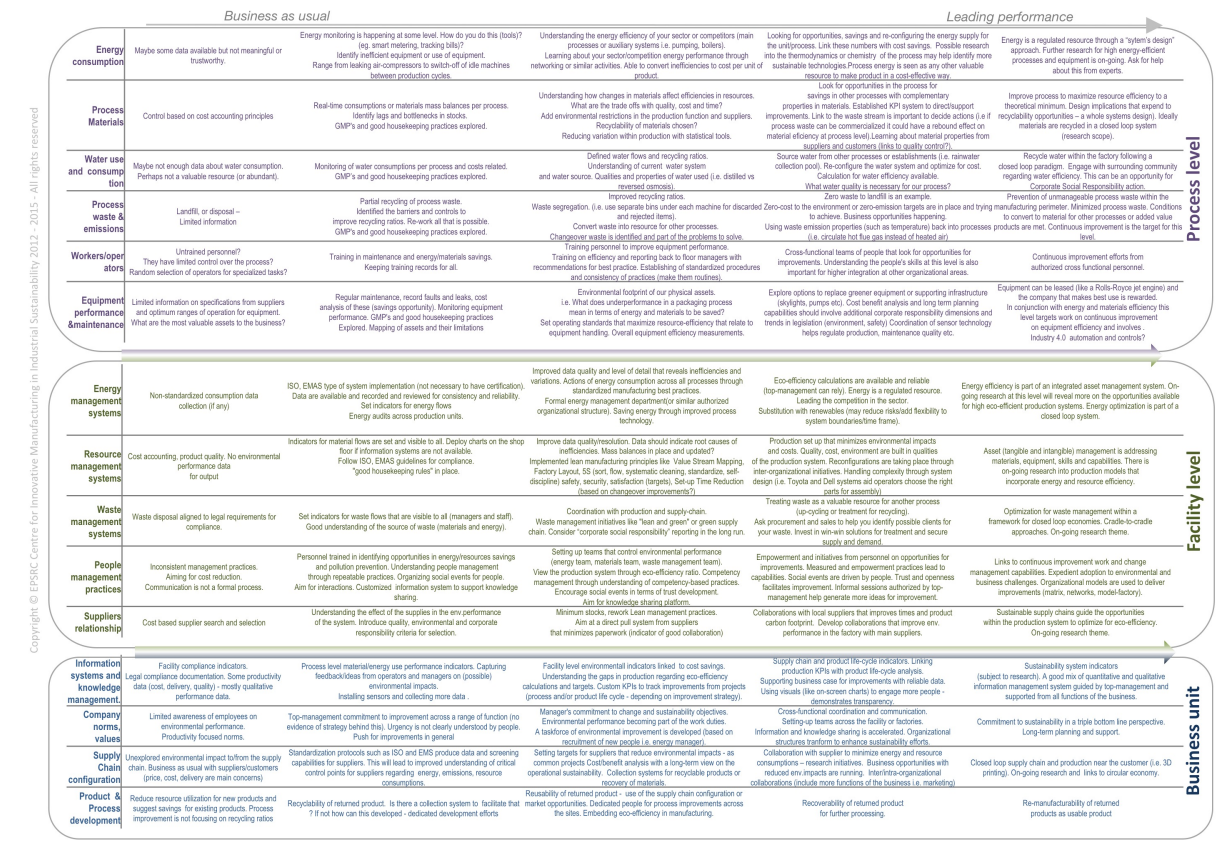
The following are a set of use cases for a maturity model designed to improve energy and resource efficiency in manufacturing facilities. This guide can help engineering educators integrate some of the main concepts behind this model (efficient use of energy and resources in factories in the context of continuous improvement and sustainability) into student learning by showcasing case study examples.
Teachers could use one or all of the following use cases to put students in the shoes of a practicing engineer whose responsibility is to evaluate and improve factory fitness from a sustainability perspective.
Factory assessment in multiple assembly facilities for an aircraft manufacturer:
The assessment is part of the following use case on this industrial energy efficiency network (IEEN):
The company operates in the aerospace sector and runs 11 manufacturing sites that employ approximately 50000 people across 4 European countries. Most of the sites are responsible for specific parts of the aircraft i.e. fuselage, wings. These parts once manufactured are sent to two final assembly sites. Addressing energy efficiency in manufacturing has been a major concern for the company for several years.
It was not until 2006 that a corporate policy was developed that would formalize efforts towards energy efficiency and set a 20% reduction in energy by the year 2020 across all manufacturing sites. An environmental steering committee at board level was set up which also oversaw waste reduction and resource efficiency. The year 2006 became the baseline year for energy savings and performance measures. Energy saving projects were initiated then, across multiple manufacturing sites. These were carried out as project-based activities, locally guided by the heads of each division and function per site.
A corporate protocol for developing the business case for each project is an initial part of the process. It is designed to assign particular resources and accountabilities to the people in charge of the improvements. Up to 2012, improvement initiatives had a local focus per site and an awareness-raising character. It was agreed that in order to replicate local improvements across the plants a process of cross-plant coordination was necessary. A study on the barriers to energy efficiency in this company revealed three important barriers which needed to be addressed:
Lack of accountability: The site energy manager is responsible for reducing the site’s energy consumption but only has authority to act within a facility’s domain–that is, by improving facilities and services, such as buildings and switchgear. They are not empowered to act within a manufacturing operations parameter. Therefore, no one is responsible for reducing energy demand.
No clear ownership: Many improvements are identified but then delayed due to a lack of funding to carry out the works. This is because neither facilities nor manufacturing operations agree whether the improvement is inside their parameter: typically, facilities claim that it is a manufacturing process improvement, and operations claim that any benefit would be realized by facilities. Both are correct, hence neither will commit resources to achieve the improvement and own the improvement.
No sense of urgency: A corporate target exists for energy reduction–but the planned date for achieving this is 2020.
The solution that the environmental steering committee decided to support, was the creation of an industrial energy efficiency network (IEEN). The company had previously done something similar when seeking to harmonize its manufacturing processes through process technology groups (Lunt et al., 2015). This approach consists of each plant nominating a representative who is taking the lead and coordinating activities. It is expected that the industrial network would contribute to a significant 7% share out of the 20% energy reduction target for the year 2020 since its establishment as an operation in 2012.
The network’s operations are further facilitated with corporate resources such as online tools that help practitioners report and track the progress of current projects, review past ones, and learn about best-available techniques. This practice evolved into an intranet website that is further available to the wider community of practitioners and aims to generate further interest and enhance the flow of information back to the network. Additionally, a handbook to guide new and existing members in engaging effectively with the network and its objective has been developed for wider distribution. These tools are supported by training campaigns across the sites.
Most of the network members also act as boundary spanners (Gittell and Weiss, 2004) in the sense that they have established connections to process technology groups or they are members of these groups as well. This helps the network establish strong links with other informal groups within the organization and act as conductor for a better flow of ideas between these groups and the network. Potentially, network members have a chance to influence core technology groups towards energy efficiency at product level.
On average, a 5-10% work-time allocation is approved for all network members to engage with the network functions. In case a member is not coping in terms of time management there is the option of sub-contracting the improvement project to an external subcontractor who is hired for that particular purpose and the subcontractor’s time allocation to the project can be up to 100%.
“….by having the network we meet and we select together a list of projects that we want to put forward to access that central pot of money. So we know roughly how much will be allocated to industrial energy efficiency and so we select projects across all of the sites that we think will get funded and we put them all together as a group…so rather than having lots of individual sites making individual requests for funding and being rejected, by going together as a group and having some kind of strategy as well…”
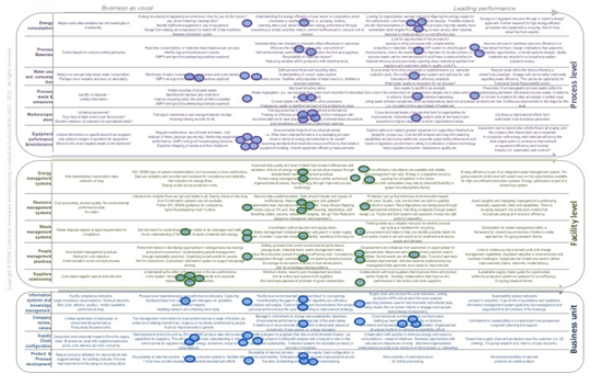
Each dot on each of the model rows represents the relative efficiencies that a factory achieves in saving energy and resources through best practice (5 of 11 factories represented here, each delivering an aircraft part towards final assembly). The assessment allowed this network of energy efficiency engineers and managers to better understand the strengths and weaknesses in different factories and where the learning opportunities exist (and against which dimension of the model).
2. The perception problem in manufacturing processes and management practice:
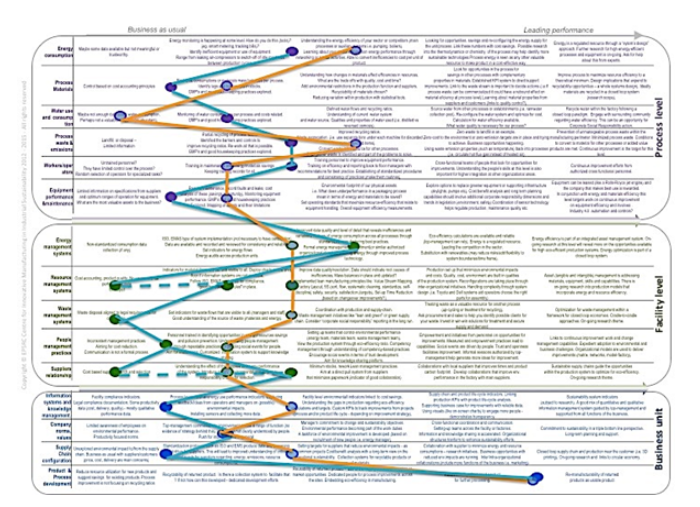
The following assessment is performed in a leading aerospace company where two senior engineering managers (green and orange lines) find it difficult to agree on the maturity of different practices currently used at the factory level as part of their environmental sustainability strategy.
This assessment was part of the following use case:
The self-assessment was completed by the head of environment and one of his associates in the same function. These two practitioners work closely together and are based in the UK headquarters. Even though the maturity profiles do not vary significantly (1 level plus or minus) it is clear that there is very little overall agreement on the maturity levels in each dimension.
3. Using the maturity model as a consensus building tool in a factory:
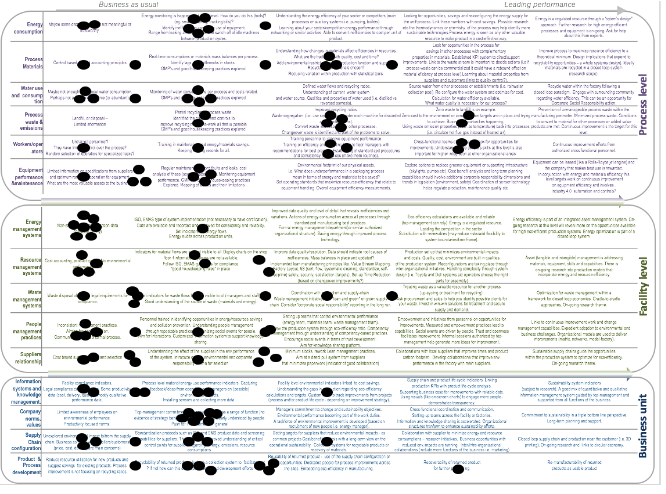
Seven practitioners from different parts of the business (engineering, operations, marketing, health and safety etc.) were brought together to understand how they think the factory performs. The convergence between perceptions was very small and this would indicate high levels of resistance to change and continuous improvement. For example, if senior managers think they are doing really well, they will not invest time and effort in better practices and technologies.
A timeline (today +5years) was used to understand where they think they are today and where they want to be tomorrow.
This can be one of the ways of thinking about improvements that need to occur, starting with areas of interest that are underperforming and developing the right projects to address the gaps.
Any views, thoughts, and opinions expressed herein are solely that of the author(s) and do not necessarily reflect the views, opinions, policies, or position of the Engineering Professors’ Council or the Toolkit sponsors and supporters.
Keywords: Design and innovation; Conflicts of interest; Ethics; Regulatory compliance; Stakeholder engagement; Environmental impact; AHEP; Sustainability; Higher education; Pedagogy; Assessment.
Sustainability competency: Systems thinking; Anticipatory; Critical thinking; Integrated problem-solving; Strategic; Collaboration.UNESCO has developed eight key competencies for sustainability that are aimed at learners of all ages worldwide. Many versions of these exist, as are linked here*. In the UK, these have been adapted within higher education by AdvanceHE and the QAA with appropriate learning outcomes. The full list of competencies and learning outcome alignment can be found in the Education for Sustainable Development Guidance*. *Click the pink ''Sustainability competency'' text to learn more.
AHEP mapping: This resource addresses two of the themes from the UK’s Accreditation of Higher Education Programmes fourth edition (AHEP4): The Engineer and Society (acknowledging that engineering activity can have a significant societal impact) and Engineering Practice (the practical application of engineering concepts, tools and professional skills). To map this resource to AHEP outcomes specific to a programme under these themes, access AHEP 4 here and navigate to pages 30-31 and 35-37.
Related SDGs: SDG 7 (Affordable and Clean Energy); SDG 9 (Industry, Innovation and Infrastructure); SDG 12 (Responsible Consumption and Production); SDG 13 (Climate Action).
Reimagined Degree Map Intervention: More real-world complexity; Active pedagogies and mindset development; Authentic assessment.The Reimagined Degree Map is a guide to help engineering departments navigate the decisions that are urgently required to ensure degrees prepare students for 21st century challenges. Click the pink ''Reimagined Degree Map Intervention'' text to learn more.
Educational aim: Apply interdisciplinary engineering knowledge to a real-world sustainability challenge in aviation, foster ethical reasoning and decision-making with regards to environmental impact, and develop abilities to collaborate and communicate with a diverse range of stakeholders.
Educational level: Intermediate.
Learning and teaching notes:
This case study provides students an opportunity to explore the role of hydrogen fuel in the aviation industry. Considerable investments have been made in researching and developing hydrogen as a potential clean and sustainable energy source, particularly for hydrogen-powered aircraft. Despite the potential for hydrogen to be a green and clean fuel there are lingering questions over the long-term sustainability of hydrogen and whether technological advancements can progress rapidly enough to significantly reduce global carbon dioxide emissions. The debate around this issue is rich with diverse perspectives and a variety of interests to consider. Through this case study, students will apply their engineering expertise to navigate this complex problem and examine the competing interests involved.
This case is presented in parts, each focusing on a different sustainability issue, and with most parts incorporating technical content. Parts may be used in isolation, or may be used to build up the complexity of the case throughout a series of lessons.
Learners have the opportunity to:
Understand the principles of hydrogen production, storage, and emissions in the context of aviation.
Assess the environmental, economic, and social impacts of adopting hydrogen technology in the aviation industry.
Develop skills in making estimates and assumptions in real-world engineering scenarios.
Explore the ethical dimensions of engineering decisions, particularly concerning sustainability and resource management.
Examine the influence of policy and stakeholder perspectives on the adoption of green hydrogen within the aviation industry.
Teachers have the opportunity to:
Integrate concepts related to renewable energy sources, with a focus on hydrogen.
Discuss the engineering challenges and solutions in storing and utilising hydrogen in aviation.
Foster critical thinking about the balance between technological innovation, environmental sustainability, and societal impact.
Guide students in understanding the role of policy in shaping technological advancements and environmental strategies.
Assess students’ ability to apply engineering principles to solve complex, open-ended, real-world problems.
Supporting resources:
Learning and teaching resources:
Hydrogen fundamentals resources:
Case Study Workbook – designed for this study to give a broad overview of hydrogen, based primarily on the content below from US DoE.
Hydrogen Aware – Set of modules for a more comprehensive background to hydrogen with a UK-specific context.
We recommend encouraging the use of sources from a variety of stakeholders. Encourage students to find their own, but some examples are included below:
FlyZero Open Source Reports Archive: A variety of technical reports focused on hydrogen in aviation specifically including concept aircraft, potential life cycle emissions, storage, and usage.
Hydrogen in Aviation Alliance: Press release (September 2023) announcing an agreement amongst some of the major players in aviation to focus on hydrogen.
Safe Landing: A group of aviation workers campaigning for long-term employment. Projected airline growth is not compatible with net zero goals and the current technology is not ready for decarbonisation, action is drastically needed now to safeguard the aviation industry and prevent dangerous levels of warming.
UK Government Hydrogen Strategy: Sets out the UK government view of how to develop a low carbon hydrogen sector including aviation projects including considerations of how to create a market.
Pre-Session Work:
Students should be provided with an overview of the properties of hydrogen gas and the principles underlying the hydrogen economy: production, storage and transmission, and application. There are several free and available sources for this purpose (refer to the Hydrogen Fundamentals Resources above).
Introduction
“At Airbus, we believe hydrogen is one of the most promising decarbonisation technologies for aviation. This is why we consider hydrogen to be an important technology pathway to achieve our ambition of bringing a low-carbon commercial aircraft to market by 2035.” – Airbus, 2024
As indicated in the industry quote above, hydrogen is a growing area of research interest for aviation companies to decarbonise their fleet. In this case study, you are put in the role of working as an engineering consultant and your customer is a multinational aerospace corporation. They are keen to meet their government issued targets of reducing carbon emissions to reach net zero by 2050 and your consultancy team has been tasked with assessing the feasibility of powering a zero-emission aircraft using hydrogen. The key areas your customer is interested in are:
The feasibility of using green hydrogen as a fuel for zero-emission aviation;
The feasibility of storing hydrogen in a confined space like an aircraft;
Conducting a stakeholder analysis on the environmental impact of using hydrogen for aviation.
Part one: The aviation landscape
Air travel connects the world, enabling affordable and reliable mass transportation between continents. Despite massive advances in technology and infrastructure to produce more efficient aircraft and reduce passenger fuel consumption, carbon emissions have doubled since 2019 and are equivalent to 2.5 % of global CO2 emissions.
Activity: Discuss what renewable energy sources are you aware of that could be used for zero-emission aviation?
Your customer is interested in the feasibility of hydrogen for aviation fuel. However, there is a debate within the management team over the sustainability of hydrogen. As the lead engineering consultant, you must guide your customer in making an ethical and sustainable decision.
Hydrogen is a potential energy carrier which has a high energy content, making it a promising fuel for aviation. Green hydrogen is produced from water and is therefore potentially very clean. However, globally most hydrogen is currently made from fossil fuels with an associated carbon footprint. Naturally occurring as a gas, the low volumetric density makes it difficult to transport and add complications with storage and transportation.
Activity: From your understanding of hydrogen, what properties make it a promising fuel for aircraft? And what properties make it challenging?
Optional activity: Recap the key properties of hydrogen – particularly the low gas density and low boiling point which affect storage.
Part two: Hydrogen production
Hydrogen is naturally abundant but is often found combined with other elements in various forms such as hydrocarbons like methane (CH4) and water (H2O). Methods have been developed to extract hydrogen from these compounds. It is important to remember that hydrogen is an energy carrier and not an energy source; it must be generated from other primary energy sources (such as wind and solar) converting and storing energy in the form of hydrogen.
Research: What production methods of hydrogen are you aware of? Where does most of the world’s hydrogen come from currently?
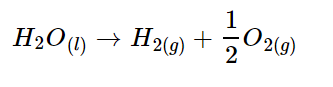
The ideal scenario is to produce green hydrogen via electrolysis where water (H2O) is split using electricity into hydrogen (H2) and oxygen (O2). This makes green hydrogen potentially completely green and clean if the process uses electricity from renewable sources. The overall chemical reaction is shown below:
However, the use of water—a critical resource—as a feedstock for green hydrogen, especially in aviation, raises significant ethical concerns. Your customer’s management team is divided on the potential impact of this practice on global water scarcity, which has been exacerbated by climate change. You have been tasked with assessing the feasibility of using green hydrogen in aviation for your client. Your customer has chosen their London to New York route (3,500 nmi), one of their most popular, as a test-case.
Activity: Estimate how much water a hydrogen plane would require for a journey of 3500 nmi (London to New York). Can you validate your findings with any external sources?Hint: How much water does it take to produce 1 kg of green hydrogen? Consider the chemical equation above.
Activity: Consider scaling this up and estimate how much water the entire UK aviation fleet would require in one year. Compare your value to the annual UK water consumption, would it be feasible to use this amount of water for aviation?
Discussion: From your calculations and findings so far, discuss the practicality of using water for aviation fuel. Consider both the obstacles and opportunities involved in integrating green hydrogen in aviation and the specific challenges the aviation industry might face.
Despite its potential for green production, globally the majority of hydrogen is currently produced from fossil fuels – termed grey hydrogen. One of your team members has proposed using grey hydrogen as an interim solution to bridge the transition to green hydrogen, in order for the company to start developing the required hydrogen-related infrastructure at airports. They argue that carbon capture and storage technology could be used to reduce carbon emissions from grey hydrogen while still achieving the goal of decarbonisation. Hydrogen from fossil fuels with an additional carbon capture step is known as blue hydrogen.
However, this suggestion has sparked a heated debate within the management team. While acknowledging the potential to address the immediate concerns of generating enough hydrogen to establish the necessary infrastructure and procedures, many team members argued that it would be a contradictory approach. They highlighted the inherent contradiction of utilising fossil fuels, the primary driver of climate change, to achieve decarbonisation. They emphasised the importance of remaining consistent with the ultimate goal of transitioning away from fossil fuels altogether and reducing overall carbon emissions. Your expertise is now sought to weigh these options and advise the board on the best course of action.
Optional activity: Research the argument for and against using grey or blue hydrogen as an initial step in developing hydrogen infrastructure and procedures, as a means to eventually transition to green hydrogen. Contrast this with the strategy of directly implementing green hydrogen from the beginning. Split students into groups to address both sides of this debate.
Discussion: Deliberate on the merits and drawbacks of using grey or blue hydrogen to catalyse development of hydrogen aviation infrastructure. What would you recommend—prioritising green hydrogen development or starting with grey or blue hydrogen as a transitional step? How will you depict or visualise your recommendation to your client?
Part three: Hydrogen storage
Despite an impressive gravimetric energy density (the energy stored per unit mass of fuel) hydrogen has the lowest gas density and the second-lowest boiling point of all known chemical fuels. These unique properties pose challenges for storage and transportation, particularly in the constrained spaces of an aircraft.
Activity: Familiarise yourself with hydrogen storage methods. What hydrogen storage methods are you aware of? Thinking about an aviation context what would their advantages and disadvantages be?
As the lead engineering consultant, you have been tasked with providing expert advice on viable hydrogen storage options for aviation. Your customer has again chosen their London to New York route (3,500 nmi) as a test-case because it is one of their most popular, transatlantic routes. They want to know if hydrogen storage can be effectively managed for this route as it could set a precedent for wider adoption for their other long-haul flights. The plane journey from London to New York is estimated to require around 15,000 kg of hydrogen (or use the quantity estimated previously estimated in Part 2 – see Appendix for example).
Activity: Estimate the volume required to store the 15,000 kg of hydrogen as a compressed gas and as a liquid.
Discussion: How feasible are compressed gas and liquid hydrogen storage solutions? The space taken up by the fuel is one consideration but what other aspects are important to consider? How does this compare to the current storage solution for planes which use conventional jet fuel. Examples of topics to consider are: materials required for storage tanks, energy required to liquify or compress the hydrogen, practicality of hydrogen storage and transport to airports, location and distance between hydrogen generation and storage facilities, considerations of fuel leakage. When discussing encourage students to compare to the current state of the art, which is jet fuel.
Part four: Emissions and environmental impact
In Part four, we delve deeper into the environmental implications of using hydrogen as a fuel in aviation with a focus on emissions and their impacts across the lifecycle of a hydrogen plane. Aircraft can be powered using either direct combustion of hydrogen in gas turbines or by reacting hydrogen in a fuel cell to produce electricity that drives a propeller. As the lead engineering consultant, your customer has asked you to choose between hydrogen combustion in gas turbines or the reaction of hydrogen in fuel cells. The management team is divided on the environmental impacts of both methods, with some emphasising the technological readiness and efficiency of combustion and others advocating for the cleaner process of fuel cell reaction.
Activity: Research the main emissions associated with combustion of hydrogen and electrochemical reaction of hydrogen in fuel cells. Compare to the emissions associated with combustion of standard jet fuel.Students should consider not only CO2 emissions but also other pollutants such as NOx, SOx, and particulate matter.
Discussion: What are the implications of these emissions on air quality and climate change. Discuss the trade-offs between the different methods of utilising hydrogen in terms of the environmental impact. Compare to the current standard of jet fuel combustion.
Both combustion of hydrogen in an engine and reaction of hydrogen in a fuel cell will produce water as a by-product. The management team are concerned over the effect of using hydrogen on the formation of contrails. Contrails are clouds of water vapour produced by aircraft that have a potential contribution to global warming but the extent of their impact is uncertain.
Activity: Investigate how combustion (of both jet fuel and hydrogen) and fuel cell reactions contribute to contrail formation. What is the potential climactic effect of contrails?
Optional extension: How can manufacturers and airlines act to reduce water emissions and contrail formation – both for standard combustion of jet fuel and future hydrogen solutions?
Discussion: Based on your findings, which hydrogen propulsion technology would you recommend to the management team?
So far we have considered each aspect of the hydrogen debate in isolation. However, it is important to consider the overall environmental impact of these stages as a whole. Choices made at each stage of the hydrogen cycle – generation, storage, usage – will collectively impact the overall environmental impact and sustainability of using hydrogen as an aviation fuel and demonstrates how interconnected our decisions can be.
Activity: Assign students to groups based on the stage of a hydrogen lifecycle (generation, storage/transport, usage). Each group could research and discuss the potential emissions and environmental impacts associated with their assigned stage. Consider both direct and indirect emissions, like energy used in production processes or emissions related to infrastructure development. Principles such as life cycle assessment can be incorporated for a holistic view of hydrogen emissions.
Activity: After the individual group discussions, each group could present their findings and perspectives on their stage of the lifecycle. The whole class could then reflect on the overall environmental impacts of hydrogen in aviation. How do these impacts compare across different stages of the lifecycle? What are the trade-offs involved in choosing different types of hydrogen (green, blue, grey) and storage/transportation solutions?
Discussion: Conclude with a reflective discussion. Students bring together their findings on the life cycle stages of hydrogen and present their overall perspectives on the environmental sustainability of using hydrogen in aviation.
Part five: Hydrogen aviation stakeholders
Hydrogen aviation is an area with multiple stakeholders with conflicting priorities. Understanding the perspectives of these key players is important when considering the feasibility of hydrogen in the aviation sector.
Activity: Who are the key players in this scenario? What are their positions and perspectives? How can you use these perspectives to understand the complexities of the situation more fully?
Your consultancy firm is hosting a debate for the aviation industry in order to help them make a decision around hydrogen-based technologies. You have invited representatives from consumer groups, the UK government, Environmental NGOs, airlines, and aircraft manufacturers.
Activity: Take on the role of these key stakeholders, ensuring you understand their perspective and priorities. This could form part of a separate research exercise, or students can use the key points given below. Debate whether or not hydrogen fuel should be used to help the aviation sector reach net zero.
Stakeholder
Key priorities and considerations
Airline & Aerospace Manufacturer
Cost efficiency (fuel, labour, fleet maintenance) – recovering from pandemic.
Passenger experience (commercial & freight).
Develop & maintain global supply chains.
Safety, compliance and operational reliability.
Financial responsibility to employees and investors.
Need government assurances before making big capital investments.
UK Government
Achieve net zero targets by 2050
Promote economic growth and job creation (still recovering from pandemic).
Fund research and innovation to put their country’s technology ahead.
Fund renewable infrastructure to encourage industry investment.
Environmental NGOs
Long-term employment for aviation sector.
Demand a sustainable future for aviation to ensure this – right now, not in 50 years.
Standards and targets for industry and government and accountability if not met.
Some NGOs support drastic cuts to flying.
Want to raise public awareness over sustainability of flying.
Consumer
Environmentally aware (understand the need to reduce carbon emissions).
Also benefit greatly from flying (tourism, commercial shipping, etc.).
Safety and reliability of aircraft & processes.
Cost effectiveness – want affordable service
Appendix: Example calculations
There are multiple methods for approaching these calculations. The steps shown below are just one example for illustrative purposes.
Part two: Hydrogen production
Challenge: Estimate the volume of water required for a hydrogen-powered aircraft.
Assumptions around the hydrogen production process, aircraft, and fuel requirement can be given to students or researched as a separate task. In this example we assume:
All hydrogen is generated via electrolysis of fresh water with an efficiency of 100%.
A mid-size aircraft required with ~300 passenger capacity and flight range of ~3500 nmi (London to New York).
Flight energy requirement for a kerosene-fuelled jet is the same as a hydrogen-fuelled jet.
Example estimation:
1. Estimate the energy requirement for a mid-size jet
No current hydrogen-fuelled aircraft exists, so we can use a kerosene-fuelled analogue. Existing aircraft that meet the requirements include the Boeing 767 or 747. The energy requirement is then:
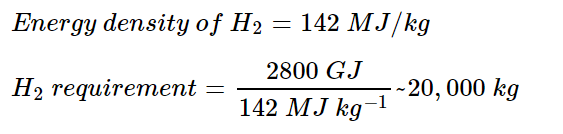
2. Estimate the hydrogen requirement
Assuming a hydrogen plane has the same fuel requirement:
3. Estimate the volume of water required
Assuming all hydrogen is produced from the electrolysis of water:
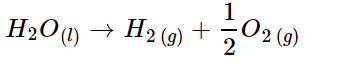
Electrolysis reaction:
For this reaction, we know one mole of water produces one mole of hydrogen. We need to calculate the moles for 20,000 kg of hydrogen:
With a 1:1 molar ratio, we can then calculate the mass of water:
This assumes an electrolyser efficiency of 100%. Typical efficiency values are under 80%, which would yield:
Challenge: Is it feasible to power the UK aviation fleet with water?
The total energy requirement for UK aviation can be given to students or set as a research task.
Estimation can follow a similar procedure to the above.
Multiple methods for validating and assessing the feasibility of this quantity of water. For example, the UK daily water consumption is 14 billion litres. The water requirement estimated above is < 1 % of this total daily water consumption, a finding supported by FlyZero.
Part three: Hydrogen storage
Challenge: Is it feasible to store 20,000 kg of hydrogen in an aircraft?
There are multiple methods of determining the feasibility of storage volume. As example is given below.
1. Determining the storage volume
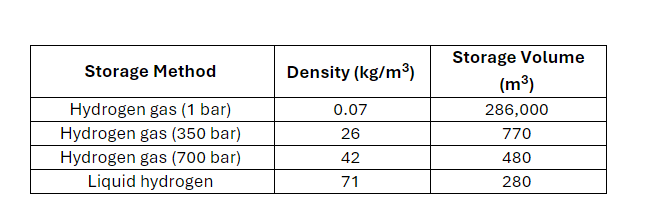
The storage volume is dependent on the storage method used. Density values associated with different storage techniques can be research or given to students (included in Table 2). The storage volume required can be calculated from the mass of hydrogen and density of storage method, example in Table 2.
Table 2: Energy densities of various hydrogen storage methods
2. Determining available aircraft volume
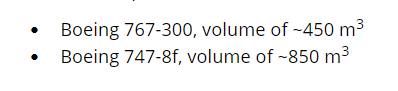
A straightforward method is to compare the available volume on an aircraft with the hydrogen storage volume required. Aircraft volumes can be given or researched by students. Examples:
This assumes hydrogen tanks are integrated into an existing aircraft design. Liquid hydrogen can feasibly fit into an existing design, though actual volume will be larger due to space/constraint requirements and additional infrastructure (pipes, fittings, etc) for the tanks. Tank size can be compared to conventional kerosene tanks and a discussion encouraged over where in the plane hydrogen tanks would need to be (conventional liquid fuel storage is in the wings of aircraft, this is not possible for liquid storage tanks due to their shape and infrastructure storage is inside the fuselage). Another straightforward method for storage feasibility is modelling the hydrogen volume as a simple cylinder and comparing to the dimensions of a suitable aircraft.
Any views, thoughts, and opinions expressed herein are solely that of the author(s) and do not necessarily reflect the views, opinions, policies, or position of the Engineering Professors’ Council or the Toolkit sponsors and supporters.
Sustainability competency: Integrated problem-solving; Systems thinking; Critical thinking; Collaboration; Anticipatory.UNESCO has developed eight key competencies for sustainability that are aimed at learners of all ages worldwide. Many versions of these exist, as are linked here*. In the UK, these have been adapted within higher education by AdvanceHE and the QAA with appropriate learning outcomes. The full list of competencies and learning outcome alignment can be found in the Education for Sustainable Development Guidance*. *Click the pink ''Sustainability competency'' text to learn more.
AHEP mapping: This resource addresses two of the themes from the UK’s Accreditation of Higher Education Programmes fourth edition (AHEP4): The Engineer and Society (acknowledging that engineering activity can have a significant societal impact) and Engineering Practice (the practical application of engineering concepts, tools and professional skills). To map this resource to AHEP outcomes specific to a programme under these themes, access AHEP 4 here and navigate to pages 30-31 and 35-37.
Related SDGs: SDG 4 (Quality education); SDG 9 (Industry, innovation and infrastructure); SDG 11 (Sustainable cities and communities); SDG 13 (Climate action).
Reimagined Degree Map Intervention: More real-world complexity; Active pedagogies and mindset development; Authentic assessment; Cross-disciplinarity.The Reimagined Degree Map is a guide to help engineering departments navigate the decisions that are urgently required to ensure degrees prepare students for 21st century challenges. Click the pink ''Reimagined Degree Map Intervention'' text to learn more.
Educational aim: To foster a deep understanding of the challenges and opportunities in balancing environmental sustainability and profitability/safety in construction projects. To develop critical thinking and decision-making skills in addressing social, economic, and environmental considerations. To encourage students to propose innovative and comprehensive solutions for sustainable urban development.
Educational level: Intermediate.
Learning and teaching notes:
Before engaging with the case study, learners should be familiar with the process of calculating embodied carbon and conducting a cost-benefit analysis. The case study is presented in three parts. In Part one, an ambitious urban revitalisation project is under development, and a project manager needs to find a balance between financial considerations and the urgent need for sustainable, low-embodied carbon construction. In Part two, the project being developed is located in a coastal area prone to climate change-related disasters. The team needs to ensure that the project is durable in the face of disasters and, at the same time, upholds sustainability principles. Lastly, in Part three, stakeholders involved in the two previous projects come together to identify potential synergies.
Learners have the opportunity to:
Assess the ethical dimensions of construction scenarios, particularly the trade-offs between socio-economic constraints and environmentally-friendly practices.
Identify potential conflicts between environmental advocacy and financial considerations, fostering critical thinking in real-world construction project dilemmas.
Gain hands-on experience in researching and calculating the embodied carbon of different construction options, enhancing their understanding of sustainability metrics.
Equip students with strategies to navigate tensions between sustainability goals and socio-economic constraints.
Integrate technical content on sustainable construction methods.
Integrate engineering content with business and entrepreneurial leadership, fostering interdisciplinary learning and preparing students for real-world challenges.
Informally evaluate students’ critical thinking and communication skills through discussions, activities, and presentations related to sustainable construction practices.
Supporting resources:
Learning and teaching resources:
Environmental impact assessment:
Hammond, G., et al. (2011). Embodied carbon: the inventory of carbon and energy.
Korpi, E., & Ala‐Risku, T. (2008). Life cycle costing: a review of published case studies.
Mishan, E. J., & Quah, E. (2020). Cost-benefit analysis.
Woodward, D. G. (1997). Life cycle costing—Theory, information acquisition and application.
Systems thinking and holistic analysis approaches (PESTLE, SWOT):
Anderson, V., & Johnson, L. (1997). Systems thinking basics .
Checkland, P. (1999). Systems thinking.
Coman, A., & Ronen, B. (2009). Focused SWOT: diagnosing critical strengths and weaknesses.
Christodoulou, A., & Cullinane, K. (2019). Identifying the main opportunities and challenges from the implementation of a port energy management system: A SWOT/PESTLE analysis.
Helms, M. M., & Nixon, J. (2010). Exploring SWOT analysis–where are we now? A review of academic research from the last decade.
Perera, R. (2017). The PESTLE analysis.
Rastogi, N. I. T. A. N. K., & Trivedi, M. K. (2016). PESTLE technique–a tool to identify external risks in construction projects.
Real-world cases to explore:
Related to Part one: Hudson Yards (New York City), King Abdullah Economic City (Saudi Arabia), Masdar City (United Arab Emirates).
Related to Part two: Bangladesh Delta Resilience Project, Majuro Atoll Relocation Project, New Orleans Post-Katrina Redevelopment, Kivalina Relocation Project, Vietnamese Red River Delta Resilient Cities Project.
Related to Part three: Amsterdam Circular Centre, Seoul Forest.
Part one:
In the heart of an urban revitalisation project, the company CityScape Builders is embarking on a transformational journey to convert a neglected area into a vibrant urban centre which will be named ReviveRise District. This urban centre will mostly be formed by tall buildings.
Avery, the project manager at CityScape Builders, is under immense pressure to meet tight budget constraints and deadlines. Avery understands the project’s economic implications and the importance of delivering within the stipulated financial limits. However, the conflict arises when Rohan, a renowned environmental advocate and consultant, insists on prioritising sustainable construction practices to reduce the project’s embodied carbon. Rohan envisions a future where construction doesn’t come at the cost of the environment.
On the other side of the situation is Yuki, the CFO of CityScape Builders, who is concerned about the project’s bottom line. Yuki is wary of any actions that could escalate costs and understands that using low-embodied carbon materials often comes with a higher price tag.
In light of this situation, Avery proposes exploring different options of construction methods and materials that could be used in the design of their skyscrapers. Avery needs to do this quickly to avoid any delay, and therefore consider just the most important carbon-emitting aspects of the different options.
Optional STOP for questions and activities
Activity: research and calculate the embodied carbon of three different options that could be used to build one of the buildings at ReviveRise District. Make sure to consider all key aspects involved (e.g., project’s location, possible materials, etc.). Students can be encouraged to challenge the need to build skyscrapers.
Activity: conduct a cost-benefit analysis for the different options. What are the potential financial gains and losses? Students may want to consider the gains and losses from the perspectives of different stakeholders, such as engineers (e.g., construction programme savings) or quantity surveyors/cost consultants (e.g., security of supply material, insurance premiums).
Discussion: what are the key challenges in reducing embodied carbon in a construction project?
Discussion: how can the construction industry minimise activities that cause conflict between profitability and sustainability, and maximise activities that mutually-benefit sustainability and profitability?
Discussion: what are some strategies for convincing stakeholders of the long-term benefits of sustainable practices? In class, this can be done in different ways (e.g., class debate, elevator pitches).
Part two:
CityScape Builders is now embarking on a new challenge, ResilientCoast, a construction project located in a coastal area that is susceptible to climate change-related disasters. This region is economically disadvantaged and lacks the financial resources often found in more developed areas.
Micha, the resilience project manager at CityScape Builders, is tasked with ensuring the project’s durability in the face of disasters and the impacts of climate change. Micha’s primary concern is to create a resilient structure that can withstand extreme weather events but is equally dedicated to sustainability goals. To navigate this complex situation, Micha seeks guidance from Dr. Ravi, a climate scientist with expertise in coastal resiliency. Dr. Ravi is committed to finding innovative and sustainable solutions that simultaneously address the climate change impacts and reduce embodied carbon in construction.
In this scenario, Bao, the local community leader, also plays a crucial role. Bao advocates for jobs and economic development in the area, even though Bao is acutely aware of the inherent safety risks. Bao, too, understands that balancing these conflicting interests is a substantial challenge.
In this situation, Micha wonders how to construct safely in a vulnerable location while maintaining sustainability goals.
Optional STOP for questions and activities
Activity: investigate sustainable construction practices that enhance resilience. Create a list of methods and materials designed to withstand climate challenges,and evaluate their effectiveness to date.
Discussion: how can the construction industry minimise activities that cause conflict between safety and sustainability, and maximise activities that mutually-benefit sustainability and safety?
Discussion: what are the ethical considerations when constructing in areas prone to natural disasters and resource scarcity?
Discussion: what are some innovative solutions to promote safety and sustainability in construction projects in challenging environments, and what is their effectiveness in this situation?
Part three:
Robin and Samir are two independent sustainability consultants that are supporting the projects in ReviveRise District and ResilientCoast respectively. They are concerned that sustainability is just being assessed by embodied carbon and cost sustainability, and they believe that sustainability is a much broader concept than just those two indicators. Robin is the independent environmental consultant working with ReviveRise District officials and is responsible for assessing the broader environmental impacts of the construction project. Robin’s analysis spans beyond embodied carbon, considering local job creation, transportation effects, pollution, biodiversity, and other aspects of the project.
Samir, on the other hand, is a municipal board member of ResilientCoast. Samir’s role involves advocating for the local community while striving to ensure that sustainability efforts do not compromise the safety and resilience of the area. Samir’s responsibilities are more comprehensive than just economic considerations; they encompass the entire well-being of the community in the face of climate change.
Robin and Samir recognise the need for cross-city collaboration and information sharing, and they want to collaborate to ensure that the sustainability efforts of both projects do not create unintended burdens for their communities. They acknowledge that a comprehensive approach is necessary for analysing broader impacts, and to ensure both the success of the construction projects and the greater good of both communities. They believe in working collectively to find solutions that are not only sustainable but also beneficial to all stakeholders involved.
Optional STOP for questions and activities
Activity: work in pairs or small groups to analyse the holistic impacts of a construction project in their local area. Consider environmental, social, and economic factors and propose potential solutions. This can be supported by PESTLE and SWOT analysis, systems diagrams, or similar techniques.
Activity: envision a scenario where two cities, like in the case study, collaborate on a large construction project. Outline the key challenges, benefits, and potential strategies for success.
Discussion: how can different stakeholders work together to mitigate unintended burdens in construction projects?
Discussion: what are some effective strategies for cross-city collaboration on sustainability initiatives?
Discussion: how can construction projects contribute positively to their local communities while addressing environmental concerns?
The above questions and activities call for the involvement of cross-disciplinary teams, requiring expertise not only in engineering but also in planning, policy, and related fields. Ideally, in the classroom setting, students with diverse knowledge across these disciplines can be grouped together to enhance collaboration and address the tasks proposed. In cases where forming such groups is not feasible, the educator can assign specific roles such as engineer, planner, policymaker, etc., to individual students, ensuring a balanced representation of skills and perspectives.
Any views, thoughts, and opinions expressed herein are solely that of the author(s) and do not necessarily reflect the views, opinions, policies, or position of the Engineering Professors’ Council or the Toolkit sponsors and supporters.
Author: Ema Muk-Pavic, FRINA SHEA (University College London)
Topic: Links between sustainability and EDI
Tool type: Guidance.
Relevant disciplines: Any.
Keywords: Sustainability; AHEP; Programmes; Higher education; EDI; Economic Growth; Inclusive learning; Interdisciplinary; Global responsibility; Community engagement; Ethics; Future generations; Pedagogy; Healthcare; Health.
Sustainability competency: Self-awareness; Normative; Collaboration; Critical thinking.UNESCO has developed eight key competencies for sustainability that are aimed at learners of all ages worldwide. Many versions of these exist, as are linked here*. In the UK, these have been adapted within higher education by AdvanceHE and the QAA with appropriate learning outcomes. The full list of competencies and learning outcome alignment can be found in the Education for Sustainable Development Guidance*. *Click the pink ''Sustainability competency'' text to learn more.
AHEP mapping: This resource addresses two of the themes from the UK’s Accreditation of Higher Education Programmes fourth edition (AHEP4): The Engineer and Society (acknowledging that engineering activity can have a significant societal impact) and Engineering Practice (the practical application of engineering concepts, tools and professional skills). To map this resource to AHEP outcomes specific to a programme under these themes, access AHEP 4 here and navigate to pages 30-31 and 35-37.
Related SDGs: All 17.
Reimagined Degree Map Intervention: Active pedagogies and mindset development; More real-world complexity.The Reimagined Degree Map is a guide to help engineering departments navigate the decisions that are urgently required to ensure degrees prepare students for 21st century challenges. Click the pink ''Reimagined Degree Map Intervention'' text to learn more.
Who is this article for: This article should be read by educators at all levels in Higher Education who wish to understand how engineering practice can promote sustainable and ethical outcomes in equality, diversity, and inclusion.
Supporting resources:
Center for Responsible Business (CRB). (2023). Case study: Sustainability initiatives by a gemstone manufacturing organisation: community engagement, decent work and gender empowerment. New Delhi: Center for Responsible Business (CRB)
The role of engineering is to enhance the safety, health and welfare of all, while protecting the planet and reversing existing environmental damage by deploying engineering solutions that can meet urgent global and local needs across all sectors (Engineering Council, 2021). The socioeconomic and environmental problems are strongly linked and finding responsible solutions is of imminent urgency that requires a holistic interdisciplinary perspective.
Sustainability and Equality, Diversity and Inclusion (EDI):
Equality, diversity, and Inclusion are interlinked concepts that emphasise equal opportunities, the inclusion of underrepresented groups, and the benefits that derive from diverse perspectives within the engineering field. Because sustainability is a global phenomenon, achieving the objective of “providing for all” should be a priority for all engineering professionals to ensure solutions are developed that benefit all (Jordan et al., 2021). To address sustainability challenges, engineers need to keep in mind that some communities are disproportionately impacted by climate change and environmental harm. It is essential to empower these communities to create systematic change and advocate for themselves.
A strategic pedagogical approach to sustainability and EDI:
A variety of pedagogical strategies can be applied to incorporate diversity and inclusion perspectives into sustainability engineering. Rather than adopting an “add-on” approach to the existing programmes it is recommended to fully embed inclusive and sustainable perspectives in the existing curriculum. These perspectives should be incorporated following a learning path of the students, from the beginning of the programme in the engineering fundamentals, starting with raising awareness and understanding of these perspectives and gradually improving student knowledge supported by evidence and further to implementing and innovating in engineering practice and solutions. By the end of the programme, diversity and inclusion and sustainability perspectives should be fully incorporated into the attitude of the graduates so that they will consider this when approaching any engineering task. This approach would go hand-in-hand with incorporating an ethics perspective.
Some practical examples of implementation in the programme and gradually deepening student learning are:
1. Awareness and understanding:
a. Define sustainability and its relation to EDI.
b. Engage with practical examples in modules that can be considered and discussed from EDI, ethical, and sustainability perspectives (e.g. present a product related to the subject of a class; in addition to discussing the product’s engineering characteristics, extend the discussion to sustainability and diverse stakeholders perspective – who are the end users, what is the affordability, where does the raw material comes from, how could it be recycled etc.)
2. Applying and analysing:
Seek out case studies which can expose the students to a range of EDI issues and contexts, e.g.:
a. Examples of “sustainable” engineering solutions aimed toward “wealthy” users but not available or suitable for the “poor”. Question if EDI was considered in stakeholder groups (who are the target end users, what are their specific needs, are the solutions applicable and affordable for diverse socioeconomic groups (e.g. high-tech expensive sophisticated medical devices, luxury cars).
b. Examples of product design suffering from discriminatory unconscious bias (e.g. medical devices unsuitable for women (Phillips SP, 2022); “affordable housing projects” being unaffordable for the local community, etc.).
c. Positive examples of sustainable engineering solutions with strong EDI perspectives taken that are also financially viable (e.g. sustainable water and sanitation projects, seaweed farming for food security and climate change mitigation (Sultana F, 2023), sustainable gem production (Center for Responsible Business (CRB), 2023) etc.)
3. Implementing, evaluating, and creating:
a. Use existing scenario-based modules to focus on finding solutions for the sustainability problems that will improve socioeconomic equality, access to water, improvement of healthcare, and reduction of poverty. This will guide students to implement sustainability principles in engineering while addressing social issues and inequalities.
b. In project-based modules, ask students to link their work with a specific UNSDG and evidence an approach to EDI issues.
4. Provide visibility of additional opportunities:
Extracurricular activities (maker spaces, EWB UK’s Engineering for People Design Challenge, partnership with local communities, etc.) can represent an additional mechanism to bolster the link between sustainable engineering practice and EDI issues. Some of these initiatives can even be implemented within modules via topics, projects, and case studies.
A systematic strategic approach will ensure that students gain experience in considering the views of all stakeholders, and not only economic and technical drivers (Faludi, et al., 2023). They need to take account of local know-how and community engagement since not all solutions will work in all circumstances (Montt-Blanchard, Najmi, & Spinillo, 2023). Engineering decisions need to be made bearing in mind the ethical, cultural, and political questions of concern in the local setting. Professional engineers need to develop a global mindset, taking into account diverse perspectives and experiences which will increase their potential to come up with creative, effective, and responsible solutions for these global challenges. (Jordan & Agi, 2021).
Leading by example:
It is of paramount importance that students experience that the HE institution itself embraces an inclusive and sustainable mindset. This should be within the institutional strategy and policies, everyday operations and within the classroom. Providing an experiential learning environment with an inclusive and sustainable mindset can have a paramount impact on the student experience and attitudes developed (Royal Academy of Engineering, 2018).
Conclusion:
Engineering education must prepare future professionals for responsible and ethical actions and solutions. Only the meaningful participation of all members of a global society will bring us to a fully sustainable future. Thus, the role of engineering educators is to embed an EDI perspective alongside sustainability in the attitudes of future professionals.
References:
Burleson, G., Lajoie, J., & et al. (2023). Advancing Sustainable Development: Emerging Factors and Futures for the Engineering Field.
Center for Responsible Business (CRB). (2023). Case study: Sustainability initiatives by a gemstone manufacturing organisation: community engagement, decent work and gender empowerment. New Delhi: Center for Responsible Business (CRB).
Engineering Council. (2021). Guidance on Sustainability. London: Engineering Council UK.
Faludi, J., Acaroglu, L., Gardien, P., Rapela, A., Sumter, D., & Cooper, C. (2023). Sustainability in the Future of Design Education. The Journal of Design, Economics and Innovation, 157-178.
Jordan, R., & Agi, K. (2021). Peace engineering in practice: A case study at the University of New Mexico. Technological Forecasting and Social Change, 173.
Any views, thoughts, and opinions expressed herein are solely that of the author(s) and do not necessarily reflect the views, opinions, policies, or position of the Engineering Professors’ Council or the Toolkit sponsors and supporters.
Sustainability competency: Critical thinking; Integrated problem-solving, Collaboration.UNESCO has developed eight key competencies for sustainability that are aimed at learners of all ages worldwide. Many versions of these exist, as are linked here*. In the UK, these have been adapted within higher education by AdvanceHE and the QAA with appropriate learning outcomes. The full list of competencies and learning outcome alignment can be found in the Education for Sustainable Development Guidance*. *Click the pink ''Sustainability competency'' text to learn more.
AHEP mapping: This resource addresses two of the themes from the UK’s Accreditation of Higher Education Programmes fourth edition (AHEP4): The Engineer and Society (acknowledging that engineering activity can have a significant societal impact) and Engineering Practice (the practical application of engineering concepts, tools and professional skills). To map this resource to AHEP outcomes specific to a programme under these themes, access AHEP 4 here and navigate to pages 30-31 and 35-37.
Related SDGs: SDG 4 (Quality education); SDG 13 (Climate action).
Reimagined Degree Map Intervention: More real-world complexity; Active pedagogies and mindset development.The Reimagined Degree Map is a guide to help engineering departments navigate the decisions that are urgently required to ensure degrees prepare students for 21st century challenges. Click the pink ''Reimagined Degree Map Intervention'' text to learn more.
Who is this article for? This article should be read by educators at all levels in higher education who are seeking an overall perspective on using PBL for integrating sustainability in engineering education. Engaging with this topic will also help to prepare students with the soft skill sets that employers are looking for.
Premise:
Engineering graduates are increasingly required to implement sustainability-focussed initiatives within industry, alongside enhanced expectations from professional bodies and the UK specification (UK-SPEC) for engineers (Engineering Council, 2024). However, a recent study of UK Higher Education institutions highlighted that only a handful have implemented Education for Sustainable Development (ESD) into their curricula in a systemic manner (Fiselier et al., 2018), which suggests many engineering institutions still need support in this area. This article aims to explain opportunities and challenges for integrating ESD into engineering programmes via project-based learning.
1. An overview of problem-based learning as a tool for teaching sustainability within engineering:
To develop sustainability-literate graduates, the Higher Education Academy (AdvanceHE) and the UK Quality Assurance Agency for Higher Education (QAA) emphasise that students need to:
understand what the concept of environmental stewardship means for their discipline and their professional and personal lives;
think about issues of social justice, ethics, and wellbeing, and how these relate to ecological and economic factors; and
develop a future-facing outlook by learning to think about the consequences of actions, and how systems and societies can be adapted to ensure sustainable futures (QAA & HEA, 2014).
Problem-Based Learning (PBL) provides a suitable teaching method for addressing these educational objectives. It is an influential approach in engineering education that emphasises real-world problem-solving and student-centred investigation. PBL deeply engages engineering students, prompting them to develop higher-level thinking skills while they personally confront and navigate economic, social, and environmental issues. This method fosters holistic systems thinking, interdisciplinary insights, ethical considerations, and an emphasis on the long-term viability of technical solutions (Cavadas and Linhares, 2023), while also inspiring and motivating learners (Loyens, 2015).
While PBL can be delivered through theoretical case study examples, the term is used interchangeably with Project-Based Learning within engineering education. Both problem-based learning and project-based learning share characteristics such as collaboration and group work, the integration of knowledge and practice, and foregrounding problem analysis as the basis of the learning process (De Graaff and Kolmos, 2003). One of the main differences is where the parameters lie: with problem-based learning the parameters are defined at the beginning and students are able to find a range of solutions; with project-based learning the parameters lie at the end and students are expected to reach a specific end solution (Savery, 2006). There is also a difference in the role of the tutor and the information they provide: in problem-based learning the tutor facilitates but gives little information, while in project-based learning they are both a facilitator and a source of knowledge (Savery, 2006). Project based learning may be more accepted within engineering education since it is considered to more closely resemble the reality of the profession (Perrenet, Bouhuijs and Smits, 2000), hence Aalborg’s working definition of PBL as “Problem-Oriented, Project-Organized, Learning” (Dym et al., 2005).
PBL thus facilitates the creation of immersive student-centric environments where group projects enable collaborative learning (Kokotsaki, Menzies and Wiggins, 2016). As Lozano et al. (2017) highlight, the nature of PBL advances critical thinking and problem-solving in engineering contexts, enabling students to critically reflect on sustainability concepts and apply this understanding to real-world challenges. Importantly, it is paramount in engineering education to foster action-oriented competencies and incorporate social contextualisation aspects (Fogg-Rogers et al., 2022), such as ethical nuances, justice, and equality, ensuring a comprehensive grasp of an engineer’s role amidst evolving societal and environmental challenges (Wang et al., 2022).
2. Overcoming challenges within PBL:
While PBL presents an obvious approach for embedding sustainability, there are a series of challenges which engineering educators need to overcome to facilitate transformational learning. This section presents some of the most common challenges encountered, along with pedagogic solutions.
Lack of apparent topic relevance Sustainability topics can sometimes be treated as isolated topics, rather than an integrated aspect of an engineering problem. A perception of sustainability in engineering is that it is not implicit in design, manufacture, and operation; rather it is often perceived as an ‘add-on’ to technical skill development. This applies to both students and teachers: both require support to understand the relevance and complexities of sustainability. When academics delivering sustainability materials may struggle to relate the topic to their own engineering disciplines, students may fail to see how they can impact change. Students must work on real-world projects where they can make a difference locally or globally, and they are more inclined towards sustainability topics that are relevant to their subject discipline with subject experts.
Dealing with an overwhelming amount of information Students can be overwhelmed by the large amounts of multidisciplinary information that needs to be processed when tackling real-world problems. This can also be a challenge for academics delivering teaching, especially if the topic is not related to their speciality. Additional support (and training), along with allocation of teaching workload, are needed to successfully integrate sustainability contexts for both staff and students.
Group work challenges PBL is best conducted by mixing individual study and group work. However, groups can fail if group creation, monitoring, supporting, and assessing processes are inconsistent, or not understood by academic tutors or students. Tutors need to act as group facilitators to ensure successful collaborative learning.
Issues with continual engagement PBL often requires active engagement of students over an extended period (several weeks or months). This can be a challenge, as over time, students’ focus and priorities can change. We suggest that whole programmes need to be designed around PBL components, so that other modules and disciplines provide the scaffolding and knowledge development to the relevant PBL topics.
Delivering PBL online
PBL is best delivered using experiential hands-on learning. For example, at UWE Bristol, this is provided through civic engagement with real-world industry problems and service learning through engagement with industry, schools, and community groups (Fogg-Rogers et al., 2017). This experiential learning was exceptionally challenging to deliver online during the COVID-19 pandemic, and programmes would need to be re-designed for online learning.
3. Recommendations for successful implementation of PBL:
Sustainability topics need to be embedded within engineering education so that each discipline-specific engineering problem is explored within PBL from a technical, economic, ethical, and sustainability perspective. Drawing from UWE Bristol’s journey of ESD implementation using PBL, key recommendations are outlined below.
Managing academic workload In the initial phases of ESD integration at UWE Bristol, a small number of committed academics contributed a lot of time, effort, and dedication to push through and enable ESD acceptance from staff and students. Programme-wide implementation of ESD required wider support at the institutional level, alongside additional support for module leaders and tutors, so they felt capable of delivering ESD with a realistic workload.
Structured delivery of ESD Structuring delivery over time and throughout different modules enables students to work through large amounts of information. Providing summative feedback/assessments during key phases of the PBL exercise can also help students stay on track and manage their workload. At UWE Bristol, group presentations with pass/fail grading are introduced mid-project, so students can present information gathered about the context, before beginning problem-solving.
Managing group work challenges PBL is best conducted by mixing individual study and group work. Ensuring assessment briefs have implicit sustainability requirements is vital to embedding ESD concepts, so that students can see the need for engagement. This is further enhanced by stating the relevance to workplace contexts and UK-SPEC requirements. Tutors need to facilitate group dynamics and engagement, along with providing support structures for students who, for whatever reason, are unable to engage with group work.
Creating an enabling environment for ESD integration The integration of sustainable development throughout the curricula at UWE Bristol has been supported at the institutional level, and this has been critical for the wide scale rollout. An institution-wide Knowledge Exchange for Sustainability Education (KESE) network was created to support staff by providing a platform for knowledge sharing. Within the department, Staff Away days were used to run sustainability workshops to discuss ESD and topics of interest to students. An initial mapping exercise was conducted to highlight where sustainability was already taught within the curriculum and to identify the discipline relevant contexts (Lamere et al., 2022). Further training and industrially relevant contexts were provided to convince some staff that sustainability needed to be included in the curriculum, along with evidence that it was already of great relevance in the wider engineering workplace. This led to the development of an integrated framework of key learning requirements which embedded professional attributes and knowledge of the UK-SPEC.
Student motivation and continual engagement
For sustainability education to be effective, the content coverage should be aligned, or better still, integrated, with the topics that form part of students’ disciplinary studies. To maintain continual engagement during the PBL delivery and beyond, clear linkages need to be provided between learning and future career-related practice-based sustainability activities. Partnerships have been developed with regional stakeholders and industry, to provide more context for real-world problems and to enable local service learning and community action (Fogg-Rogers, Fowles-Sweet, 2018). Industry speakers have also been invited to contribute to lectures, touching on a wide range of sustainability and ethical issues. ESD teaching is also firmly linked to the individual’s own professional development, using the UK-SPEC competency requirements, and linked to end-point assessments. This allows students to see the potential impact on their own professionalism and career development.
These recommendations can enable engineering educators to integrate sustainability topics within the curriculum using PBL to enhance student learning and engagement.
Any views, thoughts, and opinions expressed herein are solely that of the author(s) and do not necessarily reflect the views, opinions, policies, or position of the Engineering Professors’ Council or the Toolkit sponsors and supporters.
Authors: Emma Crichton CEng MICE and Dr Jonathan Truslove MEng PhD (Engineers Without Borders UK).
Topic: How to talk about sustainability in engineering education.
Tool type: Guidance.
Relevant disciplines: Any.
Keywords: Advocacy; Collaboration; Global responsibility; Sustainability; Systems change; Climate change; AHEP; Higher education; Pedagogy.
Sustainability competency: Self-awareness; Strategic; Critical thinking.UNESCO has developed eight key competencies for sustainability that are aimed at learners of all ages worldwide. Many versions of these exist, as are linked here*. In the UK, these have been adapted within higher education by AdvanceHE and the QAA with appropriate learning outcomes. The full list of competencies and learning outcome alignment can be found in the Education for Sustainable Development Guidance*. *Click the pink ''Sustainability competency'' text to learn more.
AHEP mapping: This resource addresses two of the themes from the UK’s Accreditation of Higher Education Programmes fourth edition (AHEP4): The Engineer and Society (acknowledging that engineering activity can have a significant societal impact) and Engineering Practice (the practical application of engineering concepts, tools and professional skills). To map this resource to AHEP outcomes specific to a programme under these themes, access AHEP 4 here and navigate to pages 30-31 and 35-37.
Related SDGs: SDG 4 (Quality education); SDG 11 (Sustainable cities and communities); SDG 13 (Climate action).
Reimagined Degree Map Intervention: Active pedagogies and mindset development.The Reimagined Degree Map is a guide to help engineering departments navigate the decisions that are urgently required to ensure degrees prepare students for 21st century challenges. Click the pink ''Reimagined Degree Map Intervention'' text to learn more.
Who should read this article? This article should be read by educators at all levels of higher education looking to embed and integrate sustainability into curriculum design. It’s especially useful in helping educators, heads of departments and deans to engage in a constructive or uncomfortable conversation if you don’t see yourself as a sustainability expert.
Premise:
“To not have conversations because they make you uncomfortable is the definition of privilege. Your comfort is not at the centre of this discussion. That’s not how it works. We have to be able to choose courage over comfort, we have to be able to say, ‘Look, I don’t know if I’m going to nail this but I’m going to try because I know what I’m sure as hell not going to do is stay quiet.’” Brene Brown
Some of the best conversations you can have in life are not comfortable to initiate:
Saying “I love you” for the first time to someone you don’t know will say it back.
Asking for a pay rise for the first time and having to describe why you are valuable.
Saying “I don’t know” when you’ve positioned yourself as an expert.
Talking about your grief. Talking about life. Talking about death.
Talking about the future. Talking about the past.
Think about a time you’ve participated in a meaningful conversation. These are not easy conversations, but they can also be the ones we look back to as very powerful, even if they took courage to initiate. And sometimes in a conversation, especially a constructive conversation, people disagree. People debate. People have different perspectives. And that’s the beauty of conversation and the beautiful rich diversity of people. It would be so boring if we all had the same life experiences, expertise and thoughts. If we only wanted to hear our own perspective, you can do that in a voice note to yourself, in your journal or by talking to the mirror.
There can also be different conversations depending on the values of those having the conversation. What they see as important, scary or what environment they live in helps form their core understanding. But despite our differences, humans are hard-wired for connection, to listen and talk with others. We discuss ideas in order to find common ground, and/or to learn about an experience we didn’t have ourselves. Difficult, constructive conversations build relationships, while avoiding them leads to a less deep connection.
Why talk about sustainability?
Educators,you have permission to start and facilitate a conversation about something you don’t know much about or are not an expert in. Just be honest about what you know and be driven to learn more.
This relates to conversations around the topic of sustainability. When we talk about how we can live within our planetary limits, whilst meeting the needs of all people, questions about justice, inequality and fairness often crop up. We don’t have one right answer here, we don’t have a magic fix or one person to blame. No one is an expert here. Sure, some know more about the science, others more about people’s lived experiences and others can feel they don’t know enough. But we all have a right to participate in conversations about our collective humanity. For example, conversations you could have with students about sustainability could cover:
Views on a particular podcast, TED talk or news article.
Think of a community you love. What would you like life there to be like in 2050?
What sustainability-related questions or topics would you like to explore?
What do the Sustainable Development Goals mean to you? How might they connect to community-driven initiatives?
What does the future of work look like for engineering?
How do we all acknowledge the burden of shifting the norm in engineering to address sustainability challenges?
Is there an extra pressure on future engineering generations? How does that feel?
How might we recognise that those who are most impacted by the climate crisis may not be the ones whose actions are responsible for it?
After all, sustainability is about imagining our future: One where we have less impact on our safe climate and biodiversity and less inequality. But we may see that future world differently. We may worry about the impact any change might have on our lives and the things we value most. Some may struggle with the idea of repurposing golf courses to address our housing crisis, others may struggle with the idea of policies stopping people from flying frequently (but they might be okay with this being imposed on those with private jets). Others may despair at the slow levels of change, where we don’t move from our default trajectory and risk climate breakdown.
On our current trajectory, we are looking at living in a world where our climate exceeds 1.5 degrees of warming, where there is mass migration, sea level rise, etc. This world may be worse, where more people suffer. But would you change how we engineer to make it better or play a role in another way to shift our trajectory?
How to initiate conversations about sustainability in engineering education:
To not have these important conversations means we don’t see any role for ourselves or the organisations we work for in creating change – and that’s not true, since sustainability requires systemic change to how we engineer AND to how we educate. For example, we asked hundreds of engineering educators and educationalists what they hope to see as the future of engineering education. Their responses are visualised below:
Discussing your opinions about these responses could be one way to start a conversation with a colleague.
It is also really important to engage in regular conversations about sustainability with students as a feature of their university education. Be a role model for how to participate in constructive conversations respectfully. Help them practise how to hold and present themselves in these spaces.
So, with this in mind, what can you do?
Initiate the conversation. Prepare to do so. Here are some tips and tricks.
Open questions are generally your friend; avoid yes/no questions that don’t allow the responder to share their insights.
Have clarity on what you will do if you don’t know the answer. Could a person in the room go away, research and come back with a more informed response?
Create a space for people to open up.
Bring in people who can facilitate this type of environment and learn from them. It is not incumbent on individual educators to create all learning content and deliver that to students.
Be humble! Learning from others is key. Degrees can be designed so that students can frequently hear and learn about different perspectives and develop the ability to speak with economists, social scientists, scientists, humanities experts, ecologists, and those with expertise gained through lived experience. Be willing to learn from others and acknowledge that it’s okay they don’t have all the answers either. In our experience, students usually respect this attitude of humility.
It can be helpful to work with those with experience. Recognise who is leading changes and creating ways for educators to feel safe in leading and making change. Sometimes all it takes is the offer of a coffee with a colleague to form a connection and get a shared understanding of how to move forward.
Seek (and give) advice and share your experience. Share resources, barriers, insights and position initiatives to support in an organised and collaborative way.
Work in partnership with students. Students also have a critical role to play in this shift, not just because they are increasingly demanding to see more sustainability in the curriculum. For many emerging students, sustainability is the topic of their lifetime. Listen to the perspectives of international students, who can bring more diverse perspectives on global responsibility.
“Sustainability is more than a word or concept, it is actually a culture, and if we aim to see it mirrored in the near future, what better way exists than that of planting it in the young hearts of today knowing they are the leaders of the tomorrow we are not guaranteed of? It is possible.” 2021 South African university student (after participating in the Engineering for People Design Challenge during their degree course)
Useful resources to get talking:
There are some excellent resources out there that can help us get started framing and having conversations about sustainability with others:
1. The Talk Climate Changecampaign tracks climate discussions to share messages and inspire others around the world. It provides advice, conversation starters and allows you to add your discussions with family, friends, and communities about sustainability to their interactive map and explore conversations submitted by others.
2. Listen to podcasts such as the Liberating Sustainabilitypodcast by Students Organising for Sustainability UK (SOSUK) who bring together leaders from student liberation movements and academia to deconstruct the exclusivity of sustainability activism and education, orAn Idiot’s Guide to Saving the World which dives into each of the Sustainable Development Goals and focuses in on ‘who is affected?’, ‘What are solutions on a global scale?’, and ‘what can I as an individual do?’.
3. Watch the presentation on ‘Imagining 2050’ from James Norman, a current educator (who will be 72 years old in 2050) and Cleo Parker, an engineering student (who will be 49 in 2050) during the Institution of Structural Engineers Annual Academics Conference 2022. You can also read the main learning points from the conference in this blog post.
4. The World Café methodology is an example of creating a space for collaborative dialogue around questions that matter and sharing insights and lessons learned. You can see an example of this by the UK Green Building Council (UKGBC) who run Collaboration Cafes on Climate Resilience, here.
5. Watch the TED talksplaylists on sustainability covering key questions and visionary ideas on the question of our generation.
Any views, thoughts, and opinions expressed herein are solely that of the author(s) and do not necessarily reflect the views, opinions, policies, or position of the Engineering Professors’ Council or the Toolkit sponsors and supporters.
Keywords: SDGs; AHEP; Sustainability; Design; Life cycle; Local community; Environment; Circular economy; Recycling or recycled materials; Student support; Higher education; Learning outcomes.
Sustainability competency: Systems thinking; Anticipatory; Critical thinking.UNESCO has developed eight key competencies for sustainability that are aimed at learners of all ages worldwide. Many versions of these exist, as are linked here*. In the UK, these have been adapted within higher education by AdvanceHE and the QAA with appropriate learning outcomes. The full list of competencies and learning outcome alignment can be found in the Education for Sustainable Development Guidance*. *Click the pink ''Sustainability competency'' text to learn more.
AHEP mapping: This resource addresses two of the themes from the UK’s Accreditation of Higher Education Programmes fourth edition (AHEP4): The Engineer and Society (acknowledging that engineering activity can have a significant societal impact) and Engineering Practice (the practical application of engineering concepts, tools and professional skills). To map this resource to AHEP outcomes specific to a programme under these themes, access AHEP 4 here and navigate to pages 30-31 and 35-37.
Related SDGs: SDG 9 (Industry, innovation, and infrastructure); SDG 12 (Responsible consumption and production).
Reimagined Degree Map Intervention: Adapt and repurpose learning outcomes; More real-world complexity.The Reimagined Degree Map is a guide to help engineering departments navigate the decisions that are urgently required to ensure degrees prepare students for 21st century challenges. Click the pink ''Reimagined Degree Map Intervention'' text to learn more.
Who is this article for? This article is for educators working at all levels of higher education who wish to integrate Sustainability into their robotics engineering and design curriculum or module design. It is also for students and professionals who want to seek practical guidance on how to integrate Sustainability considerations into their robotics engineering.
Part of the strategy to ensure that engineers incorporate sustainability into their solution development is to ensure that engineering students are educated on these topics and taught how to incorporate considerations at all stages in the engineering process (Eidenskog et al., 2022). For instance, students need not only to have a broad awareness of topics such as the SDGs, but they also need lessons on how to ensure their engineering incorporates sustainable practice. Despite the increased effort that has been demonstrated in engineering generally, there are some challenges when the sustainability paradigm needs to be integrated into robotics study programs or modules (Leifler and Dahlin, 2020). This article details one approach to incorporate considerations of the SDGs at all stages of new robot creation: including considerations prior to design, during creation and manufacturing and post-deployment.
1. During research and problem definition:
Sustainability considerations should start from the beginning of the engineering cycle for robotic systems. During this phase it is important to consider what the problem statement is for the new system, and whether the proposed solution satisfies this in a sustainable way, using Key Performance Indicators (KPIs) linked to the SDGs (United Nations, 2018), such as carbon emissions, energy efficiency and social equity (Hristov and Chirico, 2019). For instance, will the energy expended to create the robot solution be offset by the robot once it is in use? Are there long-term consequences of using a robot as a solution? It is important to begin engagement with stakeholders, such as end-users, local communities, and subject matter experts to gain insight into these types of questions and any initial concerns. Educators can provide students with opportunities to engage in the research and development of robotics technology that can solve locally relevant problems and benefit the local community. These types of research projects allow students to gain valuable research experience and explore robotics innovations through solving problems that are relatable to the students. There are some successful examples across the globe as discussed in Dias et al., 2005.
2. At design and conceptualisation:
Once it is decided that a robot works as an appropriate solution, Sustainability should be integrated into the robot system’s concept and design. Considerations can include incorporating eco-design principles that prioritise resource efficiency, waste reduction, and using low-impact materials. The design should use materials with relatively low environmental footprints, assessing their complete life cycles, including extraction, production, transportation, and disposal. Powered systems should prioritise energy-efficient designs and technologies to reduce operational energy consumption, fostering sustainability from the outset.
3.During creation and manufacturing:
The robotic system should be manufactured to prioritise methods that minimise, mitigate or offset waste, energy consumption, and emissions. Lean manufacturing practices can be used to optimise resource utilisation where possible. Engineers should be aware of the importance of considering sustainability in supply chain management to select suppliers with consideration of their sustainability practices, including ethical labour standards and environmentally responsible sourcing. Robotic systems should be designed in a way that is easy to assemble and disassemble, thus enabling robots to be easily recycled, or repurposed at the end of their life cycle, promoting circularity and resource conservation.
4. Deployment:
Many robotic systems are designed to run constantly day and night in working environments such as manufacturing plants and warehouses. Thus energy-efficient operation is crucial to ensure users operate the product or system efficiently, utilising energy-saving features to reduce operational impacts. Guidance and resources should be provided to users to encourage sustainable practices during the operational phase. System designers should also implement systems for continuous monitoring of performance and data collection to identify opportunities for improvement throughout the operational life.
5.Disposal:
Industrial robots have an average service life of 6-7 years. It is important to consider their end-of-life and plan for responsible disposal or recycling of product components. Designs should be prioritised that facilitate disassembly and recycling (Karastoyanov and Karastanev, 2018). Engineers should identify and safely manage hazardous materials to comply with regulations and prevent environmental harm. Designers can also explore options for product take-back and recycling as part of a circular economy strategy. There are various ways of achieving that. Designers can adopt modular design methodologies to enable upgrades and repairs, extending their useful life. Robot system manufacturers should be encouraged to develop strategies for refurbishing and reselling products, promoting reuse over disposal.
Conclusion:
Sustainability is not just an option but an imperative within the realm of engineering. Engineers must find solutions that not only meet technical and economic requirements but also align with environmental, social, and economic sustainability goals. As well as educating students on the broader topics and issues relating to Sustainability, there is a need for teaching considerations at different stages in the robot development lifecycle. Understanding the multifaceted connections between sustainability and engineering disciplines, as well as their impact across various stages of the engineering process, is essential for engineers to meet the challenges of the 21st century responsibly.
Any views, thoughts, and opinions expressed herein are solely that of the author(s) and do not necessarily reflect the views, opinions, policies, or position of the Engineering Professors’ Council or the Toolkit sponsors and supporters.