New EPC framework launch: Towards neuroinclusive engineering education
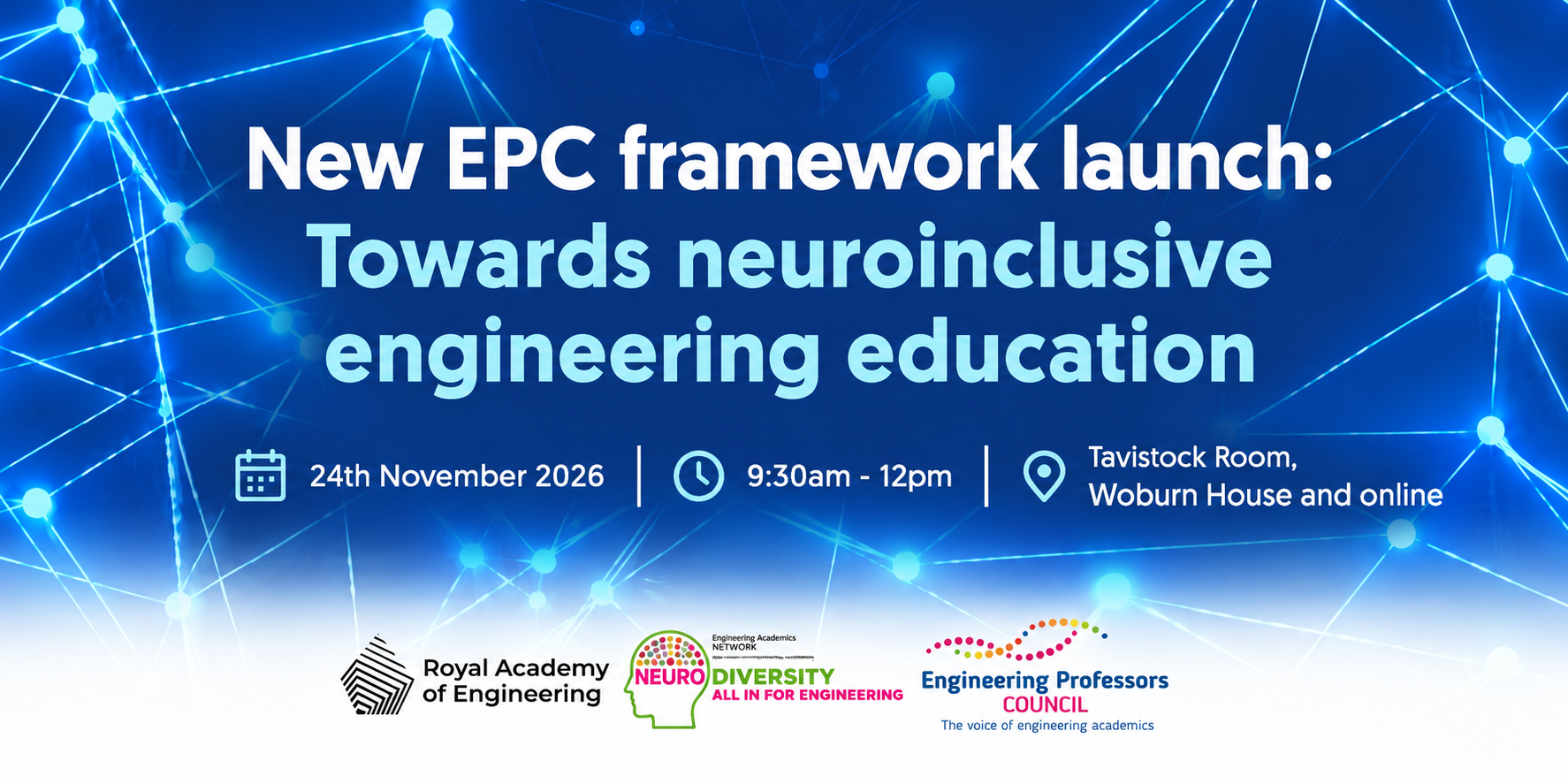
New EPC framework launch: Towards neuroinclusive engineering education
free
How can engineering education unlock the talents of every learner? Join sector leaders, educators and students to launch a new framework for neuroinclusive engineering education and help shape the future of the profession.
The Engineering Professors’ Council invites you to the launch of the EPC Neuroinclusion Maturity Framework, a new discipline-specific tool designed to help engineering faculties understand, assess and embed neuroinclusive practice.
Developed with over 100 contributors from across the sector, the framework moves the conversation beyond awareness and adjustment, linking neuroinclusion to educational quality, student success and institutional performance.
Join us to hear from project contributors, explore the evidence behind the framework, and learn how engineering departments can create learning environments that work better for all students.
With thanks to the Royal Academy of Engineering, impact partners for the framework.
A practical framework. A collaborative approach. A stronger future for engineering education.
Ready to take the next step?
Whether you are beginning your institution’s neuroinclusion journey or looking to build on existing good practice, this event offers an opportunity to engage with the authors, contributors and early adopters of the EPC Neuroinclusion Maturity Framework.
Places are limited. Register now to:
Be among the first to explore the framework in depth
Hear directly from leading voices in engineering education and neuroinclusion
Learn from the experiences of pilot institutions and co-design contributors
Connect with colleagues from across the engineering education community
Help shape the EPC Neuroinclusion Community of Practice and future implementation activity
Reserve your place today and join a growing movement to make neuroinclusive engineering education the norm, not the exception.
Register below
Attendance is free, but advance registration is required for both in-person and online participation.
Engineering education depends on diverse ways of thinking. Yet many neurodivergent students continue to face barriers within learning environments that were not designed with cognitive accessibility in mind.
Join the Engineering Professors’ Council for the launch of Towards Neuroinclusive Engineering Education: The EPC Neuroinclusion Maturity Framework, the first discipline-specific, evidence-led framework designed to help engineering faculties move from reactive accommodations to systemic neuroinclusive practice. Developed through a co-design process involving more than 100 contributors from 32 institutions, the framework provides a practical roadmap for strengthening inclusion, student success and educational quality across engineering education.
This interactive launch event brings together higher education leaders, engineering educators, professional engineering institutions, student voices and sector partners to explore the future of neuroinclusive engineering education. Attendees will hear from framework authors and contributors, learn about the evidence underpinning the model, and consider how neuroinclusive approaches can contribute to improved retention, progression, attainment, graduate readiness and institutional performance.
The event will also mark the beginning of a new national conversation, inviting participants to join the EPC Neuroinclusion Community of Practice and help shape the next phase of implementation across the sector
Who should attend?
Engineering academics and educators
Heads of School, Deans and Faculty leaders
Learning and teaching specialists
Student support and disability services staff
Quality and enhancement professionals
Professional engineering institutions
Researchers and policymakers with an interest in inclusive education
Neurodivergent students and advocates
You’ll leave with:
An understanding of the EPC Neuroinclusion Maturity Framework and its seven domains
Practical insights from pilot institutions and contributors
Ideas for strengthening neuroinclusive practice within your own context
Connections with others committed to improving engineering education
Opportunities to contribute to future case studies and the EPC Community of Practice
Agenda
09:30 | Registration, refreshments and networking
Arrive and connect with colleagues from across the engineering education community.
10:00 | Welcome and introduction
Stella Fowler, Interim Chief Executive, Engineering Professors’ Council. Introduction to the framework, the programme and the opportunities ahead for neuroinclusive engineering education.
Welcome from The Royal Academy of Engineering.
10:05 | Keynote address: engineering education at an inflection point
Professor Amanda Kirby
Why neuroinclusion is a matter of educational quality, workforce readiness and engineering excellence. Exploring the hidden challenges facing neurodivergent engineering students and the role institutions can play in creating more inclusive learning environments.
10:20 | Launch of the EPC Neuroinclusion Maturity Framework
Dr Jo-Anne Tait, Principal Lecturer in Digital Living and Design, Robert Gordon University, Co-Lead Author
Discover the research, evidence and co-design process behind the framework, including:
Why engineering requires a discipline-specific approach
The seven domains of neuroinclusive practice
The four-stage maturity model
Opportunities for implementation and impact within institutions
10:35 | Panel discussion: voices from the journey
Chaired by Professor Beverley Gibbs FREng, Co-Lead Author and EPC Vice President.
Featuring experts and contributors to the framework, including:
Professor Amanda Kirby
Dr Sarah Peers (pilot provider), Associate Professor and Head of Academic Skills at NMITE
Dr Nia Owen, Deputy Head of School: Education & Student Experience in Cardiff University’s School of Engineering / Dr Elisa Bertolesi, Senior Lecturer in Civil Engineering, Cardiff University School of Engineering
Professor Anne Nortcliffe, Dean of the Faculty of Arts, Computing and Engineering,Wrexham University
A discussion focused on lived experience, implementation and the practical realities of creating change across engineering education.
11:10 | Audience Q&A
An opportunity to engage directly with the authors, contributors and panellists.
11:25 | Community commitment
Working together to identify practical next steps:
11:50 | Closing remarks and call to action
An invitation to:
Use the framework within your institution
Participate in future case studies
Join the EPC Neuroinclusion Community of Practice
Contribute to a growing evidence base for neuroinclusive engineering education
12:00 | Close
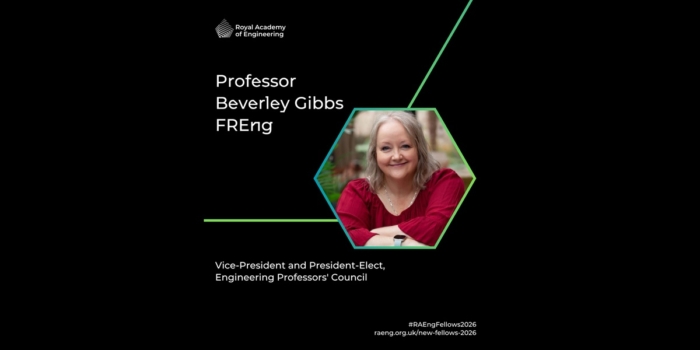
Professor Beverley Gibbs FREng is Vice-President and President-Elect of the Engineering Professors' Council (EPC), having previously been Chair of its Education, Employability & Skills Committee. An engineering educator and former engineer, she has led educational innovation and institutional development across the higher education sector, with a particular focus on employability, inclusion and curriculum transformation.
Beverley has been a leading advocate for neuroinclusive engineering education and worked with neurodivergent students and staff to develop the EPC's Neuroinclusion Maturity Framework. She was elected a Fellow of the Royal Academy of Engineering in 2026 in recognition of her contributions to engineering education, leadership and policy.
Amanda is the founder and CEO of Do-IT Solutions, an internationally recognised tech-for- good company that provides neurodiversity screening and web-based support tools for children and adults in education and employment. The profiling tools are also used in many settings including fire, police, justice, workplace, education and apprenticeship settings. The data findings are published with research partners
Amanda Is a medical doctor and an emeritus professor at the University of South Wales , an honorary professor at Cardiff University and a Visiting Professor at Faculty of Health Sciences Trinity College Dublin.
She has clinical and research experience and founded and ran a transdisciplinary clinical and research team for 20 years relating to neurodiversity. She is a qualified GP and has a Ph.D. relating to emerging adulthood and neurodiversity. She has initiated and run a wide variety of training programmes including a Masters in SEN programme. She is also Mental Health section editor for Neurodiversity for PLOS Journal.
Amanda has been on government advisory boards (e.g., Hidden Impairment National Group) as well as advising UK and international charities in the field of neurodiversity. This includes being a patron of the Dyspraxia Association in New Zealand, and Chair of Movement Matters UK. She is the current chair of the ADHD Foundation and works closely with many other charities working in this area. She sits on the Professional Advisory Group for DWP relating to Disability Confident. She recently advised the Engineering Council on their professional guidelines. She was on the working group for the first BSI guidelines -Design for the Mind, and the built environment.
She has written 10 books and more than 100 research papers in the field and one of her recent books published in 2021:'Neurodiversity at Work, Drive Innovation, Performance and Productivity with a Neurodiverse Workforce' won the Business Book Awards 2022 for EDI. Her latest book in 2023 is: Neurodiversity and Education and she is currently writing a book for parents.
Amanda has been voted one of the top UK HR Thinkers in 2022 and one the lifetime achievement awards at the National Diversity Awards as well as being voted in the top 50 Diversity power list. In 2023, she has been named one of: Think Women’s 40 outstanding global women’; Top ‘33 UK Business Influencers’. Amanda has co-authored the first Neurodiversity Index Report with City and Guilds Foundation published in March 2023 and the second one in March 2024. She is one of the LinkedIn Top Voices and has a weekly Neurodiversity 101 newsletter with more than 135,000 followers.
Amanda has lived experience of neurodiversity firsthand, as she sees herself as neurodivergent as well as being a parent of neurodivergent children, and grandchildren. Amanda’s passion to make changes in society and increase the chances of showcasing talents for neurodivergent children and adults especially in work settings remains as strong as it was 30 years ago
Dr Jo-Anne Tait is a Principal Lecturer in Digital Living and Design at Robert Gordon University (RGU), within the School of Computing, Engineering and Technology. She also leads RGUflex, the university’s flexible studies programme, and has a leadership role relating to Maritime education. She has been part of RGU’s engineering team since 2003, initially contributing to distance-learning MSc programmes in energy-related subjects before joining the university full-time in 2009.
Jo-Anne has a background in geology, petroleum geology, engineering education and higher education learning and teaching. She holds a BSc in Geology and Petroleum Geology from the University of Aberdeen, an MA in Higher Education Learning and Teaching from RGU, and completed a PhD at RGU in 2024 examining the mental health and wellbeing of engineering students.
Her research and professional interests include student mental health and wellbeing, inclusive engineering education, virtual and mixed reality, creative technologies, and multidisciplinary working. She was instrumental in the development of RGU ECHO, an anonymous digital resource designed to support engineering students' mental health and encourage earlier help-seeking.
In 2025, Jo-Anne was named among the Women’s Engineering Society’s Top 50 Women in Engineering (WE50), recognising her collaborative work on RGU ECHO and her contribution to engineering education and student wellbeing. RGU She is also a Senior Fellow of the Higher Education Academy (SFHEA).
More recently, she has contributed to work on neuroinclusion and inclusive assessment in engineering education, including collaboration with the Engineering Professors Council on developing approaches that better support diverse learners.
Dr Sarah Peers is an Associate Professor and Head of Academic Skills at the New Model Institute for Technology and Engineering (NMITE) in Hereford, where she leads the Academic Skills & Knowhow Centre (ASK). The centre supports students in developing the academic, mathematical and transferable skills needed to succeed as engineers, while also helping academic staff embed these capabilities throughout NMITE’s learning-by-doing approach.
Sarah has a background in mathematics, engineering education and mechanical engineering, holding a BSc, MSc, PGCE and PhD. Her doctoral research focused on the application of artificial intelligence and reliability tools to the maintenance of mechanical engineering structures. She has more than 30 years’ experience in engineering education across multiple levels and has been a longstanding advocate for greater gender equality and diversity in STEM.
Her professional interests include STEM education, mathematics education, widening participation, skills strategy and policy, diversity and inclusion, and innovation in engineering education. At NMITE, she has contributed to work exploring how innovative approaches to mathematics can remove barriers to entry into engineering and make engineering education more accessible to a broader range of students.
Sarah has also played a significant international leadership role in advancing women in engineering and science. She served as Deputy President of the International Network of Women Engineers and Scientists (INWES) from 2018–2020 and was elected President of INWES for the 2024–2026 term. In that role, she has promoted international collaboration and greater participation of women and girls in STEM.
She is a Fellow of the Institute of Innovation & Knowledge Exchange (FIKE) and a Fellow of the Royal Society of Arts (FRSA), as well as a member of the Institution of Engineering and Technology and INCOSE.
The Engineering Professors’ Council is committed to creating an inclusive and welcoming environment for all attendees.
Access to the Tavistock Room, Woburn House
Step-free access is available throughout the venue.
A lift provides access to the Tavistock Room.
A hearing loop is available for those who require it.
Additional adjustments We recognise that attendees may have different access requirements and will do our best to accommodate requests wherever possible. Adjustments available on request include:
Low-lighting or reduced-noise seating areas
Early entry to avoid crowds and busy arrival periods
Access to a calm or low-stimulus breakout space (subject to availability)
Wellbeing and quiet spaces A private wellbeing room is available on the 4th floor. The key can be obtained from Reception.
Attendees who would benefit from a larger or alternative quiet space may use the Sakura Café within the building. In addition, Tavistock Square Gardens is located directly opposite Woburn House and provides an accessible outdoor space for anyone who may wish to take a break, access fresh air, or step away from the event environment.
Requesting support If you have any access requirements or would like to discuss adjustments in advance of the event, please get in touch with the EPC team when registering. We will work with you to ensure that you can participate fully and comfortably in the event.
We welcome conversations about accessibility and encourage attendees to let us know how we can support their participation.
The Engineering Professors’ Council is delighted to congratulate Professor Beverley Gibbs FREng, EPC Vice-President and President Elect, on her election...
EPC introduces a new framework for engineering education The Engineering Professors’ Council is pleased to publish Towards Neuroinclusive Engineering Education:...