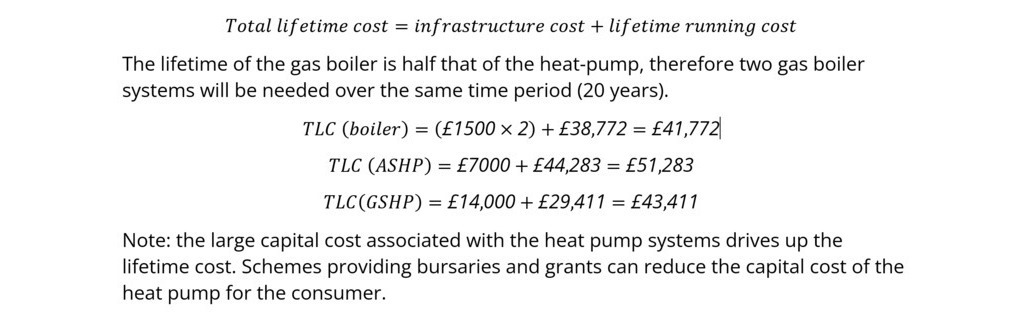
Case enhancement: Power-to-food technologies

Activity: An ethical evaluation of the technology and its impacts.

Author: Dr Fiona Truscott (UCL).


Overview:

This enhancement is for an activity found in the Dilemma Part one, Point 1 section of the case: “Identify different aspects of the production process where ethical concerns may arise, from production to delivery to consumption.” Below are prompts for discussion questions and activities that can be used. Each prompt could take up as little or as much time as the educator wishes, depending on where they want the focus of the discussion to be.

In this group activity, students will act as consultants brought in by the Power to Food team to create an ethical evaluation of the technology and any impacts it may have throughout its lifetime. The aim here is for students to work together to discuss the potential ethical issues at each stage of the production process as well as thinking about how they might be addressed. Groups will need to do research, either in class or at home. Depending on the timeframe you may want to give them a starting point and some basic information found in the case study’s learning and teaching resources.


Suggested timeline:


Team briefing:

You are a team of consultants brought in by the company who has developed Power to Food technology. Before they go to market they want to understand the ethical issues that may arise from the technology and address them if possible. They want you to look at the process as a whole and identify any ethical issues that might come up. They also want to know how easy these issues might be to address and want you to suggest potential ways to address them. You will need to provide the company with a briefing on your findings.


Tools:

It’s useful to give teams some frameworks through which they can do an analysis of the production process. One of those is to discuss who is harmed by the process at each stage. This is harm in the widest possible sense: physical, environment, political, reputational etc. What or who could be impacted and how? Another framework is the values of the people or entities involved in the process: what are they trying to achieve or what do they want and are any of these in conflict? Topics such as sustainability and accessibility also have an ethical dimension, and using these as a lens can help students to look at the problem from a different viewpoint.


Prompts for questions:

These are questions that you can get students to answer in class or suggest that they cover in an assessment. This could also be information you give the team so that they can use it as a foundation.


Assessment:

This group activity lends itself to a few different assessment formats, depending on what fits with your programme and timeframe. The two key things to assess are whether students can understand and identify ethical issues across the whole Power to Food production process and whether they can discuss ways to address these issues and the complexities that can be involved in addressing these issues. These two things can be assessed separately; for example through a written report where teams discuss the potential issues and a presentation where they talk about how they might address these issues. Or one assessment can cover both topics. This can be a written report, a live or recorded presentation, a video, podcast or a poster. Teams being able to see other teams’ contributions is both a good way of getting them to discuss different viewpoints and makes for a fun session. You can get teams to present their final work or a draft to each other.

Depending on the timeframe, you may also want to build in some skills assessment too. The AAC&U’s VALUE rubrics are a great starting point for assessing skills and IPAC is a good tool for assessing teamwork via peer assessment.


Marking Criteria:

Good Average Poor
Understanding and identification of ethics issues across the whole Power to Food production process Has identified and understood context specific ethical issues across the production process. May have shown some understanding of how issues may impact on each other. Has identified and understood broad/general ethical issues around production processes but hasn’t linked much to the specific context of the case study. Some stages may be more detailed than others. Has not identified many or any ethical issues and seems to have not understood what we’re looking for.
Discussing ways to address these issues and the complexities that can be involved Has identified context specific ways to address the ethical issues raised and has understood the potential complexities of addressing those ethical issues. Has identified broad/general ways to address the ethical issues raised and made some reference to differing levels of complexity in addressing ethical issues. Has not identified many or any ways to address the ethical issues raised and seems to have not understood what we’re looking for.
Communication Very clear, engaging and easy to understand communication of the ethical issues involved and ways to address them. Right language level for the audience. Generally understandable but not clear in places or uses the wrong level of language for the audience (assumes too much or not enough prior knowledge). Difficult to understand the point being made either due to language used or disconnection to the point of the assessment or topic.


This work is licensed under a Creative Commons Attribution-ShareAlike 4.0 International License.

Any views, thoughts, and opinions expressed herein are solely that of the author(s) and do not necessarily reflect the views, opinions, policies, or position of the Engineering Professors’ Council or the Toolkit sponsors and supporters.
Case enhancement: Water wars: managing competing water rights

Activity: Role-play the council meeting, with students playing different characters representing different perspectives.

Author: Cortney Holles (Colorado School of Mines, USA).


Overview:

This enhancement is for an activity found in the Dilemma Part two, Point 6 section: “Role-play the council meeting, with students playing different characters representing different perspectives.” Below are several prompts for discussion questions and activities that can be used. Each prompt could take up as little or as much time as the educator wishes, depending on where they want the focus of the discussion to be.


Prompts for questions:

After discussing the case in class, and completing the stakeholder mapping activity (Dilemma Part one, Point 4 – repeated below) from the Water Wars case study, this lesson guides teachers through conducting a role-play of the council meeting scenario.

1. Discuss the stakeholder mapping activity: Who are all the characters in the scenario? What are their positions and perspectives? How can you use these perspectives to understand the complexities of the situation more fully?

2. To prepare for the council meeting role-play activity, assign students in advance to take on different stakeholder roles (randomly or purposefully), or let them self-assign based on their interests.  Roles can include any of the following:

Suggestions from Stakeholder mapping activity:

Additional stakeholders to consider:

3. Before the class session in which the role-play will occur, students should research their stakeholder to get a sense of their values and motivations in regard to the case. Where no information is available, students can imagine the experiences and perspectives of the stakeholder with the goal of articulating what the stakeholder values and what motivates them to come to the council meeting to be heard on this issue. Students should prepare some statements about the stakeholder position on the water use by DSS, what the stakeholder values, and what the stakeholder proposes the solution should be. Students assigned to be council members will prepare for the role-play by learning about the conflict and writing potential questions they would want to ask of the stakeholders representing different views on the conflict.

4. In class, students prepare to role-play the council meeting by first connecting with others in the same stakeholder role (if applicable – you may have few enough students to have only one student assigned to a stakeholder) and deciding who can speak (you may want to require each student to speak or ask that one person be nominated to speak on behalf of the stakeholder group).

5. As the session begins, remind students to jot down notes from the various perspectives’ positions so there can be a debrief conversation at the end.  Challenge students to consider their personal biases and position at the outset and reflect on those positions and biases at the end of the council meeting. If they were a lead member of the council, what solution would they propose or vote for?

6. As the Council Meeting begins, the teacher should act as a moderator to guide students through the session. First the teacher will briefly highlight the issue up for discussion, then pass it to the students representing the Council members.  Council members will open the meeting with their description of the matter at hand between DSS and other local parties. They set the tone for the meeting with a call for feedback from the community members. The teacher can help the Council members call up the stakeholders in turn. Each stakeholder group will have a chance to state their argument, values, and reasons for or against DSS’ water use.  Each stakeholder will have an opportunity to suggest a proposed solution and Council members can engage in discussion with each stakeholder to clarify anything about their position that was unclear.

7. At the end of the meeting, the council members privately confer and then publicly vote on a resolution for the community.  All students, no matter their role, end the class by reflecting on the outcome and their original position on the case. Has anything shifted in their position or rationale after the council meeting? Why or why not?

8. The whole class could then engage in a discussion about the outcome of the council meeting. Teachers could focus on an analysis of how the process went, a discussion about the persuasiveness of different values and positions, and/or an exploration of the internal thinking students went through to arrive at their positions.


Related materials:


This work is licensed under a Creative Commons Attribution-ShareAlike 4.0 International License.

Any views, thoughts, and opinions expressed herein are solely that of the author(s) and do not necessarily reflect the views, opinions, policies, or position of the Engineering Professors’ Council or the Toolkit sponsors and supporters.


Case enhancement:
Business growth models in engineering industries within an economic system

Activity: Defending a profit-driven business versus a non-profit-driven business.

Author: Dr Sandhya Moise (University of Bath).


Overview:

This enhancement is for an activity found in the Dilemma Part one, Point 4 section of the case: “In a group, split into two sides with one side defending a profit-driven business and the other defending a non-profit driven business. Use Maria’s case in defending your position.” Below are several prompts for discussion questions and activities that can be used. These correspond with the stopping points outlined in the case. Each prompt could take up as little or as much time as the educator wishes, depending on where they want the focus of the discussion to be.


Session structure:

1. As pre-class work, the students can be provided the case study in written format.

2. During class, the students will need to be introduced to the following concepts, for which resources are provided below (~20 min):

3. Group activity (15 min +)

4. Whole class discussion/debate (15 min +)


Learning resources:

Ethics in Engineering resources:

Professional Codes of Conduct resources:

Corporate Social Responsibility Resources:

ESG Mandate Resources:

In recent years, there have been calls for more corporate responsibility in environmental and socioeconomic ecosystems globally. For example:

In 2017, the economist Kate Raworth set out to reframe GDP growth to a different indicator system that reflects on social and environmental impact. A Moment for Change?

Further reading:


Group Activity – Structure:

Split the class into two or more groups. One half of the class is assigned as Group 1 and the other, Group 2. Ask students to use Maria’s case in defending their position.


Group activity 1:

Group 1: Defend a profit-driven business model – Aims at catalysing the company’s market and profits by working with big corporations as this will enable quicker adoption of technology as well as economically benefit surrounding industries and society.

Group 2: Defend a non-profit driven business – Aims at preventing the widening of the socioeconomic gap by working with poorly-funded local authorities to help ensure their product gets to the places most in need (opportunities present in Joburg).


Pros and Cons of each approach:

Group 1: Defend a profit-driven business model:

Advantages and ethical impact:

Disadvantage and ethical impacts:

Group 2: Defend a non-profit driven business:

Advantages and ethical impact:

Disadvantage and ethical impacts:


Relevant ethical codes of conduct examples:

Royal Academy’s Statement of Ethical Principles:

Both of the above statements can be interpreted to mean that engineers have a professional duty to not propagate social inequalities through their technologies/innovations.


Discussion and summary:

This case study involves very important questions of profit vs values. Which is a more ethical approach both at first sight and beyond? Both approaches have their own set of advantages and disadvantages both in terms of their business and ethical implications.

If Maria decides to follow a profit-driven approach, she goes against her personal values and beliefs that might cause internal conflict, as well as propagate societal inequalities.

However, a profit-driven model will expand the company’s business, and improve job opportunities in the neighbourhood, which in turn would help the local community. There is also the possibility to establish the new business and subsequently/slowly initiate CSR activities on working with local authorities in Joburg to directly benefit those most in need. However, this would be a delayed measure and there is a possible risk that the CSR plans never unfold.

If Maria decides to follow a non-profit-driven approach, it aligns with her personal values and she might be very proactive in delivering it and taking the company forward. The technology would benefit those in most need. It might improve the reputation of the company and increase loyalty of its employees who align with these values. However, it might have an impact on the company’s profits and slow its growth. This in turn would affect the livelihood of those employed within the company (e.g. job security) and risks.


This work is licensed under a Creative Commons Attribution-ShareAlike 4.0 International License.

Any views, thoughts, and opinions expressed herein are solely that of the author(s) and do not necessarily reflect the views, opinions, policies, or position of the Engineering Professors’ Council or the Toolkit sponsors and supporters.

Case Enhancement: Choosing to install a smart meter

Activity: Technical integration – Practical investigation of electrical energy.

Author: Mr Neil Rogers (Independent Scholar).


Overview:

This enhancement is for an activity found in the Dilemma Part two, Point 1 section of the case: “Technical integration – Undertake an electrical engineering technical activity related to smart meters and the data that they collect.”

This activity involves practical tasks requiring the learner to measure parameters to enable electrical energy to be calculated in two different scenarios and then relate this to domestic energy consumption. This activity will give technical context to this case study as well as partly address two AHEP 4 themes:

This activity is in three parts. To fully grasp the concept of electrical energy and truly contextualise what could be a remote and abstract concept to the learner, it is expected that all three parts should be completed (even though slight modifications to the equipment list are acceptable).

Learners are required to have basic (level 2) science knowledge as well as familiarity with the Multimeters and Power Supplies of the institution.

Learners have the opportunity to:

Teachers have the opportunity to:


Suggested pre-reading:

To prepare for these practical activities, teachers may want to explain, or assign students to pre-read articles relating to electrical circuit theory with respect to:


Learning and teaching resources:


Activity: Practical investigation of electrical energy:

Task A: Comparing the energy consumed by incandescent bulbs with LEDs.

1. Power in a circuit.

By connecting the bulbs and LEDs in turn to the PSU with a meter in series:

a. Compare the wattage of the two devices.

b. On interpretation of their data sheets compare their luminous intensities.

c. Equate the quantity of each device to achieve a similar luminous intensity of approximately 600 Lumens (a typical household bulb equivalent).

d. now equate the wattages required to achieve this luminous intensity for the two devices.


2. Energy = Power x Time.

The units used by the energy providers are kWh:

a. Assuming the devices are on for 6 hours/day and 365 days/year, calculate the energy consumption in kWh for the two devices.

b. Now calculate the comparative annual cost assuming 1 kWh = 27p ! (update rate).


3.  Wider implications.

a. Are there any cost-benefit considerations not covered?

b. How might your findings affect consumer behaviour in ways that could either negatively or positively impact sustainability?

c. Are there any ethical factors to be considered when choosing LED lightbulbs? For instance, you might investigate minerals and materials used for manufacturing and processing and how they are extracted, or end-of-life disposal issues, or fairness of costs (both relating to production and use).


Task B: Using a plug-in power meter.

1. Connect the power meter to a dishwasher or washing machine and run a short 15/30 minute cycle and record the energy used in kWh.

2. Connect the power meter to a ½ filled kettle and turn on, noting the instantaneous power (in watts) and the time taken. Then calculate the energy used and compare to the power meter.

3. Connect the power meter to the fan heater and measure the instantaneous power. Now calculate the daily energy consumption in kWh for a fan heater on for 6 hours/day.

4. Appreciation of consumption of electrical energy over a 24 hour period (in kWh) is key. What are the dangers in reading instantaneous energy readings from a smart meter?


Task C: Calculation of typical domestic electrical energy consumption.

1. Using the list of items in Appendix A, calculate the typical electrical energy usage/day for a typical household.

2. Now compare the electrical energy costs per day and per year for these three suppliers, considering how suppliers source their energy (i.e. renewable vs fossil fuels vs nuclear etc).


Standing charge cost / day Cost per kWh Cost / day Cost / year
A) 48p 28p
B) 45p 31p
C) 51p 27p


3. Does it matter that data is collected every 30 minutes by your energy supplier? What implications might changing the collection times have?

4. With reference to Sam growing marijuana in the case, how do you think this will show up in his energy bill?


Appendix A: Household electrical devices power consumption:

Typical power consumption of electrical devices on standby (in Watts).

Wi-Fi router 10
TV & set top box 20
Radios & alarms 10
Dishwasher  5
Washing machine  5
Cooker & heat-ring controls 10
Gaming devices 10
Laptops x2 10


Typical consumption of electrical devices when active (in Watts) and assuming Gas central heating.

TV & set top box (assume 5 hours / day) 120
Dishwasher (assume 2 cycles / week) Use calculated
Washing machine (assume 2 cycles / week) Use calculated
Cooking (oven, microwave etc 1 hour / day) 1000
Gaming devices (1 hour / day) 100
Laptop ( 1 hour / day) 70
Kettle (3 times / day) Use calculated
Heating water pump (2 hours / day) 150
Electric shower (8 mins / day) 8000


This work is licensed under a Creative Commons Attribution-ShareAlike 4.0 International License.

Any views, thoughts, and opinions expressed herein are solely that of the author(s) and do not necessarily reflect the views, opinions, policies, or position of the Engineering Professors’ Council or the Toolkit sponsors and supporters.

Theme: Research

Authors: Dr Grazia Todeschini (King’s College London) and Kah Leong-Koo (National Grid UK)

Keywords: Electrical Engineering, Power Systems, Renewable Energy, Computer Model

Abstract: This case study deals with a collaboration between KCL and National Grid on a EPSRC project. The project deals with assessing the impact of renewable energy sources on the electricity grid. This assessment will be carried out by using a transmission grid model provided by National Grid and device models developed by KCL.


Topic of the case study

This case study deals with the development of advanced models to study the impact of renewable energy sources, and more in general, inverter-based devices, on the UK transmission grid. More specifically, this project focuses on the impacts in terms of voltage and current distortion. This topic is referred to as ‘power quality’ in the specialist literature.

Aims

This research was motivated by various reports presented in the technical literature in the last decade, where a general increase of harmonic levels has been observed. A similar trend has been reported in several countries, simultaneously to the installation of increasing levels of renewable energy sources and other inverter-based devices. These reports have created some concerns about harmonic management in the future, when more renewable energy sources will be in services. Ultimately, the project aims at forecasting harmonic levels in 2050, and at determining impact on the equipment, and possible mitigating solutions.

Collaborating parties

This case study involved the collaboration between the Department of engineering at King’s College London and National Grid UK.

Project set up

Power quality is a specialist area within power systems that deals with deviation of voltage and current waveforms from the nominal values, in terms of both amplitude and frequency. The academic PI worked for a few years in the power industry, with the aim of specialising in power quality and understanding the issues faced by the power industry, as well as the tools that are used to carry out power system studies. The industrial PI is an expert in the area of power quality and has been involved with many standardisation groups as well as professional organisation to help developing common tools to harmonise the approach to power quality. Therefore, the two PIs have a similar expertise and background that allowed them to discuss and define common areas of research. When looking to develop such a specialist project, it is very important that all parties involved have a common ground, so that it is possible to interact and work in the same direction.

Outcomes

The project is still not finished, however, some of the original objectives have been achieved:

  1. A 2050 scenario has been developed, by using: transmission system model data provided by National Grid, device models developed through research and testing, and identification of future locations of renewable energy sources. Although the case is still under development, preliminary results indicate that harmonic levels are expected to increase, but they can be managed using existing design practice.

Lessons learned, reflections, recommendations

Further resources

We published two papers and others are in preparation:


Any views, thoughts, and opinions expressed herein are solely that of the author(s) and do not necessarily reflect the views, opinions, policies, or position of the Engineering Professors’ Council or the Toolkit sponsors and supporters.

Theme: Knowledge exchange, Universities’ and businesses’ shared role in regional development, Collaborating with industry for teaching and learning

Authors: Ben Ricketts (NMITE), Prof Beverley Gibbs (NMITE) and Harriet Dearden (NMITE)

Keywords: Challenge-based Learning, Timber Technology, Levelling-up, Skills, Future of Work

Abstract: NMITE is a greenfield engineering-specialist HEI in Herefordshire which welcomed its first students in September 2021. Partnership is key to our growth, from both necessity and choice. Our MEng Integrated Engineering is infused with partners who facilitate a challenge-based learning pedagogy, and our Centre for Advanced Timber Technology (opening September 2022) works in national partnership to deliver a curriculum developed by – and for – the timber engineering industry. Alongside a rich educational offer, NMITE’s greenfield status brings with it the responsibility to contribute to civic and economic growth. We are a named partner in Western Power Distribution’s Social Contract as we pursue shared goals for regional development and reduced economic inequality. Key to our goals is our role in in Hereford’s Town Plan, leading an initiative called The Skills Foundry which will promote community engagement around individual skills, and with businesses in the changing nature of work.


NMITE is a greenfield HEI founded to make a difference to the people of Herefordshire and to its economy. Herefordshire is  characterised by lower-than-average wages, lower-than-average skills, higher proportions of part-time work, a GVA gap of £1.75bn[1], and is categorised as a social mobility coldspot [2].  Into this context, NMITE was launched in 2021 without any antecedent or parent organisation, and with an engineering and technology focus whose graduates would help address the national shortfall of engineers.  We see ourselves as educators, educational innovators, a catalyst for upskilling, and agents for regional change.

An HEI founded in partnership

From NMITE’s earliest days, building strong relationships with partners has been a core part of our culture.  NMITE’s first supporters were industry partners, a mixture of local SMEs and national and international companies with a regional presence, united by the need for access to a talent pipeline of engineering graduates. The urgency of this need was evidenced in the raising of over £1M of seed funding, from a range of businesses and individuals. This early investment demonstrated to Government and other stakeholders that the concept of an engineering higher education institution in Hereford had industrial support. In turn, this unlocked significant Government funding which has subsequently been matched through donations and sponsorship to NMITE.

Over the last five years, the portfolio of partners has continued to grow. The nature of the support spans equipment, expertise and financial donations. Our Pioneer Fund raised money to support NMITE’s first students, with donations recognised through naming opportunities. For NMITE, this enabled us to offer universal bursaries to our students joining in our first two years of operation – a powerful tool in student recruitment, and with a longer-term outcome for those early investors in their ability to develop relationships with students, increase their brand awareness and achieve their own recruitment targets in the future.

Curriculum Partnerships

NMITE welcomed its first MEng students in September 2021, and this has provided new opportunities for industrial partnership in the curriculum. The MEng Integrated Engineering is a challenge-led pedagogy where learners work in teams to address real engineering challenges provided by an industrial (and occasionally community) partner. During the process, learners have direct contact with professionals to understand commercial pressures and engineering value, apply theoretical knowledge and develop professional capabilities.

In the sprint-based MEng, NMITE learners tackle around 20 different challenges in this way. Since September, our first students have helped re-engineer the material on a torque arm, designed and built a moisture sensor for a timber-framed house, visualised data from a geotechnical survey, and validated/optimised their own designs for a free-standing climbing structure. Students are already building their portfolio of work, and employers are building relationships with our student body.

Amplifying Innovation

Whilst NMITE is comfortable in its positioning as a teaching-focused HEI, we are mindful of the contribution we can make to the regional economy. NMITE has benefitted from LEP investment to support regional skills and productivity [3], and we have identified opportunities in advanced timber technology, automated manufacturing and skills for a changing future of work.

The Centre for Advanced Timber Technology (CATT) will open in September 2022 on Skylon Park, Hereford’s Enterprise Zone. Drawing on insight from a series of round table meetings with global and national businesses in timber, we came to understand that the UK timber industry needed to be much better connected, with more ambitious collaboration across the industry both vertically (seed to end product) and horizontally (between architects, engineers and construction managers, for example). In pursuing these aims we once again opted for a partnerships-based approach, forging close relationships with Edinburgh Napier University – internationally recognised for timber construction and wood science – and with TDUK – the timber industry’s central trade body. Founded in this way, CATT is firmly rooted in industrial need, actively engaged with industrial partners across the supply chain, and helps join up activity between Scotland, England and Wales. 

CATT’s opening in 2022 will spearhead NMITE’s offer for part-time, work-based learners (including professionals, reskillers and degree apprentices) and provide a progressive curriculum for a sustainable built environment. In keeping with NMITE’s pedagogical principals, the CATT’s curriculum will be infused with a diverse portfolio of industrial partners who will provide challenges and context for the CATT curriculum. In future years, the Centre for Automated Manufacturing will provide educational options for comparable learners in the manufacturing industry.

Our initial research in establishing need in these areas pointed not only to skills shortages, but to technological capacity. Herefordshire has a very high proportion of SME’s who report difficulties in horizon scanning new technologies, accessing demonstrations, attracting and retaining graduates with up-to-date knowledge. In this space, and an HEI can play a key role in amplifying innovation; activities to support this will be integral to NMITE’s work at Skylon Park.

The Changing Nature of Work

NMITE is active in two further projects that support the regional economy and social mobility, founded in the knowledge that today’s school leavers will face very different career paths and job roles to those we have enjoyed. Automation, globalisation and AI are hugely disruptive trends that will change opportunities and demand new skills.

NMITE’s ‘Herefordshire Skills for the Future’ project is funded by the European Social Fund and helps SMEs, micro-businesses and young people to develop and secure the skills needed to flourish in the economy of 2030. Activities include:

NMITE’s Future Skills Hub is a central element of the Hereford Stronger Towns bid [4] to the Government’s Towns Fund, a flagship levelling-up vehicle. The overarching goal of the hub is to provide access to skills and improve employment opportunities for Herefordians, in the context of changing job roles and opportunities.

Conclusion

Our core mission of innovation in engineering education is enhanced by our civic commitment to regional growth and individual opportunity. From the outset, NMITE has been clear that to meet business demand for work-ready engineers, business must contribute meaningfully to their development. We aim to contribute to closing the gap in regional, national and global demand for engineers, but without that critical early investment from partners we would not have been in the position to establish the radical institution that NMITE is today, that remains so close to the original vision of the Founders.


[1] Herefordshire Council. Understanding Herefordshire: Productivity and Economic Growth, 2022. Available online at Productivity and economic growth – Understanding Herefordshire [accessed 17th January 2022].

[2] [1] Herefordshire Council. Understanding Herefordshire: Topics Related to Social Mobility, 2022. Available online at Topics relating to social mobility – Understanding Herefordshire [accessed 17th January 2022].

[3] Marches Local Economic Partnership. Marches LEP backs NMITE project with £5.66m funding deal. Available online at Marches LEP backs NMITE project with £5.66m funding deal – Marches LEP [accessed 17th January 2022].

[4] Stronger Hereford. #StrongerHereford – The independent Towns Fund Board for Hereford


Any views, thoughts, and opinions expressed herein are solely that of the author(s) and do not necessarily reflect the views, opinions, policies, or position of the Engineering Professors’ Council or the Toolkit sponsors and supporters.

Theme: Universities’ and business’ shared role in regional development 

Authors: Amer Gaffar (Manchester Metropolitan University); Dr Ian Madley (Manchester Metropolitan University); Prof Bamidele Adebisi (Manchester Metropolitan University).

Keywords: Decarbonisation; Local Energy; Skills; Economic Growth.

Abstract: Greater Manchester (GM) has committed to carbon neutrality by 2038. There is a 97m tonnes carbon emission gap between solutions currently available and a net zero budget. To bridge this innovation gap under the leadership of the Greater Manchester Combined Authority the agency brings together: Bruntwood, Hitachi, MMU, UoM, GM Growth Company, SSE and UoS to support R&D and innovation initiatives focused on customer pull to enable rapid deployment of new and emerging technologies, services and business models to meet the challenge of GM becoming a carbon neutral city-region by 2038, drive skills development and deliver economic growth.


The need for an Energy Innovation Agency

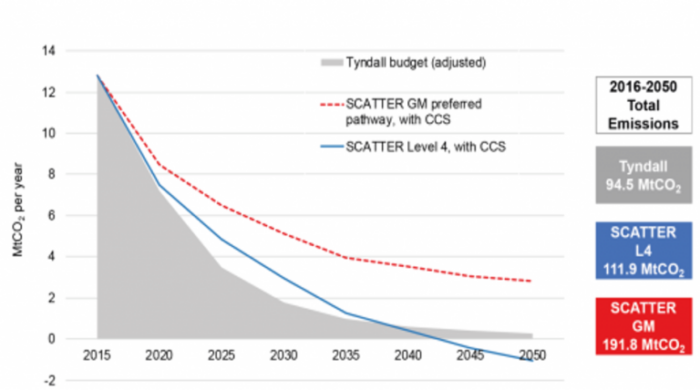
The Mayor for Greater Manchester Combined Authority (GMCA) has committed the city region to carbon neutrality by 2038.  An analysis of the implications of the Paris Climate Change Agreement for Greater Manchester (GM) (Figure 1) has identified that there is a 97m tonnes carbon emission gap between solutions currently available and the actions needed to reach net zero.  We refer to this as the Innovation Gap.

 
Figure 1 GM Net Zero Carbon Budget and implementation pathways. Source GM 5-year Environment Plan [1]


[2] Unconstrained implementation of Scatter methods
Achievable implementation of Scatter methods


To bridge the GM innovation gap under the leadership of GMCA the agency brings together: Bruntwood, Hitachi, Manchester Metropolitan University, University of Manchester, SSE and  University of Salford to support R&D and innovation initiatives focused on customer pull to enable rapid deployment of new and emerging technologies, services and business models (energy innovations) to meet the challenge of GM becoming a carbon neutral city-region by 2038, driving skills development and delivering economic growth.

Forming the Energy Innovation Agency

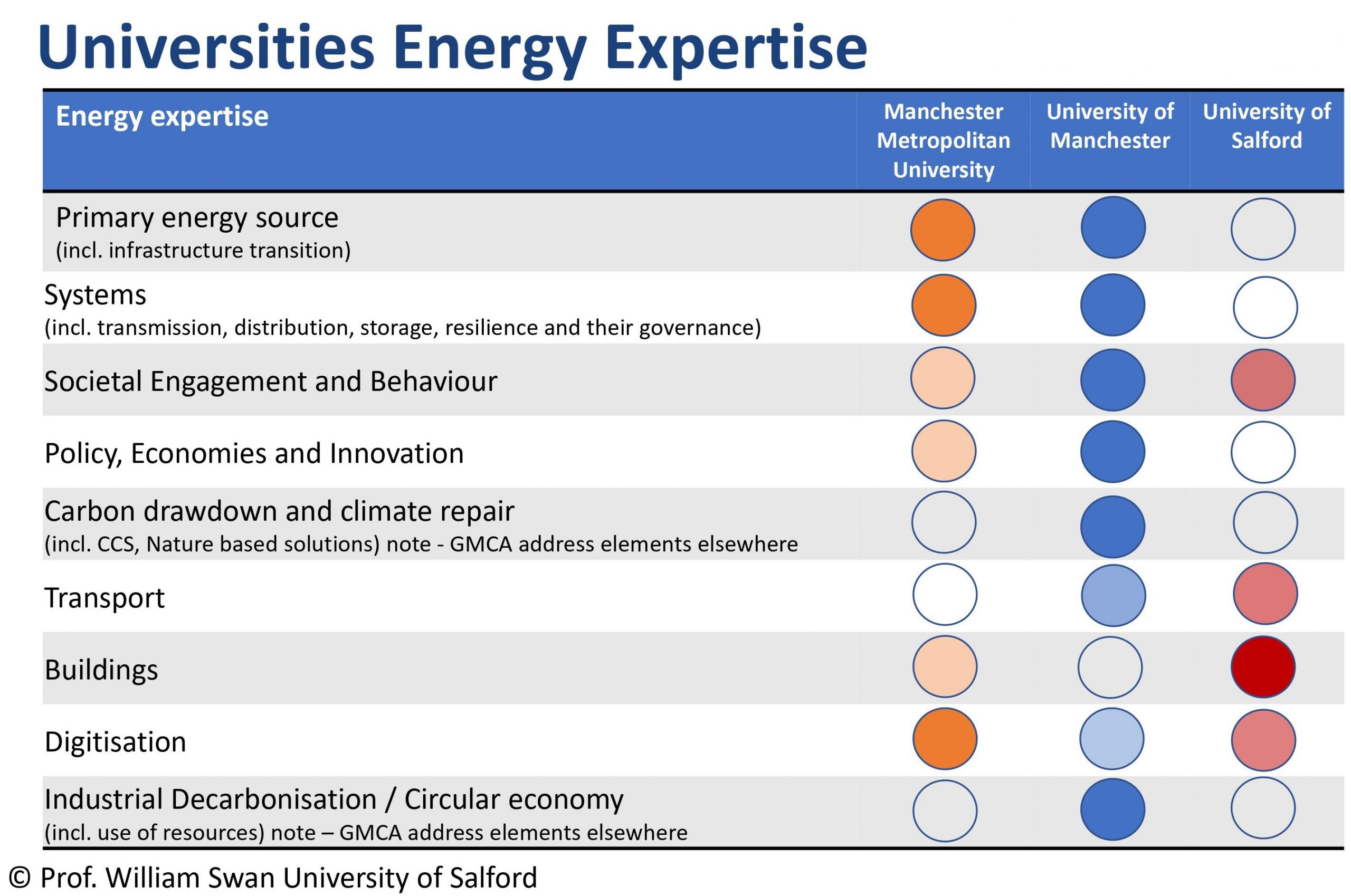
GMCA initially approached the city’s three universities to seek advice on how their academic expertise could be harnessed to help bridge the innovation gap.  This quickly led to discussions between each of the universities that identified a wide pool of complementary, and largely non-competitive, areas of research expertise that could address the gap (Figure 2).      

Figure 2 Research expertise by university partner – darker colour indicates a greater depth of expertise in the area.


It was also clear that the timescales needed to deliver city wide change would not fit within a traditional academic approach to research and knowledge transfer that required a public-private partnership.

At the core of this partnership approach are three key components.

Using existing networks, a core team comprising GMCA, Bruntwood, Hitachi, MMU, UoM, SSE and UoS came together to develop the business plan for the agency and to jointly provide the funding for the first three-years of the operation of the agency.

Vision, Aims and Objectives

To accelerate the energy transition towards a carbon-neutral economy by bridging the energy innovation gap, increasing the deployment of innovative energy solutions in GM and beyond, to speed-up the reduction of carbon emissions.

Aims:

  1. Innovation Exploitation: supporting and scaling the most promising decarbonised energy innovations to maximise the early adoption of effective carbon-neutral energy systems.
  2. Decarbonisation: reducing Greater Manchester’s carbon emissions from energy to meet our ambitious target to be a carbon-neutral city region by 2038
  3. Rapid Commercialisation: rapid transition of carbon-neutral energy innovations to full-scale integration.
  4. Investment: creating and promoting investment opportunities for carbon-neutral energy innovations and projects in the city region.

Objectives:

Scope

With a population of 2.8 million covering 1,277 km2 the ten metropolitan boroughs of GMCA comprises the second most populous urban area in the UK, outside of London. The scope and potential for the Energy Innovation Agency is huge.


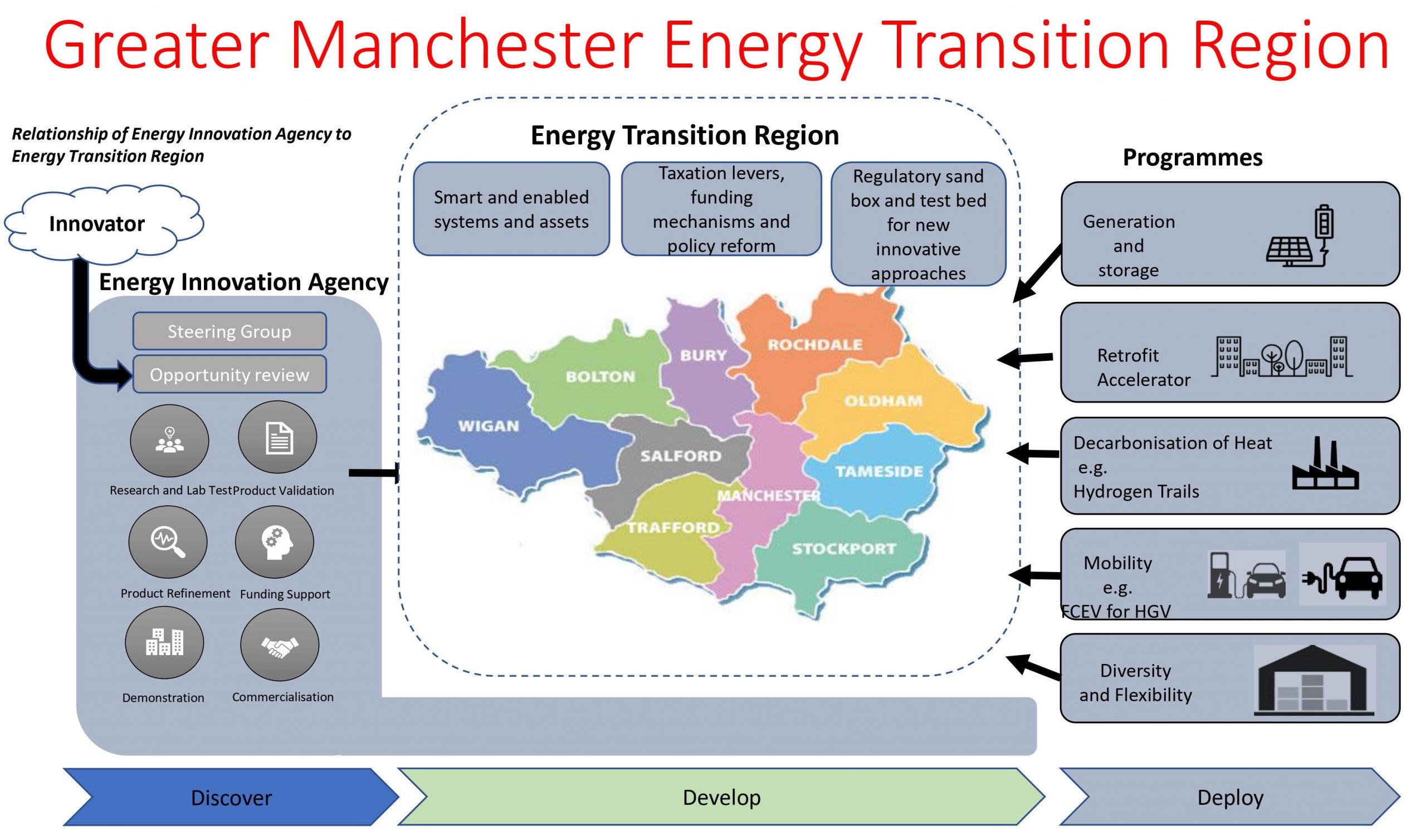
Figure 3 GMCA Energy Transition Region showing local authority boundaries.


Establishing the GM-city region area as an Energy Transition Region will provide the opportunity to develop the scale of deployment necessary to go beyond small-scale demonstration projects and develop the supply chains that can be replicated as a blue-print  elsewhere in urban environments across the UK and internationally.

Progress to date

Following the investment by the founding partners a management team has been established within GMCA’s subsidiary “The Growth Company”.  An independent board chaired by Peter Emery CEO ENWL has also been established.

The formal launch event will take place on 28th April 2022, at which a first challenge to the innovation community to bring forward solutions to decarbonise non-domestic buildings  will be set.

Key contacts and further information

Energy Innovation Agency

Case Study

Amer Gaffar, Director Manchester Fuel Cell Innovation Centre, Manchester Metropolitan University a.gaffar@mmu.ac.uk

References

[1] https://www.greatermanchester-ca.gov.uk/media/1986/5-year-plan-branded_3.pdf

[2] Kuriakose, J., Anderson, K., Broderick, J., & Mclachlan, C. (2018). Quantifying the implications of the Paris Agreement for Greater Manchester. https://www.research.manchester.ac.uk/portal/files/83000155/Tyndall_Quantifying_Paris_for_Manchester_Report_FINAL_PUBLISHED_rev1.pdf


Any views, thoughts, and opinions expressed herein are solely that of the author(s) and do not necessarily reflect the views, opinions, policies, or position of the Engineering Professors’ Council or the Toolkit sponsors and supporters.

Theme: Research, Knowledge exchange

Authors: Dr Matteo Ceriotti (University of Glasgow), Niven Payne (Fujitsu UK), Giulia Viavattene (University of Glasgow), Ellen Devereux (Fujitsu UK), Dr David Snelling (Fujitsu UK) and Matthew Nuckley (Fujitsu UK)

Keywords: Space, Debris Removal, Sustainability, Optimisation

Abstract: A partnership between the University of Glasgow, Fujitsu UK, Astroscale and Amazon Web Services was established in response to a UK Space Agency call on Active Debris Removal mission design. This is the process of de-orbiting space debris objects from low Earth orbit with a dedicated spacecraft. The consortium brought together different but complementary expertise and tools to develop an algorithm (using machine learning and quantum-based computing) to design multiple-debris removal missions, able to select feasible sequences of debris objects among millions of permutations, in a fraction of the time of previous methods, and of better performance in terms of time and propellant required.


Overview

Space and its services have become part of everyone’s daily life, quietly. Things like mapping, geolocation, telecommunication services and weather forecast all depend on space assets. The continuous and increasing exploration and exploitation of space heavily depends on sustainability: defunct satellites and other spacecraft and launcher parts that became part of space debris population, or “junk”, increasing the threat of collision for current and future missions. There are 34,000 objects larger than 10 cm, and 130 million smaller than 1 cm, including non-operational satellites, upper stage rocket bodies, satellite parts, etc. Most of these objects are in the low Earth orbit region (below 1000 km), which is where most satellites operate.

Design of new satellites for demise prevents the creation of further debris. Active debris removal (ADR) aims dispose of debris objects that are currently in orbit. ADR actions require a “chaser” spacecraft to grapple a “non-cooperative” target, and transfer it to an orbit low enough that it will eventually de-orbit and burn in the atmosphere in a relatively short amount of time.

The idea

Many ADR missions would be required to make a substantial contribution in diminishing the debris population. The business challenge was to investigate how we could make space debris removal missions more commercially viable. This project investigated the feasibility, viability and design of removal and disposal of multiple debris objects using a single chaser spacecraft. The mission scenario involves a spacecraft that transfers to the orbit of one or more objects, captures it (or them), and then transfers to a lower orbit for release and disposal. At low altitude, the atmospheric drag will quickly cause the object to rapidly fall and burn in the atmosphere. In the meantime, the chaser spacecraft will transfer to another object (or set of objects) and continue the mission.


The problem

With million pieces of space junk, there are multiple trillions of permutations for ADR missions between these objects, that would need to be investigated, to efficiently remove even only a few of them. Since orbital transfers have no analytical closed-form solutions, an optimisation strategy must be used to find a solution to trajectory design problems, which is generally computationally demanding.

Our solution

The aim of this project was to make space debris removal missions more commercially viable, through a new solution that allows fast mission planning. First, an Artificial Neural Network (ANN) is trained to predict the cost of orbital transfer to and disposal of a range of debris objects quickly. Then, this information is used to plan a mission of four captures from candidate possible debris targets using Fujitsu’s quantum-inspired optimisation technology, called Digital Annealer (DA), by formulating the problem as a quadratic unconstrained binary optimisation. We used Astroscale’s mission planning data and expertise, and run the algorithms on the Amazon Web Services (AWS) Sagemaker platform. For technical details on our approach, the reader is referred to the publications below.

Outcomes

In a test-scenario, we showed that our solution produced a 25% faster mission, using 18% less propellant when compared to an expert’s attempt to plan the mission using the same assumptions; this was found 170,000 times faster than current methods based on an expert’s work.

Partnership

The project involved the partnership of four institutions, with areas of contributions described in the following diagram:

We believe the key to the success of the partnership was the different, but complementary areas of expertise, tools offered, and contribution of each partner into the project. It may be easier to rely on existing network of contacts, often with similar areas of expertise. However, this project shows that the additional effort of creating a new partnership can have great benefits, that overcome the initial difficulties.

Project set up

An initial contact between Fujitsu and UofG defined the original idea of the project, combining the existing expertise on discrete optimisation (Fujitsu) and multi-body space missions (UofG). The team was strengthened by expertise in active space debris removal (Astroscale) and cloud computing (AWS). The project proposal was funded by the United Kingdom Space Agency (UKSA), for a duration of four months, from September 2020 to January 2021.

Due to the on-going global pandemic, the project was run entirely online, with weekly meetings on Microsoft Teams. Fujitsu, as team lead, was responsible for planning and scheduling of tasks, as well as integration of code and reporting.

Lessons learned and reflections

Reactivity in preparing a project proposal was fundamental for the project: The very first contact between the partners was made at the end of July 2020, the proposal was submitted in mid-August and the project officially kicked-off in September.

Given the short timeframe, it was important to conceive a project proposal that fit the scope of the funder, but also matches with available expertise and personnel. It was also critical to frame the business challenge in the proposal.

From the point of view of the academic team, and again given the short window between notification of successful application and start of the project, these factors were crucial for the success of the project:

A PhD student in the research group was the best candidate for the project: at the cost of taking a leave-of-absence from the PhD studentship, the project constituted a unique experience with industrial collaboration, enriched their CV through a ground-breaking project, added a conference and a journal paper to their track record, and eventually opened new areas of investigation for the rest of the PhD studentship.

It would have been probably unthinkable – or at not very credible – to deliver a project with new partners remotely without any in-person meeting before the pandemic; however, this turned out to be an enabler for this project, allowing to maximise time on actual development and save on travel costs.

Further information

G. Viavattene, E. Devereux, D. Snelling, N. Payne, S. Wokes, M. Ceriotti, Design of multiple space debris removal missions using machine learning, Acta Astronautica, 193 (2022) 277-286. DOI: 10.1016/j.actaastro.2021.12.051

D. Snelling, E. Devereux, N. Payne, M. Nuckley, G. Viavattene, M. Ceriotti, S. Wokes, G. Di Mauro, H. Brettle, Innovation in planning space debris removal missions using artificial intelligence and quantum-inspired computing, 8th European Conference on Space Debris, ESA/ESOC, Darmstadt, Germany (Virtual Conference), 2021.


Any views, thoughts, and opinions expressed herein are solely that of the author(s) and do not necessarily reflect the views, opinions, policies, or position of the Engineering Professors’ Council or the Toolkit sponsors and supporters.

Theme: Knowledge exchange

Authors: Dr Tom Allen (Manchester Metropolitan University), Prof Andy Alderson (Sheffield Hallam University) and Dr Stefan Mohr (HEAD)

Keywords: Sport, Tennis, Material, Auxetic, Mechanics

Abstract: The case study is interesting as it combines the engaging topics of smart materials and sports engineering, and showcases the release of a sports product. The work is underpinned by academic papers, include a teaching focus one detailing how materials have influenced tennis rackets dating back to the origins of the game. Effect of materials and design on the bending stiffness of tennis rackets: https://doi.org/10.1088/1361-6404/ac1146. Review of auxetic materials for sports applications: Expanding options in comfort and protection: https://doi.org/10.3390/app8060941.


This case study is about the application of auxetic materials to sports equipment. Particularly, it is about the development of the first ever tennis racket to feature auxetic fibre-polymer composites [1]. In our work, we aim to combine the exciting fields of sport and advanced materials to engage people with science, technology, engineering, and maths (STEM). Indeed, our work is multi-disciplinary. Dr Mohr is the R&D Manager for PreDevelopement at HEAD and brings expertise in tennis racket engineering, Dr Allen and Professor Alderson are academics and bring respective expertise in sports engineering and smart materials.

Dr Allen has been researching the mechanics of sports equipment for many years, with a focus on tennis rackets [2]. One project involved characterising the properties of over 500 diverse rackets dating back to the origins of the game in the 1870s to the present day. The rackets were from various collections, including the Wimbledon Lawn Tennis Museum in London, and HEAD in Kennelbach Austria, where Dr Mohr works. The museum houses particularly old and rare rackets, whereas the collection at HEAD has a broad range of more modern designs. Initial work involved developing techniques for efficiently characterising many rackets [3]. Subsequent publications describe how a shift in construction materials – from wood to fibre-polymer composites – around the 1970s and 1980s led to lighter and stiffer rackets, with shorter handles and larger heads [4], [5]. Indeed, the application of new materials has driven the development of tennis rackets, and further advances are likely to come from developments in materials and manufacturing techniques.

Professor Alderson has been researching smart materials and structures for many years, with a focus on auxetic materials [6]. Auxetic materials have a negative Poisson’s ratio, which means that they fatten when stretched and become thinner when compressed. A negative Poisson’s ratio can enhance other properties, including vibration damping. Dr Allen and Professor Alderson have been working together to apply auxetic materials to sports equipment [7]. Dr Allen discussed this work on auxetic materials with Dr Mohr, and this led to the collaboration between the three parties that resulted in the new racket design [1].

Auxetic fibre-polymer composites were particularly appealing to Dr Mohr for application in tennis rackets, as they can be made using conventional fibres and resins, by simply arranging the fibres in specific orientations [8]. Following a visit to HEAD, where he was able to see the prototyping facilities, Professor Alderson developed various auxetic fibre-polymer composites, using the materials already being used by HEAD to make rackets. HEAD then developed prototype rackets incorporating these auxetic fibre-polymer composites at their research and development facility in Kennelbach. The racket designs were further developed and refined through testing, both in the laboratory and on the tennis court with players providing feedback.  

The first tennis racket with auxetic fibre composites was released in late 2021, in the form of the HEAD Prestige (Figure 1a). The Prestige was followed by the release of a new racket silo (collection) in early 2022 in the form of the Boom (Figure 1b). Drs Mohr and Allen and Professor Alderson are now exploring options for further applying auxetic materials to tennis rackets. Dr Allen’s teaching case study on the historical development of the tennis racket [4] has been enriched by including the story behind the development of the new auxetic fibre-polymer composite rackets [1]. He also includes discussion of emerging topics in the case study that could be applied to tennis rackets, such as more automated manufacturing techniques like additive manufacturing, and more environmentally friendly materials, like natural fibres and resins [5]. We hope that the new tennis rackets will raise awareness of auxetic materials amongst the public, and the case study will help inspire others to use topics like sports engineering and advanced materials to support their STEM teaching and public engagement.  


Figure 1 Examples of HEAD rackets featuring auxetic fibre-polymer composites, a) Prestige Pro and b) Boom Prom.


References

[1]         HEAD Sports, “Auxetic – The Science Behind the Sensational Feel,” 2021. https://www.head.com/en_GB/tennis/all-about-tennis/auxetic-the-science-behind-the-sensational-feel (accessed Feb. 05, 2022).

[2]         T. Allen, S. Choppin, and D. Knudson, “A review of tennis racket performance parameters,” Sport. Eng., vol. 19, no. 1, Mar. 2016, doi: 10.1007/s12283-014-0167-x.

[3]         L. Taraborrelli et al., “Recommendations for estimating the moments of inertia of a tennis racket,” Sport. Eng., vol. 22, no. 1, 2019, doi: 10.1007/s12283-019-0303-8.

[4]         L. Taraborrelli, S. Choppin, S. Haake, S. Mohr, and T. Allen, “Effect of materials and design on the bending stiffness of tennis rackets,” Eur. J. Phys., vol. 42, no. 6, 2021, doi: 10.1088/1361-6404/ac1146.

[5]         L. Taraborrelli et al., “Materials Have Driven the Historical Development of the Tennis Racket,” Appl. Sci., vol. 9, no. 20, Oct. 2019, doi: 10.3390/app9204352.

[6]         K. E. Evans and A. Alderson, “Auxetic materials: Functional materials and structures from lateral thinking!,” Adv. Mater., vol. 12, no. 9, 2000, doi: 10.1002/(SICI)1521-4095(200005)12:9<617::AID-ADMA617>3.0.CO;2-3.

[7]         O. Duncan et al., “Review of auxetic materials for sports applications: Expanding options in comfort and protection,” Applied Sciences (Switzerland), vol. 8, no. 6. 2018, doi: 10.3390/app8060941.

[8]         K. L. Alderson, V. R. Simkins, V. L. Coenen, P. J. Davies, A. Alderson, and K. E. Evans, “How to make auxetic fibre reinforced composites,” Phys. Status Solidi Basic Res., vol. 242, no. 3, 2005, doi: 10.1002/pssb.200460371.


Any views, thoughts, and opinions expressed herein are solely that of the author(s) and do not necessarily reflect the views, opinions, policies, or position of the Engineering Professors’ Council or the Toolkit sponsors and supporters.

Theme: Collaborating with industry for teaching and learning, Graduate employability and recruitment

Author: James Ford (University College London)

Keywords: Civil Engineering Design, Timber Design, Industry, Collaboration

Abstract: A project, developed jointly by UCL and engineers from ARUP, allowed students to work on redesigning the fire damaged roof of the Notre Dame Cathedral. Industry expertise complemented academic experience in civil engineering design to create a topical, relevant and creative project for students. The project combined technical learning in timber design with broader considerations such as costs, health and safety, buildability and environmental impacts. Final presentations being made to engineering teams at ARUP offices also developed wider professional skills.


Background

Following the 2019 fire in the Notre Dame Cathedral, Civil Engineering Students at University College London (UCL) were tasked with designing a replacement. The project was delivered, in collaboration with engineers from ARUP, within a Design module in Year 2 of the programme. The project was run as a design competition with teams competing against one another. The project built on learning and design project experience built up during years 1 and 2 of the course.

The collaboration with ARUP is a long-standing partnership. UCL academics and ARUP engineers have worked on several design projects for students across all years of the Civil Engineering Programme.

The Brief

Instead of designing a direct replacement for the roof the client wanted to create a modern, eye-catching roof extension which houses a tourist space that overlooks the city. The roof had to be constructed on the existing piers so loading limits were provided. The brief recognised the climate emergency and a key criterion for evaluation was the sustainability aspects of the overall scheme. For this reason, it also stipulated that the primary roof and extension structure be, as far as practicable, made of engineered timber.


Figure 1. Image from the project brief indicating the potential building envelopes for the roof design


Given the location all entries had to produce schemes that were quick to build, cause minimal disruption to the local population, not negatively impact on tourism and, most importantly, be safe to construct.

Requirements

Teams (of 6) were required to propose a minimum of 2 initial concept designs with an appraisal of each and recommendation for 1 design to be taken forward.

The chosen design was developed to include:

Teams had to provide a 10xA3 page report, a set of structural calculations, 2xA3 drawings and a 10-minute presentation.

Figure 2. Connection detail drawing by group 9


Delivery

Course material was delivered over 4 sessions with a final session for presentations:

Session 1: Project introduction and scheme designing

Session 2: Timber design

Session 3: Construction and constructability

Session 4: Fire Engineering and sustainability

Session 5: Student Presentations

Sessions were co-designed and delivered by a UCL academic and engineers from ARUP. The sessions involved a mixture of elements incl. taught, tutorial and workshop time. ARUP engineers also created an optional evening workshop at their (nearby) office were groups or individuals could meet with a practicing engineer for some advice on their design.

These sessions built on learning from previous modules and projects.

Learning / Skills Development

The project aimed to develop skills and learning in the following areas:

Visiting the ARUP office and working with practicing engineers also enhanced student understanding of professional practice and standards.

Benefits of Collaborating

The biggest benefit to the collaboration was the reinforcement of design approaches and principles, already taught by academics, by practicing engineers. This adds further legitimacy to the approaches in the minds of the students and is evidenced through the application of these principles in student outputs.


Figure 3. Development of design concepts by group 12


The increased range in technical expertise that such a collaboration brings provides obvious benefit and the increased resource means more staff / student interaction time (there were workshops where it was possible to have one staff member working with every group at the same time).

Working with an aspirational partner (i.e. somewhere the students want to work as graduates) provides extra motivation to improve designs, to communicate them professionally and impress the team. Working and presenting in the offices of ARUP also helped to develop an understanding of professional behaviour.

Reflections and Feedback

Reflections and feedback from all staff involved was that the work produced was of a high quality. It was pleasing to see the level of creativity that the students applied in their designs. Feedback from students gathered through end of module review forms suggested that this was due to the level of support available which allowed them to develop more complex and creative designs fully.

Wider feedback from students in the module review was very positive about the project. They could see that it built on previous experiences from the course and enjoyed that the project was challenging and relevant to the real world. They also valued the experiences of working in a practicing design office and working with practicing engineers from ARUP. Several students posted positively about the project on their LinkedIn profiles, possibly suggesting a link between the project and employability in the minds of the students.


Figure 4. Winning design summary diagram by group 12


Any views, thoughts, and opinions expressed herein are solely that of the author(s) and do not necessarily reflect the views, opinions, policies, or position of the Engineering Professors’ Council or the Toolkit sponsors and supporters.

Let us know what you think of our website