Toolkit: Inclusive Engineering Toolkit 

Author(s):   Dr Rebecca Macfie (University of Strathclyde); Dr Ross Brisco (University of Strathclyde) 

Resource type:  Teaching activity: Teamwork and collaboration activities (e.g. role allocation, peer feedback, group structure design) 

Topic:  Design method for concept generation in engineering design teams.

Title: Sit on your hands.

Relevant disciplines:  Any. 

Keywords: Engineering design; Inclusive Engineering; Communication; Collaboration; Equity, Diversity and Inclusion; Teaching and learning; Reflective practice; Pedagogy; Access and participation; Teaching resource

Licensing: This work is licensed under a Creative Commons Attribution-ShareAlike 4.0 International License.  

Downloads: A PDF of this resource will be available soon. 

QAA Inclusive Higher Education Framework mapping:  Toolkit resources are designed to be applicable across engineering disciplines, but educators may find it useful to understand their alignment with the QAA Inclusive Higher Education Framework. The framework sets out five areas of activity that support inclusive practice across higher education, covering curriculum design, teaching and learning, assessment, learner support, and institutional approaches to inclusion.    

This resource aligns most closely with the following QAA Inclusive Higher Education Framework area of activity: Community and Belonging and Curriculum Design and Delivery 

Within the Inclusive Engineering Toolkit, these areas provide a reference point for understanding how resources support inclusive engineering education and practice, rather than defining a rigid taxonomy or classification system.   

AHEP mapping: This resource addresses several of the themes from the UK’s Accreditation of Higher Education Programmes fourth edition (AHEP4):  Equality, Diversity and Inclusion. In addition,  Design, Teamwork and Communication principles.

Educational level: Beginner 


Learning and teaching notes: 

The Sit on Your Hands (SoYH) method is designed to support more inclusive communication, thinking and empathy within engineering design teams. By temporarily removing physical design and communication tools such as sketching, writing and hand gestures, the activity encourages students to develop concepts through discussion alone and to reflect on how differently team members may think, communicate and visualise design ideas. The subsequent individual sketching and group reflection provide an opportunity to make these differences visible and develop greater awareness of diverse approaches to design and teamwork. The activity can be incorporated into engineering design teaching with new or ongoing projects and adapted for different team sizes and teaching contexts, including online group work.  

Learners do not require any specialist prior knowledge of the SoYH method, although facilitators should provide an introduction to the purpose and format of the activity before beginning. The accompanying facilitation guidance provides suggested timings, participant instructions, practical considerations and reflection prompts to support educators in delivering the activity. 

Upon successful engagement with this resource, learners will be able to:   

Teachers have the opportunity to:   


Overview 

The Sit on Your Hands (SoYH) method for concept generation in engineering design teams has been developed as a method of improving communication, inclusive thinking, and empathy within student engineering design teams. As demonstrated in Macfie (2026), engineering design students think in diverse ways, and yet engineering education often does not account for this. The SoYH method has been developed as an accessible novel engineering design method that removes all physical elements of design and concept generation, and simplifies the tools necessary for the design session to only a designer’s mind and their voice, asking the team to design through discussion alone. The design team is asked to “sit on your hands” to remove any temptation to use common physical design and communication methods, such as sketching and hand gestures, which in turn encourages the team to reflect on how they communicate ideas.  

Human memory can be fallible, raising concerns about design teams relying on memorising the details of the concepts they are generating. For this reason, the SoYH method has been developed to be undertaken in short design sessions, with physical sketching sessions taking place immediately following the design session: the concept is generated through mind and discussion alone, then logged physically for reference purposes. The SoYH method has been evaluated with engineering design educators, and verified through implementation into various higher education engineering design classes with student participants. It has been demonstrated that the method improves communication, inclusive thinking, and empathy between design team members.  


Activity description 

The SoYH method for concept generation, follows a standard conceptual ideation session as would be conducted in product design, industrial design or engineering design to develop initial ideas. Participants are encouraged to sit on their hands whilst they discuss and generate concepts as a team. Following the generation of a concept, each individual team member will draw the concept as they understand it and visualise it in their minds eye. At the end of generating multiple concepts, they will discuss the differences in their understanding and visualisation of the concepts.  

It is recommended that the activity is conducted differently depending on if the method is being undertaken as part of a new design project, or an ongoing design project. New design projects will require additional time to discuss the problem and plan how to conduct the generation of concepts. Ongoing design projects may need less time, but will use this to review previous research, findings and decisions that have come from the design project itself.  


Team structure and roles 

Specific team structures and roles are not required. Teams are able to manage their own process. Larger teams may require a moderator or leader to manage the session and ensure all have a voice. As detailed in Macfie (2026), SoYH has an impact of cognitive behaviour and personality impacting an individual’s engagement with the team, which can impact on their role within the team. 


Facilitation guidance:


Methodology

(1) Introduce the format of SoYH and answer any questions on how to conduct the activity.

(2) Design teams are presented with a design task.

(3) The teams will undertake three ideation sessions of five minutes each.

(4) Between each five-minute design sessions, team members should be provided with two to three minutes for individually sketching the shared concept as they envision it.

(5) The team will share their sketches as reflective practice revealing differences in interpretation and understanding and visualisation.


Adaptability

The SoYH method has been developed for diverse teaching contexts and classroom sizes, with varying team sizes. While smaller team sizes support easier communication, the method is adaptable for larger team sizes, for example, longer discussion times and structured discussion are an option to allow for more voices. 

It can also be applied to both new and ongoing design projects. The recommended structure is intended to support positive team outcomes, but facilitators can adapt the timing and format where needed, including adapting for use in online environments, such as Microsoft Teams for online group work.  


Notes for facilitator


Instructions for participants


Suggested reflection prompts


 Acknowledgements: 

This research was funded by EPSRC DTP EP/T517938/1 2607701.  


References: 


Any views, thoughts, and opinions expressed herein are solely that of the author(s) and do not necessarily reflect the views, opinions, policies, or position of the Engineering Professors’ Council or the Toolkit sponsors and supporters.       

All contributions published through the Inclusive Engineering Toolkit will be subject to a structured peer review process to support quality, relevance, and consistency.    

The Inclusive Engineering Toolkit recognises that inclusive language and terminology may vary across contexts and communities, and that contributors may use different approaches depending on context and preference, including identity-first and person-first language. Users are encouraged to contact us at admin@epc.ac.uk with any questions, concerns, or feedback regarding language used within toolkit resources.    
Toolkit: Inclusive Engineering Toolkit

Author(s):  Simon Lawes (University of Nottingham)

Resource type:  Teaching activity: Applied learning tools and simulations (e.g. interactive or digital tools exploring inclusion in systems)

Topic: Inclusive engineering decisions in medical-device development 

Title: Everyday decisions: An inclusive engineering simulation

Relevant disciplines: Bioengineering, medical & biomedical engineering; Electrical, electronic and computer engineering; General, non-specific or other engineering

Keywords: Inclusive Engineering; Equity Diversity and Inclusion; Engineering practice; Bias; Inclusive or Responsible design; Reflective practice; Risk; Professional conduct; Assessment criteria or methods and tools; Teaching and learning; Teaching resource

Licensing: This work is licensed under a Creative Commons Attribution-ShareAlike 4.0 International License.

Downloads: A PDF of this resource will be available soon.

QAA Inclusive Higher Education Framework mapping:  Toolkit resources are designed to be applicable across engineering disciplines, but educators may find it useful to understand their alignment with the QAA Inclusive Higher Education Framework. The framework sets out five areas of activity that support inclusive practice across higher education, covering curriculum design, teaching and learning, assessment, learner support, and institutional approaches to inclusion.

This resource aligns most closely with the following QAA Inclusive Higher Education Framework area of activity: Curriculum Design and Delivery, Community and Belonging.

Within the Inclusive Engineering Toolkit, these areas provide a reference point for understanding how resources support inclusive engineering education and practice, rather than defining a rigid taxonomy or classification system.

AHEP mapping: This resource addresses several of the themes from the UK’s Accreditation of Higher Education Programmes fourth edition (AHEP4):  Equality, Diversity and Inclusion. In addition, Design and Ethics.

Educational level: Beginner and Intermediate (no prior knowledge)


Overview

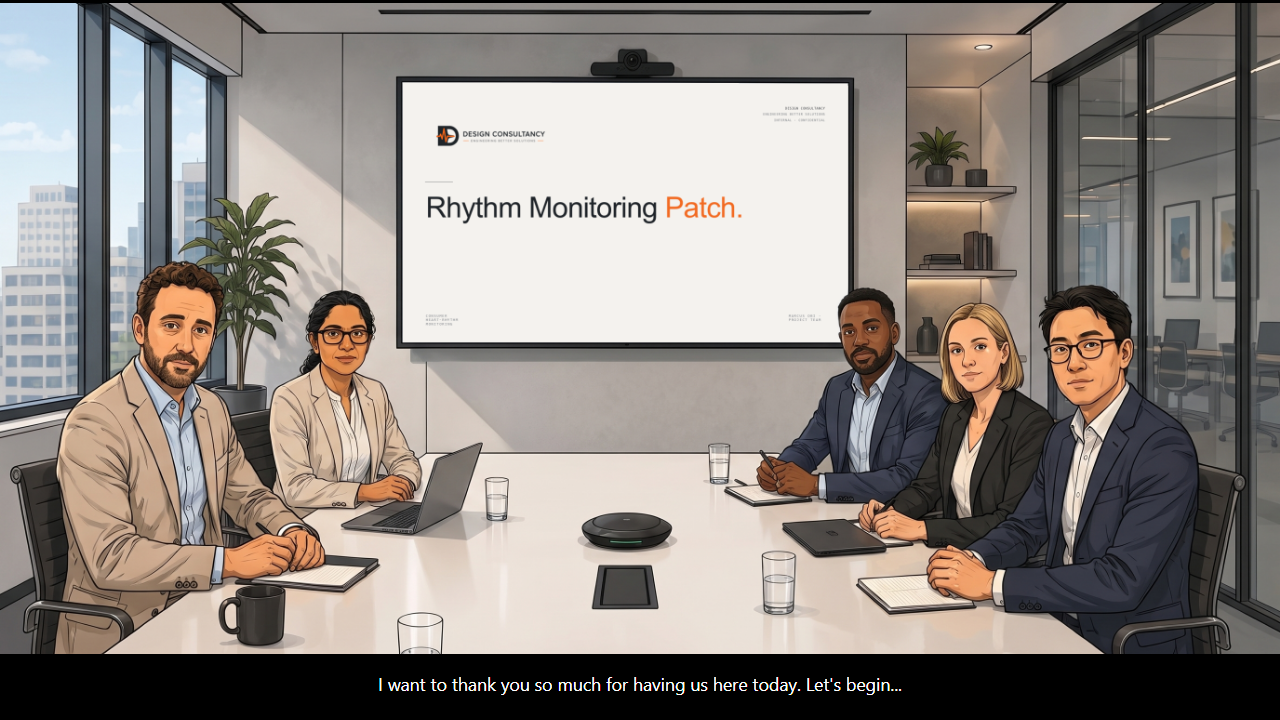
This resource is an interactive simulation that lets a learner practise the everyday decisions through which engineering products come to work well, or badly, for different people. The learner plays a senior engineer at a design consultancy developing a heart-rhythm monitoring patch for a client (Fig. 1). Nothing in the scenario is a dramatic ethical crisis. Instead the learner meets the ordinary moments that quietly decide who a product serves: who gets heard in a meeting, how a test population is defined, how ambiguous findings are classified, and how strongly a result is claimed to a client. Each decision plays out in short voiced scenes and reshapes the emails and results the learner then encounters, so consequences are felt in the world of the story rather than delivered as a score.

The experience then steps out of the fiction and connects it to a documented real-world case of non-inclusive engineering: bias in pulse oximetry. It ends on three questions the learner carries back into their own practice. There are no marks and no single correct path; the subject of the exercise is the quality of a professional’s attention, not the outcome of one presentation.


Fig. 1. The client presentation that frames the scenario: the learner’s team demonstrates the monitoring patch.


Access the simulation

Click the link below to access the simulation:

Everyday Decisions: An inclusive engineering simulation

Format: Browser-based, single-player voiced branching role-playing simulation. Suitable for individual use or group delivery in a lecture room (approximately 25–35 minutes to play).

Group size: Individual, or groups of any size using a shared screen or projector.

Duration: Approximately 25–35 minutes to play; 45–75 minutes including group discussion.

Requirements: A modern web browser and internet connection. The simulation runs directly in the browser with no login, download or installation required. Sound/headphones are recommended.


How to access and run 

Open the link below in any modern web browser (Chrome, Edge, Firefox or Safari) on a laptop or desktop; it also runs on tablets and phones. There is no login, download, install or setup: the simulation begins from the opening screen. The dialogue scenes are voiced, so headphones or speakers are recommended; on-screen captions are always shown. It is best experienced full-screen. Nothing is stored and no data is collected, so each run starts fresh.

https://frabjous-longma-bcc431.netlify.app/


Technical requirements 

No additional requirements: runs in a modern web browser with no accounts, plugins or installation. An internet connection is needed to stream the short scene videos. Because the resource is delivered as a hosted web application, the stable link above is the intended route for use.


Learning and teaching notes

The simulation is built for flexible use. It can be set as a self-contained individual activity, or run with a group and paused at each decision point for discussion. It assumes no prior knowledge of inclusive engineering, which makes it suitable at beginner level; a short primer from the facilitator, or the training slides referenced inside the story, deepens it for intermediate learners. Because the tool is deliberately un-scored and every path is playable, it rewards discussion of reasoning rather than a hunt for the right answer. A separate facilitator guide accompanies this document with timings, pause-point prompts, discussion questions and assessment suggestions.

The design follows the arc of a real project rather than a set of abstract principles. Learners are not told that inclusion matters; they experience how a narrow room, a convenient test group or an over-confident claim narrows a product, and only afterwards see the same pattern in a real device. This ordering, practice first and principle second, is deliberate.


Upon successful engagement with this resource, learners will be able to:


The scenario and its five decision points 

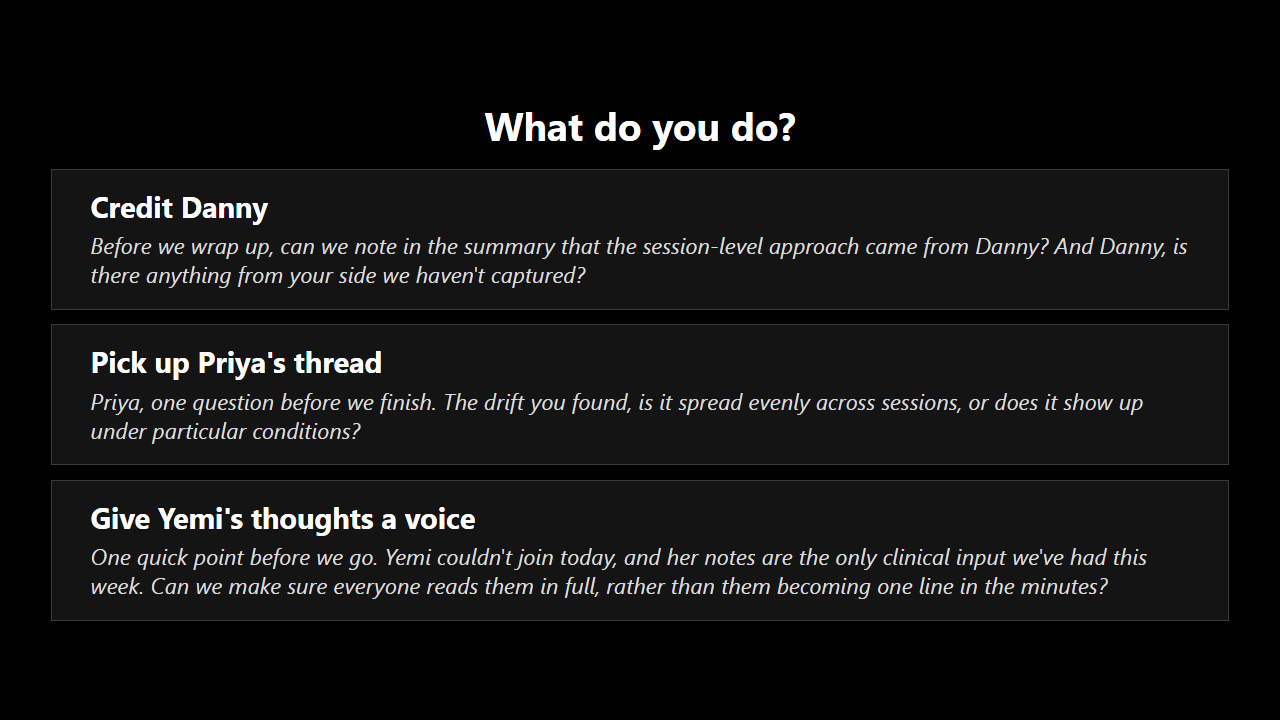
The learner works alongside a small, recognisable team: Marcus, who runs the project; Priya, who owns the data; Fran, who owns the product and app; Danny, an engineer; and Yemi, who carries the clinical and regulatory perspective and is often the voice most easily left out of the room. The client is a medical device company preparing to present the patch. Over five decision points, each a natural stop for group discussion (Fig. 2), the learner shapes the project:


Fig. 2. A decision point. Every path is playable; the tool never marks a choice right or wrong.

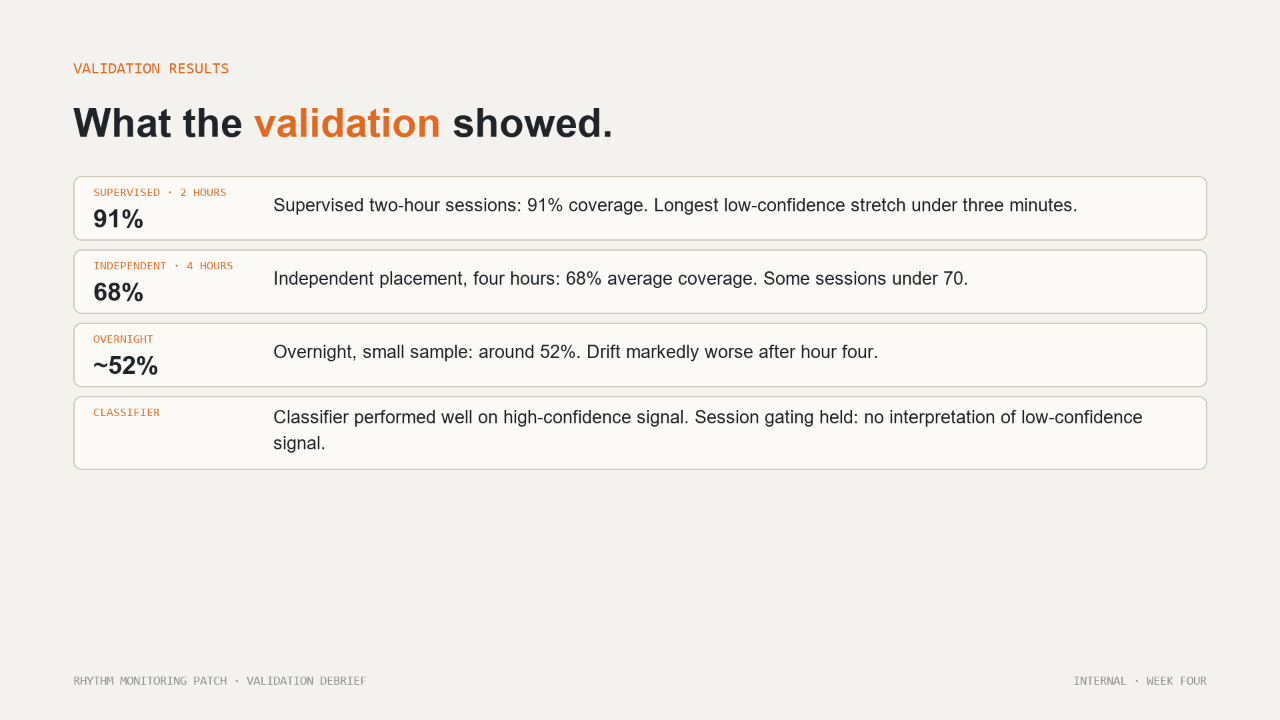
Because the choices set state that later scenes read, the emails, the validation results and the final message the learner receives all differ according to the path taken. One such consequence is shown in Fig. 3: a validation debrief in which coverage falls away for the groups the test under-represented.


Fig. 3. A validation debrief the learner sees later, shaped by the earlier decisions about who was tested.


From fiction to evidence: the pulse-oximetry bridge 

After the story ends, the simulation connects the pattern the learner has just lived through to a real, well-documented case. A pulse oximeter estimates blood-oxygen from light shone through the skin. The calibration behind that estimate historically rested on a narrow range of participants, and the device can read differently on darker skin.

In 2020, clinicians at the University of Michigan compared oximeter readings against arterial blood, the clinical gold standard. Among patients whose oximeter showed a reassuring 92 to 96 percent, occult hypoxaemia, dangerously low oxygen the device missed, was found in 11.7 percent of Black patients against 3.6 percent of White patients: roughly three times as often (Sjoding et al., NEJM, 2020). In 2022, a study of 7,126 Covid-19 patients across the Johns Hopkins system found the overestimate left a meaningful share of Black and Hispanic patients unflagged for care they qualified for (Fawzy et al., JAMA Internal Medicine, 2022). The concern is not new: larger errors were reported in the 1990s and the over-reading characterised in the laboratory in 2005. The point the simulation draws out is that this was not a single bad actor. It was an accumulation of ordinary decisions about who was in the room, who was tested and what was claimed, exactly the decisions the learner has just made.


The closing reflection 

The experience ends with three questions, presented one at a time, that move the lesson from the story into the learner’s own working life:


Facilitation Guidance


What this activity is 

Learners play a senior engineer developing a heart-rhythm monitoring patch and make five decisions that shape whether the product works for everyone it is meant to serve. The tool is un-scored and every path is valid; its purpose is to make the ordinary decisions of inclusive practice visible and discussable, then connect them to a real case of non-inclusive engineering (bias in pulse oximetry).

Before the session (for group delivery)


Suggested teaching contexts 


Running it: the five decision points as pause points 

In group mode, pause before each choice and ask the group to argue it out before selecting. The prompts below are starting points. There are no correct answers; the value is in what learners weigh.


Decision 1: Whose voice is heard 

The learner sets the tone for how the team listens: who gets credit, and whose input is actively brought into the record.

Discussion prompts:


Decision 2: How the meeting is run (in person / online / hybrid) 

The format of a planning meeting opens or narrows who can genuinely take part. The story follows the consequences, including a participant cut off at the key moment.

Discussion prompts:


Decision 3: How the test population is defined 

Convenient, easily recruited users, or the harder-to-reach people the product is actually for: older adults, people with tremor, limited mobility or reduced dexterity.

Discussion prompts:


Decision 4: How the findings are classified 

When results are mixed, the learner records them as clean, as carrying risks to flag, or as needing stress-testing. The label travels downstream.

Discussion prompts:


Decision 5: How strongly the result is claimed 

The learner sets the strength of the claim to the client, from a strong general claim to a qualified or technology-only statement.

Discussion prompts:

Extras – there are also opportunities during the activity to type email responses to various characters in the experience. These are not built into the logic of the game in the same way that the choices are and as such they are completely optional. They exist to prompt participants to think about how they would handle the interpersonal elements of Inclusive practice. These can be crowd sourced in a group delivery but it may be best to skip.


The real-world connection: pulse oximetry 

After the story, the tool bridges to a documented case. Key talking points, all shown in the tool with sources:

Encourage learners to go deeper with this example after the session. In session you may wish to Invite learners to bring an example of non-inclusive engineering from their own discipline; the oximetry case is one instance of a general pattern.


The three closing questions (use as prompts) 

These work well as a written one-minute reflection, a think-pair-share, or an exit ticket.


Debrief and assessment 

The tool records no scores, so assessment. It is designed to promote Inclusive thinking and as such it a good primer for other assessment activities. Options:


Accessibility and practical notes 


Troubleshooting 


References and sources 


Author, rights and licence 

Author and affiliation: Simon Lawes. Sole author. This is original, independently owned work. All artwork and rendered slides were created by the author; character voices are synthesised; the pulse-oximetry figures are the author’s own visualisations of publicly reported findings, cited above. The resource is offered under the Creative Commons Attribution-ShareAlike 4.0 International licence.


Any views, thoughts, and opinions expressed herein are solely that of the author(s) and do not necessarily reflect the views, opinions, policies, or position of the Engineering Professors’ Council or the Toolkit sponsors and supporters.  

All contributions published through the Inclusive Engineering Toolkit have been subject to a structured peer review process to support quality, relevance, and consistency.    

The Inclusive Engineering Toolkit recognises that inclusive language and terminology may vary across contexts and communities, and that contributors may use different approaches depending on context and preference, including identity-first and person-first language. Users are encouraged to contact us at admin@epc.ac.uk with any questions, concerns, or feedback regarding language used within toolkit resources.
Toolkit: Inclusive Engineering Toolkit  

Author(s):  Jenny McLaughlin, MA APMQ 

Resource type:  Knowledge article: Inclusion in engineering contexts (e.g. how inclusion shapes engineering practice, design decisions, teamwork, and outcomes in real engineering contexts) 

Topic: Explore the relationship between inclusion, human-centred design, safety, and systems thinking in engineering practice. Drawing on examples including the Heathrow Inclusive Design programme, Inclusive Design Overlay, Accessible and Inclusive Airport standards, and the Equitable Safety Initiative to demonstrate how inclusive approaches can influence engineering decisions and outcomes. 

Title: Inclusion as a Core Engineering Competency: Improving Safety, Systems and Engineering Outcomes.

Relevant disciplines:  Any.

Keywords:  Inclusive Engineering; Systems thinking; Risk; Inclusive or Responsible design; Equity, Diversity and Inclusion; Accessibility; Engineering practice; Reflective practice; Professional conduct; Teaching and learning; Knowledge or Guidance

Licensing: This work is licensed under a Creative Commons Attribution-ShareAlike 4.0 International License.   

Downloads: A PDF of this resource will be available soon. 

QAA Inclusive Higher Education Framework mapping:  Toolkit resources are designed to be applicable across engineering disciplines, but educators may find it useful to understand their alignment with the QAA Inclusive Higher Education Framework. The framework sets out five areas of activity that support inclusive practice across higher education, covering curriculum design, teaching and learning, assessment, learner support, and institutional approaches to inclusion.     

This resource aligns most closely with the following QAA Inclusive Higher Education Framework area of activity:  Curriculum Design and Delivery and Community and Belonging. 

Within the Inclusive Engineering Toolkit, these areas provide a reference point for understanding how resources support inclusive engineering education and practice, rather than defining a rigid taxonomy or classification system.    

AHEP mapping: This resource addresses several of the themes from the UK’s Accreditation of Higher Education Programmes fourth edition (AHEP4):  Equality, Diversity and Inclusion. In addition, Design, Integrated or systems approach, Ethics and Risk. 

Education Level: Beginner. 


Upon successful engagement with this resource, learners will be able to: 

Teachers have the opportunity to: 


Central argument

Inclusion is not an add-on to engineering; it is an essential part of good engineering practice. By applying systems thinking and understanding the full diversity of human needs, engineers can identify risks, uncover opportunities and design solutions that work for more people. The result is safer, more resilient and more successful outcomes. Inclusion should therefore be viewed as a core engineering competency, not simply an EDI consideration.  


Introduction  

Engineering has always been about solving complex problems. Whether designing infrastructure, transport systems, digital technologies, products or services, engineers make decisions that shape how people experience the world around them. Yet engineering practice has often relied on assumptions about a hypothetical ‘average’ user. The challenge is that no such person exists.  

People experience products, environments and systems differently. Disability, age, neurodiversity, health conditions, language, culture, socioeconomic circumstances, caring responsibilities, confidence and previous lived experiences all influence how individuals interact with engineered solutions. When these differences are not considered, barriers emerge. Sometimes those barriers create inconvenience. Sometimes they create exclusion. In many cases, they create safety risks.  

This is where inclusion becomes an engineering issue, not a separate social aspiration. Inclusion asks engineers to move from awareness to action: to notice when a system has not been designed for the full diversity of people who will use, build, maintain or be affected by it, and to respond before harm, exclusion or workaround becomes normalised.  

Inclusion should therefore be recognised as a core engineering competency: a practical route to better decision-making, safer systems, more ethical practice and stronger outcomes for society. It is part of how engineers understand context, interrogate assumptions and design with responsibility.  


Why inclusion is an engineering issue  

Inclusion is often discussed in relation to accessibility, representation or equality. Whilst these are essential considerations, the implications for engineering practice are frequently overlooked. Every engineering decision is based on assumptions: who will use a system, how they will behave, what capabilities they have, what risks they may encounter and what constitutes acceptable performance.  

When those assumptions are narrow, engineering solutions can unintentionally exclude people or introduce risks that remain hidden until late in delivery or operation. A standard face mask, a colour coded indicator, a risk assessment, a site access route or an evacuation procedure may appear neutral, but each one carries assumptions about bodies, cognition, confidence, communication, culture and context.  

The human cost of those assumptions is often felt first at the edges. A person may find themselves adapting silently to a design that has not considered them. They may work harder, move more cautiously, rely on unofficial support or decide not to speak up because the system around them signals that the issue sits with them rather than with the design. Those experiences are not marginal. They are evidence that the engineering problem has not been fully understood.  

Inclusive engineering is therefore not about designing for a ‘minority’ group. It is about recognising human diversity as a design parameter. It asks engineers to move from designing for an assumed norm to designing with awareness of variability, context, interdependence and lived experience. This is not separate from technical excellence. It is part of it.  

Many innovations now considered mainstream originated from efforts to address exclusion or access barriers. Captions, voice recognition, predictive text, touch screens and video calling show how designing for difference can improve usability and participation for many people, including those with temporary or situational needs. Inclusion can therefore be a source of innovation as well as a route to equity.  


Inclusion, safety and human-centred design  

One of the strongest reasons for embedding inclusion into engineering practice is the relationship between inclusion and safety. Traditional safety approaches rightly focus on hazards, controls, compliance and risk reduction. However, if those approaches assume a standard user, worker or maintainer, they may overlook the fact that safety is experienced differently by different people.  

The principle of equitable safety* is grounded in a simple but powerful proposition: safety is experienced uniquely by everyone. This shifts the question from ‘Is this safe?’ to ‘For whom is this safe, in what context, and under what conditions?’ That reframing matters. A maintenance access route may appear adequate for one worker while creating significant barriers for another. An evacuation process may assume sensory, cognitive or physical capabilities that not everyone possesses. A site welfare arrangement may meet minimum requirements while still failing to provide dignity, confidence or psychological safety for all.  

*The Equitable Safety Initiative is a group of organisations driving change within standards, policy and practice, recognising that safety is experienced differently by everyone. The initiative is referenced in the Construction Leadership Council’s Equity, Diversity, Inclusion and Culture Change workstream objectives (Construction Leadership Council, n.d.). 

A personal example illustrates the point. During a health and safety visit, walking across rebar on a construction site, I knew I was not safe. Yet even as the client and project manager, I did not feel safe enough to speak up in that moment. That experience matters because it exposes a wider systems question: if someone with formal authority can hesitate, what happens for a subcontractor, a new apprentice, a disabled worker or anyone who already feels they have less power in the system?  

This is why equitable safety1i must include physical and psychological safety. A person cannot raise a safety concern if the culture, language, process or hierarchy around them makes speaking up feel unsafe. Engineers must therefore consider not only whether a control exists, but whether people can understand it, access it, trust it and challenge it when it does not work for them.  

Human-centred design (ISO, 2019)  helps engineering teams recognise these differences by considering the full range of people who interact with a system across its lifecycle: those who design, build, operate, maintain, use, visit, regulate, clean, respond to emergencies and live alongside it. By anticipating difference, engineers can identify risks that remain hidden when decisions are made around the perceived majority.  

This does not mean adding complexity for its own sake. It means recognising the complexity that already exists and responding to it with empathy, evidence and professional judgement. If safety is non-negotiable, then safety should be equitable.  


Why systems thinking matters  

Many attempts to improve inclusion focus on individual adjustments or isolated interventions. These can be important, but they rarely address the wider systems that shape people’s experiences. Systems thinking offers a more useful perspective because it considers the relationships between people, processes, environments, behaviours, technologies, governance and culture (Meadows, 2008).  

In engineering, a design decision rarely affects only one outcome. A change to layout can influence movement, wayfinding, staffing, emergency response, maintenance access, perceived safety, passenger confidence and operational resilience. A procurement decision can influence who is consulted, whose knowledge is valued and which risks are prioritised. A standard or process can either enable inclusive decisions early or push them into late-stage remediation.  

The difficulty is that systems often give us comfort. They provide process, standards, sign-off routes and familiar evidence. These are necessary, but they can also create a false sense that someone else has already checked the assumptions. Inclusive practice asks engineers to stay curious within those systems: to ask what the evidence is based on, whose experience has informed it and what bias may sit inside the data, standard or precedent being used.  

At Heathrow, inclusive design work has used approaches such as the Accessible and Inclusive Airport Standards (Heathrow, 2025), the Inclusive Design Overlay (RIBA, 2023), and the Wheel of Considerations (Heathrow, 2026) to encourage project teams to ask wider questions. These approaches prompt consideration of people, environments, activities, risks, legacy and system interactions. The intention is not to make every engineer an inclusive design specialist. It is to equip engineers to ask better questions, recognise assumptions and identify when additional expertise or lived experience is needed.  

The Wheel of Considerations is particularly useful because it makes inclusion discussable and trackable across a project lifecycle. By considering people who use a space and people who do not, the environments they move through, the activities they need or want to undertake, the risks created by low agency, the legacy of previous projects and the wider systems connected to the design, teams can make inclusion part of everyday engineering judgement rather than a late-stage review.  

In this sense, inclusion is a practical application of systems thinking. It helps engineers see how decisions interact across an asset lifecycle and how unequal outcomes can be designed in or designed out.  


Inclusion as a professional competency  

Engineering education has traditionally emphasised technical competence, analytical capability and problem-solving. These remain essential. However, engineering is fundamentally a social activity, shaped by the needs, behaviours and experiences of the people it serves. The complex challenges facing society increasingly require engineers to combine technical expertise with human-centred judgement, ethical reasoning and systems awareness in order to create solutions that are both technically effective and socially successful.  

Future engineers will need to design for diverse populations, anticipate unintended consequences, balance competing stakeholder needs, manage complex risks and demonstrate responsibility for the social outcomes of their work. These capabilities cannot be developed through technical knowledge alone. They require students to understand exclusion, engage with different perspectives, challenge assumptions and evaluate the implications of engineering decisions for people who may experience systems differently from themselves.  

This is also a matter of professional responsibility. Safety duties require engineers and project teams to consider foreseeable risks to people affected by construction, operation and use. Inclusive engineering strengthens that responsibility by widening what teams are able to foresee. It challenges the idea that risk can be fully understood if the people most likely to experience barriers are absent from the conversation.  

Inclusion should therefore be treated as a core professional competency, alongside safety, sustainability and ethics. It is not an optional addition at the end of a design process. It is a discipline of thinking that should influence problem definition, data collection, user research, design development, risk assessment, testing, commissioning, operation and post-occupancy learning.  


Implications for engineering education  

If inclusion is a core engineering competency, it cannot be confined to a standalone lecture or optional module. Engineering educators can embed inclusion throughout curricula by connecting it to the activities students already undertake: defining problems, setting requirements, analysing risk, developing concepts, testing prototypes, evaluating trade-offs and reflecting on outcomes.  

Students should be asked not only whether a solution works technically, but who it works for, who it may disadvantage, what assumptions were made and what evidence was used to understand diverse needs. They should encounter case studies where exclusion has created harm or poor performance, as well as examples where inclusive approaches have improved safety, usability, resilience or innovation.  

The Equitable Safety framing offers a useful classroom shift. Instead of asking students to design for a generic user, educators can ask them to design for the edges and then examine how that improves the centre. What risk becomes visible when we consider a neurodivergent maintainer, a short-statured worker, a person with colour vision deficiency, someone managing fatigue, or a passenger under stress? What changes when students consider confidence, dignity and agency as design outcomes, not just technical performance?  

This does not require all educators to become inclusion specialists. It requires curricula to make inclusive thinking visible, assessable and connected to engineering judgement. It also requires educators to create learning environments where students can ask difficult questions, recognise what they do not know and learn from people with different lived experiences.  


Reflective questions for educators and students  

The following questions can support classroom discussion, design reviews, project-based learning and assessment:  

Understanding people  

Understanding assumptions  

Understanding safety  

Understanding systems  

Understanding outcomes  


Conclusion  

Inclusion is often associated with social outcomes, but the evidence presented in this article demonstrates its relevance to engineering practice. Engineering decisions influence how people interact with infrastructure, technology, products and services, shaping outcomes related to safety, accessibility, usability and participation. Understanding the diversity of the people affected by those decisions is therefore an important aspect of effective engineering practice.  

The application of human-centred design, systems thinking and equitable safety principles provides engineers with practical approaches for managing complexity, identifying risks and improving outcomes. In this context, inclusion is not simply a matter of compliance or representation; it supports sound engineering judgement and contributes to the delivery of solutions that perform more effectively across a wider range of users, environments and operating conditions.  

The evidence base for inclusion extends beyond equity considerations alone. Research and practice demonstrate its contribution to safer systems, more informed decision-making, improved risk identification, enhanced user experiences and better overall system performance. As engineering challenges become increasingly complex and interconnected, the ability to recognise and respond to human diversity becomes an important element of professional competence.  


Suggested educator use  


References


Further reading

McLaughlin, J. (2025) The edges protect the centre: Equitable safety and inclusive design in the built environment. IOM3. Available at: IOM3 | The edges protect the centre (Accessed: 24 September 2026).


Acknowledgements

This contribution draws on previous work, including PEARLS and Wheel of Considerations, co-authored by Emily Castle, Carly Dickson and Jenny McLaughlin.


Any views, thoughts, and opinions expressed herein are solely that of the author(s) and do not necessarily reflect the views, opinions, policies, or position of the Engineering Professors’ Council or the Toolkit sponsors and supporters.        

All contributions published through the Inclusive Engineering Toolkit have been subject to a structured peer review process to support quality, relevance, and consistency.     

The Inclusive Engineering Toolkit recognises that inclusive language and terminology may vary across contexts and communities, and that contributors may use different approaches depending on context and preference, including identity-first and person-first language. Users are encouraged to contact us at admin@epc.ac.uk with any questions, concerns, or feedback regarding language used within toolkit resources.    
Toolkit: Inclusive Engineering Toolkit 

Author(s):  Dr Munira Raja (Lead Author), School of Engineering, University of Liverpool

Resource type:  Guidance resource: Embedding inclusion in curricula and learning design

Topic: Embedding accessibility, participation, inclusion, and belonging in engineering education.

Title: Inclusive Practical Learning Framework and Toolkit for Engineering Education

Relevant disciplines:   Any.

Keywords:  Inclusive Engineering; Teaching and learning; Accessibility; Access and participation; Curriculum or Course; Assessment criteria or methods and tools; Reflective practice; Knowledge or Guidance; Best practice; Engineering practice; Professional development

Licensing: This work is licensed under a Creative Commons Attribution-ShareAlike 4.0 International License.  

Downloads: A PDF of this resource will be available soon. 

QAA Inclusive Higher Education Framework mapping:  Toolkit resources are designed to be applicable across engineering disciplines, but educators may find it useful to understand their alignment with the QAA Inclusive Higher Education Framework. The framework sets out five areas of activity that support inclusive practice across higher education, covering curriculum design, teaching and learning, assessment, learner support, and institutional approaches to inclusion.    

This resource aligns most closely with the following QAA Inclusive Higher Education Framework area of activity: Curriculum Design and Delivery

Within the Inclusive Engineering Toolkit, these areas provide a reference point for understanding how resources support inclusive engineering education and practice, rather than defining a rigid taxonomy or classification system.   

AHEP mapping: This resource addresses several of the themes from the UK’s Accreditation of Higher Education Programmes fourth edition (AHEP4):  Equality, Diversity and Inclusion. In addition, Teamwork and Communication.

Educational level: Intermediate.


Learning and teaching notes: The University of Liverpool’s Inclusive Practical Learning Framework and Toolkit for Engineering Education provides practical guidance to help educators consider and strengthen inclusion within engineering learning and teaching. It supports reflection on practical learning activities, curriculum design, assessment and learning environments, with a focus on better supporting diverse learners and promoting equitable participation.

The resource can be used to review existing approaches, identify opportunities for improvement and inform the development or adaptation of practical engineering learning activities. It is suitable across engineering disciplines and teaching contexts, and can support both individual reflection and conversations with colleagues about developing more inclusive engineering education.


Upon successful engagement with this resource, learners will be able to:   

Teachers have the opportunity to:   


Click here to download the Inclusive Practical Learning Framework and Toolkit for Engineering Education resource


Acknowledgments:

This contribution is based on a student–staff partnership project within the Department of Electrical Engineering and Electronics at the University of Liverpool. The work was informed by student input through co-design activities, workshops, and feedback sessions that helped shape the development of the Inclusive Practical Learning Framework and Toolkit. The development of the Inclusive Practical Learning Framework and Toolkit was informed by accessibility audits, student surveys, focus groups, and collaborative work with students, academic staff, technicians, demonstrators, and professional services colleagues. Student co-creators contributed directly to identifying barriers and shaping recommendations for inclusive practical learning. The work also draws on wider institutional initiatives in equality, diversity, and inclusion (EDI) and curriculum enhancement within engineering education.

This version of the Inclusive Practical Learning Framework and Toolkit for Engineering Education has been enhanced, with updates informed by reviewer and expert lead feedback, specifically for inclusion in the Inclusive Engineering Toolkit.


Any views, thoughts, and opinions expressed herein are solely that of the author(s) and do not necessarily reflect the views, opinions, policies, or position of the Engineering Professors’ Council or the Toolkit sponsors and supporters.       

All contributions published through the Inclusive Engineering Toolkit have been subject to a structured peer review process to support quality, relevance, and consistency.    

The Inclusive Engineering Toolkit recognises that inclusive language and terminology may vary across contexts and communities, and that contributors may use different approaches depending on context and preference, including identity-first and person-first language. Users are encouraged to contact us at admin@epc.ac.uk with any questions, concerns, or feedback regarding language used within toolkit resources.    


About this resource: Katalytik provides a collection of open-access resources supporting more inclusive engineering practice. The resources encourage organisations and educators to reflect on inclusive engineering principles, explore practical approaches to embedding inclusion, and access supporting guidance and tools.

Why we are signposting this resource: This resource collection has been included in the Inclusive Engineering Toolkit Resource Library because it brings together practical guidance, reflective tools and supporting resources that encourage organisations and educators to embed more inclusive approaches within engineering practice.


Resource information

Organisation / Author:  Katalytik

Resource type: Guidance; Knowledge

Topics:  Understanding Inclusive Engineering; Supporting Diverse Learners and Teams; Teaching Inclusive Engineering; Inclusive Engineering Practice; Systems, Policy and Organisational Change

Disciplines: Any

Keywords: Equity, Diversity, Inclusion; Inclusive engineering; Best practice; Organisational change; Systems change; Organisational systems; Reflective practice; Knowledge or Guidance

Access the resource: 
This resource collection is hosted by the original authors.

Available resources include:


Explore more resources

Looking for additional resources?
Browse the Inclusive Engineering Toolkit Resource Library to discover more open-access guidance, tools and resources supporting inclusive engineering education.


Any views, thoughts, and opinions expressed herein are solely that of the author(s) and do not necessarily reflect the views, opinions, policies, or position of the Engineering Professors’ Council or the Toolkit sponsors and supporters.    

All contributions published through the Inclusive Engineering Toolkit have been subject to a structured peer review process to support quality, relevance, and consistency. 

The Inclusive Engineering Toolkit recognises that inclusive language and terminology may vary across contexts and communities, and that contributors may use different approaches depending on context and preference, including identity-first and person-first language. Users are encouraged to contact us at admin@epc.ac.uk with any questions, concerns, or feedback regarding language used within toolkit resources. 

Let us know what you think of our website