Keywords: Water and sanitation; Infrastructure; Community sustainability; Health; Government policy; Social responsibility; AHEP; Higher education; Sustainability; Project brief; Water quality control.
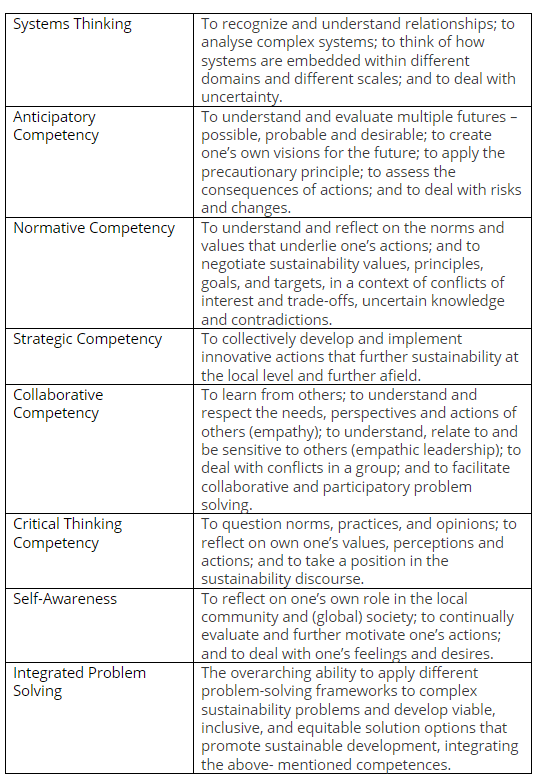
Sustainability competency: Systems thinking; Anticipatory; Collaboration; Integrated problem-solving; Strategic.UNESCO has developed eight key competencies for sustainability that are aimed at learners of all ages worldwide. Many versions of these exist, as are linked here*. In the UK, these have been adapted within higher education by AdvanceHE and the QAA with appropriate learning outcomes. The full list of competencies and learning outcome alignment can be found in the Education for Sustainable Development Guidance*. *Click the pink ''Sustainability competency'' text to learn more.
AHEP mapping: This resource addresses two of the themes from the UK’s Accreditation of Higher Education Programmes fourth edition (AHEP4): The Engineer and Society (acknowledging that engineering activity can have a significant societal impact) and Engineering Practice (the practical application of engineering concepts, tools and professional skills). To map this resource to AHEP outcomes specific to a programme under these themes, access AHEP 4 here and navigate to pages 30-31 and 35-37.
Related SDGs: SDG 3 (Good health and well-being); SDG 4 (Quality education); SDG 6 (Clean water and sanitation); SDG 8 (Decent work and economic growth).
Reimagined Degree Map Intervention: Active pedagogies and mindsets; More real-world complexity.The Reimagined Degree Map is a guide to help engineering departments navigate the decisions that are urgently required to ensure degrees prepare students for 21st century challenges. Click the pink ''Reimagined Degree Map Intervention'' text to learn more.
Educational level: Intermediate.
Learning and teaching notes:
This is an example project that could be adapted for use in a variety of contexts. It asks students to devise a “sustainability dashboard” that can not only track indicators of river system sustainability through technical means, but also communicate the resulting data to the public for the purpose of policy decisions. Teachers should ideally select a local river system to focus on for this project, and assign background reading accordingly.
Learners have the opportunity to:
Investigate the links between history, politics, and engineered systems;
Research existing data sources;
Devise a technical solution for community impact.
Teachers have the opportunity to:
Showcase real-world implications of the SDGs;
Integrate technical learning with sustainability issues;
Emphasise the importance of the engineer’s role in public life.
Two vital and unique resources for the planet are water and air. Any alterations in their composition can have detrimental effects on humans and living organisms. Water uses across New Mexico are unsustainable. Reduced precipitation and streamflows cause increased groundwater use and recharge. Serious omissions in state water policy provide no protection against complete depletion of groundwater reserves.
The water governance status quo in New Mexico will result in many areas of New Mexico running out of water, some sooner, some later, and some already have. Because Water is Life, water insecurity will cause economic insecurity and eventual collapse.
Water resources, both surface and groundwater, and total water use, determine the amount of water use that can be sustained, and then reduce total water use if New Mexico is to have water security. The public must therefore recognise that action is required. Availability of compiled, accessible data will lead to and promote our critical need to work toward equitable adaptation and attain sustainable resiliency of the Middle Rio Grande’s common water supply and air quality.
A data dashboard is needed to provide on-line access to historical, modern, and current perspectives on water, air quality, health, and economic information. A dashboard is needed to help inform the public about why everyone and all concerned citizens, institutions and levels of government must do their part!
Project brief:
The Middle Rio Grande region of New Mexico has particular sustainability and resilience requirements and enforceable legal obligations (Rio Grande Compact) to reduce water depletions of the Rio Grande and tributary groundwater to sustainable levels. However, there is a lack of accessible depictions of the Middle Rio Grande’s water supply and demand mismatch. Nothing publicly accessible illustrates the surface water and groundwater resources, water uses, and current water depletions that cannot be sustained even if water supplies were not declining. Therefore, there is a corresponding lack of public visibility of New Mexico’s water crisis, both in the Middle Valley and across New Mexico. Local water institutions and governments are siloed and have self-serving missions and do not recognise the limits of the Middle Valley’s water resources.
A water data dashboard is needed to provide online open access to historical, modern, and current perspectives on water inflows, outflows, and the change in stored surface and groundwater. This dashboard should inform the public about why everyone and all water institutions and levels of government must do their part!
Given:
Data from numerous on-line and paper or spreadsheet data sources
Law of the Rio Grande
The 2004 water budget components and historical information.
Objectives:
Engage data providers to cooperatively secure access to the public data they collect and maintain.
Create one website Dashboard to present the relevant water data of the Middle Rio Grande.
Demonstrate the function and form of the Water Data Dashboard to illustrate the value of simplified presentation of aggregated data.
Illustrate the value of creating procedures for data aggregation and presentation in simplified, accessible formats so that the prototype dashboard is taken over by an institution with the resources to build and maintain an improved second-generation version.
Provide selected water data sets as set forth in 2019 Water Data Act standards and procedures to the NM Water Data Initiative.
Find a long-term home for the dashboard project with a government agency or Middle Rio Grande water institution.
Acknowledgements: The 2023 Peace Engineering summer cohort of Argentine Fulbright Scholars who analysed the Middle Rio Grande Case Study concluded that water in the Middle Rio Grande is a community problem that requires a community driven solution.
Any views, thoughts, and opinions expressed herein are solely that of the author(s) and do not necessarily reflect the views, opinions, policies, or position of the Engineering Professors’ Council or the Toolkit sponsors and supporters.
Sustainability competency: Integrated problem-solving; Collaboration.UNESCO has developed eight key competencies for sustainability that are aimed at learners of all ages worldwide. Many versions of these exist, as are linked here*. In the UK, these have been adapted within higher education by AdvanceHE and the QAA with appropriate learning outcomes. The full list of competencies and learning outcome alignment can be found in the Education for Sustainable Development Guidance*. *Click the pink ''Sustainability competency'' text to learn more.
AHEP mapping: This resource addresses two of the themes from the UK’s Accreditation of Higher Education Programmes fourth edition (AHEP4): The Engineer and Society (acknowledging that engineering activity can have a significant societal impact) and Engineering Practice (the practical application of engineering concepts, tools and professional skills). To map this resource to AHEP outcomes specific to a programme under these themes, access AHEP 4 here and navigate to pages 30-31 and 35-37.
Related SDGs: All.
Reimagined Degree Map Intervention: Adapt learning outcomes; Active pedagogies and mindsets; More real-world complexity; Cross-disciplinarity; Authentic assessment.The Reimagined Degree Map is a guide to help engineering departments navigate the decisions that are urgently required to ensure degrees prepare students for 21st century challenges. Click the pink ''Reimagined Degree Map Intervention'' text to learn more.
Projects, and thus project-based learning, offer valuable opportunities for integrating sustainability education into engineering curricula by promoting active, experiential learning through critical and creative thinking within problem-solving endeavours and addressing complex real-world challenges. Engaging in projects can have a lasting impact on students’ understanding and retention of knowledge. By working on projects related to sustainability, students are likely to internalise key concepts and develop a commitment to incorporating sustainable practices into their future engineering endeavours.
Building a brief:
Project briefs are a powerful tool for integrating sustainability into engineering education through project-based learning. They set the tone, define the scope, and provide the parameters for students to consider sustainability in their engineering projects, ensuring that future engineers develop the knowledge, skills, and mindset needed to address the complex challenges of sustainability.
To ensure sustainability has a central and/or clear role within an engineering project, consider the following as you develop the brief:
1. Sustainability as part of goals, objectives, and requirements. By explicitly including sustainability objectives in the project brief, educators communicate the importance of considering environmental, social, and economic factors in the engineering design and implementation process. This sets the stage for students to integrate sustainability principles into their project work.
2.Context: Briefs should always include the context of the project so that students understand the importance of place and people to an engineered solution. Below are aspects of the context to consider and provide:
What is the central problem for the project?
Where is the problem/project located? What data will be given to students to describe the context of the problem? Why is the context important and how does it relate to expectations of solving of the problem or the project solution
Who are the people directly impacted by the scenario and central to the context? What is the problem that they face and why? How are they associated with the project and why do they need to be considered?
When in time does this scenario/context exist? How does the data or information re. the context support the time of the scenario?
3. Stakeholders: Sustainability is intertwined with the interests and needs of various stakeholders. Project briefs can include considerations for stakeholder engagement, prompting students to identify and address the concerns of different groups affected by the project. This reinforces the importance of community involvement and social responsibility in engineering projects. Below are aspects of the stakeholders to consider and provide:
Who are the main stakeholders (i.e. users) and why are they important to the context? (see above) What are their needs and what are their power positions
Who else should be considered stakeholders in the project? How do they influence the project by their needs, interest and power situations?
Have you considered the earth and its non-human stakeholders, its inhabitants or its landscape?
Do you want to provide this information to the students or is this part of the work you want them to do within the project?
4.Ethical decision-making: Including ethical considerations related to sustainability in the project brief guides students in making ethical decisions throughout the project lifecycle. The Ethics Toolkit can provide guidance in how to embed ethical considerations such as:
Explicitly state ethical expectations and frame decisions as having ethical components.
Prompt and encourage students to think critically about the consequences of their engineering choices on society, the environment, and future generations.
5. Knowns and unknowns: Considering both knowns and unknowns is essential for defining the project scope. Knowing what is already understood and what remains uncertain allows students to set realistic and achievable project goals. Below are aspects of considering the knowns and unknowns aspects of a project brief to consider and provide:
What key information needs to be provided to the students to address the problem given?
What is it that you want the students to do for themselves in the early part of the project – i.e. research and investigation and then in the process of their problem solving and prototyping/testing and making?
6. Engineering design process and skills development: The Project Brief should support how the educator wants to guide students through the engineering design cycle, equipping them with the skills, knowledge, and mindset needed for successful problem-solving. Below are aspects of the engineering design process and skills development to consider and provide:
What process will the students follow in order to come to a final output or problem solution? What result is required of the students (i.e. are they just coming up with concepts or ideas? Do they need to justify and thus technical argue their chosen concept? Do they need to design, build/make and test a prototype or model to show their design and building/making skills as well? Do they need to critically analyse it using criteria based on proof of concept or sustainability goals – ie. It is desirable? Viable? Responsible? Feasible?)
What skills should students be developing through the project? Some possibilities are (depending on how far they expect students to complete the solution), however the sustainability competencies are relevant here too:
a. Research – investigate,
b. Creative thinking – divergent and convergent thinking in different parts of the process of engineering design,
c. Critical thinking – innovation model analysis or other critical thinking tools,
d. Decision making – steps taken to move the project forward, justifying the decision making via evidence,
e. Communication, collaboration, negotiation, presentation,
f. Anticipatory thinking – responsible innovation model AREA, asking in the concept stages (which ideas could go wrong because of a double use, or perhaps thinking of what could go wrong?),
g. Systems thinking.
7.Solution and impact: Students will need to demonstrate that they have met the brief and can demonstrate that they understand the impact of their chosen solution. Here it would need to be clear what the students need to produce and how long it is expected to take them. Other considerations when designing the project brief to include are:
Is the brief for a module or a short activity? What is the ideal number of students in a team? Is it disciplinary-based or interdisciplinary (and in this case – which disciplines would be encouraged to be included).
We would want the students to understand and discuss the trade-offs that they had to consider in their solution.
Important considerations for embedding sustainability into projects:
1. Competences or content?
Embedding and/or developing competences is a normal part of project work. When seen as a set of competences sustainability is crosscutting in the same way as other HE agendas such as employability, global citizenship, decolonisation and EDI. See the Global Responsibility competency compass for an example of how competencies can be developed for engineering practice.
Embedding sustainability content often requires additional material, even if it is only in adapting one of the project phases/outcomes to encourage students to think through sustainable practice. For more guidance on how to adapt learning outcomes, see the Engineering for One Planet Framework (aligned to AHEP4).
2. Was any content added or adapted?
Was any content adapted to include sustainability awareness?
– What form of content, seminars, readings, lectures, tutorials, student activity
Were learning objectives changed?
Did you have to remove material to fit in the new or adapted content?
Were assessments changed?
3. Competencies
UNESCO has identified eight competencies that encompass the behaviours, attitudes, values and knowledge which facilitate safeguarding the future. These together with the SDGs provide a way of identifying activities and learning that can be embedded in different disciplinary curricula and courses. For more information on assessing competences, see this guidance article.
Did you map the competences that you already support before changing anything?
What kind of activities did you add to support the development of the competences you wish to target?
Did you explain to the students that these were the competences that you were targeting and that they are considered necessary for all who go on to work and live in a warming world?
Any views, thoughts, and opinions expressed herein are solely that of the author(s) and do not necessarily reflect the views, opinions, policies, or position of the Engineering Professors’ Council or the Toolkit sponsors and supporters.
Keywords: Climate change; Water and sanitation; Renewable energy; Battery Technologies; Recycling or recycled materials; AHEP; Sustainability; Student support; Local community; Environment; Future generations; Risk; Higher education; Assessment; Project brief.
Sustainability competency: Systems thinking; Anticipatory; Strategic; Integrated problem-solving; Normative.UNESCO has developed eight key competencies for sustainability that are aimed at learners of all ages worldwide. Many versions of these exist, as are linked here*. In the UK, these have been adapted within higher education by AdvanceHE and the QAA with appropriate learning outcomes. The full list of competencies and learning outcome alignment can be found in the Education for Sustainable Development Guidance*. *Click the pink ''Sustainability competency'' text to learn more.
AHEP mapping: This resource addresses two of the themes from the UK’s Accreditation of Higher Education Programmes fourth edition (AHEP4): The Engineer and Society (acknowledging that engineering activity can have a significant societal impact) and Engineering Practice (the practical application of engineering concepts, tools and professional skills). To map this resource to AHEP outcomes specific to a programme under these themes, access AHEP 4 here and navigate to pages 30-31 and 35-37. Potential alignments with AHEP criteria are shown below.
Related SDGs: SDG 7 (Affordable and Clean Energy); SDG 11 (Sustainable Cities and Communities).
Reimagined Degree Map Intervention: More real-world complexity; Active pedagogies and mindset development; Authentic assessment.The Reimagined Degree Map is a guide to help engineering departments navigate the decisions that are urgently required to ensure degrees prepare students for 21st century challenges. Click the pink ''Reimagined Degree Map Intervention'' text to learn more.
Educational level: Intermediate / Advanced.
Learning and teaching notes:
This resource outlines a project brief that requires an engineer to assess the local area to understand the scale of flooding and the local context. This will highlight how climate change affects everyday life, how water usage is changing and happening on our doorstep.
The project also requires the engineer to be considerate of the needs of a local business and showcases how climate change affects the economy and individual lives, enabling some degree of empathy and compassion to this exercise.
Depending upon the level of the students and considering the needs of modules or learning outcomes, the project could follow either or both of the following pathways:
Pathway 1 – Introduction to Electronic Engineering (beginner/intermediate- Level 4)
LO1: Describe the operation of electronic circuits and associated discrete components (AHEP4: SM1m).
LO2: Compare the operation principles of a variety of electronic sensors and actuators and apply them to a given task (AHEP4: EA2m).
LO3: Interpret how transistors and operational amplifiers function (AHEP4: EA4m).
LO4: Know how amplifiers operate and assess their performance for a given application (AHEP4: EA1m; EA2m).
LO5: Integrate the operation of an actuator, sensor, and power supply into a system for a given task (AHEP4: EA4m; EA6m).
In this pathway, the project deliverables could be in the form of a physical artefact, together with a technical specification.
Pathway 2 – Electromagnetics in Engineering (intermediate/advanced- Level 5)
LO1: communicate the primary challenges inherent in wireless communication (AHEP4: SM1m)
LO2: devise solutions to a given design challenge (AHEP4: SM1m; SM3m) In this pathway, the project deliverable could be in the form of a Technical Report.
This project allows teachers the option to stop at multiple points for questions and/or activities as desired.
Learners have the opportunity to:
analyse local environmental factors that affect river water levels,
appreciate local planning with respect to installing devices on or near a riverbank,
consider how to communicate with a variety of stakeholders,
undertake cost-benefit and value trade-off analysis in the context of using sustainable materials,
undertake cost-benefit and value trade-off analysis in the context of using renewable energy,
practise argument and reasoning related to sustainability dilemmas.
Teachers have the opportunity to:
introduce concepts related to climate change in the local environment,
introduce concepts related to environmental sensors,
introduce concepts related to renewable energy sources,
introduce concepts related to battery systems,
introduce concepts related to local planning laws,
informally evaluate students’ argument and reasoning skills,
integrate technical content in the areas of electrical or mechanical engineering related to water level monitoring,
authentically assess a team activity and individual work.
A local business premises near to a river has been suffering from severe flooding over the last 10 years. The business owner seeks to install a warning system that can provide adequate notice of a possible flood situation.
Time frame & structure: This project can be completed over 30 hours, either in a block covering 2-3 weeks (preferred) or 1 hour per week over the academic term. This project should be attempted in teams of 3-5 students. This would enable the group to develop a prototype, but the Specification (Pathway 1) and Technical Report (Pathway 2) could be individual submissions without collusion to enable individual assessment.
It is recommended that a genuine premises is found that has had the issues described above and a site visit could be made. This will not only give much needed context to the scenario but will also trigger emotional response and personal ownership to the problem.
To prepare for activities related to sustainability, teachers may want to read, or assign students to pre-read the following article: ‘Mean or Green: Which values can promote stable pro-environmental behaviour?’
Context and Stakeholders:
Flooding in the local town has become more prevalent over recent years, impacting homes and businesses. A local coffee shop priding itself on its ethical credentials is located adjacent to the river and is one of the businesses that has suffered from severe flooding over the last 10 years, causing thousands of pounds worth of spoilt stock and loss of revenue. The local council’s flood warning system is far from adequate to protect individuals on a site-by-site basis. So the shop is looking for an individual warning system, giving the manager and staff adequate notice of a possible flood situation. This will enable stock to be moved in good time to a safer drier location. The shop manager is very conscious of wanting to implement a sustainable design that uses sustainable materials and renewable energy, to promote the values of the shop. It is becoming clear that such a solution would also benefit other businesses that experience flooding and a wider solution should also be considered.
Pathway 1
This project requires assessment of the local area and ideally a visit to the retailer to understand their needs and consider options for water level monitoring. You are required to consider environmental and sustainable factors when presenting a solution.
After a visit to the premises:
Discussion: What is your initial reaction to the effects of the flooding and doesit surprise you? What might your initial reaction reveal to you about your own perspectives and values?
Discussion: What is your initial reaction to the causes of the flooding anddoes it surprise you? What might your initial reaction reveal to you about your own perspectives and values?
Discussion and activity: List the potential issues and risks to installing a device in or near to the river bank.
Activity: Research water level monitoring. What are the main technical and logistical issues with this technology in this scenario?
Activity: Both cost-benefit and sustainable trade-off analyses are valuable approaches to consider in this case. Determine the possible courses of action and undertake both types of analysis for each position by considering both short- and long-term consequences.
Reflection: Obligations to future generations: Do we have a responsibility to provide a safe and healthy environment for humans that don’t yet exist, or for an ecosystem that will eventually change?
Design Process:
To satisfy the learning outcomes identified above the following activities are suggested.
Assessment activity 1 – Physical artefact:
Design, build and test a prototype flood warning device, monitoring various water levels and controlling an output or outputs in an alarm condition to meet the following as a minimum:
a) The device will require the use of an analogue sensor that will directly or indirectly output an electrical signal proportional to the water level.
b) It will integrate to appropriate Operational Amplifier circuitry.
c) The circuitry will control an output device or devices.
d) The power consumption of the complete circuit will be assessed to allow an appropriate renewable energy supply to be specified (but not necessarily be part of the build).
The written specification and accompanying drawings shall enable a solution to be manufactured based on the study, evaluation and affirmation of the product requirements.
The evaluation of the product requirements and consequent component selection will reference the use of design tools and problem-solving techniques. In compiling the specification the component selection and integration will highlight the underlying engineering principles that have been followed. The specification shall be no more than 1000 words (plus illustrations and references).
Pathway 2
This project requires assessment of the local area and ideally a visit to the retailer to understand their needs and consider options for water level monitoring.
You are required to consider environmental and sustainable factors when presenting a solution.
After a visit to the premises:
Discussion: What is your initial reaction to the effects of the flooding and does it surprise you? What might your initial reaction reveal to you about your own perspectives and values?
Discussion: What is your initial reaction to the causes of the flooding anddoes it surprise you? What might your initial reaction reveal to you about your own perspectives and values?
Discussion and activity: List the potential issues and risks to installing a device in or near to the river bank.
Activity:Both cost-benefit and sustainable trade-off analyses are valuable approaches to consider in this case. Determine the possible courses of action and undertake both types of analysis for each position by considering both short- and long-term consequences.
Wireless communication of information electronically is now commonplace. It’s important for the learners to understand the differences between the various types both technically and commercially to enable the most appropriate form of communication to be chosen.
Pathway 1 above explains the need for a flood warning device to monitor water levels of a river. In Pathway 2, this part of the challenge (which could be achieved in isolation) is to communicate this information from the river to an office location within the town.
Design Process:
Design a communications system that will transmit data, equivalent to the height of the river in metres. The maximum frequency and distance over which the data can be transmitted should be explored and defined, but as a minimum this data should be sent every 20 seconds over a distance of 500m.
Assessment activity – Technical report:
A set of user requirements and two possible technical solutions shall be presented in the form of a Technical Report:
Highlighting the benefits and drawbacks of each.
Explaining the inherent challenges in wireless communication that defined your selections
Design tools and problem-solving techniques should be used to define the product requirements and consequent component selection
The report shall be no more than 3000 words (plus illustrations and references)
Any views, thoughts, and opinions expressed herein are solely that of the author(s) and do not necessarily reflect the views, opinions, policies, or position of the Engineering Professors’ Council or the Toolkit sponsors and supporters.
Authors: Prof Lucy Rogers (RAEng Visiting Professor at Brunel University, London and freelance engineering consultant) and Petra Gratton (Associate Dean of Professional Development and Graduate Outcomes in the College of Engineering, Design and Physical Science at Brunel University London, and Lecturer in the Department of Mechanical and Aerospace Engineering)
Keywords: Industry, Interview, Video, Real Life, Engineers
Abstract: A number of short videos that can be re-used in teaching undergraduate modules in Engineering Business, instead of inviting guest presentations. The interview technique got each individual to talk about their life experiences and topics in engineering business that are often considered mundane (or challenging) for engineers, such as ethics, risks and regulation, project management, innovation, intellectual property, life-cycle assessment, finance and creativity. They also drew attention to their professional development.
Project outcomes
The outcomes of this project are a number of short videos that were used, and can be re-used, in teaching delivery of an undergraduate module in Engineering Business in the Department of Mechanical and Aerospace Engineering at Brunel University London instead of having guest presentations from invited speakers. Lucy’s interview technique got the individuals featured in each film to talk about their life experiences and topics in engineering business that are often considered mundane (or challenging) for engineers, such as ethics, risks and regulation, project management, innovation, intellectual property, life-cycle assessment and finance; and drew attention to their professional development.
The shorter videos were inspirational for students to make videos of themselves as part of the assessment of the module, which required them to carry out a personal professional reflection exercise and report upon what they had learned from the exercise in a simple 90-second video using their smartphone or laptop.
Having used the videos with Brunel students, Lucy has made them available on her YouTube channel: Dr Lucy Rogers – YouTube. Each of the videos are listed in the following table:
We learned that students generally engaged with the videos that were used. Depending which virtual learning environment (VLE) was being used, using pre-recorded videos in synchronous online lectures presents various challenges. To avoid any unplanned glitches, in future we know to use the pre-recorded videos as part of the teaching-delivery preparation (e.g. in a flipped classroom mode).
As part of her legacy, Lucy is going to prepare a set of simple instructions on producing video interviews that can be carried out by both staff and students in future.
Any views, thoughts, and opinions expressed herein are solely that of the author(s) and do not necessarily reflect the views, opinions, policies, or position of the Engineering Professors’ Council or the Toolkit sponsors and supporters.
Abstract: A project, developed jointly by UCL and engineers from ARUP, allowed students to work on redesigning the fire damaged roof of the Notre Dame Cathedral. Industry expertise complemented academic experience in civil engineering design to create a topical, relevant and creative project for students. The project combined technical learning in timber design with broader considerations such as costs, health and safety, buildability and environmental impacts. Final presentations being made to engineering teams at ARUP offices also developed wider professional skills.
Background
Following the 2019 fire in the Notre Dame Cathedral, Civil Engineering Students at University College London (UCL) were tasked with designing a replacement. The project was delivered, in collaboration with engineers from ARUP, within a Design module in Year 2 of the programme. The project was run as a design competition with teams competing against one another. The project built on learning and design project experience built up during years 1 and 2 of the course.
The collaboration with ARUP is a long-standing partnership. UCL academics and ARUP engineers have worked on several design projects for students across all years of the Civil Engineering Programme.
The Brief
Instead of designing a direct replacement for the roof the client wanted to create a modern, eye-catching roof extension which houses a tourist space that overlooks the city. The roof had to be constructed on the existing piers so loading limits were provided. The brief recognised the climate emergency and a key criterion for evaluation was the sustainability aspects of the overall scheme. For this reason, it also stipulated that the primary roof and extension structure be, as far as practicable, made of engineered timber.
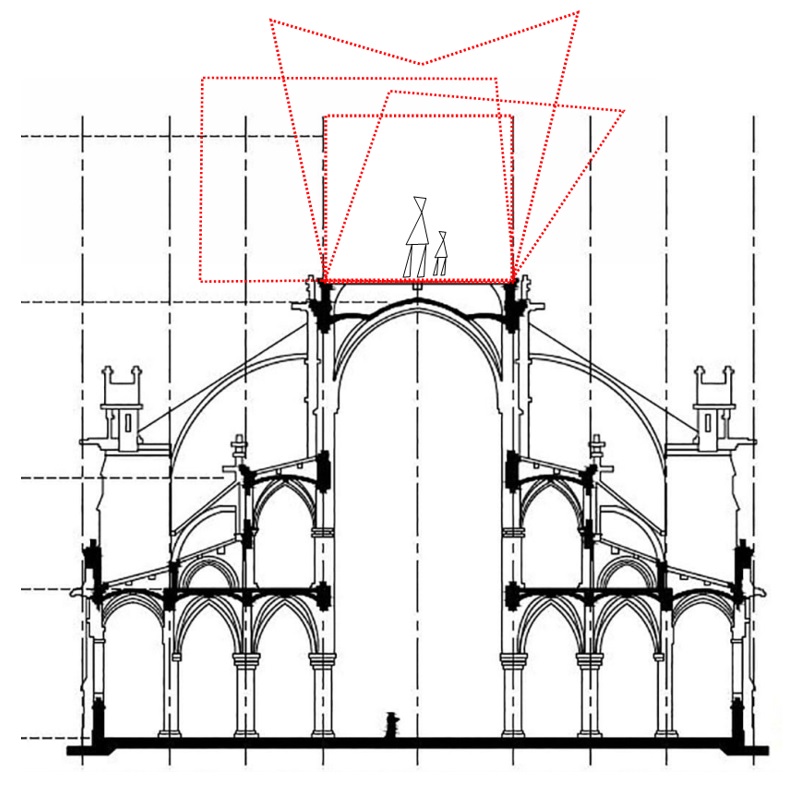
Figure 1. Image from the project brief indicating the potential building envelopes for the roof design
Given the location all entries had to produce schemes that were quick to build, cause minimal disruption to the local population, not negatively impact on tourism and, most importantly, be safe to construct.
Requirements
Teams (of 6) were required to propose a minimum of 2 initial concept designs with an appraisal of each and recommendation for 1 design to be taken forward.
The chosen design was developed to include:
Full structural design; Calculations to Eurocodes, load path diagrams, member sizing, connection design, explanation of structural choices.
Buildability (cost breakdown, site logistics, consideration of context)
Health and Safety risks, impacts on design and control measures
Construction sequence
Sustainability summary inc. embodied carbon calculations
Teams had to provide a 10xA3 page report, a set of structural calculations, 2xA3 drawings and a 10-minute presentation.
Figure 2. Connection detail drawing by group 9
Delivery
Course material was delivered over 4 sessions with a final session for presentations:
Session 1: Project introduction and scheme designing
Session 2: Timber design
Session 3: Construction and constructability
Session 4: Fire Engineering and sustainability
Session 5: Student Presentations
Sessions were co-designed and delivered by a UCL academic and engineers from ARUP. The sessions involved a mixture of elements incl. taught, tutorial and workshop time. ARUP engineers also created an optional evening workshop at their (nearby) office were groups or individuals could meet with a practicing engineer for some advice on their design.
These sessions built on learning from previous modules and projects.
Learning / Skills Development
The project aimed to develop skills and learning in the following areas:
Technical skills relating to structural design using timber, embodied energy calculations, drawing and H&S risk assessment.
Design skills relating to consideration of the site, its context and the need, creativity and assessing ideas, consideration and overlapping of numerous disciplines, design iteration and improvement.
Professional skills in relation to communicating with clients, producing reports to a professional standard, presenting a project, working in teams, organising resources, etc.
Visiting the ARUP office and working with practicing engineers also enhanced student understanding of professional practice and standards.
Benefits of Collaborating
The biggest benefit to the collaboration was the reinforcement of design approaches and principles, already taught by academics, by practicing engineers. This adds further legitimacy to the approaches in the minds of the students and is evidenced through the application of these principles in student outputs.
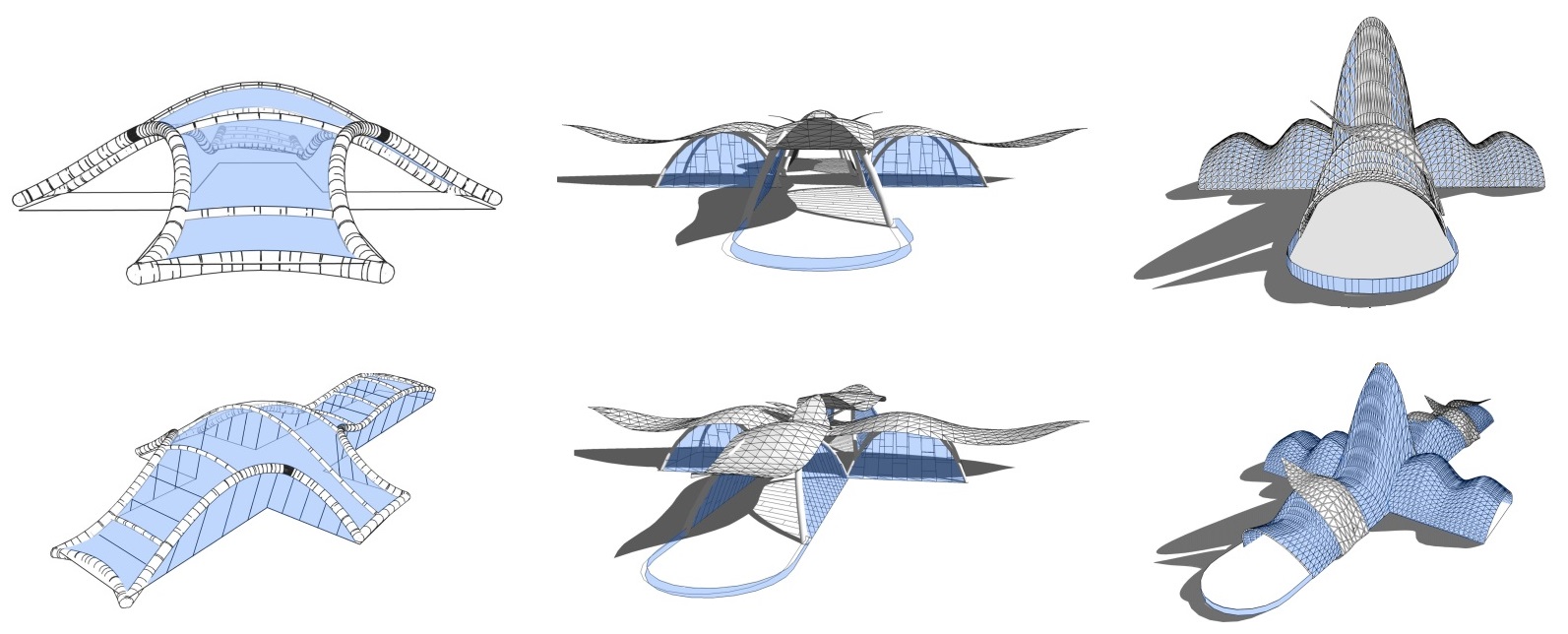
Figure 3. Development of design concepts by group 12
The increased range in technical expertise that such a collaboration brings provides obvious benefit and the increased resource means more staff / student interaction time (there were workshops where it was possible to have one staff member working with every group at the same time).
Working with an aspirational partner (i.e. somewhere the students want to work as graduates) provides extra motivation to improve designs, to communicate them professionally and impress the team. Working and presenting in the offices of ARUP also helped to develop an understanding of professional behaviour.
Reflections and Feedback
Reflections and feedback from all staff involved was that the work produced was of a high quality. It was pleasing to see the level of creativity that the students applied in their designs. Feedback from students gathered through end of module review forms suggested that this was due to the level of support available which allowed them to develop more complex and creative designs fully.
Wider feedback from students in the module review was very positive about the project. They could see that it built on previous experiences from the course and enjoyed that the project was challenging and relevant to the real world. They also valued the experiences of working in a practicing design office and working with practicing engineers from ARUP. Several students posted positively about the project on their LinkedIn profiles, possibly suggesting a link between the project and employability in the minds of the students.
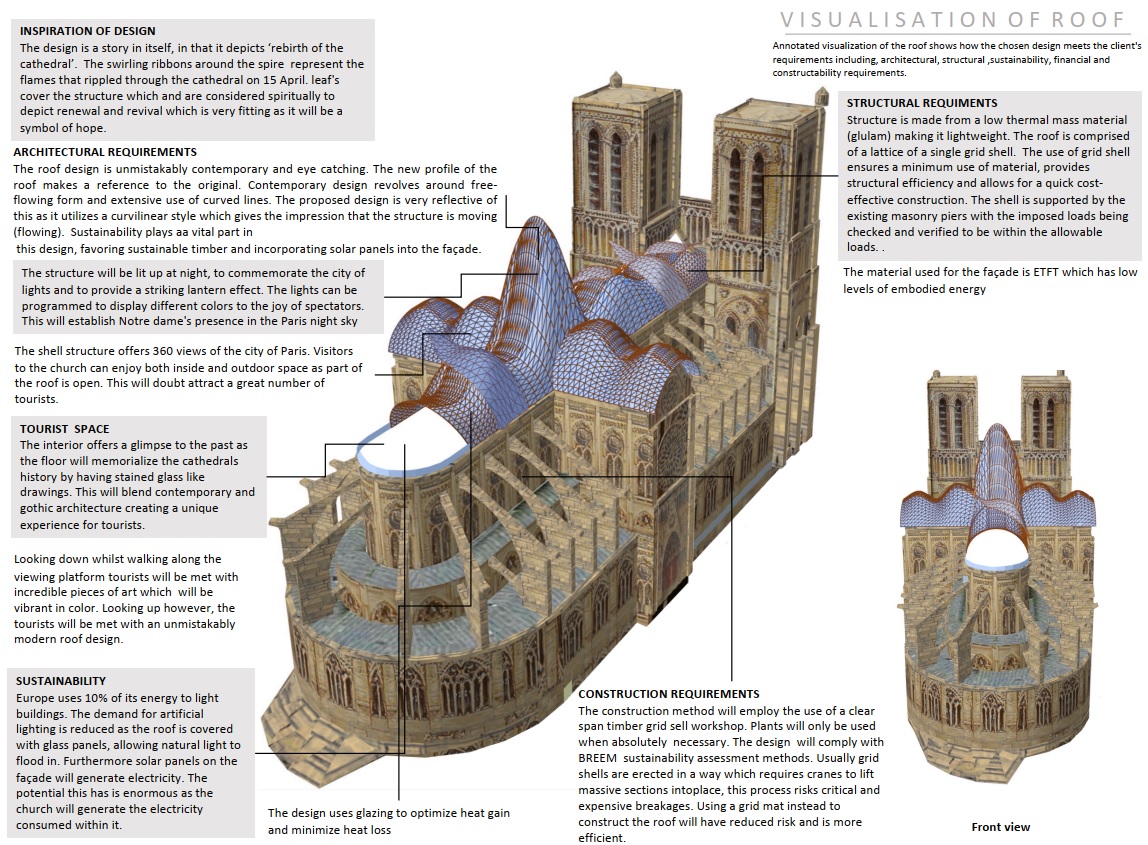
Figure 4. Winning design summary diagram by group 12
Any views, thoughts, and opinions expressed herein are solely that of the author(s) and do not necessarily reflect the views, opinions, policies, or position of the Engineering Professors’ Council or the Toolkit sponsors and supporters.
Keywords: Civil Engineering Design, Building Information Modelling, BIM, Digital Engineering, Industry, Collaboration
Abstract: This project, developed jointly with industry partners at Multiplex, allowed Civil Engineering students at UCL to develop their understanding and technical skills around the use of Building Information Modelling (BIM) on civil engineering projects and related software. Students worked on a model of an emergency shelter (designed by UCL alumnus) and were required to consider the relevant parties involved (technical and non-technical), the information they require and how to utilise the model to organise and communicate this information effectively.
Background
Digital engineering tools and Building Information Modelling (BIM) are increasingly becoming important features of modern construction projects. The design teaching team in the Department of Civil, Environmental and Geomatic Engineering (CEGE) at University College London (UCL) recognised the need to embed this practice into parts of the design teaching delivery for students on the Civil Engineering undergraduate programmes.
UCL and Mulitplex (civil engineering contractor) had been partnering on school outreach activities for several years. A discussion at such an event led to a realisation that there was good alignment on how these topics should be taught, with a focus on information and communication rather than modelling. Staff at UCL had already started developing a project that would involve using elements of BIM in the design development of an emergency shelter for humanitarian relief and that the project should encourage students to think about the information and communication aspects of this. The digital engineering team at Multiplex then agreed to join the project and provide technical assistance, to develop and deliver teaching materials and to provide real life examples and case studies to supplement the project.
The Brief
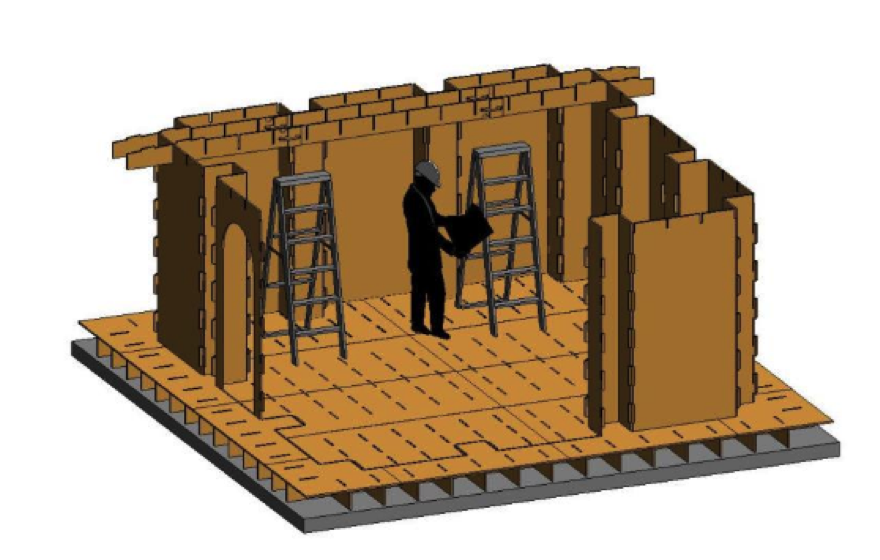
Students were provided with a pre-developed REVIT® model of an emergency shelter design made, predominantly, from timber. The shelter had been designed by a UCL alumnus during their time as a UCL student and agreement was granted to use it for this project. Students were presented with an imagined scenario that they were working for a charity that was planning to build 10 of these shelters in Haiti to assist with humanitarian relief effort following an earthquake. The students needed to consider which parties would need to be communicated with, what information they would need, how this information could be communicated with them and how the digital model could assist with this process.
Figure 1. Image of Emergency Shelter model in REVIT®
Students were encouraged to consider (but not limited to) included:
Design information (limits, assumptions, etc)
Commercial
Construction (programme, logistics and sequencing)
Health and safety
Environmental factors
Handover information and future maintenance requirements
Students were required to research the relevant information and populate the REVIT® model appropriately and professionally.
Requirements
Teams (of 6) were required to provide a 10xA3 page report that would run through each of the potential parties to communicated with, what information they would need and how the model would be used to enable this communication. They also needed to describe any assumptions that were made and how information was selected during the research phase. They needed to highlight the critical thinking that had been carried out in relation to sources of information and its suitability and reliability.
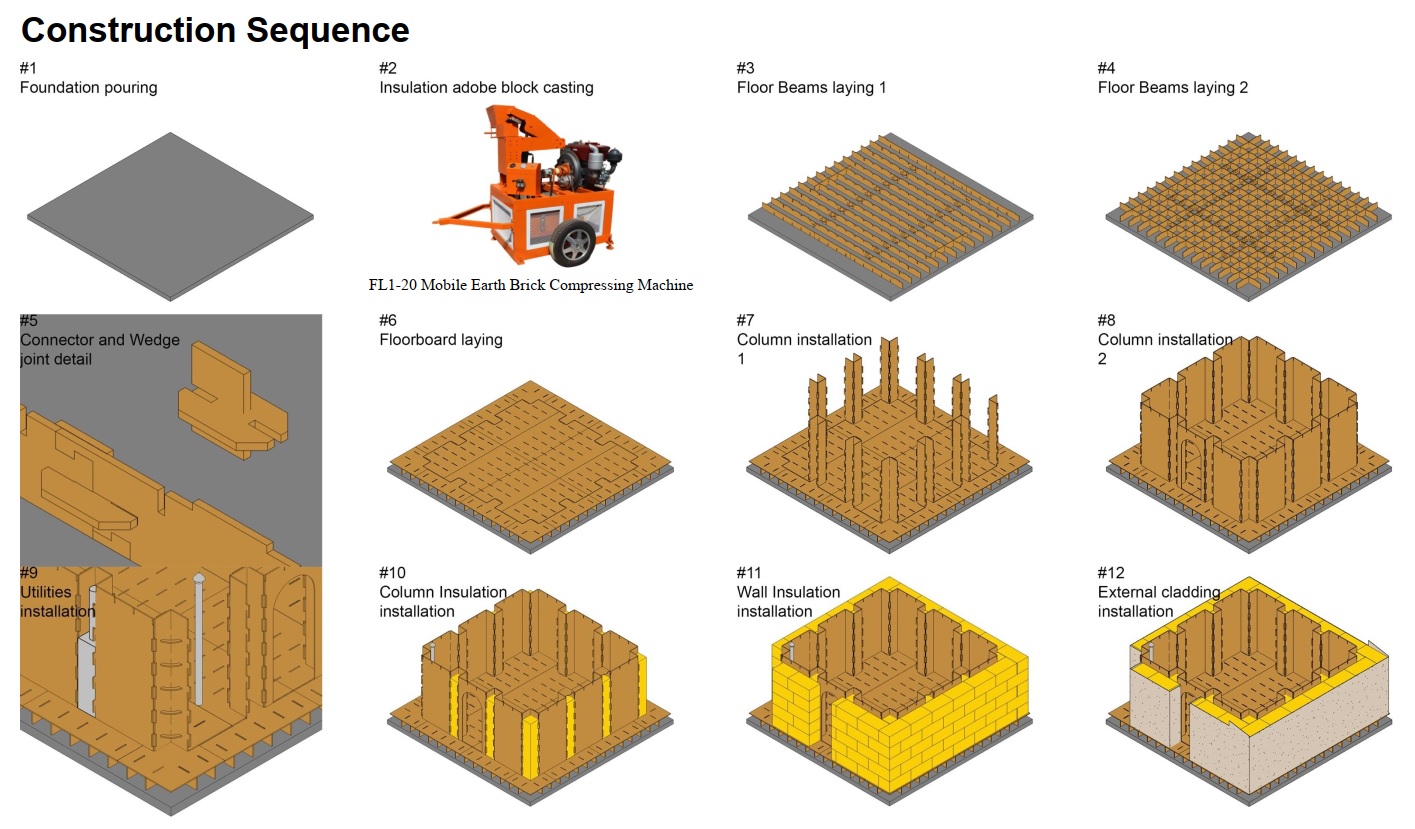
Figure 2. Use of model to explain construction sequence
Teams also needed to submit their completed REVIT® model files for inspection as well as an 8 min video presentation that would:
Present the completed model and show competency in finding the relevant information for different elements
Showcase how the model enhanced communication to each of the relevant parties
Explain how the team collaborated to produce a justified proposal
Discuss problems encountered and how they were overcome
Figure 3. External view of model
Delivery
Course material was delivered over 4 sessions with a final session for presentations:
Session 1: Project introduction and software introduction
Session 2: (i) Information and exporting in REVIT®. (ii) Commercial overview
Session 3: (i) Construction and Logistics. (ii) Health, safety and environmental factors
Session 4: (i) Handover requirements. (ii) Maintainable assets. (iii) Building management
Session 5: Student presentations
Sessions were co-designed and delivered by a UCL academic and a digital manager from Multiplex. The sessions involved a mixture of elements incl. taught, tutorial and workshop time that allowed students to work in their groups.
Learning / Skills Development
The project aimed to develop skills and learning in the following areas:
Improve REVIT® / software skills
Understand the benefits of BIM to a multi-party construction project particularly in relation to information and communication.
Improve construction knowledge
Recognise that digital technology isn’t a replacement for engineering knowledge and input.
Improve employability of students by equipping them with relevant and up-to-date construction tools and techniques.
Benefits of Collaborating
The first benefit was the inspirational aspect of working on a shelter design that had been produced by a former UCL student. This Alumnus contributed to the introduction session by running through their design and this helped students understand just how much had been achieved by someone in their position.
The collaboration with Multiplex’s digital team brought obvious benefits to the technical skills development but also benefitted student understanding by showing how these skills are being used on live construction sites. The process of learning from and presenting to practicing construction professionals also allowed students to develop key professional behavioural skills that help develop and enhance employability.
Reflections and Feedback
Reflections and feedback from all staff involved was that the work produced was of a high quality and that this demonstrated an understanding of the project objectives from the student perspective. It was also apparent that students were becoming adept at using REVIT® software effectively and appropriately.
Wider feedback from students in the module review was very positive about the project and that it had improved their understanding of the role of digital technologies in the construction industry. Students said in feedback “BIM has helped us to look at all aspects of the design and to figure out more stuff in the same amount of time,” and, “Doing it this way [REVIT model] means you can see what you think might be a risk to the workers more easily.”
Several students posted positively about the project on their LinkedIn profiles, possibly suggesting a link between the project and employability in the minds of the students.
2 of the students successfully applied for summer internships with Multiplex’s digital team immediately following the project and were able to build on their digital engineering skills further.
The project was featured by trade magazine BIMPlus which ran an article on the project showcasing the relative novelty and uniqueness of the approach taken.
Any views, thoughts, and opinions expressed herein are solely that of the author(s) and do not necessarily reflect the views, opinions, policies, or position of the Engineering Professors’ Council or the Toolkit sponsors and supporters.
 Theme: