EAN Congress 2026: Evolution or revolution invites delegates to explore whether incremental change in engineering education is enough to make it fit-for-purpose in the face of significant global and sectoral challenges – or whether engineering education now demands something more radical. As global challenges intensify, disciplinary boundaries blur, and AI reshapes every profession, there is a broad consensus now that engineers of the 21st century must pair technical expertise with sustainability literacy, ethical awareness and an entrepreneurial mindset. This year’s EPC Congress explores what a truly “fit‑for‑purpose” engineering education looks like – one that harnesses AI while safeguarding against its risks, embraces interdisciplinary thinking, and expands the role of active and experiential pedagogies – and critically, how we can deliver this. Through provocative presentations and discussion, the congress will examine who engineering education serves and how institutions can reimagine their role in shaping future‑ready engineers.
The EAN Annual Congress is the flagship event in the EPC calendar. Join us in Glasgow between 17th-19th June for Congress 2026. Our theme this year is Evolution or revolution?
Welcome to Glasgow, the UK’s friendliest city. Glasgow is a city full of warmth, character and culture where you can discover vibrant streets, welcoming locals and a spirit that makes it truly unique.
This year, Congress boasts an impressive line-up of speakers – as always – and offers you sessions, panels and activities to inform, inspire and entertain you. Watch this space for speaker announcements.
Wednesday 17th June
Thursday 18th June
Friday 19th June
*Subject to change
Jocelyn Bell Burnell inadvertently discovered pulsars as a graduate student in radio astronomy in Cambridge, opening up a new branch of astrophysics - work recognised by the award of a Nobel Prize to her supervisor.
She has subsequently worked in many roles in many branches of astronomy, working part-time while raising a family. She is now a Visiting Academic in Oxford, Department of Astrophysics. She has been President of the UK’s Royal Astronomical Society, in 2008 became the first female President of the Institute of Physics for the UK and Ireland, and in 2014 the first female President of the Royal Society of Edinburgh. She was one of the small group of women scientists that set up the Athena SWAN scheme.
She has received many honours, including a $3M Breakthrough Prize in 2018 and made CH in 2026.
The public appreciation and understanding of science have always been important to her, and she is much in demand as a speaker and broadcaster. In her spare time, she gardens, listens to choral music and is active in the Quakers. She has co-edited an anthology of poetry with an astronomical theme – ‘Dark Matter; Poems of Space’.
Dr Chris Bell is Associate Professor in the School of Physics and Academic Director of Recruitment & Admissions in the Faculty of Science & Engineering at the University of Bristol. In his role overseeing recruitment and admissions, he champions inclusive and flexible access routes, including the Foundation Year in Science, Engineering & Mathematics. This programme enable applicants without standard Level 3 qualifications to prepare for undergraduate study by building both subject knowledge and academic skills. He was a first generation student and has helped establish the Faculty's first-generation network connecting and supporting students at all levels as well as staff.
Professor Campbell Booth is Associate Principal and Executive Dean of the Faculty of Engineering at the University of Strathclyde, leading almost 1,200 staff across eight departments, several innovation centres, and more than 6,000 students. Now in his 39th year at Strathclyde, having first joined as an undergraduate in Electronic and Electrical Engineering in 1987, his research focuses on electrical power system protection, control and monitoring. He has secured more than £15m in research funding as Principal Investigator or senior lead on major projects, including EPSRC-funded programmes on digital twinning and multi vector energy systems, and has collaborated extensively with organisations such as National Grid and ScottishPower.
Professor Booth has published over 250 papers, holds patents in power system protection, and is co-founder of Synaptec, a Strathclyde spinout specialising in distributed sensing technologies. He is a Fellow of the Higher Education Academy, a member of the IET, active in CIGRE, and a past Chair of the IET International Conference on Developments in Power System Protection.
Professor Lisa Brodie is Acting Managing Director, Chief Academic Officer, and Executive Dean at ASU London (formerly TEDI-London). A Chartered Engineer and bold disruptor in engineering education, she builds programmes from scratch, reimagines curricula, champions inclusion, and turns ideas into action. From award-winning facilities to pioneering neurodiverse engineer initiatives, Lisa drives transformative change that shapes the next generation of engineers who won’t settle for incremental progress. Her career spans industry, academia, and national leadership, including service on the Engineering Professors’ Council.
Joy leads Independent Higher Education’s policy development and public affairs activity, as well as facilitating good practice across the independent sector. She built the IHE Launchpad programme, which supports start-up and step-up higher education providers to join the regulated HE sector in the UK. She sits on national taskforces and working groups focused on cold spots in HE, mergers and acquisitions, and regional tertiary collaboration.
Before joining IHE in July 2015, Joy spent over 10 years working in the British and Canadian education sectors, working from within universities, independent providers, students’ unions, and national student and higher education sector organisations.
An engineer, Chartered Environmentalist, and former UNESCO Special Envoy for Youth & the Environment, Georgia started her career as the first Environment Manager in the UK construction industry.
With 30 years’ experience as a sustainability expert, Georgia advises organisations such as HSBC, Nike, Amnesty International, and the Bank of England, delivering her “disruptive sustainability” approach – a combination of best practice and activism that generates meaningful change.
In 2021, Georgia challenged the UK government in the High Court over their failure to uphold the Paris Agreement. As a result, major polluters must now report and pay for their carbon emissions. In 2023, she founded the non-profit Fighting Dirty with journalist George Monbiot, leading strategic judicial reviews that close regulatory loopholes, force government action, and prevent pollution at source. In 2025, she successfully drove the Environment Agency to introduce new regulations preventing the illegal export and burning of UK waste in developing countries.
As Chair of the Board for Engineers Without Borders UK, she is a leader in the drive for globally responsible engineering, regularly advising Parliamentarians, contributing to industry and policy committees and standards that advance sustainable development. In 2024 & 2025 she was named in the ENDS Power List as one of the UK’s leading environmental campaigners.
As Director of Sustainability at pioneering engineering practice, Elliott Wood, she leads a team of consultants supporting real estate and infrastructure clients to embed and advance sustainable and regenerative solutions.
An internationally acclaimed keynote speaker and media contributor, she has spoken at TEDxUCL, New York Times Climate Forward Conversations, Green Footprint Mumbai, European Climate Summit, Cambridge University Zero Festival, and BBC Women’s Hour explaining how to move from anxiety and procrastination to positive action at scale and pace.
Professor Goodhew CBE FREng was the leader of the UK SuperSTEM project at the STFC Daresbury Laboratory for ten years and has been Dean of Engineering and Pro-Vice-Chancellor at the University of Liverpool.
Phil serves as the Dean of Education for the Faculty of Engineering and Physical Sciences at Queen's University Belfast. With a background as a Professor of Computer Science Education, he is particularly passionate about technology and its implications for the future for education in a rapidly evolving world. He is a Principal Fellow of the Higher Education Academy and received a National Teaching Fellowship for improving alignment across primary, secondary, and tertiary education.
Dr Nikita Hari is an interdisciplinary engineer, educator, and entrepreneur. She is Head of the Teaching and Research Design Support Group in the Department of Engineering Science at the University of Oxford and an Honorary Associate Professor in Engineering Education at University College London.
Recognised as one of the UK’s Top 50 Women in Engineering, she contributes to national and international initiatives shaping engineering education, research collaboration, and policy. Through her work across academia, industry, and entrepreneurship, Dr Hari focuses on empowering the next generation of engineers to address complex global challenges.
Kathryn is the Deputy Chief Executive Officer at Advance HE, where she leads strategic organisational development, global member engagement and the transformation and operational excellence required for Advance HE to deliver value and impact for member institutions.
Kathryn has been a member of the senior team at Advance HE since its creation in 2018 and has played a pivotal role in strengthening its global reputation developing programmes to support higher education across the world. She led the global redevelopment of the Professional Standards Framework for Teaching and Supporting Learning in HE, was a member of the steering group that developed the Framework for Leading in HE and oversaw the review and refresh of the Athena Swan gender equality charter.
Her earlier career includes leadership of professional recognition and accreditation at the Higher Education Academy and teaching and leadership roles in further education and specialist higher education. She holds two master’s degrees with a focus on leading educational development and change and is a Senior Fellow of the HEA.
Professor Paul Jowitt CBE FRSE FREng is a distinguished British civil engineer and academic, and Professor of Civil Engineering Systems at Heriot‑Watt University in Edinburgh. He has spent decades advancing systems thinking, sustainable development and infrastructure resilience within engineering and higher education, and he was the 145th President of the Institution of Civil Engineers, leading the profession through issues of global sustainability and social impact. He is also President of the Commonwealth Engineers Council, a Fellow of both the Royal Academy of Engineering and the Royal Society of Edinburgh, and was awarded a CBE for services to technology in the 2011 Birthday Honours.
His research and leadership focus on systems‑level solutions to complex infrastructure and environmental challenges, including water resources, carbon management and sustainable urban systems. Paul has chaired influential commissions such as ICE’s “Engineering without Frontiers”, chaired the engineering charity Engineers Against Poverty, and served as a board member of Scottish Water and United Utilities Water, combining academic insight with real‑world impact on policy, practice and global development.
Jil MacBryde is Professor of Innovation and Operations Management within Strathclyde Business School. She was Associate Principal, Entrepreneurship and Enterprise at Strathclyde University from Jan 24 to Jan 26. Jill is Co-Director of the ESRC Made Smarter “InterAct” network, which aims to bring insights from the social sciences to support the innovation and diffusion of digital technologies that will result in a stronger, more resilient, manufacturing base. Jill was previously Director of the Hunter Centre for Entrepreneurship. She is currently a member of the Innovate UK/ESRC Innovation and Research Caucus.
Professor Sir Jim McDonald is Chair of Scottish Enterprise, Scotland’s national economic development agency, a role he took up in January 2025. He is widely recognised as one of Scotland’s leading engineers, academics and innovation leaders, with a career spanning industry, higher education and national economic strategy.
A three-time graduate of the University of Strathclyde, Sir Jim went on to become Principal and Vice-Chancellor from 2009, leading the university’s transformation into a globally recognised technological institution with strong industry partnerships.
Sir Jim has held numerous national leadership roles, including President of the Royal Academy of Engineering from 2019 to 2024—the first Scot to hold the post—and he co-chairs the Scottish Government’s Energy Advisory Board with the First Minister.
He was knighted in 2012 for services to education, engineering and the economy, and in 2024 was awarded the Knight Grand Cross of the Order of the British Empire (GBE) for services to engineering, education and energy.
Director Universities Scotland
President Emeritus, Olin College of Engineering
John E. Mitchell is Professor of Communications Systems Engineering and Head of the UCL Department of Electronic and Electrical Engineering and Co-director of the UCL Centre for Engineering Education. Between 2012 and 2016 he was on secondment to the UCL Engineering Sciences Faculty office, where he led the introduction of the Integrated Engineering Programme. The team that led this major revision of the curriculum across the engineering faculty was awarded the HEA Collaborative Award for Teaching Excellence (CATE). He has published widely on curriculum development, active learning and issues of diversity within engineering education. From 2015 to 2022 he was Vice-Dean Education of the UCL Faculty of Engineering Sciences.
Professor Mitchell is a Chartered Engineer, Fellow of the Institution of Engineering and Technology (IET), Fellow of the Institute of Electrical and Electronics Engineers (IEEE), Principal Fellow and National Teaching Fellow of the Higher Education Academy, Past President of the Engineering Professors’ Council and was until recently Vice-President, Publications of the IEEE Education Society, a Member of the Board of Directors of the European Society for Engineering Education (SEFI) and Editor-in-Chief of the IEEE Transactions on Education.
Professor Mick O’Connor PhD CEng CDir FIoD FRSA FIES is a Chartered Engineer, Chartered Director and former Royal Academy of Engineering Visiting Professor with more than 30 years of leadership across aerospace, defence, space, energy, manufacturing and financial services.
Beginning his career as an apprentice welder at Scott Lithgow, he progressed to lead complex, capital-intensive organisations, building a £70m engineering business within SSE Enterprise, delivering a £200m working-capital improvement at QinetiQ and turning around a defence aviation MRO business recognised as Business of the Year.
He is Co-Founder and Chair of Fire Arrow Ltd, an international spaceport advisory firm and Managing Director of Gibson Robotics, leading the development of advanced Counter-UAS technologies. He is also Founder of HAELO, a RegTech company providing AI-driven regulatory intelligence to financial institutions.
Mick holds a PhD in Emergence Sense-Making in Complex Organisational Ecosystems and is an Adjunct Lecturer in FinTech at the University of Strathclyde. He led the Scottish Government industrial strategy for Aerospace, Defence, Marine and Security and is Deacon of the Incorporation of Hammermen of Glasgow.
A strong advocate for STEAM and engineering education, he holds honorary academic roles and serves on the Department for Transport’s Spaceflight and Safety Regulatory Council.
With over 20 years of experience in higher education (HE), Elena is a nationally and internationally recognised expert and leader in enterprise and engineering education, inclusive and international learning and teaching, and change management.
Elena has a distinguished record of achievements and recognitions, including being a Fellow of the Royal Academy of Engineering, one of the first twelve Principal Fellows of the AdvanceHE/HEA in the UK, and the 2020 Woman of the Year in Technology. She is also a Fellow of the Institute of Engineering and Technology, the Chartered Management Institute, and the Women's Engineering Society.
Elena is passionate about engaging and empowering students, staff, and stakeholders through innovative and impactful global educational initiatives and programmes.
She is the Chair of the Board of Trustees of EDT, a nationwide educational charity that provides STE(A)M-focused opportunities for young people. Elena is also President of, her Alma Mater’s Mexican, Universidad Autónoma de Nuevo León’s International Advisory Board.
Professor Rodriguez-Falcón famously led the creation of the New Model Institute for Technology and Engineering (NMITE) as President and CEO, a pioneering and ambitious higher education institute to transform engineering education in the UK.
Before joining Study Group, Elena was also Deputy Vice Chancellor at the University of Wales Trinity Saint David (UWTSD), where she had oversight of the academic portfolio and strategy of the institution. Elena's mission is to drive change and innovation in HE, to support and empower international students, and to inspire the next generation of socially aware change makers.
Paul Sheerin has been Chief Executive of Scottish Engineering since 2018 having previously been involved through member companies Polaroid and B&W Diamond Power Specialty Ltd.
Paul studied Electrical and Electronic Engineering at The University of Glasgow and joined Nuclear Electric in 1990 as part of the Sizewell ‘B’ project team. After a period of working in the USA, he returned to Scotland and joined Polaroid at its Dumbarton base in 1996 and became Managing Director in 2005, then VP Global Operations of Polaroid’s sunglass business until 2017. Paul is also part of Scottish Engineering’s volunteer mentor group and through that enjoys opportunities to promote and support Enterprise, Engineering and Manufacturing opportunities for all.
Dr Jonathan Truslove is the Education and Skills Lead for Engineers Without Borders UK, developing opportunties to learn about about how to put global responsibility at the heart of how engineering is taught and practiced, and pathways for systemic change in the sector. Jonathan is an interdisciplinary research practitioner with experience in engineering for global development, social and environmental value, facilitation, systems change and policy and standards. He leads the research and development of Engineers Without Borders UK’s educational portfolio, and monitoring and evaluation of the organisation's impact. His background in water and sanitation access in rural and challenging environments in Scotland, Rwanda, Malawi and Cambodia. Jonathan was awarded his PhD in 2020, by the University of Strathclyde, through the Scottish Government Climate Justice Fund Water Futures Programme which focussed on addressing the sustainability burden placed on rural communities in Malawi by the drive to meet global coverage targets, and the relationship between sustainable infrastructure and communities.
Katy leads the Engineering Council's work on policy and standards, including education and skills, international and external affairs, and professional standards.
Katy joined the Engineering Council in 2011 as Head of International, with over twenty years’ experience working for professional engineering institutions. In 2016 she led the newly formed Professional Standards department which brought together the international and standards teams, embedding a focus on international alignment and recognition into core business.
As Head of Policy & Standards and Deputy CEO, Katy continues to have strategic oversight of the Engineering Council’s professional standards and guidance, international and external affairs, and portfolio of strategic activities focused on enhancing equity, diversity and inclusion, ethics and sustainability. Current and recent work includes development of a contextualised version of UK-SPEC for engineers and technicians working on higher-risk buildings; guidance on reasonable adjustments to the professional review to support neurodivergent applicants; updated guidance on whistleblowing; and revision to the joint Engineering Council Royal Academy of Engineering Statement of Ethical Principles.
Katy holds a degree in European Studies and is a Chartered Manager with the Chartered Management Institute.
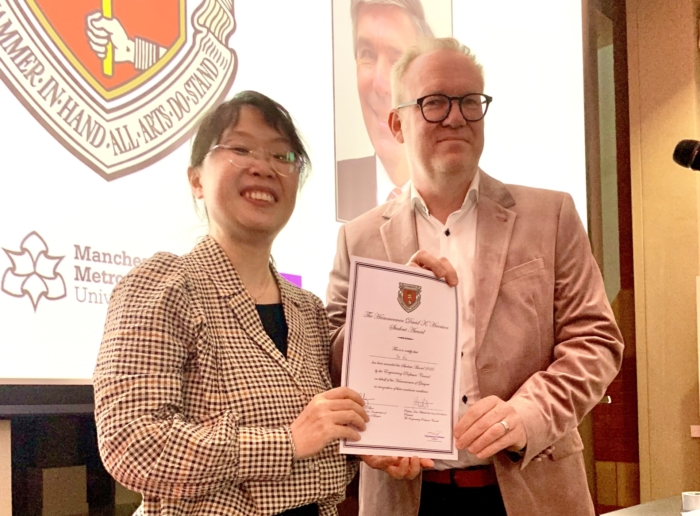
Help your students celebrate their success through the coveted Hammermen Student Prize. There is a cash award of up to £500 and FIVE totally free places at the 2026 Engineering Academics Network Annual Congress up for grabs.
The prize celebrates the achievements of different engineering students at the EAN Annual Congress. Following the resounding student success at Manchester Metropolitan University and The University of Manchester in 2025, we will be showcasing the Student Awards live as part of Congress 2026: Evolution or revolution? This is the big event in the EAN calendar.
Please encourage your students (undergraduate, postgraduate or KTP associate) to apply by submitting a 100-word abstract for a poster on the theme Change that challenges. This might be something students are already working on for their final year project, or something from within their engineering studies which has really inspired them.
We are delighted to be able to offer 5 early career staff an EPC sponsored place at Congress 2026.
Please see the full eligibility criteria below:
You must be employed as an academic in an Engineering discipline at an institution that is a member of the EPC or you must be an individual member of the Engineering Academics Network.
You must not have been employed in any academic post(s) for longer than a sum of five years.
Academics previously attending Congress on a free ECS place are not eligible for this offer (but can book a heavily discounted rate).
The free place offer is for a full congress ticket plus congress dinner and optional basic B&B accommodation.
Travel and other expenses to attend are not included.
You will be expected to attend the whole of Congress.
Only one free place per member institution (non-member institutions are not eligible for this offer).
Places will be offered on a first-come-first-served basis to those eligible for them.
Successful applicants will be expected to submit a brief report following their attendance.
Please note that if an individual if found not to be eligible, they will be responsible for the full Congress fee.
We are delighted to welcome you to a host of networking spaces, including a Civic Welcome from the City of Glasgow and local activities.
Congress dinner will be held this year at Merchants House. We’ll meet in the Directors room for a drinks reception and dine in the Grand Hall.
Tickets for Congress do not include accommodation (with the exception of the 10 fully free places for early career staff and students). If needed, please make your own arrangements. We will be happy to offer advice if we can.
Details of hotels near University of Strathclyde Learning & Teaching Building can be found here.
The exhibition will also include the shortlisted posters for the David K Harrison Hammermen Student Award.
The Congress, which runs over three days, attracts between 80 and 150 delegates, most of whom are decision-makers and budget controllers. The first day is devoted to networking followed by two days packed with high-profile and expert speakers.
By Dr Jo-Anne Tait, Principal Lecturer, Aberdeen’s Robert Gordon University (RGU) Following the All In for Engineering: Neurodiversity in Engineering...