Toolkit: Inclusive Engineering Toolkit
Author(s): Simon Lawes (University of Nottingham)
Resource type: Teaching activity: Applied learning tools and simulations (e.g. interactive or digital tools exploring inclusion in systems)
Topic: Inclusive engineering decisions in medical-device development
Title: Everyday decisions: An inclusive engineering simulation
Relevant disciplines: Bioengineering, medical & biomedical engineering; Electrical, electronic and computer engineering; General, non-specific or other engineering
Keywords: Inclusive Engineering; Equity Diversity and Inclusion; Engineering practice; Bias; Inclusive or Responsible design; Reflective practice; Risk; Professional conduct; Assessment criteria or methods and tools; Teaching and learning; Teaching resource
Licensing: This work is licensed under a Creative Commons Attribution-ShareAlike 4.0 International License.
Downloads: A PDF of this resource will be available soon.
QAA Inclusive Higher Education Framework mapping: Toolkit resources are designed to be applicable across engineering disciplines, but educators may find it useful to understand their alignment with the QAA Inclusive Higher Education Framework. The framework sets out five areas of activity that support inclusive practice across higher education, covering curriculum design, teaching and learning, assessment, learner support, and institutional approaches to inclusion.
This resource aligns most closely with the following QAA Inclusive Higher Education Framework area of activity: Curriculum Design and Delivery, Community and Belonging.
Within the Inclusive Engineering Toolkit, these areas provide a reference point for understanding how resources support inclusive engineering education and practice, rather than defining a rigid taxonomy or classification system.
AHEP mapping: This resource addresses several of the themes from the UK’s Accreditation of Higher Education Programmes fourth edition (AHEP4): Equality, Diversity and Inclusion. In addition, Design and Ethics.
Educational level: Beginner and Intermediate (no prior knowledge)
Overview
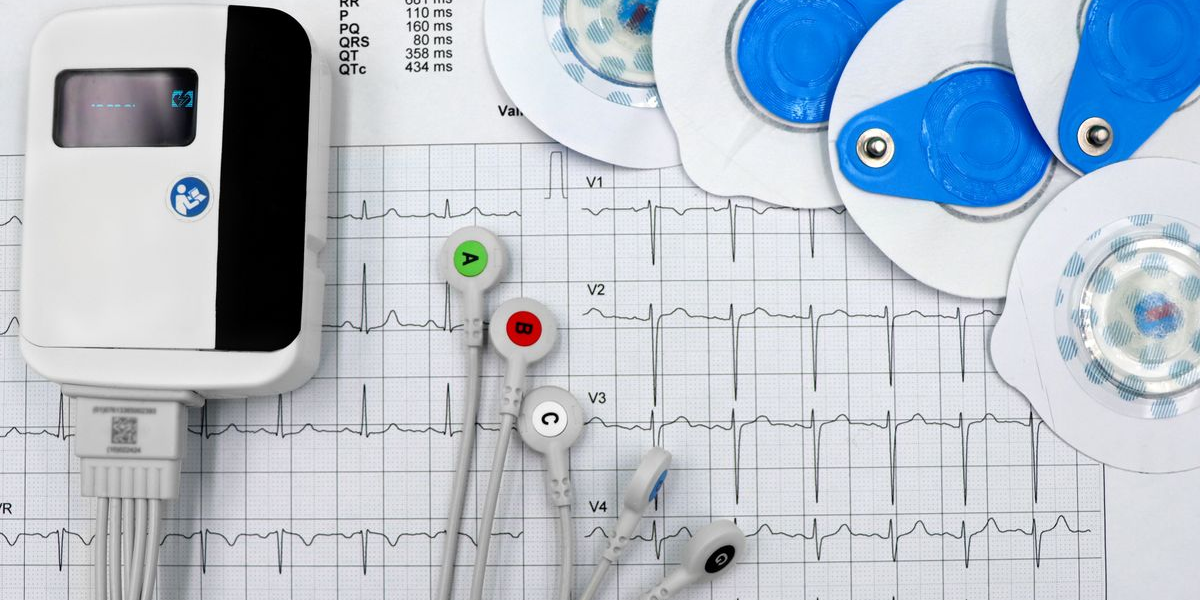
This resource is an interactive simulation that lets a learner practise the everyday decisions through which engineering products come to work well, or badly, for different people. The learner plays a senior engineer at a design consultancy developing a heart-rhythm monitoring patch for a client (Fig. 1). Nothing in the scenario is a dramatic ethical crisis. Instead the learner meets the ordinary moments that quietly decide who a product serves: who gets heard in a meeting, how a test population is defined, how ambiguous findings are classified, and how strongly a result is claimed to a client. Each decision plays out in short voiced scenes and reshapes the emails and results the learner then encounters, so consequences are felt in the world of the story rather than delivered as a score.
The experience then steps out of the fiction and connects it to a documented real-world case of non-inclusive engineering: bias in pulse oximetry. It ends on three questions the learner carries back into their own practice. There are no marks and no single correct path; the subject of the exercise is the quality of a professional’s attention, not the outcome of one presentation.
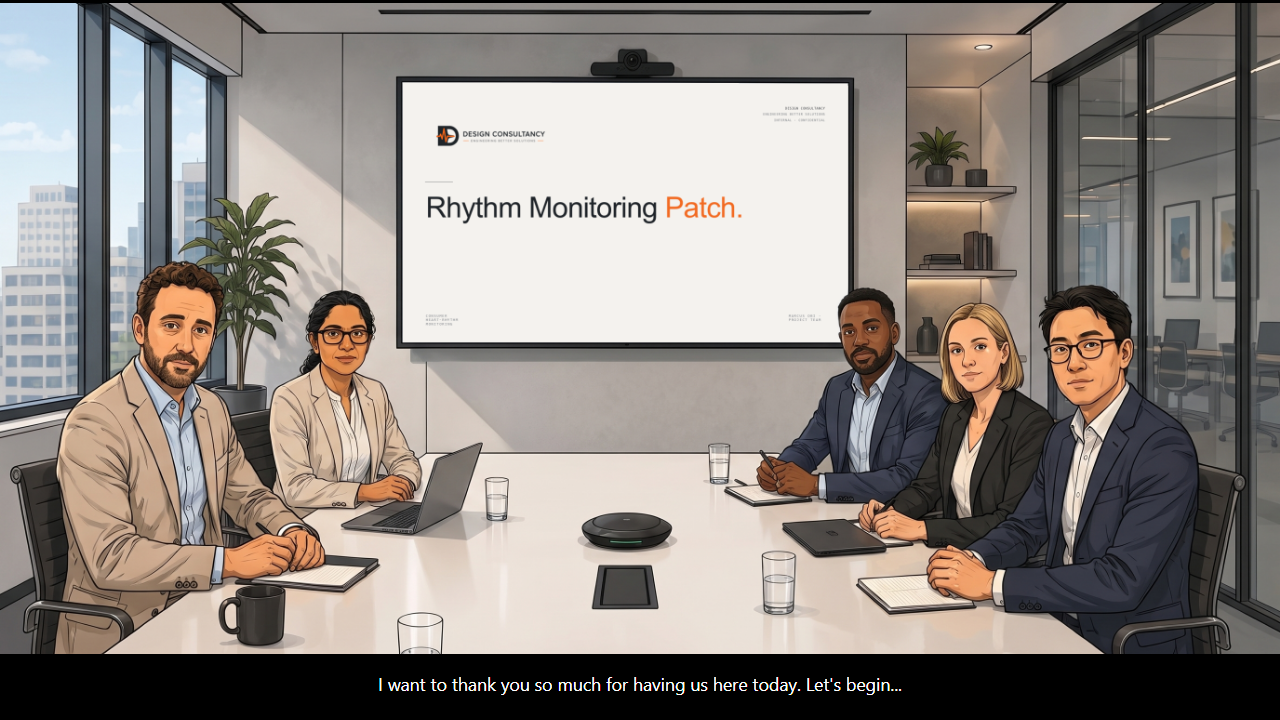
Fig. 1. The client presentation that frames the scenario: the learner’s team demonstrates the monitoring patch.
Access the simulation
Click the link below to access the simulation:
Everyday Decisions: An inclusive engineering simulation
Format: Browser-based, single-player voiced branching role-playing simulation. Suitable for individual use or group delivery in a lecture room (approximately 25–35 minutes to play).
Group size: Individual, or groups of any size using a shared screen or projector.
Duration: Approximately 25–35 minutes to play; 45–75 minutes including group discussion.
Requirements: A modern web browser and internet connection. The simulation runs directly in the browser with no login, download or installation required. Sound/headphones are recommended.
How to access and run
Open the link below in any modern web browser (Chrome, Edge, Firefox or Safari) on a laptop or desktop; it also runs on tablets and phones. There is no login, download, install or setup: the simulation begins from the opening screen. The dialogue scenes are voiced, so headphones or speakers are recommended; on-screen captions are always shown. It is best experienced full-screen. Nothing is stored and no data is collected, so each run starts fresh.
https://frabjous-longma-bcc431.netlify.app/
Technical requirements
No additional requirements: runs in a modern web browser with no accounts, plugins or installation. An internet connection is needed to stream the short scene videos. Because the resource is delivered as a hosted web application, the stable link above is the intended route for use.
Learning and teaching notes
The simulation is built for flexible use. It can be set as a self-contained individual activity, or run with a group and paused at each decision point for discussion. It assumes no prior knowledge of inclusive engineering, which makes it suitable at beginner level; a short primer from the facilitator, or the training slides referenced inside the story, deepens it for intermediate learners. Because the tool is deliberately un-scored and every path is playable, it rewards discussion of reasoning rather than a hunt for the right answer. A separate facilitator guide accompanies this document with timings, pause-point prompts, discussion questions and assessment suggestions.
The design follows the arc of a real project rather than a set of abstract principles. Learners are not told that inclusion matters; they experience how a narrow room, a convenient test group or an over-confident claim narrows a product, and only afterwards see the same pattern in a real device. This ordering, practice first and principle second, is deliberate.
Upon successful engagement with this resource, learners will be able to:
- recognise how routine engineering decisions, who is heard in a meeting, how a test population is defined, how findings are classified, how evidence is claimed, shape whether a device works for diverse users;
- identify the moments in everyday engineering practice where inclusion is quietly designed in or out, and explain the likely consequences of each;
- weigh the trade-offs between convenience, schedule pressure and inclusive rigour when planning validation and defining who is tested;
- distinguish between what a technology can do and what can responsibly be claimed for it, and match the strength of a claim to the strength of the evidence;
- connect the fictional scenario to documented real-world harm, using bias in pulse oximetry as a worked example of non-inclusive engineering;
- reflect critically on their own practice: whose voice is missing, what “it works” means and for whom, and which standards to hold under pressure.
The scenario and its five decision points
The learner works alongside a small, recognisable team: Marcus, who runs the project; Priya, who owns the data; Fran, who owns the product and app; Danny, an engineer; and Yemi, who carries the clinical and regulatory perspective and is often the voice most easily left out of the room. The client is a medical device company preparing to present the patch. Over five decision points, each a natural stop for group discussion (Fig. 2), the learner shapes the project:
- Whose voice is heard. In the opening meeting the learner decides how to handle credit and whose input to actively bring into the record, setting a tone for how the team listens.
- How the meeting is run. The learner chooses the format of a key planning meeting (in person, online or hybrid). Each format opens or narrows who can genuinely take part, and the story follows the consequences, including a participant whose connection drops at the decisive moment.
- How the test population is defined. The learner decides who the validation will and will not include. Convenient, easily recruited users, or the harder-to-reach people the product is actually meant for: older adults, people with tremor, limited mobility or reduced dexterity.
- How the findings are classified. When the results are mixed, the learner chooses how to record them: as clean, as carrying risks to be flagged, or as needing further stress-testing. The classification travels downstream into what everyone else believes.
- How strongly the result is claimed. In the final decision the learner sets the strength of the claim made to the client, from a strong general claim to a carefully qualified or technology-only statement, matching, or overreaching, the evidence.
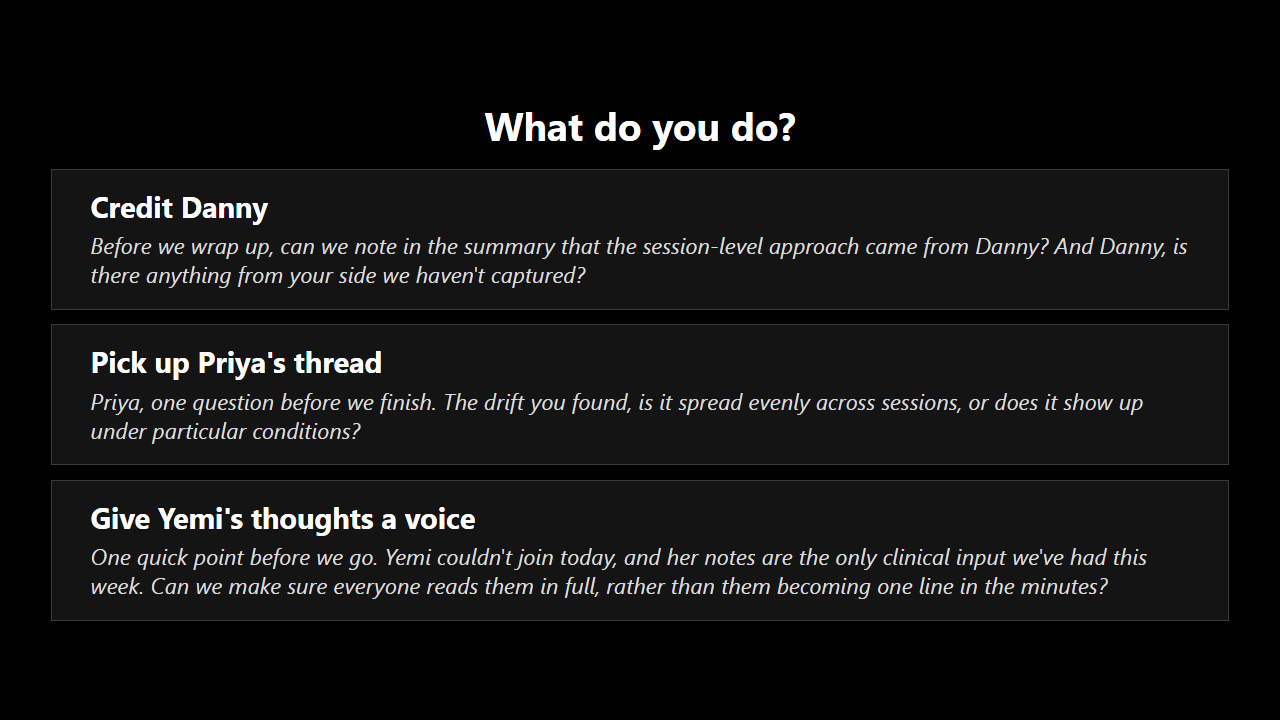
Fig. 2. A decision point. Every path is playable; the tool never marks a choice right or wrong.
Because the choices set state that later scenes read, the emails, the validation results and the final message the learner receives all differ according to the path taken. One such consequence is shown in Fig. 3: a validation debrief in which coverage falls away for the groups the test under-represented.
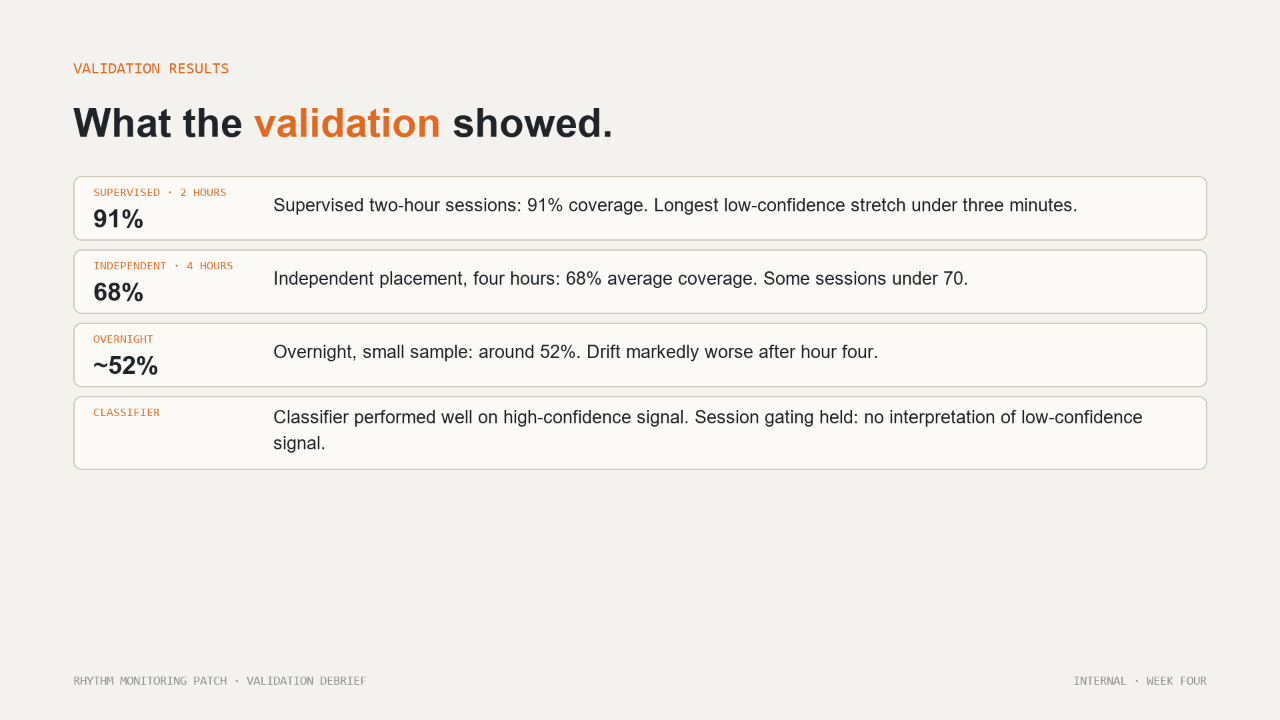
Fig. 3. A validation debrief the learner sees later, shaped by the earlier decisions about who was tested.
From fiction to evidence: the pulse-oximetry bridge
After the story ends, the simulation connects the pattern the learner has just lived through to a real, well-documented case. A pulse oximeter estimates blood-oxygen from light shone through the skin. The calibration behind that estimate historically rested on a narrow range of participants, and the device can read differently on darker skin.
In 2020, clinicians at the University of Michigan compared oximeter readings against arterial blood, the clinical gold standard. Among patients whose oximeter showed a reassuring 92 to 96 percent, occult hypoxaemia, dangerously low oxygen the device missed, was found in 11.7 percent of Black patients against 3.6 percent of White patients: roughly three times as often (Sjoding et al., NEJM, 2020). In 2022, a study of 7,126 Covid-19 patients across the Johns Hopkins system found the overestimate left a meaningful share of Black and Hispanic patients unflagged for care they qualified for (Fawzy et al., JAMA Internal Medicine, 2022). The concern is not new: larger errors were reported in the 1990s and the over-reading characterised in the laboratory in 2005. The point the simulation draws out is that this was not a single bad actor. It was an accumulation of ordinary decisions about who was in the room, who was tested and what was claimed, exactly the decisions the learner has just made.
The closing reflection
The experience ends with three questions, presented one at a time, that move the lesson from the story into the learner’s own working life:
- Think about the meetings you attend. Whose voice is not being heard?
- And when you say that something works: works for whom?
- When the pressure comes, and it will, what standards will you hold firm on?
Facilitation Guidance
What this activity is
Learners play a senior engineer developing a heart-rhythm monitoring patch and make five decisions that shape whether the product works for everyone it is meant to serve. The tool is un-scored and every path is valid; its purpose is to make the ordinary decisions of inclusive practice visible and discussable, then connect them to a real case of non-inclusive engineering (bias in pulse oximetry).
Before the session (for group delivery)
- Test the link. Open https://frabjous-longma-bcc431.netlify.app/ on the room’s machine beforehand. Check sound through the room speakers and that video plays. It streams, so confirm the network is adequate.
- Set the room. Full-screen the browser. If projecting for a group, decide who drives; a single shared screen works well because the choices become a group conversation.
- Optional primer (recommended for intermediate use). A five-minute framing lifts the activity: name that this is about everyday decisions, not villains, and that there are no marks. The story itself references inclusive-practice training slides you can preview and echo.
Suggested teaching contexts
- Design and product-development modules (requirements, validation, human factors).
- Engineering ethics and professional practice.
- Medical-device, biomedical or sensor engineering.
- Teamwork, communication and inclusive-culture sessions (voice, psychological safety).
- Induction or CPD for practising engineers.
Running it: the five decision points as pause points
In group mode, pause before each choice and ask the group to argue it out before selecting. The prompts below are starting points. There are no correct answers; the value is in what learners weigh.
Decision 1: Whose voice is heard
The learner sets the tone for how the team listens: who gets credit, and whose input is actively brought into the record.
Discussion prompts:
- Who tends to get heard in meetings you have been in, and who does not?
- What does it cost, and what does it protect, to slow down and pull in a missing voice?
Decision 2: How the meeting is run (in person / online / hybrid)
The format of a planning meeting opens or narrows who can genuinely take part. The story follows the consequences, including a participant cut off at the key moment.
Discussion prompts:
- How does each format change who is really in the decision, not just who is invited?
- What would it take to keep a remote or clinical colleague meaningfully present?
Decision 3: How the test population is defined
Convenient, easily recruited users, or the harder-to-reach people the product is actually for: older adults, people with tremor, limited mobility or reduced dexterity.
Discussion prompts:
- Who is easy to test, and who is the product actually for? When do those differ?
- What pressures push teams toward the convenient sample?
Decision 4: How the findings are classified
When results are mixed, the learner records them as clean, as carrying risks to flag, or as needing stress-testing. The label travels downstream.
Discussion prompts:
- How does the way a finding is labelled change what everyone downstream believes?
- Where is the line between reasonable confidence and quietly burying a caveat?
Decision 5: How strongly the result is claimed
The learner sets the strength of the claim to the client, from a strong general claim to a qualified or technology-only statement.
Discussion prompts:
- Match the claim to the evidence: what can this result honestly support?
- Who bears the cost if the claim is stronger than the evidence?
Extras – there are also opportunities during the activity to type email responses to various characters in the experience. These are not built into the logic of the game in the same way that the choices are and as such they are completely optional. They exist to prompt participants to think about how they would handle the interpersonal elements of Inclusive practice. These can be crowd sourced in a group delivery but it may be best to skip.
The real-world connection: pulse oximetry
After the story, the tool bridges to a documented case. Key talking points, all shown in the tool with sources:
- A pulse oximeter estimates blood-oxygen from light through the skin; its calibration historically rested on a narrow range of participants and it can read differently on darker skin.
- Among patients reading a reassuring 92-96%, dangerously low oxygen was missed about three times as often in Black patients (11.7% vs 3.6%) – Sjoding et al., NEJM, 2020.
- In 7,126 Covid patients at Johns Hopkins, the overestimate left many Black and Hispanic patients unflagged for eligible care – Fawzy et al., JAMA Internal Medicine, 2022.
- The harm came not from one bad actor but from an accumulation of ordinary decisions – the same kinds the learner just made.
Encourage learners to go deeper with this example after the session. In session you may wish to Invite learners to bring an example of non-inclusive engineering from their own discipline; the oximetry case is one instance of a general pattern.
The three closing questions (use as prompts)
- Think about the meetings you attend. Whose voice is not being heard?
- And when you say that something works: works for whom?
- When the pressure comes, and it will, what standards will you hold firm on?
These work well as a written one-minute reflection, a think-pair-share, or an exit ticket.
Debrief and assessment
The tool records no scores, so assessment. It is designed to promote Inclusive thinking and as such it a good primer for other assessment activities. Options:
- Reflective writing. A short piece on one decision the learner would make differently, and why.
- Compare paths. Have two learners who chose differently at Decision 3 or 5 explain their reasoning to each other.
- Transfer task. Ask learners to map the five decisions onto a project in their own field.
- Participation rubric. Assess the quality of contribution to the pause-point discussions (evidence used, trade-offs named, others’ views engaged).
Accessibility and practical notes
- All dialogue is captioned on screen as well as voiced.
- The interface uses click/tap to advance and to choose; no fine motor precision or keyboard shortcuts are required.
- Best full-screen; works on desktop, tablet and phone.
- No account, no data collection, no persistence: each run is fresh and private.
- Runtime is short enough to fit a single class slot with discussion.
Troubleshooting
- No sound. Check the browser tab is not muted and room volume is up; captions still carry the dialogue if sound fails.
- Video stalls. It streams video; on a weak connection, let a scene buffer, or try a wired network.
- Want to restart. Reload the page; there is also a start-again option at the end.
References and sources
- Sjoding, M.W. et al. (2020). Racial Bias in Pulse Oximetry Measurement. New England Journal of Medicine, 383:2477-2478.
- Fawzy, A. et al. (2022). Racial and Ethnic Discrepancy in Pulse Oximetry and Delayed Identification of Treatment Eligibility. JAMA Internal Medicine.
- Bickler, P.E., Feiner, J.R., Severinghaus, J.W. (2005). Effects of skin pigmentation on pulse oximeter accuracy at low saturation. Anesthesiology.
- Jubran, A., Tobin, M.J. (1990). Reliability of pulse oximetry in titrating supplemental oxygen. Chest.
- NHS Race and Health Observatory (2021). Pulse oximetry and racial bias: recommendations for national healthcare, regulatory and research bodies.
- The Open Oximetry Project, UCSF Hypoxia Research Laboratory. openoximetry.org.
Author, rights and licence
Author and affiliation: Simon Lawes. Sole author. This is original, independently owned work. All artwork and rendered slides were created by the author; character voices are synthesised; the pulse-oximetry figures are the author’s own visualisations of publicly reported findings, cited above. The resource is offered under the Creative Commons Attribution-ShareAlike 4.0 International licence.
Any views, thoughts, and opinions expressed herein are solely that of the author(s) and do not necessarily reflect the views, opinions, policies, or position of the Engineering Professors’ Council or the Toolkit sponsors and supporters.
All contributions published through the Inclusive Engineering Toolkit have been subject to a structured peer review process to support quality, relevance, and consistency.
The Inclusive Engineering Toolkit recognises that inclusive language and terminology may vary across contexts and communities, and that contributors may use different approaches depending on context and preference, including identity-first and person-first language. Users are encouraged to contact us at admin@epc.ac.uk with any questions, concerns, or feedback regarding language used within toolkit resources.