EAN Congress 2026: Evolution or revolution invites delegates to explore whether incremental change in engineering education is enough to make it fit-for-purpose in the face of significant global and sectoral challenges – or whether engineering education now demands something more radical. As global challenges intensify, disciplinary boundaries blur, and AI reshapes every profession, there is a broad consensus now that engineers of the 21st century must pair technical expertise with sustainability literacy, ethical awareness and an entrepreneurial mindset. This year’s EPC Congress explores what a truly “fit‑for‑purpose” engineering education looks like – one that harnesses AI while safeguarding against its risks, embraces interdisciplinary thinking, and expands the role of active and experiential pedagogies – and critically, how we can deliver this. Through provocative presentations and discussion, the congress will examine who engineering education serves and how institutions can reimagine their role in shaping future‑ready engineers.
The EAN Annual Congress is the flagship event in the EPC calendar. Join us in Glasgow between 17th-19th June for Congress 2026. Our theme this year is Evolution or revolution?
Welcome to Glasgow, the UK’s friendliest city. Glasgow is a city full of warmth, character and culture where you can discover vibrant streets, welcoming locals and a spirit that makes it truly unique.
This year, Congress boasts an impressive line-up of speakers – as always – and offers you sessions, panels and activities to inform, inspire and entertain you. Watch this space for speaker announcements.
Wednesday 17th June
Thursday 18th June
Friday 19th June
*Subject to change
Tom Adeyoola is a technology entrepreneur, investor, and innovation leader, and Executive Chair of Innovate UK, the UK’s national innovation agency. In this role, he leads efforts to support high-growth businesses and accelerate the development of breakthrough technologies across the UK.
Tom has more than 25 years’ experience in the startup and technology ecosystem. He is the founder and former CEO of Metail, a fashion-technology company that pioneered virtual fitting technology for online retailers, and co-founder of Extend Ventures, a research organisation focused on improving diversity and access to venture capital.
Alongside his entrepreneurial work, Tom has served on several boards including Channel 4, where he contributed to digital transformation and innovation strategy. His career has focused on helping ambitious companies scale, improving access to funding for underrepresented founders, and strengthening the UK’s innovation economy.
Stephen Beck is Professor of Mechanical Engineering at Sheffield University. His expertise is in practical education, efficient teaching and examining. While Faculty director of Learning and Teaching, he led on the construction of and operation of 'The Diamond', probably the best (CEE).Practical Engineering teaching facility in the world and between 2014 and 2022 led a team of 50 staff to deliver the practical teaching for 6400 students in the Faculty of Engineering. He subsequently set up and became Director (now Co-director) of the Centre for Engineering Education at Sheffield, encouraging staff to publish, teach better and develop their careers.
Jocelyn Bell Burnell inadvertently discovered pulsars as a graduate student in radio astronomy in Cambridge, opening up a new branch of astrophysics - work recognised by the award of a Nobel Prize to her supervisor.
She has subsequently worked in many roles in many branches of astronomy, working part-time while raising a family. She is now a Visiting Academic in Oxford, Department of Astrophysics. She has been President of the UK’s Royal Astronomical Society, in 2008 became the first female President of the Institute of Physics for the UK and Ireland, and in 2014 the first female President of the Royal Society of Edinburgh. She was one of the small group of women scientists that set up the Athena SWAN scheme.
She has received many honours, including a $3M Breakthrough Prize in 2018 and made CH in 2026.
The public appreciation and understanding of science have always been important to her, and she is much in demand as a speaker and broadcaster. In her spare time, she gardens, listens to choral music and is active in the Quakers. She has co-edited an anthology of poetry with an astronomical theme – ‘Dark Matter; Poems of Space’.
Dr Chris Bell is Associate Professor in the School of Physics and Academic Director of Recruitment & Admissions in the Faculty of Science & Engineering at the University of Bristol. In his role overseeing recruitment and admissions, he champions inclusive and flexible access routes, including the Foundation Year in Science, Engineering & Mathematics. This programme enable applicants without standard Level 3 qualifications to prepare for undergraduate study by building both subject knowledge and academic skills. He was a first generation student and has helped establish the Faculty's first-generation network connecting and supporting students at all levels as well as staff.
Professor Campbell Booth is Associate Principal and Executive Dean of the Faculty of Engineering at the University of Strathclyde, leading almost 1,200 staff across eight departments, several innovation centres, and more than 6,000 students. Now in his 39th year at Strathclyde, having first joined as an undergraduate in Electronic and Electrical Engineering in 1987, his research focuses on electrical power system protection, control and monitoring. He has secured more than £15m in research funding as Principal Investigator or senior lead on major projects, including EPSRC-funded programmes on digital twinning and multi vector energy systems, and has collaborated extensively with organisations such as National Grid and ScottishPower.
Professor Booth has published over 250 papers, holds patents in power system protection, and is co-founder of Synaptec, a Strathclyde spinout specialising in distributed sensing technologies. He is a Fellow of the Higher Education Academy, a member of the IET, active in CIGRE, and a past Chair of the IET International Conference on Developments in Power System Protection.
Professor Lisa Brodie is Chief Academic Officer, and Executive Dean at ASU London (formerly TEDI-London). A Chartered Engineer and bold disruptor in engineering education, she builds programmes from scratch, reimagines curricula, champions inclusion, and turns ideas into action. From award-winning facilities to pioneering neurodiverse engineer initiatives, Lisa drives transformative change that shapes the next generation of engineers who won’t settle for incremental progress. Her career spans industry, academia, and national leadership, including service on the Engineering Professors’ Council.
Joy leads Independent Higher Education’s policy development and public affairs activity, as well as facilitating good practice across the independent sector. She built the IHE Launchpad programme, which supports start-up and step-up higher education providers to join the regulated HE sector in the UK. She sits on national taskforces and working groups focused on cold spots in HE, mergers and acquisitions, and regional tertiary collaboration.
Before joining IHE in July 2015, Joy spent over 10 years working in the British and Canadian education sectors, working from within universities, independent providers, students’ unions, and national student and higher education sector organisations.
An engineer, Chartered Environmentalist, and former UNESCO Special Envoy for Youth & the Environment, Georgia started her career as the first Environment Manager in the UK construction industry.
With 30 years’ experience as a sustainability expert, Georgia advises organisations such as HSBC, Nike, Amnesty International, and the Bank of England, delivering her “disruptive sustainability” approach – a combination of best practice and activism that generates meaningful change.
In 2021, Georgia challenged the UK government in the High Court over their failure to uphold the Paris Agreement. As a result, major polluters must now report and pay for their carbon emissions. In 2023, she founded the non-profit Fighting Dirty with journalist George Monbiot, leading strategic judicial reviews that close regulatory loopholes, force government action, and prevent pollution at source. In 2025, she successfully drove the Environment Agency to introduce new regulations preventing the illegal export and burning of UK waste in developing countries.
As Chair of the Board for Engineers Without Borders UK, she is a leader in the drive for globally responsible engineering, regularly advising Parliamentarians, contributing to industry and policy committees and standards that advance sustainable development. In 2024 & 2025 she was named in the ENDS Power List as one of the UK’s leading environmental campaigners.
As Director of Sustainability at pioneering engineering practice, Elliott Wood, she leads a team of consultants supporting real estate and infrastructure clients to embed and advance sustainable and regenerative solutions.
An internationally acclaimed keynote speaker and media contributor, she has spoken at TEDxUCL, New York Times Climate Forward Conversations, Green Footprint Mumbai, European Climate Summit, Cambridge University Zero Festival, and BBC Women’s Hour explaining how to move from anxiety and procrastination to positive action at scale and pace.
Professor Peter Goodhew CBE FREng has had a long career in both engineering and education. He was a professor of Materials Engineering at the Universities of Surrey and Liverpool, and he served as Head of Engineering, Dean of Engineering and Pro-Vice-Chancellor at Liverpool. He was for ten years the Director of the UK Subject Centre for Materials Engineering and also served as one of the Directors of the CDIO movement. In addition to his books and papers on electron microscopy, he has written many articles and a couple of books about engineering education and was elected FREng in 2002. He was awarded a CBE for services to Engineering and Education in 2016. In retirement he enjoys wood-turning, fiction and controversy.
Phil serves as the Dean of Education for the Faculty of Engineering and Physical Sciences at Queen's University Belfast. With a background as a Professor of Computer Science Education, he is particularly passionate about technology and its implications for the future for education in a rapidly evolving world. He is a Principal Fellow of the Higher Education Academy and received a National Teaching Fellowship for improving alignment across primary, secondary, and tertiary education.
Dr Nikita Hari is an interdisciplinary engineer, educator, and entrepreneur. She is Head of the Teaching and Research Design Support Group in the Department of Engineering Science at the University of Oxford and an Honorary Associate Professor in Engineering Education at University College London.
Recognised as one of the UK’s Top 50 Women in Engineering, she contributes to national and international initiatives shaping engineering education, research collaboration, and policy. Through her work across academia, industry, and entrepreneurship, Dr Hari focuses on empowering the next generation of engineers to address complex global challenges.
Georgina Harris is a British engineer, academic leader, and advocate for STEM education. She currently serves as Dean of Engineering and Computing at the University of Lancashire, where she leads strategy, teaching, and research across engineering and technology disciplines. Georgina is President of the Engineering Professors' Council.
Sarah has been teaching in universities for almost 20 years in both the US and the UK. At the Colorado School of Mines, she served as the Director of the Writing Center, Director of the McBride Honors Program in Public Affairs, and Founding Director of a First Year Program designed to bring the arts into ethical engineering design and to recruit diverse students to engineering.
In 2019 she moved to the UK to become Founding Professor of Liberal Studies at NMITE, specialising in bringing ethics, communication, sustainability, and a place-based approach to the curriculum.
Sarah is Visiting Professor in the School of Computing, Engineering, and the Built Environment at Edinburgh Napier University, and is Programme Lead for the BSc Construction Management at NMITE via its Centre for Advanced Timber Technologies. She has recently authored chapters for the International Handbook of Engineering Education Research and the International Handbook of Engineering Ethics Education.
She was previously Project Manager for the Engineering Professors’ Council’s Ethics, Sustainability, and Complex Systems Toolkits.
Daniel Johnston teaches in the Department of Mechanical and Aerospace Engineering at the University of Strathclyde, where he specialises in dynamics and control systems. His pedagogical work focuses on student-centred learning, developing student feedback literacy, and integrating generative AI within higher education.
Alongside his academic career, Daniel is an accomplished musician with over 15 years of experience playing the bagpipes and other instruments. He has performed at venues including Glasgow’s SEC Armadillo and the European Parliament, and has worked extensively as a wedding musician. Daniel looks forward to contributing to the atmosphere of this year’s conference as the event's piper.
Jill MacBryde is Professor of Innovation and Operations Management within Strathclyde Business School. She was Associate Principal, Entrepreneurship and Enterprise at Strathclyde University from Jan 24 to Jan 26. Jill is Co-Director of the ESRC Made Smarter “InterAct” network, which aims to bring insights from the social sciences to support the innovation and diffusion of digital technologies that will result in a stronger, more resilient, manufacturing base. Jill was previously Director of the Hunter Centre for Entrepreneurship. She is currently a member of the Innovate UK/ESRC Innovation and Research Caucus.
Peter Martin is a robotics and engineering education specialist who has been a member of the Quanser R&D team for over thirteen years. As Director of R&D, Peter is responsible for ensuring that Quanser’s vision and strategy continues a legacy of world-leading innovative and academically aligned products and services.
Before taking on the role of director, Peter was responsible for managing the Academic Applications team, and the development of several notable ground-breaking products focused on diverse markets from robotics and mechatronics, to educational platforms and tools
Professor Sir Jim McDonald is Emeritus Principal of the University of Strathclyde and former President of the Royal Academy of Engineering 2019-24. He is Chair of Scottish Enterprise, Chair of Enginuity and Vice Chair of Scottish Power Ltd through which he Chairs the Boards of Scottish Power Renewables and Scottish Power Energy Retail.
Director Universities Scotland
Miller was appointed President and first employee of Olin College of Engineering in 1999; in June 2020 he became President Emeritus and Professor Emeritus of Mechanical Engineering; He then served as the Jerome C. Hunsaker Visiting Professor of Aerospace Systems at MIT (2020-2021). Previously, he served as Dean of Engineering at the University of Iowa, Associate Dean of Engineering at USC in Los Angeles, and assistant professor of engineering at UCSB in Santa Barbara.
Miller is a Fellow of the American Academy of Arts & Sciences and the National Academy of Inventors, an International Fellow of the Royal Academy of Engineering (UK), and a Member of the National Academy of Engineering (NAE). He is co-recipient of the NAE Bernard M. Gordon Prize for Innovation in Engineering and Technology Education twice—in 2013 and again in 2022. He also received the 2017 Brock International Prize in Education, and the 2011 Marlowe Award from the American Society for Engineering Education. In 2014, he received the Caltech Distinguished Alumni Award and in 2002 he received the Distinguished Engineering Alumnus Award from the University of California at Davis.
Miller has served as Chair of the Board on Higher Education and Workforce of the National Academies of Science, Engineering, and Medicine and as Chair of the Engineering Advisory Committee of the National Science Foundation. He has also served on advisory boards and committees for Harvard University, Stanford University, the U.S. Military Academy at West Point, the Lemelson Foundation, the Asian University for Women, and others. In addition, he has served as a consultant to the World Bank in the establishment of new universities in developing countries. Miller earned his B.S at the University of California, Davis, his S.M. from MIT, and Ph.D. from the California Institute of Technology.
John E. Mitchell is Professor of Communications Systems Engineering and Head of the UCL Department of Electronic and Electrical Engineering and Co-director of the UCL Centre for Engineering Education. Between 2012 and 2016 he was on secondment to the UCL Engineering Sciences Faculty office, where he led the introduction of the Integrated Engineering Programme. The team that led this major revision of the curriculum across the engineering faculty was awarded the HEA Collaborative Award for Teaching Excellence (CATE). He has published widely on curriculum development, active learning and issues of diversity within engineering education. From 2015 to 2022 he was Vice-Dean Education of the UCL Faculty of Engineering Sciences.
Professor Mitchell is a Chartered Engineer, Fellow of the Institution of Engineering and Technology (IET), Fellow of the Institute of Electrical and Electronics Engineers (IEEE), Principal Fellow and National Teaching Fellow of the Higher Education Academy, Immediate Past President of the Engineering Professors’ Council and was until recently Vice-President, Publications of the IEEE Education Society, a Member of the Board of Directors of the European Society for Engineering Education (SEFI) and Editor-in-Chief of the IEEE Transactions on Education.
Based in Glasgow, Sandra leads the IMechE’s UK Membership Development Team, who are responsible for recruiting members including undergraduates, apprentices & graduates and coaching experienced engineers to gain Eng Tech, IEng and CEng Registration and Fellowship. She is also responsible for developing and nurturing strong and collaborative relationships across the engineering community in industry and academia.
To grow a diverse and sustainable membership, Sandra and her team support engineers throughout their careers, delivering a variety of workshops and 1:1 guidance sessions, virtually and in person, customised to meet the requirements of the various audiences they engage with.
Sandra is adept at translating the academic and competence requirements for Professional Registration into individual pathways and supports employers with attaining the highest professional standards. She also provides strategic guidance for active volunteers in the Regions at IMechE’s Regional Strategy Board and runs a monthly Mentor Forum, helping Mentors remain up to date, sharing & developing best practice.
Sandra is passionate about advocating and championing the benefits of Networking, Mentoring, Professional Registration and CPD, helping members to uncover the wealth of opportunities that may be realised by using membership proactively.
She graduated from Trinity College Dublin and worked in a variety of sales and marketing roles at corporate hospitality venues, Virgin Hotels and Sodexho before joining IMechE.
Professor Mick O’Connor PhD CEng CDir FIoD FRSA FIES is a Chartered Engineer, Chartered Director and former Royal Academy of Engineering Visiting Professor with more than 30 years of leadership across aerospace, defence, space, energy, manufacturing and financial services.
Beginning his career as an apprentice welder at Scott Lithgow, he progressed to lead complex, capital-intensive organisations, building a £70m engineering business within SSE Enterprise, delivering a £200m working-capital improvement at QinetiQ and turning around a defence aviation MRO business recognised as Business of the Year.
He is Co-Founder and Chair of Fire Arrow Ltd, an international spaceport advisory firm and Managing Director of Gibson Robotics, leading the development of advanced Counter-UAS technologies. He is also Founder of HAELO, a RegTech company providing AI-driven regulatory intelligence to financial institutions.
Mick holds a PhD in Emergence Sense-Making in Complex Organisational Ecosystems and is an Adjunct Lecturer in FinTech at the University of Strathclyde. He led the Scottish Government industrial strategy for Aerospace, Defence, Marine and Security and is Deacon of the Incorporation of Hammermen of Glasgow.
A strong advocate for STEAM and engineering education, he holds honorary academic roles and serves on the Department for Transport’s Spaceflight and Safety Regulatory Council.
Dr Christos Petichakis is Head of Academic Development at the Liverpool School of Tropical Medicine (LSTM), where he leads the institution’s accredited Fellowship provision. He is a Principal Fellow of Advance HE (D4/PFHEA) and an Advance HE Accreditor, Consultant and Reviewer for direct Fellowship applications across all descriptor categories, from D1 to D4.
He has held several external examining roles in the UK and internationally, working with programme teams to strengthen alignment between PSF2023, programme outcomes and routes to professional recognition for academic and professional services staff across a range of roles and career stages. His academic background is in Electrical Engineering and Electronics, with PhD and postdoctoral work in the field, and he also holds an MBA in Higher Education Management.
With over 20 years of experience in higher education (HE), Elena is a nationally and internationally recognised expert and leader in enterprise and engineering education, inclusive and international learning and teaching, and change management.
Elena has a distinguished record of achievements and recognitions, including being a Fellow of the Royal Academy of Engineering, one of the first twelve Principal Fellows of the AdvanceHE/HEA in the UK, and the 2020 Woman of the Year in Technology. She is also a Fellow of the Institute of Engineering and Technology, the Chartered Management Institute, and the Women's Engineering Society.
Elena is passionate about engaging and empowering students, staff, and stakeholders through innovative and impactful global educational initiatives and programmes.
She is the Chair of the Board of Trustees of EDT, a nationwide educational charity that provides STE(A)M-focused opportunities for young people. Elena is also President of, her Alma Mater’s Mexican, Universidad Autónoma de Nuevo León’s International Advisory Board.
Professor Rodriguez-Falcón famously led the creation of the New Model Institute for Technology and Engineering (NMITE) as President and CEO, a pioneering and ambitious higher education institute to transform engineering education in the UK.
Before joining Study Group, Elena was also Deputy Vice Chancellor at the University of Wales Trinity Saint David (UWTSD), where she had oversight of the academic portfolio and strategy of the institution. Elena's mission is to drive change and innovation in HE, to support and empower international students, and to inspire the next generation of socially aware change makers.
Paul Sheerin has been Chief Executive of Scottish Engineering since 2018 having previously been involved through member companies Polaroid and B&W Diamond Power Specialty Ltd.
Paul studied Electrical and Electronic Engineering at The University of Glasgow and joined Nuclear Electric in 1990 as part of the Sizewell ‘B’ project team. After a period of working in the USA, he returned to Scotland and joined Polaroid at its Dumbarton base in 1996 and became Managing Director in 2005, then VP Global Operations of Polaroid’s sunglass business until 2017. Paul is also part of Scottish Engineering’s volunteer mentor group and through that enjoys opportunities to promote and support Enterprise, Engineering and Manufacturing opportunities for all.
Paul is a Council member fot The Institution of Engineers in Scotland (IES) and one of three Labour MSPs elected on the Glasgow Regional List. He is currently Scottish Labour’s Shadow Mental Health and Veterans Minister in the Scottish Parliament and so has a wide range of experience in holding the Government to account on matters of health. Paul is a champion of safe consumption rooms, having logged his Proposed Drugs Death Prevention (Scotland) Bill in 2022 which would enable the establishment of overdose prevention centres. Paul is passionate about Glasgow, it’s people and its heritage, and he is dedicated to seeing the city flourish and its heritage protected.
Dr Jonathan Truslove is the Education and Skills Lead for Engineers Without Borders UK, developing opportunties to learn about about how to put global responsibility at the heart of how engineering is taught and practiced, and pathways for systemic change in the sector. Jonathan is an interdisciplinary research practitioner with experience in engineering for global development, social and environmental value, facilitation, systems change and policy and standards. He leads the research and development of Engineers Without Borders UK’s educational portfolio, and monitoring and evaluation of the organisation's impact. His background in water and sanitation access in rural and challenging environments in Scotland, Rwanda, Malawi and Cambodia. Jonathan was awarded his PhD in 2020, by the University of Strathclyde, through the Scottish Government Climate Justice Fund Water Futures Programme which focussed on addressing the sustainability burden placed on rural communities in Malawi by the drive to meet global coverage targets, and the relationship between sustainable infrastructure and communities.
Katy leads the Engineering Council's work on policy and standards, including education and skills, international and external affairs, and professional standards.
Katy joined the Engineering Council in 2011 as Head of International, with over twenty years’ experience working for professional engineering institutions. In 2016 she led the newly formed Professional Standards department which brought together the international and standards teams, embedding a focus on international alignment and recognition into core business.
As Head of Policy & Standards and Deputy CEO, Katy continues to have strategic oversight of the Engineering Council’s professional standards and guidance, international and external affairs, and portfolio of strategic activities focused on enhancing equity, diversity and inclusion, ethics and sustainability. Current and recent work includes development of a contextualised version of UK-SPEC for engineers and technicians working on higher-risk buildings; guidance on reasonable adjustments to the professional review to support neurodivergent applicants; updated guidance on whistleblowing; and revision to the joint Engineering Council Royal Academy of Engineering Statement of Ethical Principles.
Katy holds a degree in European Studies and is a Chartered Manager with the Chartered Management Institute.
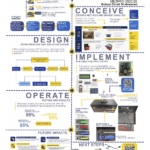
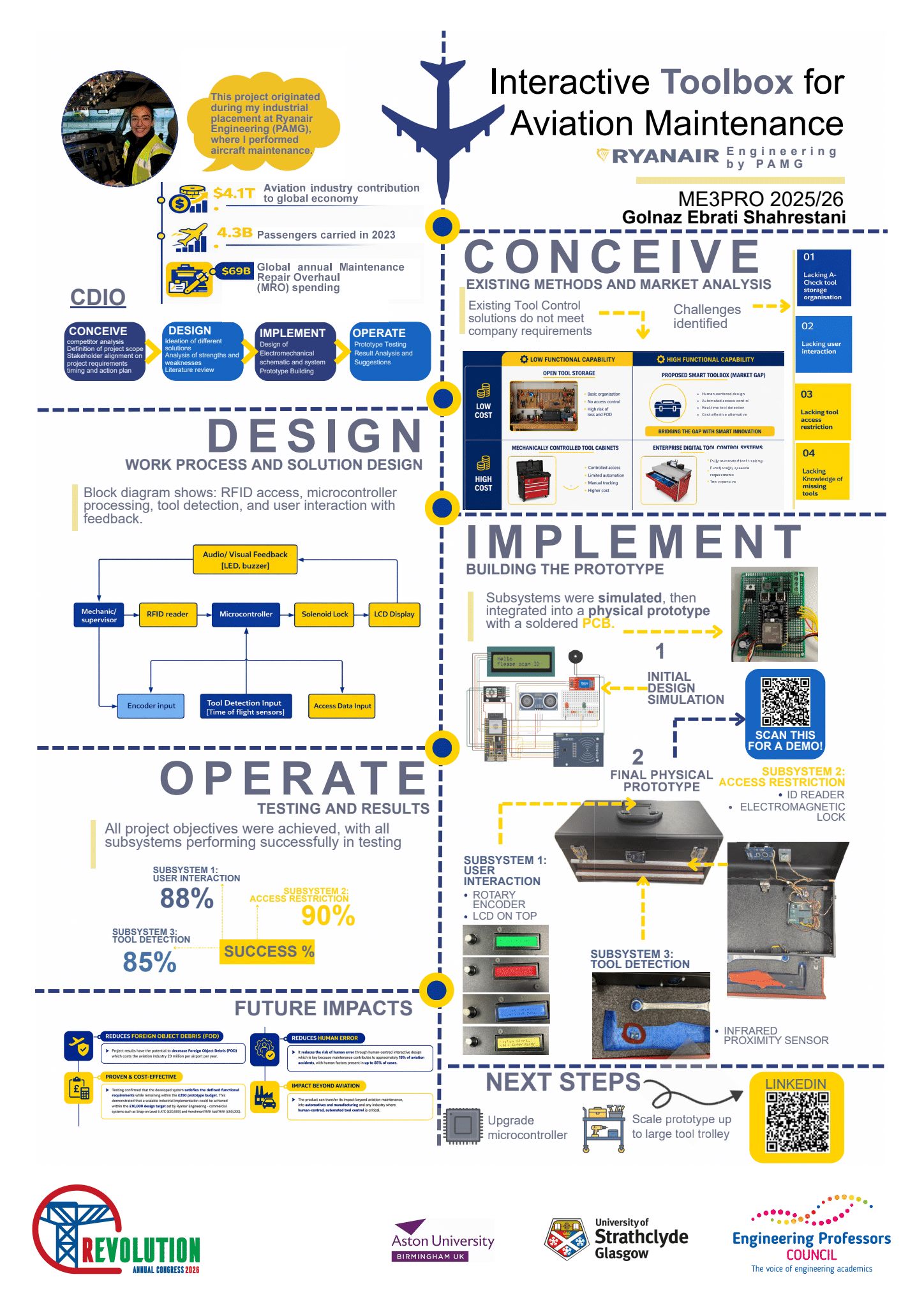
This poster presents the development of a low-cost automated tool control system designed to challenge traditional manual tool management in aviation maintenance. Observations during an industrial placement with Ryanair Engineering revealed inefficiencies in shared A-check tool trolleys, increasing the risk of tool misplacement, delays, and foreign object damage. The project investigates how embedded systems can challenge these practices through an interactive smart toolbox integrating RFID authentication, user interface feedback and time-of-flight sensor detection. Developed using the CDIO engineering framework and validated through prototyping and testing, the system demonstrates how scalable, low-cost engineering innovation can improve safety, accountability and operational efficiency in maintenance environments.
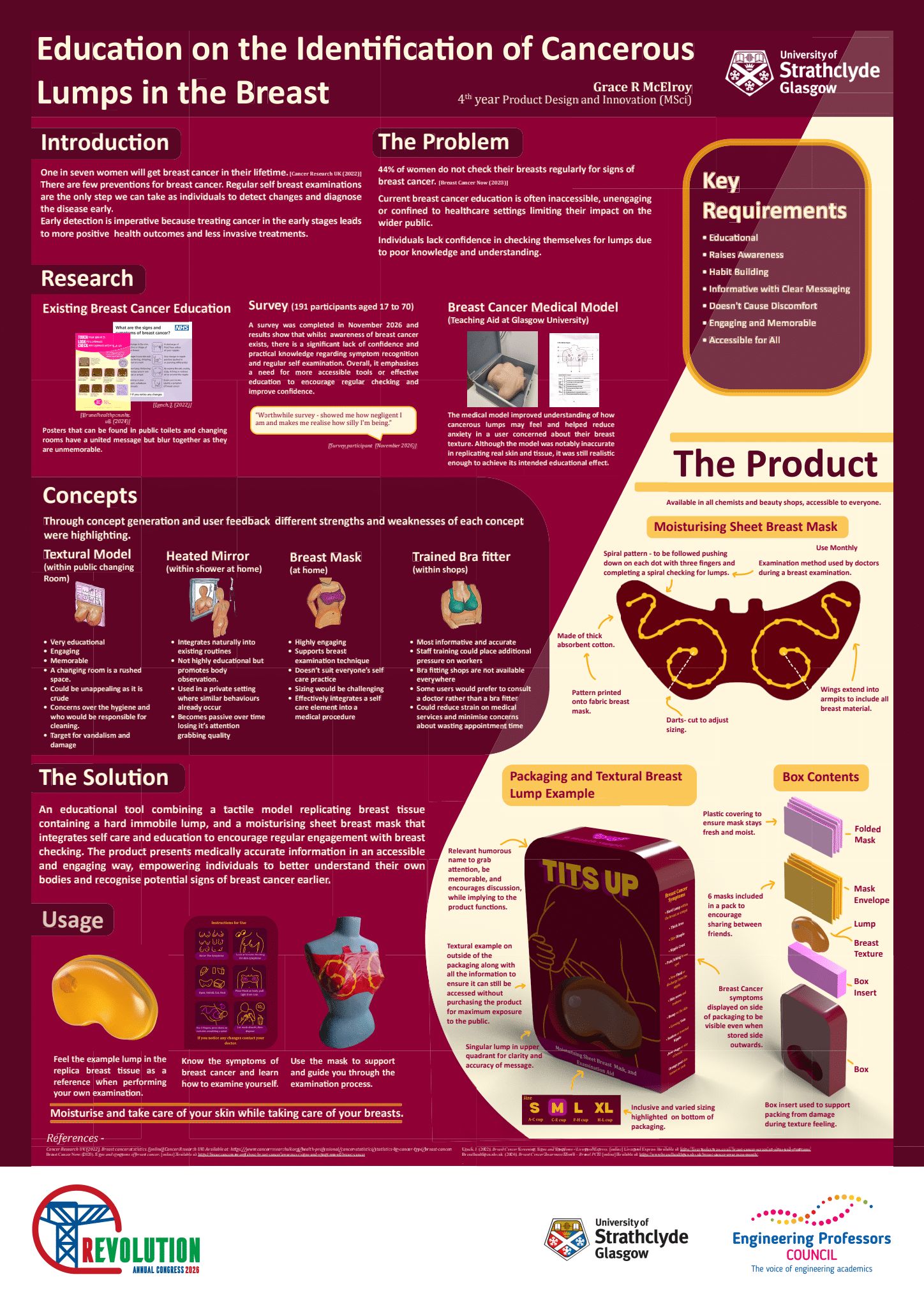
This project challenges the current approach to breast cancer education, as many existing resources are inaccessible, unengaging, or primarily targeted at an older demographic and located within healthcare environments, limiting their impact on the wider public. The project aims to develop a textural example and supporting tool to increase confidence when performing self-checks, making information available in an approachable and memorable way. By improving accessibility and engagement, the project seeks to empower individuals with the knowledge and practice needed to recognise early warning signs, ultimately encouraging earlier detection of breast cancer and better health outcomes.
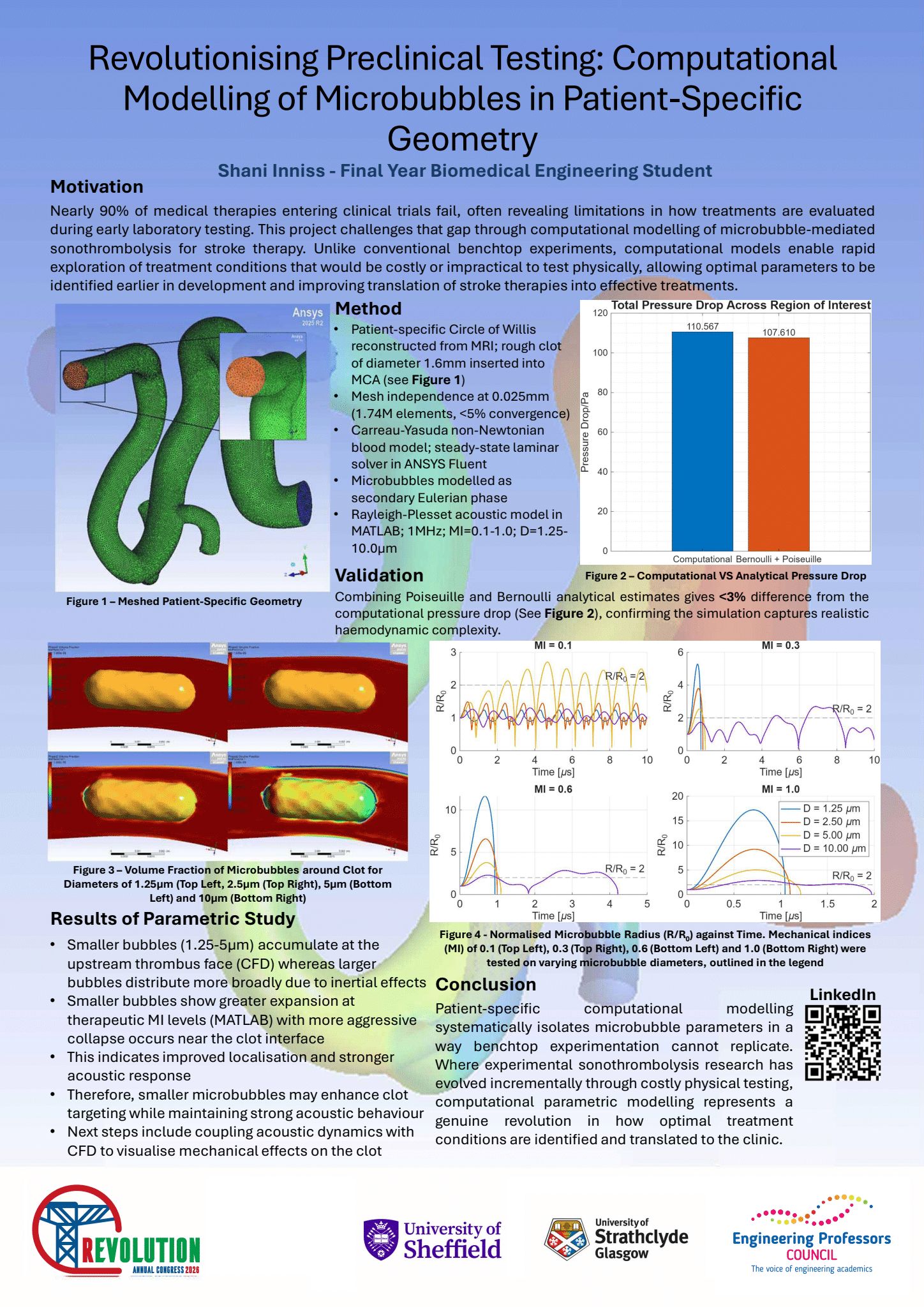
Nearly 90% of medical therapies entering clinical trials fail, often revealing limitations in how treatments are evaluated during early laboratory testing. This project challenges that gap through computational modelling of microbubble-mediated sonothrombolysis for stroke therapy. By systematically varying microbubble diameter and concentration, simulations investigate how these parameters influence clot dissolution. Unlike conventional benchtop experiments, computational models enable rapid exploration of treatment conditions that would be costly or impractical to test physically. This approach allows optimal parameters to be identified earlier in development, reducing experimental burden while strengthening preparation for clinical trials and improving translation of stroke therapies into effective treatments.
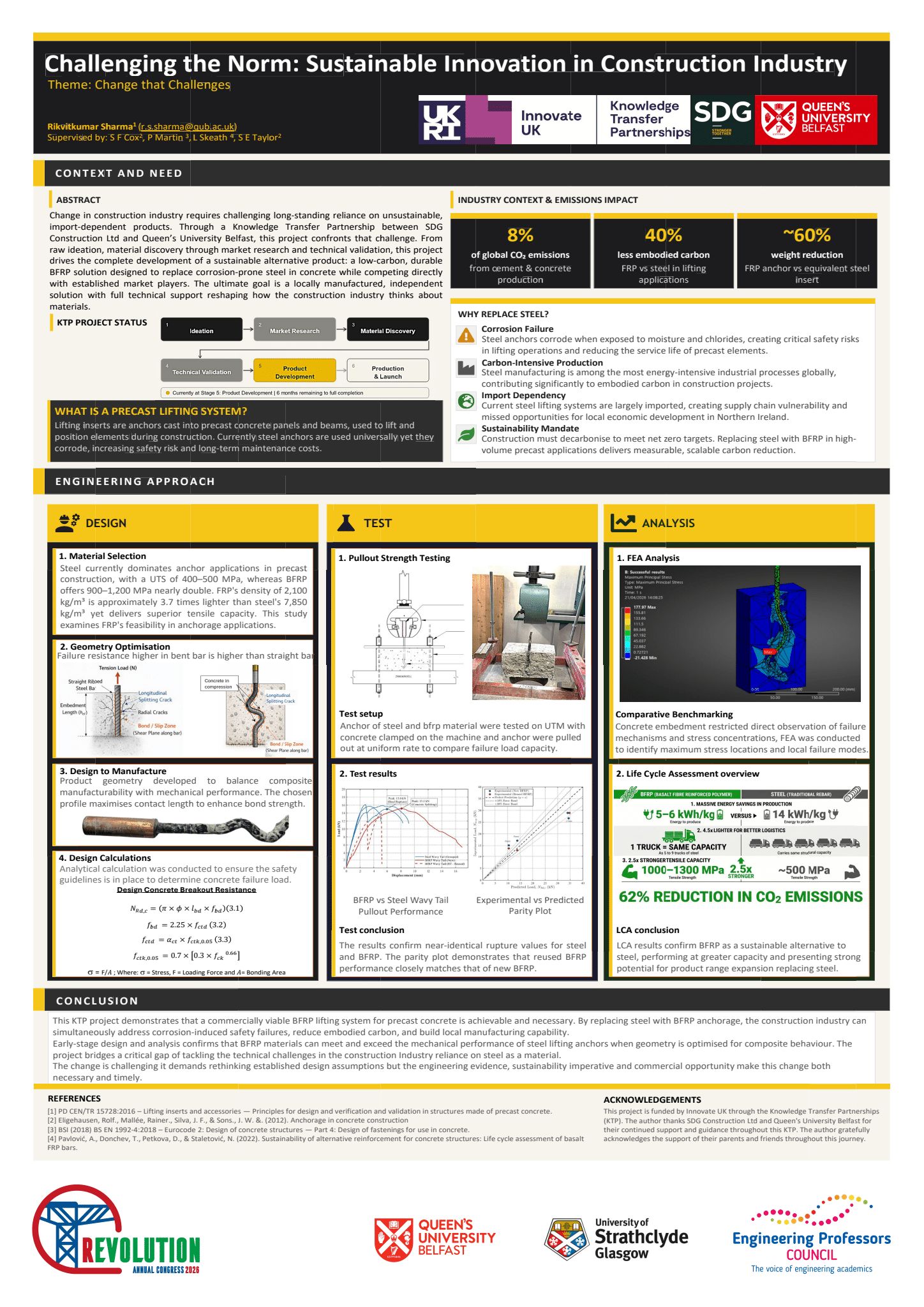
Change in construction industry requires challenging long-standing reliance on unsustainable, import-dependent products. Through a Knowledge Transfer Partnership between SDG Construction Ltd and Queen’s University Belfast, this project confronts that challenge. From raw ideation, material discovery through market research and technical validation, this project drives the complete development of a sustainable alternative product: a low-carbon, durable FRP solution designed to replace corrosion-prone steel in concrete while competing directly with established market players. The ultimate goal is a locally manufactured, independent solution with full technical support reshaping how the construction industry thinks about materials.
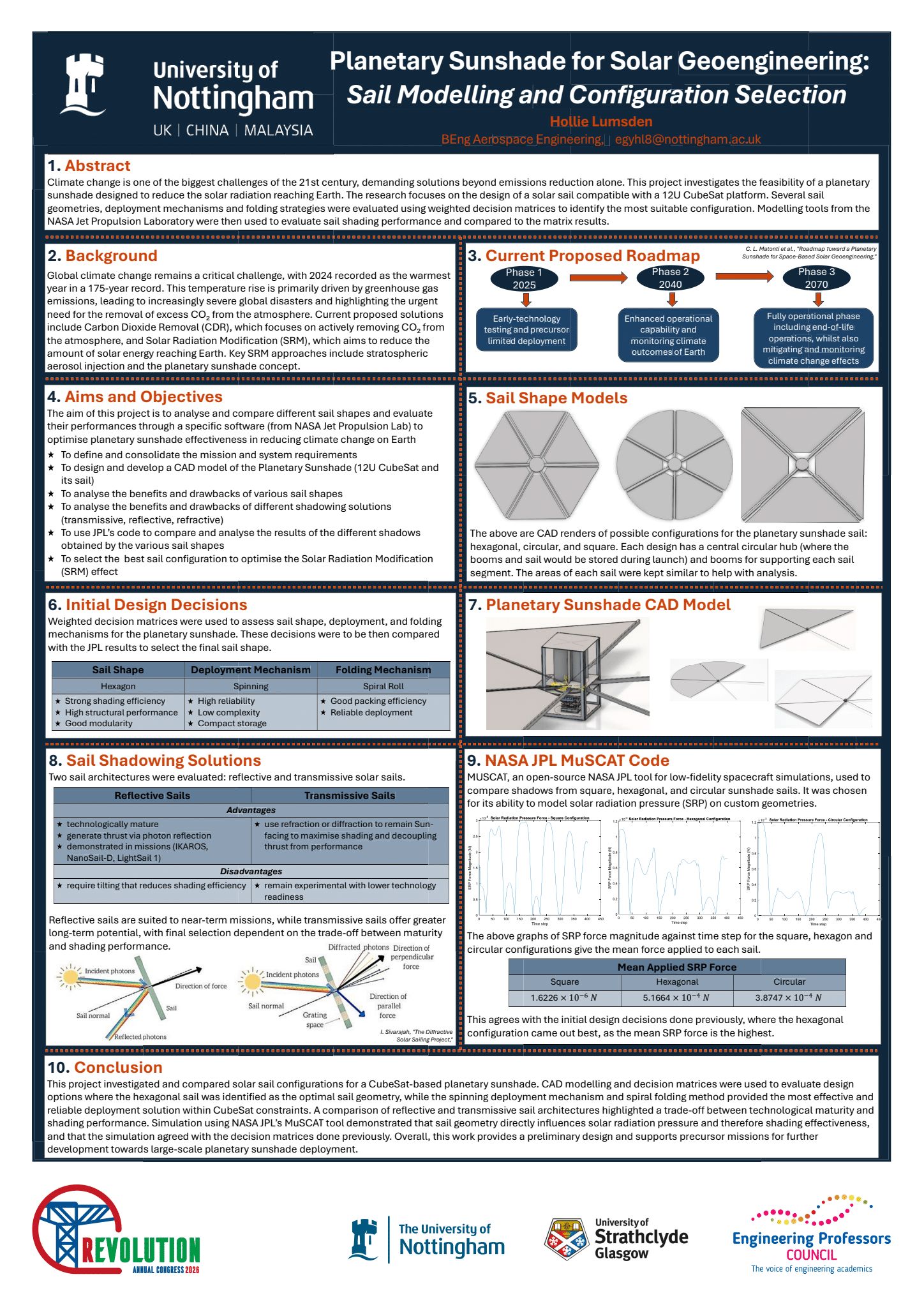
Climate change is one of the biggest challenges of the 21st century, demanding solutions beyond emissions reduction alone. This project investigates the feasibility of a planetary sunshade designed to reduce the solar radiation reaching Earth. The research focuses on the design of a solar sail compatible with a 12U CubeSat platform. Several sail geometries, deployment mechanisms and folding strategies were evaluated using weighted decision matrices to identify the most suitable configuration. Modelling tools from the NASA Jet Propulsion Laboratory were then used to evaluate sail shading performance and compared to the matrix results.
Meet the 2026 Hammermen David K. Harrison Student Award finalists
The Hammermen David K. Harrison Student Award celebrates outstanding student engineering work and recognises emerging engineers whose projects demonstrate creativity, technical skill and real-world relevance.
Supported by The Incorporation of Hammermen of Glasgow, the award provides a platform for students to present their work as part of the Engineering Academics Network Annual Congress. This year’s finalists represent a wide range of engineering challenges, from aviation maintenance and healthcare education to medical modelling, sustainable construction and climate intervention technologies.
The 2026 finalists are:
Golnaz Shahrestani
This poster presents the development of a low-cost automated tool control system designed to challenge traditional manual tool management in aviation maintenance. Observations during an industrial placement with Ryanair Engineering revealed inefficiencies in shared A-check tool trolleys, increasing the risk of tool misplacement, delays, and foreign object damage. The project investigates how embedded systems can challenge these practices through an interactive smart toolbox integrating RFID authentication, user interface feedback and time-of-flight sensor detection. Developed using the CDIO engineering framework and validated through prototyping and testing, the system demonstrates how scalable, low-cost engineering innovation can improve safety, accountability and operational efficiency in maintenance environments.
This project challenges the current approach to breast cancer education, as many existing resources are inaccessible, unengaging, or primarily targeted at an older demographic and located within healthcare environments, limiting their impact on the wider public. The project aims to develop a textural example and supporting tool to increase confidence when performing self-checks, making information available in an approachable and memorable way. By improving accessibility and engagement, the project seeks to empower individuals with the knowledge and practice needed to recognise early warning signs, ultimately encouraging earlier detection of breast cancer and better health outcomes.
Nearly 90% of medical therapies entering clinical trials fail, often revealing limitations in how treatments are evaluated during early laboratory testing. This project challenges that gap through computational modelling of microbubble-mediated sonothrombolysis for stroke therapy. By systematically varying microbubble diameter and concentration, simulations investigate how these parameters influence clot dissolution. Unlike conventional benchtop experiments, computational models enable rapid exploration of treatment conditions that would be costly or impractical to test physically. This approach allows optimal parameters to be identified earlier in development, reducing experimental burden while strengthening preparation for clinical trials and improving translation of stroke therapies into effective treatments.
Change in construction industry requires challenging long-standing reliance on unsustainable, import-dependent products. Through a Knowledge Transfer Partnership between SDG Construction Ltd and Queen’s University Belfast, this project confronts that challenge. From raw ideation, material discovery through market research and technical validation, this project drives the complete development of a sustainable alternative product: a low-carbon, durable FRP solution designed to replace corrosion-prone steel in concrete while competing directly with established market players. The ultimate goal is a locally manufactured, independent solution with full technical support reshaping how the construction industry thinks about materials.
Climate change is one of the biggest challenges of the 21st century, demanding solutions beyond emissions reduction alone. This project investigates the feasibility of a planetary sunshade designed to reduce the solar radiation reaching Earth. The research focuses on the design of a solar sail compatible with a 12U CubeSat platform. Several sail geometries, deployment mechanisms and folding strategies were evaluated using weighted decision matrices to identify the most suitable configuration. Modelling tools from the NASA Jet Propulsion Laboratory were then used to evaluate sail shading performance and compared to the matrix results.
We are delighted to be able to offer 5 early career staff an EPC sponsored place at Congress 2026.
Please see the full eligibility criteria below:
You must be employed as an academic in an Engineering discipline at an institution that is a member of the EPC or you must be an individual member of the Engineering Academics Network.
You must not have been employed in any academic post(s) for longer than a sum of five years.
Academics previously attending Congress on a free ECS place are not eligible for this offer (but can book a heavily discounted rate).
The free place offer is for a full congress ticket plus congress dinner and optional basic B&B accommodation.
Travel and other expenses to attend are not included.
You will be expected to attend the whole of Congress.
Only one free place per member institution (non-member institutions are not eligible for this offer).
Places will be offered on a first-come-first-served basis to those eligible for them.
Successful applicants will be expected to submit a brief report following their attendance.
Please note that if an individual if found not to be eligible, they will be responsible for the full Congress fee.
Our Glasgow City bridge tour takes place on Wednesday 17th June from 14.15 to 16.00. We will meet at the Congress registration desk.
The walking trail takes you on a journey through Glasgow City centre, along the bridges of River Clyde, from Albert Bridge at Saltmarket to the more recent “Squiggly” Bridge connecting Anderston to Tradeston.
Led by practicing engineers, the walk offers insights into the historical significance and structural design of each bridge encountered. From heritage structures to modern engineering solutions, each crossing tells a part of Glasgow’s story.
Tickets for Congress do not include accommodation (with the exception of the 10 fully free places for early career staff and students). If needed, please make your own arrangements. We will be happy to offer advice if we can.
Details of hotels near University of Strathclyde Learning & Teaching Building can be found here. Details on a wider range of hotels has also kindly been provided by the Glasgow Convention Bureau, together with a list of delegate discounts which can be used in and around Glasgow.
Sponsors
The exhibition will also include the shortlisted posters for the David K Harrison Hammermen Student Award.
The Congress, which runs over three days, attracts between 80 and 150 delegates, most of whom are decision-makers and budget controllers. The first day is devoted to networking followed by two days packed with high-profile and expert speakers.